This site is supported by our readers. We may earn a commission, at no cost to you, if you purchase through links.

Around 20% of people worldwide live with pet allergies—yet dog ownership rates keep climbing. That gap tells you something: plenty of allergy sufferers refuse to give up on having a dog.
The good news is they don’t have to. Some breeds shed far less and produce less dander than others, making life with a dog genuinely manageable for sensitive owners. Choosing the right breed, keeping up with grooming, and making a few changes around the house can all tip the odds in your favor.
Here’s what you need to know before you bring one home.
Table Of Contents
Key Takeaways
- Breeds like Poodles, Bichon Frises, and Maltese shed far less than most dogs, which means less dander floating around your home and fewer allergy flare-ups.
- A dog’s coat type matters more than its breed label — single-layer, hair-based coats release allergens gradually, while double coats shed in seasonal bursts that can overwhelm sensitive airways.
- Consistent grooming — brushing outdoors, bathing twice a week with hypoallergenic shampoo, and trimming regularly — can cut dander levels by up to 85%.
- Pairing a low-shedding dog with HEPA air purifiers, allergen-proof bedding, and pet-free bedroom zones gives you the best shot at a comfortable, sneeze-free home.
Best Dog Breeds for Allergy Sufferers
Not every dog works for someone with allergies, but some breeds make it a whole lot easier. The good news is you don’t have to give up on dog ownership — you just need to know where to start.
A good starting point is browsing through low-dander dog breeds to find one that actually fits your lifestyle.
Here are ten breeds worth considering if sneezing and itchy eyes have been standing between you and a dog.
Poodle

Few dog breeds check as many boxes for allergy sufferers as the Poodle. Their tight, curly coat traps dander instead of releasing it into the air — a real win for sensitive households.
Here’s what makes them stand out among hypoallergenic dog breeds:
- Minimal shedding reduces allergens on furniture
- Available in three sizes: Standard, Miniature, and Toy
- Poodle training is straightforward thanks to high intelligence
- Low-shedding breeds like this one pair well with pet insurance for long-term care
- Canine behavior stays stable with 60 minutes of daily exercise
For a deeper understanding of their unique coat and allergy-friendly characteristics, read about the hypoallergenic properties of Poodles.
Bichon Frise

The Bichon Frise is another great pick among low shedding breeds. Weighing just 3–6 kg, this cheerful breed traps loose hair in its curls rather than scattering it around your home. That tight coat makes Bichon Frise one of the most allergy friendly pets around.
Bichon Training, Dog Nutrition, and Canine Health all shape how well this breed fits your life. To learn more about their history and care, explore these Bichon Frise breed characteristics.
| Feature | Detail |
|---|---|
| Shedding Level | Very low |
| Grooming Frequency | Every 4–6 weeks |
Portuguese Water Dog

If you want a step up in size, the Portuguese Water Dog is worth a close look. This medium-sized breed stands up to 23 inches tall and carries a single-layer, low shedding coat — no undercoat means less dander floating around your home.
Among allergy-friendly breeds, their history as working water dogs makes Dog Training and Canine Nutrition easy to address with the right routine.
Maltese

If you prefer something smaller, the Maltese might be your match. These toy-sized, low-shedding dogs weigh just 4 to 7 pounds and carry a single-layer, silky coat that releases minimal dander — a real win for dog allergies.
Canine behavior is gentle and affectionate, making training easy. Just stay consistent with grooming, Maltese nutrition, and exercise to keep this hypoallergenic breed thriving.
Chinese Crested

The Chinese Crested is a standout among hypoallergenic dogs, especially the Hairless variety — mostly bare skin with wispy hair on the head, paws, and tail. Low shedding dogs don’t get much more allergy-friendly than this.
Chinese Crested care includes daily moisturizing and sun protection for exposed skin. With a calm, velcro-like Crested temperament, this breed suits allergy sufferers who want closeness without the sneezing.
Afghan Hound

Surprisingly elegant and lower-shedding than most large breeds, the Afghan Hound earns a quiet spot on the hypoallergenic dogs list. That long, silky coat care routine does take real commitment — but for allergy sufferers, the payoff is fewer airborne triggers.
- Afghan Hound grooming needs brushing 3–4 times weekly
- Bathe every two weeks to cut dander buildup
- Dog allergy management improves with consistent coat maintenance
- Low shedding dogs like Afghans suit mild allergy cases best
Havanese

Few hypoallergenic dog breeds check as many boxes as the Havanese. Their single-layer hair coat sheds very little, keeping dog allergies more manageable day to day. They weigh under 15 pounds, so overall allergen production stays low.
Canine behavior-wise, they’re affectionate and adaptable — great for allergy sufferers who want a true companion without constantly battling dander around the house.
To keep things low-stress at home, small habits like proper dry food storage routines can also help allergy-sensitive households stay cleaner and more organized.
Shih Tzu

The Shih Tzu is a quiet surprise for allergy sufferers. This small breed sheds minimally, trapping loose hair in its coat rather than releasing it into your air. With consistent Shih Tzu care, dander stays manageable. Here’s why allergy sufferers love them:
- Weighs just 9–16 pounds
- Low-shedding, continuous-growth coat
- Weekly baths reduce dander markedly
- Gentle, lap-dog temperament
- Adapts well to clean, allergen-managed homes
Yorkshire Terrier

The Yorkshire Terrier packs a lot into a tiny frame — 4 to 7 pounds of bold personality with a silky, single-layer coat that sheds far less than most breeds. For allergy sufferers, that’s a real win.
Regular brushing, proper Yorkie Nutrition, and routine baths support canine skin health and keep dander low. Among low-shedding dogs, this small dog care champion rarely disappoints.
West Highland White Terrier

The Westie might surprise you. Despite its double coat, this sturdy 15–20 pound terrier sheds far less than most breeds, making it one of the more practical allergy friendly breeds to think about.
Westie Nutrition and regular grooming help manage dander, while Terrier Training and Dog Socialization keep that confident spirit in check.
Pet Insurance is smart too — Westies can be prone to skin allergies.
Key Traits of Hypoallergenic Dogs

Not all dogs are created equal regarding allergies, and a few key traits make some breeds much easier to live with. Things like coat type, shedding level, and even body size can all affect how many allergens your dog puts into the air. Here’s what to look for.
Low-shedding Coats
Low-shedding coats are one of the biggest reasons allergy-friendly breeds work so well for sensitive owners. Their unique shedding patterns mean less hair — and dander — floating around your home. Here’s what makes them stand out:
- Hair texture stays trapped in curls, reducing airborne allergens
- Gradual hair growth limits dander reduction challenges
- Consistent grooming techniques prevent buildup
- Non shedding dogs need coat maintenance every 4–8 weeks
- Low shedding dogs leave less allergen-coated fur on furniture
Single-layer Vs. Double-layer Coats
Coat structure matters more than most people realize. Single-layer coats don’t have that dense undercoat, so shedding patterns stay steady and low-volume year-round.
Double-layer coats, by contrast, blow out seasonally — releasing clouds of fine hairs and dander straight into your air.
For dog breeds for allergy sufferers, that difference is huge. Non shedding dogs with single-layer coats simply mean fewer allergy triggers settling into your furniture.
Hair Vs. Fur Differences
There’s a real difference between hair and fur, and it matters a lot for pet allergies. Hair, like on Poodles or Maltese, keeps growing until trimmed — shedding less dander into your air. Fur sheds in seasonal waves, releasing allergens in bursts.
Unlike fur that sheds allergens in seasonal bursts, hair on breeds like Poodles keeps growing until trimmed, releasing far less dander
For low-shedding dogs and allergen control, coat texture and hair growth patterns make hypoallergenic dogs a smarter starting point.
Smaller Size and Allergen Production
Size does play a role in allergen spread — a 70-pound dog simply covers more surfaces than a 7-pound one. That’s the dog size impact in action.
Small breed benefits are real, but don’t assume tiny means dander free. Even low-shedding dogs and hypoallergenic dogs produce airborne allergens.
For managing dog allergies, combine a smaller breed with regular grooming and smart home habits.
Essential Grooming for Allergy-Friendly Dogs

Grooming isn’t just about keeping your dog looking good — it’s one of the most effective ways to keep allergens under control. How often you brush, bathe, and trim your dog can make a real difference in how your home feels.
Here’s what you need to know to build a routine that works.
Brushing and Bathing Frequency
Grooming routines are your first real line of defense against indoor allergens. For hypoallergenic dogs, consistency matters more than flawlessness.
- Brush curly-coated dogs like Poodles daily to prevent dander buildup
- Use bathing schedules of twice weekly for stronger allergen control
- Apply brushing techniques outdoors to keep loosened dander out of your air
- Bathe with hypoallergenic shampoo for up to 85% dander reduction
- Keep grooming routines on a calendar for steady allergen control
Coat Trimming and Stripping
Trimming and hand stripping aren’t just about looks — they’re core coat maintenance steps that directly affect how much dander stays in your home.
For low-shedding dogs and wire-coated hypoallergenic dogs, proper stripping techniques pull dead hair from the root, cutting loose buildup before it spreads.
Use the right trimming tools, follow grooming safety basics, and you’ll keep dog hair and dander genuinely manageable.
Professional Vs. At-home Grooming
Both options have real trade-offs. A professional salon keeps dander out of your home entirely — wet fur, loose hair, and airborne particles stay contained in their workspace. That’s a genuine win for allergy prevention.
At-home dog grooming costs less long-term once you have the right equipment, but brush outdoors when you can. Combine both approaches, and your hypoallergenic dog’s care routine becomes genuinely manageable.
Managing Allergens in The Home
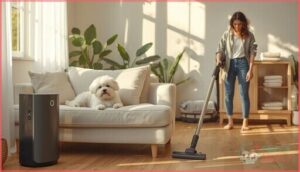
Keeping your home comfortable for both you and your dog takes a little planning.
There are a few simple ways to cut down on allergens around the house. Let’s look at what can help keep things clean and easy to manage.
Cleaning Routines to Reduce Dander
Dander doesn’t just disappear — it settles into every corner of your home. Staying consistent with these allergen reduction strategies makes a real difference for pet allergies, even with hypoallergenic dogs.
- Vacuuming floors with a HEPA-sealed vacuum two to three times weekly
- Washing textiles like dog beds in hot water weekly
- Dog wipe-downs between baths to grab loose dander
- Dusting surfaces twice weekly with damp microfiber cloths
Allergen-free Zones and Barriers
Think of your home as a map — some zones stay clean, others don’t. Pet Free Rooms, especially bedrooms with closed doors, give allergy sufferers a real break from dander.
Use Gate Barriers to keep Hypoallergenic Dogs and LowShedding Dogs out of sensitive areas. Furniture Protection covers and Floor Zones on hard surfaces make Allergen Reduction Strategies easier to maintain daily.
Crate Boundaries limit dander spread further.
Air Filtration and Ventilation
Good air filtration is one of your best defenses against pet dander. A HEPA filter air purifier captures 99.97% of airborne particles, including the fine pet dander that triggers allergies.
Look for models with a CADR of 300 or higher for real dander removal. Pairing air purifiers with proper ventilation systems helps flush stale, allergen-heavy air out — keeping your home fresher for allergy sufferers.
Allergen-proof Bedding and Furniture Covers
Air purifiers help, but your bed is where allergens really pile up. Mattress encasement covers zip fully around all six sides, cutting off dust mites from their food source.
Add allergen-proof pillow covers and comforter encasements made from tightly woven microfiber fabric, and you’ve built a serious barrier:
- Blocks pet dander particles down to 2 microns
- Waterproof membrane protects against dog saliva and accidents
- Washable at 130°F to kill mites consistently
Top Products for Allergy Sufferers With Dogs
The right products can make a real difference when you’re living with a dog and managing allergies.
From dander removers to air purifiers, a few smart picks go a long way toward keeping your home comfortable.
Here are four worth keeping on your radar.
1. Chuckit Classic Ball Launcher Dog Toy

Fetch time doesn’t have to mean slobber time. The Chuckit Classic Ball Launcher lets you pick up and throw the ball without ever touching it — a quiet win for allergy-sensitive owners.
Its 26-inch handle sends the ball two to three times farther than a hand throw, so your dog sprints away while you stay clean and comfortable. The launcher is lightweight, washable, and easy to grip, it’s built for parks and open fields where fresh air keeps dander from piling up around you.
| Best For | Dog owners who love a good game of fetch but could do without the slobber, arm strain, or picking up a soaked ball with their bare hands. |
|---|---|
| Pet Focused | Yes, fetch toy for dogs |
| Allergy Support | Indirect, reduces slobber contact |
| Ease of Use | Ergonomic handle |
| Safety | Durable plastic construction |
| Included Accessories | One ball included |
| Maintenance Required | Ball replacement needed |
| Additional Features |
|
- Throws the ball way farther than you ever could by hand — great for high-energy dogs that need a real run.
- No more touching the ball. The hands-free pickup is a genuine lifesaver, especially at muddy parks.
- Light, easy to carry, and made in the USA — it’s a simple tool that just works.
- Not great for tight spaces — this thing is built for wide open areas, not your backyard or a small apartment.
- The included balls aren’t the most durable, so if your dog is a heavy chewer, plan on replacing them.
- There’s a bit of a learning curve — some people find the grip and throwing motion awkward at first.
2. Allerpet Dog Dander Remover

Keeping your dog clean between baths doesn’t have to be complicated. Allerpet Dog Dander Remover works like a reset button — just dampen a cloth with the liquid and wipe it through your dog’s coat. No rinsing, no full bath.
Used weekly, it’s been shown to cut dander levels in your home by about 50 percent. The formula includes aloe vera, chamomile, and glycerin, so it conditions the coat while removing allergens.
Vets and allergists have recommended it since the late 1980s.
| Best For | Dog owners who suffer from allergies and want to reduce dander in their home without the hassle of frequent baths. |
|---|---|
| Pet Focused | Yes, dander reduction for dogs |
| Allergy Support | Yes, reduces dander by 50% |
| Ease of Use | No bath required |
| Safety | Non-toxic, safe 10+ weeks |
| Included Accessories | Cloth application method |
| Maintenance Required | Weekly reapplication needed |
| Additional Features |
|
- Cuts dander levels by around 50% with weekly use — that’s a real, measurable difference for allergy sufferers.
- No bath needed — just wipe it through the coat with a cloth, which most dogs tolerate way better than a full wash.
- Made with skin-friendly ingredients like aloe vera, chamomile, and glycerin, so it conditions the coat at the same time.
- Results aren’t guaranteed for everyone — some users haven’t seen the improvement they hoped for.
- It only works if you keep up with it — skip a few weeks and dander levels creep back up.
- If your allergies are severe, this isn’t a replacement for actual medical treatment — worth talking to a doctor first.
3. Eureka Powerful Upright Vacuum Cleaner
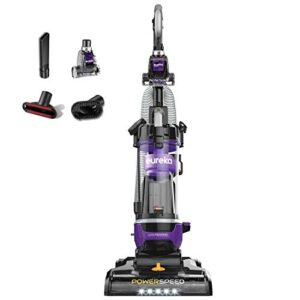
Once you’ve wiped down your dog’s coat with Allerpet, the next step is tackling what’s already settled into your floors and furniture.
The Eureka PowerSpeed upright vacuum is built for exactly that. It runs at 960 watts, pulls pet hair out of carpets and hardwood, and holds 2.6 liters before you need to empty it — enough for a full home pass.
The included pet turbo tool lifts hair from sofas and dog beds, and the washable foam filter keeps suction strong without ongoing costs.
| Best For | Pet owners who want a powerful, no-fuss vacuum that handles multiple floor types without breaking the bank. |
|---|---|
| Pet Focused | Yes, pet hair removal |
| Allergy Support | Yes, removes pet hair/dander |
| Ease of Use | Lightweight design |
| Safety | Foam filter system |
| Included Accessories | 4 attachments included |
| Maintenance Required | Regular brush cleaning needed |
| Additional Features |
|
- Pulls pet hair out of carpets, hardwood, and upholstery with 960 watts of suction
- Large 2.1-liter dust cup means fewer trips to the trash
- Comes with four attachments — including a pet tool — so you’re ready for any surface
- At 88 decibels, it’s loud enough to send nervous pets running for cover
- The cord rewind can feel clunky and slow down your cleaning flow
- Heavier than it looks, so long cleaning sessions might wear on you
4. Afloia Air Purifier For Pets
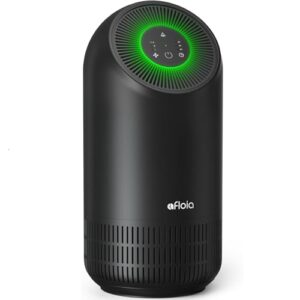
The last piece of the puzzle is what’s floating in the air you breathe. The Afloia Air Purifier for Pets uses a 3-stage filter — pre-filter, H13 true HEPA, and activated carbon — to pull pet dander, dust, and odors out of rooms up to 880 square feet.
It runs as quietly as 22 dB, so it won’t disturb you or your dog at night. Filters last 4 to 6 months, and the whole unit weighs just 4.6 pounds — easy to move wherever your dog goes.
| Best For | Pet owners dealing with allergies, dander, or odors in larger rooms up to 880 square feet. |
|---|---|
| Pet Focused | Yes, pet dander filtration |
| Allergy Support | Yes, removes 99.99% dander |
| Ease of Use | Adjustable fan speeds |
| Safety | 3-stage filtration |
| Included Accessories | Built-in timer function |
| Maintenance Required | Filter replacement every 4-6 months |
| Additional Features |
|
- Tackles pet dander, dust, pollen, and odors with a 3-stage filter that removes 99.99% of airborne particles
- Covers up to 880 sq ft and runs at just 22 dB — quiet enough for bedrooms
- Lightweight at 4.6 lbs, so it’s easy to move from room to room
- Filters need replacing every 4–6 months, which adds to the long-term cost
- No handle or indent makes it awkward to carry despite the light weight
- Can push out cooler air, which might be uncomfortable during winter months
Tips for Choosing The Right Hypoallergenic Breed

Picking the right hypoallergenic breed takes more than just falling for a cute face.
There are a few key things worth thinking through before you bring a dog home. Here’s what to focus on.
Researching Breed Characteristics
Not all hypoallergenic dogs are built the same — breed selection really does matter. Start with coat analysis: single-layer, low-shedding coats spread far fewer allergens than thick double coats. Dog size plays a role too, since smaller breeds simply produce less dander overall.
Allergy testing with your doctor before committing helps you understand your specific triggers. Grooming needs vary widely across dog breeds, so factor that into your decision when choosing a hypoallergenic pet.
| Breed | Key Trait for Allergy Sufferers |
|---|---|
| Poodle | Tight curls trap loose hair |
| Maltese | Minimal shedding, low dander |
| Bichon Frise | Soft, non-shedding coat |
| Chinese Crested | Hairless option available |
| Portuguese Water Dog | Single-layer, low-shed coat |
Considering Activity Level and Temperament
Your lifestyle shapes breed matching more than you might think. A Portuguese Water Dog needs 60 minutes of vigorous daily exercise, while a Maltese stays happy with two short 15-minute walks.
For allergy sufferers managing pet allergies, mismatched energy levels can increase stress and indoor activity, spreading more dander. Consider family dynamics and run simple temperament tests before committing to any hypoallergenic dog breed.
Connecting With Responsible Breeders
Finding a trustworthy breeder is half the battle with hypoallergenic dogs. Start with AKC Marketplace or breed parent clubs, where health testing standards are non-negotiable.
During breeder interviews, ask for OFA certificates and DNA results. Good puppy socialization — exposure to household sounds from weeks 3 to 12 — matters too.
A solid contract and strong breeder reputation protect you long-term.
Preparing Your Home for a New Dog
Before your new dog even sets paw inside, a little home renovation goes a long way. Swap out heavy carpets for hard floors — dander hides deep in fibers.
Set up cleaning schedules: vacuum twice weekly with a HEPA machine, damp mop hard surfaces, and wash pet bedding in hot water weekly. Good dog proofing and allergen reduction habits from day one make hypoallergenic dog care genuinely manageable.
Frequently Asked Questions (FAQs)
Can dog allergies develop after years of exposure?
Yes, canine allergies can develop after years of symptom-free living.
The immune system shift happens gradually as the sensitization process builds, triggering allergy onset even in long-term dog owners who once showed full tolerance.
Are mixed breeds less allergenic than purebreds?
Not really. Mixed breeds aren’t automatically better for pet allergies.
Allergen production depends on individual dog biology, not pedigree. A mixed breed can trigger canine allergies just as much as any purebred.
Do hypoallergenic dogs cost more than regular breeds?
Hypoallergenic dogs often cost more upfront — puppy prices for popular breeds usually range from $1,000 to $3, Grooming expenses add up too, since most low-dander coats need regular professional maintenance.
Is it safe to adopt a dog from a shelter?
Adopting from a shelter is generally safe. Most shelters vaccinate dogs on intake and run behavioral assessments before placement.
Schedule a vet visit right after adoption to confirm your new dog’s health.
Conclusion
Finding the right dogs for allergy sufferers isn’t ruff—it just takes the right information.
Low-shedding breeds like Poodles and Bichon Frises give you a real head start, but grooming habits and a clean home carry equal weight.
Run your HEPA filter, set up pet-free zones, and stay consistent with brushing.
Allergies don’t have to write the final chapter of your dog ownership story. The right match makes every sneeze-free cuddle worth it.
- https://www.akc.org/dog-breeds/hypoallergenic-dogs/
- https://sleepandsinuscenters.com/blog/effective-pet-bathing-schedule-to-reduce-dander-and-allergies
- https://www.dialavet.com/vet-answers/bichon-frise-poodle-mix-allergies-31856
- https://www.petmd.com/dog/procedure/dog-allergy-tests
- https://www.ncbi.nlm.nih.gov/pmc/articles/PMC5809771/