This site is supported by our readers. We may earn a commission, at no cost to you, if you purchase through links.

I watched a seasoned pointer lock up on point 200 yards out, then break and bolt after a rooster—completely ignoring my whistle. That’s when I realized my $30 training collar wasn’t cutting it anymore.
Hunting dogs operate in conditions that would destroy most pet gear: freezing water, dense brush, miles of open terrain. You need a collar that can track your dog through heavy cover, deliver clear corrections at distance, and survive getting dunked in a marsh.
The right dog training collar for hunting dogs transforms a headstrong pup into a reliable partner who checks back, holds steady, and responds when it counts. Whether you’re running pointers in the uplands or training a retriever for waterfowl work, the collar you choose directly impacts your dog’s performance and your success in the field.
Table Of Contents
- Key Takeaways
- Top 10 Dog Training Collars for Hunting Dogs
- 1. Garmin Alpha Dog Tracking System
- 2. Garmin Pro Dog Training Device
- 3. SportDOG Remote Dog Trainer Collar
- 4. Garmin Dog Tracking Training Device
- 5. PetSafe Wireless Dog Fence System
- 6. SportDOG Wetland Hunter Dog Collar
- 7. DT Systems Upland Dog Training Collar
- 8. Dt Systems Dog Training Collar
- 9. Garmin Alpha LTE Dog Tracker
- 10. Sportdog No Bark Collar
- Key Features of Hunting Dog Training Collars
- Choosing The Right Collar for Your Hunting Style
- Training Functions and Effectiveness
- Safety, Comfort, and Durability Factors
- Evaluating Technology and User Experience
- Cost, Support, and Warranty Considerations
- Ethical Use and Best Practices for Training Collars
- Frequently Asked Questions (FAQs)
- Conclusion
Key Takeaways
- Hunting dog collars need GPS tracking that works through dense cover, waterproof construction rated to at least IPX7, and multiple correction options (tone, vibration, stimulation) to handle real field conditions where cheap gear fails.
- Match your collar to your hunting style—upland hunters need rugged builds with long-range tracking like the DT Systems SPR5300, while waterfowl hunters require serious waterproofing like the SportDog WetlandHunter that survives submersion to 25 feet.
- Start stimulation at the lowest effective level (around 5-10 on most systems) and use tone or vibration first—ethical training builds reliability through clear communication and positive reinforcement, not fear-based corrections.
- Budget beyond the sticker price by checking warranty coverage (look for 12-24 months), subscription fees for cellular tracking, and battery replacement costs, since premium features like GPS often require ongoing payments that add up over the collar’s lifespan.
Top 10 Dog Training Collars for Hunting Dogs
You need a collar that keeps up when your dog’s running hard through cover and you’re focused on the hunt. I’ve tested dozens of systems in the field, and these ten stand out for their reliability, range, and real-world performance.
Here’s what actually works when conditions get tough and your dog needs guidance at distance.
1. Garmin Alpha Dog Tracking System
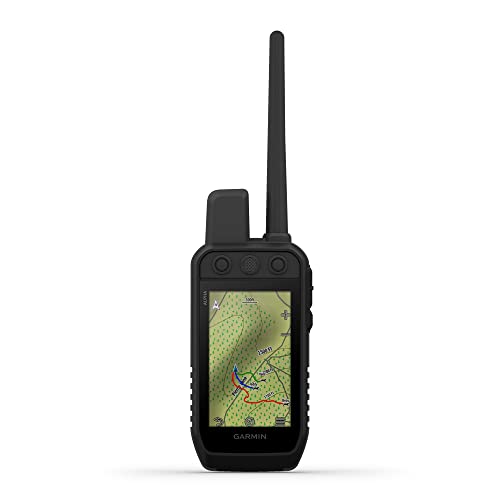
The Garmin Alpha 300i stands out as the top GPS dog tracking system you’ll find for serious hunting work. This GPS tracking powerhouse monitors up to 20 dogs from 9 miles away, giving you peace of mind about dog safety when your pointers are working thick cover.
The 3.5-inch touchscreen displays preloaded TopoActive maps, while 18 training modes let you dial in tone, vibration, or stim for each dog.
Yes, it’s expensive, but the collar durability and alpha features justify the investment when you’re counting on reliable performance in demanding conditions.
| Best For | Serious hunters and dog trainers who need reliable long-range tracking and training capabilities for multiple dogs in challenging terrain. |
|---|---|
| Waterproof | Yes |
| Battery Type | Rechargeable |
| Stimulation Levels | 18 |
| Range | 9 miles |
| Vibration Mode | Yes |
| Tone Mode | Yes |
| Additional Features |
|
- Tracks up to 20 dogs simultaneously from up to 9 miles away with real-time GPS location updates
- Offers 18 customizable training levels (stim, tone, vibration) plus preloaded TopoActive maps with satellite imagery
- Rugged, waterproof design with up to 55 hours of battery life handles demanding field conditions
- High price point compared to basic GPS tracking collars
- Outdated software interface and physical buttons don’t work when screen is asleep
- Battery life varies significantly depending on usage settings and number of dogs tracked
2. Garmin Pro Dog Training Device
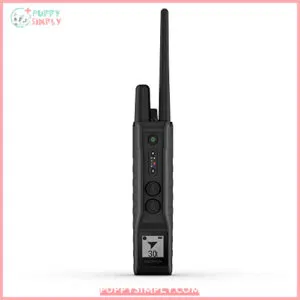
If you’re looking for training without all the tracking bells and whistles, the Garmin Pro 550 Plus delivers serious training power in a simpler package. You’ll get 18 stimulation levels plus tone and vibration across multiple training modes—perfect for dialing in obedience commands when your dog doesn’t need constant GPS monitoring.
The user interface won’t confuse you in the field, and battery performance holds strong through long training days. At roughly half the cost of Alpha systems, this electronic training aid offers outstanding collar durability without the subscription fees.
| Best For | Dog owners who want focused training control with multiple correction levels but don’t need GPS tracking features. |
|---|---|
| Waterproof | No |
| Battery Type | Rechargeable |
| Stimulation Levels | 18 |
| Range | Not specified |
| Vibration Mode | Yes |
| Tone Mode | Yes |
| Additional Features |
|
- 18 stimulation levels plus tone and vibration give you plenty of options to match your dog’s temperament
- Simple interface that’s easy to use in the field without fumbling through menus
- About half the price of Alpha tracking systems with no ongoing subscription costs
- No GPS tracking means you can’t monitor your dog’s location during training sessions
- Some users report the on/off switch design could be better
- Requires two hands for certain functions despite being marketed as field-ready
3. SportDOG Remote Dog Trainer Collar
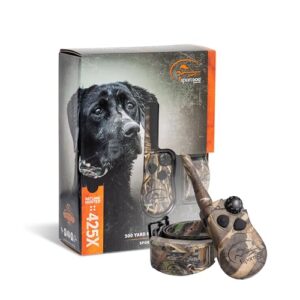
For hunters seeking reliable remote control without a premium price, the SportDOG FieldTrainer 425XS offers 21 training modes, including static, tone, and vibration, across an impressive 500-yard range. The camouflage pattern and DryTek waterproofing (submersible up to 25 feet) enhance its durability, while a 2-hour charge provides 50-70 hours of runtime.
The user interface remains simple for quick adjustments during dog obedience work. The collar withstands thick brush and cold water retrieves, delivering robust performance without the cost of GPS training collar systems.
| Best For | Hunters and trainers who need affordable, long-range off-leash control for dogs working in wet or rugged outdoor conditions. |
|---|---|
| Waterproof | Yes (25 ft) |
| Battery Type | Rechargeable |
| Stimulation Levels | 21 |
| Range | 500 yards |
| Vibration Mode | Yes |
| Tone Mode | Yes |
| Additional Features |
|
- 500-yard range with 21 adjustable training levels (static, tone, vibration) gives you plenty of options for different situations and dog temperaments.
- Fully waterproof and submersible up to 25 feet, so it handles water retrieves and harsh weather without issues.
- Long battery life (50-70 hours per charge) means you won’t be constantly recharging between training sessions or hunting trips.
- Can cause skin irritation if left on too long, so you need to remove and reposition the collar regularly.
- Some users report problems with the charging device or adapter failing over time.
- Not a substitute for foundational leash training—it’s a tool for reinforcement, not a shortcut to building a solid relationship with your dog.
4. Garmin Dog Tracking Training Device
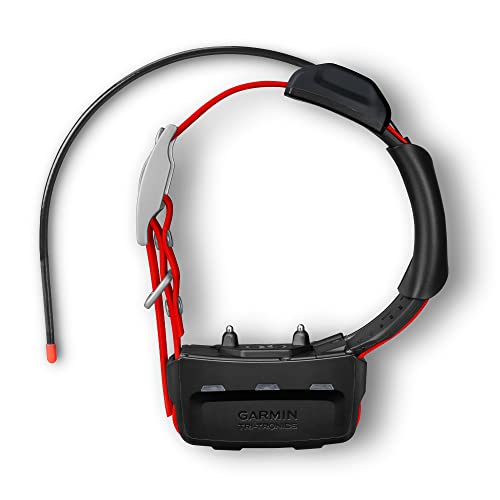
When you need dual-function capability without stepping up to the Alpha 300i, the TT 25 collar delivers solid GPS tracking and training functions at a midpoint price. This GPS Training Collar pairs with compatible Garmin handhelds and offers 18 stimulation levels, tone, and vibration across a 9-mile range.
The LED beacon lights prove invaluable during dawn or dusk retrieves. Battery Optimization reaches 80 hours between charges, and the User Interface syncs cleanly with Alpha, PRO 550 Plus, and Astro 430 devices for flexible tracking modes and training settings.
| Best For | Hunters and trainers who want GPS tracking and remote training tools in one collar without paying for premium satellite features. |
|---|---|
| Waterproof | Yes (10m) |
| Battery Type | Rechargeable |
| Stimulation Levels | 18 |
| Range | 9 miles |
| Vibration Mode | Yes |
| Tone Mode | Yes |
| Additional Features |
|
- 80-hour battery life means less frequent charging during long hunting trips or training sessions.
- LED beacon lights make it easy to spot your dog in low-light conditions at dawn or dusk.
- 18 stimulation levels plus tone and vibration give you flexible training options for different situations.
- You’ll need a separate Garmin handheld device to use the collar—it doesn’t work standalone.
- 9-mile range might fall short in wide-open terrain compared to higher-end models.
- Water resistance is limited to 10 meters, so deep water crossings could be risky.
5. PetSafe Wireless Dog Fence System
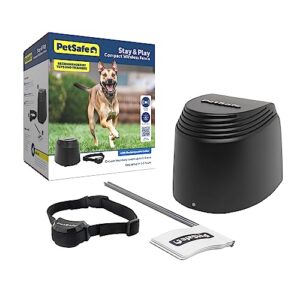
The PetSafe Stay and Play Wireless Fence shifts from active training to boundary setting, designed for dog containment rather than field work. This wireless fencing system covers up to 3/4 acre, featuring adjustable correction levels and a tone-only mode, making fence installation straightforward without buried wires.
While it enhances pet safety at home or camp, the circular boundary and limited range don’t suit hunting terrain. For pet care and accessories that keep your dog secure between hunts, it works fine.
| Best For | Dog owners looking for a simple home containment solution to keep pets safely in the yard without burying wires or installing physical fencing. |
|---|---|
| Waterproof | Yes |
| Battery Type | Rechargeable |
| Stimulation Levels | 5 |
| Range | 3/4 acre |
| Vibration Mode | No |
| Tone Mode | Yes |
| Additional Features |
|
- Quick wireless setup covers up to 3/4 acre with adjustable correction levels and tone-only training mode
- Portable design works great for travel, camping, or moving between properties
- Waterproof rechargeable collar supports multiple pets with additional collars
- Circular boundary pattern doesn’t adapt well to irregular yard shapes or hunting terrain
- Non-replaceable collar battery means buying a new collar when it eventually dies
- Metal objects and large appliances can interfere with signal strength and boundary consistency
6. SportDOG Wetland Hunter Dog Collar
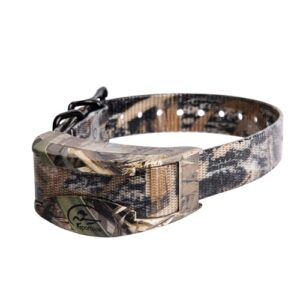
The SportDOG WetlandHunter 425X collar confronts duck marsh realities head-on with waterproof protection down to 25 feet. Field testing proves it manages rough water and mud without missing a beat.
You’ll get tone, vibration, and static training modes across a half-mile range, plus DryTek technology that actually keeps moisture out during retrieves. Battery life runs for days with a two-hour quick charge.
The Realtree Max-5 camo blends into your setup, though you’ll need to buy the handheld transmitter separately.
| Best For | Hunters and trainers who need a rugged, waterproof collar that can handle serious wetland conditions and long training sessions in the field. |
|---|---|
| Waterproof | Yes (25 ft) |
| Battery Type | Rechargeable |
| Stimulation Levels | N/A |
| Range | N/A |
| Vibration Mode | Yes |
| Tone Mode | Yes |
| Additional Features |
|
- Waterproof down to 25 feet with DryTek technology that actually works in rough water and mud
- Multiple training modes (tone, vibration, static) with half-mile range and days of battery life
- Realtree Max-5 camo blends into outdoor environments during hunts
- Remote control sold separately, which adds significant cost to the setup
- Charging port cover can break off according to some users
- Learning curve for setup, especially when managing multiple dogs
7. DT Systems Upland Dog Training Collar
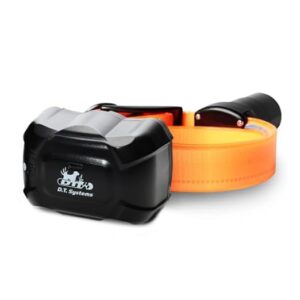
The DT Systems SPR5300 Upland collar delivers 24 adjustable stimulation levels and a two-mile MAXX-RANGE 360 system for serious field testing. You’ll appreciate the programmable Baritone upland beeper that audibly tracks your dog out to 400 yards, plus Positive Vibration as a no-shock alternative.
This GPS collar suits upland hunting with durable fabric construction and waterproof design. Dog safety features include Gentle Touch stimulation for sensitive breeds.
Remember you’re buying the ecollar receiver only—you’ll need the handheld transmitter separately to complete your hunting dog training setup.
| Best For | Upland hunters who need a reliable remote training collar with long-range tracking and flexible stimulation options for dogs working thick cover and varied terrain. |
|---|---|
| Waterproof | Yes |
| Battery Type | Rechargeable |
| Stimulation Levels | 24 |
| Range | 2 miles |
| Vibration Mode | Yes |
| Tone Mode | Yes |
| Additional Features |
|
- Two-mile range with 24 adjustable stimulation levels gives you precise control whether your dog is close or pushing the edges of the field
- Programmable Baritone beeper with 400-yard audible range keeps tabs on your dog even when visibility drops in heavy brush
- Waterproof build and Positive Vibration mode provide durability and a humane no-shock training alternative for sensitive dogs
- Sold as receiver only, so you’ll need to buy the handheld transmitter separately to actually use it
- Limited beeper range of 400 yards might not cover dogs that really push out in open country
- Requires upfront programming to dial in the right settings, which adds a learning curve before you hit the field
8. Dt Systems Dog Training Collar
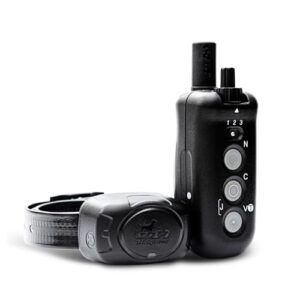
The DT Systems 2022 model packs ten adjustable stimulation levels into a compact 8-ounce package with a respectable 700-yard range. You’ll get vibration and tone options for sensitive dogs, plus waterproof construction that manages field testing in wet conditions.
Battery life runs about 40 hours with the rechargeable lithium pack, though some user reviews mention confusion with the remote’s button layout.
This electronic training aid fits neck sizes from 7 to 22 inches and delivers solid collar durability for upland work without breaking your budget.
| Best For | Owners training hunting or field dogs who need a durable, budget-friendly collar with multiple correction options and solid range for outdoor work. |
|---|---|
| Waterproof | Yes |
| Battery Type | Rechargeable |
| Stimulation Levels | 10 |
| Range | 700 yards |
| Vibration Mode | Yes |
| Tone Mode | Yes |
| Additional Features |
|
- Ten adjustable stimulation levels plus vibration and tone modes give you flexibility to match your dog’s temperament and training needs
- 700-yard range with waterproof construction handles real-world field conditions without babying the equipment
- Rechargeable battery delivers around 40 hours of use, cutting down on constant recharging between training sessions
- Remote button layout confuses some users, making it less intuitive when you need quick adjustments in the field
- Battery longevity concerns pop up in customer reviews, suggesting the pack may not hold up as long as advertised
- Transmitter runs on a separate 9V battery instead of being rechargeable, adding an extra maintenance step
9. Garmin Alpha LTE Dog Tracker

The Garmin Alpha LTE leverages cellular connectivity to track your dog when traditional radio signals can’t reach through dense cover or rolling terrain. This GPS Dog Tracking System pairs with your smartphone through the Alpha app, delivering real-time location updates via LTE network coverage.
You’ll get up to 32 hours of battery life with continuous tracking, multi-GNSS positioning for tough environments, and compatibility with the Garmin Alpha 300i for redundant VHF backup.
The 1.8-ounce collar includes multi-color LED lights for quick dog identification at dawn or dusk, though you’ll need a subscription for LTE connectivity.
| Best For | Hunters who need reliable cell-based tracking in areas where traditional radio signals struggle, especially when working multiple dogs across large properties. |
|---|---|
| Waterproof | Rugged design |
| Battery Type | Rechargeable |
| Stimulation Levels | N/A |
| Range | LTE cellular |
| Vibration Mode | No |
| Tone Mode | No |
| Additional Features |
|
- Real-time location updates through your smartphone mean you can track your dog from anywhere with LTE coverage, no separate handheld device required
- 32-hour battery life handles full-day hunts without needing a recharge mid-session
- Multi-color LED lights make it easy to spot which dog is which when you’re working the field at dawn or dusk
- Requires an ongoing subscription for LTE tracking, adding recurring costs beyond the initial purchase
- Performance drops significantly in areas with poor cell coverage, which can be common in remote hunting spots
- Users report issues with app crashes and inconsistent battery performance that can disrupt tracking when you need it most
10. Sportdog No Bark Collar
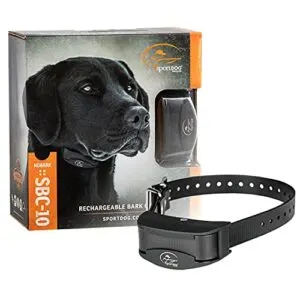
If your retriever barks at passing ducks or your pointer sounds off in the blind, you’ll appreciate the SportDOG NoBark 10’s silent partner sensor technology—it differentiates genuine barking from ambient noise. You can choose between progressive correction mode or user-select settings across 10 stimulation levels.
The rechargeable battery delivers 200 hours per charge, and the waterproof neoprene construction fits neck sizes from 5 to 22 inches. Just remember it’s a bark collar, not a remote training device like the SportDOG FieldTrainer 425XS.
| Best For | Hunting dog owners who need to curb nuisance barking in the field without carrying a separate remote trainer. |
|---|---|
| Waterproof | Yes |
| Battery Type | Rechargeable |
| Stimulation Levels | Progressive/User |
| Range | N/A |
| Vibration Mode | No |
| Tone Mode | No |
| Additional Features |
|
- Silent Partner Technology reduces false corrections by distinguishing actual barks from background noise like wind or other dogs
- 200-hour battery life means you can go weeks between charges, even during heavy hunting seasons
- Waterproof design with adjustable fit handles everything from duck blinds to stream crossings
- Some users report durability issues with the collar and shorter-than-expected battery lifespan over time
- Proprietary charger can be expensive to replace if you lose it in the field
- May cause discomfort or inconsistent corrections if not fitted properly, and it’s not effective for dogs under 8 pounds
Key Features of Hunting Dog Training Collars
Not all hunting dog collars are built the same, and knowing what features actually matter can save you from buyer’s remorse.
The best units balance reliable tracking technology with training tools that work when you need them most.
Here’s what separates the serious gear from the gimmicks.
GPS Tracking and Mapping Capabilities

Modern GPS tracking collars put real-time location data in your hands, usually updating every one to five seconds. You’ll see your dog’s position on digital map overlays with terrain analysis and geofence alerts when they cross boundaries you’ve set. GPS accuracy usually lands within three to five meters under open sky, and satellite imaging helps you read the landscape—critical when your pointer disappears over that next ridge.
Effective communication of research findings, such as those on clear science concepts, is essential for understanding the capabilities of these tracking devices.
Stimulation, Tone, and Vibration Options
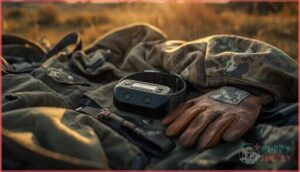
You’ll find most collars pack three core correction techniques: audible tone signals, vibration modes, and electronic stimulation levels ranging from 0 to 99. Start low—around level five or ten—and bump up only when your dog needs clearer feedback.
Tone and vibration work wonders for recall reinforcement without any stimulation, giving you flexible remote control options that match your hunting dog’s temperament and the day’s training goals.
Effective training requires understanding of scientific writing basics to communicate results clearly.
Range and Connectivity

Good signal strength matters less when terrain swallows your radio waves whole. Most RF-based GPS dog tracking systems reach one to three miles in open country, but dense cover and steep hills cut that fast. Cellular collars swap to GPS technology with satellite backup, giving you reliable data transmission across bigger coverage areas without line-of-sight limits.
- Rolling hills and thick timber reduce traditional frequency options to under a mile
- High-end GPS tracking technology can monitor your dog seven miles out in flat terrain
- Cellular collar systems update position every five to sixty seconds via network towers
- Multi-dog setups need separate receivers—each dog gets its own collar unit
Battery Life and Charging Options
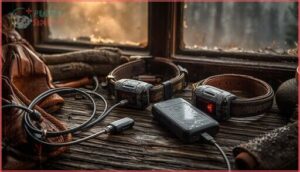
Strong signals won’t help you once the battery dies at dawn. Most GPS collars run 18 to 40 hours between charges, but cellular collar units drain faster. The Garmin Alpha 300i delivers about 20 hours with active GPS tracking—enough for a long weekend if you plan ahead.
| Collar Type | Battery Life | Charging Speed |
|---|---|---|
| GPS Collar | 18–40 hours | 2–6 hours |
| Training Collar | 30–50 hours | 2–4 hours |
| Cellular Collar | 12–30 hours | 2–5 hours |
USB-C charging methods work with most power banks, and swappable batteries keep you hunting without downtime. Cold weather cuts battery efficiency by up to 30 percent, so carry backup power. Check battery health indicators before each trip—dead electronics don’t bring your dog home.
Waterproof and Rugged Construction
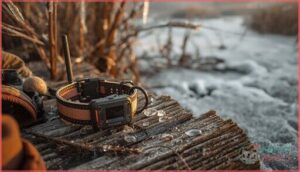
Your collar needs to handle swamp water, briars, and frozen mornings without fail. IPX7-rated waterproof collars shrug off full submersion—essential when your retriever hits icy ponds. Look for these markers of durability testing:
- Reinforced antenna housings that survive brush impacts
- Coated buckles and hardware resistant to rust and corrosion
- Thermoplastic shells designed for temperature extremes
- Nylon straps that won’t stiffen in freezing conditions
- Sealed battery compartments preventing moisture intrusion
Rugged materials separate field-ready GPS collars from weekend toys. Impact protection matters when dogs crash through cover at full speed.
Choosing The Right Collar for Your Hunting Style

Your hunting style shapes every feature you’ll actually use in the field. A waterfowl hunter slogging through marshes needs different tools than an upland hunter covering miles of open terrain.
Let’s match your specific needs to the collar that’ll work hardest for you.
Upland Vs. Waterfowl Hunting Needs
Your hunting terrain drives every gear decision you’ll make. Upland work demands dog training collars that handle dense brush and long recall distances—the DT Systems SPR5300 Upland excels here with rugged construction.
Waterfowl hunting needs serious waterproofing and visibility across open water; that’s where the SportDog WetlandHunter 425X shines.
Match your GPS collar’s field conditions rating to your dog breed’s typical working environment.
Tracking Vs. Training Priorities
Your priorities determine which collar you need. If you’re running multi-acre sheds, invest in a GPS collar like the Garmin Alpha with real-time tracking—you’ll locate your dog in 1–2 seconds, even through dense cover.
For close-range upland work, a dedicated training collar with adjustable stimulation levels and tone modes delivers faster recall without the tracking overhead.
Match the tool to your field performance needs.
Breed-Specific Considerations
Your dog’s breed shapes every training decision you make. Sporting breeds like pointers and retrievers thrive with longer sessions and moderate stimulation, while brachycephalic breeds show heightened stress responses. Coat thickness dictates collar contact, and neck size determines fit limits.
- Match stimulation intensity to breed temperament and natural drive
- Account for coat type when selecting collar sensors and contact points
- Adjust training duration based on energy levels and stamina
- Prioritize scent-tracking features for breeds with strong noses
Number of Dogs to Track or Train
Training solo versus running a pack changes everything. Most GPS collar systems reliably handle 2–3 dogs per handheld without signal degradation in open country. Push beyond three and you’ll need separate sessions or additional devices to maintain control. Dense cover amplifies interference, so I stick with 1–2 active tracking collars when working waterfowl or thick brush.
| Dogs Tracked | Recommended Context | Limitation |
|---|---|---|
| 1–2 dogs | Dense cover, waterfowl | Best signal clarity |
| 2–3 dogs | Open fields, upland | Standard pairing limit |
| 4+ dogs | Requires extra handhelds | Signal interference risk |
Training Functions and Effectiveness
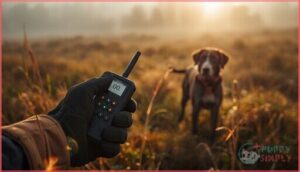
A good training collar isn’t just about correction—it’s about clear communication between you and your dog when they’re working in the field. The most effective collars give you multiple ways to signal your dog, from gentle tones to customizable stimulation levels that match their temperament and training stage.
Let’s look at the core training functions that make these collars work in real hunting situations.
Adjustable Stimulation Levels
You’ll want a GPS collar or training collar that offers at least 0 to 99 stimulation intensity options so you can dial in the right correction for your dog’s temperament. Start at the lowest effective level calibration and work up only when needed—these electronic training aids should match your dog’s sensitivity, not overwhelm it.
Remote training works best when you can fine-tune stimulation safety on the fly.
Tone and Vibration for Communication
Beyond stimulation, you’ve got auditory cues and vibration modes that work wonders for communication signals in the field. Tone settings give your dog immediate feedback at a distance, while sensory input from vibration can reach shy or sound-sensitive dogs without ramping up pressure.
Many hunting dog collars let you combine both—higher-frequency tones cut through wind better, and calibrated, progressive intensity beats abrupt corrections every time.
Reinforcing Recall and Obedience
Once your canine communication is locked in, you can use Recall Techniques and Positive Reinforcement to sharpen obedience under pressure. Short, sixty-to-ninety-second drills three times a week keep response times tight, even when Field Distractions pile up. Modern hunting dog collars let you layer tone, vibration, and low-level stimulation to reinforce commands without stress:
- Pair immediate, high-value rewards with every successful recall
- Start at minimal intensity and adjust based on your dog’s response
- Practice with simulated field noise—gunfire, flushes—to build real-world reliability
Integrating Collars Into Training Plans
Your collar works best when you treat it like another tool in your kit—not a shortcut. Start with Collar Introduction during habituation, then move through distinct Training Phases: field drills, recall under pressure, and finally independent work.
Map each session to clear goals, pair Behavioral Cues with verbal commands, and use GPS data to track real progress while gradually fading prompts as your dog locks in.
Safety, Comfort, and Durability Factors

A collar that falls apart in the field or rubs your dog raw isn’t just a bad investment—it’s a safety hazard.
The best hunting collars combine tough construction with smart design features that keep your dog comfortable and visible from dawn to dusk.
Let’s look at what separates collars built for real field work from ones that’ll leave you stranded.
Materials for Field Conditions
Your hunting dog equipment takes a beating in the field, so rugged construction isn’t optional. You need dog collars built from materials that won’t quit when conditions get nasty:
- Stainless steel or reinforced nylon hardware delivers corrosion resistance against mud and saltwater
- High-denier ripstop fabric (355+ rating) provides fabric durability through brambles and brush
- Thermal insulation components maintain performance in freezing temps or scorching heat
Durable hardware with bar-tack stitching and water repellency keeps everything functioning hunt after hunt.
Waterproofing and Weather Resistance
Most tracking collars carry IP67 or IP68 water resistance ratings, letting you work through rain, mud, and shallow retrieves without worry. IP68 units handle submersion up to one meter for an hour—darn impressive for duck hunting.
Look for rubberized housings and sealed battery compartments with o-rings. Check those seals regularly for cracks, rinse saltwater off after marsh hunts, and your waterproof hunting dog equipment will last seasons.
Visibility and Reflective Features
When light fades, reflective trim becomes your safety net. High-visibility coloring and reflective materials meeting ANSI-like visibility standards let you spot your dog at dusk or dawn—sometimes from 50 meters out. Look for 360-degree reflective strips on hunting dog accessories that won’t peel after mud exposure.
Enhanced conspicuity complements GPS tracking for nighttime safety, cutting retrieval time when your dog disappears into thick cover.
Collar Sizing and Fit for Active Dogs
Neck measurement matters more than you’d think. Wrap a soft tape around your dog’s neck at the widest point behind the ears, then add two fingers’ clearance to prevent chafing during long days afield.
Choose adjustable buckles with breathable padding and flexible materials that won’t dig in when your dog hits full stride. Recheck fit after every hunt—hydration and exertion change everything.
Evaluating Technology and User Experience

The best collar in the world won’t help if you can’t figure out how to use it when your dog’s on point three ridges over. I’ve watched plenty of hunters fumble with touchscreens in the cold or lose signal right when it matters most.
Let’s look at how these systems actually perform when you need them to work.
Handheld Device Vs. Mobile App Controls
You’ve got two paths when controlling your training collar: a dedicated handheld device or a mobile app on your phone. Each offers distinct advantages worth weighing against your hunting routine.
- Handheld units like the Garmin Pro 550 Plus deliver instant, tactile feedback with 20-40 hours of battery and half-mile to three-mile range depending on terrain
- Mobile apps provide real-time GPS tracking and geofencing through your smartphone, eliminating extra gear in the field
- Device latency matters when you need split-second recall—direct radio handhelds beat app connectivity options in dense cover
- Control ergonomics and user interface design affect whether you can operate gloves-on during cold waterfowl hunts
App security and firmware updates keep your tracking devices current, but I’ve seen connectivity drop when cell service fades in remote upland zones.
Ease of Use and Intuitive Controls
When you’re fumbling with a training collar in freezing rain, user-friendly controls make or break the moment. User interface matters—78% of users rate handheld remotes with clear button sensitivity and tactile feedback as genuinely user-friendly.
Control layout on quality e-collars places stimulation and tone controls within thumb reach, letting you adjust navigation modes and feedback systems single-handed while your dog locks on point.
Real-World Tracking Accuracy
GPS reliability sounds great on paper, but real-world tracking accuracy tells you what actually happens when your dog disappears into thick timber. Here’s what you’ll see in the field:
- Open terrain delivers 5–15 meter accuracy with solid satellite coverage and signal strength.
- Dense cover or ravines degrade GPS tracking to 20–50 meters due to terrain impact and multipath errors.
- LTE-enabled tracking collars improve position fixes to 8–12 meters in fringe areas with stable connectivity.
- Tracking algorithms combining GPS with GLONASS and multi-path correction deliver more reliable realtime tracking across varied landscapes.
Cost, Support, and Warranty Considerations

You’ve narrowed down your gear list, but the sticker shock on some of these collars can make you blink twice. Beyond the upfront cost, you’ll want to know what happens when something goes wrong at 5 a.m. on opening day or when that collar takes a dive into icy water.
Let’s break down what you’re really paying for and what kind of backup you can count on when things don’t go as planned.
One-Time Purchase Vs. Subscription Fees
When you’re budgeting for a tracking collar, you’ll face two pricing models: one-time purchases that cover hardware and basic training functions, or subscription fees that enable cellular collar connectivity and cloud-based GPS and tracking technology.
Most dog training and tracking systems let you start with an upfront cost comparison, but premium features—live maps, multi-dog coordination—often require payment plans that add up over your collar’s lifespan.
Customer Service and Troubleshooting
After you’ve settled on a pricing model, you’ll want reliable support channels when your e-collar or training collar stops syncing mid-hunt. Look for brands that publish clear troubleshooting tips and offer toll-free lines with 24–72 hour response targets—real service quality shows up when your handheld won’t pair or GPS drops out.
Here’s what strong issue resolution looks like:
- Diagnostic tools built into mobile apps that report signal strength and battery voltage
- Live chat with technicians who guide you through pairing sequences and firmware updates
- Replacement options with simplified RMA processes for defective dog collars
- Event logs stored on-device to help pinpoint connectivity problems or stimulation glitches
Fast, knowledgeable help keeps you and your dog in the field instead of stuck troubleshooting alone.
Warranty Coverage and Return Policies
A strong warranty tells you the brand stands behind their training collar. You’ll want twelve to twenty-four months of protection against defects in dog collars, plus return windows of thirty to sixty days for e-collars that don’t mesh with your dog training routine.
| Coverage Terms | Return Process | Warranty Claims |
|---|---|---|
| 1–2 years for pet safety and accessories | 30–60 day trial period | Submit proof of purchase online |
| Manufacturing defects covered | Original packaging often required | Exchange options for faulty units |
| Water damage excluded on most e-collars | Restocking fees may apply | Refund policies vary by retailer |
| Dog training and equipment accessories included | Prepaid return labels provided | Turnaround averages 7–14 business days |
Value for Money Based on Features
Beyond the fine print, your training collar’s real worth shows up in the field. GPS tracking cuts search time by thirty percent, while multi-modal stimulation on e-collars like the Garmin Sport PRO shortens training sessions by twenty to forty percent.
Feature comparison reveals:
- High-end systems deliver two to three days of battery under typical dog tracking use
- Waterproof construction extends device longevity in marsh conditions
- No subscription fees lower total cost analysis over two to three years
- User reviews confirm rugged materials outlast budget options in thick brush
Ethical Use and Best Practices for Training Collars

Training collars are powerful tools, but they’re only as good as the person holding the remote. You’ve got to use them right—with patience, consistency, and respect for your dog’s welfare.
Here’s how to keep your training humane and effective while getting the results you need in the field.
Humane Training Methods
You can’t build a reliable hunting dog on fear alone—humane training methods blend positive reinforcement with minimal aversive stimuli to protect canine welfare while sharpening recall. Pair collar signals with rewards, keep stimulation at the lowest effective level, and consult a certified trainer for sensitive dogs. Training ethics demand stress reduction through clear cues and consistent reward systems.
A hunting dog’s reliability is built on patient, humane training that prioritizes rewards, gentle cues, and clear, consistent communication
| Humane Practice | Welfare Benefit |
|---|---|
| Positive reinforcement first | Builds trust and engagement |
| Minimal stimulation intensity | Reduces anxiety and avoidance |
| Tone before correction | Allows voluntary compliance |
| Professional consultation | Ensures breed-specific safety |
Time-Limited Training Sessions
Keep each training collar session between 5 and 20 minutes—you’ll sharpen recall reinforcement without overloading your hunting dogs. Short, focused dog training blocks align with daylight hunting patterns and prevent stress buildup.
Use clear behavior tracking to log progress, and schedule cooldown periods between e-collar sessions. Session planning with progressive duration increases works, but only after you see consistent recall gains.
Monitoring for Stress or Discomfort
Watch for lip licking, yawning, or a tucked tail during training collar sessions—behavioral monitoring catches stress detection before chronic issues take root. Aversive stimuli can spike cortisol and heart rate, so track canine welfare with video logs or even heart-rate variability tools.
Training ethics demands you stop immediately if discomfort appears and doesn’t resolve fast. Canine health and wellness always trump the next drill.
Consulting Professionals for Sensitive Dogs
If your dog shows fear, anxiety, or reactivity, a professional consultation prevents collar misuse from escalating the problem. Veterinary guidance and expert training advice guarantee sensitive dog care through behavior modification customized to each animal:
- Certified Professional Dog Trainers (CPDT) use reward-based dog training methods and positive reinforcement
- Veterinary Behaviorists diagnose complex issues and integrate medical treatment with dog behavior plans
- Certified Applied Animal Behaviorists (CAAB) apply science-backed approaches to dog training and behavior
- Professionals assess whether training collar use fits or harms your dog’s emotional state
- Humane alternatives like desensitization often replace dog training equipment that relies on aversive stimuli
Frequently Asked Questions (FAQs)
How often should I replace the collar battery?
Most rechargeable batteries in tracking collars last 1–2 years before replacement. Heavy GPS use, cold conditions, and frequent charging cycles accelerate wear, so monitor battery health regularly to maintain reliable training features and power management.
Can collars interfere with each others signals?
Yes, radio frequency interference happens when multiple collars operate nearby. Cross talk and frequency overlap can trigger unintended signals.
Choose tracking collars with digital pairing—it prevents device compatibility issues and satellite tracking errors.
What age should puppies start wearing training collars?
Like teaching a child to tie their shoes before running a marathon, puppies need foundational Dog Training first.
Start Collar Introduction around 8–12 weeks with lightweight gear, focusing on Puppy Socialization and Training Basics before any stimulation features.
How do I clean and maintain the collar contacts?
Wipe contact points after each hunt with a cotton swab dampened in isopropyl alcohol.
Check for corrosion monthly—greenish buildup means it’s time to replace the contacts.
Clean electronic care prevents tracking collar failures mid-season.
Conclusion
Your dog doesn’t care about subscription tiers or app notifications—it cares whether you can reach it when a pheasant flushes at 400 yards.
The best dog training collars for hunting dogs deliver reliable range, rugged durability, and clear communication when conditions get nasty.
Match the collar to your hunting style, train consistently, and you’ll build the kind of trust that turns every hunt into a partnership worth bragging about.
- https://x.com/godofprompt/status/1990526288063324577
- https://academichelpexpress.blog/2024/08/please-use-the-bulleted-points-and-the-rubric-below-to-guide-your-work-your-pa/
- https://www.linkedin.com/posts/bohdanlukianets_tasks-study-research-activity-7373377539521667072-UTEi
- https://www.writingclearscience.com.au/category/writing-guides/writing-research-papers/page/2/
- https://www.sciencedirect.com/science/article/pii/S0749208123000268