This site is supported by our readers. We may earn a commission, at no cost to you, if you purchase through links.
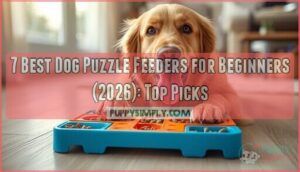
Most dogs finish their meals in under 60 seconds. That’s not eating—that’s inhaling. And for a lot of dogs, that speed comes with a price: bloating, weight gain, and an afternoon of restless energy with nowhere to go.
A puzzle feeder changes the whole situation. Instead of dumping kibble into a bowl, you give your dog something to work for—nose-led foraging, pawing at sliding pieces, licking food from grooved surfaces. The mental effort alone can tire a dog out faster than a 20-minute walk.
These seven dog puzzle feeders for beginners are the easiest places to start.
Table Of Contents
Key Takeaways
- Most dogs eat too fast, and a puzzle feeder slows them down enough to cut bloat, aid digestion, and burn mental energy without extra effort from you.
- Start at the easiest level possible — simple ridges, a snuffle mat, or a lick mat — and only move up once your dog looks confident, not frustrated.
- Match the feeder to your dog’s style: lickers do best with silicone mats, chewers need rubber dispensers, and curious problem-solvers thrive with sliding board puzzles.
- Ten minutes of focused puzzle feeding can tire your dog out faster than a walk, making it one of the most efficient enrichment habits you can build into a daily routine.
What Are Dog Puzzle Feeders?
Dog puzzle feeders are toys or bowls that make your dog work a little to get their food or treats. Instead of just eating from a regular bowl, your dog has to sniff, slide, or figure something out first.
Think of them as tiny brain games—you can browse a variety of puzzle toys designed for slow feeders that match your dog’s skill level and eating pace.
There are a few different types worth knowing before you pick one.
Types of Puzzle Feeders for Beginners
There’s a puzzle feeder style for every dog’s personality. Here are the main beginner puzzle feeder types to know:
- Slow Feeder Styles — bowls with raised ridges that slow down fast eaters
- Snuffle Mat Types — fabric mats hiding kibble for nose-led foraging
- Lick Mat Options — silicone surfaces for spreadable foods
- Treat Ball Variants — rolling dispensers that reward curious dogs
- Board Puzzle Forms — flat trays with sliding or lift pieces
They also provide mental stimulation benefits for pets.
How Puzzle Feeders Work
Each feeder type works differently, but the goal is the same — slow things down and make your dog think. Slow feeder bowls use food flow regulation through ridges and grooves, while rolling dispensing dynamics in treat balls release kibble after 10–20 nudges.
Snuffle mats activate sensory engagement features through nose-led foraging.
Interactive sliding systems and mechanical release mechanisms on board puzzles require deliberate paw pushes to uncover hidden food.
These feeders provide essential mental stimulation and enrichment for dogs.
Benefits for First-Time Users
All of that slowing down and nose work pays off fast.
Dog mental stimulation toys like a beginner puzzle feeder give your dog easy portion control, reduced bloat risk, and built-in stress relief — without extra effort from you. They also support weight management and create a structured routine your dog can count on.
Puzzle feeders deliver portion control, bloat reduction, and stress relief — effortlessly building a routine your dog can count on
Think of it as one of the simplest dog enrichment strategies you’ll ever try.
Choosing The Right Beginner Puzzle Feeder
Not every puzzle feeder works for every dog, so picking the right one from the start saves you a lot of frustration.
A few key factors — complexity, size, materials, and cleaning ease — will help you narrow it down fast. Here’s what to look for before you buy.
Puzzle Complexity & Challenge Level
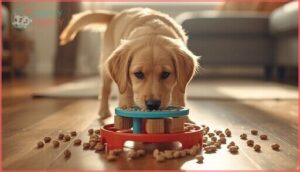
Start simple — way simpler than you think your dog needs. Most beginners do best at Level 1 or even Level 0: basic nudges, licks, or a single flip to uncover food. Watch for frustration indicators like pawing, whining, or ignoring the feeder — those are your cues to dial back the puzzle complexity.
- Level 1: One-step solutions, slow-feeder bowls, simple nudges
- Level 2: Sliding blocks, rotating cylinders, moderate nose work
- Adjustable Openings: Widen or narrow holes to fine‑tune difficulty progression
Skill assessment comes first. Reward timing matters too — quick wins build confidence before you ever reach Level 3.
Feeder Size & Meal Capacity
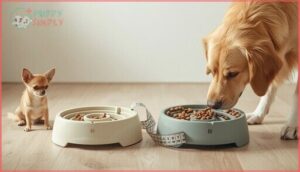
Size matters more than most people realize. Small dogs under 20 pounds need feeders around 5–7 inches wide; larger breeds need 9+ inches for comfortable access.
Match cup capacity to your dog’s actual meal — most slow feeders hold 2–4 cups, enough for one sitting.
Getting size matching right keeps portion scaling consistent and puzzle complexity from becoming a space or logistics problem.
Material & Safety Considerations
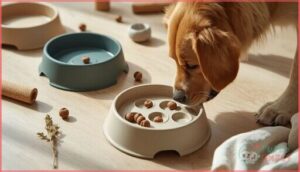
Safety isn’t just a checkbox — it’s the whole foundation. Look for food‑safe plastics and food‑grade materials that are BPA‑free plastic with non‑toxic dyes, so nothing harmful leaches into your dog’s meal.
- Chew‑resistant rubber holds up to pawing and nudging without cracking
- Eco‑friendly materials (some blends are ~50% plant‑based) reduce chemical exposure
- Anti‑slip base keeps the feeder steady on tile or hardwood
Ease of Cleaning for Busy Owners
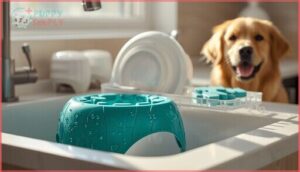
Cleaning shouldn’t eat up your morning.
The best dog puzzle feeders make this easy — think dishwasher friendly design (top rack, one cycle), quick rinse features that clear food in under 30 seconds, and modular removable parts you can soak separately.
Non-stick surfaces and minimal residue materials like food-grade, BPA-free silicone keep dog feeding solutions hygienic without the scrubbing marathon.
Top Puzzle Feeders for Beginners
Here are seven puzzle feeders worth trying if you’re just getting started. Each one keeps things simple, low-stress, and beginner-friendly for your dog.
Find the one that fits dog’s pace and personality.
1. PETBABA Silicone Dog Slow Feeder Bowl
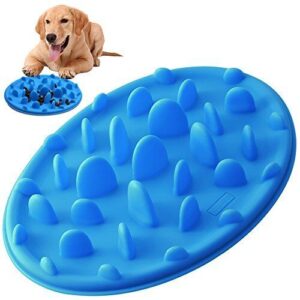
The PETBABA Silicone Slow Feeder Bowl is a solid first puzzle feeder for dogs who inhale their meals. Its raised maze pattern divides food into smaller sections, naturally slowing eating and reducing choking risks.
The bowl measures 10 x 7 inches — enough room for dry kibble, wet food, or treats.
Soft, BPA-free silicone protects your dog’s gums, and the suction base keeps it from sliding across the floor.
Bonus: it’s dishwasher safe, so cleanup takes seconds.
| Best For | Dogs that eat too fast and owners who want a simple, easy-to-clean solution to slow them down. |
|---|---|
| Material | Silicone |
| Dishwasher Safe | Yes |
| Mental Stimulation | Yes |
| Slow Feeding | Yes |
| Non-Toxic Materials | Yes |
| All Dog Sizes | Yes |
| Additional Features |
|
- The maze design genuinely slows eating, which helps cut down on choking and post-meal vomiting.
- Soft silicone is gentle on gums, and the suction base keeps the bowl from sliding all over the floor.
- Folds flat for travel and goes straight in the dishwasher — super low maintenance.
- Determined chewers may treat it like a chew toy and eventually tear it up.
- Food can get stuck in the grooves, which makes hand-washing necessary sometimes despite being dishwasher safe.
- Dogs that eat at warp speed might not be slowed down much if the puzzle isn’t challenging enough for them.
2. Company Of Animals Green Slow Feeder
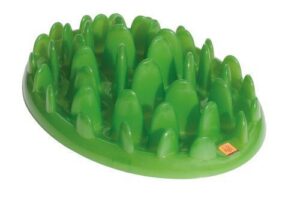
This one looks like a patch of grass — and that’s exactly the point. The Company of Animals Green Slow Feeder mimics natural foraging, so your dog pushes food out from between flexible blades instead of just gulping it down.
That simple change reduces bloat risk, cuts down on gassy aftermath, and keeps meals interesting.
It works with wet or dry food equally well, comes in regular and mini sizes, and cleans up on the top rack of your dishwasher.
| Best For | Dogs that eat too fast and need a bit of mental stimulation to slow them down at mealtime. |
|---|---|
| Material | Cotton |
| Dishwasher Safe | Yes (machine wash) |
| Mental Stimulation | Yes |
| Slow Feeding | Yes |
| Non-Toxic Materials | Yes |
| All Dog Sizes | Small to Medium |
| Additional Features |
|
- Turns eating into a mini foraging game, which is great for your dog’s brain
- Works with wet or dry food, so no need to swap feeders
- Dishwasher safe — toss it on the top rack and you’re done
- Getting food out from between the blades can be a hassle to clean by hand
- Not a great fit for dogs that get aggressive or try to muscle their way through it
- Spaniels and floppy-eared dogs may end up with wet, messy ears after every meal
3. Starmark Large Treat Dispensing Chew Ball
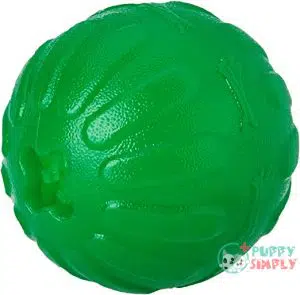
Think of this as a treat toy and fetch ball rolled into one.
The Starmark Large Treat Dispensing Chew Ball is built from thermoplastic rubber — stronger and lighter than standard rubber — so it holds up against serious chewers.
Fill it with kibble or peanut butter, freeze it, and your dog could stay busy for 30 minutes or more.
It bounces unpredictably, floats in water, and runs quietly indoors.
For dogs over 40 pounds, it’s a genuinely well-rounded pick.
| Best For | Dogs over 40 pounds who are tough chewers or prone to boredom and separation anxiety. |
|---|---|
| Material | Plastic/Grass |
| Dishwasher Safe | Yes |
| Mental Stimulation | Yes |
| Slow Feeding | Yes |
| Non-Toxic Materials | Yes |
| All Dog Sizes | Yes |
| Additional Features |
|
- Tougher and lighter than regular rubber, so it holds up against serious chewers
- Fill it with kibble or peanut butter and it keeps dogs mentally busy for a long stretch
- Bounces, floats, and doubles as a fetch toy — works indoors and out
- Very aggressive chewers with a full set of teeth may eventually break it open
- Small kibble can be a pain to stuff inside
- Costs more than a lot of other dog toys on the market
4. TRIXIE Flip Board Dog Puzzle Toy
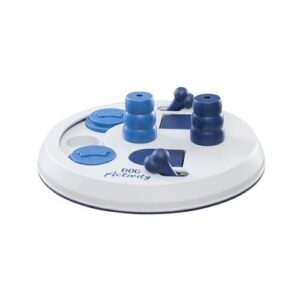
If your dog’s already bored with bouncing toys, a flat puzzle might be exactly what they need next.
The TRIXIE Flip Board is rated Level 2, so it’s built for dogs ready to think a little harder. It combines sliding lids, flip covers, and removable cones — three different actions in one board.
Your dog has to figure out each compartment separately, which keeps them focused longer. It’s dishwasher safe, has a non-slip rubber base, and comes in a larger XXL size for bigger dogs.
| Best For | Dogs who are past the beginner stage and need a real mental challenge to stay entertained and out of trouble. |
|---|---|
| Material | Rubber |
| Dishwasher Safe | Yes |
| Mental Stimulation | Yes |
| Slow Feeding | No |
| Non-Toxic Materials | Yes |
| All Dog Sizes | Yes |
| Additional Features |
|
- Three different actions in one board — sliding lids, flip covers, and removable cones — so your dog stays engaged longer
- Dishwasher safe and made with BPA, Phthalate, and Lead-free materials, so it’s easy to clean and safe to use
- Works for all ages and sizes, and doubles as a slow feeder to curb fast eating
- The plastic can feel a bit flimsy, and determined dogs may crack or break it with rough handling
- Not a great fit for aggressive chewers who’d rather destroy it than solve it
- Dogs that are prone to knocking things over might just flip the whole board instead of working through it
5. TRIXIE Mad Scientist Food Puzzle Toy
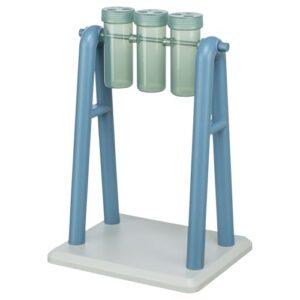
Ready to take things up a notch? The TRIXIE Mad Scientist puzzle is a Level 2 feeder built around three rotating tubes, your dog spins and tips, to release treats.
It comes with two sets of lids — different hole patterns — so you can dial the difficulty up as your dog improves.
The non-slip feet keep it steady during enthusiastic play sessions.
It’s BPA-free, dishwasher-safe, and includes a training booklet to help you both get started right.
| Best For | Dogs who’ve already mastered basic puzzles and need a bigger challenge to stay mentally sharp. |
|---|---|
| Material | Plastic/Rubber |
| Dishwasher Safe | Yes |
| Mental Stimulation | Yes |
| Slow Feeding | Yes |
| Non-Toxic Materials | Yes (BPA-free) |
| All Dog Sizes | Yes |
| Additional Features |
|
- Two sets of lids mean you can make it harder as your dog gets smarter
- Non-slip feet keep it from sliding all over the floor during play
- BPA-free and dishwasher-safe makes cleanup genuinely easy
- The plastic can feel a bit flimsy, especially with rough players
- Not a great fit for aggressive chewers who might break it apart
- Dogs that tip things over easily may outsmart it for the wrong reasons
6. Outward Hound Lickin Layers Dog Feeder
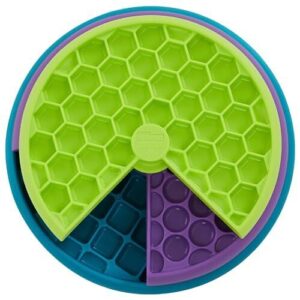
If your dog is more of a licker than a digger, the Outward Hound Lickin Layers is worth a look. It’s a 3-in-1 feeder — puzzle toy, lick mat, and slow feeder — all in one low, wide dish.
Three spinning layers hide food across 100+ small compartments, so your dog works through the meal in stages. It holds up to 2 cups of food, fits kibble or wet food, and goes straight into the dishwasher when done.
| Best For | Dogs that eat too fast or need more mental stimulation at mealtime, especially medium and large breeds. |
|---|---|
| Material | Plastic |
| Dishwasher Safe | Yes |
| Mental Stimulation | Yes |
| Slow Feeding | Yes |
| Non-Toxic Materials | Yes (BPA-free) |
| All Dog Sizes | Yes |
| Additional Features |
|
- Three spinning layers spread food across 100 small compartments, slowing down even the fastest eaters
- Works with kibble, wet food, raw meals, or peanut butter — pretty versatile
- Dishwasher-safe and made without BPA, PVC, or phthalates, so cleanup and safety are covered
- Some dogs figure it out quickly, so it may not stay challenging for long
- Getting kibble evenly distributed across all the tiers can be a bit fiddly
- The center peg can be tricky to pinch when you’re trying to free the upper layer
7. Sniffiz SmellyMatty Dog Snuffle Mat
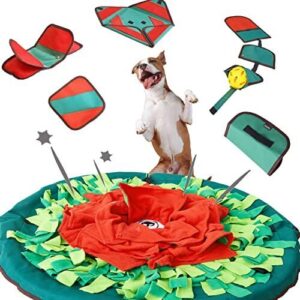
For dogs that love using their nose more than their paws, the Sniffiz SmellyMatty is a standout pick. This 32×32-inch snuffle mat hides kibble deep inside 11 layers of fleece “grass” and five detachable mini puzzles — a ball pocket, book, wallet, handkerchief, and puzzle board.
Most meals stretch into a 15–30 minute sniff session.
You can dial difficulty up or down by tucking food deeper or adding more puzzle attachments. It’s machine washable, too.
| Best For | Dogs who love to sniff and forage — especially anxious or fast-eating pups who need a slower, more mentally engaging mealtime. |
|---|---|
| Material | Plastic |
| Dishwasher Safe | Yes |
| Mental Stimulation | Yes |
| Slow Feeding | Yes |
| Non-Toxic Materials | Yes (BPA/PVC-free) |
| All Dog Sizes | Medium to Large |
| Additional Features |
|
- Turns dinner into a 15–30 minute nose workout, which is great for bored or anxious dogs
- Five detachable mini puzzles let you mix things up and adjust the challenge level
- Machine washable, so cleanup is actually easy
- Not ideal for aggressive chewers — the fabric can’t hold up to serious destruction
- Small detachable parts are a choking risk, so you’ll need to supervise playtime
- High food-drive dogs might get frustrated (or pushy) instead of settling in to sniff
Introducing Puzzle Feeders to Your Dog
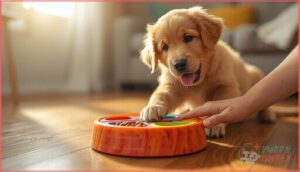
Jumping straight into a puzzle feeder can overwhelm a dog that’s never seen one before. A little patience upfront makes the whole experience click faster.
Here’s how to set your dog up for success from day one.
Starting With Small Portions
Start small — around 10–25% of your dog’s usual meal in the beginner puzzle feeder. This micro portions approach is the smartest starter routine you can follow.
Here’s your portion size guidelines in action:
- Use meal fractioning: split the daily ration across bowl and puzzle
- Apply calorie control by swapping treats for kibble
- Track portion monitoring session by session
- Try a gradual portion increase of one-quarter at a time
- Adjust the starting level if your dog walks away
Making Success Easy for Beginners
Before adding any food, let your dog sniff the empty beginner puzzle feeder first — that calm introduction matters more than most owners realize. A quiet feeding area at consistent mealtimes sets the stage.
Simple demonstrations, like nudging the feeder so a few pieces fall out, connect the dots fast. These small encouraging touches are the simplest dog feeding solutions and dog training tips rolled into one starter routine.
Using Positive Reinforcement
Timing is everything with positive reinforcement dog training. Say “yes” or click within 1–2 seconds of your dog interacting with their beginner dog puzzle toy — that marker timing is what builds real understanding.
Use high treat value early on, then shift toward praise consistency as confidence grows.
Watch their body language throughout; emotion reading tells you when dog enrichment is working or when to ease back.
Reward fading comes later.
Gradually Increasing Difficulty
Think of difficulty like a dial, not a switch. Once your dog clears a beginner dog puzzle toy confidently, nudge the dial forward.
Try Adjustable Slider Settings to slow kibble release, or introduce Layered Food Challenges by freezing wet food on top of dry.
Obstacle Integration — like hiding the feeder under a towel — creates a satisfying two-level challenge.
Use Progressive Level Rotation weekly, and keep Monitoring Dog Response to stay one step ahead.
Preventing Common Puzzle Feeder Problems

Even the best puzzle feeders can hit a snag if a few simple things get overlooked. Most problems come down to frustration or a feeding routine that’s off track.
Here’s what to watch for so you and your dog stay on the same page.
Avoiding Frustration and Overwhelm
Frustration is the fastest way to kill a dog’s interest in puzzle feeders. That’s why beginner dog puzzle toy training works best when you keep sessions short — around 5 to 10 minutes — before mental fatigue sets in.
Observe body language closely: stiff posture, excessive pawing, or walking away signals it’s time to stop or simplify.
Adjust food value by swapping kibble for soft, high-value treats when motivation drops. A quiet feeding environment removes distractions, while gradual difficulty scaling builds confidence steadily.
Managing dog frustration with puzzles comes down to ending each session on a win.
Managing Feeding Routines and Schedules
A solid routine is the backbone of successful puzzle feeding. Consistent meal timing — think 7 a.m. and 6 p.m. — helps your dog anticipate feeding and cuts down on anxious begging. Portion splitting keeps caloric monitoring simple: measure the daily amount first, then divide it across sessions.
- Use Workday Integration by prepping feeders the night before
- Save complex puzzles for evenings; use a slow feeder bowl at breakfast
- Split daily portions across 2–3 dog puzzle feeders
- Build Weekly Rotation into your calendar — easier puzzles on busy days
- Count treat-based play toward daily intake to avoid weight creep
Managing pet feeding this way keeps dog feeding routines stress‑free and consistent.
Cleaning and Maintaining Puzzle Feeders
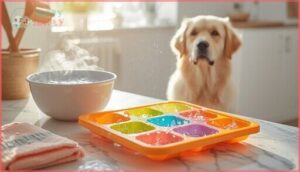
A puzzle feeder only stays useful if it stays clean. Leftover food and bacteria build up fast, especially in grooves and crevices.
Here’s what you need to know to keep every type fresh, safe, and lasting longer.
Best Practices for Mess-Free Feeding
Mess-free pet feeding strategies start before the bowl even hits the floor. portion control matters—fill puzzle feeders only 50–70% full to cut overflow. Match kibble size to the feeder’s openings so pieces don’t scatter freely.
non-slip placement on a rubber mat or boot tray keeps things contained. A short pre-feeding exercise walk also reduces frantic pawing.
small habits, big difference.
Cleaning Tips for Each Feeder Type
Keeping your dog puzzle feeders clean is straightforward once you know the routine for each type.
- Silicone Bowl Sanitizing: Handwash with warm water and mild soap; use baking soda paste for stubborn stains.
- Hard Plastic Disassembly: Take apart maze sections, scrub channels with a bottle brush, air-dry upside-down.
- Rubber Ball Soaking: Soak briefly in soapy water, rinse thoroughly — replace if cracked.
- Fabric Mat Spotting: Shake outdoors after each use; gentle machine wash, always air-dry flat.
Ensuring Long-Term Durability and Safety
Clean feeders last longer — but how you store and inspect them matters just as much.
Do a quick Crack Inspection weekly. Sharp edges and surface splits happen quickly. Check Edge Smoothness on rubber and BPA-free plastic pieces, and retire anything rough or warped.
| Habit | Why It Helps |
|---|---|
| Rotational Usage | Spreads wear across feeders |
| Store indoors, dry | Prevents UV and mold damage |
| Non-Toxic Coatings check | Confirms food-grade materials stay intact |
| Nonslip base inspection | Keeps feeding sessions stable and safe |
Frequently Asked Questions (FAQs)
Are puzzle feeders good for dogs?
Yes, puzzle feeders are genuinely good for dogs.
They support mental stimulation, digestive health, anxiety relief, weight management, and canine enrichment — making dog feeding enrichment one of the simplest ways to improve your dog’s daily wellbeing.
Can puzzle feeders replace regular exercise for dogs?
Puzzle feeders sharpen focus and calm anxious minds — but they can’t replace a walk.
Dogs still need daily physical exercise for cardiovascular health, no matter how great the mental enrichment is.
Are puzzle feeders safe for puppies under six months?
Most puppies can safely use puzzle feeders from around 8 weeks old — once they’re eating solid food. Stick to short sessions, simple designs, and always supervise closely.
How often should dogs use puzzle feeders daily?
Most dogs do well with one to two sessions daily.
Match Age Frequency and Energy Scheduling to your dog’s needs — morning and evening timing works best for a steady pet feeding routine.
Do puzzle feeders work for picky eaters?
Some dogs ignore their bowl, but wolf down the same kibble from a snuffle mat.
Puzzle feeders boost Appetite Stimulation through calm feeding, dog mental stimulation, and low-noise designs — great dog feeding strategies even without Flavor Enhancement.
Conclusion
The empty bowl used to mean mealtime was over. Now it means your dog actually works for something. That shift—from passive eating to active problem-solving—is what dog puzzle feeders for beginners are really about.
Start simple. One feeder, one meal, one small win.
Watch how your dog slows down, focuses, and settles afterward. That calm isn’t accidental. It’s what happens when a dog’s brain finally gets the workout it’s been waiting for.
- https://thepuzzlefeeder.com/blogs/news/slow-feed-bowl-types-best-options-for-dogs-of-all-sizes
- https://cbtdogbehaviour.com/puzzle-feeders-for-dogs/
- https://www.nextritionpet.com/blogs/nutrition/how-a-puzzle-feeder-can-make-feeding-time-better-for-your-dog
- https://www.companionanimalpsychology.com/2021/10/a-guide-to-using-food-puzzle-toys-with.html
- https://www.davesdogdenblog.com/why-puzzle-feeders-are-perfect-for-your-dog/