This site is supported by our readers. We may earn a commission, at no cost to you, if you purchase through links.

Your morning coffee’s still hot, but your shoulder’s already aching—your dog just yanked you halfway down the block chasing a squirrel. It’s a scene that plays out in millions of households, and here’s the kicker: most owners think their dog is being stubborn or disobedient.
The truth? Leash pulling is rarely about rebellion. Dogs pull because their natural walking pace is roughly twice ours, and the world beyond your front door explodes with scents and stimuli that trigger every instinct they’ve got.
The good news is that dog leash pulling solutions don’t require a PhD in animal behavior. With the right combination of training techniques, properly fitted equipment, and a few shifts in how you approach your walks, you can transform that tug-of-war into a peaceful stroll—usually in less time than you’d expect.
Table Of Contents
Key Takeaways
- Leash pulling stems from dogs’ faster natural walking pace and environmental overstimulation rather than stubbornness, with urban settings triggering 40–60% more pulling episodes than quieter environments.
- Combining no-pull harnesses with front-clip attachments and standard 4–6 foot leashes reduces pulling by 25–38%, while retractable leashes actually encourage surging ahead and increase injury risk.
- Daily 10-minute training sessions using positive reinforcement and immediate rewards (within 1–2 seconds) can reduce pulling by 60% within four weeks when applied consistently.
- Pre-walk routines that include 3–5 minutes of obedience practice cut first-ten-minute pulling by 12–22%, making preparation as crucial as the walk itself for long-term success.
Why Dogs Pull on The Leash
Leash pulling isn’t random—it usually comes from somewhere specific, and knowing the source makes all the difference. Your dog might be reacting to their energy levels, the excitement of a new smell, or just the thrill of being outside.
Let’s break down the most common reasons dogs pull so you can start addressing the right issue.
Common Triggers for Leash Pulling
Understanding what sets off leash pulling is half the battle. Your dog’s arousal spikes when something exciting enters their world—another pup within 15 meters, a passing bike, or even the anticipation of the walk itself boosts pulling likelihood by 35%.
Urban environments amp up leash tension with their sensory overload, creating 40–60% more pulling triggers than quieter settings. Effective strategies often rely on research network collaborations to address dog behavior issues.
How Age and Energy Levels Affect Pulling
Age factors shape every walk you take. Puppies pull on 68% of walks compared to just 22% in seniors—that youthful energy translates directly into leash tension. High-energy dogs exert 1.8 times more force than mellow companions, regardless of age.
- Puppy development peaks pulling in the first 5 minutes
- Energy levels correlate with 32% more zigzag patterns
- Canine endurance drops 28% lower in young pups
Early training cuts puppy pulling by 40%.
The Role of Environment and Distractions
Your dog’s surroundings shape every pull. In urban environments, 62% of dogs increase leash tension when traffic, pedestrians, and other animals compete for attention. Sensory overload from new smells and sights triggers pulling in nearly half of canines.
That’s why distraction management matters—quieter routes reduce episodes by 10–20%, while pre-walk enrichment and positive reinforcement build stronger leash manners before you even step outside.
Effective Training Techniques for Leash Pulling

The good news is that leash pulling doesn’t have to be a permanent struggle. With the right approach, you can teach your dog to walk calmly by your side instead of dragging you down the street.
Let’s look at three proven training techniques that’ll transform your walks from chaos to control.
Loose-Leash Walking Fundamentals
Think of loose leash walking as teaching canine communication through your lead—when there’s slack, your dog’s mastered the art of walking politely. Start in a calm space where your pup can focus on you. The moment they stick close without pulling, reward them instantly. That’s your key to solid leash manners: immediate reinforcement builds training consistency and transforms chaotic walks into smooth, controlled strolls.
Understanding theme development concepts is essential for effective communication with your dog.
Teaching The “Heel” Command
Master the heel command and you’ll cut leash tension by a third within just a month. Start by positioning your dog at your side, then step forward calmly—your steady energy matters more than you’d think. When they stay close, reward immediately.
Practice five to seven short sessions weekly for best results. This foundational dog obedience skill transforms chaotic walks into controlled, polite strolls where owner guidance shines.
Using Positive Reinforcement Methods
Consistency unlocks transformation—58% of owners see improved leash manners when they reward good behavior steadily. Use high-value treats during early sessions, then switch to kibble as your dog progresses. Reward calm walking within one to two seconds for best results.
Those immediate positive reinforcement methods paired with clear cues build solid loose leash habits. Your reward schedules matter more than you’d expect for lasting leash walking strategies.
Best Equipment to Prevent Leash Pulling
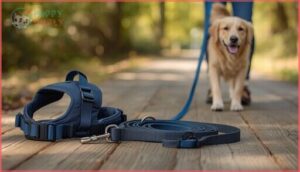
Training alone won’t solve every pulling problem—sometimes you need the right gear to back it up. The good news is that a few well-designed tools can make your walks smoother from day one.
Let’s look at the equipment that actually works and how to choose what fits your dog best.
No-Pull Harnesses and Their Benefits
A no-pull restraint can cut pulling episodes by roughly 38% compared to flat collars—that’s a breakthrough for frustrated owners. When choosing yours, look for:
- Front-clip attachment at the chest to redirect momentum without yanking
- Adjustable straps that accommodate growth and weight shifts
- Breathable padding to prevent chafing during longer walks
- Secure buckles for quick, safe on-and-off adjustments
Pair your restraint with consistent loose-leash walking practice, and you’ll see tension reduction within weeks.
Choosing The Right Leash Length and Type
Your leash choice shapes every walk. A standard 4–6 foot leash reduces pulling by up to 25%, giving you better control than longer options. Skip retractable leashes—they encourage surging ahead and increase injury risk.
For leash material, nylon’s durable and budget-friendly, while leather offers hand comfort during longer sessions.
Adjustable lengths help distribute tension evenly, cutting sudden jerks by 15–20% during leash training.
Head Halters and Gentle Leaders Explained
Think of head halters as power steering for dog walking. These tools—like the Gentle Leader or Halti Strap—apply gentle pressure on your dog’s snout when they pull, redirecting their attention back to you.
Proper fit matters: the nose loop should sit two finger-widths from the eyes. Most dogs need 2–6 weeks to adjust, but combined with loose leash training and positive reinforcement, head halters deliver real leash pulling solutions.
Step-by-Step Solutions for Persistent Pullers
If your dog still pulls after trying basic techniques and better gear, don’t worry—you’re not alone. The key is building on what you’ve learned with a more structured approach that tackles the specific challenges persistent pullers face.
Let’s walk through three proven strategies that will help you and your dog finally master leash manners.
Gradually Increasing Distractions During Training

Training your dog isn’t a sprint—it’s a strategic journey. Start in your quiet hallway, then progress to your front yard, and finally venture to busier streets.
This measured approach to walk environment changes yields impressive results: dogs trained with structured distraction techniques show 42% better loose leash reliability.
By pacing your training sessions with positive reinforcement, you’re building canine focus that lasts.
Managing Excitement and Overstimulation

Your dog’s spinning, barking, or lunging at every passing squirrel? That’s overstimulation—and it’s why 60% of leash pulling peaks in the first five minutes.
When excitement triggers hit, pause for three seconds and redirect their focus with a high-value treat. This simple reset cuts pulling by 30% during the same walk.
Watch for leash stress signals, reward good behavior immediately, and you’ll stop pulling before it escalates.
Consistency and Patience in Practice

Here’s the thing: sporadic effort won’t cut it. Owners who commit to daily 10-minute training schedules see pulling drop by 60% in just four weeks.
Use consistent reward systems—same cue, same treat—and you’ll reinforce leash manners 33% faster.
Practice routines build trust. Patience isn’t passive; it’s the backbone of every leash pulling solution that sticks.
Tips for Safe and Enjoyable Dog Walks

Once your dog starts getting the hang of loose-leash walking, you’ll want to make sure every walk stays safe and stress-free. A little preparation and awareness go a long way in keeping both of you relaxed and in sync.
Here’s how to set yourselves up for walks you’ll both actually look forward to.
Preparing for Walks to Reduce Pulling
A calm start sets the tone for every walk. Pre-walk routines that include 3–5 minutes of obedience practice reduce arousal and subsequent pulling by 12–22% during those critical first ten minutes. These walk preparation strategies help your dog understand it’s time to walk politely, not race out the door.
- Practice basic commands like “sit” or “stay” before attaching the leash
- Use structured walking strategies and consistent departure times to build routine
- Keep energy levels manageable with brief indoor exercises
- Verify proper leash control by checking strap fit and equipment readiness
Recognizing and Addressing Unsafe Behavior
Sometimes pulling isn’t just enthusiasm—it’s a red flag for canine anxiety or fear. When 58% of owners report pulling linked to stress during walks, owner awareness becomes your first line of defense against walking hazards.
Watch for sudden lunging when bikes pass or tense stiffening before approaching stimuli. These leash safety signals demand immediate attention. Positive interrupter cues reduce tension by 32% within two weeks, transforming unsafe reactions into controlled responses through smart dog behavior modification.
Building a Strong Owner-Dog Walking Relationship
Trust transforms every walk from a tug-of-war into a genuine partnership. When you invest in leash communication and owner consistency, you’re not just teaching mechanics—you’re deepening canine trust through shared experiences that strengthen dog-owner relationships by 9–14%.
Trust transforms walks from tug-of-war into partnership through consistent communication that deepens your bond with every step
- Practice daily walk bonding with 15–20 minute focused sessions to reduce pulling by 23% while teaching your dog to walk politely.
- Master LooseLeash walking through positive reinforcement, achieving 70–85% success rates within weeks.
- Build dog socialization skills with controlled exposure, improving rapport by 10–18% and creating lasting canine trust through consistent dog walking techniques and leash pulling solutions.
Frequently Asked Questions (FAQs)
Can leash pulling cause physical harm to dogs?
Yes, leash pulling can cause physical harm. Pulling increases neck and shoulder forces by up to 40%, raising injury risk. It can also lead to tracheal irritation, spinal stress, and chronic discomfort over time.
How do different dog breeds respond to training?
Different dog breeds respond to training based on temperament and energy. Border collies excel quickly in obedience training, while beagles need scent-distraction protocols.
Training methodologies must match breed-specific needs and canine learning styles for success.
What mistakes do owners make during leash training?
You know the phrase “one step forward, two steps back”? That’s leash training when owners make these errors: inconsistent reinforcement, overreliance on punishment, inadequate progression planning, poor excitement management, and training inconsistencies derail stop-pulling efforts.
When should professional trainers be consulted for pulling?
Seek professional help if pulling persists after 4–6 weeks of consistent training, your dog shows fear-based reactivity, has orthopedic issues, or displays severe behavioral problems requiring expert guidance and behavior modification.
Are retractable leashes appropriate for dogs that pull?
Retractable leashes aren’t ideal for dogs that pull—they reduce control and can cause injuries from sudden tension.
Front-clip harnesses and standard leashes offer safer, more effective alternatives for training and managing pulling behavior.
Conclusion
The leash connects your hand to your dog’s chest—but the real connection happens through patience, consistency, and clear communication. When you combine the right gear with deliberate training, those daily walks stop feeling like a battle and start becoming what they should be: moments of trust and partnership.
Dog leash pulling solutions work because they address instinct with strategy, frustration with understanding. Your next walk doesn’t have to look like the last one. Start today.
- http://akc.org/expert-advice/training/puppy-training-timeline-teaching-good-behavior-before-its-too-late/
- https://writers.com/common-themes-in-literature
- https://spines.com/themes-in-literature/
- https://michaelbjorkwrites.com/2019/09/26/story-themes-list-ideas-for-your-novel/
- https://www.merriam-webster.com/dictionary/subtopic