This site is supported by our readers. We may earn a commission, at no cost to you, if you purchase through links.
Last month, a golden retriever named Max turned into a 70-pound projectile during a fender-bender—breaking through the windshield at just 30 mph. His owner walked away with minor whiplash, but Max didn’t survive the impact. This heartbreaking scenario plays out more often than most pet parents realize, and it’s entirely preventable with the right gear.
Crash-tested dog harnesses for car travel aren’t optional accessories—they’re life-saving restraint systems engineered to distribute forces across your dog’s chest and shoulders during collisions, keeping them (and you) secure when physics takes over. The challenge? Not all harnesses claiming to be “crash-tested” actually meet rigorous safety standards, and choosing the wrong one can be as dangerous as using nothing at all.
From understanding lab certification protocols to selecting the proper fit for your fur baby, protecting your four-legged copilot requires more than good intentions.
Table Of Contents
- Key Takeaways
- Why Dog Harnesses Matter for Car Travel
- How Crash-Tested Harnesses Protect Your Dog
- Top 6 Dog Harnesses for Car Travel
- Essential Safety Features to Look For
- Choosing The Right Size and Fit
- Proper Installation and Usage Guidelines
- Maintenance and Inspection for Long-Term Safety
- Common Mistakes to Avoid When Traveling
- Frequently Asked Questions (FAQs)
- Conclusion
Key Takeaways
- Unrestrained dogs become deadly projectiles in crashes, experiencing forces several times gravity that can injure both pets and passengers—making crash-tested harnesses essential life-saving equipment, not optional accessories.
- Legitimate crash-tested harnesses like Sleepypod Clickit Sport undergo rigorous laboratory testing with standardized canine dummies to verify they distribute impact forces across the chest and shoulders (never the neck), meeting specific force threshold standards that untested products can’t match.
- Proper installation matters as much as the harness itself—attach tethers only to seat belt buckles or approved anchor points (never LATCH child seat anchors or upholstery), and conduct quarterly inspections for frayed straps, loose stitching, or damaged hardware that compromises crash protection.
- Wide adjustable straps (1.5-2 inches) that create a snug but breathing-friendly fit are critical for distributing impact loads effectively, while precise chest girth and weight measurements ensure the harness actually protects your dog instead of failing when it matters most.
Why Dog Harnesses Matter for Car Travel
You love your dog, but here’s the hard truth: an unrestrained pet in your car isn’t just a distraction—it’s a serious safety hazard for everyone on the road.
Investing in a quality car seat harness or booster designed for dogs keeps your pup secure and prevents them from becoming a projectile in a crash.
Whether you’re making a quick trip to the vet or heading out on a cross-country adventure, your furry companion needs proper protection that goes beyond good intentions.
Finding the right Havanese pet insurance means you can focus on adventures together instead of worrying about unexpected vet bills.
Let’s look at why a quality car restraint isn’t optional equipment, it’s essential.
Unrestrained Dogs Create Dangerous Distractions While Driving
Driver distractions from your unrestrained pup can spell trouble fast—that playful doggo climbing into your lap blocks your vision and delays braking responses when seconds count. Studies show unsecured pets increase cognitive load during high-stress traffic, triggering sudden steering corrections and lane deviations.
Before you face those road hazards, understand that proper dog safety restraints prevent accident-inducing distractions and keep everyone safer during car travel.
For dogs with medical conditions or mobility challenges, consider packing specialized evacuation bags designed for pets with special needs to ensure their safety during emergencies.
Impact Forces Turn Pets Into Projectiles During Crashes
When a collision occurs, your fur baby becomes a projectile—crash test results reveal unrestrained dogs experience forces several times gravity, slamming into occupants and cabin structures with devastating impact.
In a crash, your unrestrained dog becomes a dangerous projectile, hitting people and car interiors with devastating force
That’s exactly why crash-tested dog car safety harnesses prioritize force distribution across the chest and shoulders, preventing secondary impacts that injure both pets and passengers.
Safety certification matters because projectile hazards multiply without proper dog safety restraints!
Choosing the right dog harnesses for puppies with crash-tested designs ensures your growing pet stays secure during every car ride.
Proper Restraints Reduce Injury and Ejection Risks
You drastically cut injury reduction when you buckle your doggo into crash tested dog straps. Vehicle-approved restraint systems meeting recognized safety standards prevent ejection during rollover scenarios and reduce concentrated neck trauma.
Crash test results show these certified dog strap designs distribute impact forces properly, protecting your pup (and passengers!) from secondary collision injuries that untested gear simply can’t prevent.
Legal and Safety Requirements for Pet Vehicle Transport
Beyond the physics of impact, you need to know the legal side—several U.S. states now mandate pet restraint laws requiring dogs to be secured with crash test certification-compliant harnesses or carriers.
Regulatory compliance isn’t just about avoiding fines; insurers increasingly scrutinize whether your fur baby met vehicle safety standards during car accident prevention claims.
Crash tested dog harnesses satisfy both pet travel safety requirements and insurance requirements!
How Crash-Tested Harnesses Protect Your Dog
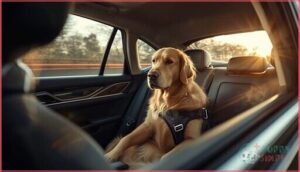
You wouldn’t buy a car seat for your child without checking crash-test ratings—and your dog deserves the same level of scrutiny. Crash-tested harnesses undergo rigorous laboratory evaluations that simulate real-world collision forces, measuring how well they protect your furry companion when it matters most.
Here’s what actually happens during those tests and why the engineering behind them can mean the difference between minor bruises and catastrophic injury.
Standardized Canine Dummies and Force Thresholds in Lab Tests
When you’re shopping for a crash-tested restraint, understanding the lab testing protocols behind those certifications matters! Independent facilities like the Center for Pet Safety use standardized canine dummy design that mimics your dog’s actual weight and anatomy—then they measure force threshold standards during simulated impacts.
These crash test methods verify whether restraints meet injury criteria before earning safety certification processes approval, so you know your fur baby’s truly protected.
Carbon Fiber and Nylon Blends for Strength-to-Weight Efficiency
Premium crash-tested dog straps now leverage carbon fiber and nylon blends, material science that slashes weight by 30–50% without sacrificing strength. Fiber reinforcement improves impact resistance through composite testing and durability analysis, while weight reduction means your doggo stays comfortable during car travel.
These dog safety car strap designs withstand UV exposure and vibration better than standard polymers, extending service life for long-term protection.
Compliance With Vehicle Safety Standards and Certification
When shopping for a crash-tested restraint, you’ll want CPS Certified products that follow the Center for Pet Safety’s voluntary certification process—the benchmark for industry standards.
While the NHTSA doesn’t mandate pet restraint regulatory compliance, independent crash testing verifies safety ratings through canine dummy evaluations, peak force measurements, and load path analysis that mirror human automotive crash testing and certification protocols.
Top 6 Dog Harnesses for Car Travel
You’ve learned why crash-tested harnesses matter—now let’s talk about which ones actually deliver on their safety promises.
I’ve narrowed down the field to six harnesses that have proven themselves through rigorous testing, real-world use, and third-party certification (not just clever marketing). These aren’t just the most popular options—they’re the ones that’ll genuinely protect your fur baby when it matters most.
1. Sleepypod Crash Tested Dog Harness
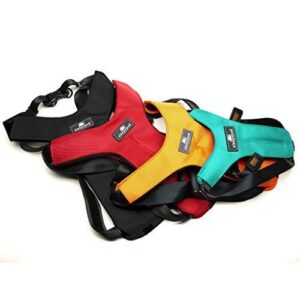
If you’re looking for gold-standard protection, the Sleepypod Clickit Sport (often called the Sleepypod Crash Tested Dog Restraint) delivers peace of mind your fur baby deserves.
This crash-tested champion passed rigorous vehicle crash test criteria using standardized canine dummies—measuring peak forces and injury scores during real-world impact scenarios.
With a ballistic nylon exterior, automotive-grade seatbelt webbing, and three points of automobile seatbelt contact, it distributes crash forces across your doggo’s chest and shoulders (never the neck!). The Medium size fits 22.5″-28″ chest measurements perfectly.
| Best For | Dog owners who prioritize maximum safety during car travel and want a harness that’s been independently crash-tested to reduce injury risk in collisions. |
|---|---|
| Size | Medium |
| Crash-Tested | Yes |
| Brand | Sleepypod |
| Material | Ballistic Nylon |
| Color | Jet Black |
| Adjustable | Yes |
| Additional Features |
|
- Passes rigorous crash test standards using canine dummies to measure real-world impact forces, giving you verified protection rather than marketing claims.
- Distributes impact forces across your dog’s chest and shoulders through three seatbelt contact points and automotive-grade webbing—keeping pressure off the neck.
- Lightweight at just 0.5 pounds with adjustable straps, so it works for daily errands and road trips without restricting movement or breathing.
- Not suitable for certain sighthound breeds like Greyhounds, Whippets, and Borzois due to their unique body shapes.
- Can be tricky to attach correctly at first—some users need extra accessories like S-clips and report a learning curve getting the fit right.
- Weight limits aren’t clearly spelled out by the manufacturer, so you’ll need to rely on chest measurements and may need to contact support for edge cases.
2. Sleepypod Mobile Pet Bed Carrier
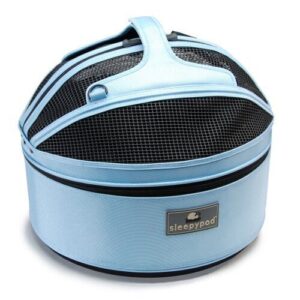
When your pup needs both crash-tested restraint and cozy comfort, the Sleepypod Mobile Pet Bed Carrier delivers dual functionality you’ll love. This clever design functions as a car safety harness-compatible carrier—meeting vehicle crash testing standards with reinforced fabrics engineered to withstand impact forces.
Inside, your fur baby (up to 15 pounds) gets ultra-plush polyester bedding and a water-resistant foam liner for maximum travel comfort.
The luggage-grade nylon exterior manages real-world abrasion, while the removable, washable cover makes post-adventure cleanup a breeze!
| Best For | Pet owners who want a crash-tested carrier that doubles as a comfortable bed for small dogs or cats up to 15 pounds during car trips, flights, or everyday travel. |
|---|---|
| Size | Medium |
| Crash-Tested | Yes |
| Brand | Sleepypod |
| Material | Nylon |
| Color | Sky Blue |
| Adjustable | No |
| Additional Features |
|
- Crash-tested design with reinforced materials provides genuine safety protection during vehicle travel
- Ultra-plush interior with washable bedding and water-resistant liner keeps pets cozy and makes cleanup easy
- Versatile 3-in-1 design works as a car seat, travel carrier, and portable bed with no assembly needed
- Size restriction limits use to pets 15 pounds or under, which rules out medium and larger pets
- Higher price point compared to basic carriers without crash-testing certification
- Some users report occasional shipping delays or issues with delivery
3. Ezydog Crash Tested Dog Car Harness
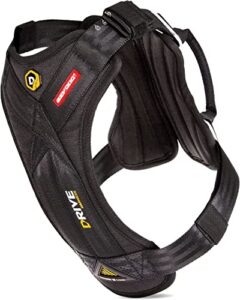
Ever wondered if your dog’s vest could actually save their life in a crash? The EzyDog Drive Crash Tested Dog Vest makes that promise—with verified Crash Test Results and materials like aluminum alloy and vehicle-tested seat belt webbing.
You’ll get ergonomic padding, a Dual SR Buckle Closure System, and universal Vehicle Compatibility for smooth car travel. It’s CrashTested and certified to USA safety standards, offering sturdy Dog Safety Features, though some escape-prone pups may slip out—so always check fit and inspect quarterly!
| Best For | Dog owners who want crash-tested protection for their pets during car rides, especially those with medium to large dogs who need a secure restraint that meets USA safety standards. |
|---|---|
| Size | Medium |
| Crash-Tested | Yes |
| Brand | EzyDog |
| Material | Aluminum Alloy |
| Color | Black |
| Adjustable | Yes |
| Additional Features |
|
- Meets FMVSS 213 safety standards with crash-tested materials like aluminum alloy and genuine vehicle seat belt webbing for reliable protection during accidents
- Quick and easy to use with the Dual SR Buckle Closure System and universal seat belt compatibility that works in most vehicles
- Ergonomic design with padded chest plate provides comfort while allowing natural movement without letting dogs jump to the front seat
- Some dogs have managed to slip out despite proper fitting, particularly anxious or escape-prone pets who may work their way free
- Higher price point compared to other dog car harnesses on the market
- Stiff, slippery material and design may not work well for all vehicle types or dogs that resist restraints
4. Kurgo Enhanced Strength Dog Car Harness
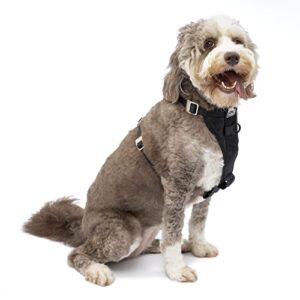
If you want a CrashTested Dog Restraint that’s built for real-world Car Travel, the Kurgo TruFit Enhanced Strength stands out. You get Crash Test Results you can trust, all-steel buckles, and Restraint Materials like reinforced nylon—plus five Adjustable Straps for a snug, breathing-friendly fit.
Safety Certifications and Durability Tests back up every claim, so your fur baby stays secure on every trip. It’s a solid choice for anyone who values both comfort and proven crash-tested protection for their dog.
| Best For | Dog owners who want proven crash-test protection for car travel without sacrificing comfort or ease of use during everyday walks. |
|---|---|
| Size | Large |
| Crash-Tested | Yes |
| Brand | Kurgo |
| Material | Nylon |
| Color | Black |
| Adjustable | Yes |
| Additional Features |
|
- Crash-tested safety with all-steel buckles and reinforced nylon webbing that distributes force across the chest instead of the neck
- Five adjustment points let you dial in a secure fit that won’t restrict breathing or cause chafing
- Dual-purpose design works as both a car restraint with the included seatbelt tether and a regular walking harness
- Can be tricky to get on and off if your dog is wiggly or uncooperative
- The no-pull front attachment doesn’t always work well for every dog
- Sizing can be hit-or-miss for dogs with unusually large chests or small waists
5. Sleepypod Dog Safety Harness
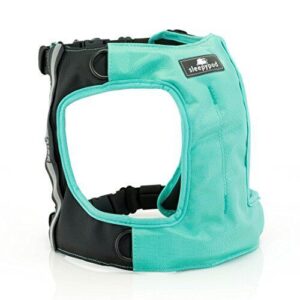
The Sleepypod Clickit Sport takes Crash Testing seriously—it uses standardized canine dummies, defined force thresholds, and third-party validation to prove its Pet Safety credentials.
You’ll notice wide straps that distribute impact forces across your dog’s chest and shoulders, plus Adjustable Straps for a snug (but never restrictive!) fit.
Restraint Materials blend carbon fiber and nylon for strength without bulk, and Vehicle Compatibility means it attaches securely to most seat belts.
It’s a crash-tested Dog Safety Car Restraint that’s earned a reputation for real-world Pet Travel protection!
| Best For | Dog owners who prioritize crash-tested safety during car travel and want a harness that doubles as a secure walking restraint for medium-sized dogs. |
|---|---|
| Size | Medium |
| Crash-Tested | Yes |
| Brand | Sleepypod |
| Material | Metal |
| Color | Robin Egg Blue |
| Adjustable | Yes |
| Additional Features |
|
- Genuinely crash-tested with canine dummies and third-party validation, so you know it meets real safety standards instead of just marketing claims.
- Wide straps distribute impact forces across the chest and shoulders, reducing neck strain and pressure points during sudden stops.
- Works as both a car restraint and everyday walking harness, giving you versatility without needing separate gear.
- Can be tricky to put on and adjust properly, especially if your dog doesn’t have textbook proportions—the fit needs to be near-perfect to work safely.
- Some dogs find it restrictive at first and need time to adjust to wearing it, which might mean a few uncomfortable practice runs.
- Attaching it to your car’s seat belt system can feel cumbersome compared to simpler (but less safe) alternatives.
6. Clickit Sport Dog Car Harness
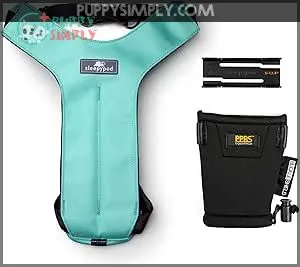
You’ll find the Clickit Sport Dog Harness ($109.24 in robin-egg blue) is built with synthetic rubber and reinforced webbing tested under real-world collision forces.
Crash Test Results show it manages front and side impacts, distributing energy across the chest—never the neck—thanks to wide, adjustable straps that fit medium dogs snugly.
Harness materials skip plastic parts that crack, while car compatibility means you clip the tether straight to your seat belt. It’s a genuine Dog Safety Car Harness engineered for crash-tested protection during car travel!
| Best For | Dog owners who prioritize crash-tested safety during car travel and want a durable harness that distributes impact forces across the chest instead of the neck. |
|---|---|
| Size | Medium |
| Crash-Tested | Yes |
| Brand | Sleepypod |
| Material | Synthetic Rubber |
| Color | Robin Egg Blue |
| Adjustable | Yes |
| Additional Features |
|
- Crash-tested under real collision conditions to protect dogs during front and side impacts
- Built with synthetic rubber and reinforced webbing instead of breakable plastic components
- Adjustable straps provide a secure, snug fit that works directly with your car’s seat belt system
- Sizing can be tricky and may not match listed measurements, so ordering directly from the manufacturer is recommended
- Difficult to adjust and put on, especially with dogs that prefer lying down during the process
- Straps may need frequent re-tightening and aren’t ideal for walking since they can slip loose
Essential Safety Features to Look For
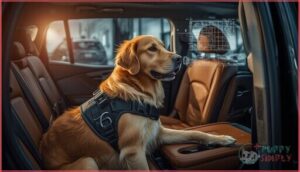
Not all dog straps are built to withstand the tremendous impact forces during a crash—and knowing which safety features actually matter can be the difference between minor bruising and catastrophic injury for your fur baby.
When you’re evaluating straps, you need to look beyond marketing claims and focus on the engineering details that protect your dog’s body during sudden deceleration. Here are the four essential safety features that every crash-worthy strap must have.
Wide Straps That Distribute Impact Forces Properly
Think of your dog’s strap like a seatbelt—narrow straps concentrate crushing forces, while wide webbing spreads that impact load across a bigger area.
Crash-tested dog straps with 1.5–2-inch strap materials deliver enhanced force distribution and impact absorption, lowering peak stress on your fur baby’s chest by up to 40%.
That’s why car straps for dog safety prioritize wider straps for genuine chest protection and strap durability.
Chest and Shoulder Distribution Avoiding Neck Pressure
A properly engineered dog restraint channels crash forces across your pup’s chest and shoulders—not the fragile neck—cutting cervical spinal load and preventing tracheal compression.
Crash-tested dog restraints with wide shoulder straps and sternum-focused load distribution meet safer performance thresholds, protecting your doggo from whiplash and airway trauma.
That’s the difference between genuine spinal safety and risky dog restraints that gamble with your pet’s wellbeing!
Adjustable Strap Systems for Snug Breathing-Friendly Fit
You want adjustable strap systems that hug your fur baby snugly without squeezing the life out of them—literally!
Here’s what crash-tested dog restraints nail:
- Multiple adjustment points (chest, shoulders, girth) using quick-release buckle design rated for 150–300 N loads
- Strap material 25–38 mm wide to distribute forces evenly
- Restraint ventilation via breathable chest plates and adjustable panels for comfortable car travel
Dog safety and protection demand precision—not guesswork!
Dual Functionality as Walking and Car Harness
Dual-purpose crash-tested dog harnesses let you switch from morning walks to road trips without re-harnessing your doggo—if they’re actually certified for both! Check labels for independent crash testing data and walking-comfort ratings, because many so-called “dual function” car harnesses fail safety standards.
Wide adjustable straps, chest-mounted attachment points, and quick-release buckles make transitions smooth while protecting your pup in both environments.
Choosing The Right Size and Fit
Getting the right fit isn’t just about comfort—it’s the difference between a collar that protects your fur baby and one that fails when it matters most. You’ll need precise measurements of your dog’s chest girth and weight, because even an inch off can compromise the entire safety system during a crash.
Let’s walk through how to measure correctly, what adjustability features actually matter, and why your Great Dane needs a completely different approach than your Chihuahua.
Measuring Your Dog for Proper Harness Sizing

Accurate dog measurement is the foundation of proper strap fit—get it wrong, and even a crash-tested dog car strap won’t protect your fur baby.
You’ll need to measure three areas: chest girth (the widest part behind the front legs), back length (base of neck to tail), and neck circumference.
Compare these to sizing charts for pet safety that truly works during car travel.
Adjustability Features for Growing or Multi-Dog Households
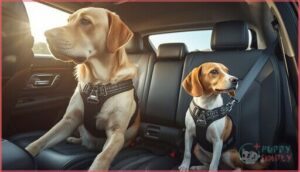
If you’re juggling growing pups or multiple dogs—a Labrador and a Beagle, say—adjustable straps are your secret weapon for long-term pet safety during car travel.
Look for restraints with:
- Sliding adjusters that expand chest and torso width by 2–4 inches, so your dog car restraint grows with your fur baby
- Telescoping back straps that lengthen gradually without full rethreading—critical for crash-tested multi-dog households
- Quick-release buckles for on-the-fly restraint sizing tweaks when growth spurts happen mid-season
Breed-Specific Considerations for Small Vs Large Dogs
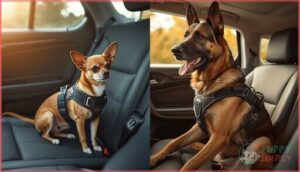
Breed Size Matters more than you’d think—canine anatomy drives everything from crash force to chest compression risk during car travel. Small dog safety demands wider, shorter straps to protect compact thoraxes, while large breed needs require reinforced stitching and adjustable torso length to handle greater mass.
Physiological differences mean your crash tested dog car restraint must match your doggo’s build for real pet safety.
Proper Installation and Usage Guidelines
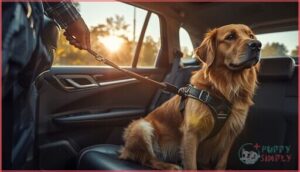
Even the best crash-tested restraint won’t protect your dog if you don’t install it correctly—and trust me, attachment mistakes are more common than you’d think. Getting the tether secured to the right anchor point, checking those buckles before every trip, and helping your pup adjust to their new safety gear are non-negotiable steps that directly impact survival rates in accidents.
Here’s exactly how to set up and use your dog’s car restraint the right way, so you can hit the road with confidence.
Attaching Harness Tether to Seat Belt System Correctly
Before you hit the road, make absolutely sure your dog restraint tether attaches to a reinforced anchor point designed for crash load testing—not just any seat belt loop or flimsy upholstery fabric.
Crash tested restraints like Sleepypod use a universal attachment system that clips directly to compatible vehicle anchors, maintaining proper restraint geometry.
Always verify seat belt compatibility and check that your tether connection has zero slack before every trip!
Avoiding Child Seat Anchors and Upholstery Attachment
Just because your SUV has LATCH child seat anchors doesn’t mean you should use them for your fur baby’s restraint tethers—manufacturer guidance specifically warns against this misuse, which can compromise the load path and certification of crash tested dog restraints.
Instead, attach pet safety systems and vehicle restraints to designated seat belt buckles or approved anchor points, never to upholstery fabric (which tears easily and offers zero structural support for car restraints during impact forces).
Pre-Trip Buckle and Adjuster Security Checks
Before you start the engine, run these buckle security and adjuster checks to verify your crash tested dog restraint performs as designed during car travel:
- Test all buckles for smooth clicking and release—no sticking or excessive force required during your restraint inspection
- Check adjusters for slipping or play that prevents a snug, secure fit on your doggo
- Verify seat belt tether compatibility with anchor points before departure (pre-trip tests save lives!)
Acclimation Sessions to Reduce Stress Before Long Trips
Once you’ve completed your buckle and adjuster security checks, don’t overlook the mental prep work for stress reduction—your fur baby needs car travel acclimation to prevent anxiety! Start short 5–15 minute sessions 1–2 weeks before your trip, pairing the dog restraint with treats and calm cues.
Here’s how traveling with dogs becomes easier when you prioritize dog safety tips and trip planning:
| Acclimation Phase | Duration & Frequency |
|---|---|
| Week 1: Restraint Introduction | 5 min daily (stationary car) |
| Week 2: Engine Sounds | 10 min daily (engine running) |
| Week 3: Short Drives | 15 min every other day |
| Week 4: Extended Routes | 20–30 min twice weekly |
| Ongoing: Maintenance Sessions | Monthly refreshers for pet travel confidence |
Monitor breathing and heart rate during these calming techniques—if distress persists beyond 2–3 sessions, reduce duration (don’t push through panic!). Record progress to adjust your dog acclimation pacing, increasing exposure time only when calm responses appear in successive travel prep sessions.
Maintenance and Inspection for Long-Term Safety
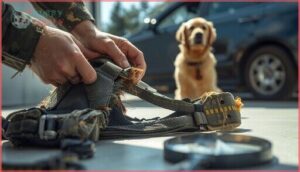
Your restraint won’t keep your dog safe forever—fabric degrades, stitching loosens, and hardware cracks under repeated stress and UV exposure. Think of maintenance like checking your own seat belt: you wouldn’t trust a frayed strap to protect you in a crash, and your dog’s restraint deserves the same vigilance.
Here’s how to keep that restraint performing at crash-test standards year after year.
Quarterly Checks for Frayed Straps and Loose Stitching
Think of your dog strap like a seatbelt—you wouldn’t ignore worn fabric there, right? Inspect every strap seam for fraying every three months, checking for loose stitching, UV degradation, and faded webbing that signals compromised thread integrity.
Document what you find and replace any strap showing more than 10% wear. This quarterly strap inspection keeps your fur baby safe during car travel!
Cleaning With Mild Detergent and Air Drying
Your crash-tested dog restraint needs regular cleaning to maintain fabric integrity—think monthly washes during heavy pet travel seasons.
Here are essential fabric care tips for safe car travel with pets:
- Use mild liquid detergent without bleach to clean webbing and buckles
- Rinse thoroughly to prevent skin irritation from detergent residue
- Air dry completely away from high heat sources that degrade stitching
- Inspect after drying for loose threads or weakened hardware before reuse
Sun Exposure and Abrasion Resistance for Durability
Direct sunlight quietly sabotages your dog restraint—nylon and polyester straps lose 10–50% tensile strength after 500–1000 hours of UV exposure, depending on color and weave! That’s why UV stabilizers in quality crash-tested dog restraints prevent fabric testing failures.
Look for durable pet products with high-friction coatings and reinforced stitching, since abrasion resistance under sun exposure keeps your doggo’s car restraint meeting durability standards throughout years of pet travel adventures.
When to Replace Worn or Damaged Hardware
Cracks, rust, or bent buckles on your car harnesses mean hardware failure is imminent—replace immediately!
Quarterly damage inspections can catch frayed webbing, loose stitching, and brittle straps around D-rings before they snap under crash-tested dog harnesses’ loads. Safety thresholds drop fast: even without visible wear signs, replacement schedules call for retiring pet safety gear after 1–2 years of vehicle safety tips–compliant use.
Regular checks for harness wear signs can help prevent accidents.
Common Mistakes to Avoid When Traveling
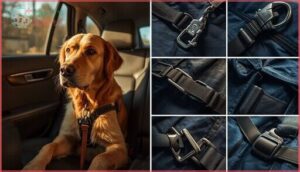
Even with a top-rated crash-tested restraint, you can still put your dog at serious risk if you’re making common installation or usage errors. Many pet owners unknowingly compromise their fur baby’s safety through seemingly harmless choices—like how they attach the restraint or what they do between trips.
Let’s walk through the four most frequent mistakes (and how to avoid them) so your doggo stays protected every single journey.
Using Retractable Leashes Inside The Vehicle
Ever wonder why retractable leashes are a no-go for car travel? Vehicle entanglement is a real risk—thin cords can wrap around limbs, causing rope burns or worse.
Sudden jerk forces, mechanical failure, and driver distraction all spike with retractables.
For true pet safety, skip the retractable leash risks and stick with crash-tested car harnesses—your doggo deserves it!
Skipping Regular Harness Inspections and Maintenance
You wouldn’t ignore a frayed seat belt in your car—so why skip maintenance schedules for your fur baby’s dog restraint? Safety neglect increases undetected restraint wear by 60% over just one year, and sun exposure can cut crash-tested dog restraints’ strength by up to 40%.
Protect your doggo with quarterly inspection checklists:
- Check stitching for loose threads or tears along webbing seams
- Examine buckles for cracks, rust, or mechanical failure signs
- Inspect straps for fraying, thinning, or discoloration from UV damage
- Test adjusters to verify smooth operation without slipping under tension
- Clean properly with mild detergent, then air dry completely before next car travel
Damage detection matters—hidden defects compromise pet safety when you need protection most!
Choosing Untested Harnesses Without Safety Certification
Skipping maintenance checks is one issue—but buying dog restraint gear without Center for Pet Safety certification or documented crash test data? That’s gambling with your pet’s life! Unverified products lack standardized crash-tested dog restraints performance, leaving you with zero liability concerns protection and no way to compare safety standards.
| Certification Risks | Verified Car Restraints | Unverified Products |
|---|---|---|
| Crash Test Data | Independent lab results available | No documented performance |
| Safety Standards | Third-party certification proven | Marketing claims only |
| Liability Concerns | Insurance-recognized protection | Zero legal standing |
| Pet Safety Guarantee | Force thresholds validated | Unknown failure rates |
Don’t compromise your fur baby’s protection!
Improper Attachment Points That Compromise Safety
Certification isn’t the only concern—you can buy the most crash-tested dog straps and still ruin your pup’s crash protection by hooking them up wrong! Proper anchor points are everything. Here’s what compromises tether safety:
- Seat belt latches not designed for strap loads allow dangerous slippage during car accidents
- Front occupant airbag zones risk serious injury from deploying airbags
- Door frames or upholstery attachments detach rapidly under crash forces
- Non-certified mounting hardware voids Center for Pet Safety performance standards
Always attach your dog strap tether to your vehicle’s actual seat belt system—nothing else!
Frequently Asked Questions (FAQs)
Do car harnesses work in trucks or SUVs?
Yes—crash-tested dog harnesses secure pets effectively in trucks and SUVs when properly installed to seat belt systems.
Sleepypod and similar designs undergo dedicated crash testing for larger cabins, ensuring SUV compatibility and truck safety.
Are there harnesses for dogs with special needs?
Adaptive gear with reinforced stitching, wider chest panels, and therapeutic support systems help dogs with mobility impairments travel safely.
Though you’ll want to verify crash-tested certification, as special-needs harnesses don’t always meet standard vehicle safety thresholds.
How do temperature extremes affect harness materials?
Your dog’s collar left in a hot car can lose up to 30% of its tensile strength. Heat accelerates polymer breakdown in nylon webbing, while freezing temps make materials brittle and prone to cracking under impact.
Can multiple dogs share one harness safely?
No—authorities strongly advise against shared harnesses for car travel. Different sizes, movement patterns, and unpredictable pulling create uneven load distribution, increasing crash injury risk.
Always use separate, crash-tested dog harnesses for maximum canine vehicle safety.
Conclusion
Think of a crash-tested restraint as your dog’s airbag—engineered to absorb chaos when metal meets metal. Choosing the right dog restraints for car travel isn’t about fear-mongering; it’s about respecting physics and loving your copilot enough to invest in proven protection.
Max’s story didn’t have to end that way, and yours won’t either. Measure carefully, buckle correctly, inspect regularly—and transform every car ride from a gamble into a guaranteed safe journey home.