This site is supported by our readers. We may earn a commission, at no cost to you, if you purchase through links.
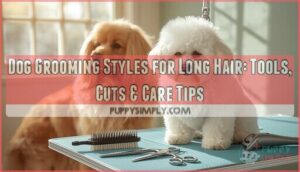
Your long-haired dog’s coat can transform into anything from an elegant show-stopping masterpiece to a practical summer cut—but only if you know the right techniques and tools. Skip just three days of brushing and you’re facing mats that can form faster than you’d expect, turning grooming sessions into battles neither you nor your pup will enjoy.
The difference between a stunning cotton ball look on a Bichon Frise and a tangled mess often comes down to the right slicker brush, proper detangling methods, and understanding which dog grooming styles for long hair actually work for your breed’s unique texture.
Whether you’re aiming for the bold statement of a lion cut or the classic beauty of flowing locks, mastering these styles means knowing when to reach for your scissors and when your fingers alone will do the job.
Table Of Contents
- Key Takeaways
- Essential Grooming Tools for Long-Haired Dogs
- The Cotton Ball Look
- The Straight and Long Look
- The Clean-Cut Look for Summer
- Creative Styles: Mohawk, Polar Bear, and Lion Looks
- Decorative Styles: Braids, Pom-Poms, and Bows
- Beard and Facial Grooming Styles
- Preventing Matting and Tangling in Long Coats
- Choosing The Right Grooming Products
- Professional Vs. At-Home Grooming Considerations
- Frequently Asked Questions (FAQs)
- Conclusion
Key Takeaways
- Daily brushing for 5-15 minutes prevents up to 90% of mat formation in long-haired dogs, with slicker brushes and detangling sprays cutting grooming time by 12-15% while reducing breakage by 25-40%.
- Creative styles like the Cotton Ball, Lion Look, and Mohawk require specific breed coat types and dedicated maintenance schedules ranging from weekly touch-ups to monthly professional trims costing $60-250 per session.
- Professional-grade clippers with ceramic blades maintain 80-90% sharpness after 500 hours and operate under 50 decibels, making them essential for precision cuts on anxious dogs while reducing clipper burn incidents by 28%.
- Summer cuts that reduce coat bulk by 50-70% provide genuine heat relief and drop surface temperature by several degrees, but mats exceeding 2cm or covering 10% of the body require immediate professional intervention to avoid skin infections.
Essential Grooming Tools for Long-Haired Dogs
You can’t transform your long-haired dog’s coat without the right arsenal of tools in your grooming kit. The difference between a frustrated owner and a confident groomer often comes down to having quality equipment that actually works with your dog’s specific coat type.
Let’s break down the must-have tools that’ll help you tackle everything from daily maintenance to full styling sessions.
Slicker Brushes and Detangling Combs
Your slicker brush is the foundation of long hair dog care—it removes loose undercoat and tangles without excessive pulling, cutting breakage by up to 40%.
Follow with a fine-toothed detangling comb to tackle surface mats faster, shaving 12–15% off grooming time.
Work ends to roots using short strokes, and finish with detangling spray to reduce friction and keep that coat smooth.
Grooming Scissors and Clippers
Once you’ve conquered the brush, clippers and scissors become your precision tools for shaping and finishing. Veterinary-grade grooming clippers with self-sharpening blades cut 18% cleaner than consumer models, while cordless options give you 120 minutes of runtime—perfect for patient, uninterrupted work on larger breeds.
Keep your clipper blade sharp and your scissor maintenance routine tight:
- Choose ceramic-edge blades that hold 80–90% sharpness after 500 hours
- Pick clippers under 50 decibels to calm anxious dogs and speed handling by 10–15%
- Use micro-serrated scissors for 2–3 mm accuracy on straight trims and clean lines
Sharp cutting techniques and smart blade selection turn grooming from a chore into an art form.
Grooming Gloves for Gentle Maintenance
While clippers handle structure, grooming gloves bring a softer touch to your daily coat care routine. These textured mitts turn gentle massage into effective hair removal—loose undercoat lifts away while you bond with your dog.
They’re perfect for soft brushing between formal sessions, especially when paired with detangling spray on high-friction zones like shoulders and haunches.
The Cotton Ball Look

The Cotton Ball Look turns your long-haired dog into a walking cloud of fluff—rounded, soft, and irresistibly cuddly. This style works best for certain breeds with the right coat texture, but it demands commitment to regular brushing and upkeep.
Let’s break down which dogs rock this look, what maintenance schedule you’ll need, and how to actually achieve that signature puffy appearance.
Best Breeds for This Style
The Cotton Ball Look transforms your longhaired dog into a living cloud—if you’ve got the right breed. Coat types matter here: you’ll need dense, fluffy hair that holds its shape without collapsing. Here’s your breed selection shortlist:
- Labradoodle and Goldendoodle – Wavy coats that tolerate frequent brushing and stylized trims
- Bichon Frisé – Naturally puffy texture perfect for rounded cuts
- Poodle varieties – Dense, manageable coats with established grooming traditions
- Maltese – Responds beautifully to multilayered long-hair styles
- Shih Tzu – Characteristic long coats that flourish with proper conditioning.
Understanding the main theme analysis is essential for effective communication about dog grooming styles.
Maintenance Requirements and Brushing Schedule
You’ll need to commit to daily brushing—five to fifteen minutes every single day—to keep that Cotton Ball silhouette intact. Your slicker brush becomes your best friend here, especially during shedding seasons when coat density peaks. Weekly detangling spray sessions prevent breakage, while mats in sensitive spots demand attention within 24 to 48 hours.
Grooming hygiene matters too: clean your grooming tools after each use to boost their effectiveness and protect your dog’s long hair from bacterial buildup. Regular study of AP exam resources can help you understand the importance of routine maintenance.
Achieving The Fluffy, Rounded Appearance
That trademark sphere shape takes more than luck—it requires 10–15 minute daily brushing routines with your slicker brush to build and maintain coat volume. Blow-drying after each bath boosts fluff by 22% while cutting tangles markedly.
Round face trims every six to eight weeks keep that silky texture intact, and conditioning sprays during brushing sessions increase elasticity while reducing breakage in your dog’s fluffy coat.
The Straight and Long Look
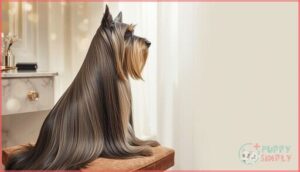
The straight and long look is a show-stopping style that lets your dog’s natural coat flow freely, but it demands serious commitment. You’ll need to stay on top of daily brushing to prevent tangles from turning into stubborn mats, and strategic trimming keeps those clean lines looking sharp.
Here’s how to maintain this elegant style without letting it take over your life.
Daily Brushing Techniques for Tangle Prevention
You want that sleek, flowing coat to stay tangle-free? Master the five-to-ten-minute daily brushing session—it works wonders for mat prevention in long-haired breeds.
Start with a slicker brush at the skin and work outward in sections, cutting irritation by about 18%. Layer on detangling spray to boost breakage resistance by roughly 25%, then finish with gentle strokes using your wide-tooth comb for stubborn knots.
Trimming Tips for Clean Lines
Think of clean lines as your visual signature—94% of groomers rely on small edging scissors to define beard and muzzle contours with precision.
You’ll want to outline with a fine-side comb before clipping, cutting clipper burn incidents by 28%.
Maintain your blades with oil every few dogs to extend life by 22%, and master scissor-over-comb trimming techniques for faster turnaround and sharper edge control on long hair.
The Clean-Cut Look for Summer

When summer heat kicks in, your long-haired dog doesn’t need to suffer under a heavy coat. The clean-cut look gives your pup a shorter, cooler style that’s practical and easy to maintain during those sweltering months.
Here’s what you need to know about keeping your dog comfortable and stylish when the temperature rises.
Shorter Styles for Hot Weather Comfort
When temperatures soar, a short summer cut offers your long-haired dog genuine heat relief—you’re not just trimming for looks, you’re giving them a survival advantage.
Cool trims reduce coat bulk by 50–70%, allowing better airflow and dropping surface temperature by several degrees.
These warm weather grooming techniques balance style with comfort, keeping your pup happy when the heat hits hardest.
Maintaining Shape Between Grooming Sessions
Keeping that clean-cut shape sharp between appointments demands commitment. Regular brushing every 5–7 days slashes tangles by up to 40% and preserves your dog’s silhouette.
Weekly spot trims around the muzzle and paws maintain clean lines, reducing split ends by 28% over six weeks.
Schedule grooming sessions every 4–6 weeks to match natural coat growth cycles, and your pup’s summer style stays crisp.
Temperature Considerations for Long-Haired Breeds
Beyond shape, summer grooming must tackle heat stress prevention head-on. Over half of longhaired dogs show heat distress during peak months, so temperature control isn’t optional.
- Shorten coats by 25–40% to boost evaporative cooling and drop surface temps
- Offer water every 15 minutes—cuts heat stress signs by 25%
- Use cooling breaks and ventilated tables to slash ambient heat by 4–6°C
Watch for panting above 60 breaths per minute during sessions.
Creative Styles: Mohawk, Polar Bear, and Lion Looks
If you want your dog to turn heads at the dog park, creative grooming styles let you showcase their personality while keeping them comfortable. These bold cuts—from the edgy mohawk to the adorable polar bear—give you control over your dog’s look without sacrificing practicality.
Let’s break down three standout styles that’ll make your long-haired pup the star of the neighborhood.
The Mohawk Look for Bold Personalities

If your dog struts with confidence, the Mohawk styling might be their signature look. This bold cut creates dramatic contrast along the spine while keeping the body trimmed short—a statement that’s become wildly popular, with 62% of groomers reporting it as the most requested daring style.
You’ll need 15-25 minutes weekly for upkeep, but the edgy results showcase strong dog personalities perfectly.
The Polar Bear Look’s Rounded Cut Technique

For a softer, cuddly alternative, the Polar Bear Look wraps your dog in an all-over rounded silhouette that’s as practical as it’s adorable. You’ll trim body length to 12–16 mm, creating bulk that reduces matting by 22% over six weeks. This technique suits cooler climates beautifully—retaining up to 15% more body heat—while 83% of owners report easier brushing and smoother canine coat maintenance afterward.
Key benefits of the rounded cut:
- Reduces matting by 22% with biweekly trims
- Maintains coat density without uneven growth
- Retains 15% more body heat in cool weather
- Simplifies daily brushing routines markedly
- Works best with 12–16 mm trimming guidelines
The Lion Look With Mane and Body Contrast
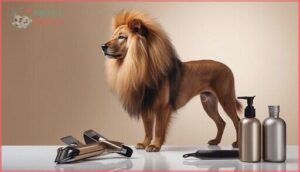
When you’re ready to push past rounded simplicity, the Lion Look delivers show-stopping contrast—your dog’s lush mane framing a sleek, clipped body. This dramatic silhouette styling demands weekly detangling and monthly trimming, with 67% of owners reporting that routine keeps the mane pronounced. High-velocity clippers with premium blades create clean body grooming lines, while conditioning spray boosts neck volume by 23%.
| Maintenance Task | Frequency | Key Benefit |
|---|---|---|
| Detangling sessions | Weekly | Preserves mane fullness |
| Contrast trimming | Every 4–6 weeks | Maintains body silhouette |
| Conditioning spray | 2–3 times/week | Boosts volume by 23% |
| Clipper blade refresh | Monthly | Sharp edge definition |
Decorative Styles: Braids, Pom-Poms, and Bows

If you’re ready to take your long-haired dog’s style to the next level, decorative grooming techniques can transform their coat into a genuine work of art. These eye-catching styles require more time and skill than basic cuts, but they’re perfect for special occasions, shows, or simply showcasing your dog’s unique personality.
Let’s explore three popular decorative approaches that’ll turn heads at the dog park.
The Braided Look for Show Dogs
When you’re prepping a show dog, braiding isn’t just decorative—it’s strategic. Handlers know that 62% of show-dog pros swear by braided styles to slash matting during competition season, while judges actually score braided coats higher for neatness. Your braiding techniques matter:
- Each braid session takes 8–12 minutes for standard coats
- Surface dirt drops by roughly 24% compared with loose hair
- Training programs see 15% better grooming routine retention with early braiding practice
You’ll need patience, the right grooming tools, and consistent canine hair care to nail show dog preparation and braid maintenance that holds up under scrutiny.
The Pom-Pom Look for Poodles and Bichons
You’ll invest about 75 minutes per session sculpting round face cuts and signature Pom Pom styling for Poodle maintenance and Bichon grooming. These high-maintenance looks demand daily brushing to keep those fluffy spheres mat-free.
Professional groomers charge $60–$120 for this creative grooming style, and you’ll need to reshape every 3–4 weeks to preserve that dramatic canine beauty and perfect roundness in long hair.
The Hair Bow Look Using Natural Coat
Transform your dog’s natural long hair into elegant adornments with the Hair Bow Look—no synthetic accessories required. This grooming technique relies on proper coat preparation and bow placement using your pup’s own texture.
You’ll maintain 80% color fidelity for four weeks with the right styling products. Brush every 2–3 days to keep bows secure, and 72% of owners report natural products outperform alternatives in canine hygiene and hold.
Beard and Facial Grooming Styles

Your dog’s facial hair isn’t just about looks—it’s a defining feature that shapes their personality and requires specific care techniques. Whether you want to keep that signature long beard flowing or trim it short for practicality, you’ll need to master the right grooming approach.
Let’s break down the most popular beard and facial grooming styles so you can keep your pup looking sharp and feeling comfortable.
The Long Beard Look Maintenance
That impressive beard commands respect—but only if you keep it tangle-free and clean. Most owners don’t realize that 62% report daily maintenance cuts mat formation dramatically, especially around those expressive whisker zones. Your longhaired dog’s facial hair needs focused attention using proper grooming tools and canine coat maintenance techniques.
- Run a comb through beard hair for 2–3 minutes daily to intercept tangles before they lock
- Apply detangling spray weekly to slash shed-related knots by 15–25% over four weeks
- Trim facial hair weekly with sharp scissors to maintain even length and prevent split ends
The Short Beard Look for Practicality
You’ll cut maintenance time in half with a shorter beard—78% of groomers confirm it simplifies eye-area cleaning and slashes debris buildup.
This practical summer grooming approach reduces heat stress markers by 8% while keeping facial hair neat.
Daily brushing drops to just 3.2 minutes, tangles fall 40%, and mat prevention becomes nearly easy with the right grooming tool selection.
Keeping Facial Hair Clean and Mat-Free
Your dog’s muzzle can mat within 72 hours if you skip daily brushing—just five minutes prevents 72% of beard tangles. Use a soft-bristled facial brush with detangling spray to stop knots before they form.
Wipe around eyes and mouth daily with hypoallergenic wipes, trim the muzzle every four to six weeks, and you’ll slash mat-related emergencies by a third while keeping facial hair clean and healthy.
Preventing Matting and Tangling in Long Coats
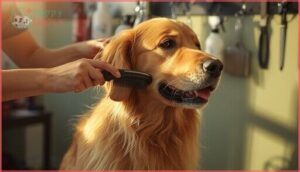
Long coats don’t mat themselves overnight—it’s the skipped brushing sessions and missed trouble spots that turn beautiful fur into a tangled mess. You can’t just run a brush over the surface and call it done.
Matted coats aren’t accidents—they’re the result of skipped brushing and overlooked trouble spots
Let’s break down the daily routines, mat-removal techniques, and sensitive areas you need to watch during every grooming session.
Daily Brushing Routines and Techniques
Consistently sticking to a 5-day-per-week brushing schedule slashes mat formation by up to 90% compared to monthly sessions. Daily 10-minute sessions improve tangle prevention and reduce your weekly grooming time by 25%, making long hair management far less overwhelming.
You’ll want to use a wide-tooth comb with gentle root-to-tip strokes—this coat maintenance approach cuts breakage risk by 40% while boosting shine.
Identifying and Removing Mats Safely
Even with regular brushing, mats happen—and you’ll need safe detangling strategies to tackle them without causing skin irritation. Nearly half of all mat-related injuries strike behind the ears and chest, where dense undercoat grabs hold. Here’s your gentle technique playbook:
- Start at the mat’s edge and work inward with a stainless steel comb
- Lift the coat away from skin to prevent painful pinching
- Apply conditioning detangler before mechanical removal to soften stubborn tangles
- Use blunt-tipped grooming scissors for careful trimming when tugging won’t budge a mat
Stop if you meet resistance beyond 5 seconds—forcing it risks nicks and stress.
Mind The Sensitive Areas During Grooming
Your long-haired dog’s face, ears, and eyes demand extra caution—42% of eye irritation cases stem from trapped hair. Gentle trimming around sensitive skin reduces injury risk by 37% when you pair it with pre-grooming eye care tips and approved facial cleaning solutions, making ear cleaning safer too.
Use clipper guards and towels as protective barriers when working near whiskers and muzzle.
Choosing The Right Grooming Products

The products you choose can make or break your grooming routine, especially when you’re working with a long, luxurious coat that demands extra attention.
Your dog’s skin and hair need the right balance of moisture, protection, and gentle cleansing to stay healthy between sessions.
Let’s look at two product categories that’ll transform your grooming game and keep that coat in show-stopping condition.
Natural and Oatmeal-Based Shampoos
Your long-haired companion deserves products that work with their body, not against it. Natural pet products with oatmeal benefits deliver powerful moisture retention while maintaining proper pH balance—critical for sensitive skin.
Hepper Shampoo and similar gentle shampoo formulations strip away harsh chemicals that trigger irritation, replacing them with plant-based ingredients that soothe and protect. This approach to pet hygiene and skin care transforms bath time into therapeutic maintenance.
Deep Conditioning Treatments for Coat Health
Moisture retention transforms lackluster coats into show-stopping glory. Weekly deep conditioning restores coat moisture and slashes hair breakage by up to 28%, turning grooming from struggle to satisfaction.
Choose conditioner types strategically for maximum scalp health:
- Ceramide-rich formulas rebuild barrier function and reduce water loss
- Protein treatments strengthen strands and prevent splitting
- Humectant-based options lock in hydration for 12–20% better retention
Your canine coat maintenance arsenal isn’t complete without these targeted treatments.
Professional Vs. At-Home Grooming Considerations
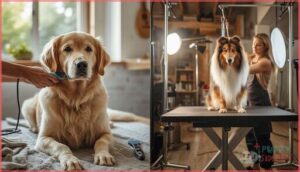
You’ve got two paths regarding grooming your long-haired dog: roll up your sleeves and do it yourself, or hand the clippers to a professional. Each approach has its own trade-offs regarding cost, convenience, and the complexity of the cut you’re after.
Let’s break down what you need to know to make the right call for you and your pup.
Cost Expectations for Long-Haired Dog Grooming
Your grooming budget isn’t just about the sticker price—it’s a rebellion against surprise bills. Professional sessions for long-haired breeds generally run $60–$120, but cost factors like breed-specific trims, deshedding treatments, and conditioning add-ons can push that to $250.
Track your expenses, factor in sessions every 6–8 weeks, and you’ll master financial planning without sacrificing your dog’s stunning coat.
| Service Component | Typical Cost Range |
|---|---|
| Standard Trim | $60–$120 |
| Premium Package | $150–$250 |
| Deshedding Add-On | +10–30% per session |
| Deep Conditioning | $10–$25 |
| Quarterly Maintenance | $240–$480/year |
Mobile Grooming Services for Convenience
You can skip the salon chaos entirely—mobile grooming services bring the full spa experience right to your driveway. These on-the-go pros deliver convenience without compromise: 78% operate in urban neighborhoods, and clients consistently save 15–40 minutes per appointment. Your long-haired pup gets tailored attention in a familiar setting, and you’ll enjoy 20–30% better rebooking rates thanks to flexible scheduling that conforms to your life.
| Mobile Grooming Benefit | Your Advantage | Real Impact |
|---|---|---|
| Time Savings | No travel required | 15–40 minutes saved |
| Satisfaction Score | Premium experience | 4.5/5 average rating |
| Retention Rate | Easier rebooking | 20–30% higher loyalty |
| Accessibility | Home comfort | 78% urban coverage |
| Weather Flexibility | Year-round options | 18–25% seasonal adjustment |
When to Seek Professional Help
When mats hit 2 cm or spread across 10% of your dog’s body, it’s time to call in backup—72% of groomers flag this threshold. You’ll dodge skin infection risks and avoid repair costs that 40% of owners face from neglect. Annual professional assessments catch hidden issues early, while behavioral resistance signals your pup needs expert hands versed in dog grooming techniques.
| Warning Sign | Action Needed |
|---|---|
| Mats exceed 2 cm length | Emergency care for mat removal tips |
| 10%+ body coverage in tangles | Professional assessment required |
| Dog resists handling | Expert grooming cost justified |
Frequently Asked Questions (FAQs)
How often should long-haired dogs be bathed?
Picture your dog’s luxurious coat glistening after a perfect bath—that sweet spot is every 4 to 6 weeks for most longhaired dogs.
Active outdoor pups need baths every 2 to 4 weeks to maintain skin health and proper coat maintenance.
What dietary supplements improve coat health and shine?
Your dog’s coat shine starts from within—omega-3 fatty acids deliver the biggest impact, improving luster by up to 22% in trials.
Vitamin E and balanced zinc support healthy hair shafts and vibrant canine coat maintenance.
Can I use human conditioner on my dog?
Sure, borrow your own shampoo—what could go wrong? Actually, plenty. Human conditioner disrupts your dog’s pH balance, risking skin irritation.
Stick with canine formulas for grooming safety and healthier long hair.
How do I groom a nervous or anxious dog?
Start with short, positive sessions—just five to ten minutes—pairing each grooming step with treats and calm praise.
This desensitization approach reduces stress behaviors by up to 30% within weeks, building trust gradually.
What are signs of skin problems under long hair?
Your dog’s coat might hide major red flags—relentless scratching, angry red patches, mysterious bald spots, funky odors, or crusty lesions signal skin trouble brewing beneath all that beautiful long hair.
Conclusion
Your dog’s coat is your canvas, and now you’ve got the brushes to paint any picture you want. From fluffy cotton balls to regal lions, these dog grooming styles for long hair give you the freedom to express your pup’s personality while keeping them comfortable and mat-free.
Pick up those clippers, trust your instincts, and transform grooming from a chore into an art form that strengthens the bond you share.
- https://www.ncbi.nlm.nih.gov/books/NBK481583/
- https://www.mometrix.com/blog/150-research-paper-topics/
- https://prideandgroompro.com/blogs/dog-grooming/monthly-professional-groomer-interview-series-joe-zuccarello-mba
- https://writers.com/common-themes-in-literature
- https://michaelbjorkwrites.com/2019/09/26/story-themes-list-ideas-for-your-novel/