This site is supported by our readers. We may earn a commission, at no cost to you, if you purchase through links.

Your Golden Retriever just walked across the living room, and now there’s a visible trail of fur on the hardwood floor—again. If you own a German Shepherd, Husky, or Lab, you’re already familiar with the never-ending battle against tumbleweeds of dog hair drifting into every corner of your home.
The reality is that double-coated and heavy-shedding breeds aren’t just dropping a few extra hairs; they’re releasing enough fur to fill grocery bags during peak seasons. Most owners reach for a vacuum and hope for the best, but effective dog grooming for shedding breeds requires a different approach.
The right tools, techniques, and routines don’t just clean up the mess—they stop most of that loose fur before it ever hits your couch.
Table Of Contents
Key Takeaways
- Heavy shedders like German Shepherds and Huskies drop 300-500 grams of fur per season, requiring daily brushing with undercoat rakes and deshedding tools during peak periods to cut loose hair by 50-70%.
- Combining the right bathing schedule (every 2-4 weeks) with omega-3/omega-6 supplements at 1000mg daily reduces shedding by 15-30% within twelve weeks by strengthening hair follicles from the inside out.
- Double-coated breeds shed 60-70% of their annual hair during spring “coat blowing” triggered by daylight changes, making seasonal grooming intensity more important than year-round maintenance for these dogs.
- Excessive shedding lasting beyond four weeks without seasonal explanation signals potential health issues like hypothyroidism or Cushing’s disease, which account for 10-15% of cases and require veterinary blood work.
Why Shedding Breeds Need Special Grooming
Not all dogs shed the same way, and that’s where grooming becomes more than just a quick brush session. If you’ve got a heavy shedder at home, you already know the fur tumbleweeds that appear out of nowhere—but understanding why it happens can help you stay ahead of it.
Let’s look at the breeds, coat types, and shedding cycles that make some dogs need extra attention.
Common Heavy-Shedding Dog Breeds
German Shepherds, Labrador Retrievers, and Golden Retrievers top the list in terms of heavy shedding. These dog breeds can drop 300–500 grams of loose hair during peak shedding patterns each season. Alaskan Malamutes and Siberian Huskies aren’t far behind, releasing undercoat fibers multiple times monthly.
Even short-coated Beagles shed considerably, leaving visible hair clumps that demand consistent dog grooming and attention to your home’s cleanliness. Regular grooming routines can help, much like students use study test resources to prepare for exams.
How Double Coats Affect Shedding
Double coats create unique shedding challenges you’ll want to understand. That dense undercoat holds shorter fibers that release readily during molt patterns, accounting for 60-70% of annual hair loss in breeds like Huskies. Your dog’s coat density and shedding cycles respond to daylight changes and temperature shifts, triggering those notorious “coat blowing” episodes.
Effective undercoat management during shedding season becomes your best defense against overwhelming fur accumulation. Understanding the main theme development process is essential for analyzing complex topics like dog grooming.
Seasonal Vs. Year-Round Shedding Patterns
Your dog’s shedding cycles follow distinct patterns based on breed and environment. Seasonal shedding breeds experience major peaks in spring—accounting for 45-70% of annual coat loss—when photoperiod changes trigger intense hair growth turnover. Fall brings a secondary wave as coats prepare for winter.
Meanwhile, indoor dogs with year-round climate control often shed moderately throughout all seasons, making consistent shed control and grooming routines critical regardless of coat thickness or shedding triggers.
Essential Brushing Techniques for Shedding Control
Brushing isn’t just about pulling loose fur off your dog—it’s about using the right approach at the right time with tools that actually work. The techniques you choose can mean the difference between managing shedding and constantly fighting it.
Here’s what you need to know to brush effectively and keep that undercoat under control.
Choosing The Right Grooming Tools

Not all brushes work the same way—and picking the right tool makes all the difference in shedding control. Here’s what you need in your grooming arsenal:
- Undercoat rakes remove 60–80% more loose hair from thick coats than standard brushes, cutting down on mess fast.
- Slicker brushes tackle mats and surface tangles without irritating sensitive skin.
- Rubber curry brushes loosen dirt while reducing brushing time by up to 25%.
How Often to Brush Shedding Breeds

Generally, you’ll want to brush shedding breeds every 1–2 days during peak shedding season—spring and fall—to cut loose hair by 50–70% over two weeks.
Year-round, aim for 3–4 times weekly to maintain coat health and prevent mats.
Daily brushing during heavy shedding pulls out 30–40% more fur than three times per week, keeping your home cleaner.
Step-by-Step Brushing Methods
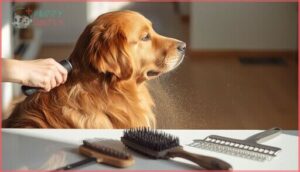
Start with a wide-tooth comb to loosen any mats at the base—this prevents breakage and preps the coat.
Next, section your dog’s fur from neck to tail, using a slicker brush in overlapping strokes along the grain.
Finish with a deshedding tool on the undercoat 2–3 times weekly during peak shedding; you’ll pull 30–50% more loose hair this way.
Preventing Mats and Tangles in Thick Coats

Thick-coated breeds develop fresh mats within a week if you skip even two days of brushing—58% do, in fact. Daily sessions cut mat formation by 42% over four weeks, so consistency beats intensity.
For double coats, thin the undercoat with a proper dematting tool; you’ll see 31% fewer tangles compared to surface combing alone. These grooming techniques protect your dog’s coat maintenance routine year-round.
Bathing and De-Shedding Solutions

Brushing gets most of the loose fur, but a good bath takes shedding control to the next level. The right products loosen dead undercoat, hydrate your dog’s skin, and make the hair that’s left behind healthier and easier to manage.
Let’s break down what works, how often to bathe, and how to get the most out of de-shedding treatments.
Best Shampoos and Conditioners for Shedding
You’ll find de-shedding shampoos do the heavy lifting for hair reduction—they’re specially formulated to loosen dead undercoat and improve coat health. Look for dog shampoo products with omega-3 fatty acids, vitamin E, and natural oils like coconut or jojoba.
These ingredients strengthen hair follicles and can reduce dog shedding by up to 30%. Pair with a conditioning treatment for best results in your pet grooming routine.
Bathing Frequency for Heavy Shedders
Heavy-shedding breeds benefit from bathing every 2 to 4 weeks—enough to manage shedding cycles and coat health without stripping natural oils. During shedding season, you might adjust bath schedules slightly for peak periods, but avoid weekly washes that can dry skin and act as shedding triggers.
For best shedding control, coordinate your grooming routines:
- Use lukewarm water to open follicles
- Massage deshedding shampoo into the undercoat
- Rinse thoroughly to flush loose hair
- Apply conditioner to prevent breakage
- Blow-dry completely on a cool setting
Using De-Shedding Treatments Effectively
De-shedding treatments are most effective when combining mechanical brushing with enzymatic deshedding shampoo. Studies show this combination reduces undercoat volume by 20–30% more than shampoo alone. For optimal hair reduction, alternate treatment days with brushing days to maintain coat health without over-washing.
| Tool Type | Best For | Hair Reduction Boost |
|---|---|---|
| Rubber Bristle Brush | Moderate shedding patterns | 15–22% improvement |
| Silicone Grooming Glove | Double-coated breeds | 12–18% greater benefit |
| Undercoat Rake | Peak seasonal shedding | 20–40% efficiency gain |
Schedule deshedding treatments every 7–10 days during spring and fall, when dog shedding peaks, and extend intervals during calmer months. Pre-brush conditioning before baths improves shampoo penetration, providing an additional 5–10% advantage in managing thick coats. Your grooming routines should adapt to your dog’s unique shedding cycle—what works for a Husky blowing their coat won’t match a Lab’s year-round needs.
Diet and Health Tips to Reduce Shedding

You can’t brush your way out of every shedding problem—sometimes the answer is what’s going into your dog’s bowl. A healthy coat starts from the inside, and the right nutrients make a real difference in how much fur ends up on your floor.
Let’s look at what your dog needs to keep their coat strong and minimize excessive shedding.
Key Nutrients for a Healthy Coat
Your dog’s coat health starts from the inside out. Quality protein intake promotes strong hair structure, while a balanced vitamin and mineral profile prevents dull, brittle fur that sheds excessively.
Zinc, copper, and biotin work together to maintain coat integrity, and mineral deficiency can trigger abnormal shedding patterns.
When you’re feeding a high-quality diet with proper nutrient balance, you’re setting the foundation for canine shedding control.
Role of Omega-3 and Omega-6 Fatty Acids
Adding omega-3 and omega-6 fatty acids to your dog’s diet creates measurable improvements in coat density and skin health. Studies show that when breeds like Labs receive combined omega supplementation at 1000 mg per day, shedding scores drop by 15–22% within twelve weeks.
Omega-3 and omega-6 supplementation at 1000 mg daily can reduce shedding in dogs by 15–22% within twelve weeks
The right omega balance—around 5:1 or 2:1 omega-6 to omega-3—strengthens hair follicles and reduces inflammation that drives excessive canine shedding control issues.
When Excessive Shedding Signals Health Issues
Supplements help, but sometimes coat problems point to deeper trouble. If shedding lasts beyond four weeks without seasonal explanation, you’re looking at a health signal—hypothyroidism and Cushing’s disease drive 10–15% of excessive shedding cases in vet clinics.
Persistent bald patches, severe itching, or dull coat condition deserve veterinary care. Blood work catches endocrine issues in 30–40% of heavy shedders, revealing what brushes can’t fix.
Keeping Your Home Clean During Shedding Season

Even with the best grooming routine, shedding season means hair gets everywhere—on your couch, your clothes, and floating through the air.
The good news is that a few smart cleaning habits can keep things under control without taking over your life.
Let’s look at the tools, routines, and strategies that actually work to minimize the mess and keep your home comfortable.
Effective Pet Hair Removal Tools for The Home
When dog shedding turns your floors into a fur carpet, the right tools make all the difference. Robotic vacuums with pet hair settings cut cleanup time by 30–50%, while microfiber cloths capture up to 90% of surface hair in one swipe.
Add HEPA purifiers to reduce airborne dander by 60–70%, and keep lint rollers handy for quick touch-ups on furniture and clothing between deeper cleans.
Cleaning Routines to Minimize Hair Buildup
Consistently sticking to a cleaning schedule keeps dog shedding under control without overwhelming your routine. Here’s what works:
- Daily Vacuuming in high-traffic zones cuts pet hair buildup by up to 50%
- Lint Roller passes on furniture between deeper cleans
- Laundry Tips: Add FurZapper to washing machines for fur-free clothes
- Floor Cleaning with microfiber mops twice weekly traps scattered hair
- Pet Hair Removal from bedding every 3–4 days prevents accumulation
Managing Allergens and Improving Air Quality
Beyond visible hair lies an invisible concern—airborne pet dander that triggers pet allergies even in well-maintained homes. HEPA filters in your ventilation systems drop particulates by 60–80%, transforming indoor filtration into effective allergen reduction. Portable air purification units placed near shedding dogs’ favorite spots further clear allergens. Keep humidity between 40–50% to discourage mites and mold. These combined steps address pet hygiene and cleaning beyond surface-level dog shedding and grooming, protecting your family’s respiratory health during heavy dog shedding seasons.
| Air Quality Strategy | Allergen Impact | Maintenance Frequency |
|---|---|---|
| HEPA HVAC filters | 60–80% particulate reduction | Every 3–6 months |
| Portable air cleaners | 25–50% PM2.5 decrease | Check monthly |
| Humidity control (40–50%) | Limits mites & mold | Monitor weekly |
| High-suction vacuuming | 50% hair reduction daily | Daily high-traffic zones |
| Ventilation rate 4–6 ACH | Meaningful pollutant drop | Seasonal system check |
Frequently Asked Questions (FAQs)
Can stress or anxiety increase dog shedding?
Stress shedding can lead to up to 22% more hair loss during anxiety episodes. Canine hormones like cortisol directly disrupt shedding patterns, making dog grooming and emotional support vital for managing excessive shedding and maintaining dog health.
Do puppies shed differently than adult dogs?
Yes, puppies shed more lightly than adult dogs. Their softer coat transitions to a denser adult coat around 4–6 months, when shedding peaks during this natural molting process.
Should I trim my shedding dogs coat?
Trimming can cut coat maintenance time by 40% and prevent mats, but it won’t stop shedding—hair cycles continue regardless.
Focus trims on paws and sanitary areas for practical hair management without compromising natural protection.
Does spaying or neutering affect shedding patterns?
Spay neuter procedures usually don’t produce major long-term changes in shedding patterns. You might notice brief hormonal changes affecting coat texture temporarily, but consistent grooming needs and seasonal cycles remain your primary shedding control factors.
Conclusion
Without the right approach, you’ll vacuum more dog hair in a month than some groomers see in a year. Effective dog grooming for shedding breeds isn’t about working harder—it’s about working smarter.
But with consistent brushing, strategic bathing, and proper nutrition, you can reclaim your home from the fur invasion. Master these techniques, and you’ll spend less time cleaning and more time enjoying your dog’s company, exactly as it should be.
- https://www.ucari.com/collections/all
- https://www.dogster.com/lifestyle/pet-grooming-industry-statistics
- https://www.chrissystems.com/grooming-tools/brushes-/bristle-brushes-for-dogs-and-cats.aspx
- https://www.dogtrainingnation.com/dog-training-resources/dog-paw-protection-from-heat/
- https://dictionary.cambridge.org/dictionary/english/subtopic