
This site is supported by our readers. We may earn a commission, at no cost to you, if you purchase through links.

When your dog’s ribs start casting shadows and their energy fades with each walk, the culprit isn’t always obvious—but the solution often starts in their food bowl. Dogs lose weight for reasons ranging from stress-induced appetite loss to undiagnosed malabsorption issues, and while a trip to the vet comes first, the right nutrition makes all the difference in recovery.
Standard kibble won’t cut it when you’re trying to rebuild muscle mass and restore vitality. Your dog needs calorie-dense formulas packed with quality protein, healthy fats, and nutrients that their body can actually absorb.
The challenge isn’t just feeding more—it’s feeding smarter with foods specifically designed to add healthy pounds without upsetting sensitive systems.
Table Of Contents
- Key Takeaways
- Signs Your Dog Needs Weight Gain Food
- Key Ingredients for Healthy Weight Gain
- Choosing The Right Dog Food Formula
- Top 10 Dog Foods for Weight Gain
- 1. High Protein Dog Food Blend
- 2. High Protein Dog Food Tundra
- 3. High Energy Dog Food Formula
- 4. High Protein Grain Free Dog Food
- 5. High Calorie Dog Food Supplement
- 6. High Calorie Dog Weight Gainer Supplement
- 7. High Protein Salmon Dog Food
- 8. Fresh Frozen Critical Care Dog Food
- 9. High Protein Dog Training Treats
- 10. Grain Free Puppy Food Recipe
- Feeding Strategies to Promote Weight Gain
- When to Consult a Veterinarian
- Frequently Asked Questions (FAQs)
- What food can I give my dog to gain weight?
- Which dog food is best for weight gain?
- What is the best weight gainer for dogs?
- What is rapid weight gain in dogs?
- How often should I feed my underweight dog daily?
- Are there specific vitamins for canine weight gain support?
- Are raw diets more effective for canine weight gain?
- Can puppies eat adult weight gain formulas?
- How long until my dog gains weight?
- Are homemade diets better than commercial foods?
- Conclusion
Key Takeaways
- Dogs showing visible ribs, prominent hip bones, or dull coats need calorie-dense formulas with 28–30% protein and 18–25% fat—not just larger portions of standard kibble—because underweight dogs face a 61% higher mortality risk during hospitalization.
- Weight loss stems from varied causes, including chronic diseases (kidney failure affects 29–61% of diagnosed dogs), malabsorption issues, metabolic disorders, or dental problems, so veterinary diagnostics must rule out underlying conditions before changing your dog’s diet.
- High-quality protein sources like chicken (90.3% digestibility) and pollock (96.9% digestibility) paired with healthy fats delivering 9 kcal per gram create the caloric density needed for healthy weight gain without overwhelming your dog’s digestive system.
- Gradual caloric increases of 10–20% combined with three to four smaller daily meals optimize nutrient absorption and prevent digestive upset, with progress monitored through biweekly weigh-ins targeting 1–2% body weight gain per week.
Signs Your Dog Needs Weight Gain Food
Knowing when your dog needs a calorie boost isn’t always obvious. Some signs are physical and easy to spot, while others stem from underlying issues that require a closer look.
Let’s walk through the key indicators that tell you it’s time to adjust your dog’s nutrition.
Visible Signs of Underweight Dogs
Your dog’s ribs shouldn’t be a roadmap. When you can easily count each rib, see pronounced hip bones, or notice muscle loss along the spine, your dog needs weight gain support. Watch for coat changes—dull, brittle fur signals nutritional gaps. Energy levels drop too. Underweight dogs tire quickly and show reduced stamina.
Body condition scoring helps: dogs at 1–3 out of 9 need vet-approved, high-calorie intervention immediately. Monitoring a dog’s healthy weight status is vital for preventing malnutrition and related health issues.
Common Causes of Weight Loss in Dogs
Spotting the problem is one thing—understanding why it’s happening is another. Weight loss in dogs stems from surprisingly varied causes. Chronic diseases like kidney failure affect 29–61% of diagnosed dogs, while gastrointestinal diseases prevent proper nutrient absorption. Metabolic disorders disrupt energy conversion, and dental problems make eating painful.
Here’s what commonly drives unintentional weight loss:
- Inadequate nutrition from low-quality diets or underfeeding
- Malabsorption issues including inflammatory bowel disease
- Endocrine conditions like diabetes or kidney disease.
Dogs experiencing weight loss may have underlying health issues that need to be addressed.
Health Risks of Being Underweight
Being underweight isn’t just cosmetic—it’s dangerous. Research shows underweight dogs face 61% higher mortality risk during hospitalization.
Being underweight isn’t cosmetic—it’s dangerous, with underweight dogs facing 61% higher mortality risk during hospitalization
Malnutrition effects include organ damage, reduced immunity, and muscle wasting that compromises recovery. In heart failure cases, 48% of dogs showed muscle loss linked to shorter survival.
Chronic complications multiply when your dog can’t maintain a healthy weight, making vet-approved nutrition critical for long-term dog health.
Key Ingredients for Healthy Weight Gain
When you’re choosing a dog food to help your pup gain weight, the ingredient list matters more than the marketing on the bag. Not all calories are created equal—your dog needs the right balance of proteins, fats, and nutrients to build healthy muscle and maintain energy, not just pack on empty pounds.
Let’s break down the key ingredients that actually make a difference in helping your dog reach a healthy weight.
High-Quality Protein Sources
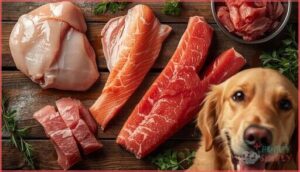
Protein digestibility matters just as much as protein content when you’re choosing weight gain formulas for your dog. Here’s what vet-approved, protein-rich sources bring to the table:
- Chicken breast delivers 90.3% crude protein with excellent amino acid profiles
- Pollock fillet tops the charts at 96.9% crude protein with excellent nutrient bioavailability
- Salmon provides 92.8% crude protein plus fish oil benefits
- Pork loin offers 86.2% crude protein with impressive digestibility rates
- Beef loin supplies 82.7% crude protein for sustained muscle development
These high-calorie, meat-quality ingredients guarantee your dog absorbs maximum nutrition from every bite.
Healthy Fats and Caloric Density
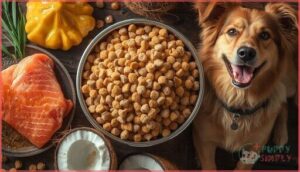
Fat metabolism drives rapid weight gain—and that’s where caloric density really shines. You’ll want dog foods delivering 18–25% fat to meet high-energy demands, roughly double the calories per gram compared to protein or carbs.
| Fat Source | Energy Density | Key Benefit |
|---|---|---|
| Chicken fat | ~9 kcal/gram | Palatability boost |
| Salmon oil | ~9 kcal/gram | Omega-3 support |
| MCT oil | ~8.5 kcal/gram | Enhanced cognition |
High-calorie formulas require less food volume while maximizing nutrient absorption for underweight dogs.
Digestible Carbohydrates and Fiber

Starch digestion matters more than you’d think—rice and corn deliver 30–60% of metabolizable energy in high-calorie dog food, with rice showing 86% digestibility compared to barley’s 84%.
For weight gain, choose formulas featuring these carb energy sources over lower-glycemic grains.
Moderate fiber sources like beet pulp support nutrient absorption without diluting caloric density, keeping your vet-approved plan on track.
Essential Vitamins and Minerals
Vitamin balance determines whether your dog’s body can actually use all those extra calories—AAFCO sets vitamin A at 5,000 IU/kg minimum for adult maintenance, while thiamin and riboflavin drive energy metabolism during weight gain.
Mineral deficiency, especially zinc (which dogs absorb poorly), undermines immune function and nutrient absorption.
High-calorie, vet-approved formulas include dietary fortification with B-complex vitamins and caloric supplements to support canine nutrition during recovery.
Choosing The Right Dog Food Formula
Not all weight gain formulas are created equal, and finding the right match for your dog’s needs can feel overwhelming. The good news is that understanding a few key differences—like calorie density, grain content, and ingredient simplicity—makes the decision much easier.
Let’s break down the main considerations so you can choose a formula that promotes healthy, sustainable weight gain for your pup.
Calorie-Dense Vs. Regular Dog Foods
Not all dog food formulas pack the same caloric punch. High-calorie performance diets deliver roughly 4,000–4,500 kcal per kilogram—up to 30% more energy density than standard maintenance kibbles. This difference matters when your dog’s energy needs outpace what regular food can provide:
- Fat content: Calorie-dense formulas often contain 20–25% fat versus 8–15% in regular foods
- Smaller portions: You’ll feed less volume while meeting daily calorie requirements
- Targeted nutrition: Performance blends support active or underweight dogs without excessive meal sizes
Grain-Free Vs. Whole Grain Options
Both grain-free and whole grain options can support weight gain, though each brings trade-offs. Grain-free formulas often reach higher caloric density—around 3,300 kcal/kg—making them efficient high-calorie dog food choices. However, whole grains deliver higher fiber content and better satiety, which helps regulate nutrient absorption.
Your dog’s dietary flexibility matters: grain-free works when sensitivities arise, but grain benefits include balanced energy for steady, vet-approved weight gain.
Limited Ingredient Diets for Sensitivities
When food allergies block nutrient absorption, ingredient simplification becomes your sharpest tool. Limited ingredient diets—usually one protein, one carbohydrate—help you pinpoint triggers while supporting digestive health.
Elimination trials confirm that roughly 20% to 30% of dogs with skin issues respond to these vet-approved formulas, making sensitivity management essential for effective weight gain.
Simplified doesn’t mean compromised: properly formulated options meet full dog nutrition standards.
Palatability and Taste Considerations
Even perfectly balanced dog nutrition falls short if your dog won’t eat. Aroma enhancement and flavor profiles drive first-choice selection—research shows specific volatile compounds boost intake ratio by over 20%.
Texture modification through moisture levels unlocks sensory stimulation: warming high-calorie, vet-approved dog food releases aromatics that trigger appetite, turning a weight gain formula from ignored kibble into a meal your dog actively seeks.
Top 10 Dog Foods for Weight Gain
Now that you understand what to look for in a weight gain formula, it’s time to explore the specific products that deliver results.
The following options represent a range of formulations—from high-protein blends to calorie-dense supplements—each designed to address different needs and preferences.
Whether your dog requires lean muscle development or simply more calories per serving, you’ll find a vet-approved option that fits.
1. High Protein Dog Food Blend
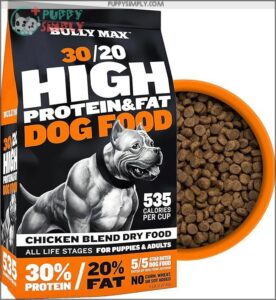
For underweight pups needing rapid recovery, this blend delivers 535 calories per cup—about 30% more energy than standard formulas. You’ll find 30% protein from chicken meal and white fish, paired with 20% fat content to support muscle growth without overloading your dog’s stomach.
The formula skips corn, wheat, and artificial additives, focusing instead on nutrient balance that helps build lean mass. It’s vet-approved for all life stages, though some dogs experience digestive adjustment initially, so introduce it gradually.
Best For: Underweight dogs, large breed puppies, or highly active dogs needing extra calories and muscle support without increasing meal volume.
- Delivers 535 calories per cup with 30% protein and 20% fat, making it easier to add weight without overfeeding portions.
- Clean ingredient list with no corn, wheat, soy, or artificial additives—just chicken meal and white fish as primary protein sources.
- Works for all life stages and breed sizes, so you can use it for puppies, adults, or dogs recovering from illness.
- Price point of $60.85 for a 15 lb bag is steep compared to standard maintenance formulas.
- Some dogs don’t love the taste, and others experience diarrhea or digestive upset during the transition period.
- Bag size feels small for the cost, especially if you’re feeding a large breed or multiple dogs.
2. High Protein Dog Food Tundra
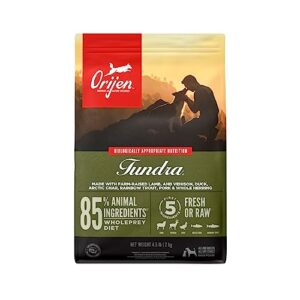
If your dog’s appetite is fussy or you’re managing sensitivities, Orijen’s Tundra recipe stands out for its protein-rich blend—lamb, venison, duck, and fish, all packed into every bite. With 40% protein and 18% fat, this high-calorie formula leverages WholePrey Tundra Ingredients to support weight gain and muscle repair.
You’ll also get a boost from omega fatty acids and probiotics for digestive health. It’s a smart choice when you want dog food that prioritizes Dog Nutrition and visible conditioning.
Best For: Dogs needing extra calories and muscle support, especially those with poultry sensitivities or picky eaters who respond well to strong meat flavors.
- High protein (40%) and fat (18%) levels deliver serious caloric density—463 kcal per cup—making it easier to add weight without feeding massive portions.
- WholePrey formula with organs and bones from lamb, venison, duck, and fish provides naturally balanced nutrients plus omega-3s for skin, coat, and joint health.
- Grain-free and poultry-free recipe works well for dogs with common food sensitivities, and the freeze-dried liver coating helps tempt fussy eaters.
- Premium price point can add up quickly, especially for larger dogs or long-term feeding plans.
- Some dogs experience loose stools or digestive upset when transitioning to such a rich, high-protein formula—slow introduction is key.
- Not suitable for large-breed puppies over 70 lbs as adults due to higher calcium and phosphorus levels that exceed safe growth guidelines.
3. High Energy Dog Food Formula
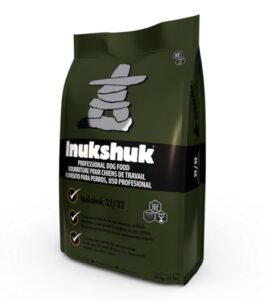
When your working dog or highly active companion burns through calories faster than you can keep up, InukShuk Professional Dog Food’s 32/32 formula delivers the caloric density and energy boosters they need. This high-calorie, vet-approved performance diet packs 484 kilocalories per cup—nearly 4,400 per kilogram—so you’re feeding concentrated fuel without massive portions.
The high protein sources (32%) support lean muscle while 32% fat drives sustained weight gain. You’ll notice improved nutrient absorption and shinier coats, though shipping costs can add up for this premium dog food.
Best For: Working dogs, highly active breeds, and underweight dogs that need serious calorie-dense nutrition to fuel demanding activity or support healthy weight gain.
- Delivers 484 kilocalories per cup with a powerful 32% protein and 32% fat formula that builds lean muscle and sustains energy for dogs with extreme caloric demands.
- Improves coat shine and digestive health thanks to high digestibility (over 90% fat absorption) and added omega fatty acids, prebiotics, and antioxidants.
- Suitable for all dog sizes and particularly effective for sporting, hunting, or working dogs that burn calories quickly and need dense nutrition without huge meal volumes.
- High shipping costs due to the 44-pound bulk packaging can make this premium formula expensive and less convenient for budget-conscious buyers.
- The price point may not fit all budgets, especially for households with multiple large dogs requiring long-term feeding.
- Packaging may not match the product image shown, and the calorie density requires careful portion control to avoid overfeeding in less active dogs.
4. High Protein Grain Free Dog Food
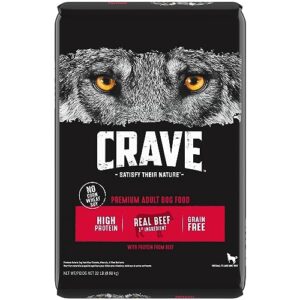
When grain sensitivities are holding your dog back from healthy weight gain, Crave’s high protein grain free formula delivers 34% protein from real beef without the common culprits—no corn, wheat, or soy.
This high-calorie dog food relies on grain alternatives like peas for sustained energy while maximizing caloric density at roughly 475 kcal per cup.
You’ll appreciate the improved digestive health and nutrient bioavailability, though some dogs need time adjusting to the richer formula. It’s solid for weight gain without inflammatory triggers.
Best For: Dogs with grain sensitivities or allergies who need to pack on pounds without digestive upset.
- Real beef delivers 34% protein to build muscle mass while grain-free formula skips common irritants like corn and wheat
- High calorie density at around 475 kcal per cup means your dog gets more energy per bite
- Clean ingredient list with no artificial junk or chicken by-products keeps digestion running smooth
- Some dogs find the taste off-putting and won’t finish their bowls
- Price point runs higher than standard kibble, which adds up with a 22 lb bag
- Richer formula can cause stomach adjustment issues when you first make the switch
5. High Calorie Dog Food Supplement
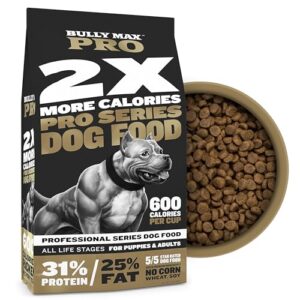
When kibble alone isn’t moving the needle, Bully Max High Calorie Boosters deliver 600 kcal per cup—nearly double standard formulas. This high-calorie supplement packs 31% protein and 25% fat, enriched with flaxseed and 19 essential vitamins for complete dog nutrition.
It’s a vet-approved solution for performance dogs or picky eaters who won’t finish larger portions. Supplement Safety matters: the rich fat content can trigger digestive upset in sensitive dogs, so introduce these High Calorie Additives gradually.
For Weight Gain Tips, mix this dog food supplement into regular meals rather than replacing them entirely.
Best For: Performance dogs, highly active breeds, and underweight dogs who need concentrated calories without eating huge portions.
- Delivers 600 calories per cup—nearly double standard kibble—so dogs can gain weight without force-feeding massive meals.
- Packed with 31% protein and 25% fat plus flaxseed and 19 vitamins, giving complete nutrition alongside the calorie boost.
- Works for all life stages and breeds, from growing puppies to adult working dogs who burn serious energy.
- Expensive compared to regular dog food, and some buyers report bags arriving half-empty with excess air.
- High fat content can cause gas or digestive issues in dogs with sensitive stomachs, especially if introduced too quickly.
- Not meant as a sole diet—it’s a supplement, so you’ll still need to buy regular food and mix it in.
6. High Calorie Dog Weight Gainer Supplement
For dogs requiring serious caloric reinforcement, Miracle Vet High Calorie Weight Gainer delivers 5,043 kcal/kg in powder form—about 151 kcal per ounce. This vet-approved supplement combines beef broth protein, whey, and flaxseed to support Nutrient Balance while boosting Energy Boosters through concentrated fat sources.
The highcalorie formula helps underweight or active dogs gain weight without expanding meal volumes.
Supplement Safety note: high protein content makes it unsuitable for dogs with kidney issues, and some experience digestive upset. Introduce gradually and monitor response closely for best Weight Gainer results.
Best For: Dogs that are underweight, recovering from illness, or have high energy needs and require extra calories without eating larger portions.
- Delivers concentrated calories (151 kcal per ounce) so you can boost your dog’s energy intake without forcing them to eat huge meals
- Includes joint-supporting ingredients, probiotics, and vitamins alongside quality protein sources like beef broth and whey
- Made with natural ingredients and no artificial colors, trans fats, or glycerin
- Not safe for dogs with kidney problems due to high protein levels, and can cause diarrhea or vomiting in some dogs
- Results aren’t guaranteed—some dogs don’t gain weight even with regular use
- No returns accepted, and you’ll want to check with your vet first, especially if your dog has existing health issues
7. High Protein Salmon Dog Food
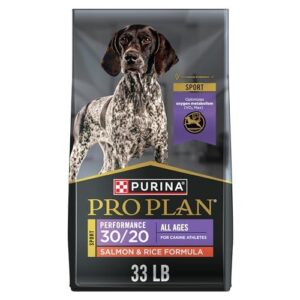
Purina Pro Plan Sport Salmon & Rice delivers 30% protein and 20% fat, making it a vet-approved high-calorie option for weight gain. This high protein dog food offers approximately 475 kcal per cup, giving you caloric density without excessive meal volumes.
The Salmon Nutrition profile provides ample Omega Rich Foods through EPA-fortified fish oil, supporting skin health while you address caloric deficits. Real salmon acts as the primary protein source, complemented by probiotics for digestive support.
The Fish Oil Benefits extend to joint health via glucosamine, though some dogs experience initial digestive adjustment during the shift.
Best For: Active or underweight dogs needing serious calorie density—think working breeds, sporting dogs, or pups recovering from illness who need muscle support and extra energy without eating huge portions.
- Packs 475 calories per cup with 30% protein and 20% fat, so your dog gets more nutrition in smaller servings compared to standard kibble.
- Real salmon plus EPA and glucosamine work double duty—omega-3s help with skin and coat while supporting joints in active or aging dogs.
- Live probiotics are baked right in, which can smooth out digestion and keep the immune system humming during weight gain.
- Some dogs hit a rough patch with loose stools or upset stomach when switching over, especially if you transition too fast.
- It’s pricier than most grocery-store brands, so feeding a large dog long-term can add up quickly.
- A handful of buyers have flagged quality control hiccups—like bags arriving underweight or formula seeming inconsistent batch to batch.
8. Fresh Frozen Critical Care Dog Food
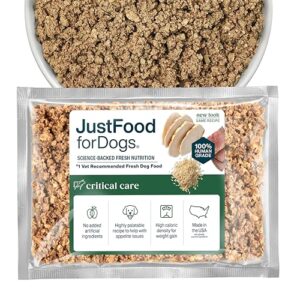
When your dog refuses even the most enticing kibble, JustFoodForDogs Critical Care Support offers a fresh frozen solution that delivers 63 kcal per ounce—nearly double many standard vet-approved canned diets.
This high calorie dog food contains fresh ingredients like ground beef and chicken thighs, providing outstanding caloric density for weight gain without excessive meal volumes. The formula’s high digestibility optimizes nutrient absorption in dogs with compromised appetites.
You’ll need freezer space and careful thawing planning, but the frozen diets format preserves quality while supporting critical care nutritional goals under veterinary guidance.
Best For: Dogs recovering from illness or surgery who need calorie-dense nutrition in smaller portions, or senior dogs with reduced appetites who struggle to maintain healthy weight.
- Delivers 63 calories per ounce—almost twice the energy density of typical therapeutic canned foods, so your dog gets more nutrition without eating huge amounts.
- Made with human-grade fresh ingredients like ground beef and chicken thighs instead of processed meal or fillers, which most dogs find more appealing when they’re not feeling well.
- High digestibility means your dog actually absorbs the nutrients instead of just passing them through, which matters when every calorie counts during recovery.
- Requires dedicated freezer space and advance planning to thaw portions (about an hour per 18 oz box), which isn’t practical if you’re short on storage or need to feed immediately.
- Once thawed, you only have 5 days to use an opened package, so there’s more waste potential compared to shelf-stable options that last weeks.
- At $111.99 for seven 18-ounce packs, the cost per feeding runs significantly higher than prescription canned diets, especially for larger dogs needing multiple packages daily.
9. High Protein Dog Training Treats
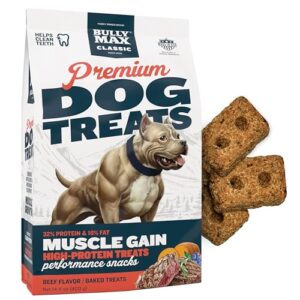
Training sessions shouldn’t sabotage your weight-gain plan. High protein dog training treats like Bully Max Biscuits deliver 32% protein content in a calorie-dense format—roughly 3 kilocalories per piece—letting you reward progress without tipping into obesity risk.
When you’re already pushing daily calorie targets for weight gain, every treat counts toward total intake. Choose formulas with clear treat composition labels, then incorporate those calories into your pet nutrition calculations.
Break larger pieces in half to maintain training frequency while keeping portion control tight, especially during intensive dog training protocols.
Best For: Dog owners running structured weight-gain programs who need calorie-dense, high-protein rewards that fit into precise daily intake calculations without derailing progress.
- 32% protein content and roughly 3 kilocalories per piece let you deliver multiple rewards during training without blowing past the 10% treat rule
- Real beef, veggies, and BCAAs support muscle growth alongside weight gain, not just empty calories
- Easy to break into smaller pieces for frequent reinforcement while keeping total calorie load under control
- Some customers report the treats arrive smaller than expected or broken into fragments
- Mixed feedback on value—at 400g per bag, frequent trainers may burn through inventory quickly
- Higher price point compared to standard training treats, which can add up for multi-dog households or intensive training schedules
10. Grain Free Puppy Food Recipe
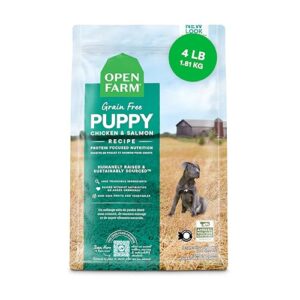
Growing puppies burn calories at a staggering rate—sometimes needing three times their resting energy just to fuel development. Open Farm’s Grain Free Chicken & Salmon recipe delivers 3,600 to 4,200 kilocalories per kilogram, matching the upper end of puppy nutrition demands for weight gain. With 22.5% minimum protein and elevated fat content, this high calorie puppy food uses peas and potatoes instead of grains.
Just remember: the FDA investigated legume-heavy diets and dilated cardiomyopathy, so discuss long-term grain free feeding with your vet.
Best For: Puppies who need extra calories for healthy weight gain and development, especially those with grain sensitivities or picky appetites.
- Packs 3,600–4,200 kilocalories per kilogram to support rapid growth without requiring huge meal portions.
- Meets AAFCO’s 22.5% minimum protein standard with wild-caught salmon and humanely raised chicken, plus omega-3s for brain and vision development.
- Uses peas and potatoes instead of grains, making it a solid option for puppies with suspected grain allergies or sensitivities.
- Some puppies experience diarrhea or stomach upset, especially during the initial transition to legume-based carbohydrates.
- The FDA investigated grain-free diets containing peas and potatoes for potential links to heart disease, so long-term use should be discussed with your vet.
- At $28.99 for a 4lb bag, it’s pricier than many traditional puppy foods, and the small, hard kibble pieces may pose a choking risk or tooth damage for some pups.
Feeding Strategies to Promote Weight Gain
Choosing the right food is only half the battle—how you feed your dog matters just as much. The way you introduce calories, structure meals, and track progress can make or break your weight gain efforts.
Here’s what you need to focus on to help your dog reach a healthy weight safely and effectively.
Gradually Increasing Caloric Intake
Generally, you’ll want to boost your dog’s daily calories by just 10–20% at a time, then watch for tolerance over one to two weeks. This measured approach prevents digestive upset and avoids metabolic complications like refeeding syndrome in severely underweight pets.
Always pair caloric increases with regular weight monitoring and nutrient balance checks to verify safe, steady progress toward your vet-approved target.
Dividing Meals for Better Absorption
Once you’ve ramped up calories, splitting that total into three or four smaller feedings each day can make a real difference. Smaller, frequent meals ease digestive strain and keep nutrient uptake steady throughout the day. This caloric distribution approach fosters healthy weight gain without overwhelming your dog’s system.
Consider these feeding schedule adjustments:
- Offer meals every 4–6 hours to maintain consistent energy
- Keep portion sizes manageable to prevent gastrointestinal upset
- Time feedings around your dog’s activity patterns
- Track which meal frequency works best for your dog’s appetite and digestion
Incorporating High-Calorie Supplements
Beyond adjusting meal timing, high-calorie additives like liquid supplements or gels can deliver 150+ extra calories per ounce without filling your dog’s stomach.
These energy-dense boosters—often fortified with vitamins—are safe for most dogs when poured over kibble or given directly.
Choose formulations with at least 45% fat for maximum calorie impact, and always confirm supplement safety with your vet before starting.
Monitoring Progress and Adjusting Portions
You should weigh your dog every two to four weeks to track whether your current portions are delivering the target 1–2% weekly weight gain. Use a gram scale to measure each meal—studies show cup measurements can overshoot or undershoot by 80%—and log any treats in a feeding diary.
If ribs stay prominent or muscle tone plateaus after a month, increase daily calories by roughly 10% and reassess body condition at your next weigh-in.
When to Consult a Veterinarian

While a high-quality diet plays a critical role in your dog’s weight gain, it’s not always the complete solution. Some underlying health conditions can quietly sabotage your efforts, making professional guidance essential before you change your dog’s nutrition plan.
Let’s look at when you need to bring your veterinarian into the conversation and what that partnership should look like.
Ruling Out Medical Conditions
Before investing in weight gain dog food, thorough diagnostic tests are vital. Medical exams, including bloodwork, urinalysis, and fecal analysis, help identify hidden culprits—cancer affects nearly 50% of dogs over 10, while kidney disease, diabetes, and inflammatory bowel disease commonly cause weight loss.
Veterinary care and proper disease diagnosis confirm you’re not masking serious health issues with pet nutrition advice alone, safeguarding your dog’s health and wellness.
Creating a Personalized Weight Gain Plan
Your veterinarian will create a plan customized to your dog’s caloric needs, activity level, and body condition score—usually recommending 1.5–2.0 times resting energy for underweight cases. Veterinary guidance ensures safe, vet-approved weight gain strategies that protect lean muscle and organ function.
Key elements include:
- Weight tracking every 2–4 weeks to adjust portions
- Meal scheduling across three or more daily feedings
- Nutrient balance through high-quality dog food and controlled supplements
Ongoing Health Monitoring and Adjustments
Progress monitoring doesn’t stop once your dog reaches a healthy weight. Schedule health checks every 6–12 weeks to track body condition, confirm nutrient balance, and fine-tune caloric adjustments.
Your vet will assess weight tracking data, bloodwork, and coat quality to confirm weight gain strategies remain vet-approved and aligned with your dog’s evolving needs. Consistent veterinary care and advice safeguards dog health and wellness long-term.
Frequently Asked Questions (FAQs)
What food can I give my dog to gain weight?
Feed your dog high-protein, high-fat foods like performance formulas containing 28–30% protein and 18–20% fat.
Calorie-dense wet foods, beef, lamb, sweet potato, and liquid supplements effectively boost weight when introduced gradually under veterinary guidance.
Which dog food is best for weight gain?
The best dog food for weight gain provides at least 400 kcal per cup with 25–30% protein and high fat content, addressing your dog’s caloric needs while supporting muscle development under vet-approved supervision.
What is the best weight gainer for dogs?
High-calorie liquid supplements delivering around 151 kilocalories per fluid ounce work well for picky eaters, while powdered boosters offering 20 kilocalories per scoop let you fine-tune your dog’s daily intake precisely.
What is rapid weight gain in dogs?
Rapid weight gain in dogs means your pet adds pounds quickly—often within weeks—without eating more.
This sudden change can signal underlying health issues like hypothyroidism or Cushing’s disease, requiring veterinary care.
How often should I feed my underweight dog daily?
Most underweight dogs thrive on three to four smaller meals spread throughout the day. This feeding frequency promotes better nutrient absorption and steady caloric intake, helping your dog gain healthy weight without overwhelming their digestive system.
Are there specific vitamins for canine weight gain support?
While no single vitamin directly causes weight gain, B vitamin benefits include supporting energy metabolism and appetite regulation. Omega fatty acids and fat-soluble vitamins help nutrient absorption.
Always consult your vet before adding micronutrient supplements to address canine nutrition needs.
Are raw diets more effective for canine weight gain?
Raw diets are like tuning a sports car—they boost digestibility up to 96%, delivering more usable calories per bite. However, studies show lean muscle gain rather than rapid weight gain.
Additionally, bacteria risks require careful handling.
Can puppies eat adult weight gain formulas?
Most adult weight gain formulas don’t meet puppy nutrition standards for growth stages. You’ll need food labeled ‘all life stages’ or specifically for puppies—critical for nutrient balance, formula shift safety, and healthy weight development.
How long until my dog gains weight?
Most dogs show measurable weight gain within 2 to 4 weeks on a calorie-dense diet. Aim for 1–2% of body weight per week—gradual progress that protects your dog’s health while building muscle.
Are homemade diets better than commercial foods?
Is homemade always healthier? Not necessarily. While 94% of owner-formulated dog diets show nutrient deficiency, commercial vet-approved foods meeting AAFCO standards guarantee dietary balance, food safety, and proper pet nutrition for healthy weight gain.
Conclusion
Rebuilding your dog’s body is less about shoveling in extra kibble and more about strategic nutrition—the right dog food for weight gain acts like a construction crew with premium materials, not just more bricks. You’ve got the blueprint now: calorie-dense formulas, quality proteins, and absorption-friendly ingredients.
But here’s the non-negotiable part—your vet needs to clear the foundation first. Because even the best food can’t fix what hasn’t been properly diagnosed, and your dog deserves both answers and recovery.
- https://wilsonvet.net/metabolic-food-requirements-for-your-pet/
- https://perfectlyrawsome.com/raw-feeding-knowledgebase/activity-level-canine-calorie-calculations/
- https://pmc.ncbi.nlm.nih.gov/articles/PMC6123354/
- https://onlinelibrary.wiley.com/doi/10.1111/jvim.16794
- https://www.chewy.com/bully-max-pro-2x-high-calorie-chicken/dp/1324086