This site is supported by our readers. We may earn a commission, at no cost to you, if you purchase through links.

Picture your dog nudging your hand for a belly rub, her tail sweeping across the kitchen floor as you wonder what’s best to put in her bowl now that she’s expecting. Suddenly, the grocery store aisle feels a lot more complicated. Nutrient lists stretch longer, and every label seems to whisper a different promise about dog food for pregnant dogs.
Feeding your soon-to-be mom is no small task—her needs are changing right under your nose, and every mealtime choice shapes the health of her future pups. Managing all this takes more than guesswork, but the right guidance makes each bite count.
Table Of Contents
- Key Takeaways
- Top 10 Best Dog Foods for Pregnant Dogs
- 1. Purina Pro Plan Chicken Dog Food
- 2. Royal Canin Small Puppy Food
- 3. Natural Puppy Food With Chicken
- 4. High Prairie Puppy Dog Food
- 5. Royal Canin Puppy Starter Food
- 6. Purina Pro Plan Puppy Food
- 7. Purina Pro Plan Puppy Food Classic
- 8. Hill’s Science Puppy Food Chicken
- 9. Blue Buffalo Puppy Food Chicken
- 10. Orthopedic Dog Bed For Large Dogs
- Nutritional Requirements for Pregnant Dogs
- How to Choose Dog Food for Pregnant Dogs
- Feeding Schedule and Portion Guidelines
- What to Avoid in Pregnant Dog Diets
- Supporting Your Pregnant Dog’s Overall Health
- Frequently Asked Questions (FAQs)
- What is the best food to feed a pregnant dog?
- What does a pregnant dog need?
- Are eggs good for pregnant dogs?
- What food to give to a dog after giving birth?
- Can pregnant dogs eat human food safely?
- How often should a pregnant dog exercise?
- Are raw diets safe for pregnant dogs?
- What signs indicate a problem during pregnancy?
- How to handle a pregnant dogs food allergies?
- Can pregnant dogs have treats or table scraps?
- Conclusion
Key Takeaways
- Pregnant dogs need high-protein, high-fat puppy or all-life-stages formulas with balanced calcium-phosphorus ratios and added DHA to support healthy fetal development.
- Their calorie and nutrient needs rise sharply from mid-pregnancy onward, so you’ll need to feed smaller, more frequent meals and adjust portions based on her changing body and expected litter size.
- Avoid raw meats, high-mercury fish, excess calcium supplements, and human snacks, as these can harm both mom and her puppies during this vulnerable time.
- Always keep fresh water available and partner closely with your vet for personalized nutrition guidance, weight checks, and prenatal care throughout her pregnancy.
Top 10 Best Dog Foods for Pregnant Dogs
Choosing the right food for your pregnant dog can feel overwhelming with so many options on the market. The good news is that several high-quality puppy formulas and all-life-stage diets provide the extra protein, fat, and nutrients your expectant mom needs.
Here are ten trusted options that support healthy pregnancies and strong litters.
1. Purina Pro Plan Chicken Dog Food
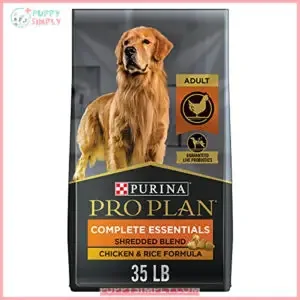
Purina Pro Plan Chicken Dog Food offers a solid foundation for your pregnant dog’s nutritional needs, though you’ll want to shift thoughtfully. With real chicken as the first ingredient and protein levels around 24-28%, it provides quality nutrition—but during pregnancy, your dog needs higher protein (28-34%) and increased calories.
Look for Purina Pro Plan’s puppy or all-life-stages formulas, which better match gestation demands with enriched DHA for fetal brain development. The live probiotics support digestive health during this sensitive time when her body’s working overtime.
Best For: Dog owners seeking a quality protein-rich food for their pregnant dog, especially if transitioning to Purina Pro Plan’s puppy or all-life-stages formulas to meet higher gestation nutritional demands.
- Real chicken as the first ingredient provides high-quality protein essential for fetal development and maternal health during pregnancy
- Live probiotics support digestive and immune health, which is particularly valuable during the sensitive pregnancy period when her system is under extra strain
- DHA-enriched formulas in their puppy lines support fetal brain and cognitive development, making the transition beneficial for pregnant dogs
- Standard adult formulas may not provide enough protein (24-28%) compared to the 28-34% needed during late pregnancy, requiring a switch to puppy or all-life-stages varieties
- Contains grains which could trigger sensitivities in some pregnant dogs, and the shredded pieces can be messy—an inconvenience when feeding more frequent smaller meals
- Some dogs experience digestive upset like diarrhea when switching foods, which can be especially concerning during pregnancy when stability matters most
2. Royal Canin Small Puppy Food
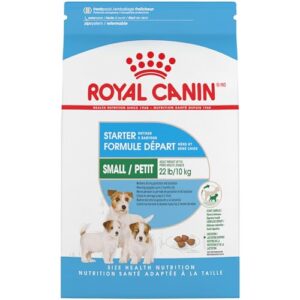
Royal Canin Small Puppy Food delivers what smaller pregnant dogs need when standard formulas fall short. At 332 calories per cup, it packs the energy density your mama-to-be requires without overfeeding. The protein sits around 25-30%—close to the 28-34% sweet spot for fetal development—while DHA aids growing puppy brains.
Prebiotics keep her digestion smooth during this demanding time, and the bite-sized kibble makes eating easier for small breeds. It’s formulated for all life stages, meaning you won’t need a jarring diet switch mid-pregnancy.
Best For: Small breed dogs during pregnancy and lactation who need higher energy density and specialized nutrition to support healthy fetal development and milk production.
- High calorie density (332 kcal/cup) and 25-30% protein content support the increased nutritional demands of pregnancy without requiring huge portion sizes
- DHA and prebiotics promote fetal brain development and maintain healthy digestion during gestation when digestive issues are common
- Small kibble size makes eating comfortable for petite pregnant dogs, and the all-life-stages formula eliminates the need for stressful diet changes mid-pregnancy
- Premium pricing makes it one of the more expensive options for feeding throughout an entire pregnancy and nursing period
- Some dogs reject the milk flavor or kibble texture, which can be problematic when consistent nutrition is critical during pregnancy
- Quality control issues with torn or damaged bags have been reported, risking freshness and potentially wasting expensive food
3. Natural Puppy Food With Chicken
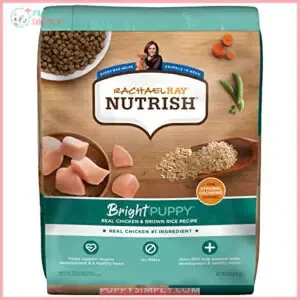
If you’re leaning toward chicken-based nutrition, this formula brings 28–32% protein—right where you need it for fetal growth and mammary development. Real chicken tops the ingredient list, delivering digestible amino acids that support your pregnant dog through every trimester.
The 14–18% fat content fuels her increased energy demands without tipping into excessive weight gain. DHA and EPA nurture puppy brain and vision development, while added vitamins and minerals fill nutritional gaps.
It’s formulated for growth, so you’re covered from conception through lactation without switching foods mid-pregnancy.
Best For: Dog owners looking for a chicken-based puppy formula that supports pregnant dogs through gestation and lactation with high protein, DHA for fetal development, and balanced energy levels.
- 28–32% protein from real chicken supports fetal growth, maternal tissue development, and nursing demands throughout pregnancy
- DHA and EPA promote brain and vision development in developing puppies, with omega-3 levels targeted for neural health
- All-life-stages formula eliminates the need to switch foods mid-pregnancy, maintaining consistent nutrition from conception through weaning
- Some customers reported digestive issues like diarrhea, which can be problematic during pregnancy when GI sensitivity increases
- Chicken is a common allergen—if your dog has sensitivities, this single-protein formula limits alternatives
- Small kibble size may not satisfy larger pregnant dogs with increased appetite in later trimesters
4. High Prairie Puppy Dog Food

When your pregnant dog needs a grain-free option, this roasted bison and venison formula delivers 28% protein to support fetal development and lactation through all stages. The 14–22% fat content matches her rising energy demands, while DHA-rich ingredients nurture puppy brain development in utero.
You’ll find a balanced calcium-to-phosphorus ratio around 1.2–1.8:1—exactly what whelping care requires without risking eclampsia. Proprietary probiotics ease digestion, which matters when hormonal shifts can upset your pregnant dog’s stomach during those final weeks.
Best For: Owners seeking a grain-free, high-protein puppy food that supports pregnant dogs through gestation and lactation with targeted DHA and probiotics.
- 28% protein and 14–22% fat content meet the intense energy demands of pregnancy and nursing without overfeeding
- Balanced calcium-to-phosphorus ratio (1.2–1.8:1) protects against eclampsia while supporting fetal bone growth
- Proprietary probiotics and grain-free recipe help sensitive stomachs handle hormonal digestive shifts during late pregnancy
- $59.99 for 28 pounds may strain budgets, especially when pregnant dogs need increased portions
- Some puppies and nursing mothers may reject the bison-venison flavor, requiring you to mix or switch foods mid-cycle
- Kibble texture might need softening for transitioning puppies or dogs with dental sensitivity during nursing
5. Royal Canin Puppy Starter Food
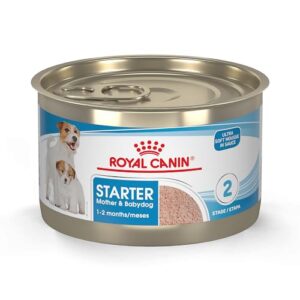
This pâté formula bridges the gap between late gestation and weaning, delivering 28–30% protein alongside 12–15% fat to fuel your pregnant dog’s final stretch and early lactation. DHA-rich recipe aids fetal brain growth, while the carefully balanced calcium-to-phosphorus ratio around 1.2–1.4:1 protects against milk fever.
Royal Canin’s starter food simplifies the shift from nursing to solid meals, and its soft texture helps puppies explore their first bites without struggle.
Best For: Breeders and owners managing pregnant dogs in late gestation through lactation, plus puppies transitioning from nursing to solid food up to 2 months old.
- High protein (28–30%) and fat (12–15%) content meets the intense energy demands of late pregnancy and nursing mothers
- DHA and omega-3s support fetal brain development and give puppies a cognitive boost during critical early growth
- Soft pâté texture makes weaning easier—puppies can lap it up without choking or struggling with kibble
- Premium pricing puts it out of reach for many dog owners, especially those managing multiple litters
- Short usage window (only suitable until puppies hit 2 months) means you’ll need to buy different food soon after
- Packaging complaints are common—some buyers report damaged cans or seals that compromise freshness
6. Purina Pro Plan Puppy Food
You’ll find 26–28% protein and 14–20% fat in this formula—levels that support your pregnant dog’s nutritional needs during late gestation and lactation. DHA from omega-rich fish oil promotes fetal brain and vision development, while balanced calcium and phosphorus levels protect skeletal health without risking eclampsia.
The digestible recipe helps optimize nutrient absorption when your dog’s appetite becomes unpredictable, and the chicken-first ingredient list delivers quality protein that fuels both maternal health and puppy growth throughout canine pregnancy.
Best For: Owners feeding pregnant dogs in late gestation or lactation who want a complete, AAFCO-approved puppy formula that supports both maternal health and fetal development without requiring separate supplements.
- High protein (26-28%) and fat (14-20%) levels meet the increased caloric demands of pregnancy and milk production
- DHA and omega-3s support brain and vision development in growing puppies while benefiting the mother
- Balanced calcium-to-phosphorus ratio helps prevent eclampsia and supports healthy bone formation
- Some buyers reported packaging issues and concerns about product freshness upon delivery
- Higher price point compared to standard adult maintenance formulas may strain budgets for larger litters
- Not suitable for dogs with specific dietary restrictions or allergies to chicken-based ingredients
7. Purina Pro Plan Puppy Food Classic
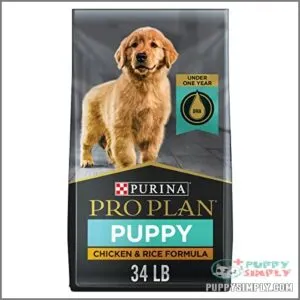
Nutrient-dense formulas like this one deliver around 26% protein and 15% fat—benchmarks that align with your dog’s escalating energy demands during late pregnancy. DHA from animal fats promotes fetal brain development, while goat and poultry proteins offer easily digestible amino acids that fuel both maternal health and puppy growth.
Antioxidant blends and prebiotic fibers help stabilize digestion during hormonal shifts, and the balanced calcium-to-phosphorus ratio protects skeletal formation without triggering eclampsia. You’re giving your pregnant dog the nutritional foundation she needs for a healthy litter.
Best For: Breeders and dog owners looking for a nutrient-dense puppy formula that doubles as pregnancy support, with high protein, DHA for fetal brain development, and digestive support during hormonal changes.
- Delivers 26% protein and 15% fat to meet the increased energy demands of late pregnancy and lactation
- Includes DHA from animal fats to support fetal brain and vision development in the litter
- Contains antioxidants and prebiotic fibers to help stabilize digestion during pregnancy’s hormonal shifts
- Pricier than standard puppy foods, which adds up when feeding a pregnant or nursing dog
- Some customers report shipping delays from certain retailers like Amazon
- May not work for dogs with specific protein allergies since it uses multiple animal sources
8. Hill’s Science Puppy Food Chicken
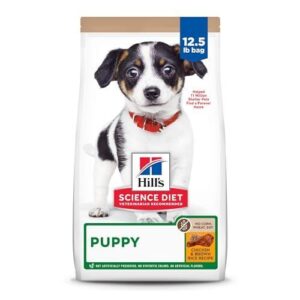
When your dog’s carrying a litter, Hill’s Science Diet Puppy Food Chicken delivers targeted fetal development support through DHA-rich fish oil and protein levels around 28–32%—ideal benchmarks for late-stage pregnancy.
The chicken-and-brown-rice formula provides easily digestible canine health fuel without corn, wheat, or soy, while balanced calcium and phosphorus ratios protect skeletal formation in both mom and pups.
You’re choosing science-backed puppy nutrition that meets growth-phase standards, ensuring your pregnant dog gets the energy density and omega-3 support her developing litter needs.
Best For: Dog owners looking for a nutrient-dense puppy formula that doubles as pregnancy support, especially if their pregnant dog needs higher protein, DHA for fetal brain development, and easy digestion without common grain allergens.
- DHA from fish oil supports brain and eye development in developing puppies, making it ideal for pregnant dogs in late gestation
- High protein (28-32%) and balanced fat levels meet the increased energy demands of pregnancy without needing separate supplements
- No corn, wheat, or soy reduces risk of digestive issues during a time when your dog’s stomach is already compressed by the growing litter
- Premium pricing may strain budgets, especially since pregnant and nursing dogs eat significantly more than usual
- Grain-free formula might not suit all dogs—some vets recommend grain-inclusive diets depending on breed and health history
- You’ll still need vet guidance to confirm it meets your specific dog’s calcium and calorie needs, since not all puppy foods automatically cover every pregnancy scenario
9. Blue Buffalo Puppy Food Chicken
Blue Buffalo’s chicken-and-brown-rice formula brings 28% protein and DHA-fortified LifeSource Bits to support pregnant dog nutrition without corn, wheat, or soy—ideal if your mama has food allergies.
The ARA and omega fatty acids fuel puppy nutrition during rapid fetal brain development, while antioxidant-rich kibble bolsters dog wellness when immunity matters most.
You’re choosing pet safety through AAFCO-compliant puppy food that doubles as pregnancy-stage fuel, though some dogs may need gradual introduction to avoid digestive upset during dog pregnancy.
Best For: Puppy owners looking for a high-protein chicken formula that supports growth and brain development, especially if their dog has sensitivities to corn, wheat, or soy.
- Real chicken as the first ingredient provides 28% protein to support healthy muscle development and energy during puppyhood
- DHA and ARA support cognitive development and brain growth during critical early stages
- LifeSource Bits deliver antioxidants for immune system support without common allergens like corn, wheat, or soy
- Some puppies may experience digestive issues like diarrhea or gas, especially without gradual introduction
- Not all dogs find the food palatable, so acceptance can vary by individual preference
- Higher price point compared to standard puppy formulas due to premium ingredients
10. Orthopedic Dog Bed For Large Dogs
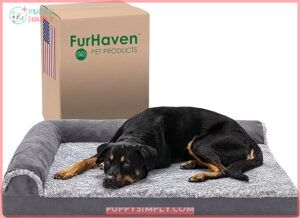
When your large breed mama-to-be struggles to rise from her usual spot, joint relief becomes just as critical as the pregnant dog food in her bowl. This orthopedic dog bed pairs 8-inch solid foam with washable bolsters to cradle hips strained by dog pregnancy weight—up to 95 pounds of canine comfort for breeds prone to mobility issues during pregnant dog care.
The bed materials support spine alignment while you’re managing dog nutrition and pregnancy demands, though some owners report thinner-than-expected orthopedic support after heavy use.
Best For: Large breed dogs up to 95 pounds dealing with joint issues or pregnancy-related mobility challenges who need solid orthopedic support and easy-to-clean bedding.
- 8-inch solid foam base helps with spine alignment and reduces hip pressure by 30-40%, which is especially helpful for pregnant dogs or those with joint problems
- Machine-washable zippered cover makes cleanup easy during pregnancy when hygiene matters most
- Removable bolsters give your dog options for how they want to rest, whether they need extra head support or prefer an open lounger style
- Some owners say the foam is thinner than expected and doesn’t hold up well over time
- Durability is hit-or-miss—a few customers reported the bed falling apart within a month
- Not ideal for dogs that chew or scratch a lot, since the material quality can be inconsistent
Nutritional Requirements for Pregnant Dogs
Your pregnant dog’s body is working overtime to support her growing puppies, which means her nutritional needs shift dramatically throughout pregnancy. Getting the right balance of protein, fats, vitamins, and minerals isn’t just important—it’s essential for her health and the development of strong, healthy pups.
A pregnant dog’s health and her puppies’ development depend on a carefully balanced diet of proteins, fats, vitamins, and minerals
Here’s what you need to know about the key nutrients that matter most during this special time.
Increased Protein and Fat Needs
Your pregnant dog’s body works overtime during mid to late gestation, requiring 25-50% more protein intake and 20-40% additional fat to fuel fetal development and mammary health. These nutritional changes aren’t optional—they’re essential for puppy development and health.
- High-quality animal proteins like chicken or turkey support healthy litter size and weight gain
- Balanced fat requirements deliver energy for rapid fetal growth spurts
- Proper nutrient balance ensures your pregnant dog maintains strength throughout gestation
- Caloric needs climb 15-30% as puppies develop in the second and third trimesters
- Canine nutrition quality directly impacts your dog’s ability to produce nutrient-rich milk
Understanding key terms in AP study guides can help dog owners appreciate the importance of balanced nutrition.
Essential Vitamins and Minerals
Beyond protein and fat, your dog needs specific micronutrients during pregnancy. Folic acid aids neural tube development, while iron intake prevents maternal anemia. Zinc levels maintain immune function, and vitamin E works alongside selenium for fetal health. Understanding the text analysis process is essential for identifying key nutritional elements.
| Vitamin/Mineral | Key Function | Why It Matters |
|---|---|---|
| Folic Acid (B9) | Neural tube development | Prevents birth defects |
| Iron | Oxygen transport | Fights maternal anemia |
| Zinc | Immune support | Maintains coat health |
Mineral supplements aren’t always necessary—quality puppy formulas generally provide adequate vitamin balance when fed correctly.
Calcium and Phosphorus Balance
Getting the mineral ratios right matters more than most owners realize. Your pregnant dog needs calcium and phosphorus in the proper balance—around 1.0 to 1.5:1—to support fetal development and bone health without triggering complications.
Commercial puppy foods generally supply 1.0–1.6% calcium and 0.8–1.2% phosphorus, which aids nutrient absorption naturally. Skip those dietary supplements unless your vet specifically recommends them.
DHA and Omega-3 Fatty Acids
Omega-3 fatty acids—especially DHA—play a big role in fetal brain development and overall canine reproductive health. Research shows that maternal nutrition with 0.1–0.25% DHA (dry-matter basis) promotes healthier litters and improved cognitive function in puppies.
Many quality puppy formulas include DHA supplements from fish oil or algal sources. You’ll want to:
- Check labels for specific DHA concentration and omega-3 sources
- Target 0.05–0.20% DHA in commercial diets during pregnancy
- Choose certified, purified fish oils to minimize contaminants
- Consult your vet before adding separate fatty acid benefits through supplementation
How to Choose Dog Food for Pregnant Dogs

Choosing the right food for your pregnant dog isn’t about grabbing the first bag labeled premium off the shelf. You need to look beyond marketing claims and focus on what actually nourishes her changing body and growing puppies.
Here’s what to check when you’re comparing options.
Look for All Life Stages or Puppy Formulas
You’ll want to focus on puppy formulas or all life stages diets—they’re built for reproduction and fetal development. Around 68% of nutrition reviews from 2023–2025 rate puppy food as appropriate for gestation when protein meets minimum thresholds.
These formulas naturally deliver the nutrient balance, elevated energy, and canine health support your dog needs through pregnancy stages without requiring complex supplementation.
Read Labels for Gestation Nutritional Standards
Labels that explicitly mention gestation or lactation suitability make your selection process straightforward. Most veterinary nutrition authorities recommend five key gestation-specific guidelines:
- Nutrient ratios with crude protein around 22–30% and fat 12–25% on a dry matter basis
- Feeding guidelines customized to different weights and litter sizes
- Essential fatty acids, particularly measurable DHA levels for fetal development
- Balanced calcium-phosphorus ratios supporting skeletal formation while preventing hypocalcemia
- Regulatory compliance confirming all-life-stages or breeding-dog formulas
These nutritional standards guarantee your dog’s dietary needs align with pregnancy stages and fetal development requirements.
Check for High-Quality Protein Sources
Animal-based proteins—like chicken, beef, and fish—offer enhanced digestibility and essential amino acids your pregnant dog needs for fetal development. Look for formulas listing these as primary ingredients, with minimum crude protein between 22–32%.
Digestibility tests confirm chicken and fish proteins exceed 85% absorption, ensuring efficient nutrient balance.
High-protein puppy formulas deliver the amino acid profile supporting both maternal health and puppy development throughout gestation.
Verify Fat and Calorie Content
Fat content between 12–20% meets your pregnant dog’s energy requirement assessment during gestation. Quality puppy food delivers 350–520 calories per cup, matching the 20–40% calorie intake management increase needed mid-pregnancy.
Check labels for dietary fatty acid evaluation and nutrient balance optimization—higher fat fuels fetal growth while maintaining your dog’s condition through nutritional changes in dog pregnancy.
Feeding Schedule and Portion Guidelines
Feeding your pregnant dog isn’t a one-size-fits-all approach—it shifts as her body changes through each stage of pregnancy. You’ll need to adjust both how much you feed and how often as her nutritional demands grow with her developing puppies.
Here’s how to structure her feeding schedule from conception through those final vital weeks before birth.
Early Stages of Pregnancy Feeding

Your pregnant dog’s nutritional changes during early gestation are subtle but important for fetal development. During these first weeks, you won’t need to dramatically adjust her diet—her body is just beginning the remarkable work of prenatal care. Here’s what matters for maternal health and gestation diet:
- Maintain her regular calorie intake near maintenance levels
- Boost protein to 25-30% of her diet
- Verify balanced minerals without extra calcium supplements
- Add 100-300 mg/kg/day of DHA for prenatal nutrition
Mid-Pregnancy Calorie Increases

By week four or five, your pregnant dog’s energy needs climb noticeably—generally 15% to 25% above her normal intake. Fetal growth accelerates during these pregnancy stages, so you’ll want to boost calories by 10 to 40 kcal per kilogram of body weight.
Calorie boosters that maintain nutrient balance support both energy needs and developing puppies without overwhelming her system.
Final Trimester Nutritional Adjustments

During those final weeks, your dog’s caloric needs surge by 30% to 50%—sometimes doubling with large litters. This phase backs fetal development and maternal health, so you’ll want to make certain her diet contains 28% to 32% protein and around 17% fat.
Proper nutrient balance minimizes pregnancy complications while backing prenatal dog nutrition, keeping both mom and her growing puppies thriving through delivery.
Feed Smaller, More Frequent Meals

Once you’ve adjusted her calories, splitting that intake into three to four smaller meals helps prevent digestive upset and keeps energy steady throughout the day. This meal frequency promotes ideal nutrient timing for both your pregnant dog and her developing puppies, especially during late gestation when space is tight.
Think of it as gentle fueling—her pregnancy diet becomes easier to digest when spread across multiple feeding schedules.
Adjust Portions Based on Litter Size

Your dog’s litter size directly shapes her caloric adjustments and nutrient requirements during pregnancy stages. Carrying multiple puppies can push energy needs up to 60% above baseline in the final trimester, while singletons require less.
Larger litters demand earlier, more aggressive portion increases to support fetal development—check with your vet once litter size is confirmed to fine-tune nutrient density and avoid underfeeding.
What to Avoid in Pregnant Dog Diets

Making smart choices is just as much about knowing what not to feed as it’s about picking the right food. There are certain ingredients and habits that can cause real trouble for your pregnant dog.
Here are the key things you’ll want to steer clear of.
Excessive Calcium Supplementation
Think topping off your meal with extra vitamins is harmless? Regarding calcium, the story shifts, especially in dog pregnancy. Overdoing calcium risks mineral balance and promotes Calcium Toxicity. Keep these points in check:
- Impaired fetal development from disrupted nutrient interactions.
- Greater odds of pregnancy complications, such as eclampsia.
- Phosphorus and calcium must align for healthy, safe pregnancies.
Raw Meat and High-Mercury Fish
Contamination can sneak up on you, especially when raw meat or high-mercury fish find their way into a pregnant dog’s bowl. Mercury Toxicity undermines healthy pregnancy and fetal development. Raw Meat Risks include Salmonella and bacteria, while Fish Contamination ramps up Mercury Exposure.
For premium Pet Food Safety, avoid these hazards to meet Nutritional Requirements for Pregnant Dogs.
Foods High in Sugar and Salt
Sugar Content and Salt Intake often work against the grain of healthy Canine Nutrition. Fetal Development can take a hit when your pregnant dog’s diet is loaded with sweet or salty foods. To support Dog Health and Wellness, avoid these Dietary Risks:
- High-sugar treats or foods
- Snack foods heavy in salt
- Puppy formulas listing sugar or salt high on ingredients
Certain Medications and Supplements
Nearly every pregnancy comes with questions about Pregnancy Vitamins and Nutrient Supplements, but not all are safe for your dog. Folic Acid and DHA support fetal safety, yet excess calcium or unsupervised medication risks can disrupt reproductive health.
For prenatal and postnatal care, avoid over-the-counter supplements and never start new medications without your vet’s guidance—your dog’s well-being depends on it.
Supporting Your Pregnant Dog’s Overall Health

Caring for your pregnant dog goes beyond nutrition alone. Keeping her healthy involves a blend of daily routines, regular check-ups, and a watchful eye on her changing needs.
Here’s what you’ll want to keep in mind as you support her through each stage.
Fresh Water and Hydration Requirements
Did you know your pregnant dog’s water intake can jump by nearly 50% during pregnancy? She’ll need fresh water access day and night—cool, clean, and always within reach.
Monitoring hydration metrics, such as urine color and daily intake, helps you avoid dehydration risks. Proper electrolyte balance is essential for her health, milk production, and successful nursing dog care.
Regular Veterinary Check-Ups
Regular veterinary care is the backbone of prenatal care for pregnant dogs. At each pregnancy stage, consistent health screening and fetal monitoring help you spot budding issues early.
Trust veterinary guidance—bloodwork, ultrasounds, and professional advice guarantee both mom and pups thrive. Veterinary recommendations and customized check-ups aren’t just helpful; they’re your best source of reassurance during this remarkable journey.
Transitioning to Lactation Diet After Birth
Isn’t it something—your dog’s needs change almost overnight once her puppies arrive. As you step into postpartum care, shift to a nursing dog diet rich in calories, protein, and DHA for peak milk production and maternal health.
A gradual shift to lactation nutrition aids puppy weaning, eases lactation and whelping, and sets the stage for healthy growth and bonding.
Monitoring Weight Gain Throughout Pregnancy
After birth, your focus shifts—but during all pregnancy stages, keeping an eye on your dog’s weight is your secret weapon. Consistent monitoring protects her health and her puppies’—think of it like real-time feedback for your nutrition planning.
For healthy dog nutrition and health, try:
- Weekly weigh-ins
- Adjusting caloric intake
- Aligning weight targets
- Watching for sudden changes
- Tracking fetal development
Frequently Asked Questions (FAQs)
What is the best food to feed a pregnant dog?
Your pregnant dog thrives on nutrient-dense puppy formulas or all-life-stages diets containing 28-32% protein and 14-20% fat—fuel that aids fetal development while building her mammary tissue for nursing ahead.
What does a pregnant dog need?
Your pregnant dog needs increased calories, higher protein (22-30%), balanced calcium, DHA-rich omega-3s for fetal development, and constant hydration.
Prenatal care includes veterinary check-ups, nutrient balance adjustments across pregnancy stages, and whelping preparation for postpartum health.
Are eggs good for pregnant dogs?
Yes, cooked eggs are beneficial for pregnant dogs. They provide high-quality protein and choline, which are essential for fetal development.
Offer them 1-2 times weekly as part of a balanced prenatal care diet, never raw.
What food to give to a dog after giving birth?
After whelping, prioritize Nursing Dog Food or puppy formulas for ideal Lactation Nutrition.
These support Maternal Health, Nutrient Balance, and Puppy Growth—offering sustained energy, digestibility, and Lactation Support, all essential for effective Postnatal Dog Care and Nursing Dog recovery.
Can pregnant dogs eat human food safely?
Watching Molly sneak a bite of pizza crust might seem harmless, but human snacks often disrupt canine nutrition. Many pose food toxicity or pregnancy risks, making safe alternatives from purpose-made pet nutrition essential for any pregnant dog diet.
How often should a pregnant dog exercise?
You’ll want to stick with daily walks and gentle stretches, weaving in canine fitness routines like pregnancy yoga or other safe activities.
Aim for regular movement, but always follow veterinary advice to support dog health during breeding and pregnancy.
Are raw diets safe for pregnant dogs?
Despite the trend toward raw diets, Raw Diet Risks can outweigh potential benefits during the critical Dog Pregnancy Stages. Fetal Development needs precise nutrients, and Raw Food Safety isn’t guaranteed.
Prioritize balanced Pregnancy Nutrition and Veterinary Care for Pregnant Dogs.
What signs indicate a problem during pregnancy?
Persistent vomiting, weight loss, or sudden lethargy in pregnant dogs can signal trouble. Watch for abdominal pain, vaginal bleeding, or any distress—these are red flags for canine pregnancy complications and require immediate veterinary care to support health and nutrition.
How to handle a pregnant dogs food allergies?
When a pregnant dog faces food allergies, lean on hypoallergenic diets and food trials with novel proteins. Skip costly allergen testing for now—focus on gentle, nutrient-rich options and plan gradual reintroduction strategies after the pups arrive.
Can pregnant dogs have treats or table scraps?
As the saying goes, “you’re what you eat.” For pregnant dogs, healthy rewards and canine snacks matter.
Table scraps and most human food can jeopardize dog nutrition. Treat safety means choosing snacks that support your pregnant dog’s dietary needs.
Conclusion
Did you know that a mother dog’s caloric needs can increase by up to 50% during late pregnancy? Every small choice you make about dog food for pregnant dogs influences both her well-being and the lifelong health of her future puppies.
Thoughtful nutrition is more than a daily routine; it’s a lasting promise you keep. With each bowl, you celebrate her resilience and give the upcoming generation of dogs a head start—one nourishing meal at a time.
- https://www.ncbi.nlm.nih.gov/books/NBK481583/
- https://www.fda.gov/animal-veterinary/animal-health-literacy/questions-answers-fdas-work-potential-causes-non-hereditary-dcm-dogs
- https://petcorner.pangovet.com/pet-nutrition/dogs/how-many-calories-does-my-dog-need/
- https://pangovet.com/?utm_source=dogster&utm_medium=article&utm_campaign=dog-nutrition
- https://en.wikipedia.org/wiki/Eclampsia