This site is supported by our readers. We may earn a commission, at no cost to you, if you purchase through links.

Your Great Dane puppy just polished off another bowl of food, and you can practically see her growing by the hour. That explosive growth might seem like a healthy sign, but here’s the catch: large breed puppies who grow too fast face over 50% higher risk of lifelong joint problems like hip dysplasia.
The difference between a puppy who develops strong bones and one who struggles with painful orthopedic issues often comes down to what’s in their food bowl. Unlike smaller breeds, large breed puppies need precisely balanced calcium, controlled calories, and joint-supporting nutrients during those critical first months when their skeleton is still forming.
Choosing the right dog food for large breed puppies isn’t just about fueling growth—it’s about protecting your puppy’s long-term mobility and quality of life.
Table Of Contents
- Key Takeaways
- Why Large Breed Puppies Need Special Diets
- Key Nutritional Requirements for Large Breed Puppies
- How Large-Breed Puppy Food Differs From Regular Puppy Food
- Choosing The Right Food for Your Large Breed Puppy
- Top 8 Dog Foods for Large Breed Puppies
- Feeding Guidelines and Transitioning to Adult Food
- Health Monitoring and Preventive Care for Large Breed Puppies
- Frequently Asked Questions (FAQs)
- What should a large breed puppy eat?
- What should I feed my XL puppy?
- What food is good for large breed dogs?
- How often should I feed my large-breed puppy?
- Can I mix wet and dry food?
- What ingredients should I avoid in puppy food?
- Can I make homemade food for large breed puppies?
- What treats are safe for large breed puppies?
- How does spaying affect large breed puppy nutrition?
- Conclusion
Key Takeaways
- Large breed puppies who grow too quickly face over 50% higher risk of lifelong joint problems like hip dysplasia, making controlled growth through proper nutrition critical during their extended 18-24 month skeletal development period.
- The right large breed puppy food maintains a calcium-to-phosphorus ratio between 1.1:1 and 1.4:1, delivers 12-15% fat with under 400 calories per cup, and includes joint-supporting nutrients like glucosamine to prevent orthopedic disease.
- Unlike standard puppy formulas, large breed-specific foods use controlled mineral content and lower calorie density (3,200-4,100 kcal/kg versus 4,000-5,000+ kcal/kg) to slow growth rates and reduce hip dysplasia risk by half.
- Feeding guidelines should adjust from 3-4 meals daily until six months to twice daily thereafter, with the transition to adult food timed between 15-24 months based on when skeletal maturity is reached and weight plateaus.
Why Large Breed Puppies Need Special Diets
Raising a large-breed puppy isn’t the same as raising a smaller dog—their bodies grow fast, and that quick development can lead to serious bone and joint problems if they don’t get the right nutrition.
Your Golden Retriever or German Shepherd needs a carefully balanced diet that promotes steady, healthy growth without pushing their skeleton to mature too quickly.
Let’s look at why these gentle giants need food that’s designed specifically for their unique needs.
Unique Growth Patterns and Maturity Rates
Your large-breed puppy doesn’t grow like smaller dogs—they can reach 100 times their birth weight, requiring careful nutrient timing during extended bone development. While small breeds mature by 8–12 months, your Golden Retriever or German Shepherd won’t reach skeletal maturation until 18–24 months.
That’s why large-breed puppy food with the right calcium-to-phosphorus ratio matters for healthy canine development stages. Understanding puppy skeletal development is essential for providing the best care.
Risks of Rapid Growth and Orthopedic Issues
When your puppy gains weight too quickly, you’re setting the stage for hip dysplasia and osteochondrosis—orthopedic diseases that plague large breeds. Studies show puppies growing faster than normal face over 50% higher risk of skeletal issues by eight months. Overfeeding energy-dense diets or excess calcium disrupts bone development, putting stress on immature joints that can’t handle rapid weight gain during critical growth windows.
Rapid growth from overfeeding increases your puppy’s risk of hip dysplasia and joint problems by over 50%
It’s vital to understand the risks of developmental orthopedic disease to make informed decisions about your puppy’s diet.
Importance of Tailored Nutrition for Bone and Joint Health
That’s why choosing the right large-breed puppy food becomes your most powerful tool for preventing these problems. Formulas built specifically for bone growth maintain a calcium-to-phosphorus ratio between 1:1 and 1.8:1—the sweet spot for orthopedic health.
Combined with controlled calories and joint-supporting nutrients like glucosamine, customized nutrient balance protects your puppy’s development during those vulnerable growth months when skeletal maturity is still years away.
Key Nutritional Requirements for Large Breed Puppies

Feeding your large breed puppy the right nutrients isn’t just about filling their bowl—it’s about giving their growing bones and joints exactly what they need to develop properly. The wrong balance of certain minerals or calories can set the stage for lifelong health problems, while the right formula fosters strong, healthy growth.
Let’s break down the specific nutrients your puppy needs and why each one matters.
Balanced Calcium and Phosphorus for Skeletal Development
Think of calcium and phosphorus as the building blocks your puppy’s skeleton needs—but too much or too little can cause serious problems. Large-breed puppy food should contain a calcium-to-phosphorus ratio between 1.1:1 and 1.4:1 for safe skeletal growth.
This careful nutrient balance promotes proper bone development while reducing the risk of hip dysplasia and other joint issues that plague fast-growing dogs.
Protein Quality and Quantity for Muscle Growth
Your puppy’s muscles depend on high-quality protein sources like chicken, beef, or lamb—aim for at least 22.5% protein on a dry matter basis. Look for large-breed puppy food that lists real meat first and provides all ten essential amino acids your dog needs.
This nutrient density fosters steady muscle development without the excessive calcium that threatens bone health. Quality matters as much as quantity for proper growth.
Appropriate Fat and Calorie Levels to Prevent Obesity
Too much fat or too many calories can derail your puppy’s development fast. Large-breed puppy food usually delivers 12–15% crude fat and under 400 kilocalories per cup, striking a nutrient balance that prevents obesity while supporting steady growth. Energy density matters because:
- Excess calories fuel rapid weight gain that overloads developing joints
- Controlled fat intake reduces hip dysplasia and osteochondrosis risk
- Calorie restriction maintains a lean body condition score throughout puppyhood
Measure portions carefully and adjust every few weeks to keep your pup trim.
Essential Nutrients: DHA, Glucosamine, Chondroitin, and Antioxidants
Beyond the basics, four powerhouse nutrients separate good large-breed puppy food from great. DHA from omega sources boosts brain development and trainability—look for at least 0.2% on a dry-matter basis. Glucosamine and chondroitin provide joint health insurance, supporting cartilage as your pup grows. Antioxidants like vitamins E and C protect cells and strengthen immunity. Nutrient balance across all four creates the foundation for a thriving large-breed puppy.
| Nutrient | Primary Benefit |
|---|---|
| DHA | Brain and eye development |
| Glucosamine & Chondroitin | Joint and cartilage support |
| Antioxidants (Vitamins E, C) | Immune health and cellular protection |
How Large-Breed Puppy Food Differs From Regular Puppy Food

You might wonder what makes large-breed puppy food different from the regular stuff on the shelf. The answer comes down to some pretty specific tweaks in the formula—changes that protect your puppy’s growing bones and joints while keeping their energy balanced.
Let’s look at the key differences that matter most.
Controlled Mineral Content for Bone Health
The biggest difference you’ll notice in large-breed puppy food is the carefully controlled mineral balance. Here’s what sets it apart:
- Calcium intake capped at 1.8% dry matter to prevent skeletal malformations
- Phosphorus levels around 0.75% to support proper bone density without overload
- Calcium-to-phosphorus ratio maintained between 1.1:1 and 1.4:1 for healthy bone growth
- Vitamin D optimized to aid calcium absorption while protecting joint health
These nutrient ratios matter because your puppy can’t regulate calcium absorption until about six months old.
Lower Fat and Calorie Formulation
High-calorie foods can cause your puppy’s weight to outpace skeletal strength—that’s why large-breed formulas dial back fat and energy density. These diets generally provide 3,200–4,100 kilocalories per kilogram, helping you manage puppy growth and development without stunting final size. Research shows calorie control during growth cuts hip dysplasia risk in half compared to free-choice feeding.
| Feature | Large-Breed Puppy Food | Standard Puppy Food |
|---|---|---|
| Fat content | Moderate (controlled) | Higher (energy-dense) |
| Caloric density | 3,200–4,100 kcal/kg | 4,000–5,000+ kcal/kg |
| Growth rate | Slower, controlled | Rapid, unrestricted |
Added Joint-supporting Ingredients
Your large-breed puppy food should work like an insurance policy for their joints. Most formulas now include glucosamine (400–1,700 mg/kg), chondroitin support (250–5,776 mg/kg), and omega fatty acids to fight inflammation during rapid growth. Some brands add hyaluronic acid or manganese to strengthen cartilage formation.
These joint supplements help prevent orthopedic disease before it starts—protection regular puppy nutrition simply can’t match.
Specific Labeling and AAFCO Standards for Large Breeds
When shopping, look for the phrase “complete and balanced for growth, including large breed puppies”—that’s your AAFCO Standards guarantee. The label compliance tells you the Calcium-to-Phosphorus Ratio meets nutrient profiles designed to prevent bone problems.
Dog Food Labels must specify whether feeding trials backed the claims or if it’s formulated to meet puppy nutrition and health guidelines. Regulatory updates now demand stricter proof for Large Breed Puppy Food growth claims.
Choosing The Right Food for Your Large Breed Puppy
Picking the right food for your large-breed puppy doesn’t have to feel overwhelming once you know what to look for. The trick is learning how to read labels like a pro, spot the certifications that actually matter, and cut through the marketing fluff that sounds impressive but means nothing.
Let’s walk through the essentials so you can make a confident choice for your growing pup.
Evaluating Dog Food Labels and Ingredient Lists

Label decoding starts with the ingredient list—components appear by weight, so protein sources like chicken or beef should rank first. Check for regulatory compliance through AAFCO statements confirming the food meets large-breed growth standards.
Ingredient analysis reveals nutrient ratios, especially calcium-to-phosphorus balance vital for puppy nutrition and health.
Look beyond marketing hype; focus on food safety and clinically tried formulations for confident dog food ingredients selection.
Importance of “complete and Balanced” Certification

Once you’ve scrutinized ingredients, “complete and balanced” certification becomes your safety net. This label confirms regulatory compliance with AAFCO nutrient profiles for large breed puppy food growth, guaranteeing your pup receives all nutritional requirements for canine nutrition without guesswork.
Look for four key markers:
- AAFCO adequacy statement specifying growth of large-size dogs
- Certification standards met through formulation or feeding trials
- Label accuracy verified by consumer protection regulations
- Proper calcium-phosphorus ratios for developmental orthopedic disease prevention
Avoiding Misleading Marketing Terms

Even with that “complete and balanced” stamp, you’ll face a maze of marketing tricks on dog food labels. Terms like “premium,” “natural,” and wholesome aren’t regulated by pet food regulations—they sound impressive but don’t guarantee excellent dog food quality.
Around 40% of pet owners find these label claims confusing, and for good reason: they’re nutrition misconceptions dressed up as consumer awareness.
Consulting Your Veterinarian for Personalized Advice

Your veterinarian becomes your strongest partner in diet planning for your large-breed puppy. Veterinary guidance during wellness visits—every 3–4 weeks early on—includes nutrition counseling customized to your pup’s growth rate and health monitoring needs.
Many practices now offer telehealth services for follow-up questions, making veterinary recommendations more accessible. Don’t skip these conversations—they’re key to puppy health and development.
Top 8 Dog Foods for Large Breed Puppies
Now that you know what to look for in a large-breed puppy food, let’s talk about specific options that meet those standards.
The foods below have been chosen for their balanced calcium-to-phosphorus ratios, quality protein sources, and joint-supporting ingredients.
Each one brings something different to the table, so you can find the right fit for your growing pup.
1. Blue Buffalo Puppy Chicken Brown Rice
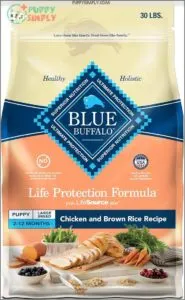
Blue Buffalo Life Protection Formula Large Breed Puppy Chicken and Brown Rice delivers a solid nutrient balance with 26% protein and 15% fat—ideal for controlled puppy growth and development. Real chicken comes first on the ingredient list, supporting muscle building without triggering common food allergies.
The formula includes DHA for brain health and antioxidant-rich LifeSource Bits for digestive health and immune support.
At 386 calories per cup, you can tailor feeding schedules to your pup’s needs, making this large breed puppy food a well-rounded choice that meets dietary requirements for puppies during critical growth stages.
Best For: Large breed puppy owners looking for a chicken-based formula with controlled calcium levels and DHA to support healthy bone growth and brain development without overfeeding.
- Real chicken as the first ingredient delivers 26% protein for strong muscle development, with added DHA and ARA supporting brain and eye health during critical growth stages.
- Moderate calorie density at 386 calories per cup helps prevent rapid growth that can lead to joint problems and hip dysplasia in large breed puppies.
- No chicken by-product meals, corn, wheat, or soy makes this a cleaner option for puppies with sensitive stomachs or food sensitivities.
- Some owners report the kibble size doesn’t work well for their puppies—either too small for larger mouths or too large for younger pups to chew comfortably.
- May cause digestive upset or diarrhea in some dogs during the transition period or due to individual sensitivities.
- Higher price point compared to other large breed puppy foods, which can add up quickly with a 30-lb bag for fast-growing puppies.
2. Purina ONE Large Breed Puppy Food
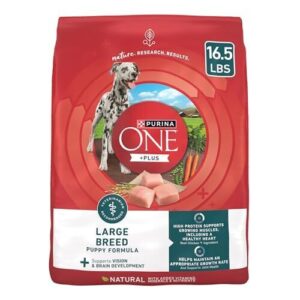
Purina ONE Large Breed Puppy Food delivers controlled nutrition with real chicken as the first ingredient, fostering strong muscle development during critical growth stages. You’ll find 28% protein and 13% fat—a leaner profile that helps prevent the rapid weight gain linked to orthopedic problems.
The formula meets AAFCO standards for large breed puppy growth and development, with calcium-to-phosphorus ratios designed specifically for safe bone mineralization. Added DHA fosters brain and vision health, while 400 ppm glucosamine promotes joint integrity.
At roughly 353–361 calories per cup, this puppy feeding approach prioritizes steady, healthy growth without excess energy.
Best For: Owners of large breed puppies who want a budget-friendly formula with controlled calcium levels and joint support to prevent growth-related orthopedic issues.
- Real chicken leads the ingredient list with 28% protein and 13% fat—a leaner profile that supports steady growth without the excessive energy that can cause skeletal problems in big dogs
- Meets AAFCO large breed growth standards with calcium-to-phosphorus ratios around 1.2–1.4:1, plus 400 ppm glucosamine to help protect developing joints
- Lower calorie density (353–361 kcal/cup) compared to standard puppy foods makes it easier to control portion sizes and avoid rapid weight gain
- Some puppies experience digestive upset like diarrhea during the transition, so you’ll need to switch gradually over 7–10 days
- Includes chicken by-product meal and corn gluten meal, which aren’t the premium protein sources found in higher-end large breed formulas
- Large 16.5-pound bag represents a bigger upfront investment, and picky eaters may refuse it entirely, leaving you stuck with unused food
3. Purina One Plus Large Breed Puppy
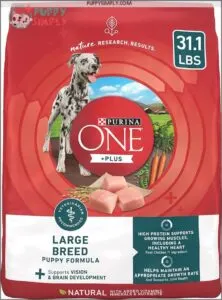
You’ll notice that Purina ONE Plus Large Breed Puppy is built around the same solid foundation as its counterpart—real chicken leads the ingredient list, delivering 28% protein for muscle development without pushing your pup into risky rapid growth.
The formula includes 400 ppm glucosamine and DHA to support joint health and puppy development, while four antioxidant sources strengthen immune defenses.
With controlled fat at 13% and carefully balanced calcium and phosphorus, this Large Breed Puppy Food meets AAFCO growth standards, giving you confidence in your Pet Care choices for Dog Wellness during those vital first months.
Best For: Owners of large breed puppies (70+ lbs as adults) who want a vet-recommended formula with real chicken, controlled growth support, and joint-friendly nutrients like glucosamine and DHA.
- Real chicken as the #1 ingredient delivers 28% protein for strong muscles without overfeeding your growing pup
- Includes 400 ppm glucosamine and DHA to support developing joints, brain, and vision in large breeds
- Controlled fat (13%) and balanced calcium/phosphorus meet AAFCO standards to prevent too-fast growth that can stress joints
- Some puppies refuse to eat it or experience digestive upset like diarrhea during the transition
- The 31.1 lb bag size is a bigger upfront investment if your pup turns out to be picky
- May not work for dogs with specific allergies or sensitivities to chicken, soy, or other ingredients
4. Large Breed Puppy Food Formula
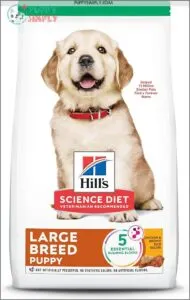
When your growing giant needs a foundation that won’t buckle under pressure, Large Breed Puppy Food Formula delivers precisely controlled Calcium Levels and a Calcium-to-Phosphorus Ratio designed for safe Growth Management.
This Large Breed Puppy Food fosters Puppy Development with a balanced Nutrient Balance that prevents the skeletal stress rapid growth can cause.
Joint Support ingredients work alongside carefully calibrated minerals, giving your Large Breed Puppy Nutrition that respects their unique timeline—because proper Large Breed Puppy Care means feeding for the long haul, not just today’s appetite.
Best For: Owners of large breed puppies (expected to reach 70+ pounds as adults) who want to prevent bone and joint problems by feeding a vet-recommended formula with controlled calcium and phosphorus levels during the critical 2-15 month growth period.
- Includes DHA from fish oil for brain development, glucosamine and chondroitin for joint support, and vitamin E for immune health—giving your puppy functional ingredients beyond basic nutrition.
- Meets AAFCO growth standards specifically for large breeds with carefully controlled calcium and phosphorus to reduce the risk of developmental bone issues that can plague fast-growing dogs.
- Made by the #1 vet-recommended brand with detailed feeding guides that adjust portions based on your puppy’s age and expected adult weight, so you’re not guessing how much to feed.
- Some owners report the kibble is too large for their puppies to chew comfortably, and a few dogs experienced digestive issues like diarrhea or gas during the transition.
- Priced at $74.99 for a 15.5 lb bag, it’s more expensive than many competitor puppy foods, which can add up over the 12-15 month feeding period.
- Quality control concerns pop up in customer reviews, with some buyers noticing differences between batches or recipes that didn’t sit well with their dogs.
5. Iams Puppy Large Breed Chicken Food
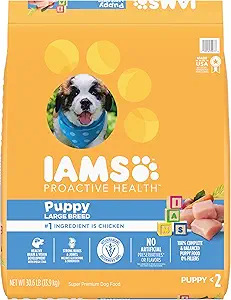
When your large breed puppy needs fuel that won’t push skeletal development too fast, Iams Puppy Large Breed Chicken Food brings controlled energy with fresh chicken as the first ingredient. You’ll find 350 mg/kg glucosamine and 35 mg/kg chondroitin supporting those vulnerable joints, while DHA-rich fish oil sharpens brain development.
The Chicken Benefits extend beyond protein—this Large Breed Puppy Food balances calcium and phosphorus to prevent orthopedic stress, giving your growing companion the Large Breed Puppy Nutrition their frame demands without the developmental risks rapid growth brings.
Best For: Owners of large breed puppies (expected to reach 70+ pounds) who want controlled-energy nutrition that supports steady growth and joint health without pushing skeletal development too fast.
- Fresh chicken as the first ingredient provides high-quality protein, plus 350 mg/kg glucosamine and 35 mg/kg chondroitin for joint support during rapid growth
- DHA from fish oil supports brain development and trainability, while omega-3s aid neurologic growth and immune function
- Balanced calcium-to-phosphorus ratio and controlled mineral levels reduce the risk of developmental orthopedic disease in fast-growing breeds
- Some puppies experience diarrhea or digestive upset, with mixed reviews on stool quality and tolerance
- Contains corn, chicken by-product meal, and soybean meal, which may not appeal to owners seeking grain-free or single-protein diets
- Packaging readability issues reported by customers due to font size and color choices making labels difficult to read
6. Purina Pro Plan Puppy Large Breed

If you’re looking for Large Breed Puppy Food that checks every box, Purina Pro Plan delivers 30% protein from real chicken plus 500 ppm glucosamine for Joint Health Support. Your pup gets DHA from fish oil to fuel brain development, while controlled calcium (1.1%) and phosphorus (0.9%) keep bone growth steady—not rushed.
This Large Breed Nutrition formula meets AAFCO standards for big-breed growth, giving you confidence in every bowl.
Growth Monitoring becomes easier when Puppy Feeding Tips start with nutrient-dense Large Breed Puppy Foods like this one.
Best For: Owners of large breed puppies (50+ lbs at maturity) who want a high-protein formula with joint support and controlled minerals to promote steady, healthy growth.
- Real chicken as the first ingredient delivers 30% protein, plus 500 ppm glucosamine to support developing joints during rapid growth phases
- DHA from fish oil supports brain and vision development, while vitamin A and omega-6 fatty acids nourish skin and coat
- Controlled calcium (1.1%) and phosphorus (0.9%) levels prevent overly rapid bone growth, reducing joint stress in large breeds
- Some customers report digestive issues like diarrhea in their dogs after switching to this formula
- A few dogs may refuse to eat it, requiring a gradual transition or alternative food
- Price point may be higher than budget options, which can add up for large breed puppies that eat 3-4 cups daily
7. Diamond Naturals Large Breed Puppy Food
Real pasture-raised lamb makes Diamond Naturals a standout option for Large Breed Puppy Food, especially if food allergies have you steering clear of chicken. You’ll find 27% protein and 1.2–1.5% calcium—ideal nutrient balance for large breed needs without overdoing skeletal stress.
DHA promotes puppy development while 80 million CFU probiotics help with digestion during growth monitoring phases. This large breed dog food meets AAFCO standards for big-breed growth, giving your pup complete large breed puppy care in every bowl—and pet food recommendations don’t get much simpler than that.
Best For: Owners of large breed puppies (70+ lbs as adults) who need a controlled-calcium formula with real lamb as the first ingredient, especially helpful if your pup has chicken sensitivities.
- Real pasture-raised lamb with 27% protein and carefully balanced calcium (1.2–1.5%) to support healthy growth without stressing developing bones
- Includes DHA for brain development plus 80 million CFU probiotics to keep digestion smooth during those fast-growing months
- AAFCO-approved for large breed puppies and comes in a 40 lb bag at $54.99, giving you solid value for a specialized formula
- Some dogs experience diarrhea or gas, especially without a gradual 7–10 day food transition
- Not every puppy loves the lamb taste, so picky eaters might turn their nose up at it
- Quality and tolerance can vary between individual dogs—what works great for one large breed pup might not suit another with specific sensitivities
8. Holistic Large Breed Puppy Food
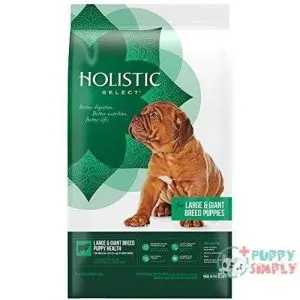
Integrated Select delivers balanced diets through lamb meal and chicken meal, backed by prebiotics and probiotics for puppy wellness during those sensitive growth months. You’ll get 25–30% protein and omega-3s for skin and coat health—natural ingredients that support large breed puppy care without the guesswork.
This integrated nutrition approach means whole grains like oatmeal and brown rice, plus glucosamine for joints, all wrapped up in one large breed puppy food. It’s a gentler path forward if you’re steering toward wellness-focused feeding.
Best For: Owners of large and giant breed puppies who want a holistic approach to growth with joint support, digestive health, and high-quality protein sources in one formula.
- Contains 25–30% protein plus glucosamine and omega-3s to support healthy joints, skin, and coat during crucial growth stages
- Includes prebiotics and probiotics alongside whole grains like oatmeal and brown rice for gentle digestion and steady energy
- Made with lamb meal and chicken meal as primary proteins, free from artificial colors, flavors, and preservatives
- More expensive than many conventional large breed puppy foods, which can add up over months of feeding
- Some customers reported ingredient changes that triggered allergies or digestive issues in their puppies
- Not grain-free, so it won’t work for dogs with grain sensitivities or owners seeking grain-free options
Feeding Guidelines and Transitioning to Adult Food

Getting the feeding amounts right and knowing when to make the switch to adult food can feel like a guessing game, but it doesn’t have to be.
Your large breed puppy’s nutritional needs will shift as they grow, and timing that change correctly protects their developing bones and joints.
Here’s what you need to know about portion sizes, feeding schedules, and making the move to adult food at the right time.
Determining Serving Sizes and Feeding Frequency
Getting the serving size right isn’t guesswork—start with the food package’s feeding guidelines based on your puppy’s current weight, then adjust as needed.
Younger pups usually need 3-4 meals daily until about 6 months, then you can shift to 2 meals.
Watch your puppy’s body condition closely; ribs should be easy to feel but not visible, signaling proper calorie intake and nutrient balance throughout growth stages.
When to Switch to Adult Food (12-24 Months)
Most large breed puppies reach skeletal maturity between 15 and 18 months, while giant breeds often need growth nutrition closer to 24 months. Shift timing depends on several factors:
- Growth Monitoring: Weekly weight checks help confirm your puppy has reached adult height and weight has plateaued
- Nutrient Adjustment: Gradually shift from large breed puppy food to adult nutrition over 5-7 days
- Feeding Schedules: Maintain consistent meal times during shift to minimize digestive upset
- Adult Nutrition: Choose formulas meeting AAFCO standards for maintenance, not growth stages
Risks of Early or Late Transition
Timing matters more than you might think. Switching too early robs your puppy of essential nutrients during critical growth velocity phases, increasing orthopedic disease risks like hip dysplasia. Yet feeding large-breed puppy food too long promotes obesity, straining developing joints.
Poor nutrient timing disrupts the calcium-to-phosphorus ratio your pup needs. Smart shift strategies protect against these developmental issues while supporting proper large-breed puppy care.
Monitoring and Adjusting for Healthy Growth
Vigilance with weekly weigh-ins keeps your large breed puppy on track. Compare weight against breed-specific growth charts to catch deviations early—consistent gains above expected centiles signal overnutrition risks.
Check body condition monthly; you should feel ribs without excess fat coverage. Adjust portions when weight management concerns arise, protecting skeletal development and joint health through proper nutrient balance and careful calcium-to-phosphorus ratio control.
Health Monitoring and Preventive Care for Large Breed Puppies

Feeding the right food is only part of keeping your large breed puppy healthy—you also need to watch how they’re growing and catch potential problems early. Your puppy’s first two years are critical for setting them up for a long, active life, so staying on top of their health now pays off later.
Here’s what you should monitor and how to keep your growing pup on the right track.
Recognizing Signs of Healthy Growth and Development
Healthy growth isn’t just about hitting weight milestones—it’s about balance. You’ll want to check your puppy’s body condition regularly: ribs should be easy to feel but not visible, with a clear waist from above. Watch for symmetrical limb development and smooth movement without limping.
Growth monitoring at vet visits, paired with proper large breed puppy food and nutrient balance, ensures skeletal health through all developmental stages.
Preventing Obesity and Bloat
Your puppy’s waistline and eating habits need your daily attention—around 60% of U.S. dogs are overweight, shortening lives by up to 1.5 years. Caloric intake and portion control through healthy feeding practices protect against obesity and bloat prevention:
- Feed two to three smaller meals daily using measured large-breed puppy food
- Place bowls at floor level to reduce bloat risk
- Use slow-feeder bowls to prevent gulping
- Track growth monitoring to adjust portions as needed
Importance of Regular Veterinary Check-ups
Think of veterinary care as your early warning system—visits every 3-4 weeks until 16 weeks catch problems before they snowball. Regular puppy health checks let your veterinarian track growth, adjust large breed puppy foods, and screen for orthopedic issues. German Shepherds show a 26.87% incidence of developmental problems, making orthopedic monitoring essential.
Schedule these vet visit schedules consistently—early detection through veterinary advice reduces clinical problems and mortality related to hip dysplasia in breeds like Cane Corsos, where prevalence hits 51.9%.
| Visit Type | Timing | Purpose |
|---|---|---|
| Initial puppy visits | Every 2-4 weeks (birth to 18 weeks) | Vaccinations, parasite prevention, growth tracking |
| Orthopedic screening | Around 16 weeks | Hip joint laxity detection, early dysplasia prediction |
| Nutritional counseling | Monthly first few months | Body condition assessment, diet adjustments for skeletal development |
| Standard wellness | Every 3-4 months (up to 1 year) | Monitor development, address large breed puppy care concerns |
| Adult shift exams | 6-12 months intervals | Evaluate readiness for adult food, long-term health planning |
Managing Exercise and Activity Levels
Beyond regular vet visits, exercise planning protects developing joints—aim for 5-10 minutes of leash walks per month of age. Growth monitoring through activity limits prevents injury, as open growth plates stay vulnerable until 12-18 months. Swimming builds strength without joint stress, while hard surfaces and stairs strain immature bones.
- Focus on low-impact activities: Controlled leash walks on grass, gentle swimming sessions, and short play periods support large breed puppy care without overloading vulnerable growth plates
- Skip high-impact repetitive movements: Ball chasing, agility jumps, and rapid turns on slippery floors increase joint strain and soft-tissue injury risk during critical development windows
- Watch for fatigue signals: Slowing down, frequent lying, or post-exercise stiffness means you’ve pushed too far—rest immediately and adjust future sessions for ideal puppy health and wellness
- Use environmental controls: Baby gates blocking stairs, non-slip rugs on tile, and restricted furniture access prevent unsupervised activities that compromise canine orthopedic health
- Keep them lean: Excess weight amplifies joint loading during growth—combine proper large breed puppy foods with controlled activity for long-term large breed health and injury prevention
Frequently Asked Questions (FAQs)
What should a large breed puppy eat?
Your gentle giant needs a carefully balanced diet—think of it as laying a foundation stone for their future.
Large breed puppy food with controlled calcium-to-phosphorus ratios, quality protein, and joint-supporting nutrients prevents orthopedic issues while supporting steady, healthy growth.
What should I feed my XL puppy?
Your XL puppy needs specially formulated large-breed puppy food with controlled calcium (0–5 g per 1,000 kcal) and phosphorus levels to support steady growth without stressing developing joints or bones.
What food is good for large breed dogs?
For large breed dogs, look for formulas with controlled calcium-to-phosphorus ratios and moderate protein levels.
Quality matters—nutrient balance promotes dog wellness throughout life, preventing obesity and joint issues common in these breeds.
How often should I feed my large-breed puppy?
Your puppy’s stomach isn’t a bottomless pit—it needs smaller, more frequent meals. Feed four times daily until three months, then three meals until six months, and finally twice daily through adulthood.
Can I mix wet and dry food?
Yes, you can combine wet and dry formulas safely if both meet AAFCO large-breed puppy standards. Adjust portions carefully to maintain proper calories and calcium levels, and shift gradually to avoid digestive upset.
What ingredients should I avoid in puppy food?
Colorful kibble often hides danger—skip synthetic additives like BHA and artificial dyes.
You’ll also want to avoid excess calcium, unnamed fats, and grain-free formulas linked to heart issues in large-breed puppies.
Can I make homemade food for large breed puppies?
You can, but it’s risky—73% of homemade recipes fall short on calcium, throwing off the calcium-phosphorus balance puppies need.
Without a veterinary nutritionist’s guidance, you’re likely creating nutrient gaps that harm bone development.
What treats are safe for large breed puppies?
Choose small, soft training rewards like plain chicken or a few kibbles from their regular large-breed puppy food.
Keep treats under 10% of daily calories to support healthy growth and prevent nutritious bite sizes from derailing balanced nutrition.
How does spaying affect large breed puppy nutrition?
Spaying impacts energy requirements and hormone levels, lowering calorie needs by roughly 10%.
You’ll need to adjust portions carefully to prevent weight gain while maintaining proper calcium-to-phosphorus ratios for ongoing bone development.
Conclusion
The smallest choices in your puppy’s bowl create the biggest impact on their future. By selecting the right dog food for large breed puppies—with balanced minerals, controlled calories, and joint support—you’re not just feeding growth, you’re building a foundation for lifelong mobility.
Your Great Dane’s powerful stride years from now starts with the nutrition you provide today. Feed smart, and watch them thrive without the weight of preventable joint problems.
- https://pubmed.ncbi.nlm.nih.gov/1604770/
- https://pmc.ncbi.nlm.nih.gov/articles/PMC6677383/
- https://vcahospitals.com/know-your-pet/nutritional-considerations-for-large-and-giant-breed-dogs
- https://www.sciencedirect.com/science/article/abs/pii/S0022316622179836
- https://wattspet.com/blog/large-breed-puppy-nutrition.html