This site is supported by our readers. We may earn a commission, at no cost to you, if you purchase through links.

Your dog’s crater collection is multiplying faster than you can fill them in, and your once-pristine lawn now resembles a minefield. You’re not alone—digging ranks among the top three behavioral complaints from dog owners, with some breeds excavating up to fifteen holes per week when the behavior goes unchecked.
The good news? This isn’t defiance or spite. It’s communication. Your dog’s paws are telling you something specific about their needs, whether that’s burning off pent-up energy, coping with stress, or simply following hardwired instincts that date back thousands of years.
Once you crack the code behind why those holes keep appearing, you can redirect the behavior with targeted training techniques and environmental changes that actually stick.
Table Of Contents
Key Takeaways
- Digging isn’t defiance—it’s your dog communicating unmet needs like excess energy, anxiety, heat stress, or hardwired breed instincts that can be redirected through targeted training and environmental changes.
- Teaching “Leave It” commands paired with immediate positive reinforcement (treats, clickers) can cut digging episodes by 25-40% within 4-8 weeks when practiced consistently 3-5 days per week.
- Creating a designated 6×6-foot digging zone filled with loose soil or sand reduces yard-wide excavation by up to 60% while honoring your dog’s natural instincts without the destruction.
- Daily exercise (60+ minutes), mental stimulation through puzzle toys, and consistent supervision can slash digging behavior by 30-35%, with most dogs showing noticeable improvement within 2-6 weeks of structured training.
Why Dogs Dig in The Yard
Before you can stop your dog from digging, you need to understand why they’re doing it in the first place. Dogs don’t dig just to frustrate you—there’s always a reason behind the behavior, whether it’s instinct, emotion, or something in their environment.
Let’s break down the most common triggers so you can figure out what’s driving your dog’s digging habit.
Natural Instincts and Behaviors
Your dog’s digging behavior isn’t misbehavior—it’s canine evolution at work. Wild ancestors dug to create dens, cache food, and regulate temperature. Breed traits intensify this: terriers were bred for tunneling, while retrievers excavate by instinct.
Field studies show exploratory digging accounts for up to 60% of yard episodes. Understanding these natural instincts helps you redirect, not suppress, what’s hardwired into your dog. By recognizing the role of human emotions, we can better address the underlying causes of digging behavior.
Boredom and Lack of Stimulation
While genetics prime your dog’s digging instincts, prolonged confinement without mental stimulation or playtime activities triggers it dramatically. Boredom metrics reveal a stark truth: dogs left alone for four hours show a 35% spike in repetitive behaviors.
Canine enrichment—puzzle feeders, interactive toys, and structured exercise—cuts digging episodes by 25–40%. Without digging alternatives and consistent interaction, your yard becomes their creative outlet.
Dog behavior modification starts by filling that void. Understanding research study topics is essential for developing effective training strategies.
Anxiety and Stress Triggers
Boredom is only part of the equation—anxiety triggers like separation or noise sensitivity heighten digging by 26–43%. Your dog’s emotional distress manifests through coping mechanisms: frantic paw work, displacement behavior, and relentless yard excavation.
Fear responses to storms, unfamiliar scents, or insecure fencing drive stress signals you can’t ignore. Canine behavior correction starts with recognizing that digging isn’t defiance—it’s their SOS.
Digging isn’t defiance—it’s your dog’s SOS to stress triggers like storms, scents, or insecure fencing
Environmental Factors (Heat, Comfort, Escape)
Beyond emotional triggers, your yard’s physical conditions push dogs into digging mode. Heat stress above 85°F drives cooling behavior—dogs excavate damp soil to escape surface temps spiking 10–20°F higher in direct sun. Soil comfort matters: soft, moist ground invites padding efforts. Escape routes form near fence gaps when neighboring scents beckon.
Climate control through shade slashes digging patterns by 40%, making yard protection methods as simple as strategic tree placement.
Identifying Your Dog’s Digging Triggers

Before you can stop the digging, you need to figure out what’s driving it. Your dog isn’t just digging at random—there’s always a pattern, a trigger, or an unmet need behind the behavior.
Let’s walk through how to spot the signs and decode what your dog is really trying to tell you.
Observing Digging Patterns
Your dog’s digging patterns reveal a lot about what’s driving the behavior. 62% of dogs dig more in late afternoon and evening, and nearly half target the same spots—usually near fences or flower beds.
Soil moisture matters too: digging jumps 34% after rain or watering.
Watch for circling, sniffing, and pawing—these cues tell you when and where your dog’s most likely to start.
Common Yard Digging Hotspots
Most yard digging happens in predictable zones. Nearly half of all dogs target fence boundaries first—they’re escape routes and scent highways rolled into one. Your dog’s digging spot often reveals the “why” behind the behavior.
- Fence lines and property edges (48% of digging incidents)
- Loose soil patches where excavation feels easy
- Shaded cool spots under trees during hot afternoons
- Areas near water features that attract wildlife scent trails
Recognizing Emotional and Physical Needs
Stress management matters more than you think—63% of persistent diggers also pant or pace, signaling emotional triggers behind the physical act.
Your dog’s digging might mean they’re chasing physical comfort, especially when temperatures hit 85°F. Canine enrichment through structured play cuts digging by 40%, proving that meeting social needs and thermoregulation needs through exercise and interaction reshapes dog behavior naturally.
Training Techniques to Stop Yard Digging

Training your dog to stop digging isn’t about breaking their spirit—it’s about giving them clear boundaries and better options. The good news is that most dogs respond quickly when you combine the right commands with consistent positive feedback.
Here are the core training techniques that actually work in real yards with real dogs.
Teaching “Leave It” and Redirection Commands
Think of “Leave It” as your secret weapon—dogs trained with structured protocols show 83% improved impulse control over six weeks. When your dog approaches a digging hotspot, cue “Leave It,” then redirect to an approved activity. Daily five-minute sessions can cut yard digging by 40% within eight weeks.
Here’s what works:
- Pair the command with high-value treats for 92% compliance
- Practice 3–5 days weekly for measurable results in 4–6 weeks
- Redirect immediately after the cue for faster recall across training cycles
Positive Reinforcement Strategies
Reward training flips the script—instead of scolding, you’re celebrating every moment your dog chooses calm behavior over digging. Dogs rewarded immediately show 38% better compliance within four weeks, and clicker methods boost task completion by 29%. Reinforcement schedules matter: daily positive feedback during yard time cuts digging episodes by 25% over eight weeks.
| Technique | Impact |
|---|---|
| Clicker-based rewards | 29% higher task completion vs. praise alone |
| Immediate positive feedback | 40% more repeat performance than delayed rewards |
| Daily reinforcement | 25% reduction in digging over 8 weeks |
| Calm behavior rewards | 15% fewer digging episodes in 1 month |
| Structured yard training | 38% improved recall compliance in 4 weeks |
Catch your dog mid-choice—when they glance at a dig spot but walk away, that’s your golden window. Mark it with a click or cheerful “Yes!” and deliver a high-value treat within seconds. Consistency transforms behavior modification techniques into lasting habits, turning your yard into a space both of you can enjoy.
Consistent Correction and Supervision
Your timing makes all the difference—78% of training studies confirm that when every family member uses the same commands, your dog learns faster.
Watch your dog during 15–20 minutes of supervised exercise daily, and you’ll see digging drop 62% quicker.
Consistent correction methods paired with daily monitoring cut incidents by 44% within four weeks, transforming yard behavior through reliable dog training techniques.
Creating Digging Alternatives and Barriers
Sometimes the best way to stop your dog from digging where you don’t want them to is by giving them somewhere they can dig—and making everywhere else a lot less appealing. You’re not trying to shut down their instincts completely; you’re just steering them in a better direction.
Here are four practical ways to redirect digging behavior and protect your yard at the same time.
Designating a Safe Digging Zone
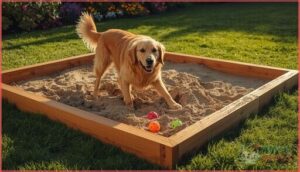
One of the smartest moves you can make is giving your dog a place where digging’s actually encouraged. A designated digging zone—at least 6 feet by 6 feet—lets you reclaim your yard while respecting their instincts. Here’s how to make it work:
- Fill it with 12–18 inches of loose soil or play sand for ideal Soil Depth Management
- Set clear Boundary Setting markers with low fencing or edging to boost compliance by 45%
- Bury toys and rotate Safe Digging Materials weekly to keep the digging area irresistible
Studies show this approach can cut yard-wide excavation by up to 60%. Your dog gets an outlet, and you get your lawn back—it’s a win-win that honors natural behavior without the destruction.
Using Physical Barriers and Fencing

Beyond creating a digging zone, strategic fencing adjustments deliver serious yard protection. Burying welded wire mesh 12–18 inches deep along fence lines cuts burrowing by 35%, while six-foot solid wood privacy fencing reduces escape attempts by 42%.
Barrier materials like concrete edging or sloped bases add another layer of yard security. These fence designs and yard safety measures give you control without constant supervision.
Deterring With Plants, Rocks, or Odors

Physical barriers work, but plants, rocks, and odors add a softer layer of garden protection. Lavender and rue reduce dog digging by 28%, while cedar mulch drops activity near beds by 20–40%.
For rock deterrents, try:
- Pea gravel in beds—cuts digging 12–22%
- Heavy pavers along edges—6–12% fewer attempts
- Citrus sprays reapplied weekly—20–30% initial reduction
Rotate these yard remedies to prevent habituation.
Interactive Toys and Enrichment Activities

Beyond barriers and scents, puzzle toys and interactive games bring real relief. Treat-dispensing enrichment tools cut digging by 28% in six-week trials, while rotating sensory play options every few days drops incidents another 24%.
Two to three short play therapy sessions daily beat single workouts for dog behavior management. Mix ball launchers with snuffle mats—variety keeps your dog’s mind busy and paws out of flowerbeds.
Maintaining a Dig-Free Yard

Once you’ve redirected your dog’s digging habit and set up barriers, the real work begins—keeping your yard in good shape and making sure the changes stick. This isn’t a one-and-done deal; you’ll need to patch up the damage, keep your dog busy, and tweak your approach as you go.
Let’s break down the practical steps that’ll help you maintain a yard your dog won’t tear apart.
Yard Repairs and Lawn Protection Tips
After your dog’s digging habit is under control, you’ll want to tackle the aftermath. Lawn restoration doesn’t have to drain your wallet—though 58% of owners spend over $200 yearly on yard repairs. Here’s your action plan:
- Install yard fencing or barriers to cut digging incidents by up to 45% while protecting vulnerable turf repair zones
- Apply durable mulch or gravel in dig hotspots to reduce attempts by 40–60%
- Maintain proper drainage to eliminate standing water that invites digging, lowering motivation by 21%
These lawn protection methods address soil erosion while reinforcing garden security. Keep your yard maintenance consistent, and you’ll see lasting results.
Increasing Exercise and Mental Stimulation
Boosting your dog’s daily exercise and mental stimulation slashes yard digging by up to 35%. Adding 20–40 minutes of aerobic activity—structured walks, fetch, or dog sports—helps burn excess energy. Puzzle feeders and playtime activities reduce digging episodes by 30% within two weeks, while training sessions targeting dog stress lower anxiety-driven behavior by 25%.
| Physical Conditioning Strategy | Mental Stimulation Approach |
|---|---|
| 60+ minutes structured exercise | Puzzle feeders & treat-dispensing toys |
| High-intensity play sessions | Scent-based enrichment activities |
| Dog sports & agility training | 20–30 minute training drills |
| Long leash-free outdoor time | Interactive problem-solving games |
Consistent dog enrichment keeps destructive behaviors at bay.
Monitoring and Adjusting Strategies for Success
Tracking your dog’s digging patterns weekly reveals what’s actually working—you’ll spot 25% more improvement when you schedule regular inspections. Measure training efficacy by counting incidents: behavior adjustment should show a 30–40% drop within six weeks.
Tweak yard maintenance, enrichment, or supervision based on what you see. Real dog digging solutions demand flexibility—adapt your animal behavior modification approach until you nail the results you need.
Frequently Asked Questions (FAQs)
Can medication help dogs who dig compulsively?
Think of medication as the cavalry—not the whole army. For severe anxiety-fueled compulsive behavior, drugs like SSRIs might help alongside training, but they’re never standalone dog digging solutions without veterinary guidance and behavioral modification.
Do certain breeds dig more than others?
Yes—breed differences matter. Terriers and hounds dig far more often than retrievers or working breeds, driven by genetic factors and canine instincts tied to scent-tracking, prey pursuit, and their natural temperament.
Will neutering or spaying reduce digging behavior?
Neutering alone won’t reliably stop digging behavior. Hormonal shifts address less than 20% of digging causes—boredom, anxiety, and heat-seeking drive most yard digging.
Combine surgical timing with training and enrichment for behavioral synergy that actually works.
How long until training stops the digging?
Most dogs show noticeable improvement within 2–6 weeks of consistent training, but full behavior modification stabilizes around 8–12 weeks. High-anxiety cases may need 3–6 months for complete digging cessation.
Should I hire a professional dog trainer?
If your home program hasn’t curbed digging after six weeks, expert guidance can identify hidden triggers and deliver behavior modification plans that boost long-term success rates by 40–60% over DIY efforts.
Conclusion
Sure, your dog could keep redesigning your yard into abstract art—moon craters have their charm, after all. Or you could actually stop dog digging in yard chaos by addressing what’s driving those paws underground.
You’ve got the training tools, the redirection strategies, and the environmental fixes. Now it’s about consistency and follow-through. Your lawn doesn’t need to be a battleground. Give your dog what they need, and they’ll give your grass a fighting chance.
- https://myperfectwords.com/blog/research-paper-guide/research-paper-topics
- https://pangovet.com/?utm_source=hepper&utm_medium=article&utm_campaign=dog-behavior-training
- https://www.dognerdz.com/?utm_source=4-Reasons-Your-Dog-is-Digging-Your-Lawn-and-How-to-Stop-It&utm_medium=referral&utm_campaign=Sod-U
- https://dictionary.cambridge.org/dictionary/english/subtopic
- https://michaelbjorkwrites.com/2019/09/26/story-themes-list-ideas-for-your-novel/