
This site is supported by our readers. We may earn a commission, at no cost to you, if you purchase through links.

Your dog deserves more than a cramped plastic box on wheels when you’re traveling through highway traffic or airport terminals. The wrong travel crate can turn a routine trip into a dangerous situation—loose latches fail during sudden stops, poor ventilation causes overheating, and flimsy construction collapses under pressure.
I’ve evaluated hundreds of travel crates through crash testing protocols and real-world aviation scenarios, and the differences between adequate and outstanding products are stark. The right dog crate options for travel combine impact-resistant construction with practical features like secure anchoring systems and proper airflow channels.
Whether you’re planning cross-country road trips or coordinating cargo flights, you’ll need specific safety certifications and design elements that match your travel method and your dog’s size.
Table Of Contents
Key Takeaways
- You need a travel crate with crash-tested construction, secure double-bolt latches, and proper ventilation systems that deliver 2-3 air changes per hour to protect your dog during sudden stops and temperature fluctuations.
- Hard-sided plastic kennels work best for airline compliance and versatile travel, while aluminum options cut weight by 20-40% without sacrificing durability, and soft-sided carriers suit small dogs under 15-20 pounds for cabin travel.
- Measure your dog’s length, height, and chest girth before selecting a crate, allowing 1-2 inches of extra space and confirming they can stand, turn, and lie down comfortably with bedding included.
- Start crate training 2-3 weeks before travel with 5-10 minute sessions paired with meals or toys, gradually increasing duration to match your trip length while practicing short car rides to reduce travel anxiety.
Top 5 Dog Crate Options for Travel
You need a travel crate that won’t fail when it matters most—whether you’re driving cross-country or flying overseas with your dog. The right choice balances crash-tested safety, proper ventilation, and build quality that holds up under real travel conditions.
Here are five options that meet strict safety standards while keeping your dog comfortable on the road or in the air.
1. Gunner Intermediate Dog Crate
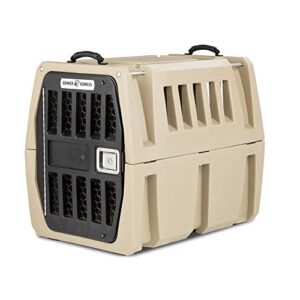
The GUNNER G1 Kennel sets the bar for crash-tested dog travel crate options. Its double-wall rotomolded construction in the intermediate size model (30 x 19 x 22 inches) is built for mid-sized breeds. The escape-proof door features a locking paddle latch plus backup safety latches—real travel safety engineering.
The reinforced aluminum frame and elevated feet guarantee crate durability even in rough conditions. At 62 pounds, it’s hefty but provides peerless pet comfort and dog acclimation space.
Worth noting: it’s pricey, but your dog’s protection isn’t negotiable.
While the cost is high, investing in your dog’s safety during travel is absolutely essential
| Best For | Dog owners who travel frequently with medium to large breeds and want crash-tested protection that won’t fail during an accident. |
|---|---|
| Material | Stainless Steel |
| Weight | 62 pounds |
| Color | Beige |
| Ventilation | Proper ventilation |
| Travel Use | Cars and vans |
| Life Stage | Medium/large dogs |
| Additional Features |
|
- Double-wall rotomolded construction with aluminum reinforcement makes this one of the toughest crates you can buy for vehicle travel
- Escape-proof door system with locking paddle latch and backup safety latches keeps even determined dogs secure
- Elevated design with proper ventilation keeps your dog comfortable in hot cars and various weather conditions
- At 62 pounds and a steep price point, it’s a significant investment in both weight and cost compared to standard crates
- Some owners report the plastic feels thinner than expected given the price, with occasional flexibility concerns
- Accessories like chew kits and security add-ons drive the total cost even higher
2. Impact Collapsible Dog Crate
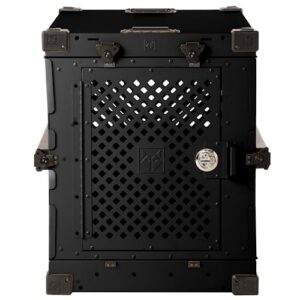
If travel crate selection leans toward portability, the Impact Collapsible Crate deserves your attention. This aluminum-framed dog travel crate folds flat in 60 seconds—no tools needed—making it ideal for frequent travelers who value foldable design without sacrificing travel safety.
At 40.5 x 27.5 x 34 inches and 45 pounds, it offers pet comfort through ventilated diamond-shaped air holes while maintaining crate durability with military-grade grips.
Though not crash tested like Gunner, its stackable, one-handed operation delivers practical convenience for road trips where quick setup matters most.
| Best For | Travelers who need a lightweight, quick-setup crate that collapses flat for easy storage between trips. |
|---|---|
| Material | Aluminum |
| Weight | 45 pounds |
| Color | Black |
| Ventilation | Optimal airflow |
| Travel Use | Car rides and trips |
| Life Stage | All life stages |
| Additional Features |
|
- Folds down in 60 seconds without tools and operates with one hand for hassle-free setup
- Aluminum construction keeps it lighter than steel alternatives while still being durable
- Ventilated design with diamond-shaped holes ensures good airflow during long drives
- Not crash tested like some competing models, so safety credentials are unclear
- 45 pounds might still feel heavy for shorter people or anyone loading it solo
- Premium price point makes it a steep investment compared to basic wire crates
3. Petmate Vari Dog Kennel Carrier
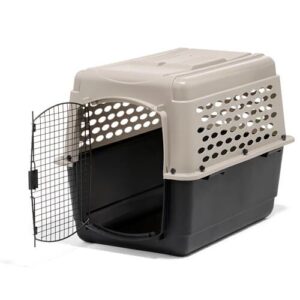
For budget-conscious travelers, the Petmate Vari Kennel balances affordability with airline-approved construction. This molded plastic dog travel crate measures 36 x 25 x 27 inches and accommodates large dogs weighing 50-70 pounds. Four-sided ventilation ensures dog comfort during transport.
Its stay-dry moat and easy-clean design improve travel safety, while the wire door includes tamper-proof holes for added security. Though some owners report latch durability concerns, the Vari Kennel’s eco-friendly recycled materials and tool-free assembly make it a practical choice for occasional travel needs.
| Best For | Pet owners looking for an affordable, airline-approved kennel for occasional travel with large dogs weighing 50-70 pounds. |
|---|---|
| Material | Plastic |
| Weight | 1 kilogram |
| Color | Taupe/Black |
| Ventilation | Four-sided ventilation |
| Travel Use | Car and air travel |
| Life Stage | Large dogs 50-70 lbs |
| Additional Features |
|
- Airline-approved design with four-sided ventilation and meets most cargo specifications for safe air travel
- Made from eco-friendly recycled materials and features a stay-dry moat for easy cleaning
- Tool-free assembly and disassembly makes setup quick and convenient
- Latch quality issues reported by multiple customers, with some doors not clamping properly or falling apart
- May be too small for dogs at the higher end of the 50-70 lb weight range
- Mixed durability reviews suggest it may not hold up well for frequent or heavy use
4. Diggs Pet Travel Carrier

For cabin-friendly pet travel, the Diggs Passenger carrier blends crash-tested safety with airline compliance. This soft-sided dog crate spans 20 x 10.8 x 11.5 inches and weighs 4.5 pounds, making it manageable for boarding and overhead stowage.
Pet Carrier Reviews consistently praise its custom seat belt clips and three-pocket design for storing travel accessories for dogs like documentation and treats.
Ventilated on four sides, this navy nylon carrier offers your small dog comfort during flights or car rides, though some owners note sizing runs snug for pets over 12 pounds.
| Best For | Pet owners who frequently travel by plane or car with small dogs or cats and want a crash-tested, airline-approved carrier with solid ventilation and storage. |
|---|---|
| Material | Nylon |
| Weight | 4.5 pounds |
| Color | Navy |
| Ventilation | Ventilated three sides |
| Travel Use | Plane, train, car |
| Life Stage | All life stages |
| Additional Features |
|
- Crash-tested with custom seat belt clips for safe car travel, plus airline-friendly dimensions that fit under most cabin seats
- Four-sided ventilation and removable washable bed keep pets comfortable on longer trips
- Three exterior pockets, detachable cross-body strap, and collar tether clip make it practical for hands-free travel
- Sizing runs small—many owners find it too snug for pets over 12 pounds despite the “small to medium” label
- Mixed feedback on clasp durability and slip resistance, with some users reporting design issues
- Higher price point compared to basic soft carriers, which may not justify the cost for occasional travelers
5. Roverlund Pet Travel Crate
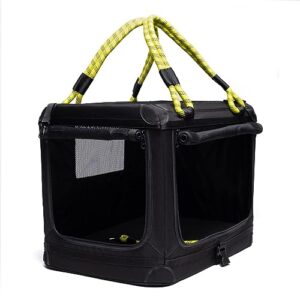
Roverlund’s Away-We-Go dog travel crate assembles in seconds without tools, delivering practical pet travel solutions for dogs up to 50 pounds. This black-and-yellow polyester carrier (21 x 30 x 24 inches) features multiple entry points, ventilated sides for pet comfort, and a waterproof bottom for crate maintenance during road trips.
Roverlund features include locking zippers, an inner leash clip for pet safety tips compliance, and a rear storage pocket for travel accessories like vaccination records.
While convenient for vet visits and overnight stays, you’ll want to skip this dog travel safety option for persistent chewers.
| Best For | Pet owners who travel frequently with small to medium dogs (up to 50lbs) and need a lightweight, tool-free crate that sets up quickly for car trips, vet visits, or short stays. |
|---|---|
| Material | Polyester |
| Weight | 9 pounds |
| Color | Black Yellow |
| Ventilation | Ventilated sides |
| Travel Use | Home and travel |
| Life Stage | Various breeds/sizes |
| Additional Features |
|
- Sets up in seconds without any tools and collapses flat for easy storage between trips
- Multiple entry points and ventilated mesh sides keep your dog comfortable and reduce travel anxiety
- Waterproof bottom and washable pad make cleanup simple after accidents or muddy paws
- Not durable enough for dogs that chew or scratch aggressively at crate walls
- Some customers report quality issues with zippers and seams failing after regular use
- Assembly and disassembly can require more effort than expected despite the quick-setup claims
Safety Features Every Travel Crate Needs
When you’re choosing a travel crate for your dog, safety features aren’t optional—they’re the foundation of responsible pet transport. A well-designed crate protects your dog from injury during sudden stops, prevents escape attempts, and ensures adequate airflow throughout the journey.
Let’s examine the four critical safety features that every quality travel crate must include to keep your companion secure on the road or in the air.
Secure Door Latches and Locking Mechanisms
Think of a dog travel crate door as a safety seal—during sudden stops or turbulence, weak latch mechanisms can fail catastrophically. You need double-bolt secure fasteners that resist prying and vibration, particularly in crash-tested models like the GUNNER G1 Kennel and Impact Dog Crates.
Look for tamper resistance through recessed housings, corrosion-resistant hardware, and locking systems that comply with airline standards, ensuring your dog’s containment holds when it matters most.
Ensuring the structural integrity of the crate is essential for passing rigorous scientific study audits to guarantee safety.
Proper Ventilation and Drainage Systems
Your dog’s travel crate ventilation design determines whether your pet arrives safely or suffers heat stress. Airflow paths must deliver 2–3 air changes per hour, while moisture control and drainage systems prevent pooling within 60 seconds.
Prioritize these dog crate features for pet comfort and safety:
- Cross-ventilation grilles at chest height for ideal airflow
- Raised drainage channels with sealed troughs
- UV-stabilized vents with replaceable, easy-clean covers
Tie-Down Capabilities for Vehicle Safety
Your crate won’t protect your dog unless it stays in place during sudden stops. Integrated cargo anchors and tie-down straps rated for 300–500 pounds keep crash-tested crates stable in SUVs, vans, and sedans.
Look for vehicle restraints with reinforced attachment points and adjustable loops that connect to seat rails. Inspect safety straps after each trip—secure fastening means reliable kennel security.
Escape-Proof Design and Reinforced Construction
A determined dog can breach weak construction faster than you think. Reinforced frames with welded seams deliver twist resistance and pry proofing that standard latches can’t match.
Crash tested options like the GUNNER G1 Kennel and Impact Dog Crates feature heavy-duty locking pins and impact testing certification, ensuring escape-proof design even when your anxious traveler tests every corner during sudden stops.
Travel Crate Materials and Their Benefits
The material you choose for your dog’s travel crate directly affects its weight, durability, and suitability for different travel scenarios. Each material offers distinct advantages depending on whether you’re flying commercial, taking a road trip, or moving between hotels.
Let’s examine the four primary crate materials and what makes each one work best for specific travel situations.
Plastic Hard-Sided Kennels for Air and Car Travel
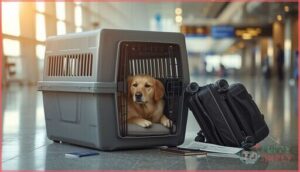
When airline compliance meets everyday durability, plastic hard-sided kennels deliver superior versatility for your travel needs. These airline-approved dog crates excel in both air and ground transport, offering pet safety through their rigid construction.
- Impact Dog Crates and similar rigid shells resist cargo stress while protecting your companion
- Travel regulations favor standardized TSA and IATA compliant dimensions
- Crate ventilation through multiple side holes maintains proper airflow
- Pet comfort improves with anti-slip mats and interior cushioning
- Plastic durability ensures easy cleaning between adventures
Aluminum Crates for Lightweight Durability

While plastic grips everyday travel well, aluminum crates bring a performance edge you’ll appreciate on longer journeys. These lightweight frames cut weight by 20–40% compared to steel, yet aluminum strength matches rigidity demands for air cargo and road trips. Corrosion resistance keeps your investment sound through humidity and temperature swings, while modular designs let you customize configurations.
| Feature | Benefit |
|---|---|
| High strength-to-weight ratio | Easier lifting and reduced payload |
| Reinforced corners and cross-members | Resists bending under load |
| Corrosion-resistant finish | Long-term durability in varying climates |
| Detachable lids and foldable components | Improved packing efficiency |
| Integrated ventilation ports | Meets airline airflow requirements |
Portability features like shoulder straps transform loading day, especially when you’re managing multiple bags and your dog’s needs simultaneously.
Collapsible Portable Crates for Convenience
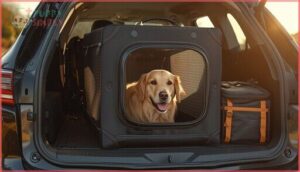
When speed and storage space matter, collapsible travel dog crates deliver outstanding convenience. These portable pet enclosures fold flat in under 60 seconds, slashing stored volume by 60% and turning cramped trunk space into organized storage solutions.
Mesh panels reduce pet anxiety through visibility, while integrated grips keep weight under 15 pounds.
Proper dog crate ventilation and reinforced corners guarantee your pup travels safely without sacrificing portability or travel comfort.
Soft-Sided Crates for Small Dogs

For small breeds weighing 15–20 pounds, soft-sided crates balance pet comfort with travel safety through lightweight nylon construction—usually under 3.5 pounds. Mesh panels deliver 60% crate ventilation across sides, while dual-locking zippers and reinforced seams provide fabric durability during cabin travel.
These portable dog crate options fold flat for storage, though they lack the crash-tested strength larger pet travel accessories offer.
How to Choose The Right Travel Crate

Selecting the right travel crate isn’t about picking the most expensive option—it’s about matching your dog’s size, temperament, and your specific travel needs to the appropriate design. You’ll need to take into account everything from precise measurements and construction quality to airline compliance and how your dog reacts to confined spaces.
The following factors will help you make an informed decision that keeps your companion safe and comfortable on every journey.
Measuring Your Dog for Proper Fit
Getting crate dimensions right isn’t guesswork—it’s about three key measurements. Measure your dog’s length from shoulder to tail base, height from floor to withers, and girth around the chest. Then compare those numbers to the crate’s interior dimensions:
- Allow 1–2 inches for growth and movement
- Confirm your dog can stand upright without touching the top
- Verify enough room to turn comfortably
- Account for bedding thickness
- Choose the larger size if measurements fall between options
Matching Crate Type to Travel Method
Your travel mode dictates the crate you’ll need. For airline compliance and air travel with pets, invest in a crash-tested, hard-sided crate with secure latching—most airlines require rigid construction and leak-proof flooring. Car travel with dogs demands tie-downs that anchor the travel crate to your vehicle’s cargo area, preventing dangerous shifts during transit. Short ground trips allow collapsible options for convenience without sacrificing pet comfort.
| Travel Method | Recommended Crate Type |
|---|---|
| Air Travel | Hard-sided, airline approved with secure locks |
| Car/SUV | Crash-tested with tie-down capabilities |
| Short Trips | Collapsible portable with proper ventilation |
Understanding Airline and Aviation Regulations
Before you book that flight, you’ll need to navigate airline policies and IATA compliance requirements. Most carriers mandate crates meeting specific aviation standards for pet transportation—rigid construction, secure latching, and adequate ventilation on at least three sides.
Key aviation regulations for pets you can’t ignore:
- Crate approval must align with IATA Live Animal Regulations, ensuring your dog can stand, turn, and lie comfortably
- Travel documents include health certificates issued within 10 days and current vaccination records
- Airline-specific rules vary by route, breed, and whether your pet travels in-cabin or cargo
Evaluating Construction Quality and Reviews
You wouldn’t skip a vehicle safety inspection, so don’t overlook construction tests and material strength when selecting crash-tested products. Independent safety ratings validate what manufacturers claim—look for load test results exceeding 200 lbf and connection points surviving 1,000 cycles without failure.
Critical Quality Indicators to Verify
| Assessment Area | What to Confirm |
|---|---|
| Dog Crate Reviews | Minimum 3-unit sample consistency |
| Material Strength | ABS/polypropylene impact resistance |
| Dog Crate Features | Secure latches, reinforced edges |
| User Reviews | Assembly time under 8 minutes |
| Pet Safety Features | Third-party lab certifications |
Dog travel safety depends on verified quality control—manufacturer weights should match measured crates within 5%, and UV-stable plastics prevent embrittlement after sun exposure.
Pre-Travel Crate Training and Acclimatization
Your dog won’t travel safely without proper dog crate training—start crate introduction 2-3 weeks before departure with brief 5–10 minute sessions in your main living area.
Effective acclimatization techniques build crate familiarity and reduce travel anxiety:
- Pair crate time with meals or favorite toys to create positive associations and improve dog comfort
- Gradually increase duration by 5–10 minutes weekly until reaching typical travel lengths
- Practice short car rides to connect motion with pet safety and prepare for dog travel
Frequently Asked Questions (FAQs)
How often should I replace my dogs travel crate?
You should replace your dog’s travel crate every 5 to 7 years under normal conditions, but inspect annually for cracks, damaged latches, or warping that compromises pet safety and travel regulations compliance.
Can I use a travel crate at home daily?
Yes, you can use a travel crate at home daily for balanced periods—up to 8–10 hours with breaks—ensuring proper sizing, ventilation, and enrichment to support your dog’s welfare and household safety.
Do travel crates come with warranty coverage options?
Most manufacturers provide limited warranties covering defects and structural failure, generally ranging from one to five years.
Extended plans and lifetime dog damage guarantees are available through select brands like Impact Dog Crates.
How do I clean stubborn stains from crates?
Think of a crate stain like a stubborn houseguest—it won’t leave without the right encouragement.
Use enzymatic cleaners for protein-based messes, white vinegar for odor control, and baking soda paste for embedded grime.
Conclusion
Your dog’s safety during travel isn’t negotiable—it’s the foundation of every trip you’ll take together. The dog crate options for travel you choose will either protect your companion during unexpected emergencies or fail when it matters most.
Invest in crash-tested construction, verify airline compliance for your specific routes, and complete thorough crate training weeks before departure. Your preparation today determines whether your dog arrives safely at every destination tomorrow.
- https://academichelpexpress.blog/2024/08/please-use-the-bulleted-points-and-the-rubric-below-to-guide-your-work-your-pa/
- https://x.com/godofprompt/status/1990526288063324577
- https://www.sciencedirect.com/science/article/pii/S0749208123000268
- https://arxiv.org/html/2507.17948v2
- https://www.scribd.com/document/683678057/Academic-Research-Manual-V1-1-April-2016