This site is supported by our readers. We may earn a commission, at no cost to you, if you purchase through links.
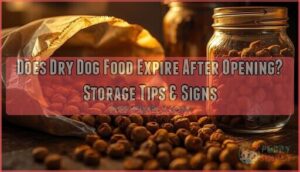
That bag of kibble sitting open on your shelf right now? It started losing quality the moment you unsealed it.
Most pet owners assume the expiration date printed on the bag tells the whole story—but it doesn’t. That date reflects sealed storage conditions, not the reality of an open bag exposed to air, humidity, and daily scooping.
Dry dog food does expire after opening, and the clock moves faster than most people expect. Fats go rancid, vitamins break down, and mold can take hold long before anything looks obviously wrong.
Knowing what to watch for—and how to store food properly—makes a real difference in what your dog actually gets from every meal.
Table Of Contents
Key Takeaways
- Once you open a bag of dry dog food, you’ve got about 6–8 weeks to use it safely before oxidation, rancidity, and nutrient loss become real concerns.
- The expiration date on the bag only applies to sealed storage, so the opening date is what actually matters once you break the seal.
- Storing kibble in an airtight container, kept between 50°F–70°F and below 60% humidity, is the single most effective way to slow spoilage.
- Trust your senses — rancid smells, greasy texture, clumping, or visible mold are clear signs it’s time to toss the bag and start fresh.
Does Dry Dog Food Expire After Opening?
Yes, dry dog food does expire after opening — and faster than most people expect. That sealed bag on the shelf has a shelf life of about one year, but the moment you open it, the clock starts ticking much quicker. Air exposure immediately triggers oxidation, breaking down fats and degrading vitamins like A and E. Think of it like a bag of chips left open overnight — stale is just the beginning.
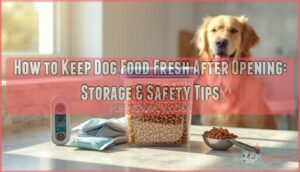
Most experts recommend finishing an open bag within 4–6 weeks, and these tips for keeping dry dog food fresh after opening can help you stretch every last scoop safely.
Dry dog food expires faster after opening than most owners realize, with oxidation breaking down fats and vitamins immediately
Poor food storage methods or skipping kibble preservation tips can speed up that decline markedly, affecting dog food quality in ways you can’t always see. Proper storage isn’t optional — it’s what stands between your dog and food that’s quietly gone bad. Understanding dry dog food shelf life is vital for maintaining its quality.
How Long is Dry Dog Food Safe After Opening?

Once you open that bag, the clock starts ticking. Most dry dog food stays safe for about 6 to 8 weeks, but a few things can cut that window even shorter.
Here’s what affects how long your dog’s food actually lasts after opening.
Recommended Usage Timeframe (6–8 Weeks)
Most dog food brands agree on a 6–8 week freshness window once you open the bag — and for good reason. Freshness guidelines exist to protect both shelf life and your dog’s health. Here’s what happens during that window:
- Weeks 1–4: Peak flavor, aroma, and nutrient retention
- Weeks 4–6: Gradual nutrient loss begins, especially vitamins A and B
- Weeks 6–8: Noticeable oxidation; some dogs start hesitating at the bowl
- Beyond 8 weeks: Spoilage risk increases, regardless of proper storage or expiration date
To maintain maximum freshness, it’s vital to follow proper dry food storage techniques.
Factors That Shorten Shelf Life
Even with proper storage, several factors can quietly cut that 6–8 week window short. Oxygen exposure triggers fat oxidation fast — especially in high-fat kibble, where rancidity can set in within weeks.
Humidity control matters too: storage conditions above 60% humidity invite mold growth and spoilage within days.
Even your choice of storage vessel plays a role—airtight container materials that keep dog food fresh can help regulate moisture and slow the conditions that let mold take hold.
Temperature fluctuations, like those in garages, accelerate shelf life loss by nearly half.
Impact of Expiration Dates Vs. Opening Date
For dry dog food, the expiration date printed on the bag is only reliable while it’s sealed. Once you break the seal, the Rancidity Timeline and Nutrient Degradation kick in, making Label Guidance less useful.
Date Interpretation shifts—after opening, shelf life depends on your dry dog food storage best practices, not the printed date. Consumer Perception often overlooks this.
Signs Your Dry Dog Food Has Gone Bad
Sometimes dog food goes bad before you expect it to, and the signs aren’t always obvious at first glance. Knowing what to look for can save your dog from an upset stomach — or worse. Here are the key warning signs that your dry dog food has turned.
Visible Mold or Discoloration
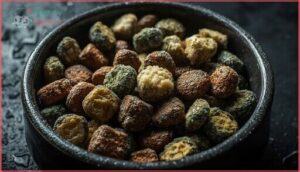
Mold color indicators can tell you a lot before your dog takes a single bite. Green, black, or white fuzzy patches are obvious red flags, but don’t overlook bluish, pink, or yellow discoloration patterns — those signal mold growth too.
Moisture-induced clumping and darker spots often come first. With mycotoxin risks hiding even in clean-looking kibble, any suspicious spotting means it’s time to discard.
Off Odors and Texture Changes
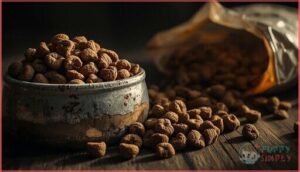
Your nose is your best tool here. Fresh kibble smells mildly meaty or grainy — once rancidity sets in, that changes fast. Watch for these texture degradation indicators and oxidation odor timeline clues:
- Rancid smell detection — sour or chemical odors replace the normal scent within 4–6 weeks
- Greasy kibble feel — oily, slick residue on fingers signals fat breakdown
- Moisture softness signs — pieces feel crumbly or sticky instead of firm
- Clumping — humidity causes kibble to clump, speeding mold growth
Nutritional Degradation and Safety Risks
What you can’t see may be the bigger problem.
Beyond the obvious signs, oxidative rancidity quietly destroys vitamin A and E, while mycotoxin contamination from mold growth can harm your dog’s liver over time.
Bacterial spoilage adds another layer of risk.
These invisible changes cause real long-term health impact — nutritional value drops, and pet food safety suffers well before anything looks or smells wrong.
Best Practices for Storing Dry Dog Food
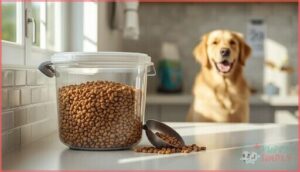
Storing dry dog food the right way makes a real difference in how long it stays fresh and safe.
A few simple habits can protect your dog’s food from moisture, heat, and contamination.
Here’s what you need to know to store it properly.
Importance of Airtight Containers
An airtight container does more than just tidy up your pantry — it’s your first line of defense for pet food safety.
Proper sealing cuts oxidation by over 50%, keeping fats from turning rancid and supporting shelf life extension up to six weeks.
It also locks in nutrient preservation, blocks pests like weevils and ants, prevents mold growth from moisture, and manages odor containment so your kitchen stays fresh.
Temperature and Humidity Control
Heat and moisture are silent kibble killers. Even a sealed airtight container can’t fully compensate for poor storage conditions. Keep these four factors in check:
- Maintain the ideal temperature range — between 50°F and 70°F
- Use humidity monitoring devices to stay below 60% relative humidity
- Choose cool dark storage, away from appliances and windows
- Address heat-induced rancidity by avoiding cool, dry area spots near garages
Mold prevention strategies start with consistent moisture and temperature control daily.
Keeping Food in Original Packaging
That original bag isn’t just packaging — it’s an engineered barrier layer built to protect what’s inside.
It blocks moisture, light, and oxygen far better than most plain bins.
Don’t toss it.
Slide the whole bag into your airtight container instead.
You’ll keep label visibility for the expiration date, get pest protection, support nutrient preservation, and make dry dog food storage genuinely easier.
Cleaning Storage Containers
Even the best airtight containers—metal, glass, or BPA-free plastic—need regular cleaning. Wash them with hot soapy water between every bag for basic soap sanitation.
For deeper care, a vinegar disinfect spray or baking soda scrub addresses stubborn grease and odors. Always finish with full air drying before refilling.
Stick to that cleaning schedule, and your dry dog food storage best practices actually hold up.
Tips to Extend Dry Dog Food Freshness
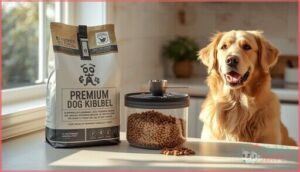
Keeping dry dog food fresh comes down to a few simple habits anyone can pick up.
Small changes in how you portion, store, and package the food can make a real difference in how long it stays safe and nutritious.
Here are some practical tips to help you get the most out of every bag.
Portioning and Avoiding Contamination
Keeping kibble clean starts the moment you open the bag. Small habits make a big difference in dog food safety and cross‑contamination prevention.
- Use dedicated scoops — never use your dog’s bowl
- Practice hand hygiene before and after feeding
- Try pre‑measured packs to limit bag exposure
- Prioritize bowl sanitization daily with hot, soapy water
- Apply portion control — never return leftovers to the bag
Innovations in Pet Food Packaging
Today’s pet food packaging has quietly gotten smarter. Many bags now use barrier materials that block oxygen and moisture, while nitrogen flush technology pushes out air before sealing to slow spoilage.
Look for resealable bags with airtight zipper closures, built-in freshness indicators that signal when the seal is compromised, smart QR codes linking to feeding guides, and ergonomic design features that make pouring easier.
These innovations in pet food packaging genuinely help extend kibble freshness.
Sustainable and DIY Storage Solutions
Beyond smart packaging, you can make DIY storage solutions that are both practical and planet‑friendly. Here are a few worth trying:
- Upcycled Coffee Canisters hold up to 2 pounds of kibble after a quick clean.
- Popcorn Tin Repurposing stores 10–15 pounds and doubles as airtight containers with humidity control.
- Bamboo Lid Bins with silicone seals keep food fresh for months.
Glass Jar Reuse and Mylar Bag Systems take it further — Mylar with oxygen absorbers can preserve kibble for years, making resealable bags look basic by comparison.
Frequently Asked Questions (FAQs)
How to tell if dry dog food has gone bad?
You open the bag, and something just smells off.
Trust that instinct.
Check for mold spots, soft or greasy kibble, color changes, and watch your dog’s reaction — those are your clearest signs.
Can you mix old and new dry dog food?
You can, but it’s risky. Old kibble carries rancid fat risks and bacterial contamination that can taint the new bag.
For a gradual change, consult vet guidance and follow proper dry dog food storage best practices.
Does bag size affect how quickly food spoils?
Yes, bag size quietly shapes how fast food loses quality. Larger bags trap more oxygen, speeding oxidation rate and vitamin degradation.
Matching bag size to your dog’s weekly intake is one of the smartest dry dog food storage best practices you can follow.
How does dry food compare to wet food longevity?
Dry kibble stays fresh for 4–6 weeks after opening, while wet food spoils within 2–3 days once refrigerated.
Moisture drives that shelf‑life variance—higher water content accelerates oxidation speed and microbial spoilage fast.
Should dry dog food be refrigerated after opening?
Refrigerating dry dog food is like keeping a sponge near a sink — it just absorbs what’s around it. Skip the fridge. Cool, dry pantry storage is all your dog’s kibble needs.
Conclusion
Like a loaf of bread left out on the counter, does dry dog food expire after opening — and faster than the bag suggests. Once that seal breaks, the countdown begins.
Keeping food in an airtight container, away from heat and moisture, buys your dog weeks of better nutrition. Check for odd smells, texture changes, or anything that looks off. Small storage habits protect every meal you serve, and your dog’s health shows the difference.
- https://dog.eukanuba.eu/dog/dog-advisor/nutrition/how-long-does-dry-dog-food-last
- https://www.iams.com/dog/dog-articles/how-long-does-dog-food-last
- https://www.houndsy.com/blogs/modern-tails/can-dry-dog-food-spoil-in-heat-understanding-shelf-life-and-storage-best-practices
- https://millsdailypacks.com/blogs/everything-in-a-pack/fresh-sealed-daily-why-your-dogs-kibble-loses-nutrients-and-how-to-fix-it
- https://keepingdog.com/how-can-you-tell-if-dry-dog-food-is-rancid/