
This site is supported by our readers. We may earn a commission, at no cost to you, if you purchase through links.
Your dog’s kibble starts losing nutritional value the moment you tear open that bag. Fats oxidize, vitamins degrade, and moisture creeps in—sometimes within days of exposure to air. The Association of American Feed Control Officials specifically recommends airtight containers for dog food storage, and there’s solid science behind this guidance.
Without proper protection, you’re not just dealing with stale food that your dog might refuse to eat. You’re risking mold growth, bacterial contamination, and pest infestation that can lead to serious digestive issues or food poisoning. The right container makes the difference between fresh, nutritious meals and a health hazard sitting in your pantry.
Table Of Contents
- Key Takeaways
- Does Dog Food Need an Airtight Container?
- Why Airtight Storage Matters for Dog Food
- What Happens When Dog Food is Exposed to Air?
- Benefits of Using Airtight Containers for Dog Food
- Risks of Storing Dog Food in Non-Airtight Containers
- Choosing The Right Airtight Dog Food Container
- How to Tell if a Container is Truly Airtight
- Best Practices for Dog Food Storage
- How Long Does Dog Food Last in Airtight Containers?
- Tips for Maintaining Dog Food Freshness and Safety
- Frequently Asked Questions (FAQs)
- Conclusion
Key Takeaways
- Dog food loses nutritional value rapidly once exposed to air because fats oxidize, vitamins degrade, and moisture enables mold growth—airtight containers slow this breakdown by limiting oxygen contact and blocking humidity that accelerates spoilage within days.
- Proper airtight storage extends kibble freshness from 4-6 weeks in loosely closed bags to 2-3 months in sealed containers, preventing waste while protecting against pest infestations like meal moths and rodents that chew through packaging.
- Keep the original bag inside your airtight container rather than pouring kibble directly—the bag’s multilayer design seals in fats and prevents rancid residue buildup that compromises freshness between refills.
- Buy only what your dog will eat within 4-6 weeks, store in cool locations under 70°F with humidity below 15%, and watch for spoilage signs like rancid odors, clumping, or discoloration that signal contamination risks.
Does Dog Food Need an Airtight Container?
Yes, your dog food absolutely needs airtight storage. Once you crack open a bag of kibble, those food storage tips become critical for pet nutrition facts. Dry food is coated with oils that break down when exposed to air, making proper storage non-negotiable.
Keeping kibble fresh also starts with choosing high-quality dog food brands that use better fats and preservatives designed to last longer in storage.
The Association of American Feed Control Officials recommends placing the original bag inside an airtight container to prevent moisture absorption and preserve quality. Container materials matter too—hard-sided plastic or metal with airtight seals protects against contaminants. This simple step delivers real dog health benefits by keeping meals fresh and safe.
For a complete breakdown of which storage methods work best, check out this guide on keeping dog food fresh and safe.
Proper storage also helps prevent food contamination risks, ensuring your dog’s meals remain nutritious and secure.
Why Airtight Storage Matters for Dog Food
Storing your dog’s food properly isn’t just about keeping it fresh—it’s about protecting the nutrients your dog needs to stay healthy.
Choosing the right dog food storage containers for senior dog owners helps you maintain freshness while making daily feeding easier and safer.
When kibble sits exposed to air and moisture, it starts breaking down in ways that can affect everything from vitamin content to safety.
That’s why proper storage techniques can make a real difference in keeping your dog’s food fresh and nutritious longer.
Here’s what happens when you use airtight storage and why it makes a real difference for your dog’s meals.
Choosing one of the best dog food containers on Amazon can help you lock in freshness and protect your pup’s kibble from humidity and pests.
Preserving Nutritional Value
Oxidation control is your kibble’s biggest enemy in terms of nutrient retention. Your dog’s food contains fats and vitamins that degrade quickly when exposed to air, with polyunsaturated fatty acids breaking down first.
Airtight storage slows this process dramatically, preserving nutritional value and extending shelf life by limiting oxygen contact that destroys essential nutrients your dog needs. Understanding lipid oxidation issues is vital for maintaining the quality of your dog’s food.
Preventing Spoilage and Contamination
Beyond nutrient loss, your dog’s kibble faces real contamination threats. A 2022 study found that 12 percent of dry dog foods exceeded safe mold counts, and warm, humid conditions accelerate this process dramatically.
Airtight containers provide moisture control and pest prevention, blocking bacteria, yeast, and fungal growth that threaten food safety. Proper container materials and sealing mechanisms turn food storage safety from guesswork into shelf life management you can trust.
Maintaining Palatability and Freshness
Your dog won’t eat stale kibble any more than you’d enjoy a week-old bag of chips left open on the counter. Airtight container materials prevent moisture absorption that destroys food freshness and safety within days.
When you use proper kibble preservation methods, you’re protecting both palatability and nutritional value—ensuring your dog actually wants to eat what you serve, supporting consistent pet nutrition tips that keep mealtimes enjoyable.
What Happens When Dog Food is Exposed to Air?

When you leave dog food exposed to air, you’re basically starting a countdown to spoilage. The oxygen, moisture, and environmental contaminants that reach the kibble trigger a cascade of changes that affect its nutrition, taste, and safety.
Here’s what actually happens to your dog’s food once that protective seal is broken.
Nutrient Degradation
When kibble sits exposed to oxygen, the fats and oils inside start breaking down through a chemical process called oxidation. Essential vitamins like A, D, and E begin to lose their potency within just a few weeks.
This nutrient decay accelerates with moisture absorption, which speeds up degradation rates and compromises your dog’s nutritional intake. Over time, food oxidation silently steals the very elements that keep your pet healthy.
Moisture absorption accelerates nutrient decay, silently stealing the essential elements that keep your pet healthy
Loss of Flavor and Aroma
Oxygen doesn’t just destroy nutrients—it steals the enticing smells and tastes that make your dog rush to their bowl. As fats oxidize, they develop rancid odors and off-flavors that your pet’s sensitive nose detects immediately, often before you notice anything wrong.
Three sensory changes occur rapidly without airtight container protection:
- Volatile flavor compounds evaporate, leaving kibble flat and unappealing
- Oxidation control fails, producing stale, cardboard-like tastes
- Aroma retention collapses as surface fats turn rancid
This sensory degradation directly impacts how much your dog eats.
Increased Risk of Mold and Bacteria
Moisture becomes an invitation for microbial invaders. Exposure to air accelerates moisture absorption, creating perfect conditions for molds like Aspergillus and Penicillium to colonize your kibble, while bacterial contaminants multiply rapidly at room temperature.
Proper mold prevention and bacteria control require strict storage hygiene. An airtight container blocks ambient humidity, protecting against contamination risks, pest infestation, and food spoilage that compromise food safety and handling.
Benefits of Using Airtight Containers for Dog Food
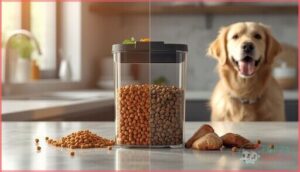
Airtight containers do more than just keep your dog’s food sealed—they actively protect against multiple threats that compromise quality and safety. When you invest in proper storage, you’re preventing waste, safeguarding your dog’s health, and actually saving money over time.
Let’s look at the three major benefits that make airtight containers essential for responsible pet owners.
Extended Shelf Life
Airtight containers can stretch your kibble’s usable life well beyond what you’d get with an open bag. When you seal out oxygen and moisture, you’re protecting your dog’s food from the breakdown that starts the moment you tear that bag. Here’s what airtight systems deliver for shelf life extension:
- Post-opening protection: Dry food stays fresh for 2-3 months in airtight storage conditions versus 4-6 weeks in loosely closed bags
- Slower nutrient loss: Reduced oxygen exposure means fats don’t turn rancid as quickly, preserving nutritional value longer
- Moisture control: Airtight containers block humidity that accelerates spoilage and compromises food preservation
Smart storage solutions mean you’re not racing the clock every time you open a new bag. Your investment in quality food stays protected, and your pup gets consistent freshness maintenance meal after meal.
Pest and Odor Prevention
Your dog’s kibble practically invites pests when stored in flimsy bags. Rodents detect food through smell and chew right through thin packaging, while insects like Indian meal moths and warehouse beetles commonly infest loosely stored dry food.
Airtight container solutions with tight-fitting lids block odor emission that signals nearby pests, keeping ants, cockroaches, and weevils away. Regular container maintenance—washing between refills—prevents rancid residue buildup that creates foul household odors and attracts unwanted visitors.
Reduced Food Waste and Costs
Proper storage solutions directly impact your wallet and the environment. When your dog’s kibble stays sealed from air and moisture, you’ll see real savings add up month after month.
Three ways airtight container benefits cut costs:
- Extended shelf life — Food lasts 4-6 weeks post-opening instead of going stale in two
- Lower spoilage rates — Oxidation slows, preserving oils and nutrients
- Bulk buying confidence — Purchase larger bags safely without rancidity concerns
Risks of Storing Dog Food in Non-Airtight Containers
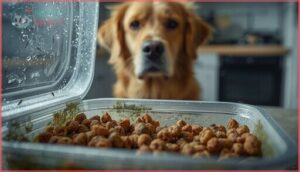
Storing your dog’s food in a container that doesn’t seal properly opens the door to several serious problems. From immediate health risks to long-term nutritional concerns, inadequate storage can compromise your pet’s wellbeing in ways you mightn’t expect.
Here are the main risks you need to know about.
Health Hazards for Dogs
When kibble sits exposed to air and humidity, it becomes a breeding ground for invisible threats that can seriously compromise your dog’s health.
Mold toxins and bacterial contamination can trigger food poisoning, leading to vomiting and diarrhea that require veterinary care.
Rancid fats may worsen canine allergies and digestive issues, while degraded pet nutrition contributes to dog obesity when your pup overeats nutrient-depleted food seeking satisfaction.
Attracting Insects and Rodents
Beyond health risks to your dog, poor food storage creates a pest infestation problem that can take over your home. Food odors from unsealed kibble act like a homing beacon, drawing rodents and insects straight to your pantry or garage. Even folding down a bag won’t stop rodent attraction or provide pest control—those critters will chew right through thin packaging.
Here’s what inadequate storage security invites:
- Indianmeal moth larvae feed directly inside kibble bags, completing their entire life cycle in your dog’s food and spreading to other pantry items.
- Flour beetles and dermestids infest opened bags, leaving behind frass, cast skins, and contaminated food throughout your storage area.
- Rodents gnaw through paper and plastic rapidly, attracted by the high protein and fat content that makes kibble irresistible to mice and rats.
- PestProof storage containers with tight-fitting lids block both odor emission and physical access, breaking the infestation cycle before it starts.
Switching to airtight container food storage isn’t just about freshness—it’s essential insect control that protects your entire household from unwanted visitors.
Increased Likelihood of Spoilage
Even if pests never find your dog’s food, leaving kibble exposed to air sets off a chemical countdown that turns fresh nutrition into spoiled waste within weeks.
Oxidation breaks down fats, creating rancid oils your dog won’t touch. Moisture control fails without airtight seals, allowing humidity levels to trigger mold growth regardless of storage temperature.
Air exposure accelerates food degradation, compromising food freshness and safety long before the printed expiration date.
Choosing The Right Airtight Dog Food Container
Not all airtight containers are created equal, and choosing the wrong one can undermine your storage efforts.
The material, seal quality, and size all play a role in how well your container protects your dog’s food from air, moisture, and pests.
Here’s what you need to take into account when selecting a container that truly keeps kibble fresh.
Food-Grade Materials (Plastic, Metal, Glass)
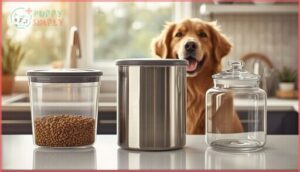
Not all materials are created equal in terms of storing your dog’s food. You’ll want to choose containers made from Food Grade materials that meet strict Container Testing standards.
Look for Food Grade Plastic marked BPA Free, such as HDPE or polypropylene, which won’t leach chemicals into kibble. Stainless Steel offers outstanding Metal Durability and resists odors, while Glass Benefits include complete inertness. Each material provides reliable Material Safety when certified for an Airtight Container.
Seal Quality and Lid Design

A quality Container Seal determines whether your Airtight Container truly keeps food fresh. The best Storage Container Selection hinges on Seal Integrity, which depends on effective Gasket Materials like silicone that compress evenly against the rim.
- Silicone gaskets (2–3 mm thick) create a reliable barrier against oxygen and moisture
- Four-sided latching systems distribute Lid Closure force evenly, passing rigorous Airtight Testing
- Screw-top designs maintain consistent pressure on the Gasketed Lid over repeated use
- Container Durability matters—check for tight threads and chew-resistant construction to guarantee long-term Airtight Storage
Proper Size for Your Needs
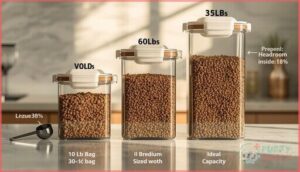
Choosing a container that’s too big wastes space and traps excess air around your kibble, while one that’s too small forces you to refill constantly or cram food in ways that compromise the seal. Match Container Capacity to your Food Quantity by measuring how much you buy at once, then add 10–15% headroom for Space Efficiency and easy scooping.
| Bag Size | Recommended Container Capacity |
|---|---|
| 5–10 lbs | 12–15 quart container |
| 15–25 lbs | 25–30 quart container |
| 30–40 lbs | 40–50 quart container |
| 50+ lbs | 60+ quart container or two smaller units |
This Airtight Sizing approach ensures your Dog Food Container meets your Storage Needs without wasting counter space or letting oxidation sneak in through extra air pockets.
How to Tell if a Container is Truly Airtight
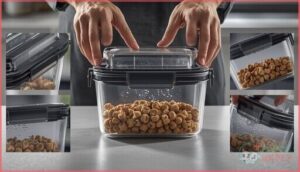
Not all containers labeled “airtight” actually deliver on that promise.
You need to know what features separate truly airtight storage from containers that just look the part. Here’s how to identify a container that will genuinely protect your dog’s food from air, moisture, and pests.
Features to Look For
A truly airtight container isn’t just about a lid that clicks shut—it’s about specific design features that create a real seal against oxygen, moisture, and pests. Look for containers with silicone gaskets or rubber gaskets around the lid, which compress to form a tight barrier. Locking mechanisms or clamp-style closures provide extra security.
Food-grade plastic or stainless steel container materials guarantee safety and durability. Check that the seal quality allows zero air exchange—some models include pressure valves that hiss when opened, confirming proper airtight storage between uses.
Common Signs of Poor Sealing
If your dog food smells stale the moment you lift the lid, or you notice bits of kibble covered in a fine layer of dust, your container isn’t doing its job.
Seal failure often shows up as condensation inside the airtight container, indicating moisture entry from air exposure. You might spot container leaks through visible gaps or feel a loose lid that doesn’t click firmly.
These spoilage indicators—like rancid odors from oxidation or clumpy kibble from moisture—tell you proper storage isn’t happening and freshness is compromised.
Best Practices for Dog Food Storage
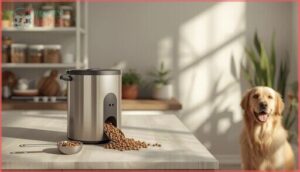
You’ve invested in the right airtight container, and now it’s time to get the most out of it. Proper storage goes beyond just sealing the lid—it involves smart placement, routine upkeep, and a few simple habits that keep your dog’s food fresh from the first scoop to the last.
Here’s how to set yourself up for success.
Keeping Food in a Cool, Dry Place
Temperature and humidity work like silent thieves, slowly stealing nutrients from your dog’s kibble even when it’s sealed inside an airtight container. Proper storage location protects food handling and freshness.
Choose a spot that meets these four criteria:
- Temperature stays between 50-70°F consistently
- Humidity levels remain below 15 percent
- Direct sunlight can’t reach the container
- Heat sources like furnaces or appliances aren’t nearby
Using The Original Bag Inside The Container
You might think pouring kibble directly into your airtight container makes sense, but keeping the original bag inside provides essential protection. The bag’s multilayer design helps seal in fats and oils, slowing rancidity that can occur when food touches plastic surfaces.
This dual-barrier approach optimizes dog food storage, preventing contaminated fat residue from building up and compromising freshness maintenance between refills.
Regular Cleaning and Maintenance
Once the original bag is settled inside your airtight container, it’s time to focus on storage hygiene. Set Cleaning Schedules—wash and dry the container between refills to prevent rancid fats and old crumbs from building up. Try Monthly Maintenance Routines or more, using soap and water.
Regular Container Inspection helps catch cracks or wear that threaten airtight storage and overall pet care.
How Long Does Dog Food Last in Airtight Containers?
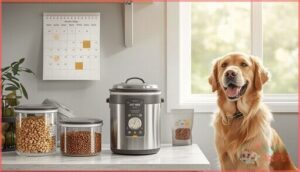
Even the best airtight container can’t stop the clock forever. How long your dog’s food stays fresh depends on whether you’re storing dry kibble or wet food, and both come with different timelines you need to know.
Let’s break down the shelf life for each type so you can keep your dog’s meals safe and nutritious.
Shelf Life of Dry Kibble
Unopened dry dog food usually stays fresh for 12 to 18 months when stored properly. Once you open the bag, shelf life drops sharply—most experts recommend using kibble within four to six weeks for maximum nutrient retention and kibble freshness.
Airtight containers slow food degradation by limiting oxygen exposure, but they don’t stop the clock entirely.
Storage conditions matter: heat accelerates moisture control issues and rancidity, shortening your food’s usable life.
Wet Food Storage Guidelines
Wet food handling differs completely from kibble and wet food storage. Once you crack open a can or pouch, refrigeration tips become critical—your dog’s leftovers need to go into an airtight container and stay chilled at or below 40°F.
Pet food storage rules give you just three to five days max before bacteria takes hold. Room temperature? Two hours, then toss it. Food safety isn’t negotiable here.
Monitoring Freshness and Expiry Dates
Even sealed containers can’t override expiration dates. Unopened dry food stays good for roughly 12 to 18 months from manufacture, but once you break that seal, you’re working with a 30-day window for peak freshness.
Mark opening dates on your container, check best-by codes weekly, and watch for rancid smells or texture changes—your freshness indicators that something’s off with nutrition and food safety checks.
Tips for Maintaining Dog Food Freshness and Safety
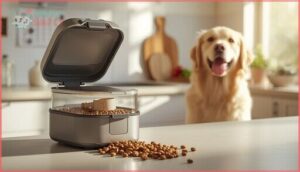
Storing your dog’s food properly is only half the battle—how you buy, handle, and monitor it matters just as much. Small mistakes in portioning or overlooking early warning signs can turn fresh kibble into a health risk faster than you think.
Here are three practical strategies to keep your dog’s meals safe and nutritious from the moment you bring food home.
Buying The Right Amount
One of the simplest ways to keep your dog’s food fresh is to buy only what they’ll eat within four to six weeks. Large bags might seem economical, but they can exceed your storage capacity and compromise freshness.
Match your purchase frequency to your dog’s eating habits, and choose a bag size that fits comfortably in your airtight container without overfilling it.
Handling and Portioning Food
Proper storage starts well before your dog eats. Always wash your hands for at least twenty seconds before scooping kibble from your airtight container, and use a dedicated scoop or digital scale for portion control. This prevents cross-contamination and ensures accurate meal planning.
Divide your dog’s daily ration into two or more feedings to support nutrient balance and steady energy, then clean all utensils after use to maintain food safety.
Spotting Signs of Spoilage or Contamination
Your nose is your best early-warning system for food safety checks. Rancid or sour odors signal oxidation and spoilage, while visible mold, unusual discoloration, or excess moisture in kibble indicate contamination risks that threaten pet health alerts.
- Check for clumping or stickiness caused by moisture intrusion
- Discard food past its “best by” date to guarantee freshness monitoring
- Watch for insects, webbing, or packaging damage that compromise freshness
Frequently Asked Questions (FAQs)
Can you freeze dog food for longer storage?
Freezing dog food definitely extends its lifespan, making it a smart food preservation method. Frozen kibble stored in airtight containers at 0°F maintains pet nutrition for three to six months, ensuring ideal kibble storage and freezer safety.
Are vacuum-sealed bags better than airtight containers?
Vacuum-sealed bags remove oxygen more completely than typical airtight containers, slowing fat oxidation and microbial growth.
They’re ideal for bulk dog food storage, extending freshness for several months compared to standard airtight solutions.
How does humidity affect stored dog food quality?
Humidity is like an invisible threat that quietly ruins your dog’s kibble.
Moisture increases water activity, accelerating mold growth, bacterial contamination, and fat oxidation—all compromising nutrient stability, palatability, and safety in stored food.
Should treats be stored in airtight containers too?
Yes, airtight containers protect treats from moisture, oxidation, and pests. Dry treats stay crunchy and safe, while moist varieties need sealed, refrigerated storage to prevent bacterial growth and spoilage.
Conclusion
Think of your dog’s kibble like fresh produce—both need protection from air to stay nutritious. The evidence clearly shows that dog food needs an airtight container to preserve essential nutrients, prevent contamination, and maintain palatability.
Without proper storage, you’re watching vitamins degrade and inviting pests into your home. Invest in a quality food-grade container with a reliable seal. Your dog’s health depends on the freshness of every meal you serve.
- https://www.fda.gov/animal-veterinary/animal-health-literacy/proper-storage-pet-food-treats
- https://www.earthbornholisticpetfood.com/blog/dog-cat-tips/the-ultimate-guide-to-dog-food-storage-containers/
- https://www.ateasepest.com/pests-and-pet-food
- https://sites.tufts.edu/petfoodology/2020/10/26/the-scoop-on-storing-pet-food/
- https://www.avma.org/resources-tools/pet-owners/petcare/safe-handling-pet-food-and-pet-treats