This site is supported by our readers. We may earn a commission, at no cost to you, if you purchase through links.

Most designer dog breeds aim for smaller, cuddlier versions of their parent stock—think pocket-sized poodle mixes and lap-friendly hybrids. The Doberman Great Dane mix defies that entire trend, combining two of the most formidable guardian breeds into a crossbreed that can weigh as much as a full-grown adult human.
This hybrid inherits the Doberman’s razor-sharp intelligence alongside the Great Dane’s towering stature, creating a dog that demands both physical space and an owner who understands canine behavior at a nuanced level.
You’ll encounter loyal companionship wrapped in a frame that makes strangers take notice, but that impressive presence comes with specific care requirements, health considerations, and training needs that separate casual dog owners from those ready for a true partnership.
Table Of Contents
- Key Takeaways
- What is a Doberman Great Dane Mix?
- Physical Appearance and Size
- Personality and Temperament Traits
- Living Requirements and Space Needs
- Exercise and Activity Needs
- Grooming and Coat Care
- Feeding and Nutrition Guidelines
- Common Health Issues
- Training and Socialization Tips
- Is The Doberman Great Dane Mix Right for You?
- Frequently Asked Questions (FAQs)
- What kind of coat does a Doberman Great Dane Mix have?
- Are Doberman Great Dane Mixes easy to train?
- Can Doberman Great Dane mixes live with cats?
- How much does a Doberdane puppy cost?
- Are Doberdanes prone to separation anxiety issues?
- Do Doberdanes drool excessively like Great Danes?
- What are the best toys for Doberdanes?
- Conclusion
Key Takeaways
- The Doberman Great Dane mix weighs 90 to 180 pounds and stands 26 to 32 inches tall, demanding spacious living arrangements with six-foot minimum fencing and dedicated exercise zones rather than apartment constraints.
- This crossbreed inherits overlapping cardiac vulnerabilities and bloat risks from both parent lines, requiring annual echocardiograms starting at age three, strategic meal timing, and vigilant monitoring for gastric torsion symptoms.
- You’ll need 60 to 90 minutes of daily structured exercise split across multiple sessions, combined with mental stimulation through puzzle toys and obedience drills to prevent destructive boredom behaviors in this intelligent hybrid.
- Early socialization between three and fourteen weeks determines whether your Doberdane becomes a confident family guardian or develops fear-based reactivity, making this critical window non-negotiable for proper behavioral development.
What is a Doberman Great Dane Mix?
The Doberman Great Dane mix—often called a Doberdane—combines two of the most commanding canine bloodlines into one impressive crossbreed.
This hybrid emerged within the last two decades, blending the Doberman’s sharp intellect with the Great Dane’s gentle giant stature. Understanding what makes this crossbreed unique starts with examining its foundation, development, and the specific traits breeders aimed to achieve.
Breed Overview
The Great Dane Doberman Mix—often called a Doberdane—is a hybrid dog that merges the towering height of the Great Dane with the lean, athletic build of the Doberman Pinscher. This large dog breed showcases genetic traits from both parent breeds, and crossbreeding benefits include potential hybrid vigor.
Key characteristics:
- Size range: Generally giant, reflecting the larger parent breed
- Appearance: Strong frame with short to medium coat
- Temperament: Loyal, protective, family-oriented
- Lineage: Varied, documented by responsible breeders
When evaluating the genetic traits of the Doberdane, it’s vital to think about the importance of scientific study summaries to verify the health and well-being of the breed.
Origins and History
The Doberdane emerged within the last 20–30 years as part of canine hybridization trends in designer hybrids. Breeding history points to the United States as the likely birthplace, where intentional crossbreeding of parent breeds—the 19th-century German Doberman Pinscher and Great Dane—gained traction. While unintentional pairings may have occurred earlier, systematic promotion of this hybrid dog breed reflects modern interest in combining genetic heritage for size and protection. The Doberdane’s development is closely tied to guard dog characteristics, which are highly valued in this breed.
| Parent Breed | Origin Era |
|---|---|
| Doberman Pinscher | 1880s Germany |
| Great Dane | 1881 German standard |
| Doberdane | 1990s–2000s U.S. |
| Crossbreeding Trends | Late 20th century |
Purpose of The Crossbreed
Breeders combine these parent lines to produce a large guardian with balanced temperament—part estate protector, part family companion. Doberdanes embody the designer breed movement, where canine hybridization aims to merge the Doberman’s alertness with the Great Dane’s calmer disposition.
Yet breeding ethics remain contentious: shared cardiac and bloat risks challenge claims of hybrid vigor, leaving crossbreed benefits unclear when both parents carry overlapping health vulnerabilities.
Critics point to teacup dog healthcare challenges as evidence that miniaturization compounds inherited vulnerabilities rather than diluting them through crossbreeding.
Physical Appearance and Size
When you picture a Doberman Great Dane mix, you’re imagining one of the tallest, most commanding breeds you’ll encounter. These dogs inherit serious size from both parents, which means you need to understand their physical build before bringing one home.
Their instincts as protective dog breeds that are loyal mean they’ll naturally guard your home, but early socialization helps them distinguish real threats from everyday visitors.
Let’s break down what to expect regarding height, weight, coat, and the features that make this crossbreed stand out.
Height and Weight Range
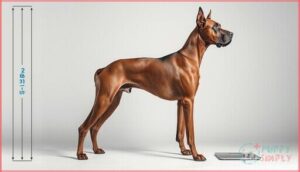
You’re looking at a hybrid dog that stands 26 to 32 inches at the shoulder, with males usually towering at the upper end.
Weight Factors include gender and lineage—expect 90 to 180 pounds once growth patterns stabilize around 18 to 24 months.
Before bringing home a German Shepherd Lab mix, ask breeders for health clearances on both parents to confirm they’ve been screened for inherited conditions.
Size Variability stems from Height Genetics; your pup might mirror the lean Doberman Pinscher or channel the massive Great Dane frame.
Coat Type and Color Variations

Your hybrid dog sports a short, sleek coat inherited from both the Doberman Pinscher and Great Dane—single-layer, smooth, and low-maintenance.
Coat Patterns range from solid black or fawn to striking mantle markings and even harlequin patches when Great Dane genes dominate.
Color Genetics drive Dilute Variations like blue or Isabella, while Shedding Traits remain moderate year-round, requiring only weekly brushing to control loose hair.
Distinctive Features
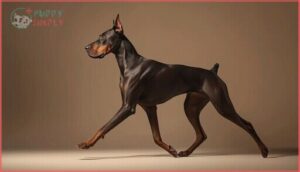
Your Doberdane’s physical profile draws attention through several unmistakable traits:
Given their large, deep-chested build, choosing the right dog food for mastiffs helps minimize bloat risk in these giant breeds.
- Head Structure: Rectangular skull with a blunt wedge shape, combining the Great Dane’s blocky muzzle and parallel alignment.
- Body Proportions: Broad chest, long limbs, and heavy bone density create an imposing yet athletic silhouette.
- Ear Types: High-set ears appear cropped or naturally floppy.
- Movement Patterns: Fluid, scissor-like gait reflecting power and endurance.
Personality and Temperament Traits

Your Doberdane’s personality sits at the crossroads of two powerhouse breeds, creating a temperament that’s equal parts guardian and gentle giant. Understanding what drives these dogs—from their protective instincts to their social needs—helps you build a relationship rooted in trust and mutual respect.
Let’s break down the three core personality traits you’ll encounter with this commanding crossbreed.
Loyalty and Protective Instincts
Your Doberdane won’t just love you—it’ll orbit you like a loyal moon. This crossbreed inherits exceptional loyalty from its Doberman lineage and the Great Dane’s quiet devotion, creating a fiercely protective companion that shadows your every move.
These guard dogs assess threats with discerning eyes, using their imposing presence and deep bark as primary deterrents. You’re getting a watchdog wired for family guardianship.
Socialization With People and Pets
You’re shaping a gentle giant or a guarded fortress—puppy socialization makes all the difference. Early exposure to diverse people, public encounters, and careful pet introduction turns your Doberdane into a confident family pet rather than a reactive sentinel.
Introduce children, strangers, and other animals gradually during those critical first months. Proper dog training and behavior work transforms this loyal companion from wary protector into a well-adjusted family dynamo.
Energy Levels and Behavior
Your Doberdane shifts between explosive energy bursts and long couch sessions—think sprinter, not marathon runner. This intelligent dog needs about 60–90 minutes of daily activity, blending the Doberman’s drive with the Dane’s calmer baseline.
- Exercise Needs: Two structured sessions prevent boredom and destructive chewing
- Mental Stimulation: Puzzle toys and dog training tire this loyal dog as much as physical work
- Calming Techniques: Consistent routines settle large breed dogs after vigorous play
- Rest Patterns: Expect quiet downtime indoors once exercise requirements are met
Living Requirements and Space Needs

Your Doberdane’s living space needs aren’t just about square footage—they’re about creating an environment where a 100-plus-pound guardian can move, rest, and thrive without feeling cramped or anxious.
Getting this wrong can lead to destructive behavior, joint stress, and a dog that never quite settles into their role as your calm protector.
Let’s break down what works, what doesn’t, and why your setup matters more than you might think.
Ideal Home Environment
You need a home that breathes with your dog’s scale—think shoulder height pushing 86 cm and mass reaching 75 kg. Climate control matters for that short coat, while padded rest zones in both quiet corners and family hubs support joint health and reduce anxiety-driven pacing.
Sturdy yard fencing contains protective instincts, and sound insulation or detached layouts prevent neighbor friction when your loyal companion alerts to movement outside.
Apartment Vs. House Suitability
Houses suit this loyal canine better than apartments for four key reasons:
- Floor planning across 140+ square feet lets your large breed stretch, turn, and rest without furniture collisions
- Stair safety concerns vanish in single-level layouts, protecting developing hips during growth
- Noise levels stay contained in detached homes, reducing neighbor friction from alert barking
- Yard access replaces multiple leash trips with quick, joint-friendly outdoor activities
Large-dog-friendly apartments work only when space requirements, building policies, and your dog training and behavior commitment align perfectly.
Fencing and Yard Considerations
Your loyal canine’s large breed athleticism demands a fence height of at least six feet—preferably eight where local codes permit—because healthy Doberman–Great Dane mixes can clear five-foot barriers with ease. Bury welded mesh thirty centimeters deep along fence lines to prevent digging, and reinforce gate safety with double latches.
Design enclosure spaces measuring ten by fourteen feet minimum. Proper yard security transforms outdoor activities into safe, enriching guard dog training opportunities.
Exercise and Activity Needs
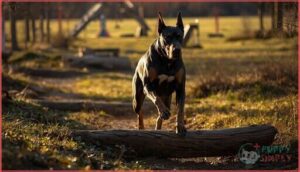
Your Doberdane won’t thrive on a quick walk around the block—this powerhouse needs serious physical output to stay balanced and healthy. Without proper exercise, you’re looking at a restless dog who’ll find creative (and destructive) ways to burn off that pent-up energy.
Here’s what your dog needs to stay physically and mentally satisfied.
Daily Exercise Requirements
Your Doberdane thrives on consistent physical activity, usually demanding 60 to 90 minutes of daily exercise split across multiple sessions. This large breed’s energy levels mirror its working-dog heritage, so you’ll want to schedule:
- Two brisk 30-minute walks each morning and evening
- Off-leash playtime in a securely fenced yard
- Interactive games like fetch or tug-of-war
- Low-impact swimming sessions to protect developing joints
- Structured training drills that challenge both body and mind
Without adequate daily routines, your loyal companion may develop destructive behaviors or anxiety.
Suitable Outdoor Activities
Once your daily walks are in place, you can expand into more adventurous outdoor activities with dogs that suit this active large breed. Hiking trails with moderate terrain offer excellent aerobic exercises while building endurance. Water sports like swimming provide low-impact conditioning that protects joints. Secure off-leash areas let your companion sprint freely, and leash training equips you both for outdoor games and controlled adventures.
| Activity Type | Benefits & Considerations |
|---|---|
| Hiking Trails | Builds stamina on varied terrain; avoid steep scrambles that stress joints |
| Water Sports | Low-impact swimming engages muscles; schedule several hours after meals to prevent bloat |
| Outdoor Games | Fetch and recall in fenced spaces provide vigorous bursts; balance intensity with rest periods |
Mental Stimulation
Intelligence without cognitive training becomes restless energy in search of trouble. Your Doberdane inherits sharp problem-solving instincts from both parent breeds, so mental exercise prevents boredom-driven destruction that ruins furniture and frays nerves. Understanding animal behavior reveals that varied mental workloads reduce attention-seeking behaviors and excessive barking.
- Puzzle toys and interactive games challenge intelligent dogs to work for rewards, combining canine genetics with environmental enrichment that tires minds faster than miles.
- Scent-based treasure hunts engage natural tracking instincts through hidden treats.
- Novel obedience drills teach new behaviors during short, frequent dog training sessions.
- Food-dispensing feeders transform mealtimes into problem-solving opportunities for loyal companions.
Rotate enrichment activities weekly to maintain novelty and prevent your clever guardian from mastering—then ignoring—the same tasks.
Grooming and Coat Care
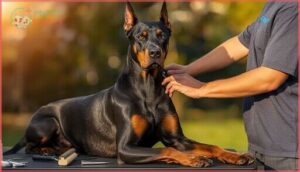
Your Doberdane’s short, sleek coat makes grooming surprisingly manageable compared to other large breeds. You won’t spend hours detangling fur, but regular maintenance keeps their skin healthy and their intimidating presence looking sharp.
Let’s break down the essential grooming tasks you’ll need to handle.
Shedding and Brushing Needs
Your Doberdane’s coat sheds year-round, but don’t panic—it’s manageable. Brushing two to three times weekly with a slicker brush or deshedding tool keeps loose hair under control and promotes coat health.
Expect heavier shedding during seasonal transitions when undercoat turnover peaks. Consistent grooming reduces hair around your home while allowing you to monitor skin condition, making this simple routine essential for large dog care and overall pet health.
Bathing and Cleaning
Routine hygiene every four to six weeks maintains coat health and prevents skin irritation in your large companion. Use pH-balanced dog grooming products designed specifically for canines to protect natural oils and support skin health.
- Brush thoroughly before bathing to remove loose fur and tangles
- Rinse completely to eliminate shampoo residue that irritates skin
- Towel-dry followed by low-heat blow-drying prevents mildew development
- Wipe paws after outdoor activities to minimize dirt transfer indoors
- Monitor for redness or hot spots during each cleaning session
Between baths, spot-clean with damp cloths for effective coat maintenance without over-bathing.
Nail, Ear, and Dental Care
Your routine pet grooming strategy should prioritize three critical zones. Trim nails every two to four weeks using dog-specific clippers to prevent splitting and discomfort.
Weekly ear cleaning with vet-approved solutions reduces infection risk in large breed dog health.
Daily dental hygiene through brushing with canine toothpaste tackles plaque accumulation, supporting overall dog health while preventing costly veterinary care interventions down the road.
Feeding and Nutrition Guidelines

Your Doberdane’s nutritional needs are substantial, and getting them right protects your dog from a host of health problems down the road. Large-breed dogs require carefully balanced diets that support bone growth without accelerating it too quickly, which can damage developing joints.
Here’s what you need to know about feeding your giant companion the right way.
Recommended Diet for Large Breeds
Your Doberdane’s diet isn’t just fuel—it’s the foundation of joint integrity, cardiac function, and longevity. Large breed dog care demands specialized formulas with 18-22% protein sources and controlled calorie management to prevent rapid growth that damages developing bones.
Look for glucosamine-enriched kibble supporting digestive health, a calcium-to-phosphorus ratio near 1.2:1, and marine-based omega-3s. Nutrient balance directly influences your dog’s trajectory from puppy to powerhouse.
Feeding Frequency and Portion Sizes
How many times a day should you fill that bowl? For your Doberdane, feeding strategies directly shape bloat risk and metabolic health. Split daily rations into multiple meals—never a single feast—to protect that deep chest from gastric torsion.
Here’s how to structure your Doberdane’s feeding plan:
- Puppies under 6 months: Feed 3–4 meals daily to fuel growth without skeletal overload
- 6–12 months: Shift to 3 meals, monitoring body condition weekly
- Adults over 1 year: Maintain 2 meals per day for digestive stability
- Portion control: Use an 8-oz measuring cup; adjust 4–8+ cups total based on weight and activity
- Caloric intake: Track body condition monthly, palpating ribs to fine-tune portions
Meal timing and nutrient balance aren’t guesswork—they’re your frontline defense in animal nutrition and pet care for this powerful dog breed.
Treats and Supplements
Beyond the bowl, you’ll need a supplement strategy that supports both joint health and calorie control. Keep treats under 10 percent of daily intake—roughly 70–100 calories for your Doberdane—to prevent obesity.
Add glucosamine-chondroitin formulas for cartilage support, omega supplements (1800–2250 mg EPA-DHA daily) to reduce inflammation, probiotic benefits for gut stability, and dental chews to fight plaque without wrecking your animal nutrition plan.
Common Health Issues

Owning a Doberdane means staying alert to the health challenges that come with their giant frame and mixed heritage. Both parent breeds carry genetic vulnerabilities that can show up in your dog, from skeletal strain to organ stress.
Here’s what you need to watch for throughout your Doberdane’s life.
Joint and Bone Problems
Your Doberdane’s towering frame comes with a sobering reality: joint and bone problems strike hard in large breeds. Hip Dysplasia and Elbow Dysplasia lurk in the genetic shadows of both Great Dane and Doberman Pinscher lineage, while Osteochondritis and developmental bone disorders threaten growing puppies.
You’ll need vigilant veterinary care, arthritis management strategies, and proactive pet care to protect those vulnerable joints from permanent damage.
Bloat and Digestive Risks
That deep chest you admire on your dog? It’s a ticking clock for gastric dilatation-volvulus—bloat—which strikes large breeds like Great Danes and Doberman Pinschers with brutal speed.
Feed smaller, measured meals, skip post-meal exercise for two hours, and consider slow-feeder bowls for bloat prevention.
Watch for restlessness, abdominal swelling, or unproductive retching; digestive health emergencies demand immediate veterinary care, not wishful thinking.
Heart and Eye Conditions
Your Doberdane carries double cardiac disease risk—dilated cardiomyopathy strikes 58 percent of Dobermans and threatens Great Danes nearly as hard. Annual echocardiograms and Holter monitoring starting at age three catch trouble before symptoms appear.
Eye disorders like entropion, cherry eye, and progressive retinal atrophy demand veterinary care through screening exams. Genetic testing reveals inherited vulnerabilities, turning responsible pet ownership into your strongest weapon against preventable suffering.
Lifespan Expectations
Realistically, you’ll share seven to twelve years with your Doberman Great Dane mix—genetics, health screenings, and nutrition impact every day you get together. Larger dogs face higher mortality rates than compact breeds, a brutal truth written in their biology.
Environmental effects like exercise quality and preventive care stretch those years further, turning responsible pet ownership into your most powerful act of love.
Training and Socialization Tips
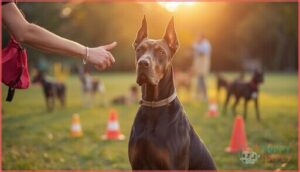
Training a Doberdane isn’t just about teaching commands—it’s about channeling that powerful combination of intelligence and protective instinct into a confident, well-adjusted companion. You’ll need consistency, early socialization, and an understanding of how these dogs think, which can feel both challenging and deeply rewarding.
Let’s break down the most effective approaches to raising a Doberdane who’s as trustworthy as they’re devoted.
Obedience Training Approaches
Your Doberman Great Dane mix combines the sharp alertness of a guard dog with the gentle power of a giant—training this intelligent blend requires structure, not force. Reward-based methods channel their loyalty into cooperation, giving you a partner who listens because they want to.
- Positive reinforcement builds trust faster than corrections in large, sensitive breeds
- Marker training or clicker methods pinpoint exactly when your dog nails an obedience cue
- Short daily sessions (10–15 minutes) prevent mental fatigue while reinforcing commands
- High-value treats maintain focus during distractions, essential for loyal and intelligent dogs
Socialization From Puppyhood
Between three and fourteen weeks, your puppy’s brain is wired to accept new experiences as normal—miss this window and fear-based reactivity becomes your steep uphill climb.
Miss the three-to-fourteen-week socialization window and you’ll face fear-based reactivity for years
Introduce your Doberman Pinscher–Great Dane blend to varied people, environments, and healthy vaccinated dogs during this critical canine development phase.
Positive puppy socialization transforms your gentle giant from wary stranger into confident, loyal canine ready for life’s unpredictable moments.
Handling Stubborn Behaviors
When your loyal canine ignores a command, it’s rarely rebellion—Canine Psychology reveals stubborn resistance often signals confusion, not defiance. Use Positive Reinforcement paired with high-value treats during short five-minute sessions to establish clear behavioral patterns.
Reward Strategies that alternate treats with treasured toys maintain motivation without overreliance.
These Training Techniques work brilliantly for Guard Dogs and Watchdogs with strong independent streaks inherited from Dog Breeding and Genetics combining two intelligent parent breeds.
Is The Doberman Great Dane Mix Right for You?

Deciding whether a Doberdane belongs in your life isn’t about falling in love with their majestic appearance—it’s about honestly evaluating your lifestyle, experience, and long-term commitment. This crossbreed demands more than most dogs, from physical space to emotional bandwidth, and the wrong match can lead to frustration for both you and the dog.
Let’s break down the realities of ownership so you can make a choice that protects everyone involved.
Pros and Cons of Ownership
You’re weighing a powerful decision: this hybrid dog breed’s commitment brings both guardian loyalty and substantial ownership challenges. Breed suitability favors experienced handlers who embrace cost considerations—higher food bills, medical expenses, and preventive care for bloat and joint issues.
The Great Dane gentleness balances Doberman Pinscher vigilance, yet lifestyle impact demands daily exercise, training investment, and space. Responsible pet ownership means acknowledging family dynamics before committing.
Family Compatibility
Your household thrives or fractures on proper Child Safety measures. Early, structured Socialization Techniques transform this Great Dane Doberman Mix into one of the most loyal canines for family pets and companions.
Family Dynamics improve when you teach kids dog body language while reinforcing impulse control.
Pet Harmony requires supervised introductions to existing family pets, respecting prey drive.
Household Adaptation demands consistent routines, safe retreat spaces, and responsible pet ownership commitment to exercise and training.
Owner Experience and Commitment Requirements
Beyond family fit, you’re signing up for a significant Time Commitment—at least two hours daily for dog exercise and activity, plus training sessions.
Financial Costs stack up fast: premium pet care and nutrition, vet bills, and responsible breeding choices if purchasing.
Lifestyle Adjustments mean canceling spontaneous trips, prioritizing dog care and health, and making a Long-term Dedication to responsible pet ownership. This breed demands serious Emotional Investment, not casual guardianship.
Frequently Asked Questions (FAQs)
What kind of coat does a Doberman Great Dane Mix have?
Most short-coated dogs shed year-round, and this Great Dane Doberman Pinscher hybrid follows that pattern.
You’ll notice moderate shedding with a sleek, straight texture requiring minimal grooming—just weekly brushing keeps their coat shining.
Are Doberman Great Dane Mixes easy to train?
Their canine intelligence and working-dog heritage make them highly trainable, but you’ll need consistency and early positive reinforcement—these large, energetic mixes aren’t “easy” for casual owners without experience.
Can Doberman Great Dane mixes live with cats?
Yes, with proper introduction and training. Their prey drive varies individually—some coexist peacefully when socialized early, while others chase.
Secure cat escape routes, supervise meetings, and teach impulse control for household safety.
How much does a Doberdane puppy cost?
A Doberdane puppy usually costs between $800 and $2,500, depending on breeder reputation, health testing, and lineage. Expect higher prices when parents carry documented clearances for hips, elbows, and cardiac conditions.
Are Doberdanes prone to separation anxiety issues?
Both parent breeds form intense human bonds, placing your Great Dane Doberman Mix at elevated risk for separation stress.
Anxiety triggers include prolonged absences, routine changes, and inadequate mental stimulation—behavioral therapy and anxiety prevention strategies help tremendously.
Do Doberdanes drool excessively like Great Danes?
Picture slobber waterfalls—but hold on. Your Doberdane won’t match a Great Dane’s drool levels.
They usually show moderate saliva management, drooling mainly during excitement or meals, leaning toward their Doberman Pinscher parent’s drier breed comparison.
What are the best toys for Doberdanes?
Your Doberdane needs extra-large KONG Classic toys, Nylabone Dura Chew products, and Chuckit Ultra Balls—durable chew toys, interactive puzzles, and giant fetch toys built for powerful jaws and high energy.
Conclusion
Big dogs require big hearts—and the Doberman Great Dane mix proves that truth daily. This crossbreed won’t fit into every lifestyle, but for owners who embrace rigorous training, spacious living arrangements, and proactive health management, you’ll discover a guardian whose devotion matches its impressive stature.
Your commitment determines whether this hybrid becomes an overwhelming responsibility or a life-changing companion that redefines what partnership with a powerful dog truly means.