
This site is supported by our readers. We may earn a commission, at no cost to you, if you purchase through links.

Your dog circles her bed three times, flops down with a groan, and stares at you with those big eyes—and you can’t help wondering if she’s hurting. It’s a fair concern. Many pet owners notice their female dog acting off during her heat cycle and immediately think of the cramping that accompanies a human period.
Here’s the thing: dogs don’t experience period cramps the way women do, but that doesn’t mean they sail through a heat cycle without any discomfort. Hormonal shifts, abdominal sensitivity, and behavioral changes are all real. Knowing what’s actually happening inside your dog’s body puts you in a far better position to help her through it.
Table Of Contents
- Key Takeaways
- Do Dogs Get Period Cramps?
- Signs Your Dog May Be Uncomfortable
- Understanding Your Dog’s Heat Cycle Stages
- How to Comfort a Dog in Heat
- Managing Heat Cycle Symptoms at Home
- Natural Pain Relief Methods for Dogs
- When to Consult Your Veterinarian
- Preventing Heat Cycles Through Spaying
- Frequently Asked Questions (FAQs)
- How do I know if my dog has period cramps?
- Do girl dogs feel pain on their period?
- Do dogs have period cramps?
- What are the causes of period cramps?
- Can dog period cramps be cured?
- Can dogs get period symptoms?
- How can I Help my Dog with menstrual cramps?
- Can I give my Dog a pain killer for menstrual cramps?
- Do female dogs feel pain during their period?
- How can I ease my dog’s period pain?
- Conclusion
Key Takeaways
- Dogs don’t experience menstrual cramps like humans do, but hormonal shifts during their heat cycle can cause mild abdominal sensitivity and discomfort without actual uterine contractions.
- Watch for signs like arched back, trembling, whining, loss of appetite, and restlessness—these behaviors signal discomfort during heat, not severe pain.
- Simple comfort measures work best: apply a dog-specific heating pad to her belly, offer gentle circular massages, provide extra affection, and create a calm, quiet space for her to rest.
- Spaying eliminates heat cycles entirely and delivers lasting health benefits beyond comfort—it dramatically reduces mammary tumor risk and prevents life-threatening uterine infections like pyometra.
Do Dogs Get Period Cramps?
If you’ve noticed your dog acting a bit off during her heat cycle, you might be wondering if she’s dealing with cramps like humans do. The short answer is no—dogs don’t experience menstrual cramps the way we do.
That said, their bodies are still going through hormonal shifts—here’s a helpful breakdown of how and when female dogs experience heat cycles as they age.
However, hormonal shifts during their heat cycle can cause some mild discomfort that’s worth understanding.
Hormonal Changes Cause Discomfort, Not Menstrual Cramps
Confusion surrounds canine discomfort during heat, but your pooch doesn’t experience menstrual cramps like you do. Instead, hormonal changes during the canine reproductive cycle trigger abdominal sensitivity without true uterine contractions.
Those hormone regulation shifts affect female dog reproductive health by preparing her body for potential pregnancy, causing mild tenderness rather than the cramping pain you’d feel. Veterinary guidance confirms this distinction matters for proper heat cycle management and abdominal care.
For a broader understanding of how hormonal imbalance can cause issues, it’s helpful to look into symptoms and effects in other species, including humans.
Difference Between Human Periods and Canine Heat Cycles
Understanding this hormone regulation difference helps you care for your dog in heat properly. The canine reproductive cycle differs fundamentally from yours—your pooch experiences an estrous cycle, not a menstrual period.
Cycle length averages six months versus your monthly pattern, fertility windows occur during estrus rather than mid-cycle, and uterine differences mean no monthly shedding. These menstrual variations explain why female dog reproductive health needs unique management approaches.
For more details, learn about the phases of the canine estrous cycle.
Mild Abdominal Sensitivity During Proestrus
During proestrus, your furry friend might show mild abdominal awareness rather than true dog period cramps. Estrogen rises rapidly, causing vulvar swelling and tissue congestion that creates subtle tummy sensitivity. You’ll notice this phase brings gentle discomfort—not the uterine contractions you experience.
Managing proestrus symptoms means watching for these canine reproductive issues signs:
- Slight firmness when you gently touch her belly
- Brief restlessness followed by quiet comfort-seeking moments
- Licking at her abdomen or vulvar area
- Closer-than-usual contact with you for reassurance
- Mild posture changes without severe pain behaviors
Heat cycle management starts with recognizing these hormone balance shifts. Most dogs handle proestrus well, but understanding canine comfort needs helps you relieve dog period cramps effectively. Abdominal care during this phase stays simple—warmth, gentleness, and observation.
Signs Your Dog May Be Uncomfortable

Your dog can’t tell you she’s uncomfortable in words, but her body will speak volumes if you know what to look for. Some signs are subtle, like a shift in posture or energy, while others are more obvious.
Here’s what discomfort during a heat cycle might look like in your furry friend.
Arched Back and Abdominal Sensitivity
You might notice your pooch arching her back when lying down or standing still. This posture often signals abdominal sensitivity during the heat cycle, as your dog instinctively tries to reduce pressure on her tender belly.
The back arching reflects temporary muscle tightening around the abdomen, a common response to hormonal shifts. Gentle abdominal massage and canine comfort measures can provide sensitivity relief and help relieve dog period cramps naturally.
Trembling, Panting, and Whining
Your furry friend’s trembling, panting, or whining during her heat cycle often stems from hormonal fluctuations and abdominal sensitivity, not severe period cramp pain. These heat cycle symptoms signal mild discomfort rather than serious canine reproductive issues.
Watch for these panting patterns and whining behavior signs:
- Shallow, rapid panting even while resting
- Soft whining when seeking reassurance or attention
- Intermittent trembling during proestrus stages
- Increased canine anxiety in unfamiliar settings
Loss of Appetite and Reduced Activity
During heat, many dogs nibble less at meals or skip food entirely—appetite changes that reflect hormonal shifts, not illness. This food aversion often pairs with lethargy signs like decreased interest in walks or play.
These behavioral shifts are actually good reasons to consider whether spaying your Sheltie before her first heat cycle could prevent far more serious health risks down the road.
Your pooch’s reduced exercise needs adjustment: offer smaller, palatable portions to meet nutrition needs, and monitor her reproductive cycle closely. Persistent disinterest beyond 48 hours warrants veterinary attention to rule out canine reproductive issues.
Constipation and Restlessness
Digestive health disruptions during your dog’s reproductive cycle can trigger constipation paired with anxious pacing. Hormonal shifts may slow bowel movement patterns, causing abdominal pressure that mimics period cramp pain—though this stems from intestinal tension, not uterine contractions.
Watch for these restlessness causes in a dog in heat:
- Firm, swollen belly after small meals suggesting bowel backup
- Pacing or fidgeting to relieve abdominal pressure discomfort
- Straining during elimination paired with nervous whining
- Increased water intake needs to support dietary changes and soften stools
Persistent constipation signals canine reproductive issues requiring veterinary guidance for your dog health and wellness.
Understanding Your Dog’s Heat Cycle Stages
Your dog’s heat cycle isn’t just one continuous event—it unfolds in four distinct stages, each with its own timeline and characteristics. Knowing what happens during each phase helps you anticipate your furry friend’s needs and recognize what’s normal versus what warrants concern.
Here’s what you can expect as your pooch moves through her reproductive cycle.
Proestrus: Initial Bleeding and Swelling

Proestrus marks the beginning of a female dog’s heat cycle, typically lasting 7 to 10 days. During this phase, visible bleeding and vulvar swelling occur due to increased blood flow to the reproductive tract, triggered by hormonal changes. Although male dogs may show interest, the female is not yet fertile and will likely reject their advances.
| Proestrus Sign | What You’ll See |
|---|---|
| Bleeding | Light to moderate vaginal discharge |
| Vulvar Changes | Noticeable swelling and enlargement |
| Behavior | Irritability, seeking solitude or comfort |
| Male Attraction | Interest from males, rejection from female |
Your dog may exhibit moodier behavior or prefer quiet time during proestrus. Providing gentle reassurance and comfort measures, such as abdominal warmth and vulvar care with sanitary wipes, can help alleviate any discomfort. Understanding the duration and characteristics of proestrus is essential for preparing for the upcoming fertile estrus phase and ensuring your dog’s overall health and wellness throughout her heat cycle.
Estrus: Fertile Period and Peak Receptiveness

Once your female dog enters estrus, she’s fully fertile and ready to mate. This phase usually begins when vaginal discharge lightens to a pink or straw color, signaling ovulation within 24 to 72 hours. Male dogs become intensely attracted, and your pooch may actively seek them out.
- Fertile Window: Peak breeding opportunity lasts several days during estrus
- Ovulation Timing: Eggs release 1-3 days after estrus begins
- Mating Behaviors: Your dog may flag her tail and assume mating stances
- Hormone Peaks: Elevated levels support successful canine reproductive health
Diestrus: Post-Fertile Recovery Phase

After estrus ends, your dog enters diestrus—a 60- to 90-day recovery phase focused on hormone regulation and uterine recovery. If she’s pregnant, fetal development progresses through this stage until whelping around day 63.
Non-pregnant dogs still experience hormonal shifts that support canine reproductive health, occasionally causing mild dog period cramps or moodiness.
This post-estrus care period helps her body reset before the next dog heat cycle begins.
Anestrus: Resting Period Between Cycles

Once diestrus wraps up, your pooch enters anestrus—a quiet resting phase where hormone regulation keeps reproductive health in check. This canine estrous break lasts several months, varying by breed and size.
Smaller dogs in heat may cycle more often, while larger breeds stretch anestrus longer. It’s your dog’s natural reset before the next dog heat cycle kicks in.
How to Comfort a Dog in Heat

When your furry friend is going through her heat cycle, a little extra care goes a long way in helping her feel more comfortable. You don’t need fancy equipment or expensive treatments—simple, hands-on comfort measures can ease her discomfort and reduce stress.
Here are four practical ways to support your dog during this natural phase.
Apply a Dog-Specific Heating Pad to The Abdomen
When your dog’s uncomfortable during her cycle, a heating pad designed specifically for pets can ease heat pain through gentle abdominal heat therapy. Choose one with thermostatic controls that won’t exceed 104°F, and place it under a washable cover on her belly.
This canine pain relief method for dogs in heat relaxes tense muscles, offering real comfort while keeping pet heat management safe.
Provide Gentle Circular Belly Massages
Once you’ve warmed your pooch’s belly with heat, your hands can offer even more relief. Belly Massage Techniques using slow, gentle circular strokes around her lower abdomen help relax tense muscles and ease discomfort during her canine heat cycle. This natural pain relief for dogs combines touch with reassurance:
- Use fingertips in soft clockwise circles around the navel
- Keep pressure light—think petting, not kneading
- Watch her body language for signs she’s relaxing
- Massage for 2-5 minutes when she seems receptive
Offer Extra Affection and Reassurance
After those soothing circles, your presence matters just as much as physical touch. Emotional support through gentle petting along her chest and shoulders—paired with soft, reassuring phrases like “You’re safe”—can dramatically lower her heart rate and ease anxiety. Short, 1–2 minute reassurance sessions several times daily build trust and security, giving your furry friend the comfort she needs during this tricky time.
| Calming Techniques | How to Apply | Expected Benefit |
|---|---|---|
| Gentle Touch | Slow strokes on chest/shoulders | Lowers heart rate, increases safety |
| Verbal Reassurance | Soft “You’re safe” phrases | Reinforces trust, reduces stress |
| Predictable Routine | Consistent check-ins daily | Stabilizes mood, promotes calm |
Create a Calm, Quiet Space
A peaceful retreat helps her feel protected. Choose a quiet corner away from household traffic and bright ceiling lights—soft lighting with warm LED bulbs at 2700K creates a gentle ambiance.
Layer cozy textures like fleece blankets over her bed, add calming music at low volume, and use calming colors like muted blues or greens on nearby surfaces to support her emotional well-being.
Managing Heat Cycle Symptoms at Home
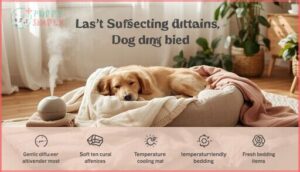
Once you understand what your dog is going through, managing her comfort at home becomes a lot more straightforward.
A few simple adjustments to your daily routine can make a real difference during her heat cycle. Here’s what you can do to keep her comfortable and your home running smoothly.
Use Dog Diapers for Vaginal Discharge
One of the simplest wins you can have during your female dog’s heat cycle is using doggy diapers to manage vaginal discharge. Look for options with strong absorbency levels, leak protection, and breathable diaper materials that won’t irritate sensitive skin.
Disposable options work great for travel, while washable diapers are kinder to your wallet long-term. Either way, your home stays clean.
Keep Your Dog Contained and Supervised
During your female dog’s heat cycle, keeping her safely contained isn’t just smart — it’s essential. A dog in heat can become surprisingly determined to escape, so solid containment strategies protect her from unwanted male attention and accidental pregnancy.
- Install secure fencing at least 6 feet high
- Check gates and latches daily for wear
- Supervise yard safety during all outdoor time
- Use baby gates indoors for added escape prevention
Maintain Light Exercise and Mental Stimulation
Your dog still needs to move, even during her heat cycle. Short, gentle walks and brief play sessions — just 5 to 15 minutes — support canine fitness and mental wellness without overstressing her body.
Puzzle toys and scent games offer calm, gentle stimulation that steadies dog behavior and mood. These simple exercise routines and calming techniques make a real difference in your pet’s overall canine health.
Provide Chew Toys and Calming Music
Think of chew toys and calming music as a two-part comfort kit for your furry friend. A durable, treat-stuffed chew toy engages her senses — offering Chew Toy Benefits like sensory stimulation and focused calm.
Meanwhile, Music Therapy using slow-tempo calming music works quietly in the background, easing dog behavior shifts tied to heat.
Together, these relaxation techniques genuinely support canine health and pet wellness during a tough stretch.
Natural Pain Relief Methods for Dogs

When your dog is feeling off during her heat cycle, sometimes the simplest remedies make the biggest difference. You don’t always need a prescription — a little warmth, play, and the right distraction can go a long way toward easing her discomfort.
Here are a few natural methods worth trying.
Warm Baths to Relax Muscles
A warm bath can work wonders for your furry friend’s muscle relaxation during her heat cycle. Bath temperature matters — aim for 98–104°F, never hotter. Here’s how to make it count:
- Soak for 15–20 minutes for full soaking benefits
- Add Epsom salt for gentle muscle relief
- Try aromatic oils like lavender for calming effects
- Keep the environment quiet for animal comfort
- Follow up with a heating pad for continued pet pain management
Distraction Through Playtime and Bonding
After that warm bath, keep the good vibes going with some gentle play. Short sessions — just 5 to 10 minutes — work beautifully for calm bonding without overstimulating her.
Soft toys, a quiet fetch game, or simple training cues offer real mental stimulation and playful distractions she’ll appreciate.
As a dog owner, your relaxed body language matters more than you think — she reads you.
Treat-Stuffed Toys for Mental Engagement
Now, take that bonding energy one step further — a treat-stuffed puzzle toy is a quiet, effective approach for canine enrichment during heat.
Interactive play with sensory toys engages your dog’s natural problem-solving instincts, offering real cognitive stimulation that pulls her focus away from discomfort.
Reward systems built into these toys reinforce calm, positive behavior, supporting her overall canine wellness beautifully.
When to Consult Your Veterinarian
Most of the time, your dog’s heat cycle discomfort is totally manageable at home. But there are moments when something feels off, and trusting that instinct matters.
Here’s what should prompt you to pick up the phone and call your vet.
Severe or Persistent Pain Behaviors
Persistent discomfort is the real signal that something needs professional attention. If your furry friend has been vocalizing pain, guarding her belly, or showing constant reluctance to move for more than 24 hours, don’t wait.
Watch for these behavioral changes:
- Constant whining or low growling when touched
- Guarding belly and refusing to lie still
- Vocalizing during simple movements or repositioning
- Physical discomfort limiting normal daily activity
Trust your instincts — veterinary advice matters here.
Unusual Discharge or Excessive Bleeding
Beyond behavior, watch her discharge closely. Abnormal discharge — foul-smelling, clotted, or lasting beyond seven days — signals potential reproductive issues worth investigating.
Excessive bleeding that soaks through diapers hourly isn’t normal heat cycle management; it’s a red flag for your dog’s vaginal health. Any unusual changes around her vulva during heat deserve a prompt call to your vet.
Signs of Infection or Illness
Infection can creep in quietly during heat. Watch for fever symptoms — a temperature above 100.4°F, abnormal lethargy, or breathing issues at rest. Digestive problems like vomiting or skipped meals also raise concern.
Redness or swelling around the vulva, unusual discharge, or any infection signs near her skin warrant prompt veterinary medicine and treatment — don’t wait it out.
Safe Pain Medication Options
When pain relief methods aren’t enough on their own, veterinary guidance becomes essential. Never give your dog aspirin, ibuprofen, or other human NSAIDs — they’re genuinely dangerous for dogs.
Safe NSAID alternatives exist, but only through veterinary medicine and advice. Even CBD oil and natural remedies need a vet’s approval before use. Medication safety isn’t something to guess at.
Preventing Heat Cycles Through Spaying

If you’re tired of managing heat cycles every six months, spaying is the most permanent solution you can give your dog. It doesn’t just stop the bleeding and behavioral changes — it opens the door to some real, lasting health benefits too.
Here’s what you should know before making that decision.
How Spaying Eliminates Heat Cycles
Spay surgery is basically the most reliable form of heat cycle prevention. It removes the ovaries and uterus entirely, so your dog’s body simply stops producing the hormones that trigger heat cycles. No more estrogen surges, no more hormonal rollercoaster.
From a veterinary medicine standpoint, this is the cleanest solution for long-term reproductive health in dogs. Surgical recovery usually takes 10–14 days, and your vet will walk you through everything.
Health Benefits Beyond Cramp Prevention
The benefits of spaying your furry friend go far deeper than just stopping heat cycles. Early spaying dramatically lowers her risk of mammary tumors and eliminates the threat of pyometra — a life-threatening uterine infection.
Early spaying does more than stop heat cycles—it shields your dog from mammary tumors and deadly uterine infection
It also aids hormone regulation and metabolic balance, reducing reproductive cancers and contributing to real lifespan improvement. That’s meaningful disease reduction and better reproductive health, all in one procedure.
Optimal Timing for Spaying Your Dog
Timing spaying correctly can make a real difference in your dog’s long-term health. There’s no single “perfect” age — it genuinely depends on her size, breed, and individual needs.
Here’s what shapes the decision:
- Spay Age Factors: Small breeds are often ready around six months; larger dogs may need to wait until after 12 months.
- Breed Considerations: Giant breeds with orthopedic sensitivities benefit from delayed spaying to support skeletal maturity.
- Health Risks: Early spaying before the first heat cycle greatly reduces mammary tumor risk and prevents pyometra.
- Surgical Timing: Avoid scheduling surgery during an active heat cycle — wait 2–3 months after for safer anesthesia conditions.
- Veterinary Guidance: Your veterinarian can personalize the timeline based on your dog’s reproductive health, weight, and genetic background.
Discussing dog health issues and reproductive health openly with your vet ensures the best outcome for your furry girl.
Frequently Asked Questions (FAQs)
How do I know if my dog has period cramps?
Watch for arched back, belly tenderness, trembling, whining, or reduced appetite — these heat symptoms signal canine discomfort.
Managing dog period cramps starts with recognizing these period signs early for better dog wellness.
Do girl dogs feel pain on their period?
Girl dogs don’t experience menstrual cramps like humans, but canine hormones can cause mild discomfort during heat.
Most pups handle it well with gentle female dog care and basic heat cycle relief support.
Do dogs have period cramps?
Not exactly. Your dog doesn’t experience menstrual cramps like humans do, but her heat cycle does bring real hormonal discomfort.
Think mild abdominal sensitivity rather than uterine contractions — uncomfortable, but manageable with good pet care.
What are the causes of period cramps?
Hormonal shifts and rising prostaglandin levels trigger uterine contractions, creating abdominal sensitivity and cramp triggers.
These hormonal changes drive most menstrual cramps — making heat cycle discomfort in estrus very similar in origin.
Can dog period cramps be cured?
Not exactly — but with the right pain management and cramp relief strategies, you can ease your dog’s heat cycle discomfort markedly.
Spaying offers the only permanent solution, delivering lasting spay benefits beyond just eliminating period cramps.
Can dogs get period symptoms?
Yes, dogs do get period symptoms. During the heat cycle, your furry friend may show heat symptoms like discharge, swelling, restlessness, and mood shifts — all tied to hormone balance shifts affecting canine health.
How can I Help my Dog with menstrual cramps?
Relieving dog period cramps starts with gentle abdominal massage and a warm heating pad. These natural remedies ease dog heat symptoms beautifully.
When discomfort seems severe, veterinary consultation ensures safe, trusted canine pain relief for your furry friend.
Can I give my Dog a pain killer for menstrual cramps?
Skip the human painkillers — ibuprofen and acetaminophen are toxic to dogs.
For genuine discomfort during heat, your veterinarian can safely prescribe dog-approved options like carprofen or meloxicam based on your pup’s weight and health.
Do female dogs feel pain during their period?
Female dogs experience mild discomfort during heat cycles from hormonal changes and vulvar swelling, not true menstrual cramps.
Pain medication isn’t usually necessary—gentle heat cycle care and veterinary advice usually provide adequate relief.
How can I ease my dog’s period pain?
Gently massage her belly with circular strokes, and apply a dog-specific heating pad on low to her abdomen. Offer extra cuddles for comfort.
A warm bath can also relax tense muscles and ease discomfort naturally.
Conclusion
Last month, a worried owner brought in her golden retriever, convinced she was dying—turned out she was just experiencing her first heat. That fear was real, but unnecessary.
The truth is, while dogs don’t get period cramps like humans, they absolutely feel hormonal shifts and abdominal sensitivity. Watch for signs, offer comfort when needed, and remember: spaying remains your most reliable path to preventing heat-related discomfort altogether. Your awareness makes all the difference.