
This site is supported by our readers. We may earn a commission, at no cost to you, if you purchase through links.

Your boxer’s short, sleek coat looks low-maintenance. But you’re finding hair on your furniture, clothes, and floors. Yes, boxers shed—not heavily, but consistently throughout the year.
Their tight, single-layer coat releases loose hairs daily, with noticeable upticks during spring and fall when seasonal changes trigger heavier shedding cycles.
The good news? Their short hair doesn’t cling to fabric like longer-haired breeds, and a simple brushing routine keeps most of it under control.
Understanding why your boxer sheds and what influences those patterns helps you manage the hair, spot potential health issues early, and keep your home cleaner without constant battle against stray fur.
Table Of Contents
- Key Takeaways
- Do Boxers Shed?
- Boxer Coat Characteristics
- Factors Influencing Boxer Shedding
- Managing Shedding in Boxers
- Preventing Excessive Shedding and Health Issues
- Frequently Asked Questions (FAQs)
- How often should I bathe my Boxer to reduce shedding?
- What are the best brushes for managing a Boxer’s shedding?
- Can Boxers be considered hypoallergenic dogs?
- How does a Boxer’s shedding compare to other dog breeds?
- Are there any health conditions that can cause excessive shedding in Boxers?
- Are Boxers considered hypoallergenic dogs?
- How does spaying or neutering affect shedding?
- Can stress or anxiety increase Boxer shedding?
- Do Boxer puppies shed differently than adults?
- What climate is best for minimizing shedding?
- Conclusion
Key Takeaways
- Boxers shed moderately all year, with heavier shedding in spring and fall.
- Regular brushing and proper diet help control loose hair and keep the coat healthy.
- Sudden increases in shedding or bald spots can signal health problems and need a vet visit.
- Boxers aren’t hypoallergenic; their short hair and dander can still trigger allergies.
Do Boxers Shed?
Yes, Boxers shed. They lose hair year-round at a moderate rate. Let’s look at how their shedding compares to other breeds and clear up some common myths about their coats.
If you’re curious about how coat texture and density change as your dog matures, check out this Boxer growth chart to see what’s typical at each stage.
Shedding Levels in Boxers
Boxers shed year-round, with moderate to heavy shedding compared to other short-coated breeds. Peak periods occur in spring and fall, as their coat adjusts for seasonal changes.
Regular brushing and a consistent grooming routine can help manage the shedding, and understanding breed-specific coat care for short-haired dogs can make seasonal transitions easier.
Brush your Boxer two to three times weekly to remove loose hairs before they land on your furniture.
Consistent grooming helps more than most owners realize—German Shepherds shed heavily too, so the same routine works wonders across breeds.
Indoor heating and artificial lighting can increase shedding patterns throughout the year.
Differences From Other Breeds
Unlike double-coated breeds that explode fur seasonally, your Boxer’s single-layer coat sheds steadily year-round. That short, tight fur lacks the plush undercoat responsible for dramatic seasonal blowouts in breeds like Huskies or German Shepherds.
Key breed distinctions in canine shedding patterns:
- Your Boxer’s sleek coat texture produces less volume than fluffy, high-furnish breeds
- Double-muscle breeds with similar grooming needs still can’t match your Boxer’s distinctive sheen
- Moderate shedding beats the heavy seasonal dumps from thick-coated dogs
- Less brushing required compared to long-haired varieties needing daily maintenance
Common Misconceptions
Many owners mistakenly believe Boxers only shed in spring or that brushing stops shedding entirely. Your Boxer sheds year-round with seasonal spikes, not one heavy dump. Grooming reduces visible hair but won’t halt natural hair cycles.
Despite rumors, no dog breed is truly hypoallergenic—all produce dander and shed to some degree, triggering dog allergies in sensitive individuals.
Some breeds like Cocker Spaniels are considered “low-shedding,” but they still release dander and shed moderately, which can affect allergy sufferers.
Boxer Coat Characteristics
Your Boxer’s coat tells you a lot about their shedding habits. The texture, color, and layering all play a role in how much fur ends up on your couch. Let’s break down what makes a Boxer’s coat unique.
Coat Type and Texture

Your Boxer’s coat sits tight against the body. It’s short and rarely grows past one inch. The hair follicles produce guard hairs continuously. These are coarse on the outside. Some dogs have a soft undercoat beneath. This is a single-layer coat that sheds lightly year-round.
Here’s what makes the Boxer coat unique:
- Guard hairs lie flat and create shine
- Coat length stays under 1 inch naturally
- Hair follicles regrow continuously but slowly
- Shedding patterns shift with temperature and daylight
- Coat regrowth starts coarse, then softens over time
Regular grooming keeps it smooth.
Typical Boxer Colors

Most Boxers sport fawn or brindle coat patterns with distinct mask formations. Color genetics determine whether your dog displays rich mahogany tones or striped brindle characteristics across their short coat. White markings often appear on the chest and paws.
While coat color doesn’t affect nutritional needs, some Boxers may benefit from grain-free senior dog food options as they age and their dietary requirements change.
| Color Type | Pattern Details | Breed Characteristics |
|---|---|---|
| Fawn | Solid tan with black mask | Most common variation |
| Brindle | Tiger-like stripes on base | Dark striping over fawn |
| Red | Deep mahogany without mask | Less frequent coloring |
Shedding happens equally across all Boxer coat colors.
Single Vs. Double Coat
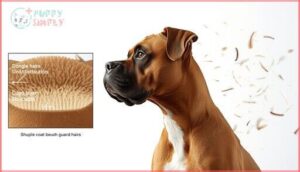
Your dog’s single coat lacks the dense undercoat found in breeds like Huskies. This simpler fur density means Boxers shed year-round at moderate levels rather than seasonal “blowouts.”
Their smooth hair texture requires regular brushing to remove loose strands. Grooming needs stay consistent across months. Coat thickness remains uniform, making shedding patterns predictable.
Understanding these breed characteristics helps you manage routine maintenance effectively.
Factors Influencing Boxer Shedding

Your Boxer’s shedding isn’t random. Several factors determine how much fur ends up on your couch. Let’s look at what influences your dog’s shedding patterns.
Diet and Nutrition Impact
Your dog’s food bowl holds real power over shedding. A balanced diet with quality protein fuels hair growth. Omega fatty acids reduce skin inflammation and flaking. Coat supplements containing zinc, biotin, and vitamin E strengthen the skin barrier.
A balanced diet with quality protein and omega fatty acids directly controls your Boxer’s shedding by strengthening the skin barrier
Healthy snacks matter too—poor dog nutrition disrupts coat maintenance. Proper Boxer dog care starts with nutrient balance in every meal.
Age and Health Conditions
As your Boxer ages, hormonal changes shift coat cycling. Senior health concerns like hypothyroidism or Cushing’s disease trigger coat thinning and excess dog shedding. Metabolic issues alter undercoat density. Age-related conditions weaken the skin barrier. Chronic inflammation increases hair loss.
Regular veterinary exams catch treatable Boxer health problems early. Effective dog shedding management starts with diagnosing underlying metabolic issues affecting coat quality.
Seasonal Shedding Patterns
Your Boxer’s coat reacts to daylight shifts and temperature swings. Spring and fall bring heavier shedding cycles as coat shift happens. Moulting patterns intensify when seasons change fast.
- Peak seasonal shedding occurs during rapid daylight length changes
- Climate effects vary by region, shifting timing earlier or later
- Indoor heating and humidity modulate visible seasonal changes
- Grooming demands increase during heavy coat shift periods
- Dog shedding management requires adjusting brushing frequency seasonally
Managing Shedding in Boxers

You can’t stop your Boxer from shedding completely. But you can control how much hair ends up on your floors and furniture.
Let’s look at practical ways to manage shedding and keep your home cleaner.
Recommended Grooming Tools and Techniques
The right tools make all the difference in shedding control. Use a slicker brush weekly to lift loose hair and distribute oils. During peak shedding seasons, switch to daily brushing with a grooming glove or deshedding tool. Bristle brushes work well for surface coat maintenance. Rotate between tools to cover all layers without irritating your Boxer’s skin.
Bathing and Skin Care Tips
Once you’ve tackled brushing, it’s time to think about baths. Wash your Boxer every 4 to 6 weeks using gentle cleansing products made for dogs. This bathing frequency keeps skin moisture balanced without stripping natural oils.
Rinse thoroughly to support coat conditioning and shedding control. Dry completely to prevent irritation.
Proper pet hygiene and dog grooming routines directly impact your dog’s coat health and comfort.
Dietary Supplements for Coat Health
Beyond baths, your Boxer’s diet plays a major role in coat health. Nutrient-rich supplements can support skin and reduce shedding when used properly:
- Omega 3 Benefits: Fatty acid supplements strengthen the skin barrier and calm inflammation
- Biotin Therapy: Improves coat texture and integrity over time
- Vitamin E Role: Acts as an antioxidant for shine
- Probiotic Effects: May ease skin issues through gut health
Consult your vet before starting any canine health regimen.
Reducing Shedding in The Home
Once grooming is covered, turn to your living space. Vacuum twice weekly using pet-hair attachments. Cover furniture with washable throws for easy protection. Lint rollers handle quick cleanups.
Set a grooming schedule—brush your Boxer outdoors when possible to catch loose hair before it spreads. These home cleaning tips and shedding prevention strategies keep fur manageable without constant battles.
Preventing Excessive Shedding and Health Issues

Shedding more than usual can signal a health problem. Your Boxer’s coat tells a story about what’s happening inside their body.
Here’s how to spot trouble early and keep your dog healthy.
Recognizing Abnormal Shedding
Your boxer’s shedding patterns tell a story. Watch for sudden hair loss in patches or bald spots. These signal trouble. Normal shedding is uniform across the coat. Abnormal signs include:
- Red, inflamed, or scaly skin issues beneath thinning areas
- Excessive scratching or biting at the coat
- Sudden increase in shedding volume over days or weeks
- Behavioral changes like lethargy alongside hair loss
These warrant veterinary care immediately.
Addressing Allergies and Parasites
Skin allergies trigger itch relief challenges in your boxer. Environmental allergens and parasites like fleas often spark excessive shedding and coat damage.
Flea management prevents allergy dermatitis, and regular parasite control reduces skin infections.
Allergy testing identifies triggers for targeted treatment. Hypoallergenic shampoos and prescribed medications ease itching.
Address these causes early to restore your dog’s healthy skin and coat.
When to Consult a Veterinarian
Sometimes, sudden bald patches or relentless scratching mean it’s time to call your vet. Identifying these issues early can help address potential coat health problems and prevent further complications.
Watch for emergency signs like skin redness or lethargy in boxers. Regular health checks catch shedding problems before they worsen.
Your veterinarian provides medical guidance on dog health and coat care when home remedies don’t work.
Frequently Asked Questions (FAQs)
How often should I bathe my Boxer to reduce shedding?
Every four to six weeks works wonders for shedding control in your Boxer. This bathing frequency maintains coat health without stripping essential oils.
Between baths, brush regularly for ideal dog hygiene and grooming results.
What are the best brushes for managing a Boxer’s shedding?
You’ll need a rubber curry brush for daily massaging and a deshedding blade for weekly deep cleaning.
An undercoat rake works great during spring and fall when shedding peaks most heavily.
Can Boxers be considered hypoallergenic dogs?
Despite hypoallergenic myths, boxers aren’t allergy-friendly. They produce dander like most breeds.
Shedding and coat oils trigger pet allergies in sensitive people. Dander reduction helps, but breed sensitivities remain real for allergy sufferers.
How does a Boxer’s shedding compare to other dog breeds?
Boxers shed moderately year-round, less than double-coated breeds like Huskies but more than low-shedding dogs.
Their short coat produces noticeable loose hair during spring and fall peaks, requiring regular grooming for effective coat maintenance.
Are there any health conditions that can cause excessive shedding in Boxers?
Yes. Hypothyroidism causes noticeable fur loss in roughly 68 percent of affected Boxers. Allergic reactions, skin infections, parasite infestations, and endocrine disorders like Cushing disease also trigger excessive shedding beyond normal levels.
Boxers often experience skin health issues that can contribute to shedding.
Are Boxers considered hypoallergenic dogs?
The “hypoallergenic” label doesn’t fit Boxers. They produce typical dander and saliva proteins that trigger allergies.
Their moderate shedding spreads allergens throughout your home, making them unsuitable for most allergy-prone individuals.
How does spaying or neutering affect shedding?
Spaying or neutering can shift your Boxer’s coat texture and shedding patterns. Hormonal changes may cause softer fur or more continuous year-round shedding instead of seasonal coat blows, though most dogs show minimal differences.
Can stress or anxiety increase Boxer shedding?
When anxious pups aren’t “stressed for success,” their coat health may suffer. Stress effects and anxiety triggers can increase shedding in Boxers.
Emotional wellbeing impacts behavioral changes and breed characteristics, affecting your dog’s overall health and wellness.
Do Boxer puppies shed differently than adults?
Puppies shed year-round at a lower baseline. During their first year, transitional coat development causes noticeable fur texture changes.
Adults settle into steadier seasonal shedding phases aligned with daylight and temperature shifts.
What climate is best for minimizing shedding?
Temperature stability matters more than you think. Mild temperatures between 64–72°F and low humidity help control shedding patterns.
Climate control reduces coat cycling in your Boxer, though seasonal grooming remains essential regardless of environment.
Conclusion
You won’t drown in fur with a boxer. Their shedding stays manageable with simple care. Brush weekly. Watch their diet. Notice changes early. Yes, do boxers shed? Absolutely. But you control most of it through consistent grooming and proper nutrition.
When shedding suddenly increases, your vet can help identify underlying issues. Your boxer’s coat reflects their overall health. Keep them well-fed, regularly brushed, and monitored. You’ll spend less time cleaning and more time enjoying your dog.
- https://americanboxerclub.org/boxer_history.html
- https://www.avma.org/resources-tools/avma-policies/ear-cropping-and-tail-docking-dogs
- https://www.vet.cornell.edu/hospitals/companion-animal-hospital/cardiology/arrhythmias-abnormal-rhythms-dogs
- https://profile.google.com/cp/Cg0vZy8xMXRqcnoydzMx
- https://x.com/godofprompt/status/1990526288063324577