This site is supported by our readers. We may earn a commission, at no cost to you, if you purchase through links.

Most dog owners spend between $300 and $600 a year on professional grooming, but here’s what the groomers won’t tell you: you can build a fully functional DIY dog bath at home for less than the cost of four salon visits.
The difference isn’t just financial. When you control the setup, you choose materials that work for your dog’s size, install features that reduce their anxiety, and bathe on your schedule instead of waiting weeks for an appointment.
Whether you’re working with a kiddie pool in the backyard or constructing a permanent station in your garage, the right approach transforms bath time from a dreaded chore into a manageable routine.
This guide walks you through every decision—from selecting slip-resistant surfaces to installing proper drainage—so you can create a bathing setup that actually makes life easier.
Table Of Contents
Key Takeaways
- Building a DIY dog bath at home can save you up to 60% a year compared to professional grooming, while letting you tailor the setup to your dog’s needs.
- Customizing your bath station with slip-resistant surfaces, adjustable features, and the right materials makes bathing safer and more comfortable for both you and your pup.
- Effective mess control—like splash guards, proper drainage, and non-slip flooring—keeps bath time manageable and your home cleaner.
- Regular maintenance, safe water temperature, and using dog-specific cleaning products ensure a healthy, stress-free routine for your dog.
Benefits of DIY Dog Baths at Home
Taking the time to set up a dog bath at home makes life a whole lot easier for both you and your pup. There’s more freedom to do things your way, without breaking the bank.
Here’s what you can expect from a DIY setup.
Cost Savings and Convenience
There’s no need to break the bank for a clean pup—a good DIY Dog Bath Tub saves you up to 60% annually over trips to the groomer. A homemade dog bath or DIY Dog Wash Station means no more hauling your dog around town, slashing your travel time and making weekend baths easy.
A DIY dog bath tub saves up to 60% annually while eliminating trips to the groomer and making weekend baths effortless
Convenience tips? Batch bathing and prep ahead—your wallet will thank you.
Customization for Dog Size and Needs
Every dog is different—that’s why a DIY Dog Bath Tub gives you the power to tailor each bath. Dog Size Adaptation matters: a Homemade Dog Bath designed for your breed makes bath day easier on you and safer for them. Go for adjustable platforms, customizable depths, and ergonomic grips.
- Breed-Specific Baths minimize strain
- Adjustable platforms speed up rinsing
- Ergonomic grips cut awkward lifting
For a successful bath, understanding AP study guides can help with patience and preparation.
Reducing Mess Indoors
Once your dog bath is set up for their size, the fight against splashes and muddy paw prints gets a whole lot easier. Mess reduction isn’t magic—it’s about water management and good cleanup strategies. Effective dog bathing requires a dog washing station to make the process more comfortable for both dogs and owners. From splash containment to smart floor protection, DIY Dog Bath Tubs are your secret weapon.
| Splash Containment | Floor Protection | Cleanup Strategies |
|---|---|---|
| Glass/poly guards | Rubber mats | Bio-enzymatic cleaners |
| Portable Dog Bath | Waterproof trays | Absorbent microfiber towels |
| Dog Wash Station edges | Interlocking tiles | Fast-drying with high-velocity dog dryers |
| Indoor Dog Bathing Tip | Non-slip boot trays | Vinegar-water spot treatment |
| Dog Bathing Station | Outdoor rugs | Quick sweep post-bath |
Choosing Materials for a DIY Dog Bath Tub
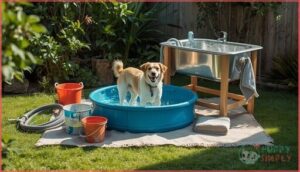
Your DIY dog bath starts with picking the right materials. The tub itself can be as simple as a plastic kiddie pool or as permanent as a custom wood frame with a steel basin.
Let’s look at what works best for your space, budget, and dog’s size.
Best Bathtub Materials (Plastic, Steel, Wood)
The right tub makes all the difference between a smooth bath and a wrestling match. You’ll want to balance material durability with tub safety when choosing your DIY dog bathtubs:
- Plastic options offer flexibility and non-slip textures, perfect for small to medium pups
- Steel coatings (304 or 316 grade) resist corrosion and handle large breeds with ease
- Wood treatment with waterproof sealants prevents warping in your elevated dog bathtub
Essential Tools and Supplies
Good tools separate a simple rinse from a true dog washing station. Start with dedicated dog shampoo—72% of owners see fewer skin issues when they ditch human products.
Add bathing gloves for control, grooming scissors (10–12 inch reach) to trim safely, and splash guards that cut indoor mess by 65%.
These basics transform your DIY dog bath tubs into professional-grade setups.
Safe and Non-Slip Surfaces
Without solid grip, your dog bathing station becomes a slip hazard. Textured surfaces cut paw slips by 38%, so add rubber flooring or anti-slip coatings with 3–5 mm tread depth. Non-slip mats work for portable dog bath setups, while slip-resistant vinyl keeps water contained.
Check for wear every six months—a nonslip surface only works when it’s fresh.
Step-by-Step Guide to Building a Dog Bath
Ready to build a better bath for your dog? Here’s how to put together a tub that works for your space and your pup.
Let’s walk through each part step by step.
Planning The Bath Tub Size and Location
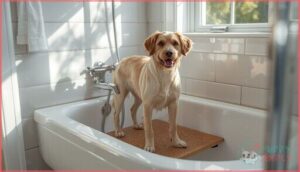
Ever wrestled with your pup in a cramped bathroom? Tub placement matters. Think about space optimization first: aim for under 24 by 36 inches if you’re tight on room.
Corner installation in your DIY dog bath tubs can free up space, and building a dog bathtub at an accessible height with reliable drainage systems transforms bath time into a proper DIY dog wash station.
Constructing The Base and Frame
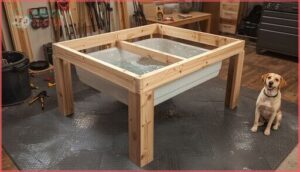
Think of the base and frame as the backbone of any DIY dog bath tub—get it sturdy, and you’ll thank yourself every wash. Choose pressure-treated wood or composite for frame stability, then reinforce with cross-bracing to handle your dog’s weight and movement.
Non-slip surfaces and a slight drain slope keep things mess-free, making your dog wash station both safe and practical.
Installing Faucets, Hoses, and Drainage
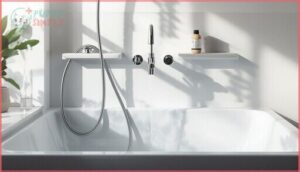
Imagine turning on the faucet and everything just works—no splashing, no cold surprises. That’s what smart Faucet Installation and Hose Management bring to your DIY Dog Bathing Solutions.
Go for water-efficient spray heads and flexible hoses, then pair them with reliable Drainage Systems. Safe drainage solutions and anti-scald features make plumbing your DIY Dog Wash Station both easy and safe.
Adding Custom Features (Stairs, Storage, Shade)
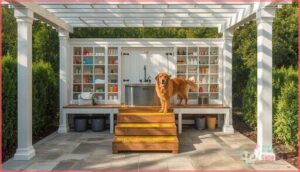
Making your DIY Dog Wash Station shine means focusing on what truly makes bath time easier: tailor those Accessible Stairs for wobbly legs, smart Storage Solutions to keep tools close, and Shade Options to beat the heat or glare. Prioritize Ergonomic Designs and Safety Features—these little upgrades add comfort, confidence, and peace of mind to every at-home dog bath.
- Accessible Stairs with non-slip treads make entry easy for dogs of all ages.
- Overhead Shade Options cool outdoor Dog Washing Stations and extend equipment life.
- Built-in, moisture-resistant Storage Solutions reduce hassle while keeping supplies organized.
- Adjustable Ergonomic Designs reduce bending and fatigue.
- Smart Safety Features like guardrails and quick drains cut down on slips and water mess.
Bathing Your Dog Safely and Effectively
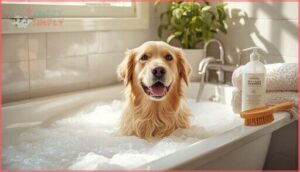
Getting your dog clean at home doesn’t have to feel stressful or messy. With just a bit of planning and the right setup, you can keep bath time safe and easy for both of you. Here’s what you’ll want to focus on next.
Preparing The Tub and Bathing Area
Tub placement is key—set your DIY dog bath tub away from high-traffic indoor spaces to cut down mess and stress. Invest in non slip flooring for the dog washing station; it’s a game changer for safety.
Prioritize bathing ergonomics, like tub height, and install practical drainage systems to keep cleanup easy. Dial in water temperature for comfort every time.
Using The Right Dog Shampoo and Conditioner
Now that your dog bath setup is ready, let’s focus on the products touching your pup’s skin. A pH-balanced dog shampoo helps prevent skin irritation and maintains everyday dog hygiene.
Choosing dedicated shampoo types and adding a quality conditioner keeps the coat soft and manageable—smart dog care for both pet grooming and happier, healthier baths at home.
Preventing Slips and Ensuring Comfort
Good products won’t help if your pup can’t stand steady. Non-slip mats are the foundation of bath safety—they cut slipping incidents by up to 60%. Pair them with traction surfaces like textured rubber flooring to boost grip even more.
Comfort designs matter too: keep water between 98–102°F, add a ramp for easier access, and choose rounded edges. These DIY dog bath tub ideas prevent stress and keep dog washing safer.
Aftercare and Maintenance Tips
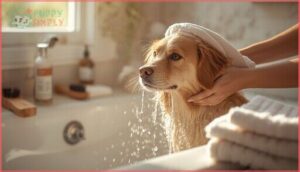
The bath is done, but your work isn’t finished yet. How you dry your dog and care for your setup afterward makes a real difference in coat health and how long your DIY tub lasts.
Let’s cover the essential aftercare steps that keep both your dog and your bathing station in great shape.
Drying Techniques for Healthy Coats
Your pup’s still damp after the dog bath? Don’t skip this step—proper drying techniques protect skin and keep that coat healthy. Towel drying with microfiber absorbs moisture fast, then finish with a low heat dryer on gentle air flow for moisture control.
- Use conditioning sprays during drying to boost softness and manageability
- Check double-coated breeds carefully—trapped dampness causes skin issues
- Never rush; thorough drying prevents that wet-dog funk and coat damage
Cleaning and Maintaining The DIY Bath Tub
After the dog bath wraps up, keeping your DIY Dog Bath Tubs spotless isn’t optional—it’s essential for pet hygiene and longevity. Weekly surface cleaning with a mild cleaner prevents soap buildup, while monthly drain maintenance clears hair clogs that cause backups. Regular inspections of seals and hoses catch leaks early, and reapplying non-slip coatings every six months maintains traction. Tub sanitization with diluted bleach kills bacteria fast, keeping your dog cleaning station ready for the next wash.
| Task | Frequency | Why It Matters |
|---|---|---|
| Surface Cleaning | Weekly | Prevents soap scum, maintains integrity |
| Drain Maintenance | Weekly | Reduces clogs by 60%, prevents overflow |
| Seal & Hose Inspections | Monthly | Cuts leak damage by 50% annually |
| Non-Slip Mat Replacement | Every 6–12 months | Keeps traction consistent and safe |
| Professional Check (steel/epoxy tubs) | Annually | Extends lifespan by 15–25% |
Frequency and Best Practices for At-Home Dog Baths
Generally, you’ll want to bathe short-coated dogs every 4–6 weeks and long-coated breeds every 6–8 weeks—bath scheduling that protects skin health without stripping natural oils. Keep water temperature between 98–102°F for comfort, and pair regular coat maintenance with brushing between washes.
This rhythm optimizes dog hygiene while supporting overall dog health and wellness in your DIY dog bath tubs.
Frequently Asked Questions (FAQs)
Can I bathe my dog in cold weather?
Yes, but you’ll need to take precautions. Cold air and wet fur can trigger hypothermia in minutes, especially in small breeds. Move indoors or use warm water and quick drying techniques.
How to handle anxious dogs during baths?
Like teaching a scared child to swim, you’ll ease anxious dogs into baths with gradual exposure, treats, and calm handling.
Non-slip mats, warm water, and quiet reassurance transform stressful grooming into comfortable canine care.
What temperature should the water be?
Keep the water between 98°F and 102°F for dog comfort, and use bath thermometers to maintain temperature control.
This range ensures water safety and heat monitoring while protecting your dog’s skin during grooming and bathing.
Are there breeds that need less bathing?
Beagles, Boxers, and Labradors can go 6–8 weeks between baths thanks to short, low-shedding coats. Regular brushing and spot-cleaning extend intervals while keeping coat health strong and skin irritation low.
How to protect dog ears from water?
A dog’s ears are gateways—shield them with cotton balls or waterproof bands before a dog bath.
Combine gentle tilting, low-pressure sprayers, and quick-dry ear cleaning solutions for superior ear protection methods.
Prioritize dog ear safety every time.
Conclusion
It’s funny—building your own diy dog bath at home is both an act of preparation and a leap of trust. You trade expensive appointments for peace, trade messes for convenience, and suddenly grow more connected to routine than you thought possible.
Each rinse and rubdown isn’t just cleaning your dog; it’s you crafting a calmer, safer ritual. As your skills grow, you’ll wonder why you ever handed the leash to anyone else. Your dog will thank you, too.