
This site is supported by our readers. We may earn a commission, at no cost to you, if you purchase through links.
Most dog owners grab a collar without thinking twice—it’s what dogs wear, right?
But that simple choice shapes every walk you take together, from how much your dog pulls to whether a flat-faced breed can breathe comfortably.
A collar concentrates all leash pressure onto the neck, while a body strap spreads it across the chest and shoulders—a distinction that matters far more than most people realize.
The difference between a dog body strap and collar isn’t just about style or convenience; it affects your dog’s comfort, safety, and behavior on the leash.
Knowing which one fits your dog’s needs can change walks from a daily battle into something you both actually enjoy.
Table Of Contents
- Key Takeaways
- Key Differences Between Dog Harness and Collar
- Pros and Cons of Dog Collars
- Pros and Cons of Dog Harnesses
- Choosing The Right Option for Your Dog
- Training and Behavior Impact
- Safety, Legal, and Practical Considerations
- Frequently Asked Questions (FAQs)
- Is it better for a dog to have a collar or harness?
- Why do dog trainers not recommend harnesses?
- Can dogs wear both a harness and collar?
- Which option is better for senior dogs?
- How do weather conditions affect harness choice?
- Are certain harnesses suitable for car travel?
- How often should harnesses and collars be replaced?
- Conclusion
Key Takeaways
- Collars concentrate all leash pressure on your dog’s neck, while harnesses spread it across the chest and shoulders—a difference that can protect your dog from real throat and tracheal damage over time.
- Your dog’s breed, size, and pulling habits should drive your gear choice: flat‑faced breeds, puppies, and heavy pullers are almost always better off in a harness.
- Front‑clip harnesses actively redirect pulling dogs sideways, making them one of the most effective tools for leash training—about 67% of owners see less pulling within three weeks.
- No matter which you pick, your dog still needs a collar with ID tags in most places—it’s not just smart, it’s often the law.
Key Differences Between Dog Harness and Collar
Collars and harnesses seem simple at first glance, but they work in very different ways. Each one affects how your dog moves, pulls, and behaves on a leash.
Understanding how collars and harnesses differ in body contact and control can make a real difference in your dog’s comfort and your walks together.
Here’s a closer look at what sets them apart.
Definition and Purpose of Collars

A dog collar is your first line of connection with your pup. It’s a simple band — nylon, leather, or biothane — that sits around the neck and fulfills multiple roles at once:
- Identification Role – holds ID tags with your contact info
- Legal Requirement – required in most public spaces
- Safety Mechanism – reflective or LED options boost visibility
- Material Choices – flat collars for everyday use, rolled collars for sensitive skin
- Comfort Fit – two-finger rule keeps it snug but safe
A collar with identification tags for safety can aid in quick return of a lost dog.
Definition and Purpose of Harnesses

collar wraps the neck, a dog gear wraps the whole body — and that changes everything.
Torso pressure distribution moves force away from the throat, reducing neck strain considerably.
Chest strap functionality keeps your dog secure without restricting movement freedom during walks.
Whether you choose a backclip gear for casual strolls or a front-clip for training cue integration, gear options genuinely support safer, more comfortable control.
senior dogs benefit for puppies and brachycephalic dogs as well.
How Each Functions During Walks

On a walk, the leash attachment point determines everything. Collars concentrate pressure on the neck — up to 44 N/cm² during pulling — which can strain the trachea quickly.
A frontclip gear redirects a lunging dog back toward you using opposition reflex, while a backclip device allows calm movement without correction.
For leash training pullers, a nopull safety gear offers smarter pressure distribution and gentler sudden‑stop control.
Pros and Cons of Dog Collars

Collars are the go-to choice for millions of dog owners, and for good reason.
But like any piece of gear, they come with real trade-offs worth knowing before you clip one on.
For sighthound owners especially, understanding how different dog collar types compare can save you from a costly—or dangerous—mistake.
Here’s a look at what collars do well, where they fall short, and which types work best for different dogs.
Advantages of Collars
Few things beat the simplicity of a good collar. Dog collars offer quick ID access — most feature D-rings that hold tags with your contact info in seconds.
Flat collars, rolled collars, and martingale collars all share a lightweight design that’s easy to adjust and comfortable for all-day wear.
Basic nylon options start around $5, making cost efficiency and durable materials easy wins for everyday dog owners.
Disadvantages of Collars
Collars aren’t perfect, though. For dogs that pull, flat collars and martingale collars can cause serious tracheal damage over time — even leading to permanent breathing problems. Neck injuries, thyroid pressure, and increased eye pressure are real risks, especially in brachycephalic breeds already prone to breathing struggles.
If your dog pulls hard, pet safety and security depends on choosing gear that doesn’t put dog health at risk.
Best Uses for Different Collar Types
right collar to your dog’s needs makes a real difference.
Flat buckle everyday use suits most calm dogs on regular walks.
Martingale sighthounds like Greyhounds need escape-proof control.
Breakaway play collars protect unsupervised dogs from snags.
Prong strong-pull corrections help large, unresponsive dogs temporarily.
Head-halti reactive dogs benefit from gentle steering.
Understanding dog collar vs leash differences helps you pick smarter leash options too.
Pros and Cons of Dog Harnesses

Slings have a a lot going for them — but they’re not perfect for every dog or every situation.
Like any piece of gear, they come with real trade-offs worth knowing before you buy.
Here’s a look at the key advantages, drawbacks, and best uses for different sling types.
Advantages of Harnesses
Dog gear gives you real advantages worth knowing. Pressure Distribution across the chest and shoulders means no strain on your dog’s throat — a significant improvement for pullers. A frontclip gear or nopull gear redirects energy sideways instead of forward. A softfabric gear also offers Skin Protection and Breathing Comfort for flat‑faced breeds. Here’s what stands out:
- Chest Leverage improves your control on busy streets
- Training Leverage makes leash manners easier to reinforce
- Comfortable walking keeps your dog calmer and more focused
Disadvantages of Harnesses
Harnesses aren’t perfect, though. trap heat against your dog’s body, raising the risk of overheating on warm days.
skin irritation from poorly fitted straps, especially under the armpits. restrict mobility in some designs, affecting your dog’s natural stride.
They also create false control — you might feel secure while your dog learns to pull harder. complex adjustment makes daily use frustrating too.
Best Uses for Different Harness Types
Each type solves a different problem.
A front-clip gear keeps energetic breed control in check — think Huskies lunging at every squirrel. Back-clip gears offer small dog comfort for calm Chihuahuas on easy strolls.
No-pull gears handle heavy pullers, while soft-fabric styles support medical condition accommodation for sensitive skin.
For escape artist prevention on hikes, a vest-style gear with multiple straps is your best bet.
Choosing The Right Option for Your Dog

Picking between a lead and a collar isn’t one-size-fits-all — your dog’s size, breed, and personality all play a role. The way you walk and train together matters just as much as the gear itself.
Here’s what to think about before you decide.
Factors to Consider (Size, Breed, Temperament)
No two dogs are built the same — and that’s exactly why size, breed, and temperament matter so much in the dog gear vs collar debate. To find the right fit, check these key factors:
- Neck girth and chest measurements for accurate sizing
- Breed-specific needs, like gear for flat-faced or toy breeds
- Pulling tendencies to guide gear or collar choice
- Temperament levels for calm versus reactive dogs
Matching Gear to Walking and Training Needs
Once you know dog’s size and temperament, matching gear to the activity becomes straightforward.
Use a back clip comfort vest for calm daily walks.
Switch to a front clip control vest when leash training a puller.
For reactive dogs, a reactive dog vest gives you better steering.
A martingale pull correction collar works well in structured obedience sessions.
Puppy training vests suit early leash work.
Safety and Comfort Considerations
Gear choice isn’t just about control — it directly affects your dog’s health. Collars concentrate neck pressure on the throat, raising tracheal health risks and even intraocular pressure, especially in small or flat-faced breeds.
A well-fitted dog vest spreads load across the chest and shoulders instead. Check that the chest strap position sits clear of the armpits, and choose padding breathability suited to your climate.
Training and Behavior Impact
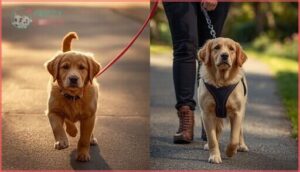
The gear you choose does more than keep your dog close — it can shape how they behave on a leash over time.
Whether you’re training a new puppy or working through pulling habits with an older dog, the right tool makes a real difference.
Here’s how collars and harnesses stack up regarding training and behavior.
Effect on Pulling and Leash Training
When your dog lunges toward a squirrel, the right gear makes all the difference. Front-clip tether mechanics redirect that forward momentum sideways, turning pulls into pivots without a battle.
No-pull tether benefits are real — about 67% of owners see less pulling within three weeks.
Back-tether tension data shows dogs pull longer and harder, while collar pressure feedback naturally discourages lunging through brief, localized neck sensation.
Suitability for Puppies Vs. Adult Dogs
Age shapes what works best. Puppies need a neck pressure protection gear — small breeds face five times higher tracheal damage risk from a dog collar. Growth adjustment is real too; expect gear upgrades every few weeks.
Small breeds face five times higher tracheal damage risk from collars, making proper gear essential from puppyhood
- Gears offer shoulder mobility and escape prevention for squirmy pups
- Collars suit adult dog walking tips and quick ID tag access
- Training flexibility improves as neck muscles mature after 18 months
Recommendations for Specific Training Goals
Match your gear to your goal.
For loose leash training, a front-clip vest naturally redirects pulling dogs without neck strain.
Recall drills work best with a long line on a back-clip vest.
Reactive behavior responds well to front-clip control near triggers.
Agility preparation favors a flat collar.
For brachycephalic safety, a no-pull vest protects the airway during all leash training and walking sessions.
Safety, Legal, and Practical Considerations

Picking the right gear isn’t just about comfort — there are real safety and legal rules you need to know too.
A few practical details can make a big difference in keeping your dog safe and identifiable. Here’s what every dog owner should keep in mind.
Legal Requirements for Collars and Harnesses
Laws around dog collars aren’t the same everywhere. UK Tag Mandate, for example, requires a collar displaying your name and address in public — a gear alone won’t cut it, and ignoring this can mean serious fines.
EU Collar Bans prohibit shock and prong collars in several countries. US State Regulations vary widely too.
Know your local rules:
- UK: collar with owner ID required by law
- Germany: shock and prong collars are banned
- US: requirements differ by state and county
ID Tag Attachment and Identification
Keeping your dog identified starts with knowing where to attach tags. On a collar, clip ID tags to the back D-ring using a split ring for a secure hold. On a lead, use the top back D-ring for better visibility.
Choose stainless steel or aluminum for durability, and engrave your dog’s name plus a primary phone number — that’s what gets them home.
Maintenance and Proper Fit for Safety
Well-fitted gear is your first line of defense. Use the Two-Finger Rule for both collars and harnesses — slide two fingers under the strap at mid‑neck or chest.
For harnesses, take a Chest Measurement at the widest ribcage point. Regular Gear Inspection catches frayed stitching before it fails.
For Cleaning nylon, machine wash on a gentle cycle and air dry. Strap Adjustment matters as your dog grows.
Frequently Asked Questions (FAQs)
Is it better for a dog to have a collar or harness?
It depends on your dog.
A body strap suits pullers and sensitive breeds, while a collar works for calm, trained dogs.
The right choice comes down to breed suitability, behavior, and comfort.
Why do dog trainers not recommend harnesses?
Many trainers avoid harnesses because they reinforce pulling, dilute leash cues, and mask behavior issues.
They reduce handler control and can cause physical strain, making collars more effective training tools for shaping dog behavior long‑term.
Can dogs wear both a harness and collar?
Yes, dogs can wear both a lead and collar at the same time. This dual-gear setup offers backup safety, legal ID compliance, and training flexibility — making walks safer and more controlled.
Which option is better for senior dogs?
As the saying goes, age changes everything.
For senior dogs, gear wins hands down — it protects the airway, helps joints, and eases mobility issues far better than any collar ever could.
How do weather conditions affect harness choice?
Weather shapes your gear choice more than you’d think. breathable mesh style suits hot days, while insulated padding deals with cold snaps.
For rain, waterproof TPU and reflective safety trim keep your dog comfortable and visible.
Are certain harnesses suitable for car travel?
Some harnesses are built specifically for car travel. Look for crash test ratings, seat belt integration, and proper weight capacity.
The Sleepypod Clickit Sport and Kurgo Tru-Fit both offer certified protection with padding comfort included.
How often should harnesses and collars be replaced?
Even gear that looks fine can quietly fail you. Replace collars every 6–12 months and harnesses every 12–18 months, adjusting sooner if you spot fraying, cracked buckles, or persistent odor.
Conclusion
Neither a safety vest nor a collar is universally better—the right choice depends entirely on your dog.
Understanding the difference between dog safety vest and collar options means you’re already thinking like a responsible owner.
A senior Dachshund and a young Husky don’t need the same gear, and that’s the point.
Match the tool to the dog in front of you, and every walk becomes less of a tug-of-war and more of a partnership built on comfort and trust.
- https://www.kentucky-horsewear.com/ro-en/eur/blog/the-difference-between-a-dog-collar-or-a-dog-harness
- https://animalosteopatia.com/en/blogs/sante-animal/harnais-ou-collier-pour-le-chien-analyse-anatomique-et-osteopathique-pour-un-choix-eclaire
- https://phys.org/news/2020-05-collars-neck-injuries-dogs.html
- https://pmc.ncbi.nlm.nih.gov/articles/PMC8450523/
- https://www.sladeczech.com/news/dog-harness-vs-collar-what-s-better-for-your-dog