This site is supported by our readers. We may earn a commission, at no cost to you, if you purchase through links.

A dog that blows its coat can dump enough fur on your table to stuff a small pillow—and the wrong brush turns that manageable task into a grinding, arm-aching hour. Most groomers learn this the hard way, reaching for whatever’s in the drawer and wondering why their wrists are screaming by noon.
brush doing the work matters as much as the technique behind it.
Coat type, tooth design, handle geometry, and how a brush releases fur between clients all determine whether you finish a Husky in forty minutes or spend the afternoon fighting it.
The right deshedding brushes for professional groomers don’t just speed up the process—they protect the coat, spare the dog discomfort, and keep your hands functional through a full day of back-to-back appointments.
Table Of Contents
- Key Takeaways
- Best Deshedding Brushes for Groomers
- Features Groomers Should Prioritize
- Match Brushes to Coat Types
- Salon Deshedding Techniques That Work
- Cleaning and Replacing Deshedding Brushes
- Frequently Asked Questions (FAQs)
- What is the best deshedding brush for dogs?
- What brush do groomers use most often?
- What is the EZ groomer shedding tool?
- Can deshedding brushes help reduce pet hairballs?
- Are deshedding brushes safe for horses and goats?
- Which coat conditions make deshedding brushes ineffective?
- Do deshedding brushes work on rabbit fur?
- How often should groomers deshed between full grooms?
- Conclusion
Key Takeaways
- Matching your brush to the dog’s coat type — not just grabbing whatever’s handy — is what separates a 40-minute Husky groom from an hour-long battle.
- Self-cleaning mechanisms, stainless steel teeth, and ergonomic grips aren’t luxury features; they’re what keep you functional through a full day of back-to-back heavy shedders.
- Technique matters as much as tools — light pressure, long steady strokes, and following coat direction protect the topcoat and spare the dog unnecessary discomfort.
- Even the best brush becomes a liability if you skip maintenance: clear fur between clients, wash with mild soap, air-dry teeth up, and replace every 6–12 months before performance drops.
Best Deshedding Brushes for Groomers
Not every deshedding brush is built for the pace of a busy salon. The right tool makes a real difference — less time per dog, better results, and fewer complaints from clients about shedding at home.
Knowing which brushes actually work for heavy-shedding breeds helps you cut through the noise and invest in tools that hold up through back-to-back appointments.
Here are the brushes worth having in your kit.
1. Pet Grooming Rake Metal Flea Comb
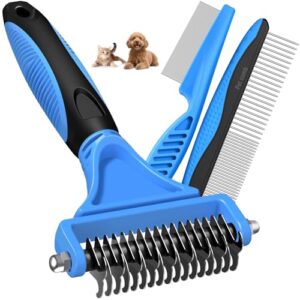
This three-piece set punches well above its $6.77 price tag.
You get a double-sided undercoat rake, a 2-in-1 metal comb, and a fine-tooth flea comb — everything you need for a thorough grooming pass in one kit.
The stainless steel teeth stay sharp through repeated use, and the non-slip TPR handle keeps your grip steady even with wet hands.
It’s especially solid for medium- to long-haired dogs and cats with dense undercoats.
The 2-year warranty doesn’t hurt either.
- Three tools in one kit covers de-shedding, detangling, and flea checks — no need to buy separately
- Stainless steel teeth and a non-slip handle make it durable and comfortable to use
- Hard to beat at $6.77, especially with a 2-year warranty backing it up
- The rake’s sharp teeth can irritate sensitive or senior pets if you’re not gentle
- Less useful for short-haired pets that don’t have much undercoat to work through
- Teeth can clog with hair pretty fast, so you’ll need to clean it regularly
2. Double Sided Pet Grooming Rake
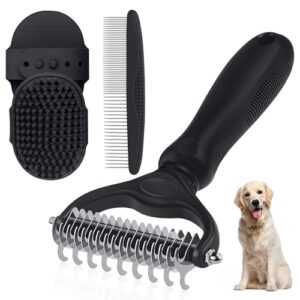
If you want more bang for your buck, the Double Sided Pet Grooming Rake (model NEYA-PET-1004) delivers for just $6.99.
One side lifts mats; the other thins the undercoat — two jobs, one tool, one pass.
The rubber grip manages wet sessions well, and the built-in massager keeps nervous dogs calmer on the table.
covers cats and dogs across most coat types.
For high-volume days, that kind of versatility saves real time.
- Two tools in one — deshedding comb on one side, wide-tooth brush on the other, so you’re not swapping tools mid-session.
- Built-in massager helps nervous pets relax and keeps natural oils moving through the coat.
- At $6.99, it’s hard to beat the value for everyday home grooming.
- The teeth can loosen over time, which makes it less effective the longer you use it.
- The rubber grip is really built for wet use — don’t expect great performance on dry fur.
- Thinner plastic build means it probably won’t hold up as well as a pricier metal rake on tough, matted coats.
Undercoat Rake Vs Slicker-style Deshedding Brush
Both tools earn a spot in your kit, but they don’t do the same job. The undercoat rake wins on penetration depth — it pulls loose fur from beneath the topcoat where slickers can’t reach. Slicker-style deshedding dog grooming brushes handle surface tangles well.
Pressure control matters with either tool; too much force causes irritation fast. Match the tool to the coat, and you’ll save time.
A deshedding tool reduces shedding by up to 80% in double‑coated breeds.
Best Options for Heavy-shedding Dogs
Heavy shedders need a deshedding dog grooming brush built for volume. Look for adjustable tooth density — it lets you shift between thick seasonal coats and standard maintenance without swapping tools.
Reducing excessive shedding also helps prevent the skin irritation that leads to dandruff and hotspots in dogs with thick coats.
Pin length optimization matters too; longer flexible pins reach deep without snagging the topcoat. Heat-resistant materials hold up through back-to-back clients.
Portable grooming kits with eco-friendly brush materials round out a solid heavy-coat setup.
Best Value for Busy Grooming Salons
When cost efficiency drives every purchase decision, the right deshedding dog grooming tools pay for themselves fast.
- Stainless steel teeth last 1,000+ uses without bending
- Self-cleaning mechanisms cut downtime by 40% between clients
- Ergonomic grips reduce staff fatigue by 25% during long shifts
- Bulk purchasing lowers per-unit cost and simplifies salon inventory management
- Workflow optimization improves throughput on back-to-back heavy-coat dogs
Features Groomers Should Prioritize
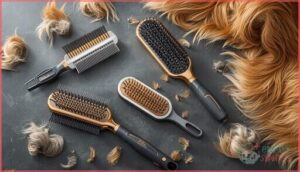
Not every deshedding brush is built the same, and the wrong one can slow you down or leave a coat half-finished. The features you choose matter more than the brand name on the handle.
Here’s what to look for before you buy.
Ergonomic Non-slip Handles
Your hands are your livelihood — don’t let a poorly designed handle slow you down. Hand Fatigue Reduction starts with Grip Material Choice: soft rubber, contoured to your natural hand posture, keeps control locked in even through Wet Condition Grip challenges. Color-Coded Sizes help your team grab the right Deshedding dog grooming tools instantly.
Your hands are your livelihood — protect them with ergonomic, non-slip handles built for long salon days
| Handle Feature | Benefit | Salon Impact |
|---|---|---|
| Soft rubber grip | Reduces hand fatigue | Longer sessions, less strain |
| Contoured Shape Benefits | Prevents wrist strain | Consistent technique all day |
| Non-slip wet surface | Secure grip when soaked | Fewer accidents mid-groom |
Consider adding a 21‑Piece Starter Kit to your inventory for professional‑grade tools.
Stainless Steel Teeth Durability
Stainless steel teeth hold up because the metal’s Surface Hardness resists wear through hundreds of grooming sessions. The Passivation Process strips free iron from the surface, building Corrosion Resistance that survives shampoos, saliva, and daily rinses. Grain Uniformity distributes stress evenly, extending Fatigue Life across your busiest salon days.
For serious Deshedding dog grooming tools and usage, that hairbrush durability isn’t optional — it’s what separates professional salon supplies from throwaway gear.
Curved Heads for Body Contouring
A flat brush on a curved dog is a fight you’ll lose every time. That’s where Contour-Fit Head design earns its place in your kit.
The Flexible Neck Design follows the dog’s body naturally, and Pressure-Relief Geometry keeps Hard-to-Reach Access areas — behind elbows, under legs — workable without forcing it.
Three reasons groomers prioritize curved heads:
- Skin-Friendly Edge contact reduces irritation on sensitive areas
- Body-following curves cut grooming time on medium to large dogs
- Even pressure distribution protects skin while lifting loose undercoat
For serious Deshedding dog grooming tools and usage, shape matters as much as steel.
Rotating Teeth for Thick Coats
Thick double coats don’t forgive weak tools. Rotating teeth deliver Deep Coat Penetration without forcing pressure into the skin — Snag-Free Rotation keeps guard hairs intact while pulling loose undercoat cleanly.
Corrosion-Resistant Steel holds up through heavy salon use, and Replaceable Tooth Modules extend tool life considerably.
| Feature | Benefit |
|---|---|
| Snag-Free Rotation | Protects dense guard hairs |
| Deep Coat Penetration | Lifts undercoat in fewer passes |
| Corrosion-Resistant Steel | Withstands daily salon demands |
| Replaceable Tooth Modules | Extends brush lifespan |
| Rounded tooth tips | Reduces skin irritation |
Self-cleaning Fur Release Systems
A good self-cleaning system changes everything when you’re moving through eight dogs before noon. The Lever Release Mechanism lets you clear collected fur with One-hand Operation — a tactile click confirms the transfer, and Quick Tray Emptying takes under 60 seconds.
Silent Fur Ejection keeps anxious dogs calm. Zinc Plated Parts resist corrosion in humid salons, making these deshedding dog grooming tools genuinely built to last.
Match Brushes to Coat Types
Not every brush belongs on every dog, and using the wrong one can do more harm than good. Matching your deshedding tool to the coat in front of you is one of the most practical skills you can sharpen as a groomer.
Here’s how to think through the most common coat situations you’ll run into.
Double-coated Breeds With Dense Undercoat
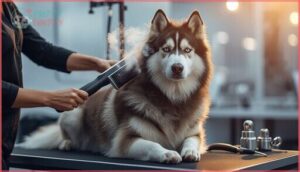
Double-coated breeds like Huskies, Malamutes, and German Shepherds run on a predictable Seasonal Shedding Cycle — heavy in spring and fall, lighter in between. Their woolly undercoat provides real Temperature Regulation Benefits, so you don’t want to strip it carelessly.
Breed-specific Undercoat Care means adjusting your Grooming Frequency Guidelines accordingly. Watch for Undercoat Health Indicators, like patchy loss or dullness — those signal something’s off.
Short- to Medium-coated Dogs
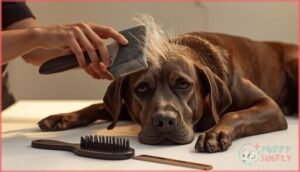
Short- to medium-coated dogs are actually low-maintenance compared to double-coated breeds, but they still shed plenty.
Rubber Curry Lift tool is your best starting point — it pulls loose fur off the skin without scratching. Follow up with a Bristle Brush Shine pass to distribute natural oils, then run a Fine-tooth Comb through for Hair Removal Efficiency.
A simple Daily Brushing Routine keeps everything clean between appointments.
Long Coats Prone to Trapped Loose Fur
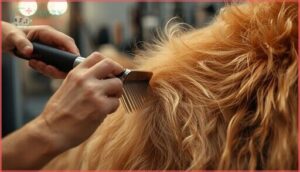
Long coats trap loose fur in ways short coats never do.
Joint Fold Accumulation around elbows and hips, Underarm Moisture Traps, Tail Base Tangles, and Neck Shoulder Rubbing zones all hold fur tight against the skin.
Your best deshedding dog grooming tools here are flexible-tooth rakes — they reach through without shredding the topcoat.
Schedule a Seasonal Deep Clean to clear embedded buildup before it mats.
Sensitive Dogs Needing Gentler Tools
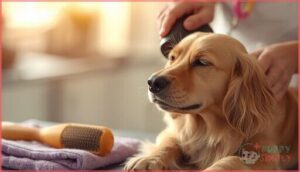
Sensitive skin changes everything. Where rake glides fine on a Lab, it can scrape a thin-coated or anxious dog raw.
Soft Bristle Options, Rubber Grooming Gloves, and Ball-tip Slicker brushes are your go-to deshedding dog grooming tools here.
Rounded-tip Combs and Flexible Brush Heads press less against the body, reducing flinching.
Light strokes, calm pace — that’s what keeps sensitive dogs coming back without a fight.
When Not to Use a Deshedding Brush
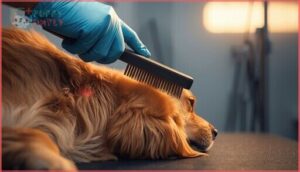
Even the best deshedding dog grooming tools have a time and place — and knowing when to put them down matters just as much as knowing how to use them. Skip the brush entirely over Matted Fur, active Dermatitis Flare, Skin Infections, Ear Sensitive Areas, or Post‑Surgery Healing sites.
Forcing it through knots or inflamed skin won’t help. It’ll hurt.
Salon Deshedding Techniques That Work
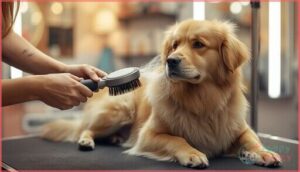
Having the right brush is only half the job — how you use it matters just as much. Even the best deshedding tool can cause coat damage or irritation if your technique is off.
Here’s what actually works on the salon floor.
Brushing With Light Pressure
Less pressure than you think — that’s the rule. Let brush do the work.
Keep your wrist relaxed and stroke slow and steady. Pressure sensing comes from feel, not force.
brush low, watch for skin sensitivity checks mid-session, and adjust immediately.
With the right deshedding dog grooming tools and proper brush angle control, gentle stroke timing becomes second nature.
Following Coat Direction Correctly
Every section of a dog’s coat tells its own story. Before you stroke, map the coat flow — shoulders, flanks, legs, tail all shift direction. Growth Lay Alignment and Sectioned Brushing let your deshedding dog grooming tools work smarter.
- Part the coat and confirm direction zone by zone
- Use Directional Stroke Sequencing from root to tip
- Apply Sensitive Zone Technique around ears, belly, and joints
- Let Coat Flow Mapping guide each pass before pressing in
Using Long, Steady Strokes
Think of your arm as a metronome — Stroke Rhythm controls everything. Long, steady passes increase Coverage Efficiency by letting your deshedding dog grooming tools glide across the back, sides, and shoulders without doubling over the same spot.
Keep a Consistent Pace, work through each section using Body Sectioning, and let the teeth do the lifting. Light pressure protects Skin Comfort every time.
Pairing Deshedding Brushes With Slickers and Combs
No single tool does it all — that’s where Tool Sequence Logic saves you.
Start with your slicker to open the coat and surface loose hair. Then run the rake through dense sections using Slicker-Rake Synergy to pull the undercoat. Finish with a comb for Comb Finish Integration — if it snags, you’re not done.
This Layered Brushing Strategy is how professional deshedding dog grooming tools deliver a clean, even result every time.
Preventing Topcoat Damage and Irritation
Topcoat damage usually comes down to two things: too much pressure and too many passes. Keep your Gentle Brush Angle low and your Controlled Stroke Speed steady — let the tool do the work.
Run Skin Sensitivity Checks around ears and flanks.
Proper Tool Alignment matters too; misaligned teeth snag healthy hair.
Avoiding Over Brushing is simple: stop when the loose coat is gone.
Cleaning and Replacing Deshedding Brushes

A clean brush works better and lasts longer — it’s that simple. How you care for your deshedding tools between clients says a lot about your professionalism and affects every groom that follows.
Here’s what you need to know to keep your brushes in top shape.
Removing Fur Buildup Between Clients
Between clients, your reset workflow timing matters more than most groomers realize. Pull fur from deshedding dog grooming tools before the next dog ever steps on your table — packed teeth slow the brush down and carry dander forward.
Use hair removal bins at your station for rapid fur extraction, and keep used brushes separate as part of your station hygiene protocol.
Client brush isolation keeps your work clean and your pace steady.
Washing Brush Teeth With Mild Soap
Once fur’s cleared, your brush cleaning routine needs a proper wash. Mix pH-balanced soap in warm water — soap temperature around 35–40°C works best.
Put on gloves, then use a clean toothbrush to scrub between the teeth at the base.
Rinse thoroughly and do a rinse inspection to confirm no soap film remains.
Unscented, mild soap protects both the metal and your next dog’s skin.
Drying and Storing Tools Properly
After rinsing, let your deshedding dog grooming tools air dry with the teeth facing up. Air drying clears moisture from tight spots that towels miss.
Once dry, move them to ventilated storage — not sealed containers, which trap humidity and invite rust.
Use protective cases to keep tools separated for hygiene separation between clients.
Brush care instructions start here: dry fully, store smart.
Checking Teeth for Wear or Damage
Once your tools are dry, run a finger along the teeth before your next client.
Sharp Edge Inspection catches burrs fast. Look for Missing Tooth Detection — any gap breaks the cutting line.
Check Bent Tooth Alignment; misaligned teeth pull instead of glide.
Watch for Wear Splaying Assessment on the outer teeth and Rust Spot Identification near the tips.
Your dog grooming brush maintenance depends on it.
When Professional Groomers Should Replace a Brush
Even a brush that looks fine on the outside can quietly stop performing.
Replace your deshedding dog grooming tools when you notice slower coat pickup, excessive tugging, or odor retention that won’t clear after proper deshedding brush cleaning. Bent teeth and a loose handle are immediate retirement signals.
Most salon brushes need replacing every 6–12 months — don’t wait until they’re slowing you down.
Frequently Asked Questions (FAQs)
What is the best deshedding brush for dogs?
Like choosing the right tool for any craft, the best deshedding brush depends on your dog’s coat.
Tooth Spacing Design, Handle Grip Texture, and Brush Material Choice all matter when matching the right hair removal tool for pets.
What brush do groomers use most often?
The slicker brush is the salon tool standard most groomers reach for daily.
Its slicker brush preference comes down to versatility — it manages tangles, loose hair, and finishing across almost every coat type.
What is the EZ groomer shedding tool?
The EZ Groomer’s micro-tooth capture design pulls dead coat from the tips without digging in — gentle enough that most pets barely notice.
The 5‑inch model suits cats and dogs; the 10‑inch manages horses with ease.
Can deshedding brushes help reduce pet hairballs?
Yes.
Regular deshedding reduces loose fur management issues by removing hair before cats ingest it.
Consistent cat grooming frequency and undercoat extraction benefits lower ingestion risk, making hairball prevention a practical result of routine brushing.
Are deshedding brushes safe for horses and goats?
They can be, but with care. Use guarded teeth design and curved head fit tools with gentle pressure on both animals.
Avoid broken skin, clipped coats, or any sign of discomfort.
Which coat conditions make deshedding brushes ineffective?
Non-shedding breeds, curly coat challenges, matted fur issues, sensitive skin irritation, and fine short fur all make deshedding tools ineffective — often causing more harm than loose hair removal.
Do deshedding brushes work on rabbit fur?
They can work, but only during the moulting phase timing when loose fur is ready to release. Rabbit skin sensitivity means light pressure is essential.
Skip them entirely if matting risks are present.
How often should groomers deshed between full grooms?
Every coat tells you when it’s ready.
For most heavy shedders, plan deshedding every 4 to 8 weeks. Seasonal interval planning and coat density assessment help you fine-tune appointment gap guidelines between full grooms.
Conclusion
Imagine a groomer named Sarah, finishing her last Husky at 5 PM without wrist pain for the first time.
Her secret? A brush designed to work with her, not against her.
The right deshedding brushes for professional groomers transform grueling sessions into efficient, even enjoyable work.
They protect coats, spare dogs’ discomfort, and keep your hands ready for the next client.
Choose wisely—your tools define your day.
The best brushes don’t just remove fur; they build trust, one stroke at a time.
- https://www.groomers-online.com/groomers-undercoat-rake-p6683
- https://petmarvel.com/products/curved-shape-pet-deshedding-brush
- https://www.pawsonsdoggroomingsalon.co.uk/product-page/pro-medium-flexible-slicker-brush-purple
- https://maplewoodblog.wordpress.com/2018/08/31/andis-deshedding-tool/
- https://www.minellipets.com/slicker-brushes/