This site is supported by our readers. We may earn a commission, at no cost to you, if you purchase through links.
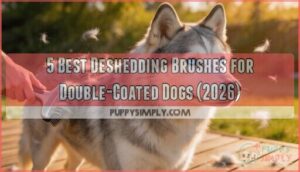
Siberian Huskies, Samoyeds, and Malamutes can shed enough fur during a single coat blow to stuff a small pillow—sometimes two. That’s not an exaggeration; it’s what happens when a dense winter undercoat releases all at once over two to four weeks.
The problem isn’t the shedding itself, it’s that most brushes skim the surface and miss the packed fiber underneath, leaving your dog uncomfortable and your furniture covered.
Double-coated breeds need tools with the right tooth spacing to reach through guard hairs without damaging them.
The right deshedding brush for double-coated breeds during shedding season cuts cleanup time in half and keeps your dog’s coat healthy through every seasonal change.
Table Of Contents
- Key Takeaways
- Why Double Coats Shed Heavily
- Signs Your Dog Needs Deshedding
- Best Brush Types for Double Coats
- 5 Best Deshedding Brushes Reviewed
- How to Choose The Right Brush
- Safe Deshedding During Shedding Season
- Brushing Frequency for Seasonal Coat Blow
- Bathing and Drying for Better Deshedding
- Mistakes That Increase Mats and Shedding
- Frequently Asked Questions (FAQs)
- Can you deshed a double coated dog?
- How often should you brush your dog during shedding season?
- How to stop a double coat dog from shedding?
- What’s the best brush for a double coated dog?
- Do indoor dogs shed less than outdoor dogs?
- How long does a seasonal coat blowout last?
- Should you groom before or after outdoor exercise?
- Is professional grooming worth it during peak shedding season?
- Conclusion
Key Takeaways
- Double-coated breeds like Huskies and Samoyeds shed in seasonal waves, and most standard brushes miss the packed undercoat entirely—so you need a tool built specifically to reach through guard hairs without damaging them.
- Matching tooth spacing to your dog’s coat density is the single most important factor when choosing a deshedding brush, with wider gaps for dense coats and finer spacing for finishing passes.
- Brushing only in the direction of hair growth, working in small coat sections, and stopping before skin turns red are non-negotiable habits that keep grooming safe during peak shedding season.
- Shaving a double coat doesn’t solve shedding—it strips the dog’s natural heat regulation and can cause permanent guard hair damage, so consistent deshedding and professional grooming are always the safer path.
Why Double Coats Shed Heavily
Double-coated dogs don’t just shed — they shed in waves, and there’s real biology behind it. Understanding what’s happening beneath the surface helps you pick the right tools and stay ahead of the mess.
The undercoat is where the real work happens — and this double-coated dog grooming guide breaks down exactly why surface brushing rarely gets the job done.
Here’s what’s driving all that fur.
Guard Hairs Vs Undercoat
double-coated dog actually has two completely separate systems working at once.
The topcoat’s coarse guard hairs act as a water barrier, repelling moisture and debris while managing thermal regulation.
Underneath, the soft, dense undercoat provides insulation, trapping warm air close to the skin.
Because growth timing differs between layers, fiber thickness varies too — and that’s exactly why a standard brush won’t reach what an undercoat rake or proper deshedding brush can.
Understanding how the guard hairs repel water helps choose the right brush.
Spring and Fall Coat Blow
Seasonal hormone shifts drive two predictable coat blowouts each year — spring and fall. In spring, your dog sheds its dense winter undercoat; in fall, it releases the lighter layer to make room for cold-weather insulation.
Shedding timeline variations do exist, especially for indoor dogs where climate control impacts softens seasonal cues. Either way, this is when a quality deshedding rake earns its place.
Understanding seasonal shedding patterns can help you anticipate when to use a deshedding brush.
Breeds With Dense Seasonal Undercoats
Some double-coated dog breeds shed far more than others. The Siberian Husky, Samoyed, and Alaskan Malamute were built for brutal cold, so their seasonal undercoats are exceptionally thick.
German Shepherd density runs similarly high, as does Labrador Retriever insulation. Golden Retrievers add to this list.
For these breeds especially, an undercoat rake isn’t optional — it’s the only tool that actually reaches the problem.
Why Double Coats Need Targeted Tools
A standard slicker barely grazes the surface of a dense double coat. To reach the undercoat where loose fur actually hides, you need a tool built for undercoat access and a layered coat structure.
- Deshedding rakes pull shed-ready fur through the topcoat without disturbing guard hairs
- Wide-spaced teeth support heat regulation by restoring airflow to packed coats
- Rounded tips handle skin irritation prevention on sensitive areas
- Stainless steel construction directly affects tool material impact and long-term performance
Signs Your Dog Needs Deshedding
Your dog’s coat usually gives you clear signals before the shedding gets out of hand. Catching them early means less fur on your couch and fewer mats to deal with later.
Here are the most common signs to watch for.
Loose Clumps Around The Hips and Tail
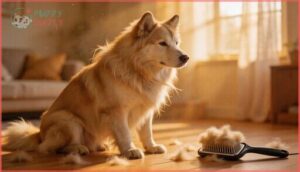
fluffy clumps gathering around your dog’s hips and tail base aren’t random — they’re your signal that the undercoat is loosening.
Hip Area Targeting and Tail Base Raking with an undercoat rake or 2 in 1 Undercoat Rake pulls dead fur before it packs down.
A dual‑function deshedding rake doubles as a dematting comb, making Rear Coat Maintenance and Post-bath Rump Grooming more efficient with the right Undercoat Looseners.
Hair Buildup on Furniture and Bedding
When your couch starts looking like a fur coat, that’s a clear sign deshedding sessions are overdue. Loosely woven fabrics trap hair deep in the fibers, while microfiber holds it on the surface — making Fabric Choice matter for pet hair management.
Use Cleaning Tools like rubber gloves and upholstery attachments for home cleaning during shedding. Protective Covers, Static Reduction sprays, and regular Laundry Tips like warm-water washing keep fur mess at home manageable.
Undercoat Packing Near The Chest and Legs
Chest friction from gear straps and collar movement packs loose undercoat into dense, compressed layers that your fingers can’t feel until it’s already a problem. For double-coated dog breeds, the legs are just as vulnerable — every stride creates friction at the joints, and moisture buildup from wet grass or a damp coat tightens things fast.
Watch for these five hidden matting warning signs:
- Firm, dense patches under the chest that don’t move when you press them
- Clumping fur around the front elbows and back hocks after outdoor activity
- Resistance when you try to slide a comb through the inner leg coat
- Undercoat that feels damp hours after a bath or rain walk
- Topcoat that looks smooth but hides packed fur directly against the skin
Sectioned brushing with an undercoat rake — using short, inward strokes — is the most reliable way to reach those compressed zones before they lock into mats. Deshedding and dematting tools with a dual-function deshedding rake design work especially well here because they handle undercoat removal without yanking the topcoat.
Early Matting Behind Ears and Armpits
Behind the ears and in the armpits are classic Friction Hotspots — fur rubs constantly there, and Moisture Traps form fast because air barely circulates.
Early Warning Signs include a felt‑like patch behind the ears or stiff clumped fur in the armpit. Skin Risks are real: mats pull on thin skin and hide irritation.
A Prevention Routine, using gentle edges on an undercoat rake or dual‑function deshedding rake catches tangles before they lock.
Best Brush Types for Double Coats
Not every brush does the same job, and with a double coat, that difference really matters. The right tool depends on what the coat actually needs—whether it’s reaching deep undercoat, breaking apart tangles, or smoothing the surface after a deshedding session.
Here are the four brush types worth knowing before you pick up anything at the store.
Undercoat Rakes for Deep Loose Fur
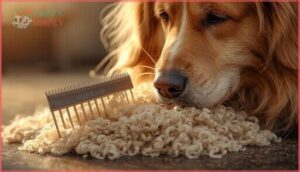
An undercoat rake is the workhorse of any double-coated dog breed grooming kit. Its tooth geometry — whether single or double row stainless steel pins — determines how deep it reaches without snagging.
Grip material and tool weight both reduce fatigue during long sessions.
With proper pressure guidance and light, steady strokes, a dual-function deshedding rake can reduce shedding by 95 percent.
Dematting Combs for Stubborn Tangles
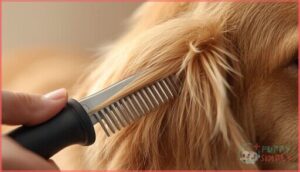
When a mat forms near the ears or armpits, a standard undercoat rake won’t cut it — literally.
A dematting comb uses a curved cutting edge and narrow-gap teeth to slice through tight knots without yanking the skin. The compact head width gives you control in crowded areas, and a thumb rest grip keeps your hand steady.
Start at the mat’s edge, not the center.
Slicker Brushes for Finishing The Topcoat
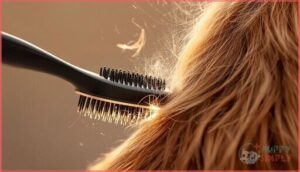
Once the mats are out, a slicker brush is your finishing move. It uses Flexible Pin Technology and fine rounded teeth to smooth the topcoat without disturbing the undercoat beneath.
A Curved Brush Shape follows your dog’s body naturally, while Pin Length Options — some reaching 22 mm — let you match the brush to coat depth.
Always finish on a dry coat for clean, Anti-Static Bristles results.
Dual-sided Tools for Detangling and Deshedding
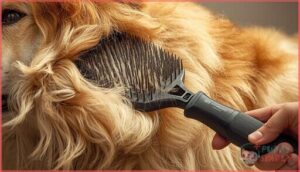
A dual-sided rake takes over where your slicker brush leaves off. The 9-tooth side breaks apart packed fur and knots, while the 17-tooth side clears loose undercoat — making it a true dual-function deshedding rake for double-coated dog breeds.
With an Ergonomic Grip Design and solid Material Durability, this 2-in-1 Undercoat Rake performs Coat Layer Targeting in one pass.
5 Best Deshedding Brushes Reviewed
Not every deshedding brush works the same way, and the wrong one can frustrate both you and your dog. These five options cover different coat types, budgets, and grooming needs — so there’s a solid match for most double-coated breeds.
Here’s what each one actually does well.
1. Maxpower Planet Double Sided Grooming Rake
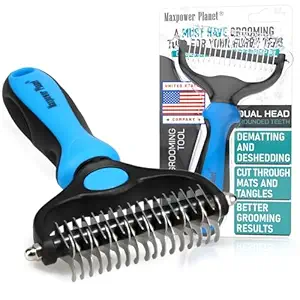
The Maxpower Planet Double Sided Grooming Rake performs two jobs in one pass.
The 9-tooth side digs into stubborn mats and tangles, while the 17-tooth side pulls out loose undercoat fast.
Rounded, sharpened teeth cut through packed fur without scratching the skin.
At just 4 oz and $9.98, it’s light enough for long sessions and easy on your wallet.
Use the 9-tooth side first, then flip it — your dog’s coat comes out noticeably cleaner every time.
| Best For | Dog and cat owners with high-shedding or double-coated breeds who want an affordable, all-in-one grooming tool that handles both mats and loose undercoat. |
|---|---|
| Price | $9.98 |
| Coat Compatibility | Long, double, dense undercoat |
| Shedding Reduction | Up to 95% |
| Handle Design | Non-slip rubber grip |
| Animal Compatibility | Dogs and cats |
| Dematting Ability | Yes, 9-tooth side |
| Additional Features |
|
- Two sides, one tool — the 9-tooth side tackles mats while the 17-tooth side clears out loose undercoat fast.
- At 4 oz and under $10, it’s genuinely lightweight and easy on your budget.
- Works on dogs and cats alike, so one rake covers the whole household.
- Dense mats can cause some snagging, which might startle or briefly hurt sensitive pets.
- Pulls out a lot of hair at once — have a vacuum or hard floor nearby, or things get messy quick.
- Too aggressive for short or fine coats; better suited to thick, heavy fur.
2. MalsiPree 2in1 Dog Undercoat Brush
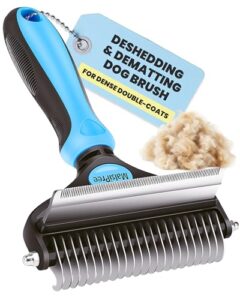
If you need one tool that manages both shedding and tangles, the MalsiPree 2-in-1 is worth a close look. One side works as an undercoat rake, pulling out loose dead fur from deeper in the coat.
Flip it over, and the dematting comb cuts through knots without yanking the skin. Rounded stainless steel teeth keep things comfortable, even on sensitive dogs.
At $15.29, it works well on Huskies, Goldens, and German Shepherds — and claims up to 95% dead hair reduction with regular use.
| Best For | Owners of medium-to-large double-coated breeds like Huskies, Golden Retrievers, and German Shepherds who want a single tool that handles both shedding and matting. |
|---|---|
| Price | $15.29 |
| Coat Compatibility | Medium-to-large double coat |
| Shedding Reduction | Significant reduction |
| Handle Design | Ergonomic rubber grip |
| Animal Compatibility | Dogs |
| Dematting Ability | Yes, built-in dematting comb |
| Additional Features |
|
- Two tools in one — the undercoat rake and dematting comb mean you’re not switching between multiple brushes mid-groom
- Rounded metal edges are gentle on skin, so even sensitive dogs tend to tolerate it well
- At $15.29, it’s an easy buy that punches above its price point
- At 6.67 oz, it’s on the heavier side, so longer grooming sessions can wear on your hand
- Not the best fit for small breeds — it’s really built for bigger dogs
- No replaceable heads, so once the teeth or grip wear out, you’re buying a whole new brush
3. DOGI Double Row Undercoat Rake
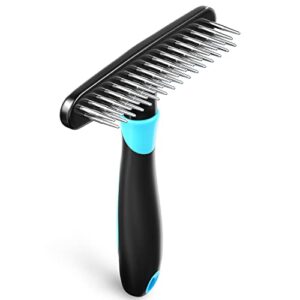
The DOGI Double Row Undercoat Rake keeps things simple — and that’s exactly why it works. Its 29 stainless steel pins are staggered across two rows, with longer pins reaching into the undercoat and shorter ones lifting the topcoat out of the way.
Rounded tips make each pass gentler on the skin, which matters for dogs that are already irritated by heavy shedding.
At $8.99, it removes up to 90% of loose hair in one session and works with dogs, cats, and rabbits alike.
| Best For | Pet owners with double-coated breeds like Aussies, retrievers, or German Shepherds who want a cheap, no-fuss way to cut down on shedding at home. |
|---|---|
| Price | $8.99 |
| Coat Compatibility | Short, medium, long |
| Shedding Reduction | Up to 90% |
| Handle Design | Silicone ergonomic grip |
| Animal Compatibility | Dogs, cats, rabbits, horses |
| Dematting Ability | Yes, double-row pins |
| Additional Features |
|
- Removes up to 90% of loose hair in one short session — way more effective than a standard brush.
- At $8.99, it’s a steal, especially for something that works on dogs, cats, and rabbits.
- Lightweight and compact, so it’s easy to toss in a travel bag or keep in a drawer.
- The tine spacing can struggle with super-dense coats like Corgis or husky mixes — you may need extra tools.
- The small size can feel a bit flimsy during long grooming sessions with bigger, stronger dogs.
- Heavily matted fur will need some pre-brushing or clipping before this rake can do its job properly.
4. Augwind Self Cleaning Grooming Kit
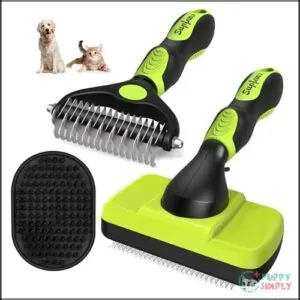
The Augwind kit bundles three tools into one package — a dual-sided dematting rake, a self-cleaning slicker brush, and a flea comb — so you’re not piecing together a grooming routine from scratch.
The rake’s 9-tooth side breaks up mats while the 17-tooth side pulls loose undercoat.
When the slicker fills up, one press of the button drops the hair cleanly.
It works across dogs, cats, and horses, and the 2-year warranty makes it a solid starter kit.
| Best For | Pet owners with dogs, cats, or horses of any coat type who want an all-in-one grooming kit without buying tools separately. |
|---|---|
| Price | $13.12 (set) |
| Coat Compatibility | Short, medium, long |
| Shedding Reduction | Reduces daily shedding |
| Handle Design | Standard grip handle |
| Animal Compatibility | Dogs, cats, horses |
| Dematting Ability | Yes, 9-tooth rake side |
| Additional Features |
|
- Three tools in one box — rake, slicker brush, and flea comb — covers most grooming needs right out of the gate
- The self-cleaning button makes hair removal quick and mess-free
- Backed by a 2-year warranty and round-the-clock support, which is reassuring for a budget kit
- Some buyers noticed a greasy film on the silicone brush fresh out of the box, so give it a wash before first use
- The bristles run short, meaning very thick or dense coats might need extra passes to get through
- The flea comb picks up what’s already there, but it’s not a substitute for actual flea treatment
5. Pet Neat Dual Head Grooming Brush
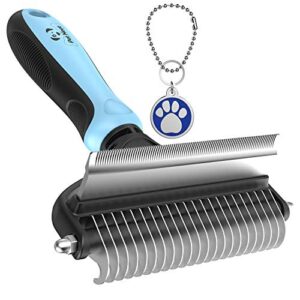
The Pet Neat Dual Head Grooming Brush rounds out this list with a smart 2-in-1 design built for real grooming flexibility.
The 22-tooth side deals with stubborn mats and tangles first, then you flip to the 87-tooth side to pull loose undercoat and reduce shedding by up to 95%.
Rounded outer teeth massage the skin while sharper inner teeth cut through knots safely.
It suits most coat types, though it’s better sized for medium-to-large dogs than small pets.
| Best For | Owners of medium-to-large dogs or cats with dense, thick, or long coats who want a single tool that handles both detangling and deshedding. |
|---|---|
| Price | $10.23 oz listed separately |
| Coat Compatibility | All coat types |
| Shedding Reduction | Up to ~95% |
| Handle Design | Plastic handle |
| Animal Compatibility | Dogs and cats |
| Dematting Ability | Yes, 22-tooth side |
| Additional Features |
|
- Two sides in one tool — tackle mats first, then switch to deshedding without grabbing a second brush.
- Removes up to 95% of loose undercoat, which means less fur on your couch (and fewer hairballs for cat owners).
- Rounded outer teeth make grooming feel like a massage, so most pets actually enjoy the process.
- On the heavier and bulkier side, so it can feel awkward when grooming smaller pets like rabbits or tiny cats.
- The sharper inner teeth need a gentle touch — rushing it on a senior or sensitive animal can cause discomfort.
- Not the best fit for very fine or super-short coats, where a finer-toothed brush would do a cleaner job.
How to Choose The Right Brush
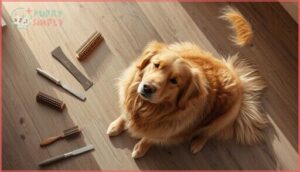
Choosing the right brush for your dog’s coat makes grooming easier and safer. You’ll want to pay attention to a few key features before settling on a tool.
Here’s what matters most when picking a brush for double-coated breeds.
Match Tooth Spacing to Coat Density
Tooth spacing is the hidden variable most owners overlook. Match your Density Spacing to your dog’s coat, and grooming becomes faster with better Tug Reduction:
- Coarse Tooth Gap — wide spacing for dense double coats like Huskies
- Fine Tooth Gap — tighter spacing for finishing passes on thinner undercoats
- 9-tooth side — breaks up packed fur first
- 17-tooth side — clears remaining loose hair after opening the coat
Seasonal Gap Adjustment matters too — shift spacing as the coat changes through shedding cycles for smarter undercoat management.
Rounded Tips for Sensitive Skin
Sharp pin ends are a quick path to brush burn, especially on thinner areas like the belly and chest. For double-coated dogs with sensitive skin, rounded tips make a real difference — the smooth ends glide through the coat with a massage-like pin action instead of dragging.
| Feature | Benefit | Best For |
|---|---|---|
| Rounded tips | Minimizing skin irritation | Sensitive skin compatibility |
| Cushion base benefits | Absorbs pressure on tangles | Dense double-coated dogs |
| Gentle stroke technique | Reduces surface friction | Nervous or reactive dogs |
Handle Comfort for Longer Sessions
A grooming session that runs 20 to 30 minutes puts real strain on your hand.
Ergonomic Grip Design, Cushioned Handle Padding, and a Vibration Dampening Core all work together to reduce that fatigue.
Look for a Textured Non‑Slip Surface and non‑slip rubber handle so control stays steady even with damp hands.
Ergonomic handle importance for extended grooming sessions can’t be overstated — your comfort directly affects your dog’s comfort.
Stainless Steel Vs Lower-durability Materials
Your handle choice matters, but what the teeth are made of matters just as much. Stainless steel teeth hold their shape through dense undercoat, resist rust after wet sessions, and clean up fast — all things that add up to real Long-Term Value.
Double row stainless steel pins found on tools like the DOGI offer consistent Tooth Performance across double-coated dog breeds.
Cheaper metal teeth bend, corrode, and lose contact with the coat.
Easy-clean Designs for Heavy Shedding Homes
A self-cleaning button changes everything when you’re grooming a heavy shedder daily. Push-button retractable bristles clear the head in one motion, so your self-cleaning slicker brush stays ready between passes.
A wipeable brush head and nonstick grip handle keep sessions moving without stopping to pick out packed fur. Compact storage design means it’s always close when you need it.
Safe Deshedding During Shedding Season

Shedding season doesn’t have to mean chaos — it just means your technique matters more than usual. Even the right brush can cause discomfort if you’re rushing through a thick coat without a plan.
Here’s how to groom safely when the fur is really flying.
Brush Only in The Direction of Growth
Every stroke matters when you’re working through a dense double coat. The Growth Direction Technique is simple: follow the Hair Grain Alignment, moving from skin outward with your deshedding rake or undercoat rake. Skin Friendly Strokes with Coat Flow Guidance prevent irritation and keep sessions comfortable.
Keep these priorities in mind:
- Always brush with hair growth, never across it.
- Use Tension Free Brushing on the belly and armpits.
- Let brush head flexibility guide your angle around legs and flanks.
- Choose brush types for dogs designed for double coat grooming.
Work in Small Coat Sections
Once you’re brushing with the grain, Sectioned Brushing is your next move. Divide the coat into small patches and work one area at a time — this is how you get real Tool Contact Optimization instead of skimming the surface. A dual-function deshedding rake or 2-in-1 Undercoat Rake with ergonomic grips reaches the undercoat properly when the hair is parted first.
| Body Zone | Common Problem | Sectioning Benefit |
|---|---|---|
| Hips and Tail | Heavy loose undercoat buildup | Catches trapped fur evenly |
| Chest and Belly | Packed fur, skin sensitivity | Allows Skin Sensitivity Control |
| Armpits and Ears | Early mat formation | Easier Targeted Area Focus |
| Flanks and Lower Back | Uneven shedding patches | Promotes Even Hair Distribution |
| Legs and Feathering | Tangles, missed spots | Improves brush head flexibility for body contouring |
Pushbutton retractable bristles help clear collected fur between sections, keeping the tool effective throughout the session.
Use Light Pressure on Thin-skinned Areas
Thin-skinned zones — the belly, armpits, and inner thighs — need a lighter touch than the rest of the coat. Try Pressure Testing Techniques on your own forearm first, so you know what your Deshedding Brush actually feels like.
Use Gentle Brush Angles, Soft Pin Selection, and ergonomic grips for skin comfort.
Skin Sensitivity Monitoring and Finger Comb Assistance keep rounded teeth gliding safely on double-coated dogs.
Start With Tangles Before Undercoat Removal
Before you reach for your undercoat rake, start with Tangle Detection and Sectional Detangling using a dematting comb or Pre-Deshedding Comb.
Knot Isolation and Gentle Knot Release prevent matting knots from hiding under loose fur.
For instance, working out tangles first makes your dual-function deshedding rake glide smoothly, reducing breakage and speeding up mat prevention across problem zones.
Stop Before Causing Brush Burn
Brush burn sneaks up fast, especially on thin-skinned spots like the belly and inner thighs. Keep Pressure Monitoring and Session Time Limits in mind every time you groom.
Stop if you notice these Skin Redness Indicators or discomfort signs:
- Pink or inflamed patches after 10 minutes of rake passes
- Flinching, yelping, or refusal to stay still
- Skin dragging visibly under pin tips despite Gentle Stroke Techniques
- Warmth in brushed areas beyond normal coat temperature
Let Tool Weight Utilization do the work — your ergonomic, nonslip rubber handle gives you control without forcing pressure. Ease off on sensitive zones, and stop well before skin irritation develops.
Brushing Frequency for Seasonal Coat Blow

How often you brush makes just as much difference as which brush you use. During a coat blow, wrong schedule can leave you chasing clumps all week or, worse, wearing out your dog’s skin.
Here’s what actually works, broken down by season, breed, and the signs that tell you it’s time to back off.
Ideal Weekly Schedule During Peak Shedding
During peak shedding season, a consistent schedule beats occasional marathon sessions every time.
Here’s a rhythm that works for most double-coated dogs:
| Day | Session Type | Tool to Use |
|---|---|---|
| Monday | Weekly Deep Deshedding | Undercoat rake |
| Wednesday | Midweek Maintenance Brush | Slicker brush |
| Friday | Morning Grooming Slot | Dematting comb |
| Saturday | Post-Exercise Brush | Grooming rake |
| Sunday | Evening Finish Brush | Slicker brush |
Stick to this for the full 2–4 weeks of seasonal shedding management, and you’ll stay ahead of the buildup.
Adjusting Sessions by Breed and Coat Length
Not every double coat follows the same calendar. Breed-based timing and coat length pacing should shape your session length planning more than any generic schedule.
- Short double coats (Labs, Beagles) — 2–3 sessions weekly
- Medium double coats (Golden Retrievers, Border Collies) — 3–4 sessions, focusing on friction areas
- Long double coats (Collies, Great Pyrenees) — 4–5 sessions with a deshedding rake first
- Arctic breeds (Huskies, Samoyeds) — match your seasonal breed schedule to coat blowout intensity
When Daily Brushing Makes Sense
Daily brushing isn’t overkill — it’s the right call when your double-coated dog’s coat is actively releasing fur in waves. During coat blowout, 5-minute sessions focused on one area at a time prevent loose undercoat from binding into the topcoat.
| Situation | Tool-Swap Strategy | Grooming Frequency |
|---|---|---|
| Weather-driven shedding spikes | Deshedding brush + undercoat rake | Daily |
| Clumps near hips and tail | Dual-sided rake | Daily |
| Matting behind ears | Dematting comb first | Daily |
| Post-brush coat inspection needed | Slicker brush finish | Daily |
| Owner-dog bonding moments | Ergonomic grips for comfort | 5-minute sessions |
95% shedding reduction.
Signs You Are Over-brushing The Coat
More isn’t always better. Once the coat blowout slows, over-brushing becomes its own problem — and your dog’s body will tell you before you notice it yourself.
- Skin irritation appears as redness or warmth on the belly or inner legs
- Coat thinning leaves patchy, uneven density across the back and sides
- Behavioral avoidance kicks in — pulling away, whining, or hiding the brush
- Excessive hair removal pulls anchored guard hairs, not just dead undercoat
- Visible coat damage shows as dull, brittle strands and exposed skin patches
Bathing and Drying for Better Deshedding

A good bath does more for shedding control than most people realize. When done right, it loosens trapped undercoat, softens the coat for easier brushing, and cuts your grooming time in half.
Here’s how to make every bath count.
Pre-brush Before The Bath
Before your dog ever steps into the tub, a Section-by-Section Brushing pass with a deshedding rake is non‑negotiable. Work in your Hair Flow Direction, using Gentle Pressure Zones near the belly and armpits.
Your Tool Prep Routine should include a self‑cleaning slicker brush and ergonomic grips for control. A quick Pre‑bath Mat Check spots hidden knots before water tightens them.
De-shedding Shampoo and Conditioner Benefits
Once your pre‑brush is done, the right deshedding shampoo does more than clean. It loosens trapped undercoat from your dog’s double coat, supporting shedding control right in the tub.
A deshedding conditioner adds skin hydration, softens the coat, and improves coat shine while cutting down on post‑bath brushing time.
Ingredients like aloe and plant oils also support allergen control by reducing dander at the source.
Why Full Drying Loosens Trapped Undercoat
That shampoo does the prep work, but drying is where the real release happens. When you dry the coat completely, moisture release lets each hair strand separate — that’s airflow separation at work.
The keratin softening from warm air loosens dead undercoat right at the follicle.
Oil redistribution smooths guard hairs, and the coat volume boost lets your undercoat rakes and deshedding rake reach fur that was packed flat.
Using a Dryer Safely on Dense Coats
A high-velocity dryer moves moisture out of a dense double coat quickly, but how you use it matters as much as the tool itself.
Keep these safety tips in mind:
- Nozzle Distance: Stay 8–12 inches back to prevent heat buildup under the topcoat.
- Adjustable Airflow & Cool Heat Settings: Use low warmth; strong air does the work.
- Moving Technique & Stress Monitoring: Sweep continuously, watch for panting or red skin.
Post-bath Brushing Order for Best Results
Once the coat is fully dry, work in this order: detangle before rake — use a slicker brush or comb first to clear knots, then follow with your 2 in 1 undercoat rake or dual-function deshedding rake to lift loose fur.
Finish with a comb as your final quality check.
Don’t skip friction zone focus — ears, armpits, and belly mat are fastest and need that last careful pass.
Mistakes That Increase Mats and Shedding
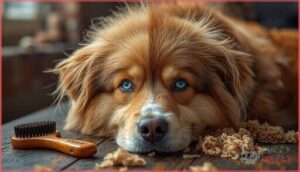
Even with the right brush in hand, a few common habits can undo all your effort and leave your dog’s coat worse than when you started. Some mistakes are easy to overlook, especially if your dog seems to tolerate the session fine in the moment.
Here’s what to watch out for.
Using The Wrong Brush Type
Ever tried brushing a double-coated dog and wondered why loose fur keeps piling up? Using the wrong brush type leads to tool inefficiency, longer sessions, and pet stress.
Pin brushes or rubber tools won’t reach the undercoat, so mats form and skin irritation follows. Selecting the right brush for double-coated dogs means mastering deshedding and dematting strategies, not guessing.
Skipping Problem Areas Like Flanks and Belly
The belly and flanks are easy to rush past, but skipping them is where mats quietly take hold. For double-coated dog breeds, these Hidden Undercoat Zones trap friction, moisture, and loose fur close to the skin.
Use a dual-function deshedding rake with rounded teeth and ergonomic grips, and apply the Belly Brush Technique with line brushing and Targeted Pressure Management—lighter strokes, small sections, working upward for full Flank Access and complete Low-Body Grooming coverage.
Grooming a Wet, Tangled Coat
Brushing a wet, tangled coat is one of the fastest ways to cause real damage. Wet hair stretches and snaps twice as easily, and tightens loose knots into dense mats within hours.
- Use Conditioner Mist Spraying before touching any tangle
- Apply the Towel Blotting Technique—never rub
- Start Finger Detangling First, then reach for your dual-function deshedding rake
- Run a High Velocity Dryer before using a self-cleaning slicker brush
Pulling Too Hard Through Packed Undercoat
Hard pulls through packed undercoat don’t speed things up — they make everything worse. Yanking triggers Dog Stress Signals fast, and repeated tugging drives knots deeper while causing Skin Redness Prevention to become your urgent priority instead of just routine care.
| Problem | Cause | Fix |
|---|---|---|
| Tool snag | Dense fiber clumps | Tool Snag Reduction via short strokes |
| Skin redness | Forceful pressure | Light passes + Conditioner Aftercare |
| Increased resistance | Packed undercoat | Undercoat Resistance Management technique |
Use your dual-function deshedding rake with feathered, direction-of-growth strokes across small sections. Undercoat rakes with ergonomic grips and reduce shedding by 95% performance ratings, work best on doublecoated dog breeds when you pause the moment resistance rises.
Shaving a Double-coated Dog
Pulling too hard is one mistake — shaving is another, and potentially worse. Many owners assume clipping solves shedding, but it doesn’t.
Shaving causes Skin Barrier Loss, Heat Regulation Issues, and can trigger Post-Shave Healing that drags on for months.
Guard hairs may grow back patchy or not at all. Veterinary Shave Indications exist, but double coat management isn’t one of them.
Alternative Trimming Methods and professional grooming services for double-coated breeds are safer paths forward.
Ignoring Excessive Shedding That May Need a Vet
Shaving strips the coat — but ignoring abnormal shedding can quietly harm your dog too. Not every clump means it’s time for a deshedding brush. Sometimes, the coat is telling you something deeper is wrong.
Watch for these Veterinary Consultation Triggers:
- Parasite Infestation Signs — excessive scratching or visible skin damage
- Hormone Imbalance Indicators — patchy loss, dull coat, increased thirst
- Skin Infection Clues — redness, scaling, or hot spots
- Nutritional Deficiency Effects — brittle, dry fur with poor regrowth
Hormonal imbalances, skin infections, and parasites all accelerate shedding in double coat breeds beyond what grooming can fix. When in doubt, call your veterinarian.
When shedding goes beyond what grooming can fix, your dog’s coat may be signaling a deeper health issue
Frequently Asked Questions (FAQs)
Can you deshed a double coated dog?
Yes, you can absolutely deshedding a double-coated dog.
With the right deshedding brush and effective deshedding techniques, you can remove loose undercoat safely while keeping the double coat’s protective structure fully intact.
How often should you brush your dog during shedding season?
During shedding season, brush your double-coated dog 3 to 4 times a week. When the coat is actively blowing, daily sessions work best to stay ahead of the loose undercoat.
How to stop a double coat dog from shedding?
You can’t fully stop it, but you can manage it. A consistent grooming routine, proper Hydration Levels, an Omega-3 Diet, and Allergy Screening when needed keep shedding under control year-round.
What’s the best brush for a double coated dog?
The best brush for a double-coated dog is an undercoat rake with double row stainless steel pins and ergonomic grips — it reaches deep without damaging the topcoat.
Do indoor dogs shed less than outdoor dogs?
Not exactly. Indoor dogs often trade sharp seasonal shedding for a slow, steady year-round release.
Artificial lighting effects and stable temperatures disrupt the seasonal cycle, so double-coated dogs may shed less dramatically but never fully stop.
How long does a seasonal coat blowout last?
seasonal coat blowout usually lasts two to four weeks, though breed-specific duration, indoor climate impact, daylight length effect, and health condition influence can stretch peak shedding weeks longer for some double-coated dogs.
Should you groom before or after outdoor exercise?
Both, honestly.
A quick Pre Exercise Brush prevents tangles from forming mid-run, while Post Exercise Cleanup removes burr debris and dirt.
For double-coated dogs, Cool Down Grooming after Heat Induced Sweating protects coat health best.
Is professional grooming worth it during peak shedding season?
Yes, the cost benefit is real.
Professional grooming services for double-coated breeds during peak shedding save you time, protect skin health, and leverage groomer expertise that removes far more packed undercoat than home brushing usually can.
Conclusion
Shedding season strikes swiftly, stuffing sofas with fluff. But armed with the right deshedding brushes for double-coated breeds during shedding season, you reclaim control.
Our top picks—like the Maxpower Planet Rake and Pet Neat Dual Brush—transform chaotic coat blows into manageable moments.
Prioritize tools matching your dog’s undercoat density, and follow our safe brushing rituals.
This cuts cleanup time, prevents painful matting, and keeps your companion comfortable. Master the method, and spring’s fur storm becomes just a gentle breeze—leaving you both serene.
- https://www.akc.org/expert-advice/health/types-dog-brushes-shedding/
- https://allgroom.co.nz/blogs/breed-guides/how-to-reduce-shedding-for-double-coated-breeds
- https://ridgesidek9grooming.com/managing-shedding-season-tips-for-double-coated-breeds/
- https://dosty.co/en/blog/article/double-coated-breeds-managing-shedding-and-grooming-challenges
- https://www.superiorcare.pet/blogs/news/double-coated-dogs-grooming-care-guide