This site is supported by our readers. We may earn a commission, at no cost to you, if you purchase through links.

A Komondor’s cords can take three full years to reach the floor—and every single day of that journey demands your attention. Corded coats don’t maintain themselves. Unlike a short-haired breed you can wipe down with a towel, a corded coat is a living structure that mats, traps debris, and hides skin problems beneath layers you can’t easily see.
Get the routine wrong and you’re looking at painful matting, yeast infections, and cords that have to be cut off entirely. Nail the corded coat grooming requirements, and you’ll have a coat that turns heads for all the right reasons.
Table Of Contents
- Key Takeaways
- What is a Corded Coat?
- Essential Tools for Corded Coat Grooming
- Step-by-Step Corded Coat Grooming Routine
- Preventing and Managing Common Corded Coat Issues
- Daily and Weekly Corded Coat Maintenance
- Frequently Asked Questions (FAQs)
- How to maintain a corded coat dog?
- How much do you tip a $70 dog groomer?
- How to groom a wire coat dog?
- Can you shave a corded dog?
- How does climate affect corded coat health?
- Can corded coats cause overheating in summer?
- Are corded breeds suitable for allergy sufferers?
- How do you manage cords during dog sports?
- What professional groomer experience is needed for cords?
- Conclusion
Key Takeaways
- Cord formation starts around 8–12 months and requires daily separation to prevent painful matting that can destroy months of coat development.
- Use pH-balanced, sulfate-free shampoo and a high-velocity dryer after every bath—trapped moisture turns into mildew within 24 hours.
- Check friction spots like behind the ears every 2–3 days, and part cords down to the skin regularly to catch yeast, hot spots, or infections early.
- Shorter cords (3–6 inches) work better for active or high-humidity lifestyles, so match your cord length to your dog’s real daily routine.
What is a Corded Coat?
A corded coat isn’t something you style — it grows that way, and once you understand how, everything about caring for it starts to make sense.
A corded coat grows itself — understanding that changes everything about how you care for it
These coats follow their own rules, shaped by breed, time, and biology. Here’s what you need to know before you pick up a comb.
Knowing your dog’s coat type helps you pick the right tools—a deshedding vacuum for dogs can make a real difference once you understand what you’re working with.
Cord Formation Process
Cord formation doesn’t happen overnight. It starts around 8 to 12 months, when your puppy’s woolly undercoat and coarser outer hairs begin to twist together naturally.
Hair texture matters here — tight, curly hair locks into cords; straight or silky hair won’t.
Without consistent cord maintenance from the start, you’ll end up with matting instead of a defined corded coat formation.
Breeds With Corded Coats
Not every breed grows a corded coat — it takes specific texture and density. Corded breed history spans working dogs built for harsh climates and tough terrain. Each has different grooming challenges based on coat thickness and breed variations:
- Komondor — long, white cords; heaviest maintenance
- Puli — tight corkscrew cords; frequent cord maintenance required
- Bergamasco — flat, felt-like flocks; less daily separation
- Havanese — fine, thin cords; needs regular cleaning
To help owners master cord upkeep, it’s vital to follow for best practices on cord separation, bathing, and drying.
Unique Features of Corded Fur
Each breed brings its own cord texture and coat thickness to the table. But all corded coat dog breeds share one thing — fur that works like natural insulation, trapping air to regulate body temperature.
That same dense structure causes matting issues if cord maintenance slips. Understanding cord formation helps you stay ahead of corded coat care before small problems become big ones.
Just like with short coats, staying consistent with your grooming schedule is the real key to keeping cords clean and tangle-free.
Regular brushing is essential to prevent matting and shedding concerns.
Essential Tools for Corded Coat Grooming

Before you touch a single cord, you need the right tools in your corner. Grooming a corded coat isn’t like grooming any other dog — the wrong products can unravel months of cord development or leave your dog’s skin in bad shape.
Here’s what you’ll actually need to get the job done right.
Recommended Grooming Supplies
Having the right corded coat tools makes a real difference. Start with a metal Greyhound comb — its rounded teeth slide between cords without scratching skin. Use a detangling spray or leave-in coat conditioner to keep cords supple during detangling methods.
Don’t overlook nail care; sharp nail clippers and styptic powder are must-haves. Hypoallergenic grooming sprays work best for sensitive skin under thick cords.
Choosing Shampoos and Drying Equipment
pH-balanced shampoos matter more than most owners realize. Dog shampoo types vary widely, so choose hypoallergenic dog shampoo with gentle cleansers and no sulfates — these rinse cleanly from deep inside cords.
For Corded Coat Drying, a high-velocity dryer is your best tool; its strong airflow manages drying techniques far better than heat. Keep Drying Equipment Safety in mind — stay below 85°F to protect skin.
Safe Grooming Products for Cords
Not all grooming products work safely on corded coats. For coat maintenance, stick to pH-balanced Leave-In Products and plant-based Cord Conditioners that keep cords flexible without leaving sticky residue. Use Detangling Sprays sparingly at cord tips to ease separation.
Enzyme-based Odor Neutralizers break down smell between baths, and Skin Soothers with colloidal oatmeal calm irritation under dense cords without rinsing.
Step-by-Step Corded Coat Grooming Routine
Getting the routine right makes all the difference with a corded coat. Each step builds on the last, so skipping one can cost you hours of untangling later.
Here’s exactly what to do, from splitting cords to getting them fully dry.
Hand-Splitting and Separating Cords
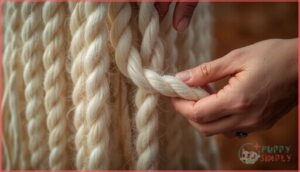
Think of hand splitting as the foundation of all corded coat maintenance. Start at the skin, grip one cord, and gently pull it apart using slow, steady pressure. Work section by section — don’t rush.
Check friction spots like behind the ears daily. Regular cord separation every 2 to 3 days keeps mat prevention on track and your dog comfortable.
Bathing Techniques and Rinsing Tips

Bathing a corded coat isn’t like bathing any other dog. Soak cords fully for 20–30 minutes before adding shampoo — dry patches trap dirt against the skin.
Use lukewarm water throughout; hot water strips natural oils and makes cords brittle.
Squeeze diluted shampoo cord by cord, then rinse top-to-bottom until runoff is completely clear. Any slippery feel means rinse again.
Drying Methods to Prevent Mildew

Skipping the dryer isn’t an option with corded coats — moisture trapped at skin level turns into mildew within 24 hours.
- Squeeze each cord by hand first, then press with a microfiber towel
- Run a high-velocity dryer on moderate airflow for cord separation and moisture control
- Position a fan nearby for steady air drying throughout
Check skin feel every few hours. Cool, clammy bases mean more drying time — don’t rush it.
Preventing and Managing Common Corded Coat Issues

Even with a solid grooming routine, corded coats can still run into a few predictable problems. Catching them early makes all the difference between a quick fix and a long recovery.
Here’s what to watch for and how to handle it.
Avoiding Matting and Tangling
Matting doesn’t happen overnight — it sneaks up cord by cord. Daily grooming catches problems early, before tangles lock into hard mats that damage the corded coat. Focus on cord separation at the base, working outward with firm finger motions.
| Coat Maintenance Task | Frequency |
|---|---|
| Cord separation check | Every 2–3 days |
| Split wide cords (1–1.5 in+) | Weekly |
Monitoring for Skin Problems
Once cords are tangle-free, turn your attention to what’s underneath. Part cords down to the skin every few days and look for red patches, crusting, or greasy texture — early signs of yeast dermatitis or cord infections. A musty smell signals moisture control issues.
Catch hot spots and skin irritation early, because hidden skin infections under heavy cords worsen fast.
Keeping Sensitive Areas Clean
Skin health doesn’t stop at the body coat. Sensitive zones — ears, eyes, genitals, anus, and paws — need targeted canine hygiene practices to prevent skin infections.
Trim genital and anal hair short for easier cleaning. For ear cleaning, use cotton and mineral oil weekly. Wipe eye corners daily.
With Komondor corded coat care, these grooming techniques keep preventing skin issues before they start.
Daily and Weekly Corded Coat Maintenance
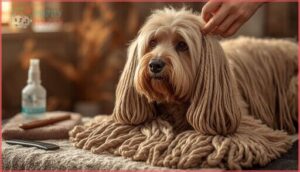
Keeping a corded coat healthy isn’t a once-in-a-while task — it’s built into your routine. The good news is that once you find a rhythm, it becomes second nature.
Here’s what a solid daily and weekly maintenance plan actually looks like.
Setting a Grooming Schedule
A solid grooming schedule is your best tool for keeping cords healthy. Do a quick 5–15 minute daily check for tangles and debris.
Twice a week, set aside 30–60 minutes for focused cord maintenance and skin inspection.
Plan baths every 4–6 weeks, and coordinate monthly grooming appointments around your dog’s activity level and cord formation stage.
Managing Coat Length for Lifestyle
Your lifestyle shapes your cord length choices more than any trend does. Highly active dogs that hike or swim do better with cords trimmed to 3–6 inches — shorter cords mean faster drying and less debris.
Climate Adjustments matter too: hot, humid regions call for reduced cord length to limit mildew risk.
Match your grooming time and activity levels honestly, and your coat maintenance strategies will follow naturally.
Adjusting Care for Puppies and Seniors
Age-specific grooming isn’t one-size-fits-all — a Komondor puppy and a senior Puli need completely different approaches.
- Start puppy socialization early with 5–10 minute cord sessions
- Check a puppy coat 2–3 times weekly during formation
- Prioritize senior health checks while separating cords by hand
- Apply cord maintenance tips with shorter, gentler sessions for older dogs
- Make lifestyle adjustments to bathing frequency as your dog ages
Frequently Asked Questions (FAQs)
How to maintain a corded coat dog?
Maintaining a corded coat dog takes consistency. Daily cord separation, regular bathing every 4–8 weeks, and thorough drying are your foundation for healthy Corded Coat Care and long-term Skin Issue Prevention.
How much do you tip a $70 dog groomer?
For a $70 dog grooming bill, tip between 15% and 20% — that’s $50 to $ For difficult coats or outstanding service, bumping to 20% or more reflects solid grooming best practices.
How to groom a wire coat dog?
Wire coat grooming relies on hand stripping, not clipping. Use proper grooming tools every 8–12 weeks to maintain coat texture, control shedding, and keep that signature harsh, weather-resistant feel intact.
Can you shave a corded dog?
Yes, you can shave a corded dog — but treat it as a last resort.
Shaving benefits include easier skin checks and hygiene, while shaving risks include texture changes and sunburn during cord regrowth.
How does climate affect corded coat health?
Climate directly shapes cord health. High humidity slows drying and invites mildew. Heat strains Hungarian Sheepdogs. Rain soaks cords for days.
Smart humidity control, heat management, and rain protection keep corded breeds thriving year-round.
Can corded coats cause overheating in summer?
Thick, tightly wound cords trap still air close to the skin, making heat retention a real summer risk.
Hungarian Sheepdogs especially need active overheating prevention and careful thermal regulation to stay safe when temperatures rise.
Are corded breeds suitable for allergy sufferers?
Corded breeds aren’t truly hypoallergenic. Their dreads trap dander close to the skin, and allergen reduction depends entirely on grooming consistency and your personal breed sensitivities — not cord formation alone.
How do you manage cords during dog sports?
Before each session, hand-separate cords down to the skin, trim leg cords so they clear equipment, and use a sport belt that won’t snap or shred them mid-run.
What professional groomer experience is needed for cords?
Most groomers need one to two years of full-time experience before handling cords.
Groomer expertise in curly and drop coats comes first, since cord formation builds directly on those professional skills.
Conclusion
Studies show that corded breeds with properly maintained coats live an average of two years longer than those with neglected ones—healthier skin means a healthier dog.
Meeting corded coat grooming requirements isn’t a weekend project; it’s a daily commitment that compounds over time. Each cord you separate, each bath you dry completely, each mat you catch early adds up.
Master the routine now, and three years from now, that coat will prove every minute was worth it.
- https://houndtherapy.com/services/pet-grooming/
- https://prideandgroompro.com/collections/the-bottles
- https://www.bowwowlabs.com/blogs/news/dogs-with-dreadlocks-meet-the-breeds-rocking-natural-dreads
- https://scrumbles.co.uk/blogs/dog/hungarian-puli
- https://www.lemon8-app.com/@maslowthetrickcorgi/7531013926315573791?region=us