This site is supported by our readers. We may earn a commission, at no cost to you, if you purchase through links.
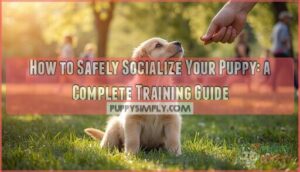
You bring your puppy home, and suddenly the world seems full of threats you never noticed before. That jogger moving too fast, the vacuum cleaner’s roar, the neighbor’s overexcited golden retriever—each encounter feels like a gamble with your puppy’s future temperament. Without guidance, well-meaning puppy owners either shelter their dogs too much or expose them to overwhelming situations that backfire.
Controlled puppy social experiences offer a third path: structured, positive interactions that build confidence without triggering fear. The difference between a dog who greets the world with curiosity and one who cowers or lunges often comes down to how those first few months unfold.
Strategic socialization doesn’t mean cramming your puppy into every possible situation—it means choosing the right experiences, at the right intensity, at the right time.
Table Of Contents
- Key Takeaways
- What Are Controlled Puppy Social Experiences?
- When is The Best Time to Start Socialization?
- How to Prepare for Safe Social Experiences
- Introducing Your Puppy to New People
- Arranging Dog-to-Dog Interactions Safely
- Gradual Exposure to New Environments
- Positive Reinforcement in Social Experiences
- Special Considerations for Sensitive Puppies
- Maintaining Social Skills Beyond Puppyhood
- Frequently Asked Questions (FAQs)
- Conclusion
Key Takeaways
- Your puppy’s critical socialization window between 3 and 16 weeks shapes their entire adult temperament, making controlled exposure during this period essential for preventing lifelong fear and anxiety issues.
- Controlled socialization means carefully supervised interactions at your puppy’s pace in safe environments, not overwhelming your pup at dog parks or with every stranger—you’re building confidence through strategic, positive experiences rather than hoping random encounters work out.
- Balance vaccination safety with socialization needs by choosing low-risk locations like private yards and puppy classes with health-screened dogs, using carriers or strollers for public observation before full immunization, and always consulting your vet about timing.
- Watch your puppy’s body language closely during every interaction—stress signals like tucked tails, lip licking, or stiff posture mean you need to create distance immediately and slow down, while calm, relaxed behavior earns treats and builds the foundation for lifelong social confidence.
What Are Controlled Puppy Social Experiences?
Controlled puppy social experiences are carefully managed interactions that help your puppy learn how to navigate the world without becoming overwhelmed or frightened. Unlike letting your puppy loose at a dog park or greeting every stranger on the street, these experiences happen under your supervision, at your puppy’s pace, with safety as the top priority.
Understanding what makes socialization “controlled” will help you create positive learning moments that build confidence instead of fear.
Definition and Purpose
A controlled puppy social experience is a structured, supervised exposure to people, animals, and environments designed to shape adaptive learning during the critical socialization period. Your primary training objectives are building confidence, reducing fear responses, and preventing behavioral goals from derailing through haphazard interactions.
This approach prioritizes puppy development by establishing clear boundaries, consistent routines, and positive reinforcement—ensuring your puppy’s social skills grow predictably while protecting their physical and emotional welfare. Breeds like the Yorkshire Tea Cup benefit especially from this structured socialization, as their small size and sensitive temperament require careful, gradual introductions to new experiences.
Effective training also involves understanding the importance of methodological rigor in evaluating learning outcomes.
Differences From Unstructured Socialization
Unlike unstructured socialization—where you’re simply hoping for good outcomes—controlled exposure follows a deliberate plan: you choose safe settings, match interaction intensity to your puppy’s developmental stage, and track progress against clear milestones.
Structured interactions minimize the risk of overwhelming stimuli that can trigger fear, while ad hoc encounters often lack the safety checks and documentation needed for effective puppy training and desensitization. Classes also help owners recognize early warning signs and address common dog behaviour problems before they escalate into serious aggression or anxiety.
Why Control Matters for Puppies
When you control your puppy’s social experiences, you’re building boundaries and social skills in environments where you can step in before fear takes root.
Controlled settings allow you to pace desensitization and habituation to new sights and sounds, preventing fearful behavior before it starts. Pairing gradual exposure with balanced holistic puppy nutrition plans supports both emotional resilience and physical health during early development.
Calm training during this window helps your puppy learn what’s safe—and what behavior earns your praise—so confidence replaces anxiety.
When is The Best Time to Start Socialization?

Your puppy’s brain is wired for social learning during a specific window of time, and missing it can mean playing catch-up for years. The sensitive period between 3 and 16 weeks shapes how your dog will respond to the world for the rest of their life. That’s why recognizing early stress signals during socialization helps you adjust exposure before minor discomfort becomes lasting fear.
Your puppy’s brain has a critical socialization window between 3 and 16 weeks that shapes their lifelong behavior
Let’s break down the key developmental stages you need to understand.
Critical Socialization Period (3–16 Weeks)
Your puppy’s brain is most receptive to social learning between 3 and 16 weeks—this window shapes their entire adult temperament. During this critical period, you’ll want to focus on three priorities:
- Introduce novel people, dogs, and places through short, positive sessions that build curiosity rather than fear.
- Use reward-based socialization techniques to create lasting positive associations with new experiences.
- Monitor stress signals carefully, adjusting pace to match your puppy’s comfort level and developmental readiness.
Early Experiences With Littermates
Before you bring your puppy home, they’ve already absorbed vital social lessons through littermate bonding. Puppy play with siblings teaches bite inhibition—when one pup bites too hard, the other yelps and stops playing, establishing boundaries that prevent aggression later.
This early canine communication shapes how your dog interacts for life, making those first eight weeks with littermates absolutely essential for healthy puppy development. Breeds like the Russian Bear Dog benefit especially from extended littermate time, as their guarding instincts require early canine feedback to develop into calm, controlled responses rather than reactive aggression.
Social Learning Milestones
Your puppy’s social learning unfolds in predictable waves during the critical socialization period. Understanding these canine development markers helps you time interactions for maximum impact on behavioral patterns and social bonds:
- 3 weeks: Increased social attentiveness toward humans and other dogs emerges
- 6–9 weeks: Puppies alternate play and signal intent to peers
- 8–12 weeks: They distinguish familiar from unfamiliar individuals through scent and sight
- 10–14 weeks: Improved impulse control during encounters appears
- 16 weeks: Consistent breed-typical social behaviors stabilize across environments
These puppy socialization milestones guide your training timeline.
How to Prepare for Safe Social Experiences

Before you take your puppy out into the world, you need to balance their developmental needs with real health risks. Your veterinarian’s vaccination schedule will guide your timeline, but protection doesn’t mean waiting until all shots are complete.
Let’s walk through the essential health precautions, how to choose safe locations, and what supplies you’ll need to make every outing a positive learning experience.
Vaccination Timing and Health Precautions
Before you take your puppy out to meet the world, you need to talk with your veterinarian about vaccination timing and disease prevention.
Core vaccinations—distemper, parvovirus, and adenovirus—usually start at six to eight weeks, with boosters every three to four weeks until sixteen weeks.
Wait forty-eight to seventy-two hours after each vaccine before puppy socialization events, and skip outings if your puppy shows stress signs or illness.
Choosing Safe Environments
Your puppy’s first outings lay the groundwork for lifelong confidence, so choosing low-risk locations matters as much as the socialization techniques themselves. Look for spaces that balance exposure with safety:
- Organized socialization classes with vaccinated puppies and trained staff supervising dog socialization
- Private yards or homes where you control the guest list and environmental hazards
- Quiet public venues that allow leashed dogs but limit noise reduction challenges like puppy parks
- Indoor pet stores offering predictable environments for safe outings during early socialization for dogs
Essential Supplies for Outings
Packing the right gear transforms outings from stressful scrambles into confident puppy training sessions. Your socialization toolkit should include basics that protect health and comfort while supporting positive puppy behavior in new settings.
| Category | Key Items |
|---|---|
| Safety Kits & Health | Vaccination records, first aid supplies, ID tags, reflective gear for visibility |
| Puppy Gear & Travel Accessories | Non-slip collar, waste bags, portable water bowl, familiar toy or blanket |
| Outdoor Equipment & Comfort | Treats for rewards, training pads, weather-appropriate protection, towel for cleanup |
Introducing Your Puppy to New People

Your puppy needs to feel comfortable around all kinds of people, from toddlers to seniors. The key is introducing them to a wide range of humans in a way that feels positive and safe, not overwhelming.
Here’s how to approach meeting adults and children while also exposing your puppy to different voices, appearances, and energy levels.
Meeting Adults and Children
Your puppy’s first impressions of people shape lifelong confidence and socialization techniques. Start with calm, supervised adult interactions before introducing children—puppies need time to adjust to different energy levels and movements.
Keep each introduction brief, just a few seconds to a minute, and watch for stress signals like tail tucking or lip licking.
Reward relaxed puppy behavior with treats and praise, reinforcing positive social cues that build trust and encourage gentle introductions throughout your puppy training journey.
Exposure to Different Appearances and Voices
Faces and voices matter during the socialization period. Your puppy learns to recognize different facial features, vocal tones, and emotional cues through repeated human interactions.
Introduce people with varied appearances—beards, glasses, hats, different ages—paired with calm conversation and high-value treats. This sensory exposure builds confidence across diverse encounters, strengthening dog socialization skills that prevent fear responses when your puppy meets someone who looks or sounds unfamiliar.
Arranging Dog-to-Dog Interactions Safely
Dog-to-dog interactions give your puppy essential social skills, but not every playmate is a good match. You need to be selective about which dogs your puppy meets, then stay close to guide those first encounters.
Let’s walk through how to choose safe playmates, manage play sessions, and spot the body language that tells you whether things are going well or heading south.
Selecting Well-Socialized Playmates

Playmate screening begins with canine body language. You’ll want dogs that show a calm, confident demeanor around unfamiliar puppies—no stiff posturing or excessive barking.
Puppy compatibility depends on matching size and energy levels to prevent intimidation. Look for companions with solid bite inhibition and a track record of gentle play.
This social matchmaking sets the foundation for positive dog-to-dog introductions and healthy puppy socialization throughout your pup’s development.
Supervising Initial Play Sessions

Once you’ve matched your puppy with the right playmate, it’s time to watch closely. Set up your first sessions in a fenced, safe play area with minimal distractions.
Keep initial play short—five to ten minutes—and build from there. Use positive reinforcement when you spot calm puppy body language, and be ready to redirect the moment arousal levels spike or mouthing begins.
Recognizing Positive and Negative Signals

During those early play sessions, you’ll need to read your puppy’s body language like a book. Look for relaxed posture, a neutral wagging tail, and soft eyes—those signal comfort and positive associations.
But watch for stiff movements, tucked tails, pinned ears, or sudden retreat. These puppy stress signs mean it’s time to pause, step back, and prevent fear and anxiety in dogs from taking root.
Gradual Exposure to New Environments

Your puppy’s world needs to expand at a steady, manageable pace. Start with the sounds and sights inside your home, then gradually introduce outdoor spaces as your puppy gains confidence and vaccination protection.
The following sections walk you through each stage of environmental exposure, from familiar household noises to controlled public outings.
Household Noises and Everyday Sounds
Your puppy’s world is full of unfamiliar sounds—vacuums, blenders, doorbells—that can trigger fear and anxiety in dogs if not properly addressed.
Start noise desensitization and sound exposure during critical socialization periods by playing household sounds at low volumes while rewarding calm training behaviors with treats.
This habituation and desensitization process, central to audio socialization and puppy socialization, builds confidence and fosters long-term fear prevention through gradual, positive associations.
Safe Public Spaces and Car Rides
Once your puppy’s comfortable with indoor sounds, it’s time to introduce public safety challenges through urban exploration. Choose low-traffic parks with quiet background noise and clear retreat routes for effective puppy socialization.
For car etiquette and travel tips, start with short sessions in a secure crate—this controls noise and stress during socialization periods. Reward calm behavior immediately to reinforce positive dog socialization and proper puppy training and socialization for socialization for dogs.
Using Carriers and Strollers for Early Trips
Before your puppy’s fully vaccinated, carriers and strollers offer smart puppy transport solutions for outdoor exposure. These tools provide carrier benefits like ground-level protection while enabling social mobility and essential puppy socialization.
You’ll control stroller safety during busy outings, reducing parasite risks while your pup observes sounds and sights. This approach fosters effective dog socialization and training without compromising health during critical puppy training and socialization periods.
Positive Reinforcement in Social Experiences

Positive reinforcement is the most effective tool you have for building your puppy’s confidence during social experiences. When you reward calm, brave behavior in new situations, you’re teaching your puppy that the world is safe and manageable.
Let’s look at how to use rewards strategically, respond to fear when it appears, and keep your puppy from becoming overwhelmed.
Rewarding Calm and Confident Behavior
When your puppy stays relaxed around unfamiliar sounds or people, that’s your golden moment to reinforce calm behavior. Offer a treat immediately, pairing positive reinforcement with their confident response.
Consistent reward systems during socialization periods strengthen fear reduction and build lasting confidence. Short, predictable training sessions prevent overstimulation while teaching your puppy that composed dog behavior earns good things, supporting effective behavioral training throughout their development.
Handling Fearful Reactions
Fear signals like dilated pupils, tucked tails, or lip licking tell you your puppy needs a break. Recognizing fearful behavior early prevents lasting behavioral issues and aids puppy socialization success.
Here’s how to handle fear periods with calm exposure and desensitization techniques:
- Stop and create distance from the scary stimulus immediately.
- Pair feared objects with high-value treats to rebuild social confidence.
- Use brief sessions with recovery time between exposures.
- Document progress to adjust your fear prevention plan.
- Seek professional help if dog behavioral issues persist beyond several weeks.
Avoiding Overstimulation and Setbacks
Too much, too fast can derail your puppy socialization timeline and trigger lasting fear periods. Watch for stress signals like yawning, lip licking, or pupil dilation, and respond with immediate withdrawal to safe spaces.
Limit daily sessions, reward calm behavior consistently, and increase intensity only after your puppy shows baseline relaxation.
Overstimulation prevention paired with fear response mitigation protects your socialization pace management from costly setbacks.
Special Considerations for Sensitive Puppies

Not every puppy bounces into new situations with confidence. Some dogs need a slower, more thoughtful approach to socialization, whether they’re naturally timid, showing reactive behaviors, or adjusting to life after rescue.
Let’s explore how to adapt your socialization strategy to meet the needs of sensitive puppies and recognize when professional guidance can make all the difference.
Adjusting Pace for Timid or Reactive Dogs
Some puppies naturally show more caution, and that’s where careful Reactive Training becomes essential.
Start Gradual Exposure in low-stress environments, watching for Calm Signals like relaxed ears and a loose tail. Keep sessions short, stay well below your puppy’s Fear Thresholds, and use Positive Reinforcement the moment you see calm behavior.
This Stress Management approach prevents Behavioral Issues during critical Fear Periods in your Puppy Socialization Timeline.
Socialization for Older Puppies or Rescues
Rescue Training and Older Puppy socialization follow similar principles but require extra patience. You’ll build Social Confidence through shorter, more frequent sessions that respect Fear Reduction timelines during Critical Periods in Puppy Development. For effective Adoption Prep and Dog Socialization and Training:
- Establish baseline calm behavior in low-stimulus settings first
- Use Positive Reinforcement Training at each small success
- Progress gradually from indoor to quiet outdoor spaces
- Track reactions to different stimuli for future planning
- Allow consent-based interaction—never force encounters
When to Seek Professional Help
Sometimes your best efforts aren’t enough. If you notice persistent Aggression Signs like hard biting beyond mouthing, or Fear Responses that disrupt daily routines, it’s time for Expert Intervention.
Behavior Therapy from a certified trainer or veterinary behaviorist tackles Puppy Anxiety and Behavioral Issues that standard Puppy Socialization can’t resolve, ensuring your pup’s Dog Behavior and Psychology develop properly without lasting Puppy Stress.
Maintaining Social Skills Beyond Puppyhood

Your puppy’s socialization doesn’t stop when the critical period ends. Adolescence brings new challenges, and without continued positive exposure, even well-socialized puppies can develop fear or anxiety as they mature.
Let’s look at how to maintain and strengthen your dog’s social skills throughout their first year and beyond.
Continuing Socialization Through Adolescence
Your adolescent pup’s curiosity runs wild during this stage, making adolescent training essential for social maturity and behavioral stability. Continue puppy socialization with structured activities that challenge without overwhelming—think busy parks at off-peak hours or controlled meetups with calm dogs.
Use positive reinforcement to reward confident exploration, supporting environmental adaptation and fear prevention. This ongoing canine socialization and habituation through puppy development stages keeps their skills sharp and their confidence steady.
Preventing Regression and Fear
Consistent puppy socialization techniques keep fear response and social anxiety at bay. When you skip regular habituation or rush desensitization, fear triggers can resurface fast.
Reward calm behavior in varied settings and watch for stress signals—ears back, tucked tail, or freezing.
Early intervention stops fear and aggression prevention from slipping backward, so you’re safeguarding your pup’s confidence through steady, positive reinforcement across every new encounter.
Building Confidence With Ongoing Experiences
Confidence building doesn’t stop at sixteen weeks—your pup needs fresh social learning and positive reinforcement throughout puppyhood and beyond to maintain emotional balance and puppy resilience. Regular, low-stress exposures sharpen fear management skills and cement puppy socialization techniques into lifelong habits.
- Schedule short, varied outings twice weekly to reinforce calm behavior in new settings.
- Rotate environments—parks, stores, sidewalks—so your pup generalizes confidence across contexts.
- Use high-value treats immediately after successful interactions to strengthen approach tendencies.
- Monitor stress signals and adjust pacing to prevent setbacks and support steady puppy development.
Frequently Asked Questions (FAQs)
Can puppies socialize with cats and other pets?
Yes, puppies can socialize with cats and other pets through gradual pet introductions, scent exchange, and supervised interactions.
Cat tolerance varies by temperament, so assess compatibility carefully while prioritizing small pet safety in multi-pet homes.
How do breed differences affect socialization needs?
Breed temperament and energy levels shape your puppy’s socialization timeline. Herding breeds may show heightened sensory sensitivity, while sporting dogs often need more varied socialization activities to match their genetic predispositions and learning pace.
What if my puppy was separated early?
Puppies separated before eight weeks may show heightened fear responses and stress.
You can support social recovery through gradual, positive socialization activities during the critical period, helping behavioral adjustment despite early separation challenges.
Should puppies attend daycare during socialization period?
Imagine your puppy entering a room full of unfamiliar dogs—daycare can work if staff supervise closely, health precautions are strict, and play sessions match your puppy’s temperament and developmental pace.
How does weather affect outdoor socialization schedules?
Heavy rain, extreme heat, or cold can force you to reschedule outdoor socialization sessions. Check weather forecasts beforehand, plan indoor alternatives, and adjust timing to protect your puppy’s comfort and safety.
Conclusion
What happens in those first few months shapes everything that follows—your puppy’s confidence, resilience, and ability to navigate the world calmly. Controlled puppy social experiences aren’t about checking boxes on a socialization list; they’re about building a foundation your dog will stand on for life.
You’ve learned the framework, the timing, and the safeguards. Now it’s about consistency, patience, and watching your puppy grow into the calm, curious companion you envisioned.
- https://avsab.org/wp-content/uploads/2018/03/Puppy_Socialization_Position_Statement_Download_-_10-3-14.pdf
- https://www.vetmed.ucdavis.edu/sites/g/files/dgvnsk491/files/inline-files/Puppy_Socialization.pdf
- https://www.linkedin.com/in/sara-b-hansen80215/
- http://mailto:editor
- https://academichelpexpress.blog/2024/08/please-use-the-bulleted-points-and-the-rubric-below-to-guide-your-work-your-pa/