
This site is supported by our readers. We may earn a commission, at no cost to you, if you purchase through links.

You tuck your pup into bed and notice the dog vest is still on from your evening walk. No big deal, right? Many dog owners face this exact dilemma—removing the dog vest means wrestling with a sleepy dog, but leaving it on feels like making them sleep in their shoes.
The truth is, most dogs shouldn’t sleep in their dog vest. While it seems harmless, overnight wear can restrict movement, irritate skin, and even pose entanglement risks during those midnight stretches and position changes.
That said, certain situations—like managing an escape artist or supporting a mobility-challenged senior—might warrant temporary overnight use with the right precautions. Understanding when dog vests help versus harm makes all the difference in keeping your dog comfortable and safe through the night.
Table Of Contents
- Key Takeaways
- Can Dogs Safely Sleep in a Harness?
- Health Risks of Sleeping in a Harness
- Potential Benefits of Harness Use at Night
- Choosing The Right Harness for Sleep
- How Harness Fit Impacts Sleep Quality
- When Should You Remove The Harness?
- Dog Breed and Size Considerations
- Monitoring Your Dog’s Comfort and Health
- Top 5 Dog Harnesses for Comfort and Safety
- Best Practices for Harness Use Overnight
- Frequently Asked Questions (FAQs)
- Should I take my dog’s harness off at night?
- Why does my dog calm down when I put his harness on?
- Is it okay to tie my dog up at night?
- Can harnesses help with nighttime crate training?
- Do harnesses affect a dogs sleep cycle?
- Are there harnesses specifically designed for sleeping?
- How do you transition dogs off nighttime harness use?
- Conclusion
Key Takeaways
- Most dogs should not sleep in their harness overnight because it restricts movement, irritates skin, and creates entanglement risks during natural position changes.
- Only use overnight harness wear for specific situations like managing escape artists, supporting mobility-challenged seniors, or providing temporary security for anxious dogs—and always with veterinary guidance.
- Choose harnesses with soft, padded, breathable materials and ensure proper fit by checking that two fingers slide comfortably under straps to prevent breathing restriction and skin chafing.
- Remove the harness daily to check for hot spots, redness, or behavioral signs of discomfort like restlessness, scratching, or changes in sleep patterns.
Can Dogs Safely Sleep in a Harness?
Most pet owners wonder if it’s safe to let their dog sleep in a vest overnight. The short answer: it depends on the situation, but most dogs shouldn’t wear a vest while they sleep.
If your dog struggles with vest wearing in general, learning how to get your dog used to wearing a harness can help them feel more comfortable during daytime use.
Let’s look at why some owners leave vests on, what veterinarians actually recommend, and how to tell if your dog is uncomfortable.
Common Reasons Owners Leave Harnesses On
You might leave your dog’s vest on overnight for owner convenience—especially if you’re worried about escape prevention during restless nights. Some pet parents keep it on for nighttime safety, believing it offers continuous pet security in case their anxious pup tries to slip out of a crate.
Others simply want quick leash access for early-morning walks without the fuss of refastening. However, it’s important to be aware of potential restricted movement and safety risks associated with leaving a vest on for extended periods.
Veterinary Recommendations for Overnight Wear
Veterinary guidance is clear: overnight vest wear should only happen if there’s a medical reason or urgent safety need—not as a default. Your vet will prioritize sleep safety by checking that your dog’s chest can expand freely and that breathing stays comfortable.
Vets say leave the harness on overnight only for medical or urgent safety reasons—never by default
They’ll recommend vest materials that are soft and breathable to minimize overnight risks like skin irritation while supporting canine comfort during rest.
Signs of Discomfort While Sleeping
Even with vet approval, watch for breathing changes—faster panting, shallow breaths, or new snoring patterns signal discomfort. Movement shifts like restless repositioning, reluctance to lie flat, or groaning when settling are red flags.
Check for skin reactions (redness, hair loss) at restraint contact points. Behavioral cues—whimpering, frequent waking, daytime fatigue—reveal compromised sleep quality, underscoring the risks of dog restraints overnight.
Health Risks of Sleeping in a Harness
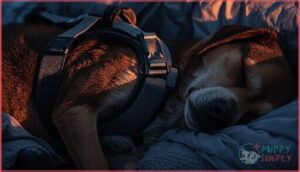
While vests can be helpful training tools during the day, leaving one on your dog overnight isn’t without risks.
From restricted breathing to skin problems, several health concerns can develop when your pup sleeps in their collar.
Let’s walk through the main issues you should watch for.
Restricted Movement and Breathing
When your dog settles in for the night, a vest that’s too snug can compress the chest, making deep breathing slightly harder and limiting natural sleep positioning. This chest compression may contribute to respiratory strain or breathing difficulties in some dogs, especially brachycephalic breeds.
Restricted movement around the shoulders and ribcage disrupts comfort, causing restlessness and frequent position changes that undermine quality rest—key concerns for dog vest safety and canine comfort and safety.
For more on the importance of a proper vest fit and cleanliness, owners should regularly assess their dog’s vest for safety and comfort.
Skin Irritation and Chafing Concerns
Skin friction from straps rubbing against your dog’s underarms, chest, and groin can trigger redness and irritation—especially in sensitive areas where fur is thinner.
Non-breathable vest materials trap sweat and heat, worsening chafing and raising the risk of hot spots. Regular checks for skin irritation help you catch these canine comfort and safety issues early, so chafe prevention becomes part of your nightly routine.
Risk of Entanglement or Injury
During the night, entanglement risks spike when loose straps snag on bedding or furniture, creating tangle hazards that can restrict breathing or injure limbs. Shifting vests may tighten unexpectedly around the chest or neck, turning what seemed safe into a choking hazard.
Injury prevention means understanding these risks of dog vests—vest safety depends on removing sleep restraints before bedtime.
Potential Benefits of Harness Use at Night
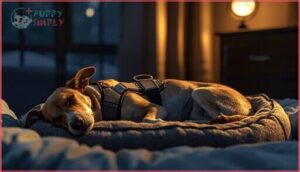
While sleeping in a vest generally isn’t recommended, there are specific situations where keeping it on at night actually makes sense.
Some dogs benefit from overnight vest wear due to safety concerns, physical limitations, or emotional needs. Let’s look at three scenarios where a properly fitted vest might help your dog through the night.
Enhanced Safety for Escape-prone Dogs
If your dog’s a Houdini in fur, a restraint overnight can be a lifesaver. Secure restraints with double-strap designs and locking buckles prevent surprise escapes while you sleep.
Front and rear attachment points offer better nighttime monitoring—you’ll hear movement before they vanish. When weaving safe sleeping into emergency protocols, restraint safety gives escape-prone pups the structure they need without sacrificing dog restraint safety or comfort.
Support for Dogs With Mobility Issues
Mobility aids can transform nighttime comfort for dogs with joint or muscle issues. Soft padded rear support slings help your pup stand and sit without twisting their spine, while orthopedic care accessories like memory foam beds reduce pressure on sore joints.
If your veterinarian recommends assistive devices for a medical condition, proper sling fit ensures canine rehabilitation continues safely overnight without risking physical health or injury.
Security for Anxious Dogs
Some anxious dogs find comfort in familiar gear, much like how a favorite blanket can ease nighttime worries. A well-fitted vest may help your nervous pup feel secure through consistent nighttime routines and safety measures, supporting stress management without constant human presence.
Key considerations for anxiety reduction and vest safety:
- Pair vest use with predictable bedtime rituals so your dog associates the gear with calm rather than confinement
- Watch for restlessness or pawing during dog sleep—signs the vest may increase rather than reduce canine anxiety
- Choose soft, breathable materials that won’t irritate skin or restrict movement while resting
- Gradually desensitize your pup through calming techniques before expecting overnight comfort with the vest
- Consult your veterinarian if anxiety persists, as other stress management strategies may better suit your dog’s needs
The goal is creating a secure environment where anxious dogs can truly rest, not simply restraining them.
Choosing The Right Harness for Sleep
If you’ve decided your dog needs to sleep in a restraint, picking the right one makes all the difference. Not all restraints are created equal for overnight wear—some can cause more problems than they solve.
Let’s look at the three key features that separate a sleep-safe restraint from one that’ll leave your pup uncomfortable by morning.
Importance of Soft, Padded Materials

Material Selection matters when your dog’s wearing a vest overnight. You’ll want soft fabric with smooth seams to prevent irritation. Look for padding importance in chest and belly panels—these reduce pressure points during sleep.
Here’s what to prioritize for canine comfort:
| Feature | Benefit | What to Avoid |
|---|---|---|
| Cotton blends | Gentle on skin | Rubberized linings |
| Padded panels | Prevents sore spots | Metal buckles |
| Flat stitching | Reduces rubbing | Rough hardware |
| Hypoallergenic | Suits sensitive dogs | Neoprene materials |
Proper comfort factors in your dog vest mean better vest safety and restful nights.
Breathable and Lightweight Designs
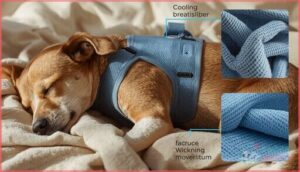
Beyond cushioning, airflow keeps your dog cool under blankets. Breathable mesh design with ventilated panels prevent overheating during dog sleep. Lightweight frames won’t weigh down your pup or restrict natural movements.
For ideal safety while sleeping with a design, choose:
- Mesh materials that wick moisture away from skin
- Breathable fabrics like cotton knit blends
- Cooling technology for warm climates
- Minimal bulk construction
Adjustability and Proper Fit
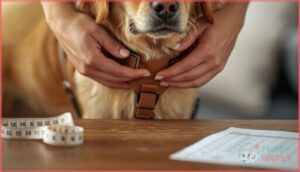
Vest sizing matters more than you think. Measure your dog’s girth behind the front legs, then check the manufacturer’s chart for proper fit.
Look for strap length adjustments at the chest and belly—buckle security should keep everything snug without pinching. A well-fitted dog vest lets you slip two fingers underneath comfortably, ensuring dog comfort and vest safety overnight.
How Harness Fit Impacts Sleep Quality
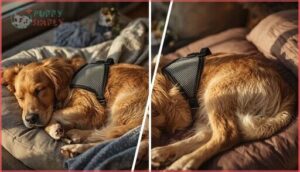
A vest that fits just right lets your dog stretch out, breathe easy, and sleep soundly through the night. When the fit’s off—even by a little—you’ll notice restless shifting, labored breathing, or red marks come morning.
Let’s walk through how to spot a proper fit, what goes wrong when straps are too loose or tight, and simple tweaks to make overnight wear more comfortable.
Identifying a Well-fitted Harness
A properly fitted vest stays put without riding up or sliding around during rest. Here’s how to check dog vest safety and comfort:
- Slide two fingers snugly between any strap and your dog’s body
- Check that buckle safety features lock firmly without pinching skin
- Verify strap adjustments sit flat without twisting or bunching
- Use sizing charts as your starting point, then fine-tune
- Observe vest materials for breathability and soft edges
Fit testing before sleep prevents overnight discomfort.
Dangers of Loose or Tight Harnesses
Even a well-selected vest can turn harmful if the fit drifts too snug or too slack. Tight straps restrict chest expansion and cut off circulation to your dog’s paws, while loose ones invite slipping, snagging, and skin rubbing that breeds hot spots. Both extremes exacerbate overnight risks—from labored breathing to entanglement with bedding—making safety and careful strap adjustment non-negotiable.
| Fit Issue | Primary Danger | Common Sign |
|---|---|---|
| Too tight | Restricted breathing, circulation loss | Wheezing, pale paws |
| Too loose | Slipping out, skin chafing | Strap gaps, sores |
| Shifted position | Pressure points, discomfort | Restlessness, waking |
Adjusting Harnesses for Overnight Comfort
A few small tweaks before bedtime transform a daytime vest into nighttime-safe gear. Loosen chest and belly straps by one notch to give your dog’s ribcage room to expand fully during deep sleep.
Check that two fingers slide easily under every strap when your pup lies down. Remove bulky accessories like ID pouches that press into skin during rest.
When Should You Remove The Harness?

Your dog doesn’t need to wear a vest around the clock. Knowing when to take it off protects their skin, prevents discomfort, and gives them the freedom to move and rest naturally.
Let’s look at the signs your dog needs a break, the risks of leaving it on too long, and the rare situations where overnight wear makes sense.
Signs Your Dog Needs a Break From Harness Use
Your dog’s body language speaks volumes about vest discomfort. Watch for persistent scratching at the chest or shoulders, restlessness during sleep, or visible rubbing marks on the skin.
If your pup seems less enthusiastic for walks or shows changes in sleep patterns, it’s time for vest removal. These signs of discomfort signal that canine wellness requires a break from constant dog vest usage.
Risks of 24/7 Harness Wear
Leaving a vest on around the clock creates serious overnight risks that compromise canine comfort and skin health. Continuous restrictive wear prevents your dog’s body from recovering between activities, making vest safety a real concern.
Key dangers of constant dog vest usage include:
- Persistent friction that causes painful hot spots and dermatitis under trapped moisture
- Restricted breathing from chest compression that disrupts deep sleep cycles
- Fur matting in high-contact zones, requiring professional grooming to resolve safely
You wouldn’t sleep with a vest—your dog shouldn’t either.
Safe Times to Leave The Harness On
Safety vest depends on timing and supervision. You can leave a vest on a dog during short supervised naps (under 4 hours) if it’s lightweight and properly fitted. Overnight risks multiply when sleeping in vest exceeds this window—restricted movement and skin irritation become real concerns.
| Scenario | Safe Duration |
|---|---|
| Supervised daytime naps | Up to 4 hours |
| Car rides or travel | Trip duration only |
| Outdoor supervised play | Active time only |
| Unattended overnight sleep | Remove immediately. |
Safety considerations prioritize your dog’s comfort zones over convenience.
Dog Breed and Size Considerations

Not all dogs wear collars the same way, and size really matters in terms of overnight safety.
A chihuahua faces different risks than a Great Dane, and puppies need different considerations than senior dogs with arthritis. Let’s break down how your dog’s breed, age, and size should guide your collar decisions.
Small Vs. Large Breed Harness Needs
Your dog’s size dramatically changes what makes a vest safe and comfortable for sleep. Breed Size Considerations and Vest Material Selection aren’t just marketing terms—they’re critical to canine comfort and welfare.
Here’s what matters for each:
- Small breeds need lightweight fabrics with soft padding to prevent breathing restriction and shoulder chafing
- Large dogs require wider chest bands and reinforced stitching to distribute pressure evenly
- Chest Plate Designs should match your dog’s body depth—deeper for small breeds, broader for large
- Adjustable Strap Systems with multiple points work best for small dogs; wider Velcro suits large breeds
- Measure chest girth and neck circumference rather than relying on weight charts for Breed Specific Features
The right dog vest fits your dog’s actual body, not just the size category on the label.
Puppies and Harness Safety During Sleep
Puppies grow fast, and that changes everything about safety vest security during sleep. Your pup’s delicate ribs and developing chest can’t handle pressure the way an adult dog’s can.
For nighttime safety vest care, choose ultra-soft materials with smooth edges and check the fit weekly—what worked Monday might pinch by Friday. Puppy safety vest tips: prioritize comfort zones over control, and remove the vest after supervised naps to prevent skin irritation.
Senior Dogs and Special Considerations
As your dog ages, canine arthritis and dog mobility challenges make sleeping in a restraint a trickier call.
Senior health means thinner fur, sensitive skin, and reduced ability to shift postures—all of which raise dog restraint safety concerns.
A too-snug fit can worsen stiffness by morning, so prioritize pet comfort and elderly care by removing the restraint nightly unless your vet advises otherwise for specific dog health and wellness needs.
Monitoring Your Dog’s Comfort and Health

Keeping an eye on your dog’s well-being is the most important part of deciding whether a vest works for nighttime wear.
Even the best-fitting vest can cause problems if your dog’s body isn’t responding well to it. Here’s what you need to watch for to make sure your pup stays comfortable and healthy.
Checking for Skin Issues or Hot Spots
Regular skin checks are your best defense against hot spot prevention and collar chafing. Even well-fitted collars can cause skin irritation if worn overnight, so inspect your dog daily for irritation signs like redness or moisture.
- Check the outer ear flap and surrounding skin for redness, moisture, or crusting
- Examine the neck, shoulders, and tail base where mats trap moisture
- Feel under the collar for warmth, swelling, or skin abrasions
- Look for damp areas from licking that invite bacteria
Behavioral Cues Indicating Discomfort
Beyond skin issues, your dog’s body language reveals critical discomfort signs when sleeping with a vest. Watch for restlessness patterns like frequent repositioning, scratching at the vest, or sleep disturbances such as shallow breathing and whining.
Anxiety indicators include tense muscles, tucked tail, or pawing at chest straps. These canine behavior cues warn you that dog vest safety is compromised and adjustment is needed.
When to Consult Your Veterinarian
While watching for behavioral shifts helps, some situations demand veterinary advice immediately. Canine health emergencies related to dog restraint safety aren’t always obvious—knowing when to act protects your pet.
Contact your veterinarian if you notice:
- Sudden breathing difficulty or collapse during sleep (emergency signs requiring urgent care)
- Persistent vomiting overnight (more than one episode within 24 hours)
- New skin irritation under the restraint after waking (potential risks of dog restraints)
Regular health checks and pet monitoring make consultation tips work.
Top 5 Dog Harnesses for Comfort and Safety
If you do need your dog to wear a vest at night, choosing the right one makes all the difference.
The best vests for overnight use are soft, breathable, and designed to minimize pressure points while your dog rests. Here are five vests that prioritize comfort and safety for extended wear.
1. Rabbitgoo No Pull Dog Harness
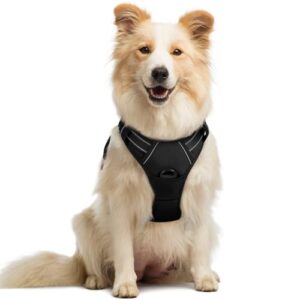
The Rabbitgoo No Pull Vest earns its spot with thoughtful features that balance control and comfort. Its front-clip design redirects pulling without choking, while soft padding behind the front legs prevents chafing during wear.
You’ll appreciate the reflective stitching for nighttime visibility and the sturdy top handle for quick assistance. The adjustable straps and quick-release buckles make fitting straightforward, though some owners report sizing inconsistencies across colors.
Made from water-resistant Oxford fabric with breathable mesh lining, it’s practical for daily use and occasional overnight wear.
| Best For | Dog owners with medium-sized pullers who need a comfortable everyday harness with good visibility features for walks and light outdoor activities. |
|---|---|
| Material | Polyester |
| Design Type | No-pull harness |
| Adjustability | Adjustable straps |
| Ease of Use | 2 quick-release buckles |
| Durability | Reflective Oxford material |
| Best For | Medium dogs |
| Additional Features |
|
- Front-clip design stops pulling without choking, plus a handy top handle for quick control
- Soft padding and breathable mesh keep dogs comfortable even during longer wear
- Reflective stitching and water-resistant material work well for various weather and lighting conditions
- Sizing runs inconsistent between different colors, so you might need to exchange
- Front buckle doesn’t always feel as secure as the rest of the harness
- Quality can be hit-or-miss depending on which batch you get
2. Gooby Easy Fit Dog Harness
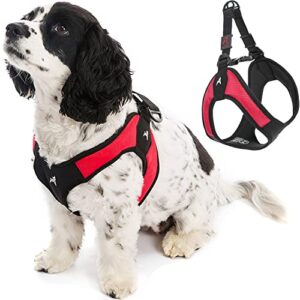
The Gooby Easy Fit vest wins praise for its step-in design that won’t stress your dog during daily fitting. Its memory foam chest pad cushions gentle pulls, while wetsuit-like fabric provides warmth and abrasion resistance—handy for chilly nights.
What sets it apart? The patent-pending escape-free function tightens when dogs try backing out, perfect for Houdini types. Reflective stitching boosts visibility during late walks. It’s machine washable and features breathable mesh to minimize skin irritation, though you’ll want to air dry to preserve the padding.
| Best For | Small to medium dogs that tend to escape from traditional harnesses or pull during walks, especially those needing extra security and comfort. |
|---|---|
| Material | Faux Suede, Neoprene |
| Design Type | Step-in harness |
| Adjustability | Fixed sizing |
| Ease of Use | Step-in design |
| Durability | Lightweight construction |
| Best For | Small breeds |
| Additional Features |
|
- Step-in design makes it super easy to put on without wrestling your dog into it
- Escape-free feature tightens when dogs try to back out, so it actually works for escape artists
- Machine washable with comfortable padding and reflective stitching for safety
- Material can fray quickly with heavy use or scratching
- Plastic leash ring may wear out over time and need replacement
- Requires accurate sizing to work properly—wrong fit defeats the escape-proof function
3. Puppia Soft Dog Harness
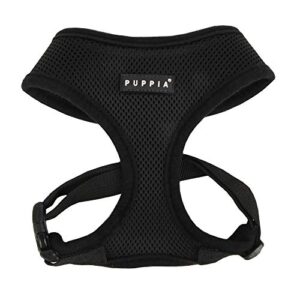
The Puppia Soft Vest earns its name with 100 percent breathable polyester air mesh that won’t overheat your pup during rest. You’ll notice the pressure spreads across the chest instead of bunching at the neck—that’s the vest-like design doing its job.
Quick-release buckles mean easy removal at bedtime, though some dogs tolerate overnight wear thanks to the soft padding around the trachea. It’s machine washable and holds up through repeated cycles. Just remember: proper sizing matters, since the neck opening stays fixed.
| Best For | Small to medium dogs whose owners want a breathable, easy-on harness that reduces neck strain during walks and outdoor activities. |
|---|---|
| Material | Polyester |
| Design Type | Vest harness |
| Adjustability | Adjustable chest belt |
| Ease of Use | Quick-release buckle |
| Durability | Triple layered |
| Best For | Small to medium |
| Additional Features |
|
- Breathable mesh fabric keeps dogs cool and comfortable even during extended wear
- Quick-release buckle makes it easy to get on and off your dog
- Spreads pressure evenly across the chest instead of pulling on the neck
- Sizing can be tricky—some users report the chest piece runs short
- Not secure enough for dogs that pull hard or try to escape
- Fixed neck opening means you need precise measurements to get the right fit
4. Kruz No Pull Dog Harness
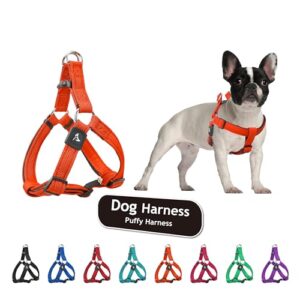
The Kruz restraint redirects pulling energy sideways instead of choking your dog forward—that front chest clip makes all the difference during walks. Dual-layer mesh protects sensitive areas while staying breathable enough for extended wear, and reflective stitching keeps nighttime potty breaks safer.
Reinforced stitching accommodates strong pullers without fraying. You can leave it on overnight if your dog escapes crates, but check under the straps daily for hot spots. The step-in design frustrates some owners initially, though most get the hang of it quickly.
| Best For | Medium to large dogs that pull on walks and need pressure redirected away from their necks without sacrificing comfort. |
|---|---|
| Material | Nylon, Polyester |
| Design Type | Step-in harness |
| Adjustability | Adjustable straps |
| Ease of Use | Single clasp |
| Durability | Dual-layer mesh |
| Best For | Medium to large |
| Additional Features |
|
- Front chest clip stops pulling by turning dogs sideways instead of choking them forward
- Dual-layer breathable mesh with reinforced stitching holds up to strong pullers while protecting sensitive skin
- Reflective accents improve visibility during early morning or evening walks
- Step-in design takes practice to master—some owners struggle with it at first
- At 8.48 ounces, it’s heavier than necessary for dogs on the smaller end of the medium range
- Leash clips may not fit all leash styles, limiting your gear options
5. PetSafe Rear Support Dog Harness
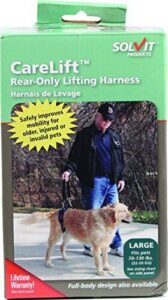
Older dogs or those recovering from surgery support need targeted lift support—that’s where PetSafe’s rear support system shines. Padded straps distribute weight across hips and abdomen, sparing your dog’s spine during potty breaks or stair climbs.
The breathable mesh prevents overheating, and machine-washable fabric simplifies cleanup after muddy adventures. This isn’t designed for overnight wear. The lifting handle works beautifully for short assists, but prolonged pressure can irritate skin.
Use it during mobility challenges, then remove it so your senior pup can rest comfortably.
| Best For | Older dogs or those recovering from surgery who need temporary lifting assistance during bathroom breaks, walks, or navigating stairs. |
|---|---|
| Material | Polyester |
| Design Type | Support sling |
| Adjustability | Adjustable sizing |
| Ease of Use | Leg loop buckles |
| Durability | Machine washable |
| Best For | Disabled or senior dogs |
| Additional Features |
|
- Padded straps distribute weight across hips and abdomen to protect your dog’s spine during lifts
- Breathable mesh fabric prevents overheating and is machine washable for easy cleanup
- Lifting handle provides excellent support for short assists when your dog needs help with mobility
- Not designed for all-day wear—prolonged use can irritate your dog’s skin
- Sizing can be tricky and may not fit all body types, so measure carefully before buying
- Can be confusing to put on and adjust, especially if you’ve got a wiggly dog
Best Practices for Harness Use Overnight

If you’ve decided your dog needs to wear a vest overnight, a few smart habits will keep them comfortable and safe. Regular cleaning, close supervision, and knowing when to try other options can make all the difference.
Let’s walk through the best practices that protect your dog’s health while they sleep.
Cleaning and Hygiene Tips
A dirty dog vest becomes a breeding ground for bacteria and odor, especially if your pup wears it overnight. Sanitizing vests weekly in hot water kills parasites and removes buildup.
Wash removable fabrics at 60°C (140°F) or higher for effective pet hygiene. Dry completely before putting it back on—damp materials can irritate skin and create unpleasant smells faster than you’d expect.
Supervising Your Dog While Harnessed
Nighttime checks matter more than you’d think. Even a well-fitted dog vest can shift during sleep, so check your dog’s vest adjustment every hour or two. Look for signs of twisting, tightness, or rubbing against skin.
Keep your dog’s sleep environment calm and clutter-free—remove dangling toys or loose bedding that could snag on straps. Dog monitoring prevents entanglement risks you won’t catch otherwise.
Alternatives to Harness Use for Sleep
If nighttime gear wear feels risky, sleep sacks or thermal pajamas offer cozy alternatives to sleeping while keeping straps off your dog’s chest. Orthopedic beds with bolsters provide security anxious pups crave without restriction.
For dogs needing mobility tools, nonslip mats and support slings work during transfers—then come off at bedtime. Calming aids like white noise or dim lighting improve canine sleep habits and create safer sleeping arrangements for dogs without buckles.
Frequently Asked Questions (FAQs)
Should I take my dog’s harness off at night?
Yes, you should remove your dog’s collar at night. Overnight wear can cause skin irritation, restrict natural movement, and create entanglement risks—compromising both sleep quality and safety during rest.
Why does my dog calm down when I put his harness on?
A snug vest provides gentle pressure across your dog’s chest—like a reassuring hug—which activates calming signals, reduces anxiety, and creates predictable routine cues that help settle nervous energy quickly.
Is it okay to tie my dog up at night?
Tethering overnight amplifies risks of dog leash safety issues—entanglement, restricted water access, and heightened anxiety.
Nighttime restraints create canine confinement stress. Instead, use crates or secure rooms for safe overnight security without tethering risks.
Can harnesses help with nighttime crate training?
A vest can be your crate training ally, offering a secure handle for guiding your pup in and out without wrestling a collar.
That extra control eases nighttime transitions and builds comfort in their sleeping environment.
Do harnesses affect a dogs sleep cycle?
A restraint can disrupt sleep patterns by restricting rest and limiting natural movement.
Most dogs settle faster and enjoy deeper sleep without one, which promotes better canine comfort and nighttime safety overall.
Are there harnesses specifically designed for sleeping?
Unlike old-fashioned tethering systems, sleeping harnesses feature soft padding and breathable fabrics to prevent chafing. These comfort designs prioritize nighttime safety through flat seams and quick-release buckles for overnight gear.
How do you transition dogs off nighttime harness use?
Start with short daytime trials using gradual removal techniques, then establish a vest-free nighttime routine.
Pair sleep training with positive reinforcement so your dog learns that sleeping with a vest isn’t necessary for security.
Conclusion
Your dog’s comfort shouldn’t feel like solving a midnight puzzle. While dogs can technically sleep in their vest, they absolutely shouldn’t make it a nightly habit.
Reserve overnight wear for specific situations—escape artists, mobility support, or temporary transitions—and always prioritize breathable designs. Check your pup’s skin regularly, watch for discomfort signals, and give them vest-free time daily.
When in doubt about whether dogs can sleep in their vest safely, err on the side of freedom and comfort.