This site is supported by our readers. We may earn a commission, at no cost to you, if you purchase through links.
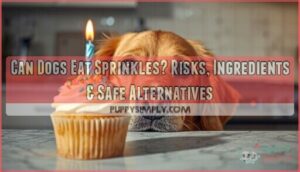
That cheerful birthday cupcake your dog is eyeing might look harmless, but those colorful sprinkles contain ingredients that could send you rushing to the emergency vet. Most commercial sprinkles pack sugar, artificial dyes, and sometimes xylitol—a sweetener that’s downright poisonous to dogs. Even chocolate sprinkles pose serious toxicity risks.
While a few accidentally licked sprinkles probably won’t cause a crisis, regular exposure adds up to digestive upset, obesity, and dental problems.
The good news? You don’t have to skip celebrating your pup’s special moments. Understanding what’s actually in those tiny decorations and knowing safe alternatives means you can treat your dog without the worry.
Table Of Contents
- Key Takeaways
- Can Dogs Eat Sprinkles?
- What Ingredients Are in Sprinkles?
- Health Risks of Sprinkles for Dogs
- How Much Sprinkle is Dangerous for Dogs?
- What to Do if Your Dog Eats Sprinkles
- Safe Alternatives to Sprinkles for Dogs
- Frequently Asked Questions (FAQs)
- Are sprinkles ok for dogs to eat?
- Do sprinkles have xylitol in them?
- How many sprinkles can a dog safely eat daily?
- Can dogs be allergic to certain sprinkle ingredients?
- Are sprinkles made from natural ingredients safe for dogs?
- Can sprinkles cause digestive issues in older dogs?
- Are there any dog-safe sprinkles available in stores?
- Are rainbow sprinkles worse than chocolate sprinkles?
- Can puppies eat sprinkles safely?
- Do sprinkles cause hyperactivity in dogs?
- Conclusion
Key Takeaways
- Sprinkles contain sugar, artificial dyes, and sometimes xylitol—a sweetener that’s extremely toxic to dogs and can cause life-threatening hypoglycemia within 10 to 60 minutes of ingestion.
- While a few accidentally consumed sprinkles won’t typically cause immediate harm, regular exposure leads to digestive upset, obesity, dental decay, and potential allergic reactions to artificial colors and additives.
- The danger level depends on your dog’s size, the type of sprinkles consumed, and frequency of exposure—smaller dogs face greater risk from the same amount, and chocolate or sugar-free varieties pose the most serious toxicity threats.
- Safe alternatives like freeze-dried meat crumbles, crushed dog treats, fresh fruit pieces, or homemade options provide festive celebration without the health risks associated with commercial sprinkles.
Can Dogs Eat Sprinkles?
Sprinkles aren’t a straightforward yes or no regarding canine wellness. While these colorful toppings aren’t inherently toxic to dogs like chocolate or xylitol, they don’t belong in your dog’s food bowl. Think of sprinkles as empty calories wrapped in artificial colors—they offer zero nutritional value and can upset your dog’s stomach if eaten in quantity.
The same goes for cotton candy and similar sugar-heavy treats—they’re best kept far away from curious pups.
Sprinkles are empty calories wrapped in artificial colors that offer dogs zero nutritional value and can upset their stomachs
A few grains that accidentally fall from your cupcake won’t usually cause severe problems, but regular consumption sets your dog up for weight gain, dental decay, and digestive issues. The real danger lies in what type of sprinkles your dog encounters. Sugar-free varieties containing xylitol are highly toxic and can trigger life-threatening hypoglycemia, while chocolate sprinkles carry their own serious risks.
Pet safety means treating sprinkles as an occasional accident, not a reward. For dogs with dietary sensitivities, there are made with natural ingredients that can be safer than traditional varieties.
What Ingredients Are in Sprinkles?
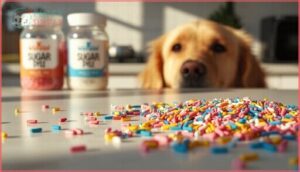
Most sprinkles seem harmless enough, but their ingredient list tells a different story regarding your dog’s health.
These colorful toppings pack more than just visual appeal—they contain several components that can upset your pup’s system or even pose serious risks.
Let’s break down what’s actually inside those tiny decorations.
Sugar and Corn Syrup Content
Most candy toppings rely heavily on refined sugars and corn syrup, which deliver a concentrated glycemic load your dog’s body isn’t designed to handle. These artificial ingredients can spike blood sugar rapidly and add empty calories without nutritional value.
- Sugar content ranges from 40 to 60 percent by weight in typical brands
- Corn syrup binds ingredients and prevents crystallization during storage
- A tablespoon adds 20 to 30 calories from sugar intake alone
- Natural sweeteners like cane sugar offer no safer alternative for dogs
Artificial Colors and Flavors
Beyond sugar intake, you’ll find a roster of certified artificial colors like FD&C Yellow No. 5 and Red No. 40 on most sprinkle labels. These food additives create vibrant hues but serve no nutritional purpose.
While regulatory oversight from the FDA keeps color additives and artificial flavors within safety limits for humans, dogs can experience stomach upset or rare allergic reactions to these toxic ingredients.
Xylitol and Other Harmful Additives
Even more concerning are toxic sugar substitutes like xylitol, which manufacturers sometimes add to sugar-free alternatives. This artificial sweetener triggers a rapid insulin spike in dogs, causing dangerous hypoglycemia within 10 to 60 minutes and potential liver damage.
Other harmful food additives and artificial flavor risks may lurk in specialty sprinkles, making xylitol poisoning a real threat that demands your attention.
If your pup needs to slim down safely, exploring homemade dog food recipes for weight loss can help you control every ingredient while avoiding hidden toxins like xylitol.
Potential Allergens in Sprinkles
The hidden threat of food allergens can turn a festive treat into a veterinary emergency. Gluten sensitivity and sugar intolerance may trigger reactions in your dog, while nut crosscontamination poses serious risks if sprinkles were processed near tree nuts or peanuts.
Artificial colors and artificial flavors are common culprits behind food allergies, alongside wheat-based binders, dairy derivatives, and soy lecithin found in many blends.
It’s important to be aware of the main ingredients in sprinkles since many contain added sugars, artificial colors, and food-grade waxes.
Health Risks of Sprinkles for Dogs

While sprinkles might seem harmless, they can create real problems for your dog’s health. The sugar, artificial additives, and potential toxins in these colorful toppings don’t mix well with canine biology.
Let’s look at the specific ways sprinkles can affect your dog’s body, from immediate stomach troubles to serious long-term conditions.
Digestive Upset and Gastrointestinal Issues
Your dog’s digestive system wasn’t built to handle those colorful sprinkles topping your donut. When sugar overload hits, you’ll see the fallout within hours—often as vomiting, canine diarrhea, or uncomfortable gas and bloating. Here’s what usually happens:
- Nausea and reduced appetite signal early stomach issues
- Abdominal discomfort shows as restlessness or hunched posture
- Loose or watery stool indicates intestinal irritation from toxic ingredients
- Gas buildup causes visible belly distension and cramping
Beyond sugar, artificial colors can trigger food allergies, while xylitol creates immediate life-threatening digestive issues. Small breeds dehydrate faster when vomiting or diarrhea persist beyond 24 hours.
If your pup shows blood in stool, repeated projectile vomiting, or refuses water, that’s your cue to call the vet—digestive upset has crossed into dangerous territory. Food intolerance to sprinkles isn’t worth the risk to your dog’s gut health.
Obesity, Diabetes, and Long-Term Effects
Regular sugar intake from sprinkles fuels weight gain that can trap your dog in a dangerous cycle. Obesity drives insulin resistance, raising diabetes risk and triggering chronic inflammation that damages cardiometabolic health over years.
Those metabolic risks compound when dietary restrictions get ignored—food toxicity concerns aside, consistent weight management protects long-term dog health far better than any festive topping ever could.
Dental Problems and Behavioral Changes
Sugar overload from sprinkles doesn’t just pack on pounds—it accelerates tooth decay and gum disease that quietly intensify pet anxiety. You might notice behavioral changes like irritability near the mouth, reluctance to chew, or excessive drool signaling oral health breakdown.
These dental problems compound canine stress, creating a cycle where discomfort affects mood and daily habits long before toxic ingredients enter the picture.
Toxicity From Xylitol and Chocolate
Even trace amounts of xylitol or chocolate turn festive treats into medical emergencies. Xylitol poisoning triggers canine hypoglycemia within 30 to 60 minutes, while chocolate toxicity varies by type—dark and baking varieties pack the highest theobromine punch per gram.
- Theobromine doses around 9 milligrams per pound can poison small dogs quickly
- Xylitol causes rapid insulin release leading to weakness and potential liver failure
- Emergency response requires immediate veterinary contact when toxic foods for dogs are consumed
- Sugar overload compounds these risks, amplifying digestive distress during dog poisoning events
How Much Sprinkle is Dangerous for Dogs?

There’s no magic number regarding how many sprinkles are safe for your dog. The real answer depends on what’s actually in those colorful toppings, how often your pup gets them, and your dog’s unique situation.
Let’s break down what matters most when you’re trying to figure out if those few sprinkles are harmless or heading toward trouble.
Occasional Vs. Regular Consumption
Think of it like seasoning—a pinch now and then versus a daily habit makes all the difference when considering can dogs eat sprinkles safely.
| Frequency | Calorie Impact | Consumption Risks |
|---|---|---|
| Occasional (1x/week) | 5–15 calories daily | Obesity, dental decay over time |
| Daily | Exceeds maintenance needs | Elevated toxic substances exposure |
| Paired with balanced diet | Negligible glucose spike | Low dietary balance disruption |
| High artificial ingredients | Compounds allergen load | GI upset in sensitive dogs |
Occasional use won’t tip the scales on canine nutrition, but regular feeding guidelines matter—repeated sugar intake from artificial ingredients disrupts dog nutrition and health long-term.
Symptoms of Overconsumption
When your dog raids the sprinkle jar, watch for vomiting causes and stomach issues that signal trouble. Digestive problems from sugar and artificial colors can escalate quickly, especially if toxic reactions from xylitol are involved.
- Nausea and abdominal bloating within minutes to hours after eating
- Vomiting or diarrhea from digestive issues and food allergies
- Weakness, wobbling, or seizures indicating xylitol poisoning
- Restlessness, rapid breathing, or racing heart from chocolate exposure
- Itching, hives, or swelling from allergens in artificial ingredients
Size and Health Factors
Your dog’s body size matters when gauging risk. A Chihuahua faces greater danger from the same amount of xylitol than a Great Dane would.
Breed-specific traits and growth rates in puppies also shape how quickly health risks develop. Smaller dogs often show symptoms faster because their nutrient needs differ, and even a few sprinkles can disrupt canine health and pet nutrition balance.
What to Do if Your Dog Eats Sprinkles

If your dog snatches a few sprinkles off the counter, don’t panic just yet. The first step is figuring out what your dog ate and how much, then watching for any concerning signs.
Here’s what you need to know about recognizing symptoms, handling emergencies, and deciding when professional help is necessary.
Immediate Symptoms to Watch For
After your dog snacks on sprinkles, watch closely for vomiting signs or digestive issues within the first few hours. Allergic reactions from artificial colors may show up as facial swelling or hives.
Neurological symptoms like weakness or tremors signal xylitol poisoning—toxic ingredients demand immediate emergency response.
Monitor for unusual drooling, rapid breathing, or lethargy, as sugar and other harmful additives can trigger serious problems quickly.
Emergency Steps for Toxic Ingredients
If xylitol or chocolate poisoning is suspected, contact your veterinarian or pet poison control immediately—don’t wait for symptoms to worsen. Quick veterinary care makes all the difference when dealing with dangerous substances like xylitol.
Follow their first aid procedures carefully, which may include inducing vomiting if instructed. Keep your dog calm and note what toxic ingredients they consumed, including the amount and timing.
When to Contact Your Veterinarian
Prompt vet emergency attention if your dog shows any of these urgent care signs after eating sprinkles:
- Persistent vomiting or diarrhea lasting more than 12 hours
- Weakness, wobbliness, or seizures suggesting xylitol poisoning
- Rapid breathing, racing heart, or restlessness indicating chocolate toxicity
- Marked lethargy or inability to stand
- Allergic reactions like facial swelling or severe itching
When in doubt about your dog’s health, contacting your veterinarian ensures proper canine first aid and prevents serious complications from pet poisoning.
Safe Alternatives to Sprinkles for Dogs
You don’t have to skip celebrations just because regular sprinkles aren’t safe for your dog. There are plenty of ways to add a festive touch to your pup’s treats without risking their health.
Let’s look at some dog-safe options that’ll make treat time special while keeping your furry friend healthy.
Dog-Friendly Sprinkles and Toppings

You’ll find several dog-friendly sprinkles made specifically for canine cuisine without sugar or artificial colors. Look for freeze-dried meat crumbles, crushed dog treats, or commercial pet nutrition toppers with natural ingredients.
Fresh blueberries, small apple pieces, and coconut flakes work beautifully as healthy snacks.
These alternatives let you celebrate with your pup while keeping their diet balanced and safe.
Healthy Homemade Treat Ideas

Making your own treats at home gives you complete control over what goes into your dog’s diet. Try frozen yogurt pops with pureed fruit, peanut butter banana bites, or sweet potato chews for grain-free options.
Fresh fruit delights like watermelon yogurt cups and veggie bites such as pumpkin chia pudding offer excellent canine nutrition while supporting healthy eating habits and pet safety.
Tips for a Balanced Canine Diet

Think of your dog’s diet like building blocks—each piece matters for canine nutrition. Focus on high-quality animal proteins as the foundation, then add digestible carbs and essential fatty acids for meal planning that meets dietary needs.
Feed two meals daily, monitor body condition, and choose healthy snacks that support dog health and nutrition while preventing food allergies in dogs. A balanced dog diet keeps your pup thriving.
Frequently Asked Questions (FAQs)
Are sprinkles ok for dogs to eat?
Sprinkles aren’t toxic in small amounts, but they offer zero nutritional value for your dog. The sugar, artificial colors, and potential xylitol make them a poor choice for canine treats.
Do sprinkles have xylitol in them?
Standard sprinkles rarely contain xylitol, but some sugar-free varieties do use this toxic artificial sweetener. Always read ingredient labels carefully before offering any sprinkle-topped treats to your dog.
How many sprinkles can a dog safely eat daily?
You shouldn’t give your dog sprinkles daily. Safe Treat Guidelines recommend limiting canine sugar intake to rare, special occasions—a few tiny pieces once in a while, never as a regular habit.
Can dogs be allergic to certain sprinkle ingredients?
Yes, dogs can develop food allergies or ingredient sensitivity to components in sprinkles—especially artificial ingredients, colors, and flavors.
Canine intolerance may trigger allergic reactions like itching, vomiting, or digestive upset.
Are sprinkles made from natural ingredients safe for dogs?
Natural sprinkles, even organic options, still pack high sugar levels that don’t match canine nutrient needs.
Plant-based colorings aside, these treats lack meaningful nutrition and can contribute to weight gain, dental issues, and digestive upset.
Can sprinkles cause digestive issues in older dogs?
Older dogs have notoriously sensitive stomachs, and sprinkles can wreak havoc on senior nutrition and digestive health.
Sugar, artificial ingredients, and additives disrupt the gut microbiome, causing diarrhea, gas, and age-related issues that worsen canine wellness.
Are there any dog-safe sprinkles available in stores?
You’ll find dog-friendly sprinkles at many pet retailers and online shops. These products use natural ingredients like beetroot or spirulina for color, skip artificial sweeteners, and offer sugar-free alternatives designed specifically for canine nutrition and celebrations.
Are rainbow sprinkles worse than chocolate sprinkles?
It’s not a black-and-white issue. Chocolate sprinkles carry theobromine toxicity risk, making them more dangerous, while rainbow sprinkles pose color additive sensitivities.
Both deliver empty sugar calories your dog doesn’t need.
Can puppies eat sprinkles safely?
Puppies shouldn’t eat sprinkles because their developing digestive systems are more sensitive to sugar, artificial colors, and xylitol. Even tiny amounts can trigger vomiting, diarrhea, or dental problems, making safer dog treats essential for puppy nutrition.
Do sprinkles cause hyperactivity in dogs?
Sprinkles can trigger temporary energy spikes in some dogs due to sugar rush effects and artificial colors, but hyperactivity isn’t guaranteed.
Stomach discomfort or canine behavior changes from dietary influences often mimic this response.
Conclusion
Your dog’s well-being doesn’t depend on whether they can eat sprinkles—it depends on you choosing what keeps them healthy. Those tiny decorations might seem insignificant, but they carry risks that matter. Skip the artificial ingredients and sugar altogether.
Instead, celebrate with dog-safe toppings or homemade treats designed for their unique needs. When you prioritize nutrition over novelty, you’re giving your pup something better than any birthday decoration: a longer, healthier life alongside you.