This site is supported by our readers. We may earn a commission, at no cost to you, if you purchase through links.

Your dog locks eyes with you the moment you pull out a raw chicken wing—tail going, whole body involved. That reaction isn’t random. Dogs are biologically wired to chew bones, and raw chicken bones sit at the center of a genuine debate among pet owners and veterinary professionals alike.
Some vets consider them a safe, natural addition to a dog’s diet. Others flag serious risks that can land your dog in an emergency clinic. The difference between a good outcome and a bad one usually comes down to what you know before you offer that first bone.
Table Of Contents
- Key Takeaways
- Can Dogs Eat Raw Chicken Bones Safely?
- What Are The Benefits of Raw Chicken Bones?
- What Are The Risks of Feeding Raw Chicken Bones?
- How to Safely Feed Raw Chicken Bones to Dogs
- What Types of Raw Chicken Bones Are Best?
- How Much and How Often Should Dogs Eat Bones?
- What to Do if Your Dog Eats a Chicken Bone
- Signs of Trouble After Eating Raw Chicken Bones
- Safe Alternatives to Raw Chicken Bones
- When Should You Consult Your Veterinarian?
- Frequently Asked Questions (FAQs)
- What raw bones are ok for dogs?
- What happens if my dog ingests a chicken bone?
- What happens if my dog eats a raw bone?
- Can dogs eat raw chicken bones?
- Can one eat chicken while on a diet?
- What if my dog eats a chicken bone?
- Can dogs eat raw chicken?
- Can dogs eat frozen chicken bones?
- Can dogs eat chicken bones without thawing?
- Are raw chicken bones ok for dogs?
- Conclusion
Key Takeaways
- Raw chicken bones can benefit your dog’s dental health and nutrition, but only when you pick the right size, stay close during chewing, and source fresh, high-quality chicken.
- Cooked chicken bones are always off the table—heat makes them brittle and prone to splintering, which can puncture your dog’s gut.
- Bacterial risks like Salmonella are real even when bones look fresh, and some dogs can carry and spread the bacteria without showing any symptoms.
- If your dog shows vomiting, lethargy, a swollen belly, or blood in their stool after eating a bone, skip the wait-and-see approach and call your vet right away.
Can Dogs Eat Raw Chicken Bones Safely?
Raw chicken bones are one of those topics that splits dog owners and vets right down the middle. The answer isn’t a simple yes or no — it really depends on how you approach it.
If you’re weighing the risks, this breakdown of whether dogs can safely eat chicken legs covers exactly what to watch for.
Here’s what you need to weigh before tossing one to your dog.
Risks Vs. Benefits Overview
Raw chicken bones sit at a crossroads — real benefits on one side, real raw bone risks on the other.
Here’s a quick look at both:
- Dental health — chewing scrapes away tartar naturally
- Nutrient balance — bones supply calcium and phosphorus
- Dog size factors — smaller dogs face greater choking danger
- Bacterial contamination — Salmonella is always a concern
Your feeding guidelines and health monitoring matter just as much as the bone itself. Be aware that gastrointestinal blockages and perforation can result from bone fragments if not properly monitored.
Expert and Veterinary Opinions
Most veterinarians don’t mince words here — the expert consensus leans cautious. The American Veterinary Medical Association discourages raw animal proteins unless treated for pathogens, and emergency vets regularly treat dogs for obstructions and perforations tied to bones.
Veterinary guidance consistently points to one pet owner precaution above all: talk to your veterinarian before starting any raw feeding approach involving raw chicken bones safety concerns.
Chewing on bones can provide dental health and stress relief for dogs, but owners must balance these benefits against significant risks.
What Are The Benefits of Raw Chicken Bones?

Raw chicken bones aren’t just a chew toy — they can actually offer your dog some real advantages when used the right way. From cleaner teeth to stronger bones, there’s more going on than you might expect. Here’s a closer look at the key benefits worth knowing.
Dental Health and Tartar Removal
Think of raw chicken bones as a natural toothbrush for your dog’s back teeth. The scraping action directly aids tartar control and overall canine dental health in ways most kibble can’t match. Regular chewing habits can help with:
- Reducing plaque buildup and slowing gum disease
- Lowering bacteria linked to tooth decay
- Improving oral hygiene and freshening breath naturally
Nutritional Value (Calcium, Phosphorus)
Beyond dental care, raw chicken bones bring real nutritional value to your dog’s diet. They’re a surprisingly dense calcium source — some bone portions provide close to a gram of calcium per 100 grams.
That calcium works alongside phosphorus intake to support bone density and healthy muscle function. Together, these minerals help maintain mineral balance, making canine nutrition from raw chicken bones genuinely worthwhile.
Mental Stimulation and Enrichment
Chewing a raw bone isn’t just physical — it’s genuinely good for your dog’s brain. The problem-solving involved in gripping, rotating, and gnawing taps directly into cognitive training and natural sensory stimulation.
Many dogs stay mentally busy for 15 to 20 minutes per session, which fosters emotional balance and reduces anxious behaviors.
As part of a raw feeding routine, this kind of interactive play quietly promotes overall dog wellness.
What Are The Risks of Feeding Raw Chicken Bones?
Raw chicken bones aren’t without their downsides, and it’s worth knowing what you’re dealing with before tossing one to your dog. The risks are real, and some can turn serious fast. Here’s what you need to watch out for.
Choking Hazard and Swallowing Risks
Raw chicken bones can become a serious choking hazard faster than you’d expect. Bone fragmentation happens the moment your dog bites down hard, and those sharp shards are prime candidates for airway blockage. Here are five risks to keep in mind:
- Choking can occur within minutes if a fragment lodges in the throat
- Esophageal damage happens when sharp pieces scrape or puncture the esophageal lining
- Aspiration risks arise if fragments are inhaled instead of swallowed
- Dog swallowed a whole piece? Intestinal blockages can follow
- Choking prevention starts with never leaving your dog unsupervised
Gastrointestinal Obstruction or Perforation
Once a bone fragment enters your dog’s gastrointestinal tract, things can go wrong quickly. An intestinal blockage forms when a piece lodges in a narrow section, cutting off normal flow — and gut obstruction can progress to bowel perforation within hours if pressure weakens the bowel wall.
Choosing safer alternatives, like freeze-dried puppy food options, can help you avoid the bone-related risks that put dogs in emergency situations.
Internal injury from bone fragments is a genuine food safety concern that demands fast action.
| Warning Sign | What It Means | Action Needed |
|---|---|---|
| Repeated vomiting | Possible gut obstruction | Call your vet immediately |
| Hunched posture | Abdominal pain signal | Emergency intervention required |
| No bowel movement | Digestive health disruption | Abdominal surgery may be necessary |
Bacterial Infections (Salmonella, E. Coli)
That fresh-looking raw chicken bone may still be hiding Salmonella, E. coli, or Campylobacter on its surface. Bacterial infections don’t always show up right away — some dogs become silent carriers, shedding harmful bacteria through saliva and stool without looking sick at all.
Raw chicken bones can harbor hidden Salmonella, turning healthy-looking dogs into silent bacterial carriers
That’s where zoonotic risks get serious. Practicing consistent pet hygiene and infection control helps protect everyone in your home from food poisoning and disease prevention failures.
How to Safely Feed Raw Chicken Bones to Dogs

If you’ve decided to give raw chicken bones a try, how you feed them matters just as much as what you feed. A few simple habits can go a long way toward keeping your dog safe.
Here’s what to keep in mind before you get started.
Choosing Appropriate Bone Size and Type
Size matters more than you might think regarding bone selection. A simple rule in raw feeding for dogs: pick a raw chicken bone at least as large as your dog’s head to prevent gulping. Size guidelines vary by dog:
- Small dogs: chicken necks or wing tips
- Medium dogs: full wings or meaty backs
- Large dogs: quarters or frames
Matching dog size to raw bone types keeps feeding safety realistic and chew durability appropriate.
Supervising Dogs During Chewing
Think of yourself as a lifeguard — don’t just be nearby, stay focused. When your dog chews raw chicken bones, keep your eyes on them the entire time. Limit sessions to 10–20 minutes for safe chewing habits and better dog health.
| Supervision Tips | Safe Environments | Choking Prevention |
|---|---|---|
| Stay within arm’s reach | Remove other pets | Match bone to dog size |
| Watch for gulping | Use a washable mat | Limit chew time |
| Teach “drop it” first | Keep children away | Remove cracked bones |
Sourcing Fresh, High-Quality Chicken
Supervision keeps your dog safe in the moment — but quality control starts before the bone ever reaches your dog. When sourcing raw chicken bones for a raw food diet, look for these markers of freshness:
- Pale pink color with no slimy texture
- Little to no odor
- Tightly sealed, undamaged packaging
- A recent sell-by date
Meat inspection labels and supplier verification matter too. Veterinary advice consistently points to human-grade chicken as the safest choice for food safety and handling.
What Types of Raw Chicken Bones Are Best?
Not all raw chicken bones are created equal regarding your dog’s safety. Some types are easier for dogs to chew and digest, while others should be avoided altogether.
Let’s look at which options are best for your pet.
Chicken Wings, Necks, and Drumsticks
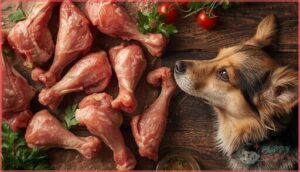
Variety matters when choosing raw chicken bones for your dog’s diet. Chicken wings, necks, and drumsticks each offer bone marrow benefits and poultry nutrition facts, but they come with risks.
Small bones can cause choking or canine digestion issues, while drumsticks may fracture teeth.
Following raw feeding guidelines and seeking veterinary advice helps protect dog health and nutrition when considering raw meat safety.
Chicken Feet and Their Preparation

Chicken feet stand out for their unique Chicken Foot Nutrition—rich in protein, glucosamine, and collagen, supporting joint health and strong teeth.
For safe Raw Feeding and Diet, always rinse, trim claws, and supervise your dog. Dehydration Methods can make bones crushable, reducing splinter risk.
Following these Bone Safety Measures helps support Dog Health and Nutrition while minimizing hazards.
Bones to Avoid
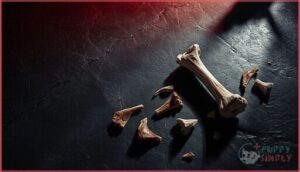
Not all bones are safe choices. Cooked Chicken Bones top the avoid list—heat makes them brittle, turning them into sharp splinters that can puncture your dog’s gut. Small Bones like rib tips, which pose serious choking risks, should also be skipped.
Heavy Weight Bones can crack teeth, while Marrow Bones may trigger pancreatitis. Contaminated Bones from trash carry dangerous bacteria. Bone ingestion risks are real—choose wisely.
How Much and How Often Should Dogs Eat Bones?

Even a good thing can cause problems if you overdo it, and bones are no different. How much your dog should get depends on their size, and how often matters just as much as how much.
Here’s what to keep in mind.
Portion Size Guidelines by Dog Size
How much bone your dog actually needs depends on their size. Most raw feeding guidelines suggest edible bone should make up 10 to 15 percent of their total daily raw meat intake.
Here’s a quick breakdown by dog size:
- Small dogs (10 lbs): About 0.6 ounces of bone daily
- Medium dogs (30 lbs): Roughly 1.4 ounces daily
- Large dogs (70 lbs): Around 2.7 ounces daily
- Puppies: Aim for the higher end — 12 to 15 percent — to support bone development
Frequency Recommendations
Most dogs do well with raw chicken bones two to three times per week — not every day. Daily feeding often leads to hard, chalky stools, which signals too much bone intake.
Use this simple bone feeding schedule as a starting point:
| Dog Type | Raw Bone Frequency |
|---|---|
| Healthy adult | 2–3 times weekly |
| Senior or sensitive | Once weekly or less |
| Puppies | Vet-guided schedule |
Always adjust based on your dog’s stools and comfort.
What to Do if Your Dog Eats a Chicken Bone

Finding a chicken bone in your dog’s mouth — or realizing it’s already gone — can send your heart racing. The good news is that staying calm and knowing what to do next makes a real difference.
Here’s what to watch for and when to act.
Signs of Distress or Emergency
Some emergency symptoms show up fast — choking risks are obvious within minutes, like gasping, pawing at the mouth, or labored breathing. But internal injuries and gastro blockage can take 12 to 72 hours to appear.
Watch for vomiting, a bloated belly, lethargy, or blood in the stool. These signs of intestinal blockages or internal injury all need immediate veterinary attention.
Immediate Steps to Take at Home
After bone ingestion, stay calm — panic leads to poor decisions. Keep your dog quiet and restrict activity for at least 24 hours. Offer a small piece of plain white bread to cushion sharp edges. Don’t induce vomiting; it can cause additional harm.
As part of basic pet first aid, monitor stools over 48–72 hours for passing fragments, and note any behavioral changes for your veterinarian.
When to Contact a Veterinarian
Some symptoms after chicken bone ingestion can’t wait until morning. Call your veterinarian immediately if you notice any of these urgent care needs:
- Difficulty breathing, gasping, or pale gums
- Repeated vomiting, especially with blood
- Swollen or rigid abdomen and signs of pain
- Lethargy, collapse, or hiding behavior
- Straining to defecate or no bowel movement for days
When in doubt, call — dog health and safety always comes first.
Signs of Trouble After Eating Raw Chicken Bones

Even if your dog seems fine right after eating raw chicken bones, that doesn’t always mean everything went smoothly. Some warning signs show up hours later, and catching them early can make a real difference. Here’s what to watch for.
Choking and Coughing
Sudden coughing after chicken bone ingestion is a red flag you shouldn’t ignore. Bone fragments can scratch the throat lining, causing throat irritation and persistent coughing symptoms.
More serious choking hazards include airway blockage, where your dog stretches its neck, gasps, or shows pale gums. If your dog swallowed a chicken bone and won’t stop coughing, that’s a potential internal injury emergency.
Vomiting or Lethargy
Vomiting or lethargy after your dog chews a raw chicken bone can mean more than an upset stomach. These are early signals of Digestive Issues worth taking seriously.
Watch for these warning signs:
- Vomiting repeatedly or with blood — possible internal injury
- Lethargy Signs like sudden weakness or reluctance to move
- Gastroenteritis symptoms from Bacterial Infections like Salmonella
- Digestive Health decline if vomiting exceeds 12–24 hours
- Emergency Care is needed when Toxicity Risks or blockage is suspected
Blood in Stool or Abdominal Pain
Beyond vomiting and weakness, blood in stool or abdominal pain signals possible Gastrointestinal Injury or Internal Bleeding — both serious Digestive Issues.
| Warning Sign | What It May Mean |
|---|---|
| Bright red Blood in Stool | Lower gut trauma or Gastroenteritis |
| Black, tar-like stool | Internal Injury higher in the digestive tract |
| Abdominal Swelling or pain | Blockage, perforation, or Internal Bleeding |
Don’t wait — these need Emergency Care immediately.
Safe Alternatives to Raw Chicken Bones

If raw chicken bones feel like more trouble than they’re worth, you’re not alone in thinking that.
Plenty of safer options can still keep your dog’s teeth clean, mind busy, and tail wagging. Here are three worth knowing about.
Dental Chews and Safe Chew Toys
Dental chews are a smart, low-risk way to support your dog’s oral hygiene without the worries that come with raw bones. Look for the VOHC seal — brands like Greenies and WHIMZEES Brushzees have proven plaque-fighting results.
Pair them with enrichment chew toys like Kongs for dog enrichment and mental stimulation.
Just remember to count chew calories toward your dog’s daily intake.
Freeze-Dried Meat Treats
If you want a treat that packs real nutritional punch without raw chicken bones, freeze-dried meat treats are worth a look. Freeze-drying preserves up to 97% of nutrients through careful meat preservation — no high heat, no fillers. That said, freeze-dried safety isn’t guaranteed; raw meat risks like Salmonella can survive. Always follow veterinary advice and guidance.
- Single-protein options support pet nutrition and help manage food sensitivities
- Store treats sealed and dry — proper treat storage extends shelf life up to 18 months
- Handle like raw meat for pet safety: wash hands after every use
Commercial Raw Food Diets
Commercial raw food diets offer a structured alternative to raw chicken bones, with many brands formulated to meet AAFCO nutrient profiles for balanced dog nutrition and health. Raw food safety is built in through pathogen control methods like high-pressure processing.
Follow veterinary advice and guidance on frozen storage and thawing, and always choose brands that test finished batches for harmful bacteria.
When Should You Consult Your Veterinarian?
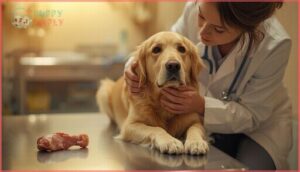
Even if your dog seems fine after eating raw chicken bones, a quick chat with your vet can save you a lot of worry. Every dog is different, and your vet knows yours best.
Here’s when it makes sense to pick up the phone and call.
Assessing Your Dog’s Suitability for Raw Bones
Not every dog is a good candidate for raw chicken bones — and your vet can help you figure out which side of that line your dog falls on. A proper health evaluation covers several key factors:
- Age restrictions: Puppies and senior dogs face higher risks
- Dental health: Existing tooth damage rules out hard bones
- Digestive history: Pancreatitis or GI issues change the equation
- Chewing behavior: Gulpers need extra caution
Dog breed considerations and individual nutrient requirements also matter.
Ongoing Health Monitoring
Once your dog starts eating raw chicken bones, ongoing health monitoring becomes your most reliable safeguard. Schedule regular health checks — yearly for adult dogs, every six months for seniors — so your vet can catch digestive issues, dental health changes, or weight shifts early.
Tracking stool consistency at home also aids digestive health and gives your vet concrete data for better veterinary care and advice around nutrition balance.
Alternatives Recommended by Vets
If raw chicken bones aren’t the right fit for your dog, there’s no shortage of safer options. Veterinarians often recommend vet-approved chews like Greenies, bully sticks as rawhide alternatives, or stuffable rubber toys that satisfy chewing urges without the risks.
Boneless diets using calcium supplements can also address pet owner concerns about nutrition. Your veterinarian can match the best healthy treats and natural supplements to your dog’s specific needs.
Frequently Asked Questions (FAQs)
What raw bones are ok for dogs?
Soft, pliable poultry bones — chicken necks, wings, duck feet, and quail carcasses — are your safest picks for raw feeding. Match bone size to your dog’s breed, and always supervise.
What happens if my dog ingests a chicken bone?
If your dog swallowed chicken bones, bone splinters can cause internal injury or gastro blockage.
Watch for vomiting, lethargy, or abdominal pain — these signal a canine emergency requiring immediate pet first aid and veterinary care.
What happens if my dog eats a raw bone?
Most cases start quietly—your dog seems fine, then hours later, bone fragment dangers emerge.
Raw bone effects range from mild gut upset to serious gastrointestinal damage requiring canine emergency care and immediate veterinary advice.
Can dogs eat raw chicken bones?
Yes, but with real caution. Raw chicken bones are softer than cooked ones, yet they still splinter, harbor bacteria, and can obstruct digestion. Veterinary advice leans toward safer alternatives for better dog health.
Can one eat chicken while on a diet?
Chicken fits easily into a weight loss plan. It’s packed with protein, low in calories, and keeps you full longer.
Stick to grilled or baked cuts for the best results with diet planning.
What if my dog eats a chicken bone?
Stay calm — but act fast. If your dog swallowed raw chicken bones, watch for choking, vomiting, or lethargy. Call your vet immediately.
Bone fragmentation and gastro blockage are real risks requiring prompt vet intervention.
Can dogs eat raw chicken?
Dogs can eat raw chicken, but it comes with real risks. Raw feeding may support dog nutrition and bone health, yet bacteria like Salmonella make pet wellness and raw chicken safety something you can’t ignore.
Can dogs eat frozen chicken bones?
Frozen chicken bones aren’t safe for dogs. Freezing makes them harder and more brittle, so they shatter into sharp fragments that threaten dog digestive health and create serious bone choking hazards. Stick to safer pet food alternatives.
Can dogs eat chicken bones without thawing?
It’s best not to cut corners here — your dog shouldn’t chew frozen chicken bones. Frozen bone risks include cracked teeth and choking.
Always follow thawing methods and raw feeding guidelines for safe handling practices.
Are raw chicken bones ok for dogs?
Raw chicken bones can be okay for some dogs, but it’s not a simple yes or no. Bone digestion, chewing style, and supervision all matter for pet safety and dog wellness.
Conclusion
Bone by bone, the decision to feed your dog raw chicken bones comes down to preparation, patience, and paying close attention. Can dogs eat raw chicken bones? Yes—but only when you choose the right type, supervise every session, and know your dog’s limits.
The risks are real, but so are the rewards when you get it right. Stay informed, stay watchful, and your dog’s next chew session can be both safe and satisfying.
- https://www.redbarn.com/blogs/blog/can-dogs-eat-chicken-bones-the-dangers-and-safer-treat-options
- https://marleybones.com/blogs/news/can-dogs-eat-chicken-bones-understanding-the-risks-and-safe-practices
- https://www.veg.com/post/can-dogs-eat-chicken-bones
- https://www.bellaandduke.com/dogs/expert-advice/dog-nutrition/can-dogs-eat-raw-chicken/
- https://www.years.com/blogs/advice/why-you-should-never-give-your-dog-cooked-chicken-bones