This site is supported by our readers. We may earn a commission, at no cost to you, if you purchase through links.

Your dog spots that golden sandwich on your plate and locks eyes with you—tail wagging, patience wearing thin. Sharing feels harmless, but dogs eating grilled cheese is a more complicated situation than it looks.
That crispy, melted combination packs fat, salt, dairy, and sometimes hidden ingredients like garlic or onion that can genuinely hurt your dog. What seems like a small indulgence can trigger everything from an upset stomach to a serious bout of pancreatitis. Knowing exactly what’s in that sandwich—and what it does inside your dog’s body—makes the difference between a safe snack and an emergency vet visit.
Table Of Contents
- Key Takeaways
- Can Dogs Eat Grilled Cheese?
- What Ingredients in Grilled Cheese Are Problematic?
- Are There Any Health Benefits for Dogs?
- What Health Risks Does Grilled Cheese Pose to Dogs?
- How Much Grilled Cheese is Safe for Dogs?
- What Should I Do if My Dog Eats Grilled Cheese?
- Are There Safer Cheese Options for Dogs?
- What Are Healthy Alternatives to Grilled Cheese for Dogs?
- Frequently Asked Questions (FAQs)
- Can dogs eat toasted bread and cheese?
- What ingredients in grilled cheese are harmful to dogs?
- How often can dogs eat cheese?
- Is lactose intolerance common in dogs?
- Can grilled cheese cause allergies in dogs?
- Do certain dog breeds handle cheese better?
- Can puppies tolerate cheese better than adult dogs?
- Does grilled cheese affect a dogs dental health?
- Are certain dog breeds more sensitive to dairy?
- Can grilled cheese interfere with a dogs medications?
- Conclusion
Key Takeaways
- Grilled cheese contains high levels of fat, salt, and dairy, which can cause digestive upset, weight gain, or even pancreatitis in dogs.
- Ingredients like onions and garlic, and certain seasonings in grilled cheese are toxic to dogs and should always be avoided.
- Most adult dogs are lactose intolerant, so even small amounts of cheese can lead to vomiting, diarrhea, or allergic reactions.
- Safer treat options include small portions of low-lactose cheeses, plain lean proteins, or dog-friendly fruits and vegetables.
Can Dogs Eat Grilled Cheese?

Grilled cheese is one of those comfort foods your dog will absolutely beg for — and technically, a small bite won’t poison them. But “not toxic” doesn’t mean “a good idea.”
If your dog has a sensitive stomach, it’s worth checking which cheesy snacks are safer for dogs before you share a bite off your plate.
Grilled cheese is loaded with fat, salt, and dairy, which adds up fast even in small amounts. For dogs managing weight, diabetes, or a sensitive stomach, it’s a hard no. As a general rule in canine nutrition, if it’s rich for you, it’s risky for them.
It’s important for pet owners to learn more about the risks of feeding dogs grilled cheese to make informed decisions.
What Ingredients in Grilled Cheese Are Problematic?
Grilled cheese might seem harmless, but some ingredients can cause trouble for dogs. It’s important to know what’s in your sandwich before sharing it with your pet.
Here’s what you should watch out for.
Cheese and Lactose Content

Cheese in grilled cheese can be a double-edged sword for dogs. Here’s what to keep in mind about lactose sensitivity and the risks of cheese for dogs:
- Most dogs are at least mildly lactose intolerant.
- Some Cheese Types have more lactose—like American or mild cheddar.
- Dairy allergies are possible.
- High Fat Content risks pancreatitis.
- Nutrient Balance is hard with cheesy treats.
For more details on choosing safe cheese options for dogs, review guidelines from veterinary professionals.
Bread and Gluten Sensitivities

If your dog is lactose intolerant, it’s easy to overlook bread as another concern. Many dogs have wheat sensitivity or gluten intolerance, leading to digestive issues like bloating or itchy skin after eating regular bread.
Watching for food allergies matters for dog health, so consider gluten free options to avoid problems and better support balanced canine nutrition.
Butter, Oils, and Added Fats

If your goal is balanced pet nutrition, watch for the extra fat hiding in every grilled cheese. Butter and oils raise the fat content risks, especially for dogs sensitive to fatty acid impacts, pancreatitis, or lactose intolerant.
You mightn’t notice subtle signs, like:
- Sudden digestive issues
- Lingering lethargy
- Added fat dangers
- Weight gain
- Poor canine nutrition
Harmful Additions (Onions, Garlic, Seasonings)

Flavor enhancers like onions and garlic turn a simple snack into a hidden risk for dogs. Even a pinch can cause serious digestive issues, garlic poisoning, or onion allergies.
Even seemingly safe veggies can surprise you, so it’s worth checking which human foods are safe for dogs before sharing your plate.
Many seasonings and spice blends carry similar seasoning dangers. For true food safety for dogs, skip these toxic ingredients altogether to avoid stomach upset and long-term health problems. Lactose intolerance multiplies the risk.
Are There Any Health Benefits for Dogs?

Grilled cheese isn’t exactly a superfood, but cheese does bring a couple of genuine perks to the table. Before you write it off completely, it’s worth knowing what your dog might actually get from a small bite.
Here’s a look at the nutritional side of things.
Cheese as a Source of Protein and Calcium
Looking for ways to meet your dog’s protein benefits and calcium needs? Some cheese varieties can offer a nutrient-dense boost as part of your dog’s diet. For instance, cheddar packs about 25 to 30 grams of protein and up to 900 mg of calcium per 100 grams—helping support strong muscles and bones.
When given carefully, cheese for dogs can supplement pet nutrition, but always factor in lactose intolerance and keep portions modest. Try these dietary tips:
- Use cheese in tiny training rewards.
- Choose varieties with lower lactose content.
- Offer only occasionally alongside balanced meals.
Nutritional Value Vs. Health Risks
Cheese for dogs offers real nutrients — protein, calcium, a bit of fat — but grilled cheese tips the scale fast. One sandwich can hit nearly your dog’s entire daily calorie budget, making Calorie Control nearly impossible. That’s a serious challenge for Nutrient Balance and overall Health Outcomes.
| Nutrient | Benefit | Risk |
|---|---|---|
| Protein | Promotes muscle | Excess strains kidneys |
| Fat Intake | Energy source | Triggers pancreatitis |
| Calcium | Strengthens bones | Oversupplied easily |
| Lactose | Minimal benefit | Digestive issues in lactose intolerant dogs |
| Sodium | None meaningful | Worsens heart/kidney conditions [] |
Matching cheese to your dog’s Dietary Needs means keeping it small and occasional — not a habit.
What Health Risks Does Grilled Cheese Pose to Dogs?
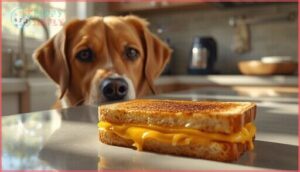
Grilled cheese might seem harmless, but it carries a few real health risks for dogs that are worth knowing.
The combination of fat, dairy, and processed ingredients can hit your dog’s system harder than you’d expect. Here are the main health concerns to watch out for.
Obesity and Weight Gain
A single grilled cheese sandwich can top 400 calories — that’s a huge chunk of a small dog’s daily needs.
For dogs that are already less active or prone to weight gain, that dairy-heavy snack quietly adds up.
Smart calorie management and portion control matter here.
Prioritize healthy snacking and weight monitoring, and keep high-fat dairy out of your dog’s regular diet to prevent obesity.
Pancreatitis From High Fat Content
Did you know that even one high fat meal—like grilled cheese—can spark pancreatitis in dogs? Fat triggered inflammation forces the pancreas to release extra enzymes, sometimes causing serious pancreatic damage.
Even one high-fat meal like grilled cheese can trigger pancreatitis in dogs, causing serious pancreatic damage
High fat diets and fatty meal risks are especially dangerous for certain breeds or older pets. For safe canine nutrition guidance, keep these in mind:
- Miniature schnauzers, cocker spaniels, older dogs
- Overweight pets
- Dogs with diabetes or Cushing’s
- Any dog with a history of pancreatitis
Digestive Upset and Lactose Intolerance
Most adult dogs don’t produce enough lactase to break down dairy, so grilled cheese can throw their gut health into chaos. Within 12 hours, you might notice loose stools, gas, or vomiting — classic signs of lactose sensitivity.
Canine nutrition experts note that these digestive issues stem from undigested lactose fermenting in the colon, making grilled cheese a risky choice for your dog’s diet.
Allergic Reactions to Ingredients
Beyond canine intolerance to lactose, grilled cheese safety for dogs gets more complicated when allergic responses enter the picture.
Dairy allergies affect a notable share of dogs, often showing up as itchy skin or ear infections rather than stomach trouble. Wheat in the bread can trigger food sensitivities too. If your dog keeps scratching after snacking, ingredient toxicity — not just digestion — may be the real culprit.
How Much Grilled Cheese is Safe for Dogs?

So your dog snagged a corner of your grilled cheese — now what? The answer really comes down to how much and how often it happens.
Here’s what you need to know about safe portions and the warning signs that things have gone too far.
Portion Size and Frequency
Portion control is everything in the context of grilled cheese and your dog’s diet. Safe portion sizes depend largely on your dog’s size, and daily treat limits should never exceed 10% of their total calories.
Here’s a simple breakdown for dog treats by size:
- Extra small dogs (under 10 lbs): 1–2 pea-sized pieces
- Small dogs (11–20 lbs): 1–2 tiny cubes
- Medium dogs (21–50 lbs): 3–4 small cubes
- Large dogs (51+ lbs): 5–8 small cubes
Feeding frequency matters too — offer grilled cheese only a few times per week at most, and skip it entirely on days when your dog already had rich treats. Calorie tracking keeps nutrient balance on point, especially for lactose intolerant dogs or those managing weight through careful pet care and dog nutrition and health practices.
Signs of Overconsumption
Even with careful portions, it’s worth knowing what too much looks like. Digestive issues can show up fast — think vomiting triggers kicking in within hours, loose stools, or full-blown diarrhea from the dairy load.
Belly bloat is another red flag, where your dog’s stomach looks rounder and feels tight. Lethargy signs follow closely, as a food coma effect sets in.
For a lactose intolerant dog especially, any gastrointestinal issues or digestive upset after grilled cheese deserves attention in their dog diet.
What Should I Do if My Dog Eats Grilled Cheese?

So your dog snagged a bite of grilled cheese — it happens.
The good news is that one small piece usually isn’t cause for panic, but you’ll still want to keep a close eye on how they’re feeling.
Here’s what to watch for and when it’s time to call your vet.
Monitoring for Symptoms
Think of the next 24 hours as your dog’s personal health watch. Once your pup has had grilled cheese, symptom tracking becomes your best tool.
Watch for vomiting, diarrhea, or stomach upset within the first few hours — these are the most common signs of digestive upset or gastrointestinal issues. Regular health checks, like noting energy levels, appetite, and stool consistency, help you catch digestive issues early.
Pet monitoring doesn’t have to be complicated — just stay observant and trust your instincts.
When to Contact a Veterinarian
Knowing when to call a veterinarian can make all the difference for your dog’s safety. If grilled cheese contained onions or garlic, treat it as pet poisoning and contact a vet immediately — don’t wait for symptoms.
When in doubt, veterinary advice is always worth a quick call. Watch for these urgent canine symptoms:
- Repeated vomiting lasting more than six to eight hours
- Bloody diarrhea or black, coffee-ground vomit
- Hunched posture, belly pain, or “prayer position”
- Pale gums, weakness, or seizures
Are There Safer Cheese Options for Dogs?

Good news — not all cheese is off the table for your dog. Some options are gentler on their stomach and lower in fat, making them a smarter choice for the occasional treat.
Here are a few safer cheeses worth knowing about.
Low-Fat and Low-Lactose Cheeses
If your dog can handle dairy at all, choosing the right cheese makes a real difference.
Aged options like cheddar or Swiss are naturally low in lactose — sometimes nearly lactose free — and lower in fat than soft, creamy varieties.
For dogs who eat cheese as an occasional treat, these cheese alternatives offer better nutrient balance without overloading their system with fat or triggering lactose intolerance symptoms.
Cottage Cheese and Goat Cheese
Cottage cheese and goat cheese are two gentler options worth knowing about. Both are easier on a dog’s digestive health than harder cheeses, and goat cheese is naturally lower in lactose, making it friendlier for dogs with lactose sensitivity.
Cottage cheese delivers solid protein and calcium benefits with less fat. Keep portions small — a teaspoon or two is plenty.
Avoiding Processed and Flavored Cheeses
Processed cheese is where things get tricky. That “cheese product” label? It often hides sodium overload, xylitol, or garlic powder — all genuinely dangerous for dogs. For safe snacking, steer clear of flavored varieties and stick to plain, whole options.
Watch for these processed dangers:
- Onion or garlic flavoring — toxic, even in small doses
- Xylitol sweeteners — can cause life-threatening hypoglycemia
- High-sodium slices — risky for a dog’s kidneys
What Are Healthy Alternatives to Grilled Cheese for Dogs?

Good news — you don’t have to give up on treating your dog just because grilled cheese is off the table. There are plenty of options that satisfy their snack-loving soul without the fat and lactose baggage.
Here are some safe alternatives worth keeping on hand.
Dog-Friendly Cheese Treats
If you’re looking for dog treats that support canine wellness without the risks, a few simple cheese swaps go a long way. Low-fat mozzarella, mild cheddar, and plain cottage cheese are smart picks for dog diet and nutrition — lower in lactose sensitivity triggers and easier to digest.
Veterinary advice and guidance consistently points to these as safer, portion-controlled options for healthy eating for dogs.
Homemade Treat Recipes
Making your own dog treats is easier than you’d think — and way healthier than sneaking bites of grilled cheese. A few simple recipes hit the sweet spot for pet nutrition and dog diet needs:
- Mashed banana bites with oat flour and peanut butter
- Sweet potato biscuits baked until crisp
- Frozen pumpkin puree and plain yogurt cubes
- Oat-based cookies with no added salt or sugar
These healthy treats keep your dog happy without the risks.
Safe Fruits, Veggies, and Lean Proteins
Beyond homemade recipes, whole foods make some of the best healthy treat ideas for dogs. Carrot sticks, green beans, and blueberries are simple veggie snacks and fresh fruit options that fit naturally into any dog diet and nutrition plan.
For lean protein sources, plain cooked chicken or salmon works well. These nutritious dog foods support pet nutrition and overall dog health without the fat or risks.
Frequently Asked Questions (FAQs)
Can dogs eat toasted bread and cheese?
Think of grilled cheese as a yellow flag, not a green light. Dogs can eat plain toasted bread and mild cheese in tiny amounts, but canine nutrition and dog treat guidelines say moderation is everything.
What ingredients in grilled cheese are harmful to dogs?
The real trouble starts with the ingredients. High-fat cheese can trigger Pancreatitis, while Lactose Intolerance makes dairy risky for many dogs.
Onion Toxicity, Garlic Dangers, and high Sodium Levels add serious health concerns.
How often can dogs eat cheese?
Most dogs can eat cheese a few times per week — but dog size matters. Keep portions small, watch for lactose intolerance, and follow the 10% calorie rule for safe cheese consumption.
Is lactose intolerance common in dogs?
Yes, lactose intolerance is fairly common in adult dogs. After weaning, lactase enzyme changes reduce dairy digestion, and individual tolerance varies widely — some handle small cheese bites fine, while others show digestive symptoms quickly.
Can grilled cheese cause allergies in dogs?
Grilled cheese can absolutely trigger dairy allergies or food sensitivities in some dogs.
Canine intolerance to cheese, wheat, or added seasonings may cause allergic symptoms like itching, skin irritation, or digestive upset after eating.
Do certain dog breeds handle cheese better?
Here’s the paradox: every dog breed can eat cheese, yet no breed is truly built for it.
Breed cheese tolerance exists on a spectrum — canine genetics and lactose sensitivity vary by individual, not breed.
Can puppies tolerate cheese better than adult dogs?
Puppies naturally produce more lactase after weaning, giving them slightly better cheese tolerance than adult dogs.
Still, their digestive systems are developing, so a veterinarian should guide portion sizes based on your puppy’s individual dietary needs.
Does grilled cheese affect a dogs dental health?
Soft bread and melted cheese stick to teeth, feeding plaque-causing bacteria that threaten oral health.
Regular grilled cheese treats can quietly fuel gum disease and tooth decay, making dental care even more essential for your dog.
Are certain dog breeds more sensitive to dairy?
Imagine two Labradors sharing a snack—one tolerates cheese fine, the other gets diarrhea.
Breed Specific Allergies and Dairy Intolerance vary, with some breeds genetically prone to Lactose Sensitivity.
Still, individual Dog Health and Nutrition matter most.
Can grilled cheese interfere with a dogs medications?
Grilled cheese can interfere with your dog’s medications by affecting drug absorption, especially due to calcium binding and fat solubility.
Veterinary guidance recommends avoiding cheese or fatty foods when dosing, as these can impact Pet Health and Wellness.
Conclusion
Ironically, while grilled cheese might look harmless beside your dog’s hopeful eyes, it’s more like a wolf in sheep’s clothing. The blend of fats, salt, and hidden dangers turns a simple treat into a risky gamble.
If you wonder, can dogs eat grilled cheese, remember that moderation and ingredient awareness are key. Safer alternatives exist, and your dog’s health is best protected by choosing wisely.
Sometimes, the best act of love isn’t sharing your sandwich at all.
- https://www.dialavet.com/vet-answers/dog-grilled-cheese-safe-2692
- https://www.hillspet.com/dog-care/nutrition-feeding/can-dogs-eat-cheese
- https://rawfeeding101.com/blogs/dog-nutrition/can-dogs-eat-cheese/
- https://www.akc.org/expert-advice/nutrition/can-dogs-eat-cheese/
- https://zigly.com/blogs/all/lactose-intolerance-in-dogs