This site is supported by our readers. We may earn a commission, at no cost to you, if you purchase through links.

Most dog owners reaching for a can of mackerel aren’t doing it on a whim—they’ve heard fish is good for dogs and want to give their pup something nutritious without breaking the bank.
Mackerel checks a lot of boxes: affordable, protein-packed, and loaded with omega-3 fatty acids that support everything from a glossy coat to a sharp mind.
But not every can on the shelf deserves a place in your dog’s bowl. Sodium levels, added seasonings, and packing liquids can turn a healthy choice into a hidden hazard.
Knowing what to look for makes all the difference.
Table Of Contents
- Key Takeaways
- Can Dogs Eat Canned Mackerel?
- Nutritional Benefits of Canned Mackerel for Dogs
- Potential Risks of Feeding Dogs Canned Mackerel
- Safe Ways to Serve Mackerel to Your Dog
- How Much Canned Mackerel Can Dogs Eat?
- Top 5 Canned Mackerel Products for Dogs
- When to Ask Your Vet About Fish in Dog Diets
- Frequently Asked Questions (FAQs)
- How much canned mackerel is safe to feed?
- Can puppies eat canned mackerel safely?
- How often can dogs eat canned mackerel?
- Are there specific canned mackerel brands to avoid?
- What are signs of mackerel allergy in dogs?
- Can dogs eat fresh mackerel instead of canned?
- Is mackerel safe for pregnant or nursing dogs?
- Can mackerel replace fish oil supplements for dogs?
- What other canned fish can dogs safely eat?
- Does mackerel help dogs with joint pain?
- Conclusion
Key Takeaways
- Choose water-packed, low-sodium canned mackerel (under 100 mg sodium per 100 g) and serve it no more than twice weekly to keep mercury and kidney strain in check.
- Canned mackerel delivers real nutritional value for dogs — omega-3s for coat and joint health, 23 g of lean protein per 100 g, and key vitamins like B12 and D — but only when portioned by your dog’s weight.
- Always read the label and avoid anything packed in brine, smoked, or flavored with tomato sauce, garlic, onion, or spices, as these can damage red blood cells or overwhelm your dog’s kidneys.
- Treat canned mackerel as a supplement (under 10% of daily calories), not a meal replacement, and watch your dog for 48 hours after the first serving for signs of allergy or digestive upset.
Can Dogs Eat Canned Mackerel?
Canned mackerel can be a smart, affordable way to add real nutrition to your dog’s bowl.
If you’re curious about portions and prep, this guide on feeding dogs canned mackerel in olive oil covers exactly what you need to know.
But not every can on the shelf is a good fit, and a few small details make a big difference.
Here’s what you need to know before you open one for your pup.
Quick Answer: Yes, With Conditions
Yes, dogs can eat canned mackerel — but a few conditions apply. For your dog’s safety, keep these in mind:
- Choose water-packed, low-sodium varieties to support canned mackerel safety.
- Follow frequency guidelines: no more than twice weekly to prevent mercury toxicity.
- Practice portion control based on your dog’s weight.
Veterinary approval, allergy testing, and moderation protect your dog’s health and nutrition. The rich omega-3 content promotes brain health and reduces inflammation.
Why Canned Mackerel Appeals to Dog Owners
Canned mackerel checks nearly every box for dog owners who care about pet nutrition without overcomplicating mealtime.
It’s a cost-effective protein source that doubles as a convenient pantry staple, lasting 3–5 years unopened.
That long shelf stability means you’re always prepared.
| Appeal Factor | Why It Matters |
|---|---|
| Irresistible fish aroma | Entices even picky eaters |
| Easy portion control | Standard cans simplify serving sizes |
Omega-3 fatty acids and quality protein help real dog health and nutrition goals. The rich omega-3 content helps joint health.
What to Look for on The Label
Choosing the right can makes all the difference for your dog’s safety. Flip it over and check these four things before opening:
- Sodium level — stay under 100mg per 100g; brine packing can hit 500mg
- Packing medium — water-packed beats oil for avoiding pancreatitis risk
- Additive warnings — no garlic, onion, or MSG listed anywhere
- Origin sustainability — wild-caught means lower mercury toxicity and cleaner omega-3 fatty acids
Nutritional Benefits of Canned Mackerel for Dogs

Canned mackerel isn’t just a convenient snack — it’s genuinely packed with nutrients your dog can benefit from.
The right variety, served in moderation, can quietly do a lot of good for their overall health.
Here’s a closer look at what’s actually inside that can.
Excellent Source of Lean Protein
Mackerel punches well above its weight in protein quality. A 100-gram serving delivers 23 grams of lean protein — about 41 percent of your dog’s daily needs.
That’s meaningful for muscle repair, especially in active or recovering dogs. The amino balance, including leucine and lysine, enhances canine nutrition efficiently.
With only 6 grams of fat, it fits naturally into a weight management plan.
Omega-3 Fatty Acids for Skin and Coat
If your dog’s coat looks dull or they scratch constantly, omega-3 fatty acids from canned mackerel can genuinely help. A typical serving delivers EPA and DHA that support:
- Itch Relief Mechanisms — calming skin inflammation within 4–6 weeks
- Skin Barrier Boost — reducing moisture loss and allergen penetration
- Coat Shine Enhancement — improving natural oil production for glossier fur
These anti-inflammatory benefits make mackerel a smart, veterinary-recommended addition.
Vitamin D for Bone and Teeth Health
Vitamin D quietly does a lot of heavy lifting for your dog’s bones and teeth. Canned mackerel delivers it naturally — about 292 IU per 100 grams — supporting calcium absorption, osteoblast activation, and enamel mineralization.
| Vitamin D Role | Dog Health Benefit |
|---|---|
| Bone mineralization | Rickets prevention in puppies |
| Enamel support | Dental disease reduction |
| Calcium regulation | Stronger teeth and joints |
Vitamin B12 for Brain and Nerve Function
Your dog’s brain and nerves depend heavily on B12 for myelin production — that protective coating keeping nerve signal transmission clean and fast. Without enough, neurological deficiency signs like wobbling, weakness, and confusion can appear.
A vet can help you find the right B12 supplement for your dog through dog health and wellness resources tailored to their specific needs.
B12 keeps your dog’s nerves firing right — without it, wobbling, weakness, and confusion follow
Canned mackerel delivers 19 micrograms per 100 grams, supporting neurotransmitter synthesis for balanced mood and canine brain health support. That’s a meaningful B12 dietary contribution from one simple ingredient.
Phosphorus for Muscle and Cell Support
Phosphorus quietly powers everything from ATP synthesis to protein synthesis in your dog’s muscles.
Canned mackerel delivers around 300 mg per 100 g — enough to support:
- Phospholipid membranes that protect each muscle cell
- Muscle contraction and sustained energy during movement
- Cell repair after daily wear and tear
That’s real canine health support in every bite.
Potential Risks of Feeding Dogs Canned Mackerel

Canned mackerel has real benefits, but it’s not without its risks.
Some concerns are easy to avoid once you know what to watch for, and others are worth taking seriously depending on your dog’s health.
Here’s what you need to keep in mind before making it a regular part of their bowl.
High Sodium Content in Brine-Packed Varieties
Brine-packed canned mackerel can carry 300 to 450 mg of sodium per 100 g — several times more than fresh fish. That sodium content puts real kidney strain on smaller dogs.
Rinsing benefits your pup considerably, cutting sodium levels by up to 80 percent. Always check label guidance before serving, and keep canned mackerel in moderation to protect your dog’s hydration and overall dog health.
Harmful Additives and Flavorings to Avoid
Some canned mackerel hides a minefield of harmful food additives behind appealing labels. Onion powder and garlic extract — common in tomato sauce varieties — damage your dog’s red blood cells even in small amounts. Ethoxyquin preservative raises organ health concerns, while MSG enhancer can trigger allergic reactions and digestive issues. Added sugars contribute to obesity over time.
Always read the full ingredient list carefully.
Mercury and Heavy Metal Exposure
Beyond additives, heavy metals are a quiet concern worth understanding. Mercury bioaccumulation is the real issue with canned mackerel — king mackerel averages 0.73 ppm, while Atlantic varieties stay near 0.05 ppm. Lead toxicity and cadmium liver impact are also documented in some fish tissues.
Atlantic or chub mackerel is the best choice to keep toxicity in pets minimal and your dog safe.
Fish Bones as a Choking Hazard
Even after addressing mercury, fish bones deserve your attention. Sharp bone fragments in canned mackerel are a real choking hazard — especially for small breeds. Esophageal obstruction can happen fast, and breed size vulnerability matters here.
Watch for:
- Gagging or retching after eating
- Excessive drooling from throat irritation
- Pawing at the mouth repeatedly
Safe bone removal means mashing contents thoroughly before serving.
Allergic Reactions and Sensitivities
Fish bones aren’t the only thing to watch after that first serving. Some dogs carry canine food allergies and sensitivities without you ever knowing — until mackerel shows up in the bowl.
| Symptom Type | Common Signs | What to Do |
|---|---|---|
| Skin reactions | Itchy face, paws, belly | Remove fish; see your vet |
| Gastrointestinal upset | Vomiting, diarrhea, bloating | Withhold food; monitor closely |
| Ear infections | Discharge, odor, head shaking | Schedule a vet exam |
| Behavioral changes | Lethargy, restlessness, irritability | Track timing with meals |
| Diagnosis methods | Elimination diet, allergy testing | Work with your veterinarian |
Allergic reactions and digestive issues from pet food safety concerns like these are real. Watch your dog for 24 hours after introducing mackerel.
Safe Ways to Serve Mackerel to Your Dog
Knowing mackerel is safe for dogs is only half the battle — how you serve it matters just as much.
Not every can on the shelf is a good choice, and small decisions like packing liquid can make a real difference.
Here’s what to keep in mind before you open that tin.
Best Canned Mackerel Varieties to Choose
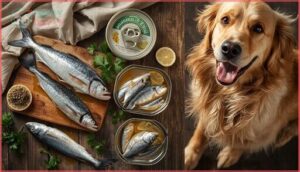
Not all canned mackerel is created equal, and choosing the right variety makes a real difference for your dog’s health.
- Low Mercury Options – Chub and Atlantic mackerel stay well below safe limits
- Sustainable Sourcing – Look for MSC-certified or Ocean Wise-recommended brands
- BPA-Free Packaging – Brands like Open Farm and K9 Natural meet this standard
- Minimal Additives & High Protein Brands – Otter Kingdom delivers 19g protein with just fish and brine
Mackerel Packed in Water Vs. Oil Vs. Brine

Regarding canned mackerel, the packing liquid matters more than most dog owners realize.
Water-packed is your safest bet — zero added sodium, lower calories at 209 per serving, and a firm, natural texture that preserves those omega-3 fatty acids your dog needs.
Brine adds excess sodium that strains kidneys, while oil bumps fat and calories unnecessarily.
Moderation and the right pack type keep feeding mackerel genuinely safe.
Avoid Tomato Sauce, Spices, and Curry Flavors

Canned mackerel packed in tomato sauce, spices, or curry is a hard no for dogs. Tomato toxicity comes from garlic and onion compounds that damage red blood cells, while spice irritation triggers drooling, vomiting, and digestive inflammation within hours.
Curry additive risks include sodium overload that stresses kidneys fast.
Stick to plain water-packed mackerel — your dog still gets those omega-3 fatty acids, minus the harm.
Smoked Mackerel and Why It Should Be Avoided

Smoked mackerel looks appealing, but it’s genuinely dangerous for dogs. The smoking process introduces several serious threats:
- Excessive Sodium levels exceed a dog’s daily limit by three times
- Liquid Smoke Irritants and cresols cause nausea and digestive issues
- Black Pepper Irritation inflames sensitive stomachs
- PAH Carcinogens accumulate in the liver over time
- Preservative Toxicity adds compounding health risks
Stick with plain canned mackerel instead.
Mixing Mackerel With Regular Dog Food

Think of canned mackerel as a flavor integration boost for your dog’s bowl. Drain it completely, flake it with a fork, then mix it right into kibble before serving.
A 70/30 kibble-to-mackerel ratio keeps texture balance intact without overwhelming the meal. That small addition brings real omega-3 fatty acids and extra protein — all in moderation.
How Much Canned Mackerel Can Dogs Eat?

Even a good thing can cause problems when there’s too much of it, and mackerel is no exception.
Getting the portion right depends on your dog’s size, how often you’re serving it, and what role fish plays in their overall diet.
Here’s what you need to know before adding it to the bowl.
Recommended Serving Sizes by Dog Weight
Getting the portion right comes down to one thing: your dog’s weight. Here’s a simple guide to keep it safe:
- Toy dogs (under 10 lbs): Start with 1 teaspoon, up to 2 tablespoons as a topper
- Small dogs (up to 20 lbs): About 3 tablespoons daily
- Large dogs (50+ lbs): Up to one-third cup per serving
Moderation protects your dog’s the complete and balanced diet.
How Often to Include It in Their Diet
Frequency matters just as much as portion size. For most adult dogs, once or twice weekly fit well into a balanced diet.
Small dogs do better at once weekly to limit mercury buildup, while large active dogs can handle twice weekly for energy support. Your dog’s activity level and health conditions shape this too — always lean on veterinary guidance when adjusting their feeding frequency.
Treating It as a Supplement, Not a Staple
Once you’ve settled on the right frequency, keep canned mackerel in its proper place — a supplement, not a meal replacement. Here’s why that matters for nutrient balance:
- Calorie Limit: Keep mackerel under 10% of daily calories
- Sodium Control: Avoid disrupting sodium levels with large portions
- Omega-3 Dosage: Small amounts deliver meaningful omega-3 fatty acids
- Mercury Monitoring: Rotation reduces long-term heavy metal exposure
Signs You May Be Feeding Too Much Fish
Even with the best intentions, too much mackerel adds up quickly. Watch for vomiting episodes, diarrhea, or gastrointestinal upset after meals — those are early red flags. Itchy skin and allergic reactions can signal fish sensitivity, while lethargy often follows fatty overload.
Rapid weight gain creeps in quietly over weeks. If you notice any of these, scale back immediately.
Top 5 Canned Mackerel Products for Dogs
Not all canned mackerel is created equal, and the brand you pick really does matter for your dog’s safety.
Some options are low in sodium, packed in water, and free of additives — exactly what you want.
Here are five products worth considering when adding mackerel to your dog’s bowl.
1. Bumble Bee Chub Mackerel Canned Fish
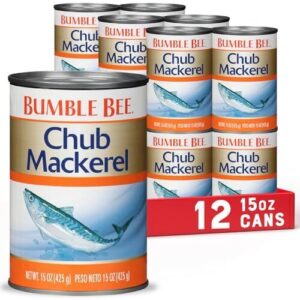
Bumble Bee Chub Mackerel is a solid choice when you’re looking for something simple and dog-friendly. Each 15 oz can contains just three ingredients — chub mackerel, water, and salt — with no added preservatives or fillers. That simplicity matters.
One can deliver 36 grams of protein and 430 mg of calcium, which aids your dog’s muscles and bones. The soft, edible bones are actually a bonus. Just watch the sodium, and serve it in moderation.
| Best For | Anyone on a high-protein diet — keto, paleo, or Mediterranean — who wants a no-fuss, affordable canned fish with clean ingredients. |
|---|---|
| Pack Size | Pack of 12 |
| Can Weight | 15 oz |
| Protein Per Serving | 12g |
| Fish Source | Chub mackerel |
| Preservatives | Salt only |
| Pet Suitable | Yes, for cats |
| Additional Features |
|
- Simple ingredient list: just mackerel, water, and salt — no fillers or preservatives
- Solid nutrition with 12g of protein per serving plus a good hit of vitamin D and calcium
- Versatile enough to toss into pastas, salads, sandwiches, or even mix into your cat’s food
- The smell is real — it’s fishy, and not everyone’s kitchen (or nose) is ready for that
- Some cans show up dented, which can be a little unsettling even if the contents are fine
- The price per pack might give budget shoppers pause compared to other canned fish options
2. Bumble Bee Chub Mackerel Canned
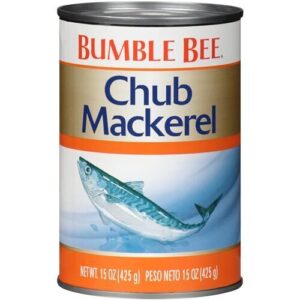
Another option worth knowing is the Bumble Bee Chub Mackerel Canned variety — same clean ingredient list, but offered in a slightly different pack format that suits different households.
You’re still getting mackerel, water, and salt, with 14 grams of protein per 56-gram serving. The skin and soft bones stay in, adding calcium that your dog’s body can actually use. Just keep sodium in mind, and you’re working with a genuinely solid, no-fuss option.
| Best For | Home cooks and diet-conscious eaters who want a versatile, protein-packed canned fish that works in everyday meals without a lot of fuss. |
|---|---|
| Pack Size | Single can |
| Can Weight | 15 oz |
| Protein Per Serving | 12g |
| Fish Source | Chub mackerel |
| Preservatives | Salt only |
| Pet Suitable | Yes, for cats |
| Additional Features |
|
- Solid protein boost (12g per serving) with just three clean ingredients — mackerel, water, salt
- Skin and soft bones stay in, so you’re getting extra calcium without doing anything extra
- Works in a ton of recipes — pasta, salads, sandwiches, patties, even mixed into cat food
- Some cans show up dented, which isn’t a great first impression (even if the fish inside is fine)
- Quality can feel inconsistent compared to other brands like California Girl
- Price point might feel high depending on how often you’re buying it
3. Chicken of the Sea Jack Mackerel Brine
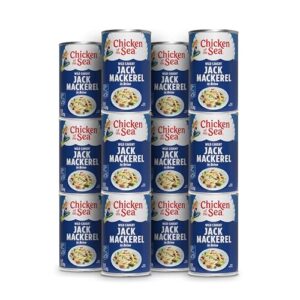
Chicken of the Sea Jack Mackerel packed in brine is worth a close look.
Each 85-gram serving delivers 22 grams of protein and 275mg of calcium — solid numbers for a fish supplement.
It’s wild-caught, gluten-free, and contains no preservatives, which keeps the ingredient list clean.
Sodium runs about 340mg per serving, so portion control matters here.
One important note: remove the soft edible bones before serving your dog to avoid any choking risk.
| Best For | Anyone eating keto, paleo, or Mediterranean-style who wants a clean, high-protein fish option they can toss into almost any meal. |
|---|---|
| Pack Size | Pack of 12 |
| Can Weight | 15 oz |
| Protein Per Serving | 22g |
| Fish Source | Wild caught mackerel |
| Preservatives | No preservatives |
| Pet Suitable | Not specified |
| Additional Features |
|
- Packs 22 grams of protein per serving with calcium and vitamin D — genuinely solid nutrition for the price
- Wild-caught, gluten-free, and no preservatives — the ingredient list is about as clean as it gets
- Super versatile — works in salads, soups, sandwiches, casseroles, even mac and cheese
- Some cans show up bent or damaged, which makes you question how it was handled in transit
- Oil content can be inconsistent from can to can
- No real way to tell if a can was mishandled before you open it
4. Otter Kingdom Wild Caught Chub Mackerel
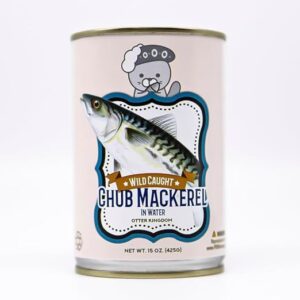
Otter Kingdom keeps things refreshingly simple — wild-caught chub mackerel from Pacific Korean waters, packed in brine with zero additives or preservatives.
Each serving delivers 19 grams of protein, and the clean ingredient list makes it a solid pick for dogs with sensitive stomachs.
It’s manufactured in BRC and ISO-certified facilities, which matters if you care about food safety standards.
Just rinse the brine before serving to reduce sodium, and remove any small bones to keep things safe.
| Best For | Pet owners and health-conscious eaters who want a clean, high-protein fish with no fillers or mystery ingredients. |
|---|---|
| Pack Size | Pack of 12 |
| Can Weight | 15 oz |
| Protein Per Serving | 19g |
| Fish Source | Wild caught chub mackerel |
| Preservatives | No preservatives |
| Pet Suitable | Yes, for pets |
| Additional Features |
|
- Pure, simple ingredients — just mackerel and brine, nothing else
- 19 grams of protein per serving makes it a solid nutritional bang for your buck
- Made in BRC and ISO-certified facilities, so food safety isn’t an afterthought
- Some cans lean heavy on liquid, so you might get less fish than expected
- Small bones are present, which means a bit of prep work before serving to pets
- Fish quality can vary can to can — not always the consistent chunks you’d hope for
5. Open Farm Rustic Herring Mackerel Wet Dog Food
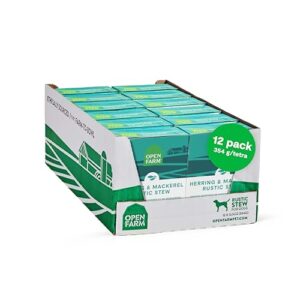
Open Farm’s Rustic Herring and Mackerel Stew is the only option on this list formulated as a complete, balanced diet — not just a supplement. It’s kettle‑cooked with human‑grade, sustainably sourced mackerel from the Northeast U.S. coast, plus nutrient‑rich additions like pumpkin, spinach, and red lentils.
With 8% crude protein and 82% moisture, it’s especially useful for dogs who don’t drink enough water. Serve it solo or mix it with dry food to stretch the nutrition further.
| Best For | Dogs who need more hydration or are picky eaters, and pet parents who want full transparency about where their pet’s food comes from. |
|---|---|
| Pack Size | Single can |
| Can Weight | 12.5 oz |
| Protein Per Serving | Not specified |
| Fish Source | Herring and mackerel |
| Preservatives | No artificial preservatives |
| Pet Suitable | Yes, for dogs |
| Additional Features |
|
- One of the few wet dog foods that works as a complete, balanced meal on its own — no mixing required
- Made with human-grade, kettle-cooked ingredients and 100% traceable sourcing, so you know exactly what’s in the bowl
- High moisture content (82%) makes it a sneaky way to keep dogs hydrated, especially fussy drinkers
- The consistency runs more like a soup than a hearty stew, which some dogs (or owners) might not love
- At 12.5 oz per can, it may get pricey as a daily standalone diet for larger dogs
- Grain-free formulas aren’t the right fit for every dog, so a vet check is worth it before making the switch
When to Ask Your Vet About Fish in Dog Diets

Canned mackerel works well for most healthy dogs, but some situations call for a quick chat with your vet before adding fish to the bowl. Certain health conditions, life stages, and sensitivities can change what’s safe and how much is appropriate.
Here’s when it’s worth picking up the phone.
Dogs With Pre-Existing Health Conditions
If your dog has kidney disease, heart failure, or pancreatitis, mackerel isn’t a simple yes-or-no decision.
High sodium content can worsen kidney and heart conditions, while fat levels trigger digestive issues in pancreatitis-prone dogs.
Kidney-friendly recipes and heart-safe portions require veterinary care to get right.
Allergic reactions and arthritis-boosting supplements like omega-3 fatty acids also need an allergy-test protocol before proceeding.
Puppies, Senior Dogs, and Special Dietary Needs
Age and health status change everything regarding feeding mackerel.
Puppies need Omega3 Fatty Acids for brain development and Vitamin D for puppy growth, but their portions must stay tiny.
Senior dogs benefit from Senior Joint Support through EPA and DHA.
For dogs needing Renal Care, Pancreatitis Management, or Obesity Control, Protein intake matters — your vet helps dial in the right amount safely.
Introducing Mackerel to a New or Sensitive Dog
slow, careful start need a slow, careful start with mackerel in dog diets. gradual taste test — beginning with just one teaspoon — helps protect canine health while revealing early food allergies.
bone removal tips before serving, and watch closely for skin reaction monitoring over 48 hours. portion adjustment based on tolerance, plus veterinary allergy screening when needed, keeps the whole process safe and guided by sound veterinary recommendations.
Monitoring Your Dog After First Feeding
Once you’ve introduced mackerel slowly, keep a close eye on your dog for the first 48 hours.
Watch for stool consistency, energy levels, and any skin redness around the paws or belly.
Do hydration checks every few hours and note any behavior changes like restlessness or irritability.
Gastrointestinal upset or allergic reactions beyond 72 hours means it’s time for veterinary advice.
Frequently Asked Questions (FAQs)
How much canned mackerel is safe to feed?
Portion size depends on your dog’s weight. A 10-pound dog needs just 1–2 tablespoons weekly, while a 60-pound dog can handle a third of a cup without exceeding calorie limits.
Can puppies eat canned mackerel safely?
Puppies can’t handle canned mackerel the way adult dogs can. Their digestive tolerance is lower, sodium limits are stricter, and mercury monitoring matters more.
Always get veterinary approval before offering even a tiny portion.
How often can dogs eat canned mackerel?
Most dogs do well with canned mackerel once or twice weekly.
Stick to a weight-based schedule, treat it as a supplement, and always keep moderation at the center of your dog’s balanced diet.
Are there specific canned mackerel brands to avoid?
Yes — avoid high sodium brine-packed brands, smoked varieties, and anything with flavored sauces or spices.
King mackerel species also carry higher mercury levels, so stick to low-sodium, plain Atlantic mackerel only.
What are signs of mackerel allergy in dogs?
Skin itching, ear inflammation, digestive upset, and behavioral changes are the most common signs. Watch for hives, vomiting, or breathing difficulty after meals. Food allergies in dogs can develop gradually.
Can dogs eat fresh mackerel instead of canned?
Fresh mackerel is the better half of this comparison.
It delivers more omega-3 fatty acids, higher protein, and zero sodium, making it a nutrient retention powerhouse and a sodium-free choice for your dog.
Is mackerel safe for pregnant or nursing dogs?
Mackerel is generally safe for pregnant and nursing dogs in moderation.
omega-3 fatty acids support fetal brain development and milk quality, but veterinary consultation is essential before adding it to their diet.
Can mackerel replace fish oil supplements for dogs?
Canned mackerel delivers more than omega-3 fatty acids — it adds protein, vitamin D, and selenium. Fish oil offers precise dosing.
For most dogs, mackerel can reduce supplement needs, but veterinary guidance helps you decide.
What other canned fish can dogs safely eat?
Yes — sardines, salmon, herring, and anchovies all make safe, nutrient-rich options. Each brings omega-3s, lean protein, and key minerals to support your dog’s coat, joints, and overall health.
Does mackerel help dogs with joint pain?
It genuinely can.
The omega-3 fatty acids — specifically EPA and DHA — deliver real anti-inflammatory properties that ease arthritis symptom relief, support cartilage repair, and improve joint lubrication for better canine health overall.
Conclusion
A single can of mackerel might be one of the most underrated things sitting in your pantry right now. When you choose a low-sodium, water-packed variety and serve it in the right portions, canned mackerel for dogs delivers real nutritional value—omega-3s, lean protein, and key vitamins your dog genuinely benefits from.
Read the label, skip the seasonings, and treat it as a supplement. Your dog’s coat, joints, and energy levels may thank you for it.