This site is supported by our readers. We may earn a commission, at no cost to you, if you purchase through links.
Your dog just snatched a chicken wing off the counter, and now you’re watching them crunch through bone with mounting dread. This scenario plays out in thousands of homes daily, and it’s one of the most common emergency calls veterinary clinics receive.
The short answer: no, dogs should not eat chicken bones, especially cooked ones. While ancestral wolves gnawed on prey bones for millennia, the chicken bones in your kitchen bear little resemblance to what canine digestive systems evolved to handle. Cooked bones splinter into razor-sharp shards that can puncture tissue from throat to intestines, and even raw chicken bones carry risks that most pet owners underestimate.
Understanding why this popular “treat” can turn dangerous—and what to do if your dog already ate one—could save you from a costly emergency vet visit or worse.
Table Of Contents
- Key Takeaways
- Can Dogs Eat Chicken Bones Safely?
- Dangers of Chicken Bones for Dogs
- What to Do if Your Dog Ate Chicken Bones
- How Veterinarians Treat Chicken Bone Ingestion
- Safer Alternatives and Prevention Tips
- Frequently Asked Questions (FAQs)
- What kind of bones can dogs eat?
- Can dogs digest cooked bones?
- Is it safe to give my dog some raw bones as a treat?
- Can puppies eat chicken bones at all?
- Are chicken bone broth safe for dogs?
- What bones are safest for dogs overall?
- How long does bone digestion typically take?
- Do different dog breeds have different risks?
- Conclusion
Key Takeaways
- Cooked chicken bones are dangerous for dogs because they splinter easily, causing choking, blockages, or internal injuries.
- You should never induce vomiting if your dog eats chicken bones, since sharp fragments can tear the esophagus on the way back up.
- Watch your dog closely for 24 to 48 hours after ingestion and contact your vet immediately if you see vomiting, abdominal pain, or difficulty breathing.
- Safer alternatives like dental chews, rubber toys, and properly sized raw bones are better options for satisfying your dog’s chewing instincts.
Can Dogs Eat Chicken Bones Safely?
The short answer is no—dogs shouldn’t eat chicken bones, especially cooked ones. But there’s more to the story than a simple yes or no, and understanding the difference between raw and cooked bones can help you make safer choices for your dog.
If you’re curious about specific cuts like drumsticks, understanding the risks of chicken legs for dogs can help you decide what’s safe to offer.
Let’s break down what you need to know about the risks, the science, and the myths surrounding chicken bones.
Raw Vs. Cooked Chicken Bones
Raw chicken bones stay flexible and moist, reducing splinter risk compared to cooked versions. Heat strips moisture and weakens bone structure, creating dangerous brittleness.
Cooked chicken bones fracture into sharp shards that threaten your dog’s digestive tract. While raw bones offer safer digestion speed and better mineral absorption with potential dental benefits, both types demand veterinary advice before feeding.
Bone brittleness determines safety, not just preparation method. For guidance on how much edible bone is appropriate in a raw diet, see these edible bone recommendations.
Why Cooked Bones Are Risky
When heat reaches chicken bones, moisture evaporates and the calcium matrix becomes brittle. This brittleness causes bone fragmentation into sharp edges that threaten your dog with splinter risks.
Those jagged shards can puncture the esophagus during swallowing, trigger choking mid-throat, or cause intestinal blockages further down. Digestive issues follow when fragments scratch intestinal walls, creating internal damage and gastrointestinal issues that demand emergency veterinary care.
Common Myths About Feeding Bones
Despite the health dangers we’ve covered, bone nutrition myths persist among well-meaning pet owners. Let’s separate fact from fiction to protect your dog’s health.
Bone Myths That Put Dogs at Risk:
- “Raw bones are always digestible” – False. Canine anatomy varies, and even raw chicken bones can cause intestinal blockages in smaller breeds, requiring immediate veterinary care.
- “Bones replace dental care” – Misleading. Bone fragments often cause digestion issues rather than improving dog health.
- “Inducing vomiting helps” – Dangerous. This worsens internal injuries, contradicting proper veterinary guidance and canine nutrition principles.
It’s important to understand that following safe feeding practices for bones can help prevent many of these risks.
Pet owner awareness prevents emergencies.
Dangers of Chicken Bones for Dogs
Chicken bones might seem harmless, but they pose serious risks that every dog owner needs to understand.
While chicken bones are dangerous, many pet owners wonder about other bone types like cooked beef ribs, which carry similar splintering concerns.
The dangers range from immediate choking emergencies to life-threatening internal injuries that develop over hours or days. Let’s break down the three main threats your dog faces when they get hold of chicken bones.
Choking Hazards

Choking is the most immediate threat when your dog swallows chicken bones. Small, smooth fragments can slip into the airway or lodge in the throat, creating a life-threatening blockage within seconds.
Even dogs that chew thoroughly can suffer airway obstruction if a splintered piece gets caught in the esophagus or windpipe. This choking hazard makes chicken bone ingestion a genuine emergency you can’t ignore.
Intestinal Blockage and Perforation
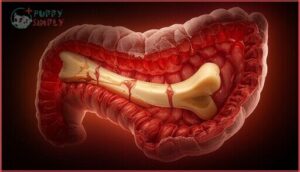
Intestinal blockage happens when bone fragments lodge in your dog’s digestive tract, raising intraluminal pressure and cutting off blood flow. This intestinal obstruction can progress to bowel perforation—a full-thickness tear that leaks stomach contents into the abdomen, triggering peritonitis and septic shock.
You’ll notice sudden, severe abdominal pain, vomiting, and rigid belly muscles. Without surgical repair, gastrointestinal injury from bone ingestion can be fatal.
Gastroenteritis and Constipation
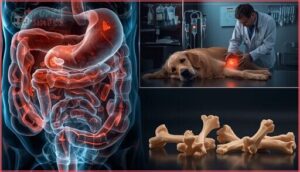
Sharp bone pieces scrape your dog’s stomach lining, triggering gastrointestinal inflammation and gastroenteritis—vomiting, diarrhea, and lethargy that may appear within 24 to 72 hours. Multiple fragments can also cause digestive blockages, leaving your dog constipated with hard, chalky stool and painful straining.
These digestive issues range from mild stomach irritation to serious bowel obstructions requiring fluid therapy, anti-nausea medication, and a prescription gastrointestinal diet under veterinary supervision.
What to Do if Your Dog Ate Chicken Bones

If your dog just swallowed chicken bones, don’t panic—but you do need to act carefully. The next few hours matter, and knowing what to do (and what not to do) can make all the difference. Here’s how to respond step-by-step.
Immediate Actions to Take
The moment you realize your dog swallowed chicken bones, your first action is emergency response—don’t panic, but move quickly and deliberately.
Here’s what to do right now:
- Secure the area: Remove any remaining bones or fragments from your dog’s reach, then call your veterinarian or emergency care clinic for immediate vet guidance on safe transport and post-ingestion care.
- Assess for distress: Watch for choking, excessive drooling, gagging, or difficulty breathing that signals an urgent need for veterinary care.
- Stay calm and observe: Note the bone type, quantity, and your dog’s behavior—this information helps your vet determine the risk of intestinal obstruction and plan appropriate first aid tips.
When Not to Induce Vomiting
Your instinct might be to make your dog vomit, but don’t—inducing vomiting can cause more harm when bones are involved. Sharp fragments could puncture the esophagus on the way back up, turning a manageable situation into a surgical emergency. Without veterinary guidance, you risk choking or aspiration into the lungs.
Never induce vomiting if your dog swallows chicken bones—sharp fragments can tear the esophagus and create a life-threatening emergency
| Never Induce Vomiting If | Why It’s Dangerous |
|---|---|
| Sharp bone fragments present | Risk of esophageal tear or perforation |
| Dog already vomiting | Indicates gastroenteritis or intestinal obstruction |
| Breathing difficulties occur | Choking or airway compromise possible |
| Over 2 hours since ingestion | Bones likely past stomach, vomiting ineffective |
Contact Poison Control or your vet for safe intervention instead.
Monitoring for Warning Signs
Over the next 24 to 48 hours, watch your dog closely for complications that signal gastrointestinal problems or internal injuries. Chicken bones can trigger emergency situations quickly, so recognizing vomiting signs, abdominal pain, or fever monitoring becomes critical.
Key warning signs requiring immediate emergency response:
- Repeated vomiting or blood in vomit (gastroenteritis)
- Abdominal bloating with pain when touched
- Black, tarry stools indicating internal bleeding
- Fever above 102.5°F with lethargy
- Choking, gagging, or difficulty swallowing
Contact your vet immediately if digestive issues appear.
How Veterinarians Treat Chicken Bone Ingestion

When your dog swallows chicken bones, your vet’s first job is figuring out how serious the situation really is. They’ll use a combination of physical exams and imaging to see what’s happening inside your dog’s body.
From there, treatment can range from simple monitoring at home to emergency surgery, depending on what they find.
Diagnostic Procedures (X-rays, Exams)
When you bring your dog to the clinic, your veterinarian will likely start with a physical exam and X-rays of the abdomen and chest. These diagnostic tests help pinpoint bone fragments inside the digestive tract. Radiograph analysis reveals the size, location, and whether internal injuries or blockages exist.
Veterinary exams may include serial imaging over 24 to 48 hours to track how the bone moves through your dog’s system.
Medical and Surgical Interventions
Once X-rays confirm the problem, your veterinarian will choose between medical management and surgical intervention. If bone fragments are small and moving through, you’ll receive veterinary guidance on supportive care—fluids, special GI diets, and probiotics to restore gastrointestinal health.
Emergency procedures like endoscopy or laparotomy become necessary when bones cause internal injuries, perforation, or blockage. Surgical removal requires anesthesia risks to be weighed carefully, but prompt veterinary care prevents life-threatening complications.
Recovery and Aftercare at Home
After your dog comes home from the vet, you’ll need to watch closely for the next 7 days. Your veterinarian will provide home care tips and a recovery timeline—usually 24 to 48 hours for mild gastroenteritis cases.
Focus on these post-incident priorities for canine health:
- Feed a bland diet in small portions to ease digestive strain
- Monitor for vomiting, lethargy, or abdominal tenderness daily
- Keep fresh water available and track drinking behavior
- Restrict jumping and rough play until cleared by your vet
- Schedule a follow-up within 48 hours to confirm safe feeding can resume
Pet monitoring and careful pet care promote smooth recovery.
Safer Alternatives and Prevention Tips

The good news is you don’t have to give your dog bones to satisfy their chewing instincts. There are plenty of safer alternatives that won’t put your pet at risk for choking, blockages, or perforations.
Let’s look at what you can offer instead, plus some practical ways to keep chicken bones away from your dog in the first place.
Dog-Safe Chew Options
Your dog deserves chew options that satisfy their instincts without the risks chicken bones carry. Dental chews designed for dogs dissolve slowly, supporting digestive health while cleaning teeth. Gentle rubber chew toys with hollow centers offer mental stimulation when stuffed with dog-friendly fillings—safer rawhide alternatives your veterinarian would approve.
| Chew Type | Safety Profile |
|---|---|
| Soft dental chews | Dissolve without sharp fragments |
| Rubber chew toys | Durable, gentle on teeth |
| Freeze-dried meat treats | Texture without tooth-cracking risk |
Keeping Bones Out of Reach
Safe chew toys work only if chicken bones never reach your dog in the first place. Secure storage starts with pet-proofing your kitchen—use trash cans with locking lids, never leave bones on counters, and dispose of chicken scraps in sealed bags immediately.
Bone disposal matters as much as what you feed. Preventing accidents through consistent trash management protects your dog’s health far better than reacting after ingestion occurs.
Educating Family and Guests
Even well-meaning guests often forget that chicken bones pose serious food hazards to dogs. Communicate household rules within five minutes of arrival, covering what your dog can’t eat and where safe interactions happen.
Teach children and visitors never to offer table scraps without asking first. Share a quick reference card with emergency contacts and your veterinarian’s number—clear family education and guest awareness protect your dog’s health better than supervision alone.
Frequently Asked Questions (FAQs)
What kind of bones can dogs eat?
You might picture a happy pup gnawing contentedly, but not all bones are created equal.
Raw beef or lamb bones—large, uncooked, and locally sourced—offer the safest chew for dog dental health.
Can dogs digest cooked bones?
While stomach acid and digestive enzymes can break down some bone material, cooked chicken bones often splinter before digestion completes.
Fragments may pass through, but they risk causing obstruction or gut perforation rather than safe nutrient absorption.
Is it safe to give my dog some raw bones as a treat?
Raw chicken bones offer canine nutrition benefits but carry pet nutrition risks including choking and bacterial contamination.
Bone size matters—supervise closely, choose appropriate portions for your dog’s breed, and explore safer chew options through veterinary care guidance.
Can puppies eat chicken bones at all?
No—puppies face even graver danger from chicken bones than adult dogs. Their tiny throats invite choking, and sharp fragments can pierce delicate digestive tracts. Their inexperience with chewing amplifies every risk exponentially.
Are chicken bone broth safe for dogs?
Homemade chicken bone broth can support canine nutrition and pet hydration when prepared plain, low-sodium, and strained of bone fragments.
Store-bought versions often contain onions or excess salt, posing bone broth risks requiring careful attention to broth ingredients and safe feeding practices.
What bones are safest for dogs overall?
Large raw knuckle bones from beef marrow offer durability without splintering, while dental chews and rubber toys satisfy chewing needs safely.
Rawhide alternatives and veterinarian-approved options protect canine nutrition and dog health better than chicken bones.
How long does bone digestion typically take?
Most dogs digest small chicken bone fragments within 24 to 72 hours, but cooked bones resist breakdown and can delay transit. Stomach acid and intestinal motility vary by size, age, and health.
Do different dog breeds have different risks?
Yes, breed-specific risks and size factors greatly impact bone ingestion outcomes. Small breeds face higher blockage risk, while brachycephalic dogs struggle with airway complications. Genetic predispositions affect each dog’s health profile differently.
Conclusion
Your kitchen scraps aren’t worth gambling with your dog’s life. The question “can dogs eat bones from chicken” has a clear answer: the risks far outweigh any perceived benefits.
Whether you’re ordering takeout or roasting Sunday dinner, treat chicken bones like the sharp hazards they are—dispose of them securely, choose veterinarian-approved chews instead, and remember that keeping your dog safe sometimes means saying no to traditions that no longer serve them.
- https://pangovet.com/?utm_source=hepper&utm_medium=article&utm_campaign=dog-general-mention
- https://www.petmd.com/dog/nutrition/what-do-i-do-if-my-dog-ate-chicken-bone
- https://vcahospitals.com/know-your-pet/gastroenteritis-in-dogs
- https://allambievet.com.au/news/gastroenteritis-in-dogs
- https://arrowheadvets.com/blog/dog-eats-a-chicken-bone/