This site is supported by our readers. We may earn a commission, at no cost to you, if you purchase through links.

Most dog owners reach for fish oil capsules without realizing the whole fish sitting in their pantry delivers the same nutrients—often better. Anchovies pack omega-3 fatty acids, protein, and key minerals into a tiny package, and dogs can eat anchovies safely when you choose the right kind.
The catch? Not all anchovies belong in your dog’s bowl. Salted, pickled, and seasoned varieties can cause real harm, while plain options offer genuine health benefits. Knowing the difference between a smart treat and a risky one comes down to a few simple rules worth understanding before you serve that first bite.
Table Of Contents
- Key Takeaways
- Can Dogs Eat Anchovies?
- Nutritional Benefits of Anchovies for Dogs
- Best Types of Anchovies for Dogs
- Anchovies to Avoid Feeding Dogs
- How to Safely Feed Anchovies to Dogs
- How Many Anchovies Can Dogs Eat?
- Risks and Precautions When Feeding Anchovies
- Frequently Asked Questions (FAQs)
- Are sardines or anchovies better for dogs?
- Are canned anchovies safe?
- How do I prepare anchovies for my dog?
- Are anchovies good for dogs?
- How many anchovies can a dog eat?
- Can dogs eat anchovies and sardines?
- Are anchovies oily fish?
- Are anchovies healthy?
- What are the different types of anchovies?
- Can dogs eat anchovies in sunflower oil?
- Conclusion
Key Takeaways
- Plain anchovies — fresh, frozen, dried, or canned in water — are safe for most dogs and deliver omega-3s, protein, and key minerals without the risks that come with fish oil capsules.
- Salted, pickled, fried, or seasoned anchovies are off the table, since high sodium and added spices can cause everything from digestive upset to serious salt toxicity.
- Portion size depends on your dog’s weight, but a good rule of thumb is to keep anchovies under 10% of daily calories and limit feeding to a few times per week, not every day.
- Always introduce anchovies slowly and watch for allergy signs like itching, vomiting, or diarrhea in the first 24 hours — puppies and senior dogs need extra caution before making it a habit.
Can Dogs Eat Anchovies?

Yes, dogs can eat anchovies — and for most healthy dogs, they’re actually a smart addition to the bowl. These small fish score well on pet food safety, carrying far less mercury risk than larger predatory fish.
If you enjoy mixing up your dog’s nutrition, it’s worth knowing whether chicken stock is safe for dogs before adding it to an anchovy-topped meal.
Plain anchovies, whether fresh, frozen, dried, or canned in water, are generally safe for canine digestion. That said, fish allergies do exist in dogs, so start slow and watch closely.
When chosen carefully, anchovies as dog food can genuinely support dog health and nutrition. For more details about their benefits and serving sizes, check out this resource on Omega 3 benefits for dogs.
Nutritional Benefits of Anchovies for Dogs

Anchovies pack a surprising amount of nutrition into a tiny fish.
For dogs, that translates into some real, everyday health benefits worth knowing about.
Here’s what your dog actually gains from eating them.
Omega-3 Fatty Acids and Skin Health
One of the quiet powerhouses behind skin and coat health is omega-3 fatty acids. When your dog eats anchovies as dog food, those fatty acids get built right into skin cell membranes, strengthening the skin barrier over weeks.
Here’s what consistent omega benefits can do:
- Reduce inflammation relief by calming redness and itch
- Boost coat shine by enriching natural hair oils
- Support skin and coat health by locking in moisture
- Help meet dog dietary needs without heavy fish oil supplements
- Lower allergen penetration through a stronger skin barrier
Dogs can only get EPA and DHA, the essential fatty acids needed for a healthy coat, through their dietary intake of omega-3s.
Protein, Vitamins, and Minerals
Beyond skin health, anchovies pack a serious nutritional punch for canine nutrition. A 100-gram serving delivers about 20 grams of complete protein — supporting muscle repair without relying on nutritional supplements.
Your dog also gets B vitamins, iron, calcium, and selenium, covering real dietary needs naturally. Think of anchovies as a whole-food alternative to fish oil supplements, offering nutrient balance through food rather than a capsule.
Anchovies deliver B vitamins, iron, calcium, and selenium — whole-food nutrition without the capsule
Joint, Heart, and Brain Support
Anchovies don’t stop at muscle support. The omega-3 fatty acids in these little fish work quietly behind the scenes, reducing inflammation that drives arthritis and joint stiffness.
They work similarly to other healthy fats in a balanced diet, which also support brain function and long-term mobility.
For heart health, EPA and DHA help stabilize rhythm and improve circulation. Brain function gets a boost too — DHA is a key building block for canine neural tissue, supporting brain development in puppies and mental sharpness in seniors.
Best Types of Anchovies for Dogs

Not all anchovies are created equal, and the type you choose makes a real difference for your dog’s health.
Some forms are safe and nutritious, while others can do more harm than good. Here are the best options to look for.
Raw and Fresh Anchovies
Fresh catch anchovies are one of the best raw feeding options for your dog. Their nutrient profile is hard to beat — packed with omega-3 fatty acids, protein, and minerals.
For fish safety, always source from reputable suppliers and keep them chilled. Follow basic handling tips: rinse, refrigerate, and use within two days. Your dog gets maximum nutrition with minimal risk.
Canned in Water (No Salt)
For convenience without compromise, canned anchovies packed in water are a smart low sodium option worth keeping on hand. Look for cans listing just anchovies and water — nothing else.
Here’s what makes them stand out for pet nutrition:
- Water packed benefits mean no added fats
- Omega-3 fatty acids stay intact after canning
- Nutrient retention remains strong for months
- Canned fish safety improves with a quick rinse
- Feeding guidelines are easier to follow with measured portions
Dried, Dehydrated, and Freeze-Dried Options
Dried, dehydrated, and freeze-dried anchovies are some of the most practical options for meeting your dog’s dietary needs and supplements.
Dehydration methods retain over 90% of protein and minerals, while freeze-dried benefits include preserving up to 97% of omega-3s. Nutrient retention stays high, and shelf life can reach 12 months sealed. Just check that dried anchovies contain no added salt or spices.
Anchovies to Avoid Feeding Dogs

Not all anchovies are a good fit for your dog’s bowl. Some types can cause real harm, from salt poisoning to digestive trouble. Here’s what to keep off the menu.
Salted and Canned in Oil
Salt is the real problem here. Salted anchovies and canned anchovies packed in oil carry sodium content that can quickly exceed your dog’s safe daily limit — sometimes from just one or two pieces.
That level of salt toxicity puts serious strain on the heart and kidneys. The extra fat intake from oil also disrupts omega-3 fatty acid balance and raises pancreatitis risk, neither of which fits your dog’s dietary needs.
Fried or Pickled Anchovies
Fried and pickled anchovies are two you’ll want to skip entirely. Fried anchovy risks are real — each piece absorbs oil during cooking, adding excess fat that can trigger stomach upset or pancreatitis.
For fish and seafood for dogs, plain is always the safer path. Pickled fish goes through pickling methods using vinegar, salt, and spices that make anchovies far too acidic and salty for dog health.
Anchovies With Added Spices or Seasonings
Seasoned anchovies might seem harmless, but the toxic seasoning hidden in those flavor blends is a real threat to dog health. Garlic and onion can damage red blood cells, while spicy anchovy risks include vomiting and gut pain.
High salt content strains kidneys, and vague “spices” labels may hide flavor enhancers or herbal allergens. For safe pet nutrition, plain anchovies preserve omega-3 fatty acids without the danger.
How to Safely Feed Anchovies to Dogs
Knowing anchovies are safe for dogs is one thing, but serving them the right way is what really matters.
A few simple steps can make a big difference in how well your dog tolerates this fishy treat.
Here’s what you need to know before you start.
Proper Preparation and Serving Suggestions
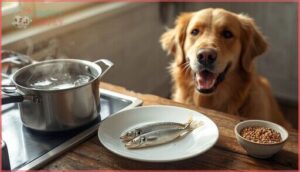
Plain preparation is the golden rule when feeding dogs anchovies. Steam or boil them in water, skip the oil and spices entirely.
For meal mixing, chop a small piece and stir it into kibble. As dog treats, keep treat portions to one or two pieces — anchovies are calorie-dense.
Safe thawing matters too; always defrost frozen fish in the fridge, not on the counter.
Whole Vs. Fillet Anchovies
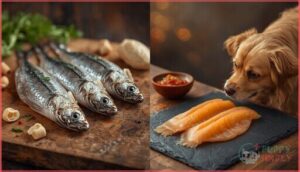
Both whole and fillet anchovies work, but each suits different dog dietary needs. Whole raw anchovies offer natural calcium from soft, digestible bones, though bone texture and choking risks make them better suited for medium to large dogs.
Fillet anchovies eliminate that concern and mix easily into food. Watch sodium levels with canned anchovies — unsalted varieties are your safest pick regardless of form.
Storage and Handling Tips

Once you’ve chosen the right form — fillet or whole — proper storage keeps things safe. Follow these food safety and handling basics:
- Refrigeration Tips: Raw anchovies and opened canned anchovies stay safe refrigerated up to 7 days in an airtight container.
- Freezer Storage: Frozen anchovies last a month at -20°C; thaw in the fridge, never the counter.
- Packaging Methods: Dehydrated anchovies need a sealed, dry spot away from sunlight to preserve shelf life.
How Many Anchovies Can Dogs Eat?

Knowing anchovies are safe is one thing, but figuring out how much to actually give your dog is where most owners get stuck.
The right amount depends on your dog’s size, age, and overall health. Here’s a simple breakdown to help you get it right.
Recommended Serving Sizes by Dog Size
Dog size matters more than most people think in regard to anchovies. Portion control isn’t one-size-fits-all — your dog’s weight directly shapes how much is safe.
| Dog Size | Serving Guideline |
|---|---|
| Under 10 lbs | ½ to 1 small anchovy |
| 10–40 lbs | 1 to 3 small anchovies |
| 40–90 lbs | 3 to 5 small anchovies |
| 90+ lbs | Adjust by body condition |
Keep all anchovy treats under 10 percent of daily caloric intake.
Frequency and Moderation Guidelines
Most dogs do well with anchovies a few times per week — not every day. Think of treat frequency like seasoning: a little enhances the meal, too much ruins it.
Keep anchovies within 10 percent of your dog’s daily calorie intake for smart calorie management. If your dog already gets fish oil or omega-3 supplements, limit anchovy feeding to once or twice weekly to avoid stacking too much fat.
Special Considerations for Puppies and Seniors
Puppies and seniors need extra care in regards to anchovy feeding. Young dogs have sensitive digestive systems, so start with just one small bite and watch for loose stool over a couple of days.
For senior health, skip salted options entirely — aging kidneys can’t handle the sodium load. Both age groups benefit from omega-3 fatty acids, but always check with your vet first.
Risks and Precautions When Feeding Anchovies

Anchovies can be a great snack for dogs, but there are a few things worth watching before you make them a regular treat.
Like any food, they come with some risks that are easy to manage once you know what to look for. Here’s what to keep in mind.
Allergies and Sensitivities
Some dogs can have allergic responses to fish proteins, and anchovies are no exception. Signs of canine sensitivity include itching, ear infections, vomiting, or diarrhea shortly after eating.
Histamine reactions are also possible, especially with older or heavily processed anchovies. If you suspect a food intolerance, fish allergy tests through an elimination diet can help identify the problem early.
Sodium Concerns and Overfeeding
Salt is sneaky — a few salted anchovies can push your dog well past their safe daily sodium limit before you even realize it. High salt intake causes thirst, bloating, and in serious cases, sodium toxicity with seizures or collapse.
Overfeeding risks go beyond sodium, too, since excess calories disrupt dietary balance and may trigger pancreatitis in sensitive dogs.
- Salted anchovies can contain 300–400 mg of sodium in just a few pieces
- Canine nutrition guidelines recommend keeping sodium below 0.2–0.4% of dry matter daily
- Salt toxicity symptoms include vomiting, tremors, and neurological signs
- Overfeeding anchovies breaks the 10% treat rule, risking weight gain
- Dogs with heart or kidney disease face the greatest danger from excess sodium
Monitoring Your Dog’s Reaction
The first 24 hours after introducing anchovies tell you a lot. Watch for reaction signs like vomiting, diarrhea, scratching, or swelling around the face — these early warnings matter.
Keep a simple symptom tracking log noting what you fed and when. Ongoing issues beyond 48 hours call for veterinary guidance. Allergy tests can help if reactions keep returning despite anchovy safety precautions.
Frequently Asked Questions (FAQs)
Are sardines or anchovies better for dogs?
Both are solid pet health options. Sardines edge ahead for omega-3 fatty acids and nutrient profiles, but plain anchovies offer comparable canine nutrition benefits.
Choose whichever low-salt option your dog tolerates best.
Are canned anchovies safe?
Canned anchovies packed in plain water with no added salt are generally safe in small amounts.
Avoid salt-packed varieties — high sodium levels can trigger salt toxicity. Always check the label and ask your veterinarian first.
How do I prepare anchovies for my dog?
Rinse anchovies under cool water, pat dry, and serve plain. Skip salt, oil, and spices. For dog feeding tips, boil or steam keeps nutrients intact and stomachs happy.
Are anchovies good for dogs?
Yes, anchovies are good for dogs. These small fish pack omega-3 fatty acids, protein, and key minerals that support dog health.
As a pet food alternative, they’re a smart, nutrient-rich addition to canine diet plans.
How many anchovies can a dog eat?
Most dogs can eat 2 to 5 anchovies daily depending on size. Small dogs do well with 2 to 3, while larger breeds can handle up to 5 plain, unsalted anchovies per day.
Can dogs eat anchovies and sardines?
Both are smart dog treat options that deliver omega-3 fatty acids, supporting canine health from skin to joints.
As low-mercury fish, they fit well into pet nutrition when served plain and unsalted.
Are anchovies oily fish?
Anchovies are classified as oily fish, and that fish classification matters.
Their nutrient profile is rich in marine omega-3 fatty acids, giving them a fat content that puts them alongside salmon and mackerel.
Are anchovies healthy?
Packed into that tiny fish is a surprisingly dense mix of nutrient dense nutrients.
These seafood powerhouses deliver omega3 fatty acids, healthy fats, and protein — making anchovy nutrition genuinely impressive for such a small catch.
What are the different types of anchovies?
You’ll find anchovies in many forms — fresh anchovies, canned anchovies, dried anchovies, frozen options, cured fillets, dehydrated anchovies, and pickled anchovies.
Across 140-plus anchovy species, the preparation method matters most for safety.
Can dogs eat anchovies in sunflower oil?
Dogs can eat anchovies in sunflower oil, but only in tiny amounts. The added oil raises fat and disrupts omega balance, increasing pancreatitis risk.
Plain or water-packed anchovies are a smarter choice for canine nutrition.
Conclusion
Anchovies aren’t exactly a glamorous pantry staple, but for your dog, they’re a quiet powerhouse hiding in plain sight. Can dogs eat anchovies? Yes—and done right, they deliver real benefits without the fuss of supplements.
Stick to plain options, keep portions sensible, and watch how your dog responds. A small fish handled thoughtfully becomes a genuinely smart addition to the bowl, not just an afterthought.
- https://wefeedraw.com/blog/can-dogs-eat-anchovies
- https://campfiretreats.com/blogs/campfire-tales/can-dogs-eat-anchovies
- https://platopettreats.com/blogs/blog/can-fish-oils-improve-my-dogs-coat-discover-the-benefits-and-how-to-boost-your-dogs-shine-naturally
- https://www.thefarmersdog.com/digest/superfoods-in-your-kitchen-anchovies-for-dogs/
- https://www.britannica.com/animal/anchovy