
This site is supported by our readers. We may earn a commission, at no cost to you, if you purchase through links.

The swirling silver-and-black coat of a blue merle Australian shepherd turns heads at every dog park. This striking marbled pattern isn’t just beautiful—it’s the result of fascinating genetics that sets these dogs apart from their solid-colored littermates.
Blue merles carry a dominant gene that disrupts normal pigment distribution, creating their signature dappled appearance with patches of gray, black, and white.
But there’s more to these eye-catching Aussies than their stunning looks. Their intelligence rivals border collies, their energy could power a small city, and their herding instincts mean they’ll probably try to round up your kids at the backyard barbecue.
Understanding what makes blue merle Australian shepherds unique—from their genetic makeup to their specific care needs—helps you decide if this bold, brainy breed fits your lifestyle.
Table Of Contents
- Key Takeaways
- What is a Blue Merle Australian Shepherd?
- Physical Characteristics and Appearance
- Temperament and Personality Traits
- Health Considerations for Blue Merle Aussies
- Care, Grooming, and Ownership Tips
- Frequently Asked Questions (FAQs)
- Are blue merle Australian Shepherds beautiful?
- What is the merle gene in Australian Shepherd blue merles?
- What is a Merle Australian Shepherd?
- What is a bi blue merle Australian Shepherd?
- How rare is a blue merle Australian Shepherd?
- How much do blue merle Australian Shepherds cost?
- Do blue merle Aussies have health issues?
- What is the personality of a blue merle Aussie?
- Are Blue Merle Australians suitable for families with kids?
- What costs should I expect annually for a Blue Merle?
- Conclusion
Key Takeaways
- Blue merle Australian Shepherds carry a dominant gene that creates their signature marbled coat pattern by disrupting normal pigment distribution, resulting in unique gray, black, and white patches that never repeat exactly the same way twice.
- These dogs demand 60-90 minutes of daily exercise plus serious mental stimulation because their intelligence rivals border collies and their herding instincts stay active even in family settings.
- The merle gene that creates their striking appearance increases risks for specific health issues like eye anomalies, hearing loss, and vision impairment—especially in double merles—making genetic testing and regular vet care essential.
- Owning a blue merle means committing to consistent grooming (2-3 times weekly, daily during shedding seasons), early socialization starting in the first 12 weeks, and annual costs ranging from $1,500 to $3,000 for proper care.
What is a Blue Merle Australian Shepherd?

A Blue Merle Australian Shepherd stands out from the pack with its striking marbled coat that blends gray, black, and white in a pattern that’s never quite the same twice. This isn’t just a pretty face—the blue merle coloring comes from specific genetics that have been part of the breed since its early days.
Let’s break down what makes these dogs unique, from their eye-catching appearance to how they’re recognized in the dog world. One of the most distinctive features is their tail, which is often naturally bobbed or docked, giving them that iconic look many people recognize.
Distinctive Blue Merle Coat Pattern
The blue merle coat is what makes these Australian Shepherds stand out from the pack. You’ll spot a mottled blend of gray-blue tones mixed with black patches scattered across their body, creating a one-of-a-kind pattern that never repeats exactly the same way twice.
Here’s what makes this coat variation so striking:
- Pattern expression varies wildly – some dogs show bold, chunky patches while others display delicate speckling across their torso and legs
- Color dilution creates that signature blue-gray base through merle genetics working its magic on black pigment
- White trim on the chest and face adds sharp contrast that highlights the coat’s natural beauty
- Breed aesthetics shine through in how patches flow from shoulder to flank, making each dog instantly recognizable
- Dog coat colors and patterns in blue merles range from light silver to deep charcoal, depending on pigment intensity
The pattern usually shows larger patches across the back and sides, with finer speckling on the face and lower legs. White markings frame the muzzle and chest, breaking up the merle distribution.
This coat color doesn’t just look good – it’s a reflection of careful breeding and understanding of how pattern expression works in Australian Shepherds. The unique genetic patterns can be analyzed using scientific study methods to better understand their composition.
Genetic Basis of Blue Merle Coloration
That striking coat pattern you see isn’t random—it’s driven by a dominant merle allele at the SILV/MITF locus. This gene disrupts normal pigment distribution during hair formation, creating irregular patches of diluted black pigment that appear as blue-gray. When two merle dogs are bred together, the resulting double merle Goldendoodles face significantly higher risks of deafness and vision problems.
Genetic testing can confirm merle status and help you understand inheritance patterns. The expressivity varies widely thanks to modifier genes, which is why no two blue merles look identical in their coat patterns.
Breed Recognition and Standards
Major kennel clubs recognize blue merle as a standard color for this dog breed. The American Kennel Club places Australian Shepherds in the Herding Classification and accepts blue merle with white or copper markings under official breed standards.
The Australian Shepherd Club of America maintains detailed breed conformation requirements for coat patterns, eye color, and proportions. International organizations like the FCI also include blue merle in their breed registration criteria, though AKC recognition standards remain most influential for breeders and show competitors. Prospective owners should carefully evaluate whether they can meet Australian Shepherd activity and supervision needs before selecting a dog based solely on coat color preferences.
Physical Characteristics and Appearance
Blue Merle Aussies aren’t just stunning—they’ve got a distinct look that sets them apart from other Shepherds. From their marbled coats to those piercing eyes, every physical trait tells part of the story. Their high energy and sharp intelligence mean Blue Merles thrive with consistent training to manage hyperactive tendencies from an early age.
Let’s break down what makes these dogs so eye-catching and how their build reflects their working heritage. Their thick double coat and sturdy frame earned them a reputation as reliable guardians, and you can explore more about the Great Pyrenees’ distinctive traits and history to see why they stand out.
Size and Weight Range
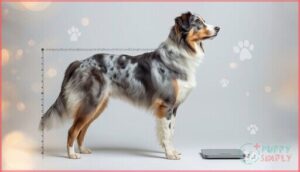
When you’re choosing your Blue Merle Australian Shepherd, expect a solid, athletic companion built for action. Here’s what breed standards outline for size variations:
- Adult males: generally 50–65 pounds and 20–23 inches tall
- Adult females: usually 40–55 pounds and 18–21 inches tall
- Weight factors: lean muscle structure defines this dog breed
- Body proportions: slightly longer than tall, balanced for herding work
Growth patterns stabilize around 16 months as breed characteristics fully develop.
Unique Eye Colors and Heterochromia

One standout feature you’ll notice? Those mesmerizing eyes. Blue Merle Australian Shepherds often display heterochromia—complete (one blue eye, one brown) or sectoral (blue patches within an iris).
This eye color variation stems from the merle gene’s interaction with pigmentation genetics during development.
While stunning, pale blue irises don’t automatically signal health issues, though routine veterinary screening ensures your pup’s vision stays sharp.
Coat Texture and Length

Beyond those striking eyes, you’ll feel a plush double coat—dense undercoat meets weather-resistant topcoat. This fur density shifts seasonally, demanding consistent grooming and hygiene routines to tackle coat shedding.
- Hair length: Medium to medium-long, straight to wavy texture variation
- Coat color and pattern: Blue merle patches create that signature marbled look
- Grooming needs: Weekly brushing prevents matting, especially behind ears
- Seasonal changes: Expect heavier coat shedding during spring and fall transitions
Body Structure and Proportions

A sturdy frame defines the breed—athleticism wrapped in balance. You’ll notice a rectangular silhouette where body length slightly exceeds height at withers, creating that low center of gravity herding dogs need. Chest depth hits elbow level, allowing unrestricted stride during work.
| Feature | Standard Range | Working Impact |
|---|---|---|
| Height (withers) | 18–23 inches | Agility in terrain |
| Body length ratio | Equal to slightly longer | Stability during turns |
| Chest depth | Reaches elbows | Full lung capacity |
| Bone density | Medium-strong | Endurance without bulk |
Muscular shoulders and hindquarters drive propulsion without excess mass—pure functional design. Proper joint stability and skeletal health prevent strain during those sharp directional changes your Aussie craves.
Temperament and Personality Traits

Blue Merle Aussies aren’t just pretty faces—they’re sharp, driven dogs with personalities that can surprise first-time owners.
You’ll find these shepherds bursting with energy and brains, which means they need more than a walk around the block to stay happy.
Let’s break down what makes their temperament tick so you know exactly what you’re signing up for.
Intelligence and Trainability
Your blue merle Aussie isn’t just pretty—this breed’s intelligence ranks among the top working dogs. With problem-solving skills and lightning-fast learning speed, they pick up commands in just a few sessions when you use positive training methods.
Their herding instincts fuel strong cognitive abilities and outstanding trainability, but without mental stimulation, boredom kicks in fast. Keep their outstanding minds engaged.
Energy Levels and Exercise Needs
Think marathon runner, not couch potato—your blue merle demands serious daily exercise to burn off that legendary energy level. Aim for 60+ minutes of physical stimulation split between structured workout routines and mental challenges. Without proper exercise requirements met, you’ll see destructive behaviors fast.
Their athletic performance thrives on varied activities like agility, fetch, and trail runs that match their high energy levels and keep boredom at bay.
Herding Instincts and Working Abilities
Your blue merle’s herding instinct kicks in early—you’ll spot circling and heel-nipping behaviors by 6–8 weeks.
These working dogs excel at livestock management and ranch work, controlling animals with minimal guidance across 8–10 hour workdays.
Whether you’re eyeing herding trials or farm assistance, this herding dog delivers stamina and precision that separates true herding and working dogs from the rest.
Social Behavior With Family and Strangers
While your Aussie’s herding drive impresses at work, family bonding reveals their softer side—they’ll shadow you room-to-room and thrive on household dynamics that include them in daily routines.
Stranger anxiety appears as cautious curiosity rather than aggression, though protective instincts may surface without proper socialization. Early positive exposure to varied social cues shapes balanced canine behavior, transforming wariness into welcoming confidence through consistent training and dog behavior management.
Health Considerations for Blue Merle Aussies
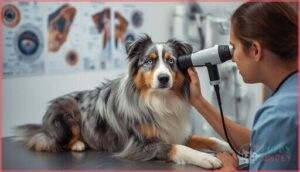
Blue merle Aussies are generally healthy dogs, but their striking coat comes with some specific health risks you need to know about.
The merle gene that creates their beautiful coloring can also increase the chance of certain genetic conditions, particularly affecting their eyes and ears.
Understanding these potential issues helps you make informed decisions about preventative care and what to watch for as your dog grows.
Common Genetic Health Issues
Genetics can be a double-edged sword in blue merle Aussies. While you’ll get that stunning coat, certain inherited traits come with real health risks that responsible breeders track closely through genetic testing.
- Progressive Retinal Atrophy gradually steals vision and can lead to blindness in affected dogs
- Congenital heart defects like patent ductus arteriosus require early veterinary care and monitoring
- Autoimmune conditions may develop in some lines, demanding proactive health management
- Breed disorders show up more in certain bloodlines, making genetic testing essential before breeding
Eye and Hearing Problems Linked to Merle Gene
That distinctive merle pattern comes with real trade-offs you need to understand. The merle gene risks extend beyond coat color, directly impacting your dog’s sensory health.
The merle gene creates stunning coat patterns but carries real risks for your dog’s vision and hearing
Eye anomalies like microphthalmia and iris malformations can cause vision impairment, while hearing loss affects some merles—especially double merles.
Genetic testing before breeding helps catch these genetic disorders early, protecting future generations from preventable eye health and problems.
Importance of Preventative Veterinary Care
Regular wellness exams catch breed-specific health issues before they spiral into costly problems. Don’t skip dental health checkups—periodontal disease affects more than just teeth. Preventative plans lower long-term veterinary care costs while keeping your dog’s animal health and wellness on track.
Your blue merle needs vaccination schedules customized to canine health risks, plus year-round parasite control to protect against transmitted diseases.
Care, Grooming, and Ownership Tips

Owning a blue merle Australian Shepherd means committing to their high-energy lifestyle and unique care needs. These dogs thrive when you give them the right grooming routine, plenty of activity, and solid training from day one.
Here’s what you need to know to keep your Aussie healthy, happy, and well-adjusted.
Brushing and Coat Maintenance
Your blue merle Australian Shepherd’s stunning coat color demands consistent attention—think of brushing as preventative maintenance for a high-performance engine. During normal periods, brush 2–3 times weekly; ramp up to daily sessions when seasonal shedding hits.
Essential grooming tools include:
- Slicker brush for undercoat detangling
- Stainless steel comb for mat removal
- Deshedding tool during peak shedding
- Conditioning rinse to maintain luster
Proper fur management prevents matting while keeping that signature merle pattern vibrant.
Exercise and Mental Stimulation Needs
Your blue merle Aussie craves 60–90 minutes of daily exercise—split into morning and evening sessions to match those sky-high energy levels. Combine brisk walks with play activities like fetch or agility work.
Mental stimulation matters just as much: rotate puzzle toys, practice new training methods weekly, and use scent games. Without proper energy management, you’ll face destructive canine behavior faster than you can say “redirected herding instinct.
Training and Socialization Essentials
Start training your blue merle with Positive Reinforcement the moment they arrive—their high Trainability responds best to reward-based methods. Socialization Techniques matter most in the first 12 weeks: expose them to 20 different people and 5 new stimuli monthly.
Focus on four essentials:
- Obedience Exercises using single, clear cues
- Impulse Control through “leave it” drills
- Leash Training with strict recall practice
- Canine Behavior management via structured routines
Channel those herding instincts into problem-solving games.
Nutrition and Feeding Guidelines
Your blue merle’s Caloric Needs depend on activity—budget 900 to 1,200 kilocalories daily for adults. Aim for 18–25% protein and 8–12% fat to nail Nutrient Balance.
Stick to Feeding Schedules: two meals for grown dogs, three to four for pups. Factor in Exercise and Activity levels, limit treats to 10% of intake, and gradually introduce any new Dog Nutrition over 7–10 days to dodge stomach issues.
Frequently Asked Questions (FAQs)
Are blue merle Australian Shepherds beautiful?
Beauty’s subjective, but most people agree these dogs turn heads. Their marbled coat, striking eye colors, and athletic build create serious visual appeal.
Breed standards celebrate the merle pattern as a hallmark trait worth showing off.
What is the merle gene in Australian Shepherd blue merles?
Ever wonder why some Aussies sport that stunning marbled coat? The merle gene causes partial pigment dilution, creating irregular blue-gray patches. It’s a dominant allele requiring careful genetic testing to avoid breeding complications.
What is a Merle Australian Shepherd?
A Merle Australian Shepherd displays a marbled coat pattern created by the dominant merle gene, which dilutes random patches of base color.
This herding dog showcases distinctive coat patterns through canine genetics, with blue merle among recognized color variations.
What is a bi blue merle Australian Shepherd?
A bi blue merle Australian Shepherd carries one merle allele and one non-merle allele, creating the signature mottled blue-gray coat pattern with darker patches—it’s the classic blue merle look most people recognize.
How rare is a blue merle Australian Shepherd?
You might be surprised to learn that blue merle Australian Shepherds aren’t particularly rare—they’re actually one of the most common color variations in the breed, readily available through reputable breeders nationwide.
How much do blue merle Australian Shepherds cost?
You’ll generally invest $800 to $2,000 for a blue merle Australian Shepherd puppy from reputable breeders, though show-quality dogs with champion bloodlines can reach $4,000 or higher depending on pedigree and health clearances.
Do blue merle Aussies have health issues?
Yes, blue merle Aussies can face health issues linked to the merle gene, including higher risks of deafness and eye disorders.
Regular veterinary care and genetic health testing help catch problems early.
What is the personality of a blue merle Aussie?
You’ll find intelligence and loyalty run deep in these dogs—sharp problem-solvers with affection levels that match their playful nature.
Their temperament blends social adaptability with sensitivity, thriving on consistent positive reinforcement and family bonds.
Are Blue Merle Australians suitable for families with kids?
Blue Merle Australian Shepherds thrive in active households when you prioritize early socialization techniques and parental guidance. Their affectionate nature suits families with kids, though household adaptation requires consistent training, supervision during play, and commitment to responsible pet ownership.
What costs should I expect annually for a Blue Merle?
Owning any dog means balancing routine pet care and ownership expenses with unexpected surprises.
Veterinary expenses, food costs, training fees, insurance premiums, and emergency funds for canine health generally total $1,500 to $3,000 annually.
Conclusion
Striking, bold, and brimming with personality, the blue merle Australian shepherd demands an owner who matches their intensity. These dogs thrive when given meaningful work, whether herding livestock or mastering agility courses.
Their genetic beauty comes with responsibility—regular vet checkups, diligent grooming, and relentless mental stimulation aren’t optional.
If you’re ready to channel their boundless drive into something remarkable, this marbled marvel will reward your commitment with unwavering loyalty and endless adventure.
- https://www.akc.org/expert-advice/dog-breeds/australian-shepherd-history-behind-breed/
- https://academichelpexpress.blog/2024/08/please-use-the-bulleted-points-and-the-rubric-below-to-guide-your-work-your-pa/
- https://www.linkedin.com/posts/bohdanlukianets_tasks-study-research-activity-7373377539521667072-UTEi
- https://www.sciencedirect.com/science/article/pii/S0749208123000268
- https://pmc.ncbi.nlm.nih.gov/articles/instance/9553038/bin/pone.0275964.s005.docx