This site is supported by our readers. We may earn a commission, at no cost to you, if you purchase through links.

You can’t tame fire and ice in the same dog—but a Blue Heeler Rottweiler mix comes close. This crossbreed wields the Rottweiler’s commanding presence and protective instinct alongside the Australian Cattle Dog’s relentless drive and sharp intelligence.
The result? A powerhouse companion built for owners who refuse to settle for passive pets. These dogs don’t lounge around waiting for direction; they demand purposeful work, consistent leadership, and environments that challenge both body and mind.
Without proper outlets, that intense energy becomes destructive restlessness. If you’re ready to channel raw potential into focused loyalty, understanding this hybrid’s unique requirements—from exercise intensity to training precision—will determine whether you release an exceptional partner or struggle with an overwhelming force.
Table Of Contents
- Key Takeaways
- What is a Blue Heeler Rottweiler Mix?
- Blue Heeler Rottweiler Mix Appearance
- Blue Heeler Rottweiler Mix Temperament
- Exercise and Activity Requirements
- Training a Blue Heeler Rottweiler Mix
- Health and Lifespan Considerations
- Grooming and Shedding Needs
- Diet and Nutrition for Blueweilers
- Top 9 Products for Blue Heeler Rottweiler Mixes
- Frequently Asked Questions (FAQs)
- How much does a Rotterman puppy cost?
- How much does a blue heeler Rottweiler mix weight?
- What is the best breed to mix with a Rottweiler?
- What is the personality of a Labraheeler?
- Are Blue Heeler Rottweiler Mixes hypoallergenic?
- What is the recommended diet for a Blue Heeler Rottweiler Mix?
- Are Blue Heeler Rottweiler mixes good with cats?
- How much does a Blueweiler puppy cost?
- Do they bark or howl excessively indoors?
- Can Blueweilers adapt to apartment living conditions?
- Conclusion
Key Takeaways
- The Blue Heeler Rottweiler mix combines intense herding drive with protective strength, creating a high-energy working dog that demands 60-90 minutes of daily exercise and purposeful mental challenges to prevent destructive behaviors.
- Early socialization between 8-16 weeks is critical to transform this mix’s natural wariness and guarding instincts into calm confidence around strangers, requiring controlled exposures 3-4 times weekly with positive reinforcement.
- These dogs thrive on protein-rich diets (20-30% from quality meats) tailored to their 60-95 pound frame, with adults requiring 1,400-1,800 daily calories depending on activity level and joint-supporting supplements like glucosamine.
- Training success depends on positive reinforcement with rewards delivered within one second of desired behavior, short frequent sessions that work with their intelligence, and consistent leadership that channels their stubborn streak into reliable partnership.
What is a Blue Heeler Rottweiler Mix?
The Blue Heeler Rottweiler mix isn’t your average backyard dog—it’s a powerhouse hybrid that brings together two of the most driven working breeds on the planet. This cross combines the relentless herding instinct of the Australian Cattle Dog with the protective strength of the Rottweiler, creating a dog that’s built for action and loyalty.
If you’re also curious about the Border Collie Rottweiler mix, that hybrid shares similar athletic drive but swaps herding cattle for herding sheep.
Before you commit to this intense mix, you need to understand where it comes from, what people call it, and what role it’s designed to fill in your life.
Breed Origins and Parent History
The Blue Heeler Rottweiler Mix draws power from two legendary working bloodlines, each forged through centuries of selective breeding. Your Blueweiler carries genetic heritage from parent breeds shaped by demanding frontier work.
Ancestral roots that define this hybrid:
- Australian Cattle Dog origins – 19th-century ranchers crossed blue merle kelpies with dingoes and other herding breeds, creating tireless cattle drivers
- Rottweiler lineage – Roman drover dogs evolved in medieval Rottweil, Germany, into fearless guardians and cart-pullers
- Herding instinct legacy – Blue Heelers contributed relentless drive and nipping behaviors refined across Australian outback stations
- Protection tendencies – Rottweilers passed down territorial awareness and muscular strength honed through butcher-guarding duties
- Modern crossbreeding wave – Breeders increasingly mixed these parent breeds throughout the 2000s, seeking adaptable companions combining work ethic with loyalty
If you’re curious about how other breeds have changed over generations, this is well illustrated in the.
Common Names and Recognition
You’ll encounter a confusing array of mix nicknames when searching for this hybrid. Breeders call them Blueweilers, Cattle Dog Rottie Mix, Blue Heeler Rottweiler cross, or Rottie Heeler—sometimes even branding them as “Blue RoRo” in advertisements.
Official recognition doesn’t exist through major kennel clubs like the AKC, so shelter listings and breeder naming practices vary wildly across regions and registries.
Purpose and Typical Roles
Beyond their name confusion, Blueweilers inherit a powerful responsibility matrix from their working dog ancestors. Both parent breeds are drover dogs that move cattle, so this hybrid dog brings herding instincts paired with guard dog vigilance.
You’re getting a multipurpose protector—ranch hand, livestock mover, property guardian, and family watchdog rolled into one intense canine package built for task allocation and decision making on the job.
Blue Heeler Rottweiler Mix Appearance
A Blueweiler’s look can surprise you—this isn’t a cookie-cutter breed. Your pup might favor the Rottweiler’s muscular build or lean toward the Blue Heeler’s compact athleticism, and everything in between is fair game.
Let’s break down what you can expect regarding size, coat, and those signature physical features.
Size and Weight Range
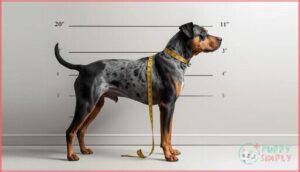
You’re looking at a medium-large dog that stands 20 to 25 inches at the shoulder, with males weighing 60 to 95 pounds and females slightly lighter.
Growth patterns continue through 18 months, though height factors like parental genetics play the biggest role.
Size variability is common—some inherit compact Blue Heeler proportions while others show blockier Rottweiler builds, affecting overall body proportions and physical appearance.
Coat Colors and Patterns

Coat color genetics determine whether your Blueweiler shows black-and-tan patches, blue-mottled merle traits, or solid tones—canine genetics pulls from both parent lines. Pattern variations range from saddle markings to subtle white chest blazes, though fading factors like sun exposure can lighten tan trim over time.
Dog breed characteristics blend unpredictably, so color preservation shampoos help maintain those striking blue or black hues longer.
Eye, Ear, and Tail Characteristics

Eye health in your Blue Heeler Rottweiler mix demands attention—almond-shaped eyes with dark brown to amber irises show expressive depth, but vision problems like progressive retinal atrophy can surface.
Dog breed characteristics blend both lines’ traits distinctly:
- Ears sit high and alert, though semi-erect folds increase ear infections if moisture lingers
- Tail length balances body proportion, requiring tail care to prevent injury during vigorous movement
- Peripheral vision aids herding instincts, tracking movement across wide fields
- Regular ear cleaning prevents hearing loss from untreated fungal buildup in your Rottweiler or Blue Heeler cross
Blue Heeler Rottweiler Mix Temperament

Your Blueweiler’s personality is where the magic—and the challenge—really happens. This mix doesn’t just inherit traits from two powerful breeds; it forges a temperament that demands respect, understanding, and consistent leadership from you.
A Blueweiler’s temperament fuses power and complexity, demanding respect and consistent leadership to unlock its potential
Let’s break down what you’re really signing up for when you bring one of these dogs into your life.
Family Loyalty and Protectiveness
Your Blue Heeler Rottweiler Mix brings loyalty foundations and guardian traits that run deep—these protective dog breeds don’t just occupy space, they claim it.
Watch how family bonds form through constant proximity, monitoring doorways and watching over children with herding instincts that translate into steady vigilance.
This family pet creates emotional safety through unwavering presence, turning guard instincts into daily rituals of protection that make strangers pause but never threaten properly introduced guests.
Intelligence and Trainability
Think of your Blue Heeler Rottweiler Mix’s mind as a high-performance engine—it demands premium fuel and constant challenges to run smoothly. Intelligence meets eagerness in this cross, creating a dog that masters commands through problem solving and adjusts to new tasks faster than most household breeds.
- Clicker training paired with treats sharpens cue timing and reinforces intelligent behavior
- Short, frequent sessions outperform marathon drills for cognitive development and retention
- Puzzle toys and scent work satisfy their drive for mental challenges
- Shaping techniques guide learning styles that thrive on progressive skill sequences
- Clear, upbeat communication keeps focus sharp during animal behavior and training work
These dog training fundamentals release trainability tips that transform raw potential into reliable partnership.
Socialization Needs
Without early Puppy Social exposure, a Blueweiler’s instinct to guard can escalate into Stranger Danger reactivity that limits freedom and trust.
Socialization shapes Social Bonds, teaching your dog to distinguish friend from threat through controlled introductions, canine socialization routines, and Environmental Adapt experiences. Training sessions paired with positive animal behavior and training methods turn wariness into calm confidence around Family Dynamics and new encounters.
| Socialization Focus | Method | Frequency |
|---|---|---|
| Stranger exposure | Controlled meet-and-greets with treats | 3–4 times weekly |
| Dog interactions | Neutral-space playdates with calm dogs | 2–3 times weekly |
| Environmental stimuli | Gradual exposure to sounds, places, textures | Daily during walks |
| Family handling | Gentle touch, grooming simulation, shared tasks | Daily routines |
| Novel situations | Car rides, vet visits, public spaces | 1–2 times weekly |
Exercise and Activity Requirements

Your Blueweiler won’t thrive on a quick lap around the block—this powerhouse needs serious physical and mental work to stay balanced. Without enough activity, you’ll see destructive behaviors, relentless barking, and a dog that’s anxious or hard to manage.
Let’s break down exactly what it takes to keep this intelligent, high-drive mix happy and under control.
Daily Exercise Needs
Your Blueweiler isn’t built for couch life—this powerhouse demands 60 to 90 minutes of daily exercise split across two or three sessions. Daily walks should cover 2 to 3 miles, with high-energy mixes needing two vigorous 20 to 30 minute play bursts.
Consistency in exercise routines prevents restlessness and promotes better sleep, while outdoor safety requires shade, water breaks, and vigilant supervision during warm weather.
Suitable Activities and Sports
Channel your working dog’s drive through agility training—weave poles, hurdles, and tunnels sharpen reflexes while burning energy.
Outdoor adventures like trail running or canicross strengthen your bond and cardiovascular fitness, while water sports such as dock jumping satisfy the herding dog’s need for speed and precision.
Team play activities, including frisbee drills and obstacle courses, meet high activity level demands while reinforcing training fundamentals.
Mental Stimulation and Enrichment
Beyond physical workouts, your Blueweiler’s intelligence demands cognitive challenges that prevent boredom-driven destruction. Puzzle toys that dispense treats reward problem-solving, while scent games tap into natural tracking instincts.
Interactive feeding with slow-feeder bowls or foraging mats transforms meals into mental exercise.
Rotate environmental enrichment weekly—hide-and-seek with toys, 10-minute training sessions for new tricks, and structured socialization with calm dogs sharpen animal behavior skills while channeling protective drive constructively.
Training a Blue Heeler Rottweiler Mix
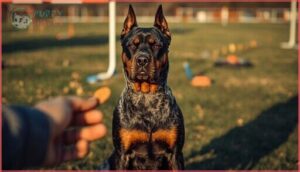
Training a Blueweiler isn’t for the faint of heart, but master the fundamentals and you’ll release a powerhouse companion who responds with precision and loyalty. This mix demands respect, consistency, and smart techniques that work with their natural drive rather than against it.
Let’s break down the training essentials that’ll transform your strong-willed pup into a reliable partner.
Positive Reinforcement Techniques
You’ll see the fastest results when you reward your Blueweiler within one second of the desired behavior—clicker training makes this timing automatic. Start with a continuous reward schedule, treating every correct response, then gradually shift to variable reinforcement once the behavior’s rock-solid.
Break complex tasks into small steps, celebrate each win, and ignore minor mistakes without punishment to keep confidence high.
Early Socialization Tips
Start socialization between eight and sixteen weeks when your puppy’s brain is wired for rapid canine development. Introduce friendly, vaccinated dogs in controlled settings to build social skills through safe dog interactions, rotating partners weekly to prevent over-attachment.
Pair new people, sounds, and environments with high-value treats so your Blue Heeler Rottweiler Mix learns strangers aren’t threats. These behavioral tips during puppy training prevent the guarding misreads that plague undersocialized Blueweilers.
Addressing Stubbornness and Guarding Instincts
Stubbornness and guarding behavior dissolve when you set clear boundaries with calm communication, not harsh corrections. Schedule short, frequent training sessions with positive reinforcement—high-value treats motivate your Blue Heeler Rottweiler Mix better than force.
Gradual socialization techniques expose your dog to controlled real-world situations, teaching him strangers aren’t enemies.
Consistent routines lower anxiety that fuels territorial responses, transforming reactive temperament into reliable animal behavior.
Health and Lifespan Considerations

Your Blueweiler’s health blueprint matters just as much as their training plan. Like any powerful mixed breed, they inherit certain vulnerabilities alongside their strength and drive.
Let’s break down what you need to watch for, how long you can expect them by your side, and the preventative steps that keep them running strong.
Common Health Issues
Your Blueweiler’s sturdy frame can hide vulnerabilities beneath the surface. Hip dysplasia and elbow dysplasia rank among the most serious inherited health issues, causing painful joint degeneration by age two to three years.
Watch for these common concerns:
- Progressive retinal atrophy and cataracts threatening vision
- Ear infections from those cupped ears
- Obesity risks that accelerate joint damage
- Skin allergies causing relentless itching
- Heart conditions reducing exercise tolerance
Expected Lifespan
Most Blue Heeler Rottweiler Mixes live 10 to 12 years, though genetic factors and hybrid vigor can extend that window. You’ll notice the aging process accelerate around year eight, when health risks like joint disease and heart conditions spike.
Longevity tips include maintaining lean weight, prioritizing canine health screenings, and sustaining daily activity—these fundamentals directly influence mortality rates in this powerful, hard-working cross.
Preventative Veterinary Care
Think of preventative veterinary care as your first defense against the health issues that plague working breeds. Annual health checks catch early warning signs, while vaccine schedules and parasite control shut down common threats before they escalate.
Dental exams, nutrition counseling, and consistent veterinary advice transform canine health outcomes—you’re building resilience, not just reacting to disease.
Grooming and Shedding Needs

Your Blueweiler’s grooming routine doesn’t require professional expertise, but it does demand consistency. This mix sheds moderately year-round, with seasonal spikes that catch many owners off guard.
Let’s break down the brushing schedule, bathing protocols, and maintenance tasks that keep your dog healthy and your home manageable.
Brushing Frequency and Tools
Your Blueweiler’s double coat demands consistent attention to prevent matting and control shedding. Brush two to three times weekly using a slicker brush or deshedding tool, targeting the undercoat with firm, gentle strokes. During seasonal shedding periods, daily brushing becomes essential.
Don’t overlook oral hygiene in your grooming routine—brush teeth at least twice weekly with dog-specific toothpaste and a soft-bristled pet toothbrush to maintain dental health.
Bathing and Coat Maintenance
Bathing every six to eight weeks keeps your Blueweiler’s coat clean without stripping essential oils that protect skin health. Choose a dog shampoo matched to canine pH levels, then rinse thoroughly—leftover residue triggers itching and flaking.
- Use warm water and towel-dry immediately to prevent chilling
- Follow with a low-heat blow dryer to speed drying and reduce matting risk
- Adjust seasonal care routines when shedding intensifies in spring and fall
Nail, Ear, and Dental Care
Beyond coat care, your Blueweiler’s grooming requirements demand attention to paw health, ears, and teeth. Nail trimming frequency should hit every three to four weeks—overgrown claws crack pads and shift posture.
Watch for ear infection signs like redness, odor, or head shaking, then clean weekly with vet-approved solutions.
A daily dental routine using canine toothpaste prevents tartar buildup and protects long-term canine health and wellness through proper dog care and health practices.
Diet and Nutrition for Blueweilers

Your Blueweiler’s diet isn’t just about filling a bowl—it’s the foundation of their energy, muscle development, and long-term health. These athletic dogs need carefully balanced nutrition that matches their size, age, and activity level, with protein-rich formulas that support their powerful build.
Let’s break down exactly what you should feed your Blue Heeler Rottweiler mix, how much they need at different life stages, and which foods can actually harm them.
Recommended Food Types
Your Blueweiler thrives on lean proteins like chicken, turkey, and salmon—these fuel muscle and sustained energy.
Pair animal proteins with whole grains such as brown rice or oats for steady digestion, and don’t skimp on healthy fats from fish or flaxseeds to support joint and coat health.
Fresh produce adds essential antioxidants, meeting your dog’s complete dietary needs for ideal canine health and wellness.
Caloric Needs by Age and Activity
Calorie intake shifts with age and activity level—your pup’s energy balance depends on both. Growing Blue Heelers under two years need 1,050–1,400 daily calories to fuel rapid development, while adults require 1,400–1,800 based on exercise needs.
Here’s how to match daily needs:
- Puppies (0-12 months): 1,050–1,400 calories for growth spurts and high energy
- Active adults: 1,600–1,800 calories for 90+ minutes of vigorous exercise
- Moderate seniors: 1,200–1,500 calories as metabolism slows
Foods to Avoid
Now protect your Blueweiler’s health by eliminating specific dangers from the bowl. Sugary treats like candy and sweetened cereals spike glucose and damage teeth, while processed meats—bacon, sausage, deli cuts—pack harmful nitrates and excess sodium.
Fried foods such as french fries and deep-fried chicken overload saturated fats, and refined carbohydrates in white bread or pasta trigger rapid blood sugar spikes that compromise canine health and wellness.
Top 9 Products for Blue Heeler Rottweiler Mixes
Your Blueweiler needs the right gear to stay healthy, well-groomed, and mentally sharp.
From interactive puzzle toys that burn mental energy to grooming tools that handle their moderate shedding, the products you choose make daily care easier and more effective.
Here are nine standout items built for the unique needs of this intelligent, active mix.
1. Awoof Interactive Dog Snuffle Mat

Your Blueweiler’s high-drive brain needs more than a walk—it craves problem-solving work. The AWOOF Interactive Dog Snuffle Mat transforms mealtime into a mental workout by hiding kibble within 28-inch layers of orange petals and artificial grass.
This foraging challenge engages your dog’s natural scent-tracking instincts, burning mental energy while slowing down fast eaters. The thick Oxford cloth construction withstands determined digging, and the release buckle secures it to furniture during intense nose work sessions.
Machine washable design means you won’t sacrifice convenience for enrichment.
| Best For | High-energy dogs who eat too fast or need mental stimulation when you’re away. |
|---|---|
| Primary Use | Mental stimulation |
| Target Pet | Small-medium dogs |
| Price Range | $23.99 |
| Material | Oxford cloth |
| Ease of Cleaning | Machine washable |
| Durability | Thick and durable |
| Additional Features |
|
- Taps into natural sniffing instincts while slowing down mealtime and burning mental energy
- Durable Oxford cloth holds up to aggressive diggers and washes easily in the machine
- Buckle attachment keeps the mat in place during intense foraging sessions
- Some dogs might chew the buckles or lose interest after repeated use
- Size may not work well for very large or very small breeds
- Needs regular washing to prevent odor buildup from hidden food
2. Pet Hair Remover Gloves
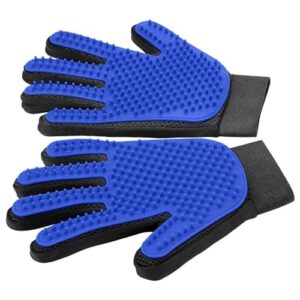
Moderate shedding doesn’t disappear on its own—you’ll find Blue Heeler Rottweiler fur on furniture, clothing, and car seats year-round.
The DELOMO Pet Hair Remover Gloves feature 255 silicone grooming tips that grip loose undercoat while you stroke your dog, turning cleanup into a bonding session. The adjustable wrist strap keeps the glove secure during energetic grooming, and the skin-friendly silicone won’t irritate sensitive areas. You can toss them in the washing machine after use, unlike sticky lint rollers that create waste.
| Best For | Dog owners dealing with year-round shedding who want a reusable grooming tool that doubles as a massage session. |
|---|---|
| Primary Use | Health testing |
| Target Pet | All dogs |
| Price Range | $139.00 |
| Material | N/A |
| Ease of Cleaning | N/A |
| Durability | N/A |
| Additional Features |
|
- 255 silicone tips grab loose fur while giving your dog a relaxing massage they’ll actually enjoy
- Machine washable and reusable, so you’re not constantly buying disposable lint rollers
- Adjustable strap keeps the glove from sliding around when you’re working with a wiggly dog
- Palm area traps hair and takes extra effort to clean out completely
- Doesn’t catch longer outer coat hairs as well as it handles undercoat
- Some dogs need a few sessions to warm up to the texture of the glove
3. Hartz Combo Dog Brush
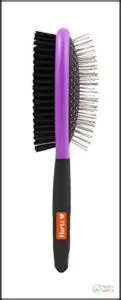
Short-to-medium coats tangle faster than you’d expect, especially around the ears and chest where movement creates friction.
The Hartz Combo Dog Brush offers stainless-steel tips on one side to work through mats without pulling, while dense nylon bristles on the reverse distribute natural oils for shine. You’ll get two grooming actions in one lightweight tool, and the oblong shape fits comfortably in your hand during longer sessions. It’s available in small and large sizes to match your Blueweiler’s build.
| Best For | Dog owners with short-to-medium coats who want a dual-purpose tool that detangles and adds shine without needing separate brushes. |
|---|---|
| Primary Use | Grooming aid |
| Target Pet | Cats and dogs |
| Price Range | Budget-friendly |
| Material | Silicone |
| Ease of Cleaning | Difficult to clean |
| Durability | Quality concerns |
| Additional Features |
|
- Two-sided design handles both mat removal and coat finishing in one pass
- Stainless-steel pins work through tangles gently while nylon bristles distribute oils for a healthier-looking coat
- Comes in two sizes so you can match the brush to your dog’s frame
- Steel pins can loosen and fall out with regular use
- Hair gets trapped deep in the bristles and takes effort to pull out completely
- Doesn’t work well on very thick or tightly curled coat types
4. Kong Zoom Groom Dog Brush

Bath time turns into a wrestling match when soap stings or bristles scrape sensitive skin, but the KONG Zoom Groom replaces that friction with a calming massage.
Its 3/4-inch rubber fingers reach through short coats to stimulate capillaries and distribute shampoo evenly, so you won’t miss patches or leave residue.
You can rinse it clean in seconds, and it works just as well on dry fur to remove loose hair like a magnet. The patented design won’t crack under pressure from large-breed grooming sessions.
| Best For | Dog owners with short-haired breeds who want a gentle grooming tool that works during both bath time and regular brushing sessions. |
|---|---|
| Primary Use | Grooming brush |
| Target Pet | Cats and dogs |
| Price Range | $13.99 |
| Material | Nylon bristles |
| Ease of Cleaning | Moderate difficulty |
| Durability | Pins can fall off |
| Additional Features |
|
- Rubber fingers massage the skin while removing loose hair, making grooming feel like a spa treatment instead of a chore
- Works wet or dry, so you can use it to distribute shampoo during baths or quickly de-shed between washes
- Rinses clean in seconds and won’t break down over time thanks to its durable USA-made construction
- Struggles with longer or thicker coats, so it’s not a one-size-fits-all solution for multi-dog households
- Won’t tackle mats or tangles, meaning you’ll need a separate tool for serious grooming problems
- Costs more than basic brushes while the ergonomics could be better for extended grooming sessions
5. Hertzko Self Cleaning Slicker Brush

Matted fur doesn’t yield to a brush that forces you to stop and clean bristles every third stroke, but the Hertzko Self Cleaning Slicker Brush lets you work through entire grooming sessions without pause.
Its fine angled bristles detangle medium to long coats while reaching undercoats, and a single button press retracts them so loose hair slides off in one motion. At 3.2 ounces, the ergonomic handle won’t strain your wrist during those 15-minute brushing routines your Blueweiler demands.
| Best For | Pet owners with long-haired cats or dogs who want a quick-cleanup brush that handles shedding and mats without constant bristle clearing. |
|---|---|
| Primary Use | Bath brush |
| Target Pet | Cats and dogs |
| Price Range | Mid-range |
| Material | Rubber |
| Ease of Cleaning | Easy to clean |
| Durability | Made in USA |
| Additional Features |
|
- One-button bristle retraction drops collected hair instantly, so you’re not stopping mid-session to pick fuzz out of the brush
- Angled fine bristles work through tangles and reach undercoat fur without scratching sensitive skin
- Lightweight ergonomic grip keeps your hand comfortable during longer grooming sessions
- Build quality feels flimsy to some users, with reports of handles cracking or buttons sticking after regular use
- Doesn’t pull as much loose fur as heavy-duty deshedding tools like the Furminator
- Pets may become obsessed with brushing time and pester you for daily sessions
6. Furminator Dog DeShedding Tool

Undercoat shedding can bury your furniture in loose hair if you don’t use a tool that reaches beneath the surface. The FURminator deShedding Tool features a patented stainless steel edge that glides under the topcoat to capture loose undercoat without damaging skin, reducing shedding by up to 90 percent with regular use.
Its FURejector button releases collected hair instantly, so you won’t stop mid-session to pull clumps from bristles. Choose the large, long-hair version for your 45–80 pound Blueweiler’s dense coat.
| Best For | Owners of large, long-haired dogs (51-90 lbs) who struggle with heavy undercoat shedding and want a professional-grade tool that reduces loose hair around the home. |
|---|---|
| Primary Use | Shedding control |
| Target Pet | Cats and dogs |
| Price Range | $13.99 |
| Material | Stainless steel |
| Ease of Cleaning | Self-cleaning |
| Durability | Lightweight plastic |
| Additional Features |
|
- Stainless steel edge reaches deep into the undercoat to remove loose hair without cutting or damaging your dog’s skin
- FURejector button lets you eject collected fur instantly instead of pulling it out by hand
- Can reduce shedding by up to 90% when used 1-3 times per week
- Not suitable for short-coated dogs or pups with sensitive skin conditions
- Won’t work well on heavily matted coats—you’ll need to detangle first
- Can create static and send loose fur flying around during grooming sessions
7. Pro Pet Works Oatmeal Dog Shampoo

After you strip loose undercoat, you need a shampoo that won’t dry out your Blueweiler’s skin or trigger allergies. Pro Pet Works Oatmeal Dog Shampoo combines organic aloe vera, almond oil, and oatmeal in a soap-free, pH-balanced formula that cleans, conditions, detangles, moisturizes, and deodorizes in one wash.
It’s hypoallergenic and tearless, so you can bathe your dog every two weeks without stripping natural oils. The plant-based ingredients soothe irritation and leave the coat soft, making post-bath brushing easier.
| Best For | Dog owners with pets that have sensitive skin, allergies, or require frequent bathing without harsh chemicals. |
|---|---|
| Primary Use | Deshedding tool |
| Target Pet | Large dogs |
| Price Range | Premium |
| Material | Stainless steel |
| Ease of Cleaning | Easy with button |
| Durability | Ergonomic metal |
| Additional Features |
|
- 5-in-1 formula saves time by cleaning, conditioning, detangling, moisturizing, and deodorizing in one wash
- Soap-free and hypoallergenic ingredients like organic aloe vera and oatmeal soothe irritated skin without stripping natural oils
- Safe for frequent use and multiple pet types including dogs, cats, ferrets, and rabbits 8 weeks or older
- May not fully remove tangles in long-haired breeds, requiring additional detangling products
- Heavily soiled pets might need multiple washes to get completely clean
- Some users reported dryness or skin irritation despite the hypoallergenic formula
8. Pogi’s Dog Grooming Wipes

Between baths, your Blueweiler still tracks in dirt, dander, and that unmistakable wet-dog smell. Pogi’s Dog Grooming Wipes give you a fast reset. These 8-by-9-inch bamboo wipes contain aloe vera, vitamin E, and Hawaiian awapuhi to condition skin and coat while you wipe down paws, body, or muddy butts.
They’re hypoallergenic and fragrance-free, so you won’t trigger sensitivities in dogs prone to skin reactions. At $13.99 for 100 wipes, they’re a practical grab for post-walk cleanups and travel.
| Best For | Owners of large breeds, puppies, or dogs with sensitive skin who need quick, hypoallergenic cleanups between baths without triggering reactions or overpowering scents. |
|---|---|
| Primary Use | Bathing shampoo |
| Target Pet | Dogs and cats |
| Price Range | Mid-range |
| Material | Plant-based |
| Ease of Cleaning | Simple rinse |
| Durability | Natural formula |
| Additional Features |
|
- Hypoallergenic and fragrance-free formula works well for dogs with allergies or skin sensitivities
- Extra-large 8×9-inch wipes handle big paws, thick coats, and messy cleanups efficiently
- Aloe vera, vitamin E, and Hawaiian awapuhi condition skin and coat while removing dirt and odors
- Resealable sticker lid doesn’t always stick reliably after the first opening
- Packaging design can pull out multiple wipes at once, leading to waste
- No scent option for owners who prefer lightly fragranced grooming products
9. Iams Large Breed Dog Food

Fuel that muscular frame with Iams Large Breed Dry Dog Food—real chicken leads the ingredient list, delivering the protein your Blueweiler needs for sustained energy and lean muscle. The formula includes glucosamine and chondroitin to protect those hardworking joints, plus ideal calcium levels to support bone health in dogs weighing 45 to 80 pounds.
At 1,050 to 1,800 calories per day, a 30-pound bag covers roughly three weeks of meals. No fillers, no artificial flavors—just wholesome grains and nutrient-dense kibble.
| Best For | Large breed dog owners looking for a high-protein formula with joint support and wholesome ingredients at a reasonable price point. |
|---|---|
| Primary Use | Cleaning wipes |
| Target Pet | Dogs and cats |
| Price Range | $13.99 |
| Material | Aloe Vera |
| Ease of Cleaning | Disposable wipes |
| Durability | Extra-large textured |
| Additional Features |
|
- Real chicken as the first ingredient provides quality protein for muscle maintenance
- Contains glucosamine and chondroitin to support joint health in heavy breeds
- No fillers or artificial flavors, with wholesome grains for sustained energy
- Not ideal for dogs with grain sensitivities or chicken allergies
- Some owners report a strong kibble smell
- Formula isn’t tailored for small breeds or growing puppies
Frequently Asked Questions (FAQs)
How much does a Rotterman puppy cost?
Rotterman puppies usually run between $900 and $3,000 depending on breeder reputation, health clearances, and bloodline quality.
Rescue adoption offers a budget-friendly alternative, often under $500 including initial vaccinations.
For more detailed information about Rotterman puppies and their breed background, visit this helpful resource on the Rotterman designer breed.
How much does a blue heeler Rottweiler mix weight?
Despite their imposing presence, these powerhouses often weigh less than you’d expect. Males usually tip the scales at 85 to 110 pounds, while females range from 60 to 85 pounds when fully grown.
What is the best breed to mix with a Rottweiler?
The best Rottweiler mix depends on your lifestyle, but Golden Retrievers, Labs, and German Shepherds create balanced companions.
Each cross softens the Rottweiler’s intensity while preserving loyalty and intelligence you can trust.
What is the personality of a Labraheeler?
Labraheelers bond fiercely with their families, showing unwavering loyalty and protective instincts. They’re highly intelligent, quick learners who thrive on routine, yet remain reserved with strangers until properly introduced.
Are Blue Heeler Rottweiler Mixes hypoallergenic?
No, they’re not hypoallergenic. You’ll face year-round shedding and dander from their double coat, with seasonal spikes intensifying allergen exposure.
Regular grooming helps manage it, but won’t eliminate proteins that trigger reactions.
What is the recommended diet for a Blue Heeler Rottweiler Mix?
Your Blueweiler thrives on a high-protein, balanced diet—aim for 20–30% protein from quality meats like chicken or beef, healthy fats at 10–15%, and complex carbs for sustained energy.
Are Blue Heeler Rottweiler mixes good with cats?
An ounce of prevention is worth a pound of cure. With early socialization and consistent boundaries, most Blueweilers can coexist peacefully with cats—but you’ll need patience, controlled introductions, and safe escape routes for your feline.
How much does a Blueweiler puppy cost?
You’ll usually pay between $500 and $1,500 for a Blueweiler puppy from a reputable breeder. Champion bloodlines or show potential can push prices above $2,000, while shelter adoption stays under $
Do they bark or howl excessively indoors?
You won’t face a symphony of noise, but these mixes do sound the alarm when strangers approach. Barking happens more than howling indoors, especially without enough exercise or mental work.
Can Blueweilers adapt to apartment living conditions?
You can definitely keep this hybrid in an apartment if you’re committed to 90-120 minutes of daily exercise and mental challenges. Without that structured outlet, expect destructive boredom behaviors.
Conclusion
Think of a blue heeler rottweiler mix as forging steel—without intense heat and constant pressure, you get brittle metal instead of an unbreakable blade. This hybrid won’t mold itself to your lifestyle; you must architect an environment that transforms raw intensity into disciplined power.
Channel that relentless energy through structured work, unwavering leadership, and daily mental challenges. Master these elements, and you’ll release a guardian whose loyalty burns hotter than any obstacle standing in your path.