This site is supported by our readers. We may earn a commission, at no cost to you, if you purchase through links.
Most working breeds trace their lineage to European bloodlines, but the Black Mouth Cur broke that mold entirely. Southeastern settlers in the 1800s needed a dog that could track wild boar through dense undergrowth, guard homesteads from predators, and herd livestock across unforgiving terrain—all without the refined breeding programs of overseas kennels. They created one from scratch.
This rugged, muscular breed stands 17 to 22 inches tall and carries the drive of a dog built for survival, not show rings. If you’re considering a Black Mouth Cur, you’re not just getting a pet—you’re partnering with a working animal whose instincts run deeper than obedience alone.
Table Of Contents
- Key Takeaways
- Black Mouth Cur Breed Overview
- Physical Traits and Appearance
- Temperament and Personality
- Health, Nutrition, and Care
- Training and Socialization
- Frequently Asked Questions (FAQs)
- Is a Black Mouth Cur a good family dog?
- Do Black Mouth Curs like other dogs?
- Do Black Mouth Cur dogs bark a lot?
- Is Black Mouth Cur a pitbull?
- How does diet affect a Black Mouth Curs performance?
- What toys are best for a Black Mouth Cur?
- Is the Black Mouth Cur a good fit for apartments?
- How much socialization does a Black Mouth Cur need?
- Can a Black Mouth Cur adapt to colder climates?
- Are Black Mouth Curs good for apartment living?
- Conclusion
Key Takeaways
- The Black Mouth Cur originated in the 1800s American Southeast as a multipurpose working dog bred by settlers and Cherokee communities to hunt, herd livestock, and guard homesteads without relying on European bloodlines.
- These dogs stand 17 to 22 inches tall, weigh 30 to 60 pounds, and require 60 to 90 minutes of daily exercise plus mental stimulation to prevent destructive behaviors rooted in their high-energy working heritage.
- Early socialization between 7 and 14 weeks is critical for managing their territorial instincts and protective nature, especially in homes with children or other pets where consistent training establishes safe boundaries.
- Despite proven working ability and UKC registration, the breed lacks AKC recognition and demands handlers who provide structure, space, and unwavering commitment rather than expecting the dog to adapt to a sedentary lifestyle.
Black Mouth Cur Breed Overview

The Black Mouth Cur isn’t your average dog—it’s a working breed with deep roots in the American South and a reputation for grit, loyalty, and versatility. If you’re considering bringing one into your life, you need to understand where this breed came from and what it was built to do.
Let’s start with the essentials: origin, purpose, and how the breed is recognized today.
The Pocket Beagle emerged as a smaller variant of the standard Beagle, originally bred for hunting small game in tight spaces.
Origin and History
The Black Mouth Cur emerged from Southern roots in the southeastern United States during the 1800s, where settlers bred multipurpose working dogs for hunting and farm tasks. This breed development reflected regional heritage across states like North Carolina and Tennessee.
Founding families valued dogs that could handle rugged terrain, and Cherokee communities helped shape the breed’s working traits. By mid-century, dog breed clubs recognized its historical significance as a distinct working breed with strong ties to the United States.
Purpose and Traditional Roles
These working dogs earned their keep on rural homesteads through varied farm roles. Your Black Mouth Cur ancestors handled hunting small game and vermin, relied on tracking abilities to locate livestock, and used guarding techniques to protect property.
Their herding methods moved cattle and hogs across rough terrain. Farm helpers by day, protective dogs by night—they mastered hunting and herding tasks that kept frontier families thriving.
Black Mouth Curs were tireless frontier workers—herding livestock by day, guarding homesteads by night, keeping families alive through sheer versatility
Breed Recognition and Registration
Despite their proven working ability, the Black Mouth Cur lacks American Kennel Club recognition. The United Kennel Club officially registers this dog breed and maintains breed standards through pedigree verification and record keeping.
You’ll find official recognition matters when purchasing a puppy—UKC registration confirms documented lineage. The registration process validates breed information and ensures your dog meets established physical and temperament criteria.
Physical Traits and Appearance
The Black Mouth Cur has a rugged, muscular build that reflects its working heritage. You’ll notice several standout physical traits that make this breed easy to identify.
Here’s what to expect when you size up a Black Mouth Cur.
These sturdy, muscular dogs typically stand 16–25 inches tall and weigh between 35–80 pounds, with a build quite different from the compact appeal of a fluffy Frenchie.
Size and Weight Range
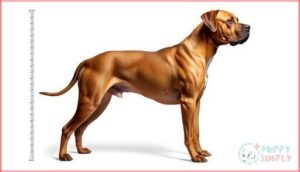
You’ll find this dog breed stands 17 to 22 inches tall and weighs 30 to 60 pounds at maturity. Males generally carry more muscle mass and reach the upper weight factors, while females maintain a slimmer frame.
Growth patterns show most dogs hit full height by 12 to 14 months, with size variance depending on genetics and activity level.
Body proportions reflect their working heritage.
Coat Type and Colors
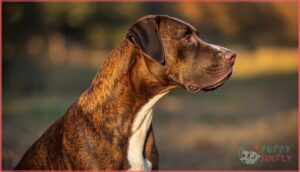
Your dog’s coat texture can range from short and smooth to rough and wiry, with some Black Mouth Cur individuals showing a soft plush feel. Color patterns include solid black, red, brown, and brindle variations, often with white chest markings.
Shedding control requires brushing 2–3 times weekly, especially during spring and fall peaks. Grooming tips include bathing every 6–8 weeks and using fade prevention products to protect coat color from sun exposure.
Distinctive Features
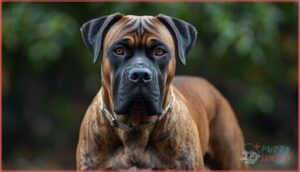
The black muzzle creates this breed’s signature look—dark pigment extends across lips and gums, forming a stark contrast against lighter facial fur.
You’ll notice a broad chest, muscular legs, and a proportionate head shape with medium-length snout. Males stand 18–24 inches tall and weigh 30–60 pounds.
Their keen facial expressions reveal focus and intensity during work tasks.
Temperament and Personality
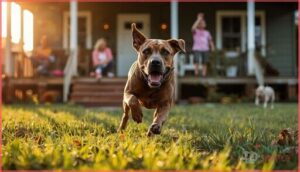
If you’re considering a Black Mouth Cur, you need to know what you’re signing up for temperament-wise. These dogs pack serious energy and strong instincts that shape how they fit into your home.
Let’s break down their personality across three key areas: their drive for activity, how they mesh with family life, and what happens when other pets enter the picture.
Energy Levels and Activity Needs
Your Black Mouth Cur thrives on consistent daily exercise—plan for 1 to 2 hours of combined physical activity to match their moderate to high energy baseline. These high-energy dogs excel in outdoor activities like hiking and ball chasing.
Mental stimulation through puzzle toys for 20 to 40 minutes daily keeps their sharp minds engaged.
Recovery time matters too: they need 12 to 14 hours of sleep to recharge between active sessions, making them ideal for active families.
Family Compatibility
Your family dynamics shape success with this breed. These loyal family dogs thrive when household roles and routines stay consistent, giving them predictable structure.
Active families who practice clear conflict resolution and offer steady emotional support create ideal conditions. They bond deeply with children when parenting styles align on boundaries and supervision.
Family pet considerations matter—their protective instincts require early guidance to balance vigilance with warmth.
Interaction With Other Pets
Your black mouth cur’s territorial instincts shape multi-pet homes. Supervised canine introductions in neutral spaces prevent guarding behaviors, while feline coexistence demands gradual scent familiarization through bedding swaps.
Establish species boundaries with separate feeding stations and escape routes for cats. Early socialization with training and socialization practices using positive reinforcement builds pet harmony.
Consistent dog care routines help canine companions and family pets adapt safely together. It’s important to always respect personal boundaries and pet etiquette when introducing pets to each other.
Health, Nutrition, and Care

Your Black Mouth Cur’s health depends on understanding what this working breed needs to thrive. These dogs carry a strong genetic foundation, but they aren’t invincible—you’ll need to stay aware of specific health concerns and provide the right nutrition and care.
Let’s break down what you need to know to keep your dog in peak condition.
Common Health Issues
Your Black Mouth Cur’s vitality hinges on vigilance—catching health problems early gives you control. Watch for hip dysplasia causing lameness, allergies triggering skin issues, and parasites stealing their strength.
Mastery of dog care and health means taking action:
- Dental care prevents painful periodontal disease
- Obesity prevention shields against diabetes and joint damage
- Parasite control guards their energy and longevity
Regular vet visits empower you to protect what matters.
Dietary Requirements
Fuel your Cur’s power with 18 to 25 percent protein and 8 to 12 percent fat daily. Feed two measured meals spaced 8 to 12 hours apart—about 1 to 1.5 cups per 25 pounds of body weight.
Watch for food allergies and digestive health shifts in coat or stool.
Keep treats under 10 percent of calories and align meal planning with their exercise and activity demands.
Grooming and Hygiene Needs
Your Cur’s grooming needs stay refreshingly simple. Weekly brushing with a bristle brush removes loose hair and distributes natural oils for a healthy shine. Keep skin inspection and hygiene in your routine:
- Bathe every 6 to 8 weeks to maintain coat maintenance without stripping oils
- Trim nails every 2 to 4 weeks for nail care
- Clean ears monthly with vet-approved solution for ear cleaning
- Brush teeth daily for dental hygiene and fresh breath
Exercise and Mental Stimulation
Beyond coat care, your high-energy dog demands substantial physical activity to thrive. Aim for 60 to 90 minutes daily through aerobic training like running, hiking, or dog sports. This exercise routine delivers the mental clarity and brain stimulation your Cur craves. Vary activities to prevent boredom:
| Activity Type | Duration | Benefit |
|---|---|---|
| Trail running | 30-45 min | Builds endurance |
| Obedience drills | 15-20 min | Sharpens focus |
| Fetch games | 20-30 min | Burns energy fast |
Without adequate exercise needs met, expect destructive behaviors.
Training and Socialization

Your Black Mouth Cur’s intelligence works in your favor, but only if you shape it early and consistently. These dogs thrive on structure and clear communication, which means training isn’t optional—it’s how you release their full potential.
Here’s what you need to focus on to raise a well-adjusted, reliable companion.
Trainability and Intelligence
Black Mouth Curs rank high in trainability and intelligence, mastering commands in under two weeks with consistent practice. Their learning speed accelerates through short, daily sessions of 5 to 15 minutes.
You’ll notice strong problem-solving during working tasks and sharp adaptive behavior when routines shift. These loyal dogs excel in obedience training when you use clear cues and predictable structure.
Positive Reinforcement Methods
Reward timing matters most—deliver treats or praise within seconds of the correct behavior so your canine companion connects action to outcome. Use clicker training or clear behavior markers like “Yes” to pinpoint the exact moment your dog succeeds.
Start with continuous reinforcement schedules, rewarding every correct response, then shift to intermittent patterns as skills solidify. Pair descriptive feedback with treats to reinforce both effort and accomplishment.
Early Socialization Practices
Puppy socialization shapes your Black Mouth Cur’s lifelong confidence and behavior. Introduce your pup to a variety of people, household sounds, and outdoor surfaces within the first eight weeks to prevent fear responses and stranger desensitization issues.
Short, positive interactions with calm dogs teach appropriate canine communication. Environmental exposure to objects like vacuums and crates builds household acclimation and reduces stress during daily routines.
Frequently Asked Questions (FAQs)
Is a Black Mouth Cur a good family dog?
Yes, when you provide structure and early socialization.
These loyal canine companions bond deeply with families and tolerate children well, but their protective instincts require consistent training for safe household dynamics.
To learn more about the breed’s history and traits, explore this resource on working dog origins and characteristics.
Do Black Mouth Curs like other dogs?
Like a diplomat reading a room before speaking, your dog’s social success depends on early exposure and consistent training.
Black Mouth Curs form respectful canine companions when properly socialized, displaying playful interactions within clear pack dynamics.
Do Black Mouth Cur dogs bark a lot?
Most working dog breeds use vocalization patterns as alert systems. Black Mouth Curs bark when detecting threats or unusual activity, but proper canine behavior training and daily exercise reduce unnecessary noise through effective communication channels.
Is Black Mouth Cur a pitbull?
No, the Black Mouth Cur isn’t a pitbull. These two working dog breeds have completely different origins, breed characteristics, and canine genetics.
Breed classification distinguishes the Cur as a southeastern hunting dog, not a hybrid dog variation.
How does diet affect a Black Mouth Curs performance?
What your dog eats shapes stamina, coat quality, and recovery speed. Nutrient balance, energy sources, and meal planning directly influence performance optimization.
Strategic dog nutrition fosters muscle repair, endurance, and overall dog health in working breeds.
What toys are best for a Black Mouth Cur?
You’ll want durable chew toys like Kongs, interactive tug ropes for outdoor fun, and puzzle games that challenge their sharp minds.
Scent work toys and fetch balls support active lifestyles perfectly.
Is the Black Mouth Cur a good fit for apartments?
Apartment living demands an Olympian commitment when you’re housing a high-energy dog breed.
Black Mouth Curs need rigorous daily exercise and mental stimulation.
Without adequate space or urban outdoor access, these dogs struggle with confinement and noise.
How much socialization does a Black Mouth Cur need?
Your pup’s social needs are significant: start exposure between 7 and 14 weeks with structured sessions two to three times weekly.
Progressive environmental exposure and positive canine interaction build confidence and prevent territorial guarding behaviors.
Can a Black Mouth Cur adapt to colder climates?
Southern origins mean their short coat offers modest winter protection. You’ll need to provide warm shelter, protective gear, and monitor for frostbite during freezing weather to keep your Black Mouth Cur safe.
Are Black Mouth Curs good for apartment living?
High-energy dogs need daily runs and mental stimulation to thrive in small spaces.
Without structured exercise needs and apartment training, these working breeds struggle with noise levels and space requirements that urban living presents.
Conclusion
The Black Mouth Cur won’t mold itself to your lifestyle—it’ll demand you rise to meet its instincts. This breed carries centuries of survival etched into muscle and bone, requiring handlers who respect that legacy.
You’ll need space, stamina, and unwavering consistency. But commit to that partnership, and you’ll discover a working animal whose loyalty runs deeper than bloodlines.
This isn’t a dog that adapts. It’s one that transforms you into the owner it deserves.
- https://www.merriam-webster.com/dictionary/cur
- https://www.akc.org/expert-advice/health/mange-what-you-need-to-know/
- https://www.ukcdogs.com/find-a-breeder
- https://vcahospitals.com/know-your-pet/eyelid-ectropion-in-dogs
- https://traffic-accident-claims12223.smblogsites.com/33986782/everything-about-recognition-breed-standards