This site is supported by our readers. We may earn a commission, at no cost to you, if you purchase through links.
Cracking open a fresh bag of dog food always promises that satisfying crunch and rich aroma—until a couple of weeks later, when the kibble starts to smell… off. Maybe your pup turns up their nose, or you spot a few suspicious crumbs in the bottom of the bin.
Keeping your dog’s food fresh isn’t just about taste; those hidden changes can quietly chip away at nutrition or even put your best friend’s health at risk. The best way to keep dog food fresh blends science and a little kitchen wisdom, helping you dodge spoilage and keep tails wagging longer.
Table Of Contents
Key Takeaways
- Store dog food in its original, sealed bag placed inside an airtight container kept in a cool, dry spot to preserve freshness and nutrients.
- Avoid common mistakes like exposing food to heat, humidity, air, or pests, and never mix old and new food without careful planning.
- Regularly clean food storage bins and bowls between refills to prevent bacteria, mold, and pest buildup.
- Watch for spoilage signs like off smells, changes in color or texture, and never ignore expiration dates to keep your dog safe and healthy.
Why Dog Food Freshness Matters
Keeping your dog’s food fresh is about more than just taste—it’s essential for their health and happiness. Freshness protects nutrition, keeps meals appetizing, and helps you avoid spoiled food risks.
For tips on spotting signs of spoilage and ensuring every bowl is safe, check out this guide on how to tell if your dog’s food is bad common dangers of spoiled dog food.
Here’s what makes dog food freshness so important.
If you’re looking for tips on storing or serving healthy dog food, check out this helpful guide on homemade dog food freshness and delivery.
Impact on Nutritional Value
Nutrient retention is at the heart of great pet nutrition—think of it as your food’s “freshness shield.” If you don’t guard against food oxidation and nutritional degradation, vitamin stability drops, shelf life shrinks, and safety slips.
For tips on keeping your senior dog’s food as fresh as possible, check out these expert-approved dog food storage solutions for older pets’ nutrition needs here.
Following smart food safety tips, like airtight storage, gives your dog reliable nutrition and extends the shelf life of every scoop.
Effects on Taste and Smell
Of course, nutrition matters—but freshness is what keeps tails wagging. Dogs have an amazing nose for aroma changes. If kibble goes rancid or stale from poor container seals or missed Rancidity Control, even the most balanced food quickly loses its magic. For your pup, flavor preservation is all about effective Aroma Management and consistent Spoilage Prevention.
- Stale or oxidized food loses its meaty aroma—dogs notice instantly
- Moisture control fends off dull, unappetizing flavors
- Even subtle rancidity puts dogs off their dinner
- Freshness factors mean happier, more enthusiastic mealtimes
Proper storage is key to maintaining kibble freshness levels and ensuring your dog’s food remains nutritious and appealing.
Risks of Spoiled Dog Food
Let’s be honest—dog food spoilage isn’t just a stinky inconvenience. Dogs refuse rancid kibble for a reason: it risks everything from nutrient degradation to nasty bouts with Salmonella or Listeria. Microbial contamination can sneak in fast, putting both you and your pup at risk. Here’s a look at what’s really at stake:
For more tips on keeping your pup safe from spoiled food and the problems it causes, check out this guide on the dangers of dogs eating rotten meat and how to store kibble safely.
Spoiled dog food isn’t just unpleasant—it can quickly threaten your pup’s health by inviting dangerous bacteria and nutrient loss
| Food Spoilage Risk | How It Affects Your Dog |
|---|---|
| Food Safety Risks | Vomiting, diarrhea, and infections |
| Nutrient Degradation | Lower vitamins, less energy |
| Microbial Contamination | Bacterial illness risk |
| Pet Health Impacts | Poor coat, lethargy, gut trouble |
| Spoilage Detection | Off smells, mold, changes in color |
Benefits for Pet Health and Satisfaction
Harmony in pet nutrition starts with fresh food. You’ll notice how vibrant your dog’s coat looks and how eagerly they run to their bowl when meals are tasty and safe.
Consistent, nutrient-preserving storage offers real health rewards—steady digestion, energetic play, and fewer tummy upsets. That’s dog food safety in action, supporting true pet health and satisfaction every single day.
For easy ways to keep your dog’s food safe and nutritious, check out these expert-backed tips on storing dog food the right way.
Common Mistakes That Spoil Dog Food
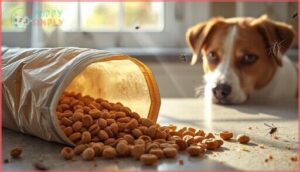
Keeping dog food fresh isn’t always as simple as sealing a bag and walking away. A few common slip-ups can end up spoiling even the best kibble.
Here are some mistakes to watch for as you store your pup’s food.
Storing Food in Hot or Humid Areas
Hot and humid spots—like garages and sheds—are the arch enemies of dog food storage. Even short heat waves can speed up spoilage and zap nutrition, so don’t rely on a corner of the laundry room or outdoor storage container.
For real Climate Control and Spoilage Prevention, trust airtight Food Storage Solutions in cool, dry indoor spaces with proper Temperature Monitoring.
Leaving Bags Unsealed or Open
With every opened bag left unsealed, oxygen exposure kicks off lipid oxidation—kind of like the slow fizz leaving a soda bottle. That means:
- Nutrient loss speeds up.
- Rancidity effects sneak in early.
- Food spoilage becomes a real risk.
- Pest infestation chances rise.
- An airtight seal or sturdy storage container stops these issues in their tracks.
Pouring Kibble Directly Into Containers
Pouring kibble straight into a container might sound tidy, but this habit actually invites Oxygen Exposure and Nutrient Loss—with Rancid Residue clinging to bin walls over time.
Instead, keep the original bag sealed inside an airtight container. This approach blends Container Safety, smart Storage Hygiene, and practical Dog Food Storage, giving your pet food storage tips real staying power against food spoilage.
Mixing Old and New Food
Mixing old and new dog food without a plan might seem like clever Food Rotation, but it can backfire. Without careful Mixing Ratios and a Gradual Shift, you risk Digestive Upset, picky eating, and Palatability Loss.
Consistency in Food Storage and Handling—using fresh Pet Food and tossing the old—keeps meals appealing, safe, and fosters straightforward Dog Food Storage habits.
Ignoring Expiration and “Best By” Dates
Ever wonder if that “best by date” is just a suggestion? Ignoring the expiration date isn’t harmless—dog food expiration signals real spoilage risks and nutrient loss. Relying only on dates can mislead you about food safety and shelf life. Instead, keep an eye out for:
- Off smells or textures
- Changes in color
- Loss of aroma or flavor
Best Storage Containers for Dog Food
Finding the right way to store your dog’s food makes all the difference in terms of freshness and safety. There’s no shortage of containers on the market, but the best ones have a few key things in common.
Let’s look at what really works for keeping your dog’s meals in top shape.
Advantages of Airtight Containers
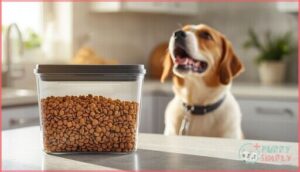
An airtight container is your best ally in dog food storage. It’s like zipping up freshness—a simple food storage solution that keeps air and pests out, locks in flavor, slows down rancidity, and shields nutrients from oxygen and moisture.
With this level of Freshness Preservation, you’re not just feeding your dog—you’re safeguarding every meal’s nutritional punch.
Using Original Packaging Inside Containers
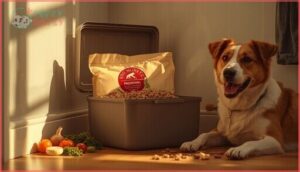
Here’s one of the most effective dog food storage solutions: keep the original bag sealed tight and place it right into your airtight container. This simple combo harnesses packaging design for maximum freshness preservation. You get extra defense against pests, traceability if you need it, and less residue clinging inside your bin.
Four big container benefits:
- Stops air leaks.
- Preserves nutrients.
- Guards flavor and scent.
- Retains all label info.
Recommended Materials (Stainless Steel, Glass, BPA-Free Plastic)
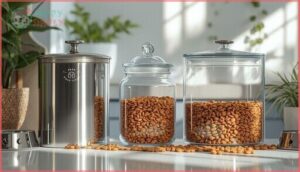
After sliding that sealed bag into your airtight container, let’s talk material comparison for your dog food storage. Stainless steel shines for container durability and freshness retention, glass wins for food preservation methods and storage safety, while BPA-free plastic offers affordable food storage solutions.
Each keeps kibble safe—meaning better pet health benefits—but nonporous materials resist odors and bacteria best.
Choosing The Right Size and Seal
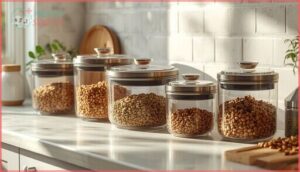
Now, let’s talk container sizing and the magic of a truly good seal. Pick a storage capacity that closely matches your bag to limit extra air—and keep it fresher longer.
Look for airtight lids and well-built seal mechanisms: these little details are the secret sauce of dog food storage. They’re storage solutions that really pull their weight for freshness preservation.
Optimal Storage Locations and Conditions
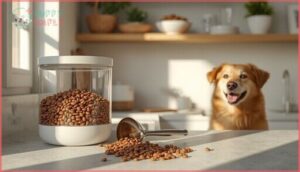
Where you keep your dog’s food matters just as much as how you store it. A few simple choices can make all the difference for freshness and safety.
Let’s look at the best spots and conditions for keeping every bowl as good as new.
Keeping Food in Cool, Dry Places
Think of dog food like a loaf of homemade bread—leave it in a hot, muggy spot and you’ll notice it goes stale fast. Cool Storage Tips aren’t just for show; Dry Food Preservation depends on keeping food in a pantry or cupboard, away from heat and humidity.
Good Temperature Management and Humidity Control make all the difference in lasting Freshness Maintenance.
Avoiding Garages and Outdoor Sheds
Regarding Dog Food Storage, parking your kibble in the garage or shed is asking for trouble. Climate effects inside these spaces—think wild swings in heat and humidity—fast-track spoilage and nutrient loss. Garage risks even include extra pest control headaches.
For proper storage, stick with indoor storage solutions designed for food safety and handling, not Shed Alternatives.
Protecting Against Pests and Moisture
Under your roof, effective Pest Control and Moisture Barriers go hand in hand with smart dog food storage. How do you stay one step ahead? Choose airtight containers and Storage Solutions designed for humidity management.
For practical food safety and handling, make these habits routine:
- Store off the ground
- Seal original packaging
- Inspect often for pests
- Avoid damp areas
Importance of Cleanliness and Regular Maintenance
Ever notice how a dog’s food bowl can become a secret haven for germs? Emphasizing Food Bowl Hygiene and Storage Container Cleaning isn’t just busywork—it’s the frontline for Microbial Contamination Prevention.
By building Regular Maintenance Schedules and practicing strong Pest Control Methods, you’ll secure Proper Food Storage, enhance Food Safety and Quality, and protect both your dog’s health and your peace of mind.
Pro Tips for Extending Dog Food Freshness
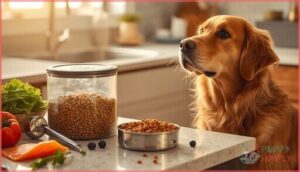
If you want to make your dog’s food last longer, a few small changes can make a big difference.
Let’s look at some simple tricks that help you lock in freshness and keep mealtime safe.
Here’s how you can get the most out of every bag and can.
Freezing Kibble for Long-Term Storage
Freezing kibble might sound like packing your dog’s food into a time capsule—done right, it can help stretch out shelf life and fight off spoilage.
For freezer safety and superior kibble preservation, follow these simple steps:
- Store kibble in airtight, original packaging.
- Keep at or below 0°F to retain nutrients.
- Thaw small batches to prevent condensation.
Proper Handling of Opened Wet Food
A tightly sealed can of dog food isn’t just a convenience—it’s peace of mind for your pet’s health. After scooping some out, refrigerate leftovers under 40°F and always use a clean, airtight container. Keep an eye out for spoilage signs like odd smells, texture, or color shifts.
Here’s a quick comparison to nail Wet Food Safety:
| Step | Pro Tip Example |
|---|---|
| Container Sealing | Use a tight plastic lid, not foil or loose wrap |
| Spoilage Signs | Discard if you spot odors, discoloration, or sliminess |
Cleaning Storage Bins Between Refills
Just like you’d freshen up the kitchen after a meal, storage hygiene matters for kibble freshness too. Give bins a rinse and scrub with unscented soap between refills—residue attracts mold and pests. Let everything dry fully before pouring in new food.
Consistent container maintenance and occasional bin sanitizing support high-quality dog food storage and smooth food handling and safety.
Frequently Asked Questions (FAQs)
How can you tell if dog food has gone bad?
Think of your dog’s dinner like a carton of old milk—when rancidity signs hit, you’ll notice off smells, odd colors, sliminess, or fizzing.
Spoilage indicators like these mean the shelf life is up, and pet health risks rise.
Can you store different brands of kibble together?
Kibble mixing from different brands is safe for most dogs if you use airtight containers and store them properly.
Watch out for sensitivities, and always prioritize storage safety and freshness factors to preserve nutrients and prevent spoilage.
What’s the safest way to transport dog food?
If wrangling a wild raccoon sounds easier than travel with pet food, you’re not alone.
Invest in airtight travel containers for dog food transport—keep storage cool, dry, and secure to safeguard pet food safety on the go.
Conclusion
Think of your dog’s bowl as a treasure chest—every meal should sparkle with freshness, not gather dust. The best way to keep dog food fresh isn’t complicated; it’s a simple blend of smart storage, a watchful eye, and just a touch of kitchen know-how.
That careful attention means every bite fuels your pup’s health and happiness. When you treat their food with the respect it deserves, you’re nourishing more than just their belly—you’re feeding your whole bond.
- https://www.hillspet.com/pet-care/nutrition-feeding/cat-and-dog-food-storage-tips
- https://pmc.ncbi.nlm.nih.gov/articles/PMC11907420/
- https://www.earthbornholisticpetfood.com/blog/dog-cat-tips/the-ultimate-guide-to-dog-food-storage-containers/
- https://www.houndsy.com/blogs/modern-tails/how-long-does-wet-dog-food-last-once-opened-a-practical-guide-for-pet-owners
- https://www.fda.gov/animal-veterinary/safety-health/recalls-withdrawals