This site is supported by our readers. We may earn a commission, at no cost to you, if you purchase through links.

Your puppy isn’t misbehaving to spite you—they just don’t speak English yet. That gap between what you want and what your pup understands can turn those adorable first weeks into frustrating power struggles over chewed shoes and puddles on the carpet.
The right training book bridges that communication gap, translating canine behavior into clear steps you can actually follow. But here’s the catch: beginner-friendly doesn’t mean oversimplified, and expert-level doesn’t have to feel overwhelming.
The best puppy training books for beginners strike that balance, giving you proven techniques without drowning you in jargon or conflicting advice.
Table Of Contents
- Key Takeaways
- Best Puppy Training Books for Beginners
- Top 10 Puppy Training Books Reviewed
- 1. Best Dog Ever Training Program
- 2. Puppy Training Easy Steps Guide
- 3. Perfect Puppy Training Book
- 4. Zak George Dog Training Guide
- 5. Puppy and Dog Training Guide
- 6. Dog Training Book for Kids
- 7. Puppies For Dummies Guide
- 8. Puppy House Training Guide
- 9. Easy Dog Training Guide
- 10. Raising The Perfect Dog Book
- Essential Puppy Training Techniques Explained
- How to Choose The Right Training Book
- Common Puppy Training Challenges Addressed
- Expert Tips for Successful Puppy Training
- Frequently Asked Questions (FAQs)
- Conclusion
Key Takeaways
- The best puppy training books balance science-backed methods with beginner-friendly instructions, focusing on positive reinforcement techniques that build trust rather than using punishment or fear-based approaches.
- Effective training starts the moment your puppy comes home, around eight weeks old, using short 5-10 minute sessions that match your pup’s natural attention span and developmental stages.
- Success comes down to consistency in daily routines, realistic goal-setting with measurable milestones, and understanding that common challenges like barking, chewing, and potty accidents are normal parts of the learning process.
- The right training book should match your specific goals and learning style, whether you need structured programs for basic obedience, solutions for behavioral issues, or guidance on socialization and building a strong bond with your dog.
Best Puppy Training Books for Beginners
Choosing your first puppy training book can feel overwhelming when you’re staring at dozens of options, each promising quick results and perfect behavior. The right guide gives you a clear roadmap through those early weeks when everything feels chaotic, from housebreaking mishaps to leash-pulling adventures.
We’ve reviewed the top 10 books that beginners trust most, focusing on clear instructions, positive methods, and realistic expectations for new puppy owners.
Key Features of Effective Training Books
The best puppy training books balance science with simplicity. You’ll want clear, step-by-step guidance that focuses on positive reinforcement and proven training methods. Look for books with practical exercises, visual aids, and troubleshooting tips that match your puppy’s developmental stage.
Quality training resources include author credentials, research-backed techniques, and coverage of essential skills like house training and socialization—all presented in an accessible, beginner-friendly format.
Effective puppy training also requires understanding of clear science writing.
Why Beginners Need The Right Guide
Training foundations matter because your puppy’s brain is wired to learn fast during those first few months. Without owner guidance grounded in positive reinforcement, you’ll likely stumble into behavioral issues that could’ve been prevented.
The right training books give you learning strategies that match puppy development stages, so you’re not guessing your way through dog training when clear, proven methods already exist. Understanding the main topic and its related subtopics can help you create a structured approach to puppy training.
Benefits of Learning From Trusted Authors
Once you pick up the best dog training books, you’re tapping into author credentials that matter—certifications like CPDT-KA and years of case studies.
Trusted sources ground their positive reinforcement and dog training methods in research findings, not guesswork.
That evidence-based expert guidance helps you skip the trial-and-error phase and build skills your puppy actually reacts to.
Top 10 Puppy Training Books Reviewed
Now that you know what to look for in a training book, let’s walk through ten excellent options that can guide you from your puppy’s first day home to confident obedience.
Each book brings something unique to the table, whether it’s a structured program, step-by-step instructions, or expert insights customized to different learning styles. You’ll find the right fit here, no matter where you’re starting from.
1. Best Dog Ever Training Program
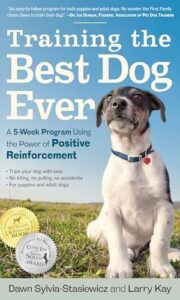
If you’re overwhelmed by conflicting advice, Dawn Sylvia-Stasiewicz’s book cuts through the noise with her proven 5-week program. You’ll follow step-by-step photographs that break down training methods into manageable daily tasks, covering everything from crate training to fixing behavior problems.
What sets this guide apart is its unwavering focus on positive reinforcement—building trust through treats and praise, never punishment.
Whether you’re shaping canine development in an 8-week-old pup or correcting adult dog behavior, this 304-page resource teaches puppy training techniques that strengthen your bond while addressing puppy socialization and basic cues effectively.
| Best For | Dog owners who want to build a strong, trust-based relationship with their puppy or adult dog using positive reinforcement instead of punishment-based methods. |
|---|---|
| Training Method | Positive reinforcement |
| Page Count | 304 pages |
| Publication Year | 2012 |
| Target Audience | Puppy and adult dogs |
| Potty Training | Included |
| Basic Commands | Included |
| Additional Features |
|
- Step-by-step photos and a structured 5-week program make training easy to follow, even for first-time dog owners
- Works for both puppies and adult dogs with behavior issues like jumping, barking, or leash-pulling
- Focuses on positive reinforcement with treats and praise, creating a happier, more confident dog
- Some readers find the book’s layout and formatting hard to navigate or follow
- The 5-week program requires daily commitment and consistency, which may feel too intensive for casual pet owners
- Less relevant if you’re looking for training beyond basic obedience or companion dog needs
2. Puppy Training Easy Steps Guide

At just over $13, this audiobook delivers nearly four hours of practical instruction you can absorb while walking your new pup. You’ll find structured routines for housebreaking, crate training, and core commands like sit and stay—all built around positive reinforcement training that rewards good behavior instead of punishing mistakes.
The guide emphasizes short 5-10 minute training schedules that fit puppy development stages without overwhelming either of you. It’s perfect for first-time owners managing puppy socialization and early training techniques, though it’s best suited for puppies under six months.
| Best For | First-time puppy owners who want a practical, step-by-step training plan they can listen to while handling daily puppy care. |
|---|---|
| Training Method | Positive reinforcement |
| Page Count | 3 hours 53 minutes |
| Publication Year | Not specified |
| Target Audience | New puppy owners |
| Potty Training | Included |
| Basic Commands | Included |
| Additional Features |
|
- Short 5-10 minute training sessions fit easily into your day without overwhelming you or your puppy
- Covers all the essentials—housebreaking, crate training, socialization, and basic commands—in one affordable resource
- Positive reinforcement approach builds trust and good habits instead of relying on punishment
- Only works well for puppies under six months old, so it won’t help if your dog is older
- Some users reported poor binding quality with pages falling out of physical versions
- Content is geared toward US audiences and may not apply to training practices in other countries
3. Perfect Puppy Training Book

Dr. Sophia Yin’s 176-page guide gives you a realistic roadmap through those critical first weeks with your new companion. You’ll work through house training, basic obedience, and puppy development stages using reward systems that build trust instead of fear.
The book includes checklists and step-by-step photos that make positive reinforcement techniques easy to replicate, though the 7-day timeline might feel ambitious if you’re juggling work.
At under $20, it’s a practical choice for first-time owners committed to training schedules that respect puppy socialization needs.
| Best For | First-time puppy owners who can dedicate consistent daily time to positive reinforcement training and want a structured, science-backed approach from a veterinarian. |
|---|---|
| Training Method | Reward-based learning |
| Page Count | 176 pages |
| Publication Year | 2011 |
| Target Audience | New puppy owners |
| Potty Training | Included |
| Basic Commands | Included |
| Additional Features |
|
- Step-by-step photos and checklists make reward-based techniques easy to follow without prior training experience
- Covers essential topics like house training, socialization, and basic obedience in one affordable guide under $20
- Written by a veterinarian and trainer, so methods align with modern animal behavior science
- The 7-day timeline can feel unrealistic for people working full-time jobs
- Requires significant time commitment and consistency that not all owners can maintain
- Some copies arrive with damaged corners or pages due to varying book conditions
4. Zak George Dog Training Guide

Zak George’s 224-page guide walks you through common behavioral issues like chewing, jumping, and separation anxiety using positive reinforcement training that builds cooperation instead of compliance through fear. Published by Ten Speed Press in 2019, the book offers step-by-step instructions with real case studies that show how reward systems shape dog behavior during puppy socialization and beyond.
You’ll find breed-specific advice that works for any experience level, though some readers note the author’s promotional tone can feel pushy. At around $15, it’s a practical resource if you’re committed to trust-based training methods.
| Best For | Dog owners of any experience level who want to address behavioral issues like chewing, jumping, and barking using positive reinforcement rather than punishment-based methods. |
|---|---|
| Training Method | Positive reinforcement |
| Page Count | 224 pages |
| Publication Year | 2019 |
| Target Audience | All experience levels |
| Potty Training | Not primary focus |
| Basic Commands | Included |
| Additional Features |
|
- Step-by-step instructions with real case studies make training techniques easy to follow and apply
- Covers common problems like separation anxiety and excessive barking with breed-specific considerations
- Affordable at around $15 for 224 pages of practical, reward-based training strategies
- Author’s promotional tone and frequent mentions of his YouTube channel and products can feel pushy
- Positive reinforcement approach may not work for all dogs or severe behavioral issues
- Some training scenarios aren’t covered, so you might need additional resources for complex problems
5. Puppy and Dog Training Guide
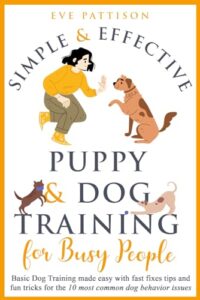
This independently published 126-page guide covers puppy training essentials from crate training to walking on a leash, all for just $9.99. You’ll get straightforward instructions on basic commands, socializing your pup, and fixing 10 common unwanted behaviors using positive reinforcement methods that respect canine behavior principles.
The book’s compact format won’t overwhelm you with complex theory, making it ideal for busy new owners who need practical owner guidance.
Just remember, it won’t address severe behavioral issues or breed specificity—those require professional help beyond any training book’s scope.
| Best For | New dog owners who want a budget-friendly guide covering basic training fundamentals without getting overwhelmed by advanced techniques. |
|---|---|
| Training Method | Positive reinforcement |
| Page Count | 126 pages |
| Publication Year | 2023 |
| Target Audience | New and experienced owners |
| Potty Training | Included |
| Basic Commands | Included |
| Additional Features |
|
- Covers all the essentials—house training, basic commands, leash skills, and solutions for 10 common behavior problems in one affordable package
- Uses positive reinforcement methods that build trust and strengthen your bond with your dog
- Straightforward layout makes it easy to find what you need when you’re dealing with a specific issue
- At 126 pages, it sticks to basics and won’t help with severe behavioral issues or specialized training needs
- Doesn’t offer breed-specific advice, which can be helpful since different breeds have unique challenges
- Requires consistent effort on your part—the book gives you the tools, but results depend on regular practice
6. Dog Training Book for Kids
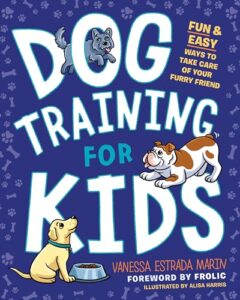
At 176 pages, this Z Kids publication teaches children aged seven and up how to train their puppy using positive reinforcement and kid-friendly methods. You’ll find basic commands like sit and stay alongside fun training games such as high five and obstacle courses, all written with child safety tips woven throughout.
The book emphasizes parental involvement while enabling kids to understand dog behavior through clear instructions, though it skips biting issues and uses smaller print that might challenge younger readers during puppy socialization sessions.
| Best For | Parents looking to involve their kids (ages 7+) in dog training through positive reinforcement methods while building responsibility and a stronger bond with their pet. |
|---|---|
| Training Method | Basic training lessons |
| Page Count | 176 pages |
| Publication Year | 2019 |
| Target Audience | Kids and families |
| Potty Training | Included |
| Basic Commands | Sit, stay, heel, drop |
| Additional Features |
|
- Covers a wide range of training essentials from basic commands to fun tricks and games, giving kids plenty of engaging activities to work through with their dog
- Uses age-appropriate language and illustrated demonstrations that make complex training concepts easy for children to understand and follow
- Includes practical features like equipment lists, progress tracking tools, and safety guidelines that help parents supervise and support their child’s training efforts
- Doesn’t address biting or nipping behavior, which is a common issue many families face with puppies and young dogs
- Small print size may be difficult for younger readers to work through independently, potentially requiring more adult assistance than expected
- Dense content and text-heavy pages might not hold the attention of all children, especially those who prefer more visual or interactive learning styles
7. Puppies For Dummies Guide
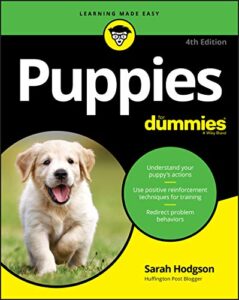
This 432-page guide from For Dummies serves as your complete reference for puppy care and training basics, covering everything from breed selection to wellness plans using positive reinforcement methods. Published in April 2019, it incorporates the latest science on dog behavior alongside proven techniques for housebreaking, socialization, and basic obedience, helping you integrate your puppy into daily life.
While some readers find the thorough approach lengthy for quick lookups and note the sparse index makes finding specific training topics challenging, it offers valuable owner guidance throughout your puppy’s development journey.
| Best For | First-time puppy owners who want a comprehensive, science-backed guide covering everything from choosing a breed to housebreaking and socialization. |
|---|---|
| Training Method | Positive reinforcement |
| Page Count | 432 pages |
| Publication Year | 2019 |
| Target Audience | First-time owners |
| Potty Training | Included |
| Basic Commands | Included |
| Additional Features |
|
- Covers all the basics you need in one place—from potty training to positive reinforcement techniques—so you don’t have to piece together advice from multiple sources.
- Uses proven methods backed by the latest dog behavior science, which means you’re getting reliable, effective training strategies that actually work.
- Detailed enough to reference throughout your puppy’s growth stages, making it a long-term resource rather than just a quick-start manual.
- At 432 pages, it’s pretty dense and can feel overwhelming when you just need a fast answer to a specific problem.
- The index isn’t great, so finding particular topics quickly can be frustrating—not ideal when you’re dealing with a puppy emergency.
- Some readers have noticed editorial inconsistencies and found the tone or approach doesn’t quite match their training style or preferences.
8. Puppy House Training Guide

If potty training feels like your biggest hurdle, this 114-page guide delivers a structured 7-day housebreaking schedule that works for first-time owners and experienced handlers alike. You’ll find practical crate training methods, accident prevention strategies, and clear puppy boundaries that help your pup learn faster.
At $10.97, it’s straightforward and positive in approach, though some readers found it repetitive and noted results may take longer than promised. If you’re committed to following the potty schedules consistently, it offers solid housebreaking tips worth your investment.
| Best For | First-time puppy owners or anyone looking for a structured, positive training approach to housebreak their pup quickly with clear schedules and accident-prevention tips. |
|---|---|
| Training Method | Positive training approach |
| Page Count | 114 pages |
| Publication Year | 2015 |
| Target Audience | First-time owners |
| Potty Training | Primary focus |
| Basic Commands | Not primary focus |
| Additional Features |
|
- Offers a practical 7-day potty training schedule with step-by-step guidance that makes the process less overwhelming
- Covers essential topics like crate training, accident handling, and recognizing puppy signals to prevent mistakes
- Affordable at $10.97 and suitable for both new and experienced dog owners
- Some readers found the content repetitive throughout the 114 pages
- Training may take longer than the promised 7 days depending on your puppy and consistency
- Requires serious dedication to follow the schedules and routines—it won’t work if you’re not all in
9. Easy Dog Training Guide

Moving beyond housebreaking alone, you’ll appreciate this 162-page guide from Callisto that covers essential commands like sit, stay, and come using positive reinforcement techniques. Published in late 2020, it walks you through training basics for puppies, adults, and rescue dogs with step-by-step instructions and helpful recap sections.
At around $10, it’s beginner-friendly and emphasizes reward systems that strengthen canine communication. Keep in mind that only about 60 pages focus directly on dog training—the rest covers preparation topics like supplies and common behavioral issues.
| Best For | First-time dog owners who want a straightforward, positive approach to teaching basic commands and handling common behavioral issues without getting into advanced tricks. |
|---|---|
| Training Method | Positive reinforcement |
| Page Count | 162 pages |
| Publication Year | 2020 |
| Target Audience | First-time owners |
| Potty Training | Included |
| Basic Commands | Sit, down, stay, come |
| Additional Features |
|
- Uses positive reinforcement throughout, which builds trust and makes training feel less stressful for both you and your dog.
- Covers the full range from puppies to rescue dogs, so it works no matter what stage you’re starting from.
- Includes helpful recap sections after each chapter that make it easy to review what you’ve learned.
- Only about 60 of the 162 pages actually focus on training—the rest is prep work and general advice that might feel basic.
- Doesn’t dive into advanced techniques or high-energy tricks if you’re looking to go beyond the basics.
- Some of the information can feel pretty generic, especially if you’ve already done any research on dog training.
10. Raising The Perfect Dog Book

If you’re looking for a broader approach, Cesar Millan’s 320-page guide covers puppy development from day one through adolescence, weaving in housebreaking tips alongside nutrition and obedience. Published by Three Rivers Press in 2009, it focuses on dog behavior through the lens of psychology—emphasizing your role as a calm, assertive leader rather than step-by-step drills.
With positive reinforcement woven throughout and breed-specific exercises included, it’s solid owner guidance for tackling behavioral issues, though some readers wish for more structured training basics.
| Best For | New dog owners who want to understand their puppy’s psychology and build a calm, balanced relationship rather than just following training scripts. |
|---|---|
| Training Method | Behavior psychology |
| Page Count | 320 pages |
| Publication Year | 2009 |
| Target Audience | New dog owners |
| Potty Training | Included |
| Basic Commands | Included |
| Additional Features |
|
- Covers the full journey from puppyhood through adolescence with breed-specific exercises and developmental milestones
- Focuses on creating a healthy owner-dog dynamic through calm, assertive leadership and positive reinforcement
- Goes beyond basic commands to address nutrition, housebreaking, and common behavioral problems in one comprehensive guide
- Light on step-by-step training methods, which may frustrate readers looking for structured how-to instructions
- Requires patience and a specific leadership mindset that can be challenging for some owners to adopt
- Binding quality issues reported by some readers, and the psychology-focused approach won’t appeal to everyone
Essential Puppy Training Techniques Explained
Once you’ve chosen the right training book, it’s time to put those lessons into action. The techniques you’ll encounter most often—positive reinforcement, clicker training, housebreaking, and socialization—form the foundation of every well-behaved dog.
Let’s break down each method so you can start training with confidence.
Positive Reinforcement Methods

Positive reinforcement is the backbone of modern puppy training—your pup learns best when good behavior earns rewards. When you deliver a treat or praise within two seconds of the right action, you’re building motivation that sticks.
Training books emphasize reward-based training with consistent schedules and reinforcement techniques, helping you modify behavior without punishment while keeping your puppy keen to learn.
Clicker Training for Beginners

A clicker is a small device that marks desired behavior with a distinct sound, pairing that click with treats to create instant clarity for your puppy. Training books recommend short, frequent clicker training sessions—five to ten minutes several times daily—so you build reliable responses without overwhelming your pup. Start with simple cues using positive reinforcement and consistent reward systems.
Housebreaking and Potty Training

You can build a reliable potty schedule by taking your puppy out every two to three hours, plus immediately after meals and naps—this consistency is the foundation of successful housebreaking strategies.
Pair crate training with enzymatic cleaners for odor control to prevent repeat accidents in the same spot.
Supervise closely, reward correct bathroom behavior instantly, and you’ll establish solid puppy hygiene habits that make potty training less stressful for everyone.
Socialization and Leash Training Basics

Puppy socialization works best when you introduce your dog to diverse people and environments between 8 and 12 weeks, pairing gentle handling with positive reinforcement to build confidence.
Start leash training in quiet spaces using treats and praise to encourage good leash manners, then gradually increase public exposure.
These environmental adaptation skills prevent fear-based reactions and make dog training smoother as your puppy matures.
How to Choose The Right Training Book

Not every training book will be the right fit for you and your puppy. The best choice depends on your specific goals, your preferred training approach, and how you like to learn.
Let’s look at three key factors that’ll help you find a book that actually works for your situation.
Matching Book Content to Your Goals
Your puppy training journey starts with clear Goal Setting—what do you actually want to achieve? Before choosing Training Books, think about your Training Objectives and how Content Alignment bolsters them.
Consider what matters most:
- Housebreaking basics for brand-new puppy parents
- Positive Reinforcement techniques to build trust
- Behavior solutions for barking or chewing issues
- Higher-level obedience once fundamentals click
- Reader Engagement style that keeps you motivated
Match Book Selection to where you’re heading, not just where you are.
Considering Training Philosophy and Methods
Training philosophy isn’t just theory—it shapes every moment you spend with your pup. Positive Reinforcement and Reward-Based Training align with Behavioral Science and Canine Psychology, helping you build trust instead of fear. Look for books grounded in Learning Theory and Training Ethics that respect your puppy’s emotional well-being.
| Training Methods | Core Principle |
|---|---|
| Positive Reinforcement | Reward desired behaviors immediately |
| Clicker Training | Mark exact moments of success |
| Reward Systems | Use treats, praise, toys consistently |
| Aversive Techniques | Avoid stress and punishment |
| Dog Training Science | Apply evidence-based practices |
Choose methods that feel right for both of you.
Evaluating Book Format and Accessibility
A great training book won’t help if you can’t navigate it easily. Readability Factors like clear chapter layouts and Visual Aids make complex Training Methods digestible, while Format Options—print, e-book, or audiobook—match your Learning Preferences. Consider these Accessibility Tools:
- Adjustable text size in digital versions for tailored reading comfort
- Step-by-step photo demonstrations showing Positive Reinforcement techniques
- Searchable indexes that help you quickly locate specific Puppy Training topics
- Audio formats for hands-free learning during Dog Training sessions
Common Puppy Training Challenges Addressed

Every new puppy owner hits the same frustrating roadblocks—barking that drives the neighbors crazy, chewed-up shoes, and those inevitable accidents on your favorite rug. The best training books don’t just teach commands; they give you real solutions for the messy, chaotic problems that make you question your sanity at 2 AM.
The best training books solve the messy, chaotic problems that make new puppy owners question their sanity at 2 AM
Here’s how to tackle the challenges that trip up most beginners.
Barking and Chewing Solutions
Excessive noise and furniture-chewing can derail your Puppy Training progress fast. The right Training Books teach Quiet Commands and Bite Inhibition using Positive Reinforcement—proven to cut barking by 25–60% and slash Destructive Behavior up to 50% within weeks. Offer safe Chewing Alternatives during teething, reward calm moments, and you’ll shape better Dog Behavior without punishment. Consistency turns chaos into confidence.
| Challenge | Effective Solution | Expected Timeline |
|---|---|---|
| Barking | Quiet Commands + environmental management | 4–12 weeks |
| Chewing | Teething Solutions + safe alternatives | 6–8 weeks |
| Destructive Behavior | Bite Inhibition + enrichment | 8 weeks |
Managing Potty Accidents
You’ll face plenty of wet spots in those first months—your Puppy Training depends on fast, neutral cleanup to erase odor cues. Set Potty Schedules around meals and naps, track Elimination Patterns in a notebook, and use Crate Training to shrink accident zones.
Consistent Accident Prevention and smart Cleanup Strategies turn House Training chaos into predictable success, one dry day at a time.
Preventing Destructive Behavior
Chewed shoes and torn cushions signal unmet needs—your puppy isn’t being defiant. Destructive Behavior drops by 40% when you combine early Puppy Proofing with structured Teething Solutions and Environmental Enrichment that fights Boredom Prevention.
Try these Dog Training Tips:
- Rotate toys weekly to maintain novelty
- Schedule 60 minutes of daily exercise
- Use scent puzzles during alone time
- Pair Positive Reinforcement with appropriate chew options
Building Confidence in Your Puppy
Beyond stopping destruction, you’ll want to focus on Confidence Building—the foundation of lasting good behavior. Puppies that receive Gentle Handling and Positive Reinforcement during their first 12 weeks show fewer fear responses later.
Use Exposure Therapy gradually: introduce your pup to Calm Environments first, then slowly add new sights and sounds. This Puppy Socialization approach fosters healthy Puppy Development and Growth without overwhelming your dog.
Expert Tips for Successful Puppy Training

Even with the best training book in your hands, success comes down to how you apply what you’ve learned. The difference between a well-behaved dog and ongoing frustration often lies in a few key strategies that experienced trainers swear by.
Let’s look at the expert-backed approaches that’ll help you get the most out of your training efforts.
Setting Realistic Training Goals
You can’t train a puppy to flawlessness overnight, so set goals that match reality. Start with measurable targets—like three successful potty trips daily within seven days—and track progress using simple behavioral metrics.
Break your training plans into two-week milestones that align with puppy development stages. This approach, emphasized in quality training books, helps you apply positive reinforcement consistently while monitoring your dog’s behavior without frustration.
Creating Consistent Training Routines
You’ll see faster progress when you train at the same time each day—even 5–10 minutes works wonders. Use consistent cues across all training environments, whether you’re practicing in your living room or backyard.
Keep your reward systems predictable, delivering treats immediately after correct responses. This structure, emphasized in quality dog training books, reinforces positive reinforcement and aligns perfectly with natural puppy development stages.
Strengthening The Puppy-Owner Bond
Trust building happens in quiet moments—gentle handling during grooming, calm praise after potty success, and predictable responses to your puppy’s needs. These bonding techniques create an emotional connection that makes positive reinforcement work better.
- Schedule daily one-on-one play sessions to strengthen dog owner relationships
- Use consistent body language and tone to reinforce owner consistency
- Integrate puppy socialization walks with focused attention exercises
- Practice gentle touch during rest time to support dog behavior development
Incorporating Advanced Obedience Skills
Once your puppy masters the basics, expert obedience opens new doors—off-leash training in parks, distance commands across fields, and precision heelwork that looks seamless.
Complex cues like two-step sequences demand patience, but positive reinforcement training books teach you to measure success rates and adjust intensity.
Track your progress with clear criteria, and you’ll build dog obedience that holds up anywhere.
Frequently Asked Questions (FAQs)
What age should puppy training actually start?
You should start as soon as your puppy comes home, ideally around eight weeks old. This early learning window is critical for building behavioral foundations and maximizing the socialization period when puppies absorb new experiences most readily.
How long should each training session last?
Ironically, less is more when training your puppy—short five- to ten-minute sessions work best.
Your puppy’s attention span thrives on frequent, focused practice using positive reinforcement, not marathon training methods that overwhelm.
What treats work best for training rewards?
High-value training bites like tiny chicken pieces or cheese work best with positive reinforcement techniques. Keep them soft, small, and calorie-conscious—reward timing matters more than treat size for effective puppy training success.
Should you train multiple puppies together or separately?
Most trainers swear by separate sessions when raising multiple puppies. It prevents competition, sharpens focus, and tailors positive reinforcement to each dog’s pace.
However, group training dynamics boost puppy socialization in controlled household management settings.
Conclusion
Knowledge is power, but only when you put it to work. The best puppy training books for beginners give you that knowledge—now it’s your turn to show up consistently, stay patient through the messy moments, and celebrate small wins.
Your puppy’s learning to trust your guidance, and you’re learning to speak their language. That partnership doesn’t happen overnight, but with the right book in hand, you’re already miles ahead of where you started.
- https://pangovet.com/?utm_source=dogster&utm_medium=article&utm_campaign=dog_behavior_training
- http://www.controlunleashed.net/
- https://www.akc.org/expert-advice/training/clicker-training-your-dog-mark-and-reward/
- https://www.thetrustedcompanion.com/dog-training-basics
- https://vetwellnesscenter.com/wp-content/uploads/2024/01/Five-benefits-of-training-your-dog.pdf