
This site is supported by our readers. We may earn a commission, at no cost to you, if you purchase through links.

Bear hunting isn’t a job for just any dog. When you’re tracking a 400-pound black bear through dense timber or confronting a grizzly that’s decided to stand its ground, you need a partner with nerves of steel and the physical stamina to match.
The best hunting dog breeds for bears combine fearless temperament with specialized tracking abilities—traits refined through generations of selective breeding. These working dogs can cover 20 to 30 miles in a single pursuit, maintain focus on a scent trail hours old, and possess the courage to bay a dangerous predator without backing down.
Choosing the right breed means understanding which traits matter most for your terrain, hunting style, and the specific bears you’ll encounter.
Table Of Contents
- Key Takeaways
- Top Bear Hunting Dog Breeds
- Key Traits of Effective Bear Dogs
- Choosing The Right Bear Dog Puppy
- Training and Socialization for Bear Hunting
- Essential Gear for Bear Hunting Dogs
- Frequently Asked Questions (FAQs)
- What is the best hunting dog for bears?
- What is the best dog to fend off bears?
- What are the best hounds for cougars?
- What is the #1 hunting dog?
- How do I assess a bear dogs hunting instincts?
- What are the common health concerns for bear hunting dogs?
- How can I evaluate a bear dogs prey drive during training?
- What are the legal requirements for hunting bears with dogs?
- How do I prepare my bear dog for unexpected bear encounters?
- What legal permits are required for bear hunting?
- Conclusion
Key Takeaways
- Karelian Bear Dogs and Plott Hounds are the most proven bear hunting breeds, with decades of field success showing they can track, tree, and hold dangerous predators through courage and stamina that covers 20-30 miles in a single pursuit.
- Your bear dog needs specific traits—fearless temperament, exceptional endurance, sharp scent tracking, and handler loyalty—which take generations of selective breeding to develop reliably and can’t be trained into just any dog.
- Proper training starts before six months with obedience work (at least four hours weekly), early socialization during the 3-14 week window, and scent discrimination drills that boost tracking accuracy above 85%.
- Matching your dog breed to your hunting style, terrain, and climate—plus investing in GPS tracking collars, durable crates, and conditioning your dog’s nutrition and fitness—determines whether you get a reliable partner or years of frustration in the field.
Top Bear Hunting Dog Breeds
When you’re facing down a 500-pound predator in the backcountry, you need a dog that won’t back down. Certain breeds have been developed over centuries specifically for their ability to track, tree, or hold bears while keeping their handlers safe.
Facing a 500-pound predator in the backcountry demands a dog bred over centuries to track, tree, or hold bears without backing down
Let’s look at the top dogs that combine the courage, stamina, and tracking ability you need for this demanding work.
Karelian Bear Dog
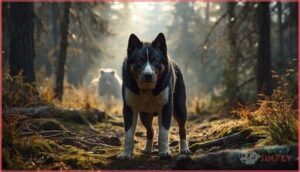
The Karelian Bear Dog stands out as the best example for bear work, originating from Finland’s forests where systematic breeding began in 1936. You’ll find these fearless hunters excel at holding bears at bay through strategic nipping and barking. Their dense coat, 54-60 cm height, and exceptional courage make them ideal for both traditional hunting and modern wildlife management roles across North America and Japan. These dogs are often used by wildlife departments as deterrents.
Key characteristics include:
- Silent tracking until the bear is cornered and treed
- Detection of 95% of grizzly dens in field studies
- Territorial alertness that protects you during encounters
- Only 20% of puppies develop true bear-hunting aptitude
Plott Hound
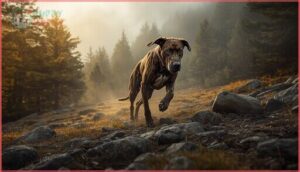
While the Karelian Bear Dog dominates wildlife work, the Plott Hound carries North Carolina’s official hunting legacy. This breed boasts an impressive record, including catching over 40 bears in Arizona and jumping 20 during the legendary 1935 Hazel Creek hunt, with six kills in one day. Males typically weigh between 50-60 pounds, featuring muscular builds and fearless dispositions, even leaping to bite bears that won’t tree. The Plott Hound is recognized as North Carolina’s state dog, celebrated for its unique heritage.
| Attribute | Specification | Performance Notes |
|---|---|---|
| Height (male) | 20-25 inches | Agile in rugged terrain |
| Weight range | 38-72 pounds | Medium-to-large frame |
| Lifespan | 12-14 years | With proper care |
| Temperament | Bold, intelligent, stubborn | Requires positive reinforcement |
| Exercise needs | High energy | Prevents obesity, maintains stamina |
The Plott Hound’s history traces back to German boar hounds from the 1750s, refined over generations for Appalachian bear hunting. Their hunting style revolves around relentless tracking over miles, baying to hold game at bay until the hunter arrives. Training requires consistent obedience work, as these dogs bond strongly but exhibit independent streaks. Breed standards highlight glossy brindle coats and exceptional endurance. Temperament traits combine loyalty with protective instincts, transforming this companion into a fierce athlete on the trail. Bear hunting dogs like Plotts demand regular exercise and early socialization to effectively channel their natural drive.
Treeing Walker Coonhound
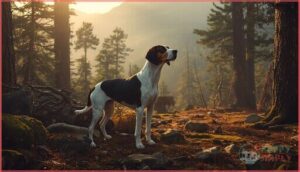
Though Plotts excel in rough Appalachian terrain, the Treeing Walker Coonhound brings unrivaled scenting performance and speed to bear hunting. Recognized by the AKC in 2012, this medium-to-large hound stands 20–27 inches tall and showcases a distinctive tricolor coat. Working suitability stems from its “cold nose” tracking older trails and vocal treeing accuracy.
Why Treeing Walkers dominate bear work:
- Scenting performance: Their ability to follow weak, hours-old scent trails helps locate elusive bears across vast forest landscapes.
- Coonhound temperament: Energetic and tireless on the trail, yet mellow and affectionate at home when properly exercised.
- Breed health: Generally hearty with a 10–13 year lifespan, though regular ear cleaning prevents infections after wet hunts.
- Training methods: Intelligent and sensitive, they respond best to positive-reinforcement programs rather than harsh corrections.
You’ll find these hunting dogs excel in packs, using clear, ringing voices that shift to a distinct “chop” when bears tree. Their high prey drive and persistence make them relentless trackers, though recall training requires patience.
Bear hunting dog breeds like Treeing Walker Coonhounds need daily physical and mental stimulation—scent work, tracking exercises, and extended runs prevent boredom-related behaviors. Working-bred lines from UKC or PKC registries offer the best combination of drive and performance for serious bear hunters seeking proven coonhound lineage.
Dogo Argentino
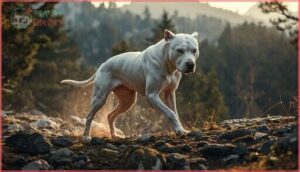
Where scent hounds rely on vocal pursuit, the Dogo Argentino—bred in 1920s Argentina from Mastiff, Great Dane, and Bull Terrier lines—adds raw catching power to bear hunting.
Weighing 88–99 pounds with muscular white coats, these dogs track and physically hold dangerous game.
You’ll need experience handling their high prey drive, plus awareness that roughly one-quarter inherit congenital deafness and many countries impose strict ownership restrictions.
Caucasian Shepherd Dog
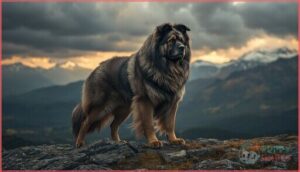
Massive Caucasian Shepherd Dogs—99–154 pounds from Russia’s livestock protection heritage—possess bite force near 700–800 psi and guardian instincts honed against wolves and bears.
You face substantial training challenges: their independent temperament resists handler-focused obedience that bear hunting dogs require. Legal restrictions in multiple countries reflect temperament risks, so most experts recommend these protective breeds exclusively for experienced owners managing stationary livestock protection rather than active bear pursuit.
Alaskan Malamute
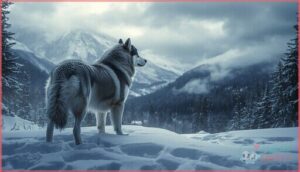
Alaskan Malamutes bring Arctic heritage and raw pulling power—85 pounds, built for sub-zero freight work where polar bears roam. You’ll notice their strong prey drive from survival hunting roots, yet temperament challenges arise: independence resists recall, and health concerns like hip dysplasia limit rugged terrain work.
Modern roles lean toward recreational sledding rather than active bear hunting, so specialized hounds outperform these freight dogs in serious pursuit.
Tibetan Mastiff
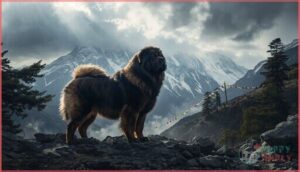
Tibetan Mastiffs evolved as Himalayan territory defenders—140 to 180 pounds of guardian instinct protecting livestock from wolves and leopards, not pursuing bears through brush.
You’ll find their historical origins centered on camp security rather than active hunting, and breed rarity limits field-proven bear dog lineages.
Climate adaptability suits cold mountains, yet independent temperament and hip dysplasia challenge the endurance demands serious bear hunting requires.
Other Notable Breeds
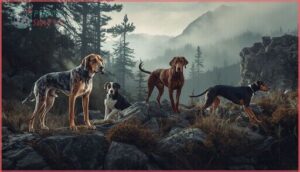
Beyond the household names, you have proven alternatives for hunting large predators. Bluetick tracking prowess rivals any specialist, with adults maintaining cold trails for miles. Redbone versatility excels in both raccoon and bear work, while Black/Tan strength aids rugged terrain pursuits. English Coonhound speed and Foxhound adaptability round out dog breeds for bear hunting—large bear hunting dog breeds selected by experienced houndsmen for consistent performance.
Key Traits of Effective Bear Dogs
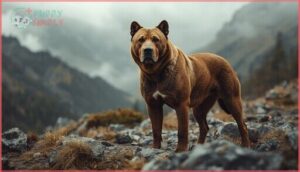
Not every dog can handle a bear. The best bear dogs share a handful of specific traits that separate them from your average pet or hunting companion.
Let’s look at the key characteristics that make these breeds effective in the field.
Courage and Bravery
You need a dog that won’t back down when a 400-pound bear charges. True bravery in hunting dog breeds separates the capable from the outstanding—testing boldness through early exposure to threats reveals which pups will handle the risk environment of bear work.
Key courage indicators to measure:
- Sustained engagement under pressure during temperament evaluations
- Low fear response to gunfire, loud noises, and unfamiliar terrain
- Quick recovery from startling encounters or physical setbacks
- Forward drive when confronting threatening stimuli or large animals
- Consistent performance despite welfare costs like injuries or exhaustion
Bear hunting dog breeds with protective instincts and proven dog temperament provide the foundation, but measuring courage through structured testing helps you identify puppies destined for dangerous work.
Endurance and Stamina
Your dog will cover 20–30 miles chasing one bear, sometimes more. That’s why hunting dog fitness matters—stamina separates dogs that quit after an hour from those pushing through 4–6-hour pursuits across brutal terrain. Breed differences show up fast: hounds and Karelian Bear Dogs handle multi-day work, while breeds lacking aerobic capacity fade early.
| Factor | Impact on Stamina | Management Strategy |
|---|---|---|
| Terrain impact | Steep or forested ground doubles energy cost | Condition on similar hills weekly |
| Thermal limits | Core temp hits 40°C+ in 15 min of hard work | Rest every 15 min; monitor recovery |
| Training regimen | 9-week program boosts VO₂max ~10% | Build to 60–90 min runs, 4–5 days/week |
| Consecutive days | Performance drops 10–15% without rest | Plan recovery days during season |
Bear hunting dog breeds need structured conditioning—gradual mileage increases, interval work, and heat management—to maintain performance when a chase stretches past the second hour.
Intelligence and Trainability
High intelligence won’t help if your dog ignores commands under pressure. Plott Hounds and Treeing Walker Coonhounds show excellent command compliance with consistent positive reinforcement, while Karelian Bear Dogs challenge novice handlers despite strong problem-solving abilities.
Research from hunting-dog trials confirms breed and training methods greatly shape obedience—older dogs with repeated field exposure score measurably higher on voice control and tracking tasks.
Scenting and Tracking Ability
A keen sense of smell separates successful bear dogs from the rest. Scent hounds like Plotts and Treeing Walkers possess 200–300 million olfactory receptors—forty times yours—enabling odor discrimination at concentrations you’d never detect.
Wind influence and terrain impact tracking skills, yet trained dogs locate bears across kilometers of mountainous cover.
Training metrics show detection rates above 80% when dogs master scent tracking and scent persistence through varied field conditions.
Loyalty and Protective Instincts
Strong bonds form the foundation of reliable bear hunting dogs. A 2020 study found that dogs with stronger handler bonds showed increased focus on their owner and reduced stranger aggression—exactly what you need when facing top predators.
Handler bond and family protection drive selective aggression: these breeds distinguish threats from non-threats. Livestock guarding research shows guardian dogs position themselves between predators and their charges 95% of the time, demonstrating targeted protective instincts rather than random aggression.
Human influence matters greatly. Dog breeds and temperament research reveals that hunting dog temperament develops through consistent, authoritative handling—high warmth paired with clear control. Your confidence shapes your dog’s reliability.
Key loyalty factors in bear hunting dogs:
- Dogs with familiar handlers locate targets considerably faster than with strangers
- Livestock guardian breeds stay within 1,000 meters of protected areas 95% of the time
- Authoritative handler styles produce more responsive, controlled protective behavior
- Strong owner attachment correlates with dogs showing focused protection of their handler
- Guardian dogs reduced bear presence near farmsteads by 68% through territorial loyalty
Choosing The Right Bear Dog Puppy
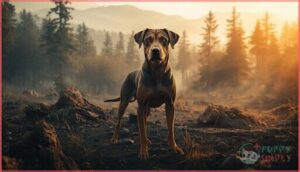
Picking the right bear dog puppy is one of the most important decisions you’ll make as a hunter. A solid pup with the right bloodlines and temperament can mean the difference between a confident partner in the field and years of frustration.
Here’s what you need to look for when choosing your next bear dog.
Parentage and Breed Lineage
When you’re choosing a bear dog puppy, understanding bloodline documentation and pedigree evaluation makes all the difference. Breed origins matter—Karelian Bear Dogs trace back to 1936 Karelia, while Plott Hounds descend from 1750 German stock.
Request health clearances and hunting records for both parents and grandparents. Linebreeding effects can fix traits like grit and scent ability, so examine how trait inheritance appears across multiple generations.
Temperament and Drive
Temperament and drive separate ordinary puppies from proven bear dogs. You need courage levels that push a pup toward bears, not away—Karelian Bear Dogs engage directly, while Plott Hounds score 50% high in prey drive.
Hunting dog temperament must balance independence needs with handler loyalty, so assess vocal alertness and protective instincts during early evaluations to match your style.
Physical Attributes and Health
Physical Attributes and Health set your puppy’s working lifespan and injury risk. You want medium-sized breeds—Karelian Bear Dogs (20–28 kg) and Plott Hounds (18–27 kg)—that deliver stamina and agility without the joint health problems hitting giant breeds. Check for:
- Clear hip/elbow screenings showing no dysplasia
- Lean, muscular builds supporting exercise needs
- Breed lifespan averaging 10+ years
- Parents with documented strength and injury prevention records
Compatibility With Hunting Style
Success hinges on matching dog breeds and hunting abilities to your field style. Pack versus solo preference, terrain mobility, and technology use define compatibility. Consider the table below:
| Hunting Style | Best Dog Breeds | Key Traits |
|---|---|---|
| Pack pursuit, GPS tracking, vehicle mobility | Plott Hound, Treeing Walker Coonhound | Long-ranging trailing, loose-baying, tech-friendly |
| Close-quarters, foot travel, quick engagement | Karelian Bear Dog, Mountain Cur | Silent until contact, bold aggression level, terrain agility |
| Cold trailing, extended tracking | Bloodhound, Bluetick Coonhound | Distance scenting, stamina |
| Catch-and-hold, high risk tolerance | Dogo Argentino | Physical engagement, powerful |
| Northern climates, slower mobility | Alaskan Malamute | Weather endurance, freight strength |
Hunter position and hunting techniques determine your puppy’s hunting skills development path.
Training and Socialization for Bear Hunting
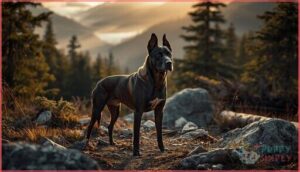
Training a bear dog isn’t like teaching basic obedience to a family pet—you’re preparing an animal to face one of the most dangerous predators in North America. Your dog needs rock-solid commands, sharp tracking instincts, and the confidence to work under extreme pressure.
Let’s walk through the essential training steps that’ll turn your pup into a reliable bear-hunting partner.
Obedience and Command Response
Your dog’s life may depend on its ability to obey instantly when a bear charges. Early obedience training—ideally before six months—builds the foundation you need for safe hunting operations, and research shows handlers dedicating four or more hours weekly achieve notably higher certification rates.
- Start obedience work before your puppy reaches six months to establish command reliability early
- Use positive reinforcement methods for faster recall and better first-command responses than aversive tools
- Train at least four hours weekly to build the intensity needed for field certification
- Practice high-arousal control drills that simulate bear encounters and distractions
- Prioritize welfare-based dog training techniques that strengthen your bond without compromising performance
Scent Tracking and Treeing Skills
Can your dog pick out a single bear’s scent from a mix of deer, raccoon, and old tracks? Training methods that include structured nose-work sessions—not just live hunting—improve scent discrimination rates above 85% and boost trail persistence even when environmental effects like rain or wind challenge the chase.
Treeing Walker Coonhounds and similar bear hunting dog breeds gain measurable tracking gains when you run short, frequent scent drills rather than infrequent long sessions.
Early Socialization Techniques
Want your pup fearless in the field but calm at home? The puppy socialization window—roughly 3 to 14 weeks—shapes every skill your hunting dogs will need. Novel environment exposure during structured puppy classes cuts adult aggression and fear behaviors by measurable margins. Inadequate socialization impact studies show that delayed training locks in avoidance and aggression later on.
Follow these early socialization techniques:
- Enroll in puppy classes by 8 weeks to capture peak receptivity and boost behavioral outcome studies results.
- Introduce diverse people, surfaces, and sounds using positive reinforcement so dog breeds build confidence, not fear.
- Carry your puppy into public spaces before full vaccination to expose senses safely without ground contact.
- Pair loud noises with treats to prevent noise sensitivity that dog behavior research links to early fear conditioning.
- Handle paws, ears, and mouth daily so vet visits and post-hunt care don’t trigger stress in your dog training routine.
Puppies missing this critical window often display persistent fearfulness that resists later correction, undermining the courage bear-hunting work demands.
Safety and Risk Management
Even a well-socialized pup faces real danger when large predators enter the picture. Dog injury prevention starts with recognizing that 77% of bear–hunter incidents involve dogs actively harassing the animal.
Technology adoption benefits like GPS tracking collars let you locate hounds fast, cutting pursuit time and environmental stress reduction for both your pack and wildlife.
Non-lethal conflict mitigation and ethical hunting practices mean knowing when to call off the chase.
Essential Gear for Bear Hunting Dogs
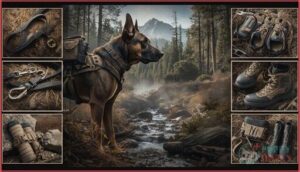
When you’re working with dogs in bear country, the right gear can mean the difference between a safe day and a serious problem. Your dog faces real risks—from thick brush to long distances to the bears themselves—so you need equipment that keeps up.
Let’s look at the core gear that protects your dog and keeps them working effectively in demanding conditions.
Durable Travel Crates
When you’re hauling your bear dog to remote hunting grounds, a crash-tested travel crate is essential for safety. Aluminum crates resist material deformation better than wire or plastic kennels, while airline-grade designs meet strict crate requirements for ventilation and structure.
Look for models with restraint system integration—four-point tie-downs prevent your dog from becoming a projectile during sudden stops, protecting both hunting dog health and your vehicle’s occupants.
GPS Tracking Collars
Once your dog’s secure in the crate, tracking accuracy becomes your lifeline in dense bear country. GPS ecollars let you monitor hunting dogs up to nine miles away, with geofencing safety alerts when they cross boundaries. Battery life now stretches 5–30 hours depending on the model, and many integrate remote training tones.
Market growth reflects what hunters already know—this dog gear saves lives.
Leads, Harnesses, and Kennels
When you’re hauling your team to the trailhead, crash-tested crates and properly sized kennels protect your investment. Kennel placement near your vehicle ensures quick access during predawn starts.
Front-clip lead biomechanics reduce pulling force by redirecting momentum, while tethering legalities in many states mandate minimum 10-foot leads with swivels.
Reflective visibility gear makes dogs visible at 150 feet in headlights.
Nutrition and Care Essentials
Beyond the gear itself, your dog’s fuel system demands equal attention. Working dogs burn 157 to 220 calories per kilogram of body weight daily—far more than house pets. Hydration strategies matter just as much: offer water immediately after exercise, when dogs drink most efficiently.
Macronutrient balance tilts toward fat for endurance, joint support starts around 15 mg glucosamine per kilogram, and field health checks protect against ticks and overheating.
Frequently Asked Questions (FAQs)
What is the best hunting dog for bears?
The Karelian Bear Dog stands out for its proven performance. Pairs of these dogs hold bears at bay with high-pitched barking, and hazed bears stayed away three times longer than with other methods.
What is the best dog to fend off bears?
No dog breed reliably fends off attacking bears. Bear spray shows 90% effectiveness, while most dogs don’t intervene.
Trained Karelian Bear Dogs offer professional hazing support, but you shouldn’t depend on any dog alone for protection.
What are the best hounds for cougars?
Treeing Walker Coonhounds top the list for cougar work, thanks to their cold-nosed tracking and treeing instinct. Plott Hounds bring grit and stamina, while Bluetick Coonhounds offer methodical trailing across demanding terrain.
What is the #1 hunting dog?
No single breed wins every hunt. Labrador dominance in popularity reflects versatility limitations—hunter preferences and objective criteria shift with game.
For bear hunting, Karelian Bear Dog and specialized hounds often outperform generalists through breed specialization.
How do I assess a bear dogs hunting instincts?
Your bear dog’s hunting instincts reveal themselves through prey drive tests, scent detection accuracy, and tracking evaluation.
Temperament testing highlights instinct markers like focus and persistence—essential hunting dog traits that determine field success before serious training begins.
What are the common health concerns for bear hunting dogs?
You’ll need to watch for Hip Dysplasia in larger breeds, plus Eye Disorders like cataracts. Skeletal Issues, Skin Allergies, and Heart Conditions also crop up, so regular vet checks keep your hunting partner healthy.
How can I evaluate a bear dogs prey drive during training?
You can evaluate prey drive by watching how your dog engages with scent trails, tracks moving targets, and maintains focus during predatory sequence phases—search, chase, and bite—while testing self-control around high-value stimuli.
What are the legal requirements for hunting bears with dogs?
Laws limiting hunting dogs vary widely by state. Most jurisdictions restrict dog breeds to tracking wounded bears only, require hunter licenses and landowner permission, and mandate reporting obligations before you track with canines.
How do I prepare my bear dog for unexpected bear encounters?
You can’t predict when a bear will appear, so start with rock-solid recall reliability and leash control. Condition your dog to bear stimuli, carry deterrents like spray, and always plan routes that minimize surprise encounters.
What legal permits are required for bear hunting?
You’ll need a valid state hunting license plus a bear-specific permit or tag.
Most jurisdictions require hunter education, impose quota systems, and mandate reporting duties after harvest.
Non-residents often face higher fees and stricter conditions.
Conclusion
The right partner in the field often arrives by coincidence—a dog bred for generations to do what you need, exactly when you need it. Selecting the best hunting dog breeds for bears demands more than instinct. It requires understanding bloodlines, temperament, and your own hunting goals.
When preparation meets the right dog, something special happens: a bond forms that transforms difficult terrain and dangerous pursuits into manageable challenges. That’s mastery.