
This site is supported by our readers. We may earn a commission, at no cost to you, if you purchase through links.
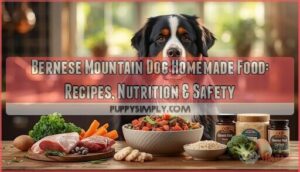
Your Bernese Mountain Dog’s commercial kibble might meet minimum nutritional standards, but those broad formulas weren’t designed for a 100-pound breed prone to joint issues and bloat. When you prepare homemade food, you’re not just filling a bowl—you’re addressing your dog’s specific physiological needs with ingredients you can actually pronounce.
The difference shows up in shinier coats, steadier energy levels, and fewer trips to the vet for digestive troubles. Making the switch requires understanding protein ratios, calcium-to-phosphorus balance, and safe preparation methods that prevent both nutrient loss and bacterial contamination.
With veterinary guidance and proper recipes, you’ll transform your kitchen into a nutrition lab customized specifically for your gentle giant’s unique requirements.
Table Of Contents
Key Takeaways
- Homemade diets give you complete control over ingredient quality and let you tailor protein ratios, calcium-to-phosphorus balance, and caloric density to address your Bernese Mountain Dog’s breed-specific risks like hip dysplasia, bloat, and joint stress.
- Adult Bernese Mountain Dogs typically need 1,480–1,855 kilocalories daily (roughly 2–3% of body weight), with recipes requiring precise nutrient balance including 22.5% crude protein for puppies, controlled calcium below 4.5 grams per 1,000 kcal, and omega-3 fatty acids for inflammatory support.
- Safe preparation demands cooking proteins to 165°F, avoiding toxic foods like onions, garlic, grapes, xylitol, and chocolate, and transitioning gradually over four weeks while monitoring stool quality, body condition scores, and weight weekly to catch deficiencies early.
- Veterinary oversight is non-negotiable for homemade feeding—consult a veterinary nutritionist every 6–12 months for bloodwork analysis, recipe formulation guidance, and supplement recommendations to prevent nutritional gaps that commercial diets already address through AAFCO standards.
Benefits of Homemade Food for Bernese Mountain Dogs
Preparing homemade food for your Bernese Mountain Dog gives you complete control over what goes into every meal. This approach offers several distinct advantages over commercial diets, particularly for a large breed with specific nutritional demands.
Many owners find that researching the best dog food for Bernese Mountain Dogs helps them understand which nutrients to prioritize when creating homemade recipes.
Let’s examine the key benefits that make homemade feeding worth considering for your dog’s health and wellbeing.
For breed-specific guidance, explore these homemade recipes tailored for Boxers that address their unique nutritional requirements.
Healthier Ingredients and Quality Control
When you control ingredient sourcing for your Bernese Mountain Dog’s homemade food recipes, you guarantee superior nutrition and food safety. Choose certified suppliers with verified provenance documentation for all proteins and produce. Independent lab testing confirms absence of pathogens and heavy metals.
Before finalizing your feeding plan, review breed-specific nutritional guidelines for Rhodesian Ridgebacks to ensure proper macro ratios and portion sizes.
Maintain quality control through separate cutting boards and sanitized surfaces, creating consistent nutrient balance while protecting your dog’s health through traceable, contamination-free meal preparation.
Following these practices ensures every meal meets the standards outlined in this Cane Corso homemade food guide, giving your dog safe, balanced nutrition with every serving.
Portion Size and Weight Management
Homemade food gives you precise portion control and weight management for your Bernese Mountain Dog.
A 50–70 pound adult usually needs 900–1,400 kcal daily, adjusted by activity level. Measure portions based on caloric needs—about 2–3% of body weight—and divide into consistent meals.
Weekly weigh-ins during transitions help you maintain nutrient balance while preventing obesity-related joint stress in this large breed.
Supporting Specific Breed Health Needs
Your Bernese Mountain Dog faces higher risks of hip dysplasia and certain cancers—breed nutrition matters. Homemade dog food recipes let you fine-tune calcium-to-phosphorus ratios and control calories, supporting joint care during growth.
Add omega-3s for inflammatory support and antioxidants (vitamins E and C) for immune function.
Dietary adjustments customized to these health risks, combined with nutrient balance and regular vet screening, strengthen your dog nutrition and health strategy.
Reducing Risk of Food Sensitivities
Food allergies strike fewer dogs than many owners think, but sensitivity testing reveals real patterns. Single-protein meals help you pinpoint triggers, while novel proteins like duck or venison offer safe alternatives.
Limited-ingredient recipes minimize digestive health risks, and ingredient rotation prevents new sensitivities from developing.
Skip common allergens—dairy, soy, wheat—until you’ve established tolerance through careful observation.
Nutritional Needs of Bernese Mountain Dogs

Bernese Mountain Dogs are large, active animals with unique nutritional requirements that differ markedly from smaller breeds. Their impressive size and energy levels mean they need carefully balanced proteins, fats, carbohydrates, vitamins, and minerals to maintain healthy joints, muscles, and overall body function.
Understanding these specific needs is your first step toward creating homemade meals that truly support your Bernese’s health throughout every life stage.
For comparison, understanding how long German Shepherds live can help you see how breed-specific nutrition impacts lifespan differently across large working dogs.
Essential Proteins and Amino Acids
Protein forms the foundation of every cell in your Bernese Mountain Dog’s body, making it the single most critical nutrient you’ll include in homemade meals.
Protein is the single most critical nutrient in your Bernese Mountain Dog’s homemade meals, forming the foundation of every cell in their body
You’ll need to provide all 10 essential amino acids through high-quality meat options like chicken, turkey, beef, or fish.
These protein sources support muscle development, tissue repair, and immune function—particularly essential for large breeds requiring ideal nutrient balance throughout their lives.
Balanced Fats and Fatty Acids
Fats and fatty acids form the cornerstone of canine nutrition, delivering concentrated energy while supporting cellular function and inflammation control. You’ll want to balance omega-3s and omega-6s carefully in your Bernese Mountain Dog’s diet:
- Target 0.1-0.5% of body weight as EPA+DHA daily for omega-3 benefits
- Maintain a 5:1 to 2:1 omega-6 to omega-3 ratio for healthy fats
- Include 1-2% of calories as linoleic acid for coat quality
- Add fish oil for DHA to support cognitive function in aging dogs
- Avoid excessive arachidonic acid to maintain proper fatty acid balance
Proper fat metabolism depends on this thoughtful formulation in homemade dog food recipes.
Carbohydrates and Dietary Fiber Sources
Complex carbohydrates fuel your Bernese’s daily activities, while fiber aids digestive health and stable glucose levels. You’ll need 2–5% of daily calories from fiber sources to maintain gut function and regular bowel movements.
| Carbohydrate Source | Fiber per Serving |
|---|---|
| Brown rice (1 cup cooked) | 3.5–4 grams |
| Rolled oats (½ cup dry) | 4 grams |
| Sweet potato (130g) | 4 grams |
| Quinoa (1 cup cooked) | 2.8 grams |
Mix whole grains with vegetables like peas and carrots in homemade dog food recipes for balanced nutrition and adequate carbohydrate needs.
Key Vitamins and Minerals for Large Breeds
Your Bernese mountain dog’s skeletal structure depends on a precise vitamin balance and mineral supplements to prevent nutrient deficiency. Meeting calcium needs requires:
- 1.0–1.8 grams calcium per kilogram of body weight daily for bone density
- Calcium-to-phosphorus ratio near 1.2:1 to 1.5:1 in homemade dog food recipes
- Vitamin D at 400–1000 IU per kilogram of diet for calcium regulation
- Zinc around 100–180 mg per kilogram supporting immune function
Proper electrolyte management ensures healthy muscle and cardiovascular function.
Adjusting Nutrients for Age and Activity Level
Tailoring nutrient ratios to your dog’s life stage and activity levels prevents both deficiency and excess. Puppies up to 18–24 months need 22.5 percent crude protein and controlled calcium below 4.5 grams per 1000 kcal to support growth without skeletal stress.
Highly active adults require energy multipliers up to 1.8 times resting needs, while seniors benefit from 10–20 percent caloric reductions while maintaining nutrient density.
To guarantee peak nutrition, consider consulting a daily calorie calculator to determine the best diet for your dog.
Safe Homemade Recipes and Preparation Tips
Now that you understand what your Bernese Mountain Dog needs nutritionally, it’s time to put that knowledge into action with recipes you can trust.
The following section provides three veterinary-reviewed recipes that deliver balanced nutrition while keeping preparation straightforward and safe. Each recipe includes specific cooking methods and guidance on avoiding ingredients that could harm your dog.
Chicken & Rice Delight Recipe

This wholesome chicken and rice recipe delivers lean protein and gentle carbohydrates your Bernese Mountain Dog needs. Cook boneless, skinless chicken to 165°F, then combine with plain white rice for ideal canine wellness.
- Trim all visible fat before cooking to reduce unnecessary calories
- Use gentle boiling or steaming methods to preserve nutrition
- Add dog-safe vegetables like carrots for added fiber
- Store prepared portions refrigerated for 3–4 days maximum
Beef & Veggie Medley Recipe
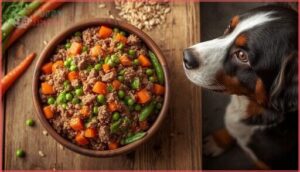
Ground beef brings protein-rich satisfaction to your Bernese Mountain Dog’s bowl. Combine lean beef (90/10 ratio) with chopped carrots, green beans, and peas for fiber and micronutrients. Cook all ingredients thoroughly, skip the salt and garlic, then mix with brown rice or quinoa for balanced energy.
| Ingredient | Amount (per 10 lbs body weight) | Key Benefit |
|---|---|---|
| Ground beef (90/10) | 3–4 oz | Protein 20–26% |
| Carrots, chopped | 2 tbsp | Fiber, beta-carotene |
| Green beans | 2 tbsp | Low-calorie bulk |
| Brown rice (cooked) | ¼ cup | Energy balance |
| Peas | 1 tbsp | Vitamins K, C |
Turkey, Vegetable & Quinoa Feast Recipe

Lean turkey powers this gluten-free alternative, combining 1 lb ground turkey with 1 cup cooked quinoa, diced carrots, zucchini, and kale. You’ll get 41% protein, 34% fat, and 25% carbohydrates—perfectly balanced for your Bernese Mountain Dog. This recipe delivers complete amino acids, phytonutrients, and essential fatty acids in every portion. The nutritional balance is achieved through a careful selection of whole food ingredients.
- Brown turkey thoroughly in olive oil
- Add vegetables and simmer with broth
- Mix in quinoa until flavors blend
- Cool completely before portioning
Cooking Methods and Food Safety

How you prepare these ingredients matters just as much as what goes into the bowl—sloppy cooking can destroy nutrients or introduce bacteria that’ll send your Berner straight to the vet. Thermal processing at 165°F eliminates pathogens while preserving vitamins.
Store homemade food in airtight containers for three days refrigerated or freeze portions immediately. Proper food handling prevents contamination.
These cooking techniques protect your dog’s health and optimize nutrient preservation in every meal.
Avoiding Harmful Foods and Common Toxins

Even when you nail cooking technique, dangerous ingredients can slip into homemade dog food recipes without your knowledge. Never feed chocolate, caffeine, onions, garlic, chives, leeks, or macadamia nuts to your Bernese Mountain Dog. These poisonous substances cause serious toxicity ranging from red blood cell damage to liver failure.
Keep this toxic food list handy for toxicity prevention:
- Xylitol-containing sugar-free products trigger hypoglycemia and liver injury
- Grapes and raisins damage kidneys through unknown mechanisms
- Alcohol leads to vomiting, tremors, and respiratory depression
- High-salt foods cause dehydration and electrolyte imbalances
- Avocado contains persin, which disrupts cardiac function in dogs
Recognizing food allergens and sensitivities in Bernese Mountain Dog care protects against both immediate poisoning and chronic pet health and wellness issues like dog food allergies and sensitivities.
Feeding Guidelines and Monitoring Health

You’ve prepared nutritious homemade meals for your Bernese Mountain Dog, but feeding the right amount at the right time matters just as much as what’s in the bowl. Getting portion sizes wrong or rushing dietary changes can undermine even the best recipes.
Here’s what you need to know about feeding schedules, portions, safe transitions, and monitoring your dog’s health on a homemade diet.
Determining Proper Portion Sizes
Your Bernese Mountain Dog’s caloric intake starts with body weight and activity level. Adult dogs usually need 1480 to 1855 kilocalories daily, translating to roughly 2–3% of ideal body weight in homemade food. Active dogs may require more than 3%, while less active companions need closer to 2%.
Use body condition scoring monthly to fine-tune portion control and maintain nutrient balance through careful meal planning.
Creating a Consistent Feeding Schedule
Scheduling meals at fixed times—usually 7 a.m. and 7 p.m. for adults, or three to four daily portions for puppies—promotes digestive health and nutrient balance in your Bernese Mountain Dog. Consistent meal timing regulates bowel movements, stabilizes blood glucose, and strengthens feeding routines.
Portion control becomes easier when you measure homemade food at predictable intervals, making your feeding guide effective and your recipes more reliable.
Transitioning Safely to Homemade Diets
Gradually shift your Bernese Mountain Dog to homemade food recipes over four weeks, blending 25% new diet in week one and increasing weekly under veterinary guidance and advice. This gradual shift protects nutrient balance and allows diet monitoring for stool quality and energy.
Safe ingredients—avoiding onions, grapes, and chocolate—guarantee your nutrition and diet planning backs digestive health when shifting to homemade dog food.
Monitoring Weight, Digestion, and Overall Health
Your Bernese Mountain Dog’s body tells a story—learn to read it.
Track weight weekly at the same time using the same scale, aiming for no more than 0.5–1.0% change per week to maintain nutrient balance and prevent joint stress.
Monitor stool quality daily on a 1–5 scale, targeting 3–4 for ideal digestive health.
Check for waist taper, abdominal tuck, and palpable ribs without excess fat during health monitoring sessions.
When to Consult Your Veterinarian
Your dog’s health isn’t a guessing game—when you spot red flags like persistent diarrhea, unexplained weight loss, or sudden behavioral changes, it’s time to pick up the phone and call your veterinarian.
Schedule veterinary care every 6–12 months for health checks and nutrition counseling with a veterinary nutritionist who can provide vet-approved diet planning under proper medical supervision—the importance of veterinary consultation can’t be overstated.
Top 7 Products for Homemade Dog Food Success
Making balanced homemade food requires more than just fresh ingredients—you’ll need the right tools and resources to do it safely. From recipe guides vetted by veterinary nutritionists to supplements that fill nutritional gaps, these products help prevent the most common mistakes in home cooking.
Here are seven essentials that support your commitment to feeding your Bernese Mountain Dog a complete, nutritious diet.
1. Home Prepared Pet Diets Book
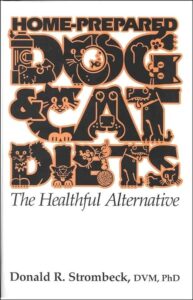
Dr. Donald Strombeck’s Home Prepared Dog & Cat Diets stands as the benchmark reference for owners who want scientific rigor behind every meal they prepare. This 366-page guide, written by a professor of nutrition and gastroenterology, delivers vetted dog food recipes with precise nutrient requirements, including protein, fat, and calorie breakdowns.
You’ll find dietary guidance for specific health conditions like obesity and kidney disease, making it invaluable for Bernese Mountain Dog owners planning homemade food. At $55.59, it’s an investment in understanding pet nutrition at a clinical level with veterinary guidance backing every recommendation.
| Best For | Pet owners who want a science-backed approach to homemade feeding, especially if their dog has specific health issues like allergies, obesity, or kidney disease. |
|---|---|
| Primary Purpose | Pet nutrition guide |
| Target Audience | Pet owners |
| Price Point | $55.59 |
| Format Type | Book (366 pages) |
| Health Focus | Disease-specific diets |
| Ease of Use | Technical/dense |
| Additional Features |
|
- Written by a veterinary nutrition expert with detailed nutrient breakdowns for each recipe
- Covers specific health conditions with targeted dietary solutions
- Uses readily available human-grade ingredients instead of hard-to-find specialty items
- Dense, technical writing that can feel overwhelming for casual readers
- Vitamin dosages are tricky to calculate for smaller pets
- Published in 1999, so some nutritional science may be outdated
2. Home Cooking For Dogs Recipe Book

Christine Filardi’s Home Cooking For Dogs offers 75 approachable recipes with step-by-step instructions and meal planning guidance customized to everyday cooking techniques. At 160 pages for $12.99, this book balances nutrition guidance with practical food safety tips—ideal for owners who want veterinary-backed dog food recipes without clinical complexity.
Color photographs and serving size charts make portion control straightforward for large breeds like Bernese Mountain Dogs.
A portion of proceeds aids animal rescue, adding purpose to your homemade food journey.
| Best For | Dog owners who want to move away from commercial kibble and prepare balanced, homemade meals using everyday ingredients from their local grocery store. |
|---|---|
| Primary Purpose | Homemade dog recipes |
| Target Audience | Dog owners |
| Price Point | Not specified |
| Format Type | Book (160 pages) |
| Health Focus | General wellness |
| Ease of Use | User-friendly recipes |
| Additional Features |
|
- 75 vet-informed recipes with clear nutritional info and serving charts make it easy to feed large breeds like Bernese Mountain Dogs safely
- Step-by-step instructions and color photos take the guesswork out of meal prep, even for beginners
- Part of your purchase supports animal rescue organizations
- Some recipes may require more prep time than busy owners can commit to regularly
- Dogs with specific allergies or health conditions will need vet approval before trying certain meals
- Transitioning from commercial food takes patience, and not every dog adapts quickly to homemade diets
3. Zesty Paws Dog Multivitamin Treats

When home-cooked meals lack micronutrient completeness, Zesty Paws 8-in-1 Multivitamin Bites can fill nutritional gaps in your Bernese Mountain Dog’s diet. These soft chews deliver glucosamine, chondroitin, probiotics, and vitamins A, C, and E—supporting joint health, immune function, and digestive wellness in large breeds.
Dose by weight: one chew daily for dogs under 25 pounds, two for 26–75 pounds, three for over 75 pounds. However, a 2022 class action lawsuit alleged significant discrepancies between labeled and tested chondroitin levels.
Always consult your veterinarian before adding any supplement.
| Best For | Bernese Mountain Dogs on home-cooked diets that need a convenient daily multivitamin to support joint health, immune function, and digestion. |
|---|---|
| Primary Purpose | Joint health supplement |
| Target Audience | All dog breeds |
| Price Point | $34 (estimated) |
| Format Type | Soft chews |
| Health Focus | Joint/immune/digestive |
| Ease of Use | Easy consumption |
| Additional Features |
|
- Combines glucosamine, chondroitin, probiotics, and antioxidants in one palatable soft chew that most dogs accept easily
- Supports multiple health areas—joints, gut, immune system, skin, and heart—making it a time-saving option for busy owners
- Dosing is straightforward and adjusts by weight, so you can tailor the amount to your dog’s size
- A 2022 lawsuit alleged that tested chondroitin levels were significantly lower than what’s listed on the label
- Contains soy, which may trigger allergies in sensitive dogs
- Independent lab analysis reportedly found far fewer probiotics than the 500 million CFU claimed per serving
4. Finn Hip and Joint Supplement for Dogs
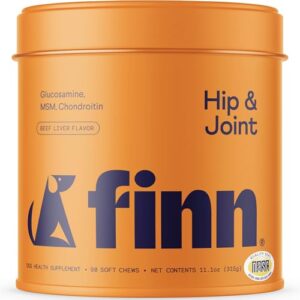
Finn Hip and Joint Supplement for Dogs delivers 500mg of glucosamine per chew, combined with chondroitin, MSM, turmeric, and BioPerine to support joint health benefits and canine mobility in Bernese Mountain Dogs shifting to homemade food. Each 90-chew package costs $34 and targets hip support and arthritis management across all life stages.
However, supplement safety requires veterinary oversight—especially when combining with omega-3s or NSAIDs. Some dogs reject the taste, and results may take a month or longer to appear. Always verify third-party testing and discuss dosing with your vet before adding this to your Berner’s regimen.
| Best For | Dog owners looking for an affordable, comprehensive joint supplement to support their Bernese Mountain Dog’s mobility and hip health, especially when transitioning to homemade diets. |
|---|---|
| Primary Purpose | Joint health supplement |
| Target Audience | All dog breeds/ages |
| Price Point | $34 |
| Format Type | Soft chews (90 count) |
| Health Focus | Joint mobility |
| Ease of Use | Easy chewable |
| Additional Features |
|
- High-dose glucosamine (500mg per chew) combined with chondroitin, MSM, turmeric, and BioPerine provides multi-ingredient joint support at a reasonable price point of $34 for 90 chews.
- Soft chew format makes daily administration easier for dogs of all sizes and ages compared to pills or capsules.
- Includes ingredients like turmeric and BioPerine that may offer anti-inflammatory benefits beyond standard glucosamine-chondroitin formulas.
- Results can take a month or longer to become noticeable, and some dogs show no improvement at all.
- Taste and texture issues mean some dogs refuse the chews or find them too hard, particularly those with dental problems.
- Requires veterinary consultation before use, especially if your dog is on NSAIDs or other medications, as interactions can occur.
5. Nutrition Strength Thyroid Supplement for Dogs
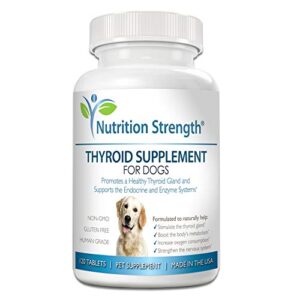
Like joint support, thyroid health deserves attention when feeding homemade diets. Nutrition Strength Thyroid Supplement delivers organic bladderwrack, L-tyrosine, and ashwagandha in 120 turkey-flavored tablets at $0.50 per serving. It targets lethargy, weight gain, and coat issues linked to hypothyroidism.
But don’t self-diagnose—thyroid disease requires blood work confirmation. This supplement won’t replace prescription medication if your Berner truly has hypothyroidism. Always consult your vet before starting any thyroid-related canine supplements to avoid dangerous interactions with medications or mismanagement of hormone levels.
| Best For | Dog owners feeding homemade diets who want to support their Berner’s thyroid health after veterinary confirmation of hypothyroid symptoms like lethargy or coat problems. |
|---|---|
| Primary Purpose | Thyroid support supplement |
| Target Audience | Dogs all sizes |
| Price Point | Not specified |
| Format Type | Tablets (120 count) |
| Health Focus | Thyroid function |
| Ease of Use | Chewable tablets |
| Additional Features |
|
- Contains organic bladderwrack, L-tyrosine, and ashwagandha to support healthy thyroid function and metabolism
- Turkey-flavored chewable tablets make administration easier for most dogs
- Made in the USA with a 365-day guarantee and affordable at $0.50 per serving
- Requires veterinary blood work to confirm thyroid issues before use—not for self-diagnosis
- Won’t replace prescription medication for dogs with confirmed hypothyroidism
- May interact with other medications or cause side effects without proper veterinary supervision
6. Pet Food Safety Magnet Chart

When you’re preparing homemade food for your Bernese Mountain Dog, keeping track of toxic foods can feel overwhelming. The TLC Safety By Design Pet Food Safety Magnet Chart (8.5 x 11 inches, vinyl) solves that problem by mapping safe and dangerous ingredients on your fridge.
It lists chocolate, grapes, onions, and xylitol alongside emergency contacts—critical when family or pet sitters help with feeding.
At under $15, this quick-reference tool prevents accidental poisoning and ensures your nutritionally complete homemade meals stay safe for your Berner’s health.
| Best For | Pet owners who prepare homemade meals for their dogs and want a quick visual reminder of toxic foods to avoid, plus emergency contacts in one spot. |
|---|---|
| Primary Purpose | Pet safety reference |
| Target Audience | Pet owners/families |
| Price Point | Not specified |
| Format Type | Magnetic chart |
| Health Focus | Poison prevention |
| Ease of Use | Quick reference |
| Additional Features |
|
- Lists critical toxins like chocolate, grapes, onions, and xylitol alongside safe foods, so you can double-check ingredients while cooking
- Includes emergency poison control hotlines and space for household contacts, which is helpful when pet sitters or family members are feeding your dog
- Durable vinyl material at under $15 makes it an affordable, long-lasting reference that sticks right on your fridge
- The 8.5 x 11 inch size takes up significant fridge space, which might be an issue in smaller kitchens
- All the information is available online for free, so some users may find the physical chart redundant
- Only covers food safety and toxins—doesn’t address other pet safety topics like household hazards or medication storage
7. Feeding Dogs The Raw Truth

Why does raw feeding spark such passionate debate among veterinarians and pet owners? Feeding Dogs The Raw Truth by Dr. Conor Brady examines canine nutrition science through over 1,200 references across 500+ pages.
At $37.40, this exhaustive resource tackles raw feeding risks, raw meat safety, and biologically appropriate raw food claims for breeds like Bernese Mountain Dogs. While it won’t provide homemade diet planning recipes, you’ll understand pet food regulation, raw diet controversies, and canine health implications—helping you make evidence-based decisions about your Berner’s nutrition.
| Best For | Dog owners and veterinary professionals who want a science-backed deep dive into canine nutrition, raw feeding evidence, and the processed pet food industry—particularly if you’re willing to wade through dense research to form your own conclusions. |
|---|---|
| Primary Purpose | Canine nutrition science |
| Target Audience | Dog owners/professionals |
| Price Point | $37.40 |
| Format Type | Book (500+ pages) |
| Health Focus | Nutrition science |
| Ease of Use | Comprehensive/scientific |
| Additional Features |
|
- Massively referenced with 1,200 citations spanning nutrition science, veterinary studies, and industry analysis—giving you the data to evaluate raw feeding claims yourself
- Covers critical health issues like obesity, cancer, and pancreatitis in relation to diet, going beyond simple raw vs. kibble arguments
- Written by a vet who’s done the legwork so you don’t have to, making scientific literature accessible without dumbing it down
- Not a practical feeding guide—you won’t find recipes, portion charts, or step-by-step transition plans for switching your Berner to raw
- Dense, scientific reading that some may find overwhelming or frustrating, especially if you’re looking for quick answers
- Doesn’t directly address safety protocols for handling raw meat at home, which is a real concern for families
Frequently Asked Questions (FAQs)
How does seasonality affect a Bernese Mountain Dog’s diet?
Activity levels shift with the seasons, influencing protein needs by up to 15%. Cold months increase thermogenic demands, requiring higher fat and calories, while summer heat may reduce energy requirements in thick-coated breeds.
How much does homemade dog food cost monthly?
Your ingredient expenses usually range from $60 to $150 monthly, depending on recipe complexity and protein quality. Bulk purchasing and seasonal discounts can trim costs by 10–30%, while premium ingredients push budgets higher.
Should I add supplements to every homemade meal?
Supplements aren’t required for every homemade meal. Your dog’s dietary needs depend on age, health status, and recipe formulation.
Veterinary advice ensures proper nutrient balance without over-supplementation risks like toxicity or gastrointestinal upset.
Can puppies under one year eat homemade diets?
Puppies can eat homemade food, but proper nutrition during growth requires veterinary guidance.
Balanced recipes with adequate protein, calcium-phosphorus ratios, and essential vitamins prevent developmental issues.
Gradual diet shift and regular growth monitoring guarantee safety.
How long does homemade dog food stay fresh?
Homemade dog food stays fresh in the refrigerator for 3 to 5 days at 40°F or below. Freezer storage extends shelf life to 2 to 3 months when properly portioned and labeled.
Conclusion
Your Bernese Mountain Dog’s bowl becomes more than a feeding station when you fill it with thoughtfully balanced bernese mountain dog homemade food—it transforms into preventive medicine. Each ingredient you measure, weigh, and prepare targets vulnerabilities that generic formulas overlook.
Monitor body condition scores biweekly, maintain veterinary partnerships for bloodwork analysis, and adjust recipes as your dog ages.
The investment of time yields dividends in mobility, digestive stability, and longevity that no commercial bag can replicate.
- https://www.freepik.com/free-photo/side-view-cook-making-dessert_32007677.htm
- https://acvn.org/
- https://avmajournals.avma.org/view/journals/javma/241/4/javma.241.4.477.xml?rskey=egfKNS&result=1
- https://todaysveterinarypractice.com/role-of-dietary-fatty-acids-in-dogs-cats/
- https://www.sciencedirect.com/science/article/pii/S2949916X23000464