
This site is supported by our readers. We may earn a commission, at no cost to you, if you purchase through links.

Your dog circles three times, sighs heavily, and settles onto the hard plastic floor of their crate—and you can practically hear their joints protesting. Many dog owners assume a bare crate is sufficient, but veterinary research shows that dogs sleeping on hard surfaces experience measurably higher stress hormones and disrupted sleep cycles compared to those with proper bedding.
The benefits of using a crate bed inside dog crate extend far beyond simple comfort. A well-chosen crate bed protects developing joints in puppies, prevents pressure sores in seniors, and transforms what could feel like confinement into a genuine safe haven. When your dog views their crate as a cozy retreat rather than a sterile box, everything from house training to separation anxiety becomes easier to manage.
Table Of Contents
- Key Takeaways
- Why Use a Bed Inside a Dog Crate?
- Improved Sleep Quality for Your Dog
- Joint and Orthopedic Health Benefits
- Reducing Anxiety and Stress
- Promoting Positive Crate Associations
- Hygiene and Cleanliness Advantages
- Temperature Regulation Inside The Crate
- Choosing The Best Bed for Your Crate
- Common Mistakes to Avoid With Crate Bedding
- Frequently Asked Questions (FAQs)
- Conclusion
Key Takeaways
- A crate bed protects your dog’s physical health by preventing pressure sores and joint damage, with orthopedic options providing crucial support for puppies’ developing bones and seniors’ arthritic joints.
- Dogs sleeping on proper bedding experience measurably lower stress hormones and better sleep cycles, transforming the crate from confinement into a genuine safe haven that reduces separation anxiety.
- The right bed makes crate training dramatically easier because dogs voluntarily enter a comfortable space, viewing it as a rewarding retreat rather than punishment.
- Practical features like waterproof materials, machine-washable covers, and chew-resistant fabrics maintain hygiene while temperature-regulating options prevent overheating in summer and cold-related discomfort in winter.
Why Use a Bed Inside a Dog Crate?
Your dog’s crate shouldn’t feel like a bare cage. A properly chosen bed transforms the space into a secure retreat where your dog actually wants to spend time.
For larger breeds, a crate bed designed for big dogs provides the extra cushioning and durability needed to keep them comfortable.
Understanding the specific reasons behind adding bedding helps you make better decisions about what type works best for your dog’s needs.
Comfort and Security for Dogs
A comfortable bed inside your dog’s crate transforms a bare enclosure into a secure retreat. Cushioned surfaces reduce pressure on joints while soft textures provide calming aids that help your dog relax.
This cozy environment signals safety, encouraging your pet to settle more quickly. When you prioritize dog comfort with appropriate crate bedding, you’re building trust and making the crate a welcoming, comfortable space your dog actually wants to use.
Creating a safe space for dogs is vital for their emotional health and can reduce anxiety in stressful situations.
Creating a Den-Like Environment
Dogs are den animals by nature, so adding a soft dog bed inside your dog crate satisfies this instinct. A plush surface paired with a darkened interior creates the cozy textures and secure spaces your pet craves, transforming the crate into a comfortable space that feels like a natural refuge.
Understanding the value of den-building and creative thinking can help pet owners create environments that nurture both comfort and security for their animals.
Key elements for ideal den design and crate comfort:
- Soft fleece or memory foam bedding for gentle contouring
- A blanket draped over the crate to form a partial roof
- A quiet corner location to minimize noise and drafts
- Familiar scents from a worn item to boost crate ambiance and calming colors
Enhancing Crate Training Success
When your dog views the crate as a comfortable retreat rather than a cage, crate training benefits multiply. A soft dog bed inside helps build positive associations from day one, reducing separation anxiety and encouraging voluntary entry.
Puppies especially respond to this setup during early socialization—they’ll settle faster and whine less when crate placement includes cozy bedding. Training tips from veterinary behaviorists consistently emphasize comfort as the foundation for willing cooperation.
Improved Sleep Quality for Your Dog

Your dog’s sleep quality directly affects their overall health, energy levels, and mood throughout the day. A comfortable bed inside the crate creates an environment that fosters deeper, more restorative rest while minimizing disruptions during the night.
Let’s look at how proper bedding improves your dog’s sleep in three key ways.
Better Rest and Recovery
Quality rest isn’t a luxury for your dog—it’s essential for physical repair and mental clarity.
A memory foam bed or orthopedic bed inside the dog crate provides ultimate comfort that facilitates deep sleep cycles, allowing muscles to rebuild and the nervous system to reset.
This restful environment becomes a recovery aid for canine wellness, helping your pet wake refreshed and ready to engage with you fully.
Reduced Nighttime Restlessness
Restlessness often stems from hard, cold crate floors that prevent your dog from settling into truly restful nights. A cushioned bed transforms sleep patterns by addressing discomfort that triggers tossing and turning during quiet hours.
Enhanced crate comfort through proper bedding offers calming aids for separation anxiety and promotes better sleep quality:
- Memory foam contours to your dog’s body, reducing pressure that causes position shifts
- Insulated materials maintain stable warmth, preventing cold-induced wakefulness
- Non-slip bases eliminate sliding that disrupts canine comfort
- Familiar scents on consistent bedding lower arousal and promote faster settling
This stability means fewer wakeful episodes for both of you.
Choosing the right dog crate bed for your puppy can make all the difference in creating that sense of security and comfort from night one.
Support for Growing Puppies and Seniors
Puppy development demands cushioned surfaces that protect forming bones during intense growth stages, while senior care requires orthopedic joint support to ease age-related stiffness.
You’ll notice both life phases benefit from crate comfort that accommodates changing needs—soft bedding reduces pressure on vulnerable joints and helps manage separation anxiety during crate training. This foundation promotes dog health and wellness throughout your companion’s entire life.
Joint and Orthopedic Health Benefits

Your dog’s body needs proper support, especially when spending hours in a crate. Hard surfaces can strain joints and create discomfort that builds up over time, particularly for older dogs or breeds prone to hip and elbow issues.
A proper bed inside the crate meets these physical needs in three specific ways.
Cushioning for Joints and Bones
Your dog’s joints rely on articular cartilage and synovial fluid to cushion bones during movement, but a hard crate floor offers no relief.
A proper dog bed absorbs impact and distributes your dog’s weight evenly, reducing stress on cartilage and preventing joint discomfort. This extra layer of support is essential for dog health and wellness, providing musculoskeletal comfort that protects bone health during rest.
Orthopedic Bed Options for Crates
When you’re shopping for crate-friendly orthopedic bed options, look for high-density memory foam or egg crate foam cores that are 2 to 4 inches thick.
These materials provide targeted support for dogs with arthritis or hip dysplasia. Check crate compatibility by matching bed dimensions to your crate’s width, and choose models with removable, machine-washable covers and waterproof liners to protect the foam from accidents.
Preventing Pressure Sores and Calluses
Dogs confined to hard crate floors develop painful pressure sores and elbow calluses over bony prominences like hips and joints.
A proper dog bed with cushioning materials inside your dog crate distributes weight evenly, offering pressure relief that protects vulnerable skin. Orthopedic beds with skin care-friendly fabrics maintain comfort and joint support, preventing tissue breakdown while keeping your dog healthy during extended crate time.
Reducing Anxiety and Stress

A soft bed inside your dog’s crate can make a real difference in managing anxiety and stress. Dogs who feel safe and comfortable in their crate are less likely to experience the nervous behaviors that often accompany alone time or unexpected situations.
Let’s look at three specific ways a well-chosen bed helps create that sense of calm.
Calming Effects of a Soft Bed
A soft bed inside your dog crate works like a calming aid by offering a secure tactile cue that signals safety. The plush texture of dog bedding fosters steady breathing patterns and can lower stress responses tied to cortisol.
A soft bed in your dog’s crate acts as a calming aid, offering secure comfort that reduces stress and promotes steady breathing
Over time, familiar bed texture reinforces a sense of routine, helping your dog relax more easily and promoting deeper dog relaxation during crate time.
Supporting Dogs With Separation Anxiety
When your dog struggles with separation anxiety, a comfortable dog bed inside the crate can anchor your desensitization techniques and broader stress management plan. Thoughtful crate placement in a quiet zone paired with calming aids like a familiar-scented blanket enhances crate training progress.
As you work on separation anxiety solutions, a cozy bed reduces anxiety triggers by creating a predictable, soothing retreat. To maximize the effectiveness of the dog bed, consider the following strategies:
- Pair the bed with high-value treats to build positive associations during short absences.
- Use the bed consistently so your dog links it to calm, independent rest.
- Gradually extend alone time while your dog settles on the bed to reinforce relaxation.
- Combine the bed with interactive toys that occupy attention and ease worry.
Comfort During Stressful Events
Beyond separation anxiety, your dog faces acute stress during storms, fireworks, or vet visits. A soft bed inside the crate dampens sudden noises and provides a calm buffer when chaos erupts outside.
That familiar texture releases a sense of reward, helping counteract fear in unfamiliar settings. Pairing cozy environments with predictable routines transforms the crate into a go-to refuge for stress relief and anxiety reduction.
Promoting Positive Crate Associations

When your dog sees their crate as a safe haven rather than a punishment, training becomes easier and stress levels drop.
A comfortable bed plays a major role in building that positive connection, turning the crate into a place your dog actually wants to be. Let’s look at three ways a well-chosen bed helps create those good associations.
Encouraging Voluntary Crate Use
A comfortable dog bed inside the crate transforms crate training from a chore into a natural choice for your dog. When you make the space inviting with soft bedding, your dog will voluntarily enter for naps and quiet time, viewing it as a cozy retreat rather than confinement.
This voluntary entry signals successful crate familiarization and reduces separation anxiety during crate introduction.
Making The Crate a Rewarding Space
When you pair the dog bed with positive experiences like treats, toys, or feeding time inside the crate, you transform crate ambiance from neutral to appealing.
Reward systems work best when you place high-value chews on the bedding and use calming aids like lavender-scented fabric near the bed.
Strategic crate placement in a quiet corner enhances dog comfort, making crate training feel less like restriction and more like pet care and comfort.
Aiding in Behavior Modification
Consistency transforms how your dog views confinement, and structured crate habituation with a comfortable bed facilitates meaningful behavior shaping. When you use calming techniques and training strategies that include a familiar bed, you build a foundation for anxiety reduction—especially in dogs struggling with separation anxiety.
- Gradual crate training extends time intervals while rewarding calm behavior
- Animal behavior modification relies on predictable routines that signal safety
- Dog behavior modification improves when the crate offers physical and emotional comfort
Hygiene and Cleanliness Advantages

A clean crate isn’t just about appearances—it directly affects your dog’s health and your home’s environment.
The right bed makes a significant difference in managing moisture, controlling odors, and simplifying your cleaning routine.
Let’s look at how thoughtful bedding choices keep both your dog and their space fresh and sanitary.
Keeping The Crate Dry and Odor-Free
Moisture control starts with the right crate mat. A water-resistant pad prevents spilled water and accidents from soaking into your dog’s bedding, while daily washing keeps odors at bay. Improved crate ventilation—through mesh panels or strategic crate placement—reduces humidity and prevents musty buildup.
Keep enzyme-based cleaning supplies nearby for quick spot treatment, ensuring your dog crate comfort zone stays fresh between washes.
| Moisture Control Strategy | Implementation | Frequency |
|---|---|---|
| Use moisture-absorbing mat | Place under removable bedding | Replace daily if needed |
| Apply odor barrier spray | Treat surrounding crate area | Weekly or after accidents |
| Clean mesh panels/vents | Wipe down with damp cloth | Weekly maintenance routine |
| Rotate washable pads | Swap out damp for dry bedding | Every 2–3 days minimum |
Easy Cleaning and Maintenance
Dog care and comfort depend on practical routines. Machine-washable pads endure at least 500 cycles without fading, so you can deep clean every two to four weeks. Wipe down your crate mat weekly with mild detergent, then air the bedding daily for fifteen minutes.
Enzyme-based cleaning tools tackle odor control effectively, while rotating multiple washable pads extends fabric durability and simplifies maintenance schedules.
Choosing Washable Bedding Materials
Material breathability matters just as much as fabric selection when choosing durable crate bedding. Cotton-polyester blends hold shape through 300-plus wash cycles, while bamboo-derived options resist odors and wick moisture effectively.
For ideal pet care and comfort, rotate between:
- Microfiber covers that stay soft through frequent washing
- Organic cotton beds reducing allergic reactions
- Non-slip fleece blankets or towels for warmth
Temperature Regulation Inside The Crate

Your dog’s crate can turn into a miniature sauna or an icebox depending on the season, and that’s where the right bed makes all the difference.
Temperature regulation isn’t just about comfort—it directly affects your dog’s ability to rest properly and maintain healthy body temperature during sleep.
Let’s look at how different bedding options help you manage temperature extremes throughout the year.
Insulated Beds for Cold Weather
When temperatures drop, your dog needs insulated crate mats and thermal bedding options to stay warm.
Reflective aluminum foil mats trap body heat and cut heat loss by up to 15 percent, while memory foam inserts provide 2 to 4 inches of cushioning against frozen floor protection.
Wool blends wick moisture and offer natural winter crate comfort, creating a comfortable bed that promotes your dog’s health tips year-round.
Breathable Materials for Warm Months
When summer heat climbs, breathable materials transform your dog crate into a cool retreat. Breathable fabrics like cotton, linen, and bamboo-blend cooling bed options promote ventilation systems that wick sweat and reduce trapped warmth—essential for pet comfort and dog health tips during hot months.
- Cotton and linen weaves improve airflow and absorb moisture wicking naturally.
- Microfiber blends pull dampness away for faster evaporation.
- Cooling technologies like gel-infused foam maintain summer comfort without bulk.
Preventing Drafts and Overheating
Balance matters when you’re managing your dog’s crate climate year-round. Position the dog crate away from exterior walls and windows to avoid cold drafts, then add an insulated cooling bed with breathable fabric for airflow management.
Use a snug crate cover with ventilation tips in mind—seal gaps without blocking circulation—so your pup enjoys stable pet comfort during crate training, no matter the season.
Choosing The Best Bed for Your Crate
Finding the right bed for dog isn’t one-size-fits-all—it depends on your dog’s size, habits, and age. You’ll need to think about how the bed fits inside the crate while still giving your dog room to turn around comfortably.
Let’s look at the key factors that’ll help you choose a bed that works for both your dog and your lifestyle.
Sizing The Bed for Your Dog and Crate
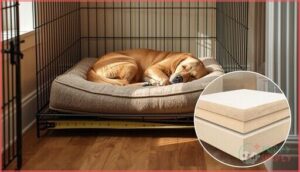
You’ll want to measure your dog’s length from nose to tail base and height from floor to head, then add 2 to 4 inches for proper crate measurement. Choose a dog bed that allows your dog to turn around fully and stretch without cramping.
Bed thickness matters for dog comfort—aim for 1 to 2 inches of cushioning. Proper crate fit and space optimization guarantee successful crate training.
Durable and Chew-Resistant Options

Once you’ve nailed the sizing, you need to think about durability—especially if your dog loves to chew excessively. Aggressive chewers can shred standard bedding in hours, so look for chew-proof beds made with durable fabrics like ballistic nylon or reinforced ripstop that resist tearing under serious pressure.
Consider these heavy-duty bed features for crate training success:
- Reinforced stitching with nylon thread that won’t fray from sharp teeth
- Water-resistant crate liners that tolerate machine washing up to 60°C
- Hidden zippers that keep your dog’s focus away from vulnerable seams
Pet safety improves when your dog crate contains bedding designed to withstand daily wear without creating choking hazards from torn fabric.
Special Considerations for Puppies and Seniors

Puppies and seniors need different bedding support during crate training. For puppy socialization, choose gentle, chew-safe materials that fit exactly to prevent sliding and reduce separation anxiety during early crate introduction sessions.
Senior mobility requires low-profile orthopedic beds that support aging joints without forcing awkward steps. Health monitoring becomes easier when you match your dog bed to age considerations—cooler surfaces for active puppies, warmer options for stiff seniors.
Common Mistakes to Avoid With Crate Bedding

Even with the best intentions, you can undermine your dog’s crate comfort by making a few common bedding mistakes. These errors range from choosing the wrong materials to misjudging how much space your dog actually needs.
Understanding what to avoid will help you create a crate environment that truly fosters your dog’s health and well-being.
Using Inappropriate Bed Types
Not every dog bed is a good fit for your dog crate. Some materials create slippery surfaces that increase the risk of minor injuries when your pet shifts position.
Others trap heat, leading to overheating during warm months. Loose covers collect dirt, hair, and allergens, making cleaning harder.
Thin, flat pads offer zero joint support, while certain fillings invite chew damage that ruins the bed quickly.
Ignoring Your Dog’s Chewing Habits
Overlooking chewing habit formation can spell disaster for crate training and canine anxiety management. If your dog has a habit of chewing excessively, placing any standard bed inside the dog crate invites destructive behavior and creates crate safety tips concerns.
Ignoring this pattern leads to ingested foam, frayed fabric, and potential blockages. Instead, seek chewing habit solutions like chew-resistant mats or supervised crate time until you address the underlying dog behavior through proper training and environmental controls.
Overcrowding The Crate With Bedding
Piling too many layers into your dog crate chokes off crate ventilation and traps heat, risking overheating. Excessive bedding depth also hides moisture, promoting skin irritation and bacterial growth.
Bulky bedding materials reduce crate accessibility for anxious or senior dogs and can shift underfoot, creating tripping hazards. Keep bedding minimal to maintain dog safety, support effective crate training, and preserve the dog bed’s intended comfort without compromise.
Frequently Asked Questions (FAQs)
Can I use blankets instead of a proper bed?
Yes, blankets can work as bed alternatives for crate comfort, offering cozy environments and pet hygiene benefits.
However, blanket safety depends on your dog’s chewing habits—destructive pups need chew-resistant crate training tips first.
How often should I replace crate bedding?
Replace crate bedding every one to two weeks for puppies and dogs that soil frequently.
For healthy adult dogs, a weekly to biweekly cleaning schedule maintains proper crate hygiene and promotes your dog’s health.
Are waterproof beds necessary for all dogs?
Not every dog needs a waterproof bed, but they’re essential for puppies still mastering house-training, senior dogs with incontinence, and any pup prone to drooling or accidents—keeping your crate hygiene simple.
Do elevated beds work well inside crates?
Elevated beds can create excellent dog comfort zones inside a crate when they fit properly.
Choose bed height options that allow clearance, ensuring crate interior design promotes ventilation while your dog enjoys elevated bed benefits and cushioned support.
Should anxious dogs have thicker or thinner beds?
A slightly cushioned surface strikes the right balance for anxious dog comfort. Aim for two to four inches of bed thickness—enough to cradle joints without swallowing your dog in foam that restricts movement during restless moments.
Conclusion
Prioritizing proper padding transforms your dog’s crate from confinement into comfort. The benefits of using a bed inside dog crate extend from puppy development through senior years—protecting joints, reducing anxiety, and improving sleep quality.
You’ve invested in training tools and veterinary care; investing in appropriate crate bedding completes that circle of responsible ownership. Your dog can’t advocate for their own comfort, but you can. Tonight, they’ll rest easier because you made the informed choice.