This site is supported by our readers. We may earn a commission, at no cost to you, if you purchase through links.

You bring your new puppy home, set up the crate with a cozy bed inside, and within hours, you find shredded fabric scattered like confetti and your pup chewing happily on a mouthful of stuffing. This scene plays out in countless homes because while crate beds offer comfort and security, they can also present real hazards if you choose the wrong one.
Puppies explore the world with their mouths, and that curious nibbling can quickly turn a soft sleeping surface into a choking risk or digestive emergency. The good news? Crate beds designed with puppy safety in mind—featuring chew-resistant fabrics, non-toxic materials, and thoughtful construction—can provide your young dog with a secure, comfortable space that fosters healthy development without the worry.
Table Of Contents
- Key Takeaways
- Are Crate Beds Safe for Puppies?
- Key Safety Features in Puppy Crate Beds
- How to Choose a Safe Crate Bed
- Top 5 Safe Crate Beds for Puppies
- Frequently Asked Questions (FAQs)
- Should you put a bed in a crate with a puppy?
- Can a 9 week old puppy sleep through the night?
- What is the 10-10-10 rule for puppies?
- When should I remove the crate bed entirely?
- Can puppies sleep without a crate bed safely?
- How often should I replace my puppys bed?
- What temperature is safest for crate sleeping environments?
- Are elevated beds better than flat crate pads?
- Conclusion
Key Takeaways
- Crate beds are safe for puppies only when you choose chew-resistant materials and monitor your pup’s behavior, since inappropriate bedding creates choking hazards, digestive emergencies, and safety risks from loose threads or cheap stuffing.
- Prioritize beds with CertiPUR-US certified foam, reinforced stitching, non-slip bottoms, and machine-washable covers that fit snugly in the crate with 1-2 inches of clearance, ensuring proper airflow while preventing your puppy from using extra space as a bathroom.
- Aggressive chewers need beds with ripstop ballistic fabric or elevated aluminum frames, while calmer puppies do well with orthopedic egg-crate foam or flannel mats—matching the bed to your dog’s habits prevents destruction and keeps them safe during the 3-6 month teething phase.
- Replace beds immediately when you spot torn seams, flattened padding, or persistent odors, and maintain crate temperatures between 68-72°F with weekly washing routines to protect your puppy’s health and comfort.
Are Crate Beds Safe for Puppies?
Crate beds can be safe for puppies when you choose the right type and monitor your puppy’s behavior, but not all beds meet safety standards or suit every pup’s habits.
Look for chew-resistant crate beds designed for puppies if your pup tends to dig or nibble during downtime.
The safety depends on factors like material quality, fit, and your puppy’s tendency to chew or shred bedding. Let’s look at the key benefits, common concerns, and risks you should understand before adding a bed to your puppy’s crate.
Potential Safety Benefits of Crate Beds
A quality crate bed isn’t just about comfort—it’s a safety tool that promotes your puppy’s physical and emotional wellbeing. When you choose the right bed, you’re creating a secure foundation for healthy development.
A quality crate bed is a safety tool that promotes your puppy’s physical and emotional wellbeing while creating a secure foundation for healthy development
- Joint protection: Cushioned surfaces distribute weight evenly, reducing pressure on developing shoulders and hips
- Temperature control: Breathable fabrics and thermal layers prevent overheating while maintaining warmth
- Anxiety reduction: A defined resting space helps puppies feel secure, promoting calmer crate time
- Hygiene support: Removable, washable covers minimize bacteria buildup and keep the crate inviting
For more guidance on selecting, check out expert recommendations for crate bed safety and comfort.
Common Safety Concerns for Puppies
Even with the best intentions, puppy safety in crates requires vigilance. Choking risks top the list—small parts, loose threads, or stuffing can quickly become hazards if your pup chews through bedding materials.
Puppy anxiety may lead to destructive behavior, turning soft beds into crate hazards. Safety precautions like removing collars before confinement and choosing chew resistant, non-toxic fabrics help protect your dog’s health and guarantee true crate safety.
Be aware that issues such as puppy teeth and hard objects can increase the risk of oral injuries if bedding isn’t carefully selected.
Risks of Inappropriate Crate Bedding
Inappropriate bedding magnifies those crate safety risks in serious ways. Crate bed hazards range from puppy choking on loose fibers to bedding toxins leaching from cheap materials, fabric allergies triggering skin reactions, and poor crate ventilation when thick padding blocks airflow. Selecting the wrong dog crate beds can undermine puppy safety and comfort altogether.
Key crate bed hazards to avoid:
- Foam padding that crumbles into chew-resistant fragments during teething
- Plush fabrics with loose seams inviting destructive chewing and ingestion
- Non-washable materials trapping moisture, bacteria, and allergens
- Oversized beds reducing ventilation and restricting puppy movement
- Decorative elements like zippers or buttons creating choking risks
Key Safety Features in Puppy Crate Beds
Not all puppy crate beds are created equal, and knowing what to look for can mean the difference between a safe sleeping space and a potential hazard.
The right bed combines materials your puppy can’t easily destroy or ingest with features that support their growing body and stay securely in place. Here are the four essential safety features you should prioritize when choosing a crate bed for your puppy.
For a deeper look at how the right bed can improve your puppy’s crate training experience, check out the key benefits of using a bed inside a dog crate.
Chew-Resistant and Non-Toxic Materials

Puppies explore their world with their mouths, so choosing crate beds made from non-toxic fillings like CertiPUR-US certified memory foam protects your pup from harmful chemicals.
Look for chew-resistant fabrics—polypropylene and polyester blends resist tearing, while reinforced stitching prevents seam separation. Chew-proof outer covers with rugged woven nylon minimize toxic material risks, and safe dye processes guarantee durability without compromising your puppy’s health during those inevitable teething sessions.
Orthopedic and Supportive Construction

Your puppy’s growing joints need proper joint support, which is why orthopedic design matters from day one. Look for multi-layer construction with memory foam—density around 1.5 to 2.5 pounds per cubic foot provides genuine joint support and pressure relief without sagging.
Quality dog crate beds maintain spinal alignment through contoured surfaces that distribute weight evenly, protecting vulnerable hips and elbows while your pup sleeps.
Non-Slip Bottoms and Secure Fit

A bed that shifts or bunches inside the crate creates tripping hazards and undermines puppy safety during restless nights. That’s why slip resistant bottoms with rubberized or textured surfaces provide essential crate floor grip, while secure fit dimensions matched to your crate size prevent sliding.
Look for puppy crate beds featuring:
- Silicone dots or treads for bed anchoring
- Snug borders that hug crate walls
- Materials maintaining grip when wet
Machine-Washable and Easy-Clean Fabrics

Accidents happen with every puppy, so machine washable covers and easy-clean fabrics protect your investment while safeguarding your pup’s health. Removable covers simplify routine laundering, while stain resistance and odor control fibers keep dog crate beds fresh between washes.
| Fabric Feature | Safety Benefit | Maintenance Tip |
|---|---|---|
| Machine washable polyester blends | Non-toxic, quick-drying material safety | Wash weekly at 30-40°C |
| Water-repellent finishes | Prevents liquid absorption, stain resistance | Wipe spills immediately |
| Odor-neutralizing fibers | Controls puppy smells, fabric durability | Use mild detergent only |
| Colorfast dyes | Maintains vibrancy, puppy comfort | Tumble dry low heat |
| Removable zippered covers | Full cleaning without pad exposure | Spot-clean between washes |
Choose crate bed options with clear care labels specifying wash temperatures and cycle types for long-term fabric durability.
How to Choose a Safe Crate Bed

Now that you know what safety features matter, it’s time to put that knowledge into action.
Choosing the right crate bed isn’t just about picking something soft—you need to take into account your puppy’s size, chewing tendencies, and how easy the bed will be to keep clean.
Let’s walk through the four key factors that’ll help you find a safe and practical option for your pup.
Matching Bed Size to Crate and Puppy
Crate measurement forms the foundation of safe bedding choices—your puppy should have enough room to stand, turn around, and lie down without touching the walls. Measure from nose to tail base, then add 3 to 4 inches for proper crate size.
Choose a bed that leaves a 1 to 2 inch gap to the walls, ensuring airflow and easy access while preventing your pup from using extra space as a bathroom spot.
Avoiding Small Parts and Loose Seams
Small detachable pieces pose serious choke hazards, so inspect dog crate beds for buttons, plastic charms, or decorative bits under 1.25 inches that puppies can swallow.
Check these safety features before buying:
- Seam integrity with at least 8 stitches per inch and reinforced corners
- Secure fasteners like covered zippers that won’t snag or expose metal
- Material safety with tightly woven, non-toxic fabrics
- Fabric durability that resists fraying and shedding
- Choke hazards eliminated through heat-sealed trims
Considering Puppy’s Chewing and Sleeping Habits
Your puppy’s teething phase and sleep patterns should drive your crate bed choice. Between three and six months, destructive behavior peaks as adult teeth emerge, so select chew-resistant dog crate beds with reinforced edges.
Observe how your pup sleeps—curled postures need slightly thicker padding for puppy comfort, while sprawlers prefer flatter surfaces. Pair the crate bed with approved chew toys to redirect biting during those 12 to 18 hours of daily rest.
Prioritizing Maintenance and Hygiene
Clean bedding makes crate training safer and more comfortable. Choose dog crate beds with machine washable covers you can toss in weekly—or more often during accidents.
Opt for bed material with tight weaves that resist tearing, and make sure proper ventilation systems are in place around the crate to prevent odor buildup. A simple puppy bed hygiene routine protects your pup’s health while keeping the space welcoming.
Top 5 Safe Crate Beds for Puppies
Now that you know what to look for in a safe crate bed, let’s talk about specific options that meet those standards.
I’ve selected five beds that consistently perform well regarding safety, durability, and ease of cleaning for puppy owners. Each one tackles common concerns like chewing, accidents, and proper support for growing joints.
1. Bedsure Orthopedic Dog Bed
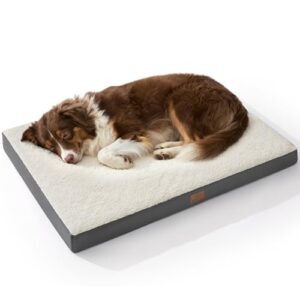
This bed delivers orthopedic support through its egg-crate foam core, which resists flattening and distributes your puppy’s weight evenly across the surface. The 200gsm sherpa fleece cover is removable and machine washable, simplifying weekly cleaning routines you’ll need during housebreaking.
At 36″L x 27″W x 3″Th, it fits most standard crates while accommodating puppies up to 65 lbs. The anti-slip bottom prevents shifting that could startle your pup during sleep, and CertiPUR-US certification ensures the foam meets safety standards for growing dogs.
| Best For | Puppy owners who need orthopedic support for growing joints, easy-clean materials for accidents, and a non-slip design that keeps the bed stable in crates or on hard floors. |
|---|---|
| Material | Egg crate foam |
| Machine Washable | Yes (cover) |
| Size | 36″L x 27″W x 3″Th |
| Anti-Slip Bottom | Yes |
| Breed Size | Large (up to 65 lbs) |
| Portability | Portable |
| Additional Features |
|
- Egg-crate foam provides genuine orthopedic support and won’t flatten like cheaper beds
- Machine-washable sherpa cover makes cleaning up puppy accidents straightforward
- Anti-slip bottom and safety certifications give you peace of mind during those chaotic early months
- Not tough enough for heavy chewers—you’ll need to supervise until your pup outgrows that phase
- The bed runs smaller than advertised, so double-check measurements if you’re planning ahead for a large breed
- The cover can shrink or lose shape after repeated washing, which is frustrating when you’re doing laundry constantly
2. Furrybaby Dog Bed Mat
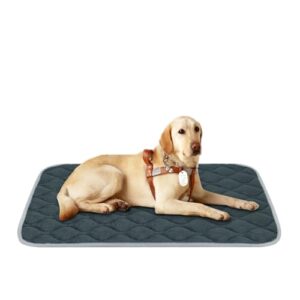
If you’re working with a tighter budget or a smaller crate, the Furrybaby Dog Bed Mat offers reliable safety at 42″L x 28″W x 0.7″Th.
Its polyester insert provides gentle pressure relief without excessive cushioning that could bottom out under your puppy’s weight, while the anti-slip bottom keeps it anchored during nighttime movements.
The machine-washable design simplifies your cleaning routine, though you’ll want to avoid this option if your pup is an aggressive chewer—the thinner profile won’t withstand serious gnawing.
| Best For | Pet owners on a budget who need a lightweight, easy-to-clean mat for crates or travel, especially if their dog isn’t a heavy chewer. |
|---|---|
| Material | Polyester |
| Machine Washable | Yes |
| Size | 42″L x 28″W x 0.7″Th |
| Anti-Slip Bottom | Yes |
| Breed Size | Large |
| Portability | Foldable for travel |
| Additional Features |
|
- Machine washable and simple to maintain
- Anti-slip bottom keeps it in place during the night
- Foldable and portable for camping or car trips
- Too thin for aggressive chewers or dogs that scratch heavily
- May lack enough cushioning for pets needing extra joint support
- Non-skid backing doesn’t grip well on all floor types
3. Soft Dog Bed Mat
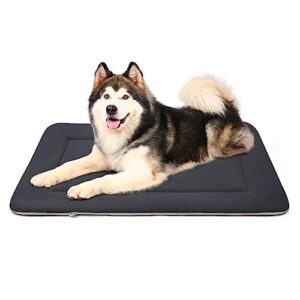
For puppies who tend to overheat or need quick-drying bedding, the Soft Dog Bed Mat in sizes M through XL (up to 48″L x 30″W) combines flannel comfort with practical PP fiber and sponge construction.
The silicone-dot bottom grips crate floors without shifting, and you can toss it straight into your washing machine when accidents happen. Just keep in mind that it’s not chew-resistant—if your pup mouths bedding regularly, this mat won’t last long under persistent gnawing.
| Best For | Puppies or dogs who overheat easily and need machine-washable, quick-drying bedding that stays put on crate or hard floors. |
|---|---|
| Material | Flannel/PP Fiber |
| Machine Washable | Yes |
| Size | 36-48″ options |
| Anti-Slip Bottom | Yes |
| Breed Size | Medium/Large |
| Portability | Multi-use versatile |
| Additional Features |
|
- Machine washable and easy to clean when accidents happen
- Non-slip silicone dots keep the mat from sliding around in crates or on floors
- Works as a versatile mat for crates, furniture, or car seats
- Not chew-resistant, so it won’t hold up if your dog gnaws on bedding
- Thinner than cushioned foam beds, offering less padding on hard surfaces
- Some users report it attracts dirt and hair easily or has inconsistent quality
4. Pet Dreams Dog Crate Pad
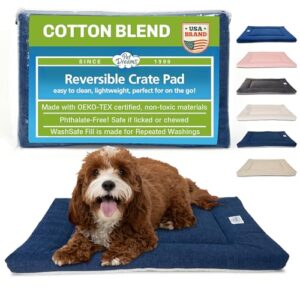
The Pet Dreams Crate Pad (24″L x 18″W x 1.5″Th) earns OEKO-TEX STANDARD 100 certification for non-toxic materials, giving you peace of mind when your puppy naps inside.
Its reversible design—Sherpa fleece on one side, breathable cotton on the other—lets you adjust for seasonal comfort, and the zipper-free construction eliminates choking hazards during teething phases.
You’ll appreciate the fully machine-washable fabric that resists pilling and shedding, though dogs who dig or shred bedding can pull loose fill through persistent scratching.
| Best For | Pet parents seeking a certified non-toxic, machine-washable crate pad for small dogs that don’t have destructive chewing or digging habits. |
|---|---|
| Material | Cotton/Polyester |
| Machine Washable | Yes |
| Size | 24″L x 18″W x 1.5″Th |
| Anti-Slip Bottom | No |
| Breed Size | Small |
| Portability | Lightweight and portable |
| Additional Features |
|
- OEKO-TEX certified non-toxic materials keep your pet safe during naps and teething phases
- Reversible Sherpa and cotton sides adapt to seasonal temperature changes
- Machine-washable fabric resists pilling and shedding for long-term durability
- Not suitable for dogs that dig or chew, as filling can come loose through persistent scratching
- May slide on hard floors or metal crates without additional grip solutions
- Thinner padding might not provide enough cushioning for all dogs
5. K9 Ballistics Chew Proof Dog Bed
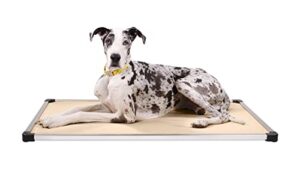
Aggressive chewers meet their match with the K9 Ballistics bed’s 100% aluminum frame and ripstop ballistic fabric, which resists punctures and tears through even the toughest teething sessions. Its 1.5-inch recycled polyester fill provides orthopedic-style support for growing joints, while the waterproof backing simplifies cleanup after accidents.
You can machine-wash the removable center pad between crate sanitizing routines, though some owners note that liquids pool on the slick surface rather than absorbing. The elevated design promotes airflow that keeps your puppy cool and dry overnight.
| Best For | Owners of aggressive chewers or diggers who need a durable, easy-to-clean crate bed that can withstand destructive behavior. |
|---|---|
| Material | Aluminum/Ballistic fabric |
| Machine Washable | Yes (fabric) |
| Size | 47″L x 29″W x 1″H |
| Anti-Slip Bottom | N/A (elevated) |
| Breed Size | Large/X-Large |
| Portability | Compatible with crates |
| Additional Features |
|
- Aluminum frame and ripstop ballistic fabric stand up to heavy chewing and digging
- Elevated design with 1.5″ padding offers orthopedic support and airflow
- Waterproof backing and machine-washable center pad make cleanup simple
- Slick surface causes liquids to pool rather than absorb, making messes harder to manage
- Padding may be too thin for dogs needing extra cushioning or joint support
- Deep cleaning can be challenging and may require soaking with baking soda and vinegar
Frequently Asked Questions (FAQs)
Should you put a bed in a crate with a puppy?
Yes, you can put a bed in crate once they’ve shown they won’t destroy it.
Start with chew-resistant options, and always supervise early on to prevent accidents or choking hazards.
Can a 9 week old puppy sleep through the night?
At 9 weeks, your puppy won’t sleep a full eight hours yet. Expect them to manage three- to four-hour stretches overnight, waking once or twice for quick potty breaks before settling back down.
What is the 10-10-10 rule for puppies?
The 10-10-10 rule transforms puppy training into bite-sized wins: 10 minutes of focused training, 10 minutes of playful bonding, and 10 minutes of essential rest, repeating throughout the day to prevent overstimulation.
When should I remove the crate bed entirely?
You can remove the crate bed once your puppy is reliably housetrained, calm without supervision, and consistently chooses a new sleeping spot for several nights—usually after weeks of stable behavior.
Can puppies sleep without a crate bed safely?
Puppies can sleep safely without a crate bed if you provide a puppy-proofed sleep zone with soft padding, proper supervision, and secure barriers—just make sure the area stays cool, dark, and free from hazards.
How often should I replace my puppys bed?
Most beds need replacing every 1 to 2 years, but active chewers may wear them out in 6 to 12 months. Replace immediately if you notice persistent odors, torn seams, or flattened padding.
What temperature is safest for crate sleeping environments?
Your puppy’s crate should stay between 68 and 72 degrees Fahrenheit temperature.
Use a room thermometer to verify comfort, and watch for shivering, panting, or restlessness—clear signs you’ll need to adjust bedding or airflow.
Are elevated beds better than flat crate pads?
Neither option is universally better—your choice depends on your puppy’s needs.
Elevated beds offer better airflow and moisture control, while flat pads provide cozy cushioning and often easier cleaning for accident-prone pups.
Conclusion
Ironically, the very thing meant to comfort your puppy—a soft crate bed—can become a source of worry if you don’t choose wisely. But armed with the right knowledge about chew-resistant materials, proper sizing, and thoughtful construction, you can confidently answer “are crate beds safe for puppies?” with a resounding yes.
Select a bed that matches your pup’s habits, prioritize non-toxic fabrics, and watch them settle into a safe, restful space they’ll love.