This site is supported by our readers. We may earn a commission, at no cost to you, if you purchase through links.
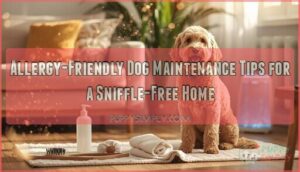
About 10 to 20 percent of people are allergic to pets—yet millions of them share their homes with dogs anyway.
Not because they love sneezing, but because the right dog, cared for the right way, makes it manageable. The secret isn’t finding a mythical "zero-allergen" breed. It’s understanding that allergens come from saliva, skin, and urine—not just fur—and building habits that keep those triggers under control.
Allergy-friendly dog maintenance isn’t a single fix; it’s a combination of smart breed selection, consistent grooming, and a cleaning routine your home actually sticks to.
Table Of Contents
- Key Takeaways
- Choosing an Allergy-Friendly Dog Breed
- Essential Grooming for Allergy Control
- Home Maintenance to Reduce Allergens
- Top 4 Products for Allergy-Friendly Dog Maintenance
- Daily Tips for Managing Dog Allergies
- Frequently Asked Questions (FAQs)
- What is the most low-maintenance hypoallergenic dog?
- What is the easiest low-maintenance dog?
- How do I maintain my dog’s allergies?
- Can diet affect how much dander dogs produce?
- Do dog allergies worsen with age over time?
- Are certain dog colors less allergenic than others?
- Do puppies trigger fewer allergic reactions than adults?
- Conclusion
Key Takeaways
- Allergens come from your dog’s saliva, skin, and urine — not just fur — so grooming, home cleaning, and air filtration all have to work together to actually lower your exposure.
- No breed is truly allergen‑free, but low‑shedding dogs like Poodles, Bichon Frises, and Yorkshire Terriers produce fewer airborne triggers, and spending time with the specific dog matters more than the breed label.
- A consistent routine — weekly brushing, baths every three to four weeks, HEPA vacuuming twice weekly, and damp‑wiping your dog with a product like Allerpet — cuts dander loads significantly more than any single fix.
- One pet‑free room, ideally your bedroom with the door kept closed, gives your immune system a real break and can change how you feel every single morning.
Choosing an Allergy-Friendly Dog Breed
Picking the right dog when you have allergies isn’t just about finding a cute face — it’s about finding a breed your immune system can actually live with.
Beyond just managing sniffles, you’ll want a breed that genuinely fits your household — this guide to hypoallergenic dogs that are great with kids makes that match a whole lot easier.
Not all dogs affect allergy sufferers the same way, and a few key factors make a real difference. Here’s what we think about before you bring one home.
Purebred Vs. Mixed Breeds for Allergies
Purebred dogs offer predictable coat types, which makes allergy risk assessment a lot easier before you commit.
But here’s what the research actually shows: genetic allergen variation between individual dogs matters more than the breed label itself.
A mixed-breed dog with a stable, established coat can work just as well.
Individual dog testing — spending real time with the specific dog — beats any pedigree claim.
low-shedding coat advantages can be seen in breeds like the Bichon Frise.
Popular Hypoallergenic Breeds
Once you know what coat works for you, picking a breed gets simpler. Here are three popular hypoallergenic dog breeds worth knowing:
- Poodles — available in multiple size variants, low‑shedding, and highly trainable
- Bichon Frise — gentle temperament traits, minimal pet dander, suits smaller homes
- Yorkshire Terrier — silky low‑shedding coat, compact, moderate energy levels
All three make allergy management genuinely manageable. They produce fewer allergens for allergy sufferers.
Breed Characteristics Affecting Allergies
Beyond breed names, it’s the biology that really matters.
Coat layer type makes a big difference — single-layered, nonshedding coat breeds trap dander close to the skin instead of releasing it into the air.
Skin oil levels, saliva protein content, paw licking habits, and hair texture all shape how much low dander actually spreads — making these breed characteristics central to dog grooming for allergies.
Size and Shedding Considerations
Size matters more than people think — but not the way you’d expect.
Small dog breeds naturally spread allergens over less of your home, making them ideal apartment-friendly dogs.
Large dog challenges include tails and bodies brushing against more surfaces, pushing dander higher up walls and furniture.
Shedding levels hit harder indoors — the more time your dog spends inside, the heavier your room allergen load gets.
Essential Grooming for Allergy Control
Grooming isn’t just about keeping your dog looking good — it’s most effective ways to keep allergens in check.
Done right, it can make a real difference in how your home feels day to day.
Here’s what you need to know to build a grooming routine that actually works.
Brushing Techniques for Low-Shedding Dogs

Brushing your low-shedding dog the right way makes a real difference for allergen control.
Use the Section Brushing Method — work upward from the legs, targeting hidden mats. A Slicker Brush Angle of 45 degrees captures dander without skin irritation, while Pin Brush Detangling smooths curly coats beautifully. Try a Rubber Curry Massage to loosen dead skin.
Stick to a Weekly Frequency Schedule for consistent, low-maintenance results.
Professional Grooming Vs. Home Care

Both options work — it really comes down to your schedule and budget.
Professional grooming cuts airborne allergens by up to 84%, using equipment quality you simply can’t replicate at home.
But home hygiene for pet allergies isn’t powerless either — allergen shampoos reduce dander by 85%.
Smart frequency scheduling blends both: DIY baths every three to four weeks, plus pro visits every six to eight weeks.
Managing Dander in The Coat

Even with the right coat type, dog dander hides in layers you can’t always see. Here’s how to tackle it:
- Brush weekly — slicker brushes remove up to 90% of loose fur
- Wipe with Allerpet — cuts dander by 50% between baths
- Support skin nutrition — omega-3s reduce flaking from inside out
- Control humidity — 30–50% indoors eases seasonal dander fluctuations
Smart allergy management starts at the coat.
Home Maintenance to Reduce Allergens
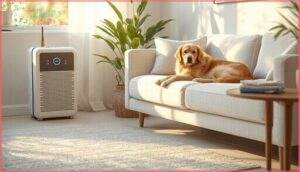
Grooming your dog is only half the battle.
What happens inside your home matters just as much, especially for anyone dealing with sneezes, itchy eyes, or a runny nose. Here are four practical ways to keep allergens under control where it counts most.
Cleaning Routines for Allergy-Friendly Homes
Think of allergens like dust settling after a storm — they don’t stop unless you do.
HEPA vacuuming twice weekly captures 99.97% of pet dander particles, while damp dusting prevents allergens from becoming airborne. Floor mopping after vacuuming cuts dander by up to 80%. Don’t overlook fabric laundering weekly at 140°F or crevice cleaning — hidden buildup quietly fuels your symptoms.
Air Filtration and Ventilation Tips
Clean air is your first line of defense against dander.
- HEPA Placement Strategies: Run HEPA purifiers where your dog lounges most — they cut airborne particles by nearly 90%.
- Pet Zone Isolation: Keep bedroom doors closed for 8 hours of allergen-free sleep.
- Ventilation Air Flow: Open windows on low-pollen days to refresh indoor air.
- Filter Replacement Schedule: Swap filters every 12 months minimum.
Allergen-Reducing Flooring and Fabrics
Your floors and furniture work harder than you think. Hardwood Sealing locks out dander at the surface level, while Tile Porosity is virtually zero with glazed porcelain — one damp mop and it’s gone.
Vinyl Antimicrobial surfaces wipe clean in seconds.
For fabrics, Microfiber Washability holds up through 200+ wash cycles, and Polypropylene MoistureResistance stops dander odors before they start.
Safe Spaces for Allergy Sufferers
Once your floors and fabrics are sorted, the next layer of allergy management strategies is about dedicated space. Pick one room — ideally your bedroom — and make it off-limits.
Door barrier rules matter here: closed doors, no exceptions. Keep it low-fabric, run a bedroom air purifier continuously, and lean on ventilation strategies like open windows on low-pollen days. That one room changes everything.
Top 4 Products for Allergy-Friendly Dog Maintenance
The right products can make a real difference when you’re managing dog allergies at home.
From reducing airborne dander to keeping floors cleaner between grooming sessions, a few well‑chosen tools go a long way.
Here are four worth having on your radar.
1. Chuckit Classic Ball Launcher Dog Toy

The Chuckit Classic Ball Launcher is a smart pick for allergy-conscious dog owners. Its 26-inch design throws balls two to three times farther than your arm can manage — keeping your dog active outdoors, where dander stays out of your living space.
The hands-free pickup means no slobber on your hands, which directly cuts down on saliva allergen transfer. It fits any medium 2.5-inch Chuckit ball, and the ergonomic handle makes long play sessions easy on your arm.
| Best For | Dog owners with medium-breed dogs who love outdoor play and want a low-effort, high-fun way to keep their pup active without straining their arm or getting covered in slobber. |
|---|---|
| Lifestage | All Lifestages |
| Breed Size | Medium Breeds |
| Dander Reduction | Indirect (exercise reduces shedding) |
| Allergy Benefit | Low |
| Ease of Use | Simple, single function |
| Pet Friendliness | Designed for dogs |
| Additional Features |
|
- Throws the ball way farther than you ever could by hand — great for burning off energy at the dog park
- Hands-free ball pickup means no dealing with wet, slobbery balls
- Lightweight and ergonomic, so long play sessions don’t wear out your arm
- Only works with medium 2.5-inch Chuckit! balls, so you’re locked into that size
- Too big to use indoors or in tight spaces
- Not the best fit for very small or very large breeds
2. Allerpet Dog Dander Remover

While outdoor play cuts down on indoor dander, you still need a plan for what’s already on your dog’s coat. That’s where Allerpet Dog Dander Remover earns its spot. Just dampen a cloth, wipe it through the fur, and you’re done — no bath needed.
It’s clinically shown to reduce dander loads by 50% with weekly use, and it’s safe for puppies as young as 10 weeks. Vets and allergists recommend it for good reason.
| Best For | Dog owners with allergies — or anyone living with a sneezy, itchy household — who want a simple, no-bath way to keep dander under control. |
|---|---|
| Lifestage | All Lifestages |
| Breed Size | All Breeds |
| Dander Reduction | 50% reduction proven |
| Allergy Benefit | High |
| Ease of Use | No bath required |
| Pet Friendliness | Safe 10+ weeks |
| Additional Features |
|
- Cuts dander loads by 50% with just a weekly wipe-down — no bath required
- Safe for puppies 10 weeks and up, and works across all breeds
- Vet and allergist recommended, with a clean ingredient list (aloe, green tea, chamomile)
- Won’t work for everyone — some users see little to no allergy relief
- Needs consistent, repeat application to stay effective
- May reduce symptoms, but don’t expect it to wipe them out completely
3. Eureka PowerSpeed Upright Vacuum Cleaner
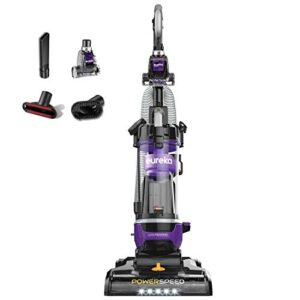
Once the dander is off your dog’s coat, you need to pull it off your floors and furniture. The Eureka PowerSpeed Upright Vacuum manages that job well.
Its 960-watt motor delivers strong suction across carpet, hardwood, and tile — and the washable foam filter traps fine dust and pet dander before air exhausts back into the room. The 2.1-liter dust cup means fewer emptying trips, and the included pet tool targets upholstery where hair quietly piles up between cleanings.
| Best For | Pet owners who want a reliable, whole-home vacuum that handles hair on every surface without constant filter or bin maintenance. |
|---|---|
| Lifestage | All Lifestages |
| Breed Size | All Breeds |
| Dander Reduction | Captures dander via vacuum |
| Allergy Benefit | High |
| Ease of Use | Automatic cord rewind |
| Pet Friendliness | Includes pet tool |
| Additional Features |
|
- Strong 960-watt suction works across carpet, hardwood, and tile
- XL 2.1-liter dust cup means fewer trips to the trash
- Comes with a dedicated pet tool for couches and upholstery
- At 12.3 lbs, it’s not the lightest option if you have mobility concerns
- The cord caps out at 25 feet, so outlets matter more than they would with a cordless
- Roller brush and belt need regular cleaning or performance drops over time
4. Afloia Air Purifier for Pets
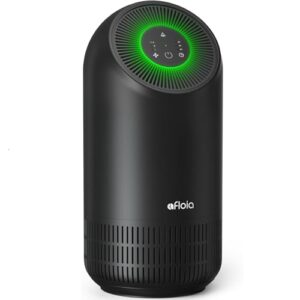
Even with the best grooming routine, pet dander still floats through your air long after brushing is done. That’s where the Afloia Air Purifier for Pets earns its place.
Its 3-stage filter — pre-filter, HEPA-style layer, and activated carbon — captures particles as small as 0.03 microns and absorbs pet odors simultaneously.
It cycles a 220 sq ft room four times per hour.
Sleep mode runs at just 22 decibels, quiet enough for bedrooms.
Replace the filter every 3–6 months and you’re set.
| Best For | Pet owners dealing with allergies, dander, or stubborn odors who want cleaner air without a lot of fuss. |
|---|---|
| Lifestage | All Lifestages |
| Breed Size | All Breeds |
| Dander Reduction | 99.99% dander removal |
| Allergy Benefit | Very High |
| Ease of Use | Customizable speed and timer |
| Pet Friendliness | Eliminates pet odors and hair |
| Additional Features |
|
- Tackles pet hair, dander, and odors all at once with its 3-stage filter system
- Cycles a 220 sq ft room four times an hour, so the air stays consistently fresh
- Sleep mode runs at 22 decibels — quiet enough to run overnight without bothering you
- Filter replacements every 4–6 months add ongoing costs to consider
- Warranty requires registration within a week of purchase, which is easy to forget
- Long-term durability is hard to gauge without extended real-world use
Daily Tips for Managing Dog Allergies

Living with a dog when you have allergies doesn’t have to mean constant sneezing and itchy eyes.
A few simple daily habits can make a real difference in how you feel at home.
Here’s what actually helps.
Limiting Allergen Spread in The Home
Think of allergens like dust settling on everything — and your job is to stop them from drifting from room to room.
- Place entryway mats where your dog comes inside to catch fur and pollen
- Use furniture covers you can toss in the wash weekly
- Practice ventilation scheduling by opening windows when pollen counts are low
- Keep grooming and care for hypoallergenic dogs in outdoor spaces
- Try airflow management by running your HEPA purifier with interior doors open
Allergy Management During Dog Play and Exercise
Playtime doesn’t have to mean payback in the form of sneezes.
Timing walks for late afternoon cuts pollen exposure considerably.
Before heading out, stick to your medication scheduling — antihistamines need 30–60 minutes to kick in.
After outdoor sessions, pollen wiping with a damp cloth is non‑negotiable.
On high‑count days, indoor play alternatives like puzzle toys work well.
Protective gear — sunglasses, a light mask — helps too.
Best Practices for Allergy Sufferers Living With Dogs
Living with a dog when you’re allergy-prone isn’t about sacrifice — it’s about systems.
Living with a dog when you’re allergy-prone isn’t about sacrifice — it’s about systems
- Hand Hygiene: Wash hands after every pet session, no exceptions.
- Clothing Changes: Swap out dander-covered clothes before settling onto furniture.
- Pet-Free Zones: Keep your bedroom closed — your sleep matters.
- Scheduled Cleaning: Weekly grooming, vacuuming, and bedding washes prevent allergen spikes.
Ventilation strategies, low-shedding dog breeds, and consistent dog grooming do the rest.
Consulting With Veterinarians for Allergy Support
Your vet is your best ally in long-term allergy management.
A proper Vet Allergy Assessment starts with reviewing your dog’s full history, then moves into Diagnostic Testing like skin or blood IgE panels.
From there, Treatment Strategies — including Immunotherapy Guidance — are built around your dog’s specific triggers.
With Ongoing Vet Support, managing dog allergies becomes a clear, manageable plan for lasting canine health.
Frequently Asked Questions (FAQs)
What is the most low-maintenance hypoallergenic dog?
Want a dog that won’t wreck your weekends with grooming? The Basenji tops the list. It’s a low-shedding, easy-care dog — short coat, self-cleaning habits, and minimal fuss.
What is the easiest low-maintenance dog?
The Basset Hound checks almost every box for low‑maintenance dog care — calm temperament, minimal shedding, short grooming sessions, and low exercise needs.
Health simplicity makes easy‑care dogs like this ideal for relaxed households.
How do I maintain my dog’s allergies?
Managing your dog’s allergies is like plugging leaks in a boat — you handle one spot, another appears.
Combine allergy management strategies, skin barrier supplements, and medication scheduling with consistent home hygiene to stay ahead.
Can diet affect how much dander dogs produce?
Yes — diet directly affects dander.
Omega‑3 supplementation hydrates skin and cuts flaking. Zinc intake prevents moisture loss.
Novel protein sources, grain‑free formulas, and hydrolyzed diets all reduce inflammation that drives excess allergen production.
Do dog allergies worsen with age over time?
They can, yes. Immune sensitivity builds quietly over time. Long-term exposure effects mean allergy symptoms may intensify — but smart management strategies and early allergy prevention can slow symptom progression considerably.
Are certain dog colors less allergenic than others?
No — coat color doesn’t affect allergens. The Color Allergen Myth is just that: a myth.
Pigment Irrelevance is real — Can f1 proteins bind to hair regardless of color.
Choose coat type, not color.
Do puppies trigger fewer allergic reactions than adults?
Puppies may seem safer, but they produce the same allergens as adults. Lower early coat shedding and short exposure time build just delay reactions — long-term sensitization is still very real.
Conclusion
Picture a quiet evening—your dog curled at your feet, no sneezing, no burning eyes, just peace.
That’s not a fantasy.
It’s what consistent allergy friendly dog maintenance actually builds, one habit at a time.
The right breed, a steady grooming rhythm, clean air, and smart home choices don’t just reduce symptoms—they rewrite your daily life with a dog in it.
You put in the work; your sinuses finally get a break.
- https://canineboardinglodge.com.au/hypoallergenic-dog-grooming/
- https://www.k9reproduction.com/single-post/grooming-tools-for-hypoallergenic-dogs-a-comprehensive-guide
- https://www.emipet.com/columbus/blog/2025/choosing-hypoallergenic-dogs-how-grooming-helps.html
- https://www.petmd.com/dog/general-health/hypoallergenic-dogs
- https://www.goodnaturedbrand.com/blogs/health-wellness/managing-allergies-cleaning-strategies-for-pet-owners-in-allergen-sensitive-homes