This site is supported by our readers. We may earn a commission, at no cost to you, if you purchase through links.

A border collie training for agility competitions burns nearly twice the calories of her couch-dwelling counterpart, yet many pet parents feed both dogs identical portions. This mismatch between energy output and food intake leaves active dogs running on empty, with consequences ranging from muscle loss to mid-trail exhaustion.
Adjusting portions for active dogs isn’t just about filling the bowl higher—it requires understanding how different activity levels translate into calorie needs, when to increase food gradually versus immediately, and how to spot the warning signs that your dog’s tank is hitting empty. Getting the balance right means your athletic companion maintains lean muscle, sustains energy through demanding workouts, and recovers properly between training sessions.
Table Of Contents
Key Takeaways
- Active dogs burn 25-90% more calories than sedentary dogs, depending on intensity, requiring you to increase daily portions by 20-40% and adjust them gradually—starting with 10% increases weekly—to prevent digestive upset while meeting their elevated energy demands.
- Your dog’s fuel needs shift with workout intensity more than duration, so you’ll need to feed a small meal 2-3 hours before exercise and offer post-workout nutrition within 60 minutes to support muscle repair and glycogen replenishment.
- Watch for warning signs of underfeeding, like visible ribs, muscle loss along shoulders and hindquarters, mid-walk energy crashes, or ravenous behavior after meals—these indicate your portions aren’t matching your dog’s activity level.
- Choose performance formulas with 26-34% protein from real animal sources and monitor body condition scores weekly, adjusting portions seasonally since spring and summer activity peaks can raise calorie needs by 15-20% compared to winter months.
Why Active Dogs Need More Food
Your active dog isn’t just burning more energy during those long hikes or agility sessions—they’re fundamentally changing how their body uses fuel throughout the day.
This metabolic shift means their protein requirements for dogs increase significantly to support muscle repair and sustained energy production.
Active dogs don’t just burn more calories—they fundamentally rewire how their bodies use fuel all day long
Just like an athlete needs more calories than someone with a desk job, working and athletic dogs require substantially more food to maintain their weight and performance. Understanding why this happens, how much more they actually need, and what signs tell you they’re running on empty will help you fuel your dog properly.
Energy Expenditure in Working and Athletic Dogs
Working and athletic dogs burn dramatically more energy than their couch-dwelling cousins. Your active companion’s energy expenditure jumps from roughly 124 kcal per kg of body weight at rest to 157–235 kcal during intense work, depending on activity type.
Sled dogs and racing breeds hit the highest levels, while detection and police dogs fall mid-range. This difference directly impacts daily food portions and nutrient optimization needs.
Recent studies analyzing locomotor costs in different breeds highlight that northern breeds demonstrate a notable energetic efficiency compared to other types.
How Exercise Intensity Affects Calorie Needs
Exercise intensity drives calorie burn more than duration alone. When your dog shifts from a leisurely walk to high-intensity agility or sprinting, energy expenditure jumps substantially—even if the session lasts the same length.
Higher-intensity efforts recruit more muscle fibers and increase post-exercise calorie use, meaning your daily food portions and nutrient timing must adapt accordingly to fuel performance nutrition and support proper weight management.
Studies using whole room indirect calorimetry confirm that both exercise intensity and type directly influence daily energy expenditure and nutrient oxidation.
Recognizing Signs Your Dog Needs More Calories
Once you’ve adjusted daily food portions for a higher activity level, watch for signals that your dog isn’t getting enough fuel. Rapid weight fluctuation, especially visible ribs or muscle loss, points to calorie deficiency.
Energy levels that drop mid-walk, a dull coat, or excessive hunger between meals all indicate nutrient balance issues. These health indicators help you fine-tune portion control for your dog size and unique needs.
Calculating Portion Increases for Active Dogs
Getting the numbers right is the foundation of feeding your active dog properly. You’ll need to start with their baseline calorie needs, then apply adjustments based on how much energy they’re actually burning.
Let’s break down the calculation process step by step so you can determine the right portions for your dog’s activity level.
Baseline Calorie Requirements by Weight

Your dog’s baseline daily caloric needs start with a simple weight-based calculation. Most adult dogs at moderate activity require roughly 2.5 to 3.0 calories per kilogram of body weight to maintain healthy weight management and meet their Resting Energy Requirement.
When adjusting your dog’s diet, follow a gradual food transition plan to prevent digestive issues while shifting calorie intake.
Dog size matters—smaller breeds often need higher per-kilogram values due to faster metabolic rates, while larger dogs use lower rates, reflecting breed-specific energy needs and nutrient requirements before any portion control adjustments.
Activity Level Multipliers and Adjustments

Once you’ve calculated baseline needs, multiply them by an activity factor to match your dog’s daily movement and training intensity. This energy multiplier transforms calorie calculation into practical portion control adapted to your pet’s routine.
Standard activity level multipliers for weight management and nutrient balance include:
- Light activity (1.2–1.4×): Casual daily walks
- Moderate activity (1.4–1.6×): Regular play and training
- High activity (1.6–2.0×): Athletic breeds with intensive workouts
- Extreme activity (2.0–3.0×): Working dogs or competition athletes
Adjust feeding strategies gradually based on weekly weigh-ins and body condition changes.
Using Feeding Charts as Starting Points
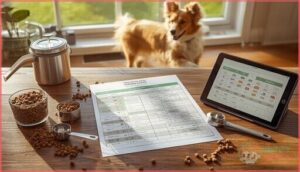
Charts provide a reliable starting point for portion control and calorie calculation, but they’re designed for average scenarios. You’ll find baseline kcal ranges, activity level tiers, and meal scheduling recommendations that guide initial feeding decisions.
Start at the conservative end of the range, then monitor your dog’s body condition weekly. These feeding charts establish nutrient balance foundations—not fixed rules—for gradual portion adjustment.
Accounting for Breed-Specific Metabolism Differences
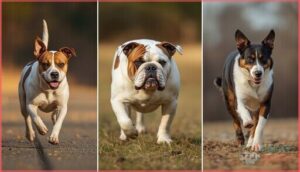
Breed metabolism shapes calorie needs in ways standard feeding guidelines can’t capture. Even at identical activity levels, genetic factors drive physiological differences in energy efficiency and nutrient utilization that alter portion requirements.
- Small breeds burn more calories per pound due to higher basal metabolic rates
- Brachycephalic breeds may need adjustments for thermoregulation during exercise
- Working lines within breeds often show greater muscle density and faster glucose clearance
- Some breeds preferentially use fat oxidation over carbohydrates during sustained work
- Protein turnover rates vary by breed, influencing recovery nutrition needs
Account for these breed-specific traits when fine-tuning portions beyond basic dog feeding guidelines for ideal canine health and wellness.
How to Adjust Portions Based on Activity
Once you’ve calculated your dog’s increased calorie needs, the next step is putting that knowledge into practice without overwhelming their digestive system.
The shift from regular portions to performance-level feeding requires careful timing, gradual adjustments, and awareness of your dog’s unique activity patterns. Let’s walk through the specific strategies that’ll help you make these changes safely and effectively.
Gradual Increases to Prevent Digestive Upset
Think of your dog’s digestive system like a finely tuned engine—sudden fuel changes can cause sputtering. Start by adding 10 percent more calories, then increase by 5 percent weekly if your dog tolerates it well.
This gradual approach protects gut sensitivity and promotes digestive health. Pair fiber intake increases with plenty of water, and watch for loose stools or gas as warning signs to slow down.
Daily Activity Vs. Occasional High-Energy Days
Your dog’s daily routine sets the baseline for calorie intake, but occasional high-energy days—like a long hike or agility training—demand temporary portion adjustments.
Regular activity level tracking helps you distinguish steady energy needs from one-off spikes. Increase portions by 20 to 40 percent on intense days, then return to baseline afterward. This flexible nutrition planning maintains energy balance without compromising portion control or long-term dog health and nutrition.
Pre- and Post-Exercise Feeding Timing
Timing your dog’s meals around exercise nutrition directly impacts performance and recovery. Feed a small portion 2 to 3 hours before activity to fuel energy intake without digestive upset.
Post workout, offer a meal within 60 minutes to support muscle repair with protein and replenish glycogen stores. This feeding schedule optimizes portion control while addressing your dog’s activity level and health needs.
Seasonal Adjustments for Activity Changes
Beyond single workout days, your dog’s energy balance shifts with the seasons. Spring and summer activity peaks from longer daylight and outdoor play can raise daily calorie needs by 15 to 20 percent.
To match these seasonal adjustments:
- Reassess portion control every 8 to 12 weeks
- Use energy dense formulas during high activity seasons
- Monitor weight closely during weather adjustments
Track activity level changes to keep your feeding guide accurate year round.
Monitoring Your Dog’s Weight and Condition
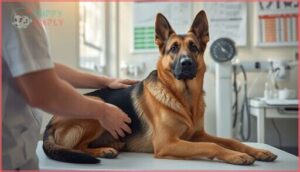
Adjusting portions is only half the equation—you also need to watch how your dog reacts to those changes.
Regular monitoring helps you catch problems early and fine-tune feeding amounts before weight issues develop.
Let’s cover the essential methods for tracking your active dog’s body condition and knowing when to adjust.
Using Body Condition Score Assessment
Your dog’s body condition score gives you a clear snapshot of whether your feeding strategies are supporting ideal canine health.
You’ll assess this by feeling for ribs with light pressure and checking for a visible waist from above. Most healthy, active dogs score a 3 on the 1-to-5 scale, balancing lean muscle with appropriate fat coverage for sustained performance and weight management.
Regular Weigh-Ins and Tracking Progress
Once you’ve mastered body condition scoring, consistent weight tracking provides the data you need for smart portion sizes decisions. Weigh your dog on the same two to three days each week, first thing in the morning after using the bathroom. Use a digital scale on a hard surface, and calibrate it monthly for accuracy.
- Record weight with date, time, and body condition notes in your feeding logs
- Compare weekly averages rather than daily numbers to spot true trends
- Note factors like recent meals or exercise that might affect readings
Warning Signs of Underfeeding Active Dogs
Tracking numbers helps, but visible symptoms reveal underfeeding fast. Watch for ravenous tendencies even after meals, since active dogs burning more calories than they consume will act constantly hungry.
Energy crashes during previously easy walks signal nutrient deficits, while dull coats and digestive issues point to health risks. Muscle wasting along the shoulders and hindquarters confirms your portions aren’t supporting their activity level.
Adjusting When Activity Levels Change
Your dog’s activity level rarely stays static, so portion control demands regular recalibration. When training seasons shift or weekend hikes taper off, reduce calories by 10 to 20 percent over one week to prevent unwanted weight gain.
If new energy needs emerge, increase portions gradually and track body condition weekly. Smart nutrition planning aligns feeding schedules with real-time activity tracking for ideal dog health tips.
Choosing The Right Food for Active Dogs

Feeding your active dog the right portions matters, but the quality and type of food you choose matters just as much.
Performance dogs need fuel that bolsters their increased energy demands without overloading their digestive system. Let’s look at the key factors that’ll help you select the best food for your dog’s active lifestyle.
High-Protein Formulas for Performance Dogs
Performance nutrition starts with choosing formulas where real animal protein sources anchor the ingredient list. You’ll want recipes delivering 26 to 34 percent protein on a dry matter basis, supplying essential amino acids that power muscle recovery in canine athletes.
High protein formulas pair quality fats with complete amino acid profiles to fuel endurance while supporting lean mass during intense training cycles.
Nutrient Density Vs. Volume Considerations
Calorie control for active dogs means balancing nutrient density with meal volume to support energy levels without digestive overload.
Nutrient-rich dog food delivers essential vitamins and minerals per calorie, letting you meet performance needs with moderate portion sizes.
When you increase portions for canine nutrition, choose formulas that pack nutrients efficiently so your feeding routine fuels activity without overwhelming their digestive health.
Performance and Sport Dog Food Options
Sport-focused dog food packs the protein sources, calorie density, and nutrient balance your athlete needs without extra volume.
Look for formulas listing real animal protein first, with 28 to 34 percent protein and 15 to 25 percent fat to fuel endurance.
Many include glucosamine for joint support, omega-3s for digestive health, and probiotics to keep feeding your dog’s performance on track.
Supplementing With Healthy Treats and Snacks
Treats can reinforce healthy dog habits when you choose wisely—aim for no more than 10 percent of total daily calories to maintain calorie control.
Protein-rich snacks like lean meat or fiber-packed options like pumpkin deliver nutrient boosts without excess.
Time treats after meals or during training for healthy rewards that support performance.
Smart snack timing and treat nutrition keep your active dog fueled and fit.
Frequently Asked Questions (FAQs)
How does the 3-3-3 rule help dogs adjust?
Your new companion needs time to decompress from canine stress.
The 3-3-3 rule guides adjustment periods through three days of decompression, three weeks of routine building, and three months of full confidence development.
How much should you feed an active dog?
Your active dog usually needs 20 to 40 percent more daily calories than a sedentary dog of the same weight.
Base portions on body weight, activity intensity, and your dog food’s calorie calculation to meet energy requirements.
How does age affect calorie needs in active dogs?
A Border Collie competing in agility trials at age two won’t have the same energy needs at age ten. Puppy nutrition demands higher calorie intake per pound than adult dog feeding, while senior dogs usually need 20-30% fewer daily caloric needs despite remaining active.
Age factors directly impact metabolism—puppies burn calories rapidly during growth, adults maintain steady energy needs, and senior diet adjustments become necessary as metabolism slows. Even athletic dogs experience age-specific feeding requirements that shift their calorie intake throughout life stages.
Should portions change during injury recovery or rest periods?
Yes, portions should decrease during rest periods since energy expenditure drops, but protein stays elevated to support tissue repair and prevent muscle loss.
Gradual calorie adjustment prevents digestive upset while supporting recovery diets and healing strategies.
Conclusion
Your active dog depends on you to fuel every sprint and leap with precision nutrition. The difference between proper and inadequate feeding can make or break athletic performance, transforming a competitive athlete into a fatigued shadow of their potential.
Mastering adjusting portions for active dogs means watching body condition scores, recalculating needs when seasons shift, and staying flexible as your dog’s demands evolve. Feed right, and you’ll see sustained energy, solid muscle, and that unstoppable drive that makes athletic dogs exceptional.
- https://www.akc.org/expert-advice/nutrition/dog-nutrition-tips/
- https://www.petmd.com/dog/nutrition/feeding-your-dog-how-much-should-they-eat
- https://www.riverbendpet.com/3-3-3-rule-dogs-adjustment-guide
- https://www.epictailsvet.com/the-3-3-3-rule-for-dogs
- https://shortpumpvetgroup.com/3-3-3-rule-adopted-dog-adjustment