
This site is supported by our readers. We may earn a commission, at no cost to you, if you purchase through links.
Parakeets eat with the enthusiasm of curious explorers, turning every meal into a little adventure. Their diet isn’t a monotonous scoop of seeds, but a lively mix that mirrors the rainbow of their feathers—pellets packed with nutrients, flashes of apple and greens, a handful of crunchy millet.
A healthy parakeet thrives on this variety, relying on your choices at the food bowl each day. Knowing what parakeets usually eat means more than following a chart—it’s about noticing their bright eyes, glossy feathers, and boundless energy, all fueled by the right balance on their plate.
Table Of Contents
- Key Takeaways
- What Do Parakeets Usually Eat?
- Seeds and Grains in a Parakeet’s Diet
- Are Pellets Better Than Seeds?
- Essential Fruits and Vegetables
- Protein and Legumes for Parakeets
- Foods Parakeets Should Never Eat
- Vitamins, Minerals, and Supplements
- Feeding Guidelines and Best Practices
- Healthy Treats and Enrichment Foods
- Monitoring Parakeet Diet and Health
- Frequently Asked Questions (FAQs)
- How much food should I feed my parakeet daily?
- Can I feed my parakeet human food?
- How often should I give my parakeet treats?
- What are some signs that my parakeet is not getting enough nutrients?
- How can I encourage my parakeet to eat a variety of foods?
- How often should parakeets be fed each day?
- Can parakeets eat cooked foods or leftovers?
- Are there seasonal foods parakeets enjoy more?
- How do parakeets react to dietary changes?
- What signs indicate a parakeet dislikes certain foods?
- Conclusion
Key Takeaways
- A healthy parakeet diet should consist of 70-80% quality pellets, 10-20 grams of fresh vegetables daily, and only 5% fruit, with seeds offered sparingly as treats rather than staples to prevent nutritional imbalances and obesity.
- Toxic foods like avocado, chocolate, caffeine, and alliums (onions, garlic) can be life-threatening even in small amounts, while safe options include apples without seeds, carrots, broccoli, leafy greens, and properly prepared legumes like lentils.
- Transitioning from an all-seed diet to pellets should happen gradually over several weeks while monitoring weight and feather condition, as pellets provide consistent nutrition and prevent selective feeding that leads to vitamin deficiencies.
- Warning signs of poor nutrition include dull feathers, reduced activity, weight changes, and unusual droppings—catching these early through regular monitoring and adjusting the diet can extend a parakeet’s lifespan by up to 30%.
What Do Parakeets Usually Eat?
Parakeets have unique dietary needs, whether they’re living in the wild or in your home. It’s important to understand the main food groups that keep them healthy and active.
Here’s a closer look at what should go into their daily meals.
Natural Diet Vs. Captive Diet
While wild parakeets thrive on diet diversity—seeds, fruits, buds, and even insects—yours rely on steady nutrition. Captive calorie needs run 8–12 kcal per gram of body weight, with pellets boosting vitamin intake and balancing seasonal shifts.
Pellet benefits include reducing picky eating and ensuring consistent nutrients, unlike wild diets that change with habitat and season. It’s worth mentioning that climate change can affect the availability of natural food sources for wild parakeets.
Key Food Groups for Parakeets
Just as pellets help balance your parakeet’s diet, the right mix of foods matters. Pellet composition should make up most meals, with seed variety offered sparingly for enrichment.
Aim for daily vegetable servings and fruit moderation—think small, fresh bites.
Don’t overlook water freshness; clean water aids digestion and overall health. Each food group plays a part in keeping your bird thriving.
Seeds and Grains in a Parakeet’s Diet
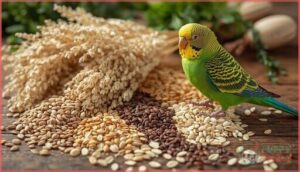
Seeds and grains play a big role in what parakeets eat every day. Not all types are created equal, though, and some are better choices than others.
Here’s what you need to know about the safest options and which ones to offer with care.
Safe Seed Types (Millet, Canary, Safflower)
Seed mixes are the backbone of a parakeet’s diet, but not all seeds are created equal. Millet seeds offer steady energy and are a staple for safe ratios. Canary seeds add protein and healthy oils, boosting canary nutrition. Safflower seeds work as a safflower alternative, lower in fat than sunflower. Mixing these seeds promotes your parakeet’s health without overdoing fats.
Academic research is important to understand types of sources for proper parakeet nutrition.
Grains as Treats (Amaranth, Buckwheat)
After you’ve sorted safe seeds, grains like amaranth and buckwheat can add variety as parakeet treats. These offer strong nutritional benefits—think protein, antioxidants, and fiber—while supporting foraging behavior.
Keep treat portioning strict: one teaspoon per week is plenty. Proper grain preparation matters, too. Always serve plain and remove leftovers quickly to maintain dietary balance and avoid spoilage.
Risks of High-Fat Seeds (Sunflower)
Although sunflower seeds tempt many parakeets, regular feeding quickly raises obesity prevalence and risks liver stress. High-fat seeds like these can drive rapid weight gain, especially without strict portion control.
If you’re aiming for better parakeet health, swap in seed alternatives—millet or canary seed—and practice fat monitoring. Keeping sunflower seeds under 15% of the diet helps maintain balance.
Are Pellets Better Than Seeds?
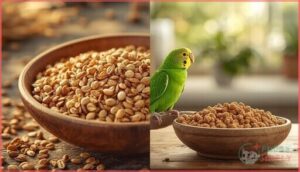
If you’re wondering whether pellets are a better choice than seeds for your parakeet, you’re not alone. There are a few key things to think about before making the switch.
Let’s look at what sets pellets apart and how to choose the right option.
Benefits of Pelleted Diets
Ever notice how parakeets pick out only their favorite seeds? A healthy parakeet diet built around pellets means reduced selective feeding and improved nutrient consistency.
You’ll see better weight stabilization, vibrant feather condition, and less stool variability. Pellets help deliver a balanced parakeet diet, supporting your bird’s overall health in ways simple seed mixes just can’t match.
Transitioning From Seeds to Pellets
When you start switching parakeets from seeds to pellets, gradual introduction is key. Replace a portion of seeds with pellets over several weeks, watching for changes in seed preference and nutrient intake.
Improved feather condition and stable weight are good signs. Keep up with weight monitoring—if appetite drops or your bird refuses pellets, slow the process and adjust the parakeet diet.
Choosing Quality Pellets
Looking for pellets that support your parakeet’s health? Focus on Pellet Ingredients and Guaranteed Analysis—crude protein should land between 12–18%. Fiber Content matters for digestion, so check for 6–9%.
Pellet Flavors help with acceptance during switching to a pelleted diet. Stick with brands designed for parakeets, and use Shift Methods to move from seeds vs pellets smoothly.
Essential Fruits and Vegetables
Fruits and vegetables play a key role in keeping your parakeet healthy. Not every option is safe or suitable, so it’s important to know what works best.
Here’s what you need to look for when choosing produce for your bird.
Safe Fruits (Apples, Bananas)
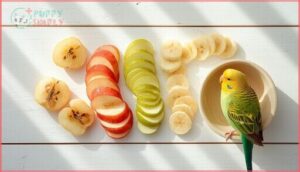
Did you know not all fruits are created equal for parakeets? Apples—washed, seeds removed—are a safe parakeet food, with 4–6 pieces weekly offering variety across apple varieties. Bananas, when ripe, make an occasional treat: 1–2 small slices daily.
For safe parakeet fruit consumption, rotate fruits, control portions, and always focus on proper fruit preparation and serving frequency.
Safe Vegetables (Carrots, Broccoli, Greens)
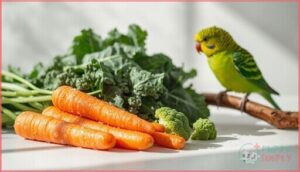
Did you realize parakeets thrive on a colorful mix of vegetables? Carrots, broccoli, and leafy greens are safe parakeet foods—each brings unique nutrients. For parakeet vegetable consumption, you’ll want to watch for Carrot Overfeeding, practice Vegetable Washing, and rotate greens. Steaming Greens helps some birds digest better. Broccoli Preparation matters, too—small florets, offered fresh.
- Carrot Overfeeding risks vitamin A imbalance
- Broccoli Preparation: serve 1–2 small florets daily
- Leafy Green Rotation prevents mineral excess
- Steaming Greens aids digestibility for juveniles
- Vegetable Washing removes pesticides and spoilage
Portion Guidelines for Produce

Balancing vegetable intake and fruit intake is a bit like weaving a colorful tapestry—each thread matters. For daily volume, stick to about 20% Parakeet Vegetables and 5% Parakeet Fruit by bowl space. Produce variety keeps nutrition broad, while safe ratios help avoid excess sugar intake. Make gradual adjustments to new foods, always observing how your bird responds.
| Produce Type | Daily Volume | Safe Ratios |
|---|---|---|
| Vegetables | 20% bowl | 4:1 |
| Fruit | 5% bowl | 1:4 |
| Mixed (weekly) | Small mix | 1:5 |
Protein and Legumes for Parakeets
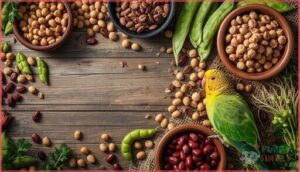
Getting enough protein is key for your parakeet’s growth and health. Legumes can be a safe and nutritious way to meet those needs.
Here are some good options for their diet.
Importance of Dietary Protein
Vitality in parakeets relies on a steady supply of protein, woven through their diet from seeds and pellets. Amino acids drive growth, muscle tone, and feather renewal—especially during molting needs. To keep protein balanced, use daily distribution and watch for signs of protein excess. Here’s what matters:
- Growth
- Muscle tone
- Feather health
- Molting needs
- Balanced daily intake
Safe Legumes (Lentils, Chickpeas)
After you’ve covered those protein basics, let’s talk about lentils and chickpeas. With the right legume preparation—soaked, cooked, or sprouted—and portion control, these safe foods make a smart addition to your parakeet’s diet.
Rotating legumes helps with nutritional balance, while veterinary guidance promotes your food list’s health. Sprouting brings added benefits, enriching your parakeet’s meal plan.
Foods Parakeets Should Never Eat

Not everything in your kitchen is safe for your parakeet. Some foods and ingredients can be surprisingly harmful, even in small amounts.
Here’s what you should always keep out of their bowl.
Toxic Foods (Avocado, Chocolate)
Did you know that even a bite of chocolate or avocado can be life-threatening for parakeets? Avocado toxicity stems from a compound called persin, which harms their heart and breathing.
Even a small bite of chocolate or avocado can be deadly for parakeets due to their extreme toxicity
Chocolate poisoning is just as serious, thanks to theobromine’s risks. For your bird’s safety, ban these foods from the cage and offer only safe alternatives, never risky treats.
Harmful Foods (Onions, Garlic)
While you might love bold flavors, onions and garlic (and all alliums) spell trouble for parakeets. Allium Toxicity creeps in fast—sometimes within a day—causing digestive upsets, anemia, and even death. Foods to avoid for parakeets aren’t just human leftovers. Remember:
- Watch for exposure symptoms.
- Know risk thresholds are low.
- Choose safe alternatives.
- Prevention tips save lives.
Other Dangerous Substances
From the kitchen to the living room, hidden dangers lurk for parakeets. Avocado toxicity, chocolate hazards, and caffeine risks top the list—each can trigger heart, lung, or neurological problems. Nicotine exposure and oils toxicity (think essential oil diffusers) also threaten your bird’s health.
Stick with safe foods for parakeets; foods toxic to parakeets aren’t worth the risk.
Vitamins, Minerals, and Supplements
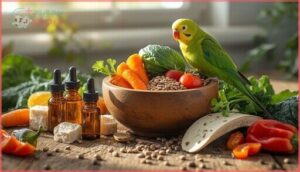
Getting the right balance of vitamins and minerals is key for your parakeet’s health. Sometimes, supplements are needed to fill the gaps in their diet.
Here’s what you should know about keeping your bird well-nourished.
Key Nutrients for Health
Ever wonder what keeps a parakeet bright-eyed and healthy? Your bird’s vitality hinges on essential nutrients like these:
- Vitamin Importance—A, D3, E, and K prevent vitamin deficiencies.
- Mineral Roles—Calcium and phosphorus support bones and eggshells.
- Protein Needs—Feather growth and muscle tone rely on 12-13.5% protein.
- Fatty Acids, Antioxidants—Guard against inflammation and oxidative stress.
When to Use Supplements
Think of supplements as a safety net—not a substitute for a balanced diet. Use supplementation when vitamin deficiencies or mineral deficiencies are suspected, especially with seed-only diets. Always follow dosage guidelines, and watch for over-supplementing risks. Vet consultation is key before adding supplement types.
Here’s a quick comparison:
| Deficiency Symptoms | Supplement Types |
|---|---|
| Dull feathers | Vitamin drops |
| Weak bones | Mineral blocks |
Signs of Deficiencies
Did you know over 40% of parakeets with nutritional deficiencies show Feather Abnormalities and dull coloring? Low Activity Levels, ruffled feathers, and soft-shelled eggs signal deeper vitamin deficiencies or mineral deficiencies. Iron Overload from seed-heavy diets is another red flag. Watch for signs of poor nutrition—these issues often point to gaps in your parakeet diet needing attention.
Feeding Guidelines and Best Practices
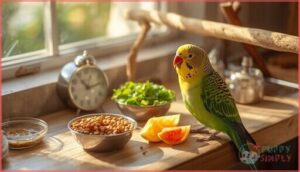
Feeding your parakeet isn’t just about what goes into the bowl—it’s also about how and when you offer it. A few simple habits can make a big difference in their health and happiness.
Here’s what you’ll want to keep in mind each day.
Daily Serving Sizes
How much food does your parakeet really need each day? Precision matters. For a healthy feeding schedule, keep these parakeet diet requirements in mind:
- Pellet Percentage: Aim for 70–80% of daily intake.
- Produce Allowance: Offer 10–20 grams fresh fruits and veggies.
- Water Intake: Provide 5–10 mL per 100g body weight.
Rotate foods and watch seed balance closely.
Introducing New Foods Safely
Once you’ve sorted daily serving sizes, introducing new foods calls for a gentle touch. Gradual introduction over 7–10 days helps your parakeet adjust, reducing stool changes and refusals.
Try different textures—some birds prefer chopped, others smoothed. Use rotation schedules for variety, boosting vitamin intake and parakeet nutrition.
This balanced parakeet diet approach keeps your bird curious and safe.
Cleaning and Food Safety
Once your parakeet tries new foods, keeping everything clean matters just as much. Washing produce removes mold and pesticides, and cutting into uniform pieces helps reduce spoilage. Use BPA-free, dishwasher-safe dishes for better dish hygiene. Safe storage keeps seeds fresh and free from toxins. These habits protect your bird’s health and keep parakeet food safety a priority.
- Wash produce before serving
- Remove uneaten food quickly
- Store seeds in cool, dry places
Healthy Treats and Enrichment Foods
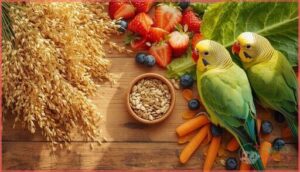
Treats and enrichment foods can make mealtime more interesting for your parakeet. These options offer variety while supporting their health and happiness.
Here are some ideas you can safely add to their routine.
Occasional Treat Options
Occasionally, offering treats for parakeets—like millet, seed mixes, or safe nuts—adds variety without tipping the balance. Keep treat frequency low, with portion sizes small to avoid junk foods or obesity. Fruit snacks and dry berries should make up less than 5% of weekly intake.
Here’s a quick guide:
| Safe Treats | Portion Sizes |
|---|---|
| Millet spray | 1–2 times weekly |
| Shelled nuts | 1–2 pieces weekly |
| Dry fruit snacks | Tiny, <5% weekly |
Foraging and Food Enrichment Ideas
Treats for parakeets are just one piece of the puzzle—real enrichment happens when you tap into their natural behaviors. Foraging toys and puzzle feeders boost activity levels and manual food retrieval. This keeps your bird busy, and also promotes mental health. Try these foraging opportunities:
- Puzzle feeders
- Shredded paper boxes
- Seed-stuffed pinecones
- Hidden treat cups
- Foraging toys
Monitoring Parakeet Diet and Health
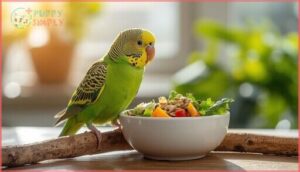
Keeping an eye on your parakeet’s diet is key to their health and happiness. There are a few important signs and steps you’ll want to watch for as you go.
Here’s what matters most regarding monitoring their nutrition and well-being.
Recognizing Poor Nutrition Signs
Ever notice your parakeet looking tired or its feathers losing their shine? Dull plumage, reduced activity, or a swollen cere often point to nutrition or vitamin deficiencies.
Early enzyme elevations can signal deeper health problems. Regular weight monitoring catches over half of diet-related issues before they get worse, helping you protect your bird’s health before symptoms become serious.
Adjusting Diet for Health Needs
From time to time, adjusting what you feed makes all the difference. Keep an eye on feather health and watch stool consistency—these are early signs of trouble. Routine weight monitoring helps you spot weight gain or loss before bigger health problems surface.
Fresh water each day aids hydration needs, while monthly dietary audits quickly uncover vitamin deficiencies, giving you a clear path forward.
When to Consult an Avian Vet
If your parakeet shows persistent weight loss, sudden inappetence, unusual dropping changes, or breathing difficulty, don’t wait—reach out to an avian veterinarian as soon as possible. Leg weakness, noticeable shifts in behavior, or digestive problems also signal trouble.
Staying alert to these signs helps you catch health problems or vitamin deficiencies before they become serious.
Frequently Asked Questions (FAQs)
How much food should I feed my parakeet daily?
For parakeet feeding, offer 1–2 teaspoons of pellets or seed mix daily, plus 15–20 grams of vegetables.
Adjusting portions for individual needs and weight monitoring helps prevent overfeeding risks. Calorie calculation aids a healthy parakeet diet.
Can I feed my parakeet human food?
You can offer safe human foods—like plain fruits and vegetables—to your parakeet in small portions. Portion control is key, since most human foods aren’t balanced for birds.
Always avoid high-fat, salty, or toxic items, and follow vet recommendations.
How often should I give my parakeet treats?
Think of treats as a sprinkle of joy, not the main course. Safe treats should be given 2–3 times a week, keeping treat frequency low.
Portion control helps prevent obesity risks and promotes healthy behavioral impacts in parakeets.
What are some signs that my parakeet is not getting enough nutrients?
Look for dull Feather Condition, unexpected Weight Changes, or shifts in Activity Levels. Beak/Eye Issues, Egg Problems, or Vitamin deficiencies often surface as Feather plucking, Lethargy, poor Appetite, and changes in Droppings—these all signal nutrient gaps.
How can I encourage my parakeet to eat a variety of foods?
Imagine swapping a plain menu for a colorful buffet—introduce variety slowly, using safe pairings and foraging enrichment.
Gradual shift boosts acceptance of fruits and vegetables, while monitoring response helps tailor your parakeet diet for healthy eating.
How often should parakeets be fed each day?
You should provide fresh food daily, usually split into 2-3 measured servings.
Most parakeets thrive with unlimited access to clean water and a consistent feeding schedule that matches their natural morning appetite peaks.
Can parakeets eat cooked foods or leftovers?
You can offer cooked vegetables and plain grains occasionally, but skip leftovers with salt, oil, or seasonings. Introduce gradually over 1–2 weeks in small portions—these aren’t diet staples, just enrichment.
Are there seasonal foods parakeets enjoy more?
While parakeets don’t require seasonal foods, many show increased interest in Spring Greens and Summer Berries when available.
Foraging Enrichment with fresh produce like Autumn Apples and Winter Carrots can boost activity and make vegetables, fruits, and seeds more appealing year-round.
How do parakeets react to dietary changes?
When switching to new foods, parakeets often show stress-related behaviors or appetite changes during the first week.
Gradual introduction over 1-2 weeks helps prevent digestive upset while protecting long-term digestive health and reducing obesity incidence.
What signs indicate a parakeet dislikes certain foods?
Watch for head bobbing, beak-wiping after tasting, or turning away from food items.
Reduced appetite, increased wing fluttering, and dietary change impact on droppings often signal taste bud sensitivity or behavioral food refusal reflecting individual preferences in parakeets.
Conclusion
Studies show that parakeets fed a varied diet live up to 30% longer than those on seeds alone—a statistic that underscores the power of what you put in their bowl.
Understanding what parakeets usually eat transforms routine feeding into intentional care, where every slice of carrot and pellet strengthens their feathers, sharpens their voice, and adds years to their companionship.
Your small daily choices become the foundation of their long, vibrant life.
- https://pmc.ncbi.nlm.nih.gov/articles/PMC539417/
- https://vcahospitals.com/know-your-pet/fruits-and-vegetables-in-bird-diets
- https://www.npvet.co.nz/pets/animal-info-pets/bird-rabbit-turtle-articles/feeding-a-budgerigar/
- https://www.cutelittlebirdiesaviary.com/a-budgie-breeding-diet.html
- https://ifafs.blog/beautiful-mind/