
This site is supported by our readers. We may earn a commission, at no cost to you, if you purchase through links.

Most people do a double-take the first time they spot one. A French Bulldog—but with flowing, feathery fur that belongs on a completely different dog.
The long-haired French Bulldog isn’t a mixed breed or a designer gimmick. It’s a purebred Frenchie carrying a rare recessive gene that most of the breed quietly hides but almost never expresses. Both parents have to pass it on for a fluffy puppy to appear, which is why breeders sometimes go years without producing a single one.
That scarcity, combined with the same bold personality packed into a compact frame, makes this coat variation one of the most talked-about in the dog world right now.
Table Of Contents
- Key Takeaways
- What is a Long Haired French Bulldog?
- History and Origin of Fluffy Frenchies
- Genetics Behind The Long Hair Trait
- Physical Characteristics and Appearance
- Temperament and Personality Traits
- Health Considerations and Common Issues
- Grooming and Daily Care Needs
- Cost and Rarity of Fluffy French Bulldogs
- Finding and Choosing a Reputable Breeder
- Frequently Asked Questions (FAQs)
- How much does a long hair French Bulldog cost?
- How rare are long-haired French Bulldogs?
- What two breeds make a fluffy Frenchie?
- Are fluffy Frenchies healthy?
- How much is a long-haired French Bulldog?
- What are long hair Frenchies called?
- What is the typical lifespan of a long haired French bulldog?
- What common health issues should potential owners be aware of?
- Do longhairs need special diets?
- How often should I bathe them?
- Conclusion
Key Takeaways
- The fluffy coat comes from a rare recessive gene (LH/FGF5), meaning both parents must carry it — which is why most breeders go years without producing a single long-haired pup.
- The long hair gene only changes coat texture; it doesn’t add new health risks, though all Frenchies still face breathing issues, spinal concerns, and skin fold infections by default.
- Expect to pay $8,000–$20,000 for one of these dogs, plus ongoing costs for grooming, vet care, and pet insurance that can easily rival a car payment.
- Finding a reputable breeder is non-negotiable — look for OFA-verified health testing, written contracts, and someone who asks you questions before handing over a puppy.
What is a Long Haired French Bulldog?

If you’ve ever spotted a French Bulldog with a soft, flowing coat and done a double-take, you’re not alone. Long-haired Frenchies turn heads for a reason — they’re genuinely different from the typical short-coated dogs most people know.
That rare, plush look comes from a recessive gene, and fluffy French Bulldog breed traits and care run deeper than just a pretty coat.
Here’s what actually sets them apart.
Defining The Fluffy French Bulldog
A fluffy French Bulldog is simply a purebred Frenchie carrying a rare recessive long-hair gene. These longhaired French Bulldogs aren’t a separate breed — just a coat variation.
What makes fluffy Frenchies stand out:
- Softer, longer fur around ears and chest
- Dense undercoat giving that plush, cloud-like texture
- Same compact body as standard Frenchies
- Full breed recognition still intact genetically
The long-haired French Bulldogs have a unique characteristic due to their genetic hair traits.
Differences From Standard French Bulldogs
So what sets a Longhaired French Bulldog apart from the classic version? It really comes down to one thing: the long hair gene. This single genetic factor changes coat length, texture, and how much grooming you’ll need — nothing else.
Standard Frenchies have sleek, close-lying coats that practically maintain themselves. Fluffy French Bulldog characteristics mean softer, feathered fur that needs real attention. Same structure, same breed standards, just different Coat Variations driven by rare Genetic Factors.
Understanding the coat type differences is essential for potential owners.
Common Myths and Misconceptions
Plenty of myths follow this breed around. Some people assume the long hair gene means mixed blood — not true. A fluffy coat doesn’t change purebred status.
Others think the LH gene brings extra French Bulldog health concerns. It doesn’t, though breed standards still exclude the longer coat.
Genetic testing confirms Longhaired French Bulldog genetics clearly. Coat Length Facts matter, and so do Fluffy Care Tips when managing French Bulldog coat colors and patterns.
History and Origin of Fluffy Frenchies

The fluffy Frenchie didn’t just appear out of nowhere — this coat has a real backstory worth knowing. Tracing it back reveals some surprising moments in history, a fascinating genetic twist, and how breeders today are shaping what comes next. Here’s how it all unfolded.
Early Appearance and Historical Records
The French Bulldog’s roots trace back to mid-19th century Paris, shaped by toy bulldogs brought from England. But the long hair gene? That’s been quietly hiding in the breed’s genetic history for nearly a century — the first Historical Photos date to 1933.
Key Early Records show:
- Paris breed clubs formed as early as 1880
- Formal AKC recognition followed decades of French Origins development
- Breed Evolution included both bat-eared and rose-eared varieties before standards locked in
The Role of The L4 Gene in Breed Development
The L4 gene expression has shaped fluffy Frenchies longer than most people realize. This recessive trait inheritance works through the FGF5 gene, quietly carried by short-coated dogs for generations.
As breed standardization favored sleek coats, longhair gene carriers stayed hidden in pedigrees.
Today, genetic testing reveals what was always there — coat length genetics encoded in the LH gene, waiting for two carriers to meet.
Modern Breeding Practices
Today, responsible French Bulldog breeding looks nothing like it did a decade ago. Ethical breeders now run full DNA panels, track the LH gene across certified lines, and manage inbreeding control carefully — keeping COI under 5%. Most fluffy Frenchie litters even require artificial insemination and C-sections. Health prioritization drives every decision:
- Genetic testing screens 200+ conditions
- Spinal and airway X-rays protect future litters
- COI tracking prevents dangerous inbreeding
- Breeding rights go only to vetted partners
Genetics Behind The Long Hair Trait

That fluffy coat doesn’t just happen by accident — there’s real science behind it. The long hair trait comes down to specific genes that both parents must carry and pass on together.
Here’s what you need to know about how it all works.
The LH Gene and Its Variants (L1-L4)
The LH gene, located at the FGF5 locus on canine chromosome 32, acts as a hair-growth “off switch” that doesn’t fully function in fluffy Frenchies.
Canine genetics recognizes four variants: Lh1 through Lh4, each representing a slightly different molecular change within the FGF5 gene. Your dog needs two long-hair alleles to display that fluffy coat.
Genetic testing methods can precisely identify which variants your Frenchie carries.
Inheritance Patterns and Breeding Outcomes
Think of the LH gene like a coin flip — both parents need to pass the recessive gene to produce a fluffy puppy. Two short-coated carriers have roughly a 25% chance per puppy of expressing the fluffy coat.
Genetic testing clarifies each dog’s fibroblast growth factor 5 (FGF5) status, making litter predictions far more reliable and supporting smarter breeding strategies that prioritize coat variation alongside health.
Impact on Purebred Status
Here’s the honest truth: a fluffy coat doesn’t erase a dog’s bloodline. Long-haired Frenchies can still hold full pedigree status and breed registration through the AKC — their ancestry is documented, just like any purebred. What changes is show eligibility.
A fluffy coat never erases a bloodline — long-haired Frenchies remain fully purebred, just ineligible for the show ring
- Purebred classification tracks parentage, not coat length
- Kennel club regulations disqualify long coats in conformation
- AKC-approved pedigree status remains intact regardless
- Breed standards and registration records serve different purposes
- Genetic testing confirms carrier status within the French Bulldog breed
Physical Characteristics and Appearance
The fluffy coat gets most of the attention, but there’s a lot more going on with these dogs than just their hair. From their signature ears to their compact build, every feature tells you something about who they are.
Here’s a closer look at what makes them stand out physically.
Coat Length, Texture, and Colors
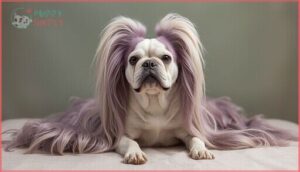
Their fluffy coat is honestly one of a kind. Coat length variations in longhaired French Bulldogs run 2–3 times longer than standard Frenchies, with the fluffiest hair texture types pooling around the ears, neck, and thighs.
Dog coat genetics and variations explain why — it’s all in the L locus. French Bulldog colors span cream to lilac, and fluffy patterns only make those shades richer.
Bat-like Ears and Facial Features

Beyond the coat, the bat-like ear structure is probably the first thing people notice. Those tall, upright ears aren’t just adorable — they’re a defining French Bulldog breed characteristic.
Frenchie experts point out that the wide skull shape frames a flat, wrinkled face with large round eyes. Clean facial wrinkles weekly, stay on top of nose care, and trim fur near the eyes to protect eye health.
Size and Body Structure

Size-wise, long-haired Frenchies are still firmly in the small dog category — usually 11 to 13 inches tall and 16 to 28 pounds. Don’t let the compact frame fool you, though. Their bone density and muscle structure make them feel surprisingly solid when you pick one up.
Smart weight management matters here, since extra pounds stress that short spine fast.
Temperament and Personality Traits

A fluffy French Bulldog isn’t just a pretty face — there’s a real personality packed inside that little body. These dogs have a reputation for being clever, affectionate, and full of character, which is a big part of why so many people fall hard for them.
Here’s a closer look at what to expect from their temperament.
Typical Behavior and Intelligence
Long-haired French Bulldogs pack a lot of personality into a small frame. Their playful nature comes out in goofy bursts — think zoomies, then a long nap on your lap.
Their learning abilities shine in short, treat-driven sessions. Problem-solving? They’ll nudge open doors to get what they want.
Emotional bonds run deep, and their social interactions thrive on your attention.
Family Compatibility and Socialization
That same emotional depth makes them a natural fit for family life. They’re gentle with kids, happy to follow little ones from room to room, and sturdy enough to handle the occasional bump.
For smooth French Bulldog temperament and personality in a multi-pet home, start socialization early — puppy classes, calm dog meetups, and supervised cat introductions all build a confident, well-rounded family dog.
Common Behavioral Challenges
Even the sweetest frenchie temperament comes with a few rough edges. Separation anxiety is real — many Frenchies spiral when left alone, barking, chewing, or scratching doors. Stubbornness, reactivity issues, and hyperactivity management challenges are common in French bulldog temperament too.
The good news? Consistent dog training, short sessions, and smart barking solutions go a long way toward calmer canine behavior.
Health Considerations and Common Issues

Owning a long-haired French Bulldog is genuinely rewarding, but their health needs deserve a clear-eyed look before you commit.
Like all Frenchies, the fluffy version comes with some built-in vulnerabilities that every owner should understand. Here’s what you need to watch for.
Brachycephalic Breathing Concerns
Breathing is where French Bulldog health gets real. Their shortened skull pushes soft tissue into the airway, causing airway obstruction that makes every breath harder work. Stenotic nares, elongated palates, and heat intolerance are everyday realities for brachycephalic dogs.
French Bulldog breathing strains worsen during exercise or warm weather. Fortunately, surgical options like nostril widening can markedly ease respiratory health concerns and improve your dog’s quality of life.
Skin, Spine, and Eye Conditions
Beyond breathing, fluffy Frenchie health brings a few more surprises. Skin fold infections thrive in facial creases, spine deformities affect nearly every dog in the breed, and eye ulcers can escalate fast without early action.
Smart Frenchie health management means staying ahead of:
- Allergy management for itchy, inflamed skin
- Chronic pain from spinal compression
- Dog health issues like entropion and cherry eye
Does The Long Hair Gene Affect Health?
The long hair gene itself isn’t the villain here. It only changes coat length — that’s it. Your fluffy Frenchie’s health risks come straight from French Bulldog genetics, not gene expression in the coat.
| Factor | Long Hair Gene | Breed-Wide Risk |
|---|---|---|
| Breathing | No impact | High risk |
| Coat Length Impact | Changes texture only | Not applicable |
| Breeding Consequences | Narrows gene pool | Health testing gaps |
Prioritize health testing over rare recessive gene looks.
Grooming and Daily Care Needs

Grooming a long-haired French Bulldog isn’t complicated, but it does require consistency. Their fluffy coat and signature facial folds each need a little regular attention to stay clean and healthy.
Here’s what your daily and weekly care routine should cover.
Brushing and Coat Maintenance
That fluffy coat doesn’t maintain itself. Aim for coat brushing 3–4 times weekly using a slicker brush and steel comb — your go-to grooming tools for tackling hair matting before it starts. Focus on high-friction zones like behind the ears and chest.
For shedding control during seasonal shifts, add a de-shedding tool. Fur conditioning shampoo every 4–6 weeks keeps those long-haired French bulldog characteristics looking their best.
Cleaning Facial Wrinkles and Ears
Those adorable facial folds are basically moisture traps — and skipping daily care is how skin infections start. A simple daily grooming routine protects your French Bulldog’s facial skin health and aids ear infection prevention year-round.
- Wipe wrinkles with a pet-safe, unscented wipe
- Dry folds completely after every cleaning
- Check ears weekly; use a vet-approved cleanser
- Never use human products on your dog’s skin
Consistent canine hygiene makes all the difference.
Cost and Rarity of Fluffy French Bulldogs
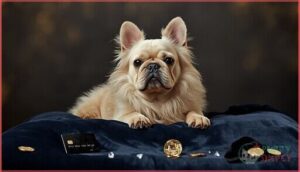
Fluffy Frenchies aren’t cheap — and that’s putting it mildly. A handful of factors work together to push prices well above what you’d expect for most dog breeds.
Here’s what actually drives the cost.
Factors Influencing Price
Several things drive French Bulldog pricing into the thousands. Breeder Reputation matters enormously — ethical breeders investing in Health Testing and quality care charge $8,000 to $15,000. Coat Colors like lilac merle or isabella push costs past $20,000. Pedigree Lineage from champion bloodlines adds another $3,000 to $5,000.
Breeding Costs — think mandatory C-sections and genetic panels — quietly inflate every dog’s final price tag.
Market Demand and Scarcity
Demand has only gone one direction — up. Social media turned French Bulldog rarity and desirability into something almost contagious, with fluffy French Bulldog popularity and cost climbing together.
Scarcity effects are real here: fewer than 10% of breeders work with this rare variation. Waitlists stretch 6 to 18 months. Market trends show no slowdown, making rarity value a genuine price factor.
Additional Ownership Expenses
Buying a fluffy Frenchie is just the beginning. Dog ownership costs add up fast. Grooming costs alone run $40–$120 every 6–8 weeks. Veterinary fees for breathing issues can hit $4,000. Food expenses for sensitive diets reach $120 monthly. Pet insurance averages $80/month, and smart owners build emergency funds of $1,000 yearly. Canine health care isn’t cheap with this breed.
Finding and Choosing a Reputable Breeder

So you’ve done the math on cost — now comes the part that actually protects your investment: finding someone who breeds with integrity. Breeder Research matters more here than with most breeds. A reputable breeder won’t rush you. They’ll ask you questions, share health guarantees in writing, and hand over Puppy Contracts that spell out warranty terms, pickup age, and spay-neuter expectations.
Watch for these green flags:
- Parents have OFA-verified health testing on file
- Puppies are raised indoors, around family activity
- Breeding Ethics show in how they discuss long haired French bulldog characteristics honestly
- Owner Support continues well after you bring your pup home
- French Bulldog breed characteristics are explained without overselling rare coat colors
Avoid anyone pushing wire transfers or dodging home visits.
Frequently Asked Questions (FAQs)
How much does a long hair French Bulldog cost?
Fluffy Frenchies aren’t cheap. Most reputable breeders price them between $8,000 and $15,000, with rare colors pushing well past $20,000.
Breed rarity and high market demand drive French Bulldog pricing far above standard coat varieties.
How rare are long-haired French Bulldogs?
Long-haired Frenchies are genuinely rare. The recessive L4 gene needs two carrier parents to produce fluffy puppies, making them a niche find in an already popular breed.
What two breeds make a fluffy Frenchie?
Most fluffy Frenchies aren’t a mix at all. Two purebred French Bulldogs carrying the recessive FGF5 gene can produce a fluffy puppy — no breed mixing required.
Are fluffy Frenchies healthy?
They’re roughly as healthy as any Frenchie. The long hair gene doesn’t add new risks, but brachycephalic breathing issues and spinal concerns still shape their overall health outlook and quality of life.
How much is a long-haired French Bulldog?
Expect to pay $8,000 to $20,000 for one of these dogs. Rare coat genetics, breeder reputation, and color all drive price variance sharply upward.
What are long hair Frenchies called?
Most people call them "Fluffy Frenchies" — you’ll spot that name everywhere from breeder sites to social media hashtags. DNA tests list them as French Bulldogs with long-hair (FGF5) markers.
What is the typical lifespan of a long haired French bulldog?
Most long-haired Frenchies live 10 to 14 years. The LH gene carries no genetic impact on longevity — it only changes coat texture.
Good care strategies and managing health risks can push that closer to
What common health issues should potential owners be aware of?
Breathing red flags, spinal mobility issues, eye ulcer warning signs, and hip dysplasia signs top the list. These dog health concerns demand a solid health guarantee and regular vet monitoring.
Do longhairs need special diets?
Not really. Longhair Nutritional Basics stay the same as any Frenchie — real meat first, balanced nutrients, and controlled portions. The fluffy coat doesn’t change what’s inside.
How often should I bathe them?
Bathe your fluffy Frenchie every 4 to 6 weeks. Overbathing strips natural oils and irritates sensitive skin. Active dogs need baths closer to every 4 weeks, while indoor pups can stretch to 6 or
Conclusion
What’s not to love about a dog that turns heads and melts hearts at the same time? The long-haired French Bulldog is rare, yes—but that’s exactly what makes finding the right one so worth the patience.
Same bat ears. Same bold personality. Just wrapped in something unexpectedly soft.
If you go in prepared—knowing the genetics, the health needs, the real costs—you won’t just own a unique dog. You’ll truly understand one.
- https://queen-inas-kennel.com/blog/fluffy-french-bulldog-genetics
- https://www.famousfrenchiesaustralia.com/fluffyfrenchies
- https://vibranthound.com/blogs/news/long-haired-french-bulldogs-everything-you-need-to-know
- https://www.frenchbulldog.com/for-sale-akc/grooming-a-long-haired-fluffy-french-bulldog
- https://www.petscare.com/en-au/news/post/french-bulldogs-americas-top-dog-with-hidden-challenges-a-data-driven-look-at-health-ethics-and-care