This site is supported by our readers. We may earn a commission, at no cost to you, if you purchase through links.

You glance over and catch your dog gnawing at his paw—again. Maybe it started a few days ago, or maybe it’s been weeks of the same obsessive chewing that leaves his fur damp and matted between his toes. Either way, your gut tells you something’s off.
Paw chewing is one of the most common complaints I hear from dog owners, and it’s almost never "just a habit." Behind that repetitive behavior sits a real cause—allergies, a hidden injury, a parasite, or stress that’s quietly building under the surface. The tricky part is that several of these causes look nearly identical from the outside.
Knowing what to look for changes everything. The right clues will tell you whether your dog needs a vet visit today, a paw rinse after walks, or something else entirely.
Table Of Contents
- Key Takeaways
- Why is My Dog Chewing Paws?
- Common Medical Causes
- Paw Injuries and Pain
- Anxiety, Stress, and Boredom
- Signs to Check at Home
- Top 3 Paw Chewing Products
- How to Stop Paw Chewing
- Frequently Asked Questions (FAQs)
- How do I get my dog to stop chewing on his paws?
- Is it normal for a dog to chew its paws?
- What can I give my dog for itching and licking paws?
- What parasites cause paw chewing?
- What is your dog trying to warn about when they chew their paws?
- Why does my dog chew on his whole paw?
- How long should paw chewing last?
- Can diet changes stop paw chewing?
- Are certain dog breeds more prone?
- When is paw chewing considered normal?
- Conclusion
Key Takeaways
- Paw chewing is rarely just a habit — it almost always signals an underlying cause like allergies, infection, injury, or anxiety that needs to be identified before it can be treated.
- The location matters: chewing focused on one paw usually points to a local irritant, while all four paws being affected typically signals a systemic issue like food or environmental allergies.
- Once a dog chews his paws raw, saliva creates a warm, moist environment where bacteria and yeast thrive, turning a simple itch into a stubborn infection cycle that’s much harder to resolve.
- Consistent daily habits — wiping paws after walks, keeping nails trimmed, adding mental enrichment, and scheduling a vet visit if chewing lasts more than a few days — are your most reliable tools for breaking the cycle.
Why is My Dog Chewing Paws?

Dogs chew their paws for more reasons than most owners expect. Some causes are minor, while others signal something that needs real attention. Here’s what to look for — and how to tell the difference.
From allergies to anxiety, common reasons dogs lick and bite their paws range widely — and pinpointing the root cause is the first step toward real relief.
Normal Grooming Versus Obsession
Most dogs lick their paws after a walk — that’s normal self-grooming. The difference lies in what happens next. Normal grooming stops once the paw feels clean.
Obsessive chewing continues anyway, restarts seconds after you redirect, and escalates over days. When you notice skin redness progressing or your dog chewing his paws through meals and play, that pattern signals something deeper than habit. Unlike human grooming behavior patterns, which can be premeditated, animal grooming is a prosocial behavior used for hygiene.
Sudden Chewing Warning Signs
When obsessive chewing shifts into something sudden, acute onset patterns deserve immediate attention. A dog chewing his paws aggressively within hours — especially right after a walk — often signals contact with a new irritant or injury.
Watch for reddish-brown saliva staining, which signals excessively licking and chewing well before skin irritation becomes visible. Limping or weight-shifting on one paw warrants veterinary consultation quickly.
One Paw Versus All Paws
Where the chewing lands often matters. Localized irritation keeps a dog focused on one foot — from residue, pressure, or a hidden object. When all paws are involved, the root cause is usually systemic, like allergies.
- Contact irritant on one paw
- Paw preference drawing focus there
- Residue accumulation between the toes
- Pressure point from uneven posture
- Embedded object causing skin irritation
When Chewing Becomes Harmful
A little nibble here and there is harmless. But when your dog is chewing his paws raw, the skin barrier breaks down — and that changes everything.
Saliva keeps the area moist, bacteria move in, and suddenly you’re dealing with a secondary infection cycle that’s far harder to treat than the original itch. Chronic tissue thickening can follow, making full wound healing unlikely without veterinary care.
Once a dog chews paws raw, saliva breeds bacteria, turning a simple itch into a stubborn infection cycle
Common Medical Causes

Most of the time, paw chewing traces back to something medical — not a bad habit or boredom. Your dog’s body could be reacting to something in the environment, their food, or even a tiny parasite you can’t see. Here are the most common medical causes worth knowing.
Environmental Allergies
Airborne allergens — pollen, mold, and dust mites — irritate your dog’s skin on contact. Symptoms often track seasonal cycles.
Five common triggers:
- Tree and grass pollen (spring)
- Weed pollen (fall)
- Indoor mold from dampness
- Dust mites in bedding
- Wildfire smoke
Wipe paws after walks. Allergy testing confirms the cause.
Food Protein Allergies
What your dog eats can quietly trigger food protein allergies — even proteins they’ve eaten for years. Chicken, beef, eggs, and milk proteins like casein are common culprits.
| Trigger Protein | Why It’s Tricky |
|---|---|
| Chicken | Most common canine allergen |
| Beef | Found in many treats |
| Egg | Contains heat-resistant allergens |
| Milk (casein) | Hides in dental chews |
| Wheat | Linked to non-IgE immune pathways |
An elimination diet trial — 8 strict weeks on a novel protein — remains the best way to get a clear diagnosis.
If behavioral triggers are also a concern, exploring why dogs lick their paws can help you rule out stress or anxiety before committing to the dietary approach.
Flea Allergy Dermatitis
Flea saliva proteins — not the bite itself — trigger this hypersensitivity reaction. Your dog’s immune system overreacts to these proteins, causing intense itching along the lower back, tailhead, and inner thighs.
One bite every 10–14 days keeps the reaction cycling. Repeated scratching leads to secondary yeast infections, skin thickening, and hot spots. Even a near-invisible flea burden is enough.
Mites and Tick Irritation
Tiny arthropods can quietly set off big reactions. Demodex mites live in most dogs’ skin naturally, but when immunity dips, they overgrow and trigger intense irritation that drives paw chewing.
Ticks are different — their saliva causes localized inflammation while they’re still attached. Chigger bites hit fast too, with itching starting within hours of outdoor exposure in tall grass or brush.
Yeast or Bacterial Infections
Paws that smell musty or "bready" are often dealing with a yeast overgrowth — a fungal infection that thrives wherever moisture collects between toes. Licking keeps the skin damp, which only worsens the cycle.
Bacterial infections, called interdigital pyoderma, look different: sticky, yellowish discharge and raw, swollen skin. Each condition needs the right treatment — antifungals for yeast, antibiotics for bacteria — because mixing them up delays healing.
Paw Injuries and Pain

Sometimes the culprit isn’t an allergy at all — it’s something physically wrong with the paw itself. Injuries and structural problems can be just as uncomfortable as any skin condition, and your dog’s only way to tell you is by chewing. Here are the most common physical causes worth checking.
Foxtails, Thorns, Splinters
Sharp plant material is one of the sneakiest causes of paw chewing. A single foxtail awn can burrow deeper with every step your dog takes, making self-removal impossible.
Watch for these signs:
- Sudden licking focused on one paw
- Swelling between the toes
- Limping or weight sensitivity
- Visible redness or discharge
Thorns and splinters create puncture wounds that trap bacteria, keeping the area inflamed long after contact.
Hot Pavement Burns
Unlike foxtails, this danger is invisible until it’s too late. On a 95°F day, asphalt in direct sunlight can reach 147°F — hot enough to cause second-degree burns within seconds.
Your dog’s paw pads have no protection against that. Watch for sudden limping, red or blistered skin, and frantic licking after walks. If pavement burns your palm in 10 seconds, skip the walk.
Overgrown or Broken Nails
Nails that grow too long don’t just look untidy — they curl inward, pressing into the paw pad and creating painful wounds. This is called onychogryphosis when severe, and it can trigger obsessive chewing as your dog tries to relieve the pressure.
Broken or split nails can expose the nail bed, risking a subungual hematoma or infection. Trim nails every two to four weeks.
Swelling Between The Toes
The space between your dog’s toes stays warm and moist — perfect conditions for yeast and bacteria to thrive. You might notice a musty or sour odor, soggy-looking webbing, or skin that appears white and peeling. That’s maceration at work.
- Redness in the webbing
- Swollen, thickened skin folds
- Yeast odor after wet walks
- Repeated licking of one spot
- Visible pinpoint wound from trapped debris
Grass awns or small splinters can lodge deep in the interdigital space, triggering obsessive chewing and localized inflammation that worsens with every step.
Limping or Paw Sensitivity
Swelling between the toes often changes how your dog moves — and limping is the clearest signal something hurts. Watch for shortened stride length or a subtle tap-and-lift pattern on one side. Dogs instinctively shift weight away from pain, sometimes holding the paw up entirely.
Foreign bodies, broken claws, or raw paw pads can all trigger this. Touch the paw gently — a sharp pull-back means real discomfort.
Anxiety, Stress, and Boredom

Not every paw-chewing habit traces back to a rash or a splinter. Sometimes the culprit is what’s happening in your dog’s head, not on his feet. Here are the most common emotional and behavioral triggers worth knowing.
Separation Anxiety Chewing
Some dogs chew their paws not because something is wrong with the paw itself, but because their mind is overwhelmed. Separation anxiety chewing usually clusters around alone time — it intensifies the moment you leave and fades when you return.
Over time, this repetitive self-soothing causes real paw trauma. Watch for whining, pacing, or restlessness alongside the chewing, as these signal anxiety rather than injury.
Fireworks and Thunder Stress
Loud, unpredictable booms don’t just startle your dog — they can trigger genuine physiological arousal: racing heart, panting, and trembling. That sensory overload pushes some dogs straight to their paws as a coping mechanism.
The randomness is the real problem. Your dog can’t predict when the next bang hits, which sustains hypervigilance long after the fireworks end, sometimes disrupting sleep well into the night.
Lack of Exercise
Think of a dog with no daily outlet — energy has to go somewhere. Without enough movement, restlessness builds quietly, and paws become the easiest target.
Insufficient exercise contributes to paw chewing in three key ways:
- Muscle weakness reduces joint lubrication, making paws uncomfortable
- Poor weight management increases pressure on paw pads
- Boredom drives repetitive self-soothing behaviors like nibbling
Canine behavioral enrichment — puzzle feeders, sniff walks, play sessions — cuts this cycle fast.
Repetitive Self-soothing Behavior
Paw chewing can quietly become your dog’s go-to coping strategy — a mouth-based reset when the world feels overwhelming.
The calming effect is almost immediate, which is the problem. That internal payoff teaches your dog to repeat the behavior with smaller and smaller triggers over time, turning a stress response into a habit that outlasts the original cause.
Lick Granuloma Risk
Habitual dog licking paws can quietly remodel the skin itself. When compulsive grooming persists, chronic saliva damage breaks down the skin barrier, triggering inflammation feedback loops that drive more licking.
Three things happen as it worsens:
- Hairless plaque development appears on the wrist or lower limb
- Tissue fibrosis risks set in beneath the lesion
- Skin thickening patterns make the wound harder to resolve
That cycle rarely stops on its own.
Signs to Check at Home
Before calling your vet, take a few minutes to look your dog’s paws over carefully — what you find can tell you a lot. Some signs are easy to spot, while others hide in places you’d never think to check. Here’s what to look for.
Red or Swollen Paws
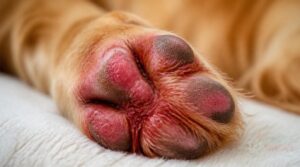
Red, puffy paws are your clearest signal that something’s wrong. Look closely between the toes — interdigital cysts can form there, presenting as firm, painful swellings. If only one paw is affected, a foreign body is likely the culprit.
Constant moisture from licking fuels yeast overgrowth, worsening irritation. Watch for discharge: serosanguineous fluid looks pink; pus signals bacterial infection.
Brown Saliva Staining
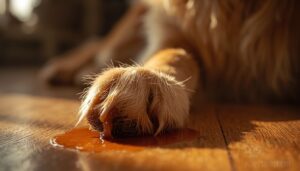
That rust-colored fur between your dog’s toes isn’t dirt. It’s saliva staining — a sign of persistent licking. Saliva oxidizes over time, turning brown or reddish as it dries into the coat.
Allergies are the most common driver. But reflux or dry mouth can darken saliva too, even without active paw irritation. If staining keeps spreading, the licking hasn’t stopped.
Pus or Moist Discharge
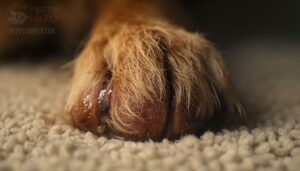
Staining tells you licking is happening. Pus or moist discharge tells you something is infected.
Look for yellow, green, or brown fluid seeping between the toes. It’s thick, often cloudy, and may smell foul — that odor signals active bacterial activity. Wet, matted fur that won’t dry out is another red flag. That persistent moisture breaks down skin fast.
Bald Spots or Scaling
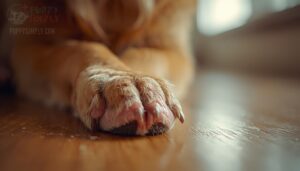
Discharge and infection often come with another visible clue: patchy hair loss. When skin stays inflamed long enough, fur thins or falls out entirely in uneven spots.
Run your fingers along the paw. Rough, flaky texture — sometimes greasy, sometimes powdery — signals chronic dermatitis at work. Symmetrical scaling across both front paws often points to allergies rather than injury.
Embedded Objects or Lumps
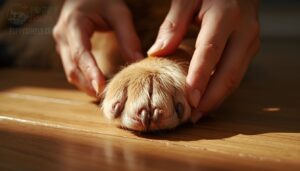
Sometimes the real issue isn’t skin-deep. Run your fingers slowly between each toe, pressing gently — a tiny lump or pinpoint puncture can reveal a foxtail or splinter working its way in.
Detecting punctures early matters; embedded objects cause pain that won’t resolve without removal. If your dog flinches or resists, that’s your cue for a vet visit.
Top 3 Paw Chewing Products
Sometimes the right product makes a real difference while you’re waiting on a vet visit or working through a treatment plan. These three options address the most common culprits — allergies, dry cracked pads, and environmental irritants — without overcomplicating your routine. Here’s what’s worth having on hand.
1. Premium Care Dog Itch Relief Allergy Chews
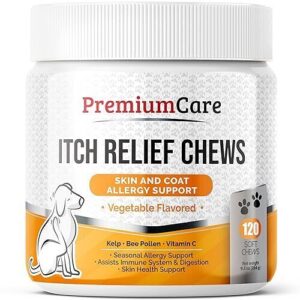
Premium Care Itch Relief Chews tackle allergy-driven paw chewing from the inside out. Each soft chew contains colostrum, bee pollen, kelp, and vitamin C — ingredients chosen to calm immune overreaction and support skin repair.
The formula skips wheat, corn, and artificial preservatives, which matters if your dog already has sensitivities. At $25.99 for 120 chews, it’s a reasonable starting point. Smaller dogs may get drowsy, so watch the first few doses closely.
| Best For | Dogs with seasonal, environmental, or food-related allergies whose owners want a natural, additive-free chew that supports both immune response and skin health. |
|---|---|
| Country of Origin | USA |
| Primary Benefit | Allergy & immune relief |
| Application Method | Oral soft chew |
| Seasonal Suitability | Year-round use |
| Indoor/Outdoor Use | Both indoor & outdoor |
| Key Limitation | May cause drowsiness |
| Additional Features |
|
- Made with natural ingredients like colostrum, bee pollen, and kelp — free from wheat, corn, and artificial preservatives
- Supports multiple concerns at once: allergy relief, skin health, antioxidant protection, and stress management
- 120 chews at $25.99 makes it an affordable daily supplement
- May cause noticeable drowsiness or sedation, especially in smaller dogs
- Gummy texture can stick to teeth, which some dogs (and owners) find messy
- Effects on focus and training may be inconsistent due to grogginess
2. Natural Dog Company Paw Soother
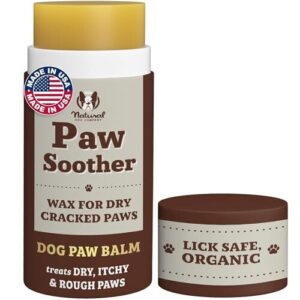
When paws are cracked, irritated, or raw from constant licking, topical relief matters. Natural Dog Company Paw Soother is a plant-based balm made with coconut oil, shea butter, calendula, and chamomile — ingredients that actively moisturize and calm inflamed skin.
It’s lick-safe, which removes one major worry after application. The stick format makes it easy to apply without mess. Use it daily on dry or damaged pads, and also on chapped noses.
| Best For | Dogs with dry, cracked, or irritated paw pads who need a safe, natural moisturizing treatment they won’t harm themselves by licking. |
|---|---|
| Country of Origin | USA |
| Primary Benefit | Moisturizes dry paw pads |
| Application Method | Topical balm |
| Seasonal Suitability | Year-round use |
| Indoor/Outdoor Use | Both indoor & outdoor |
| Key Limitation | Requires daily application |
| Additional Features |
|
- Made with gentle, plant-based ingredients like coconut oil, calendula, and vitamin E that moisturize and soothe irritated skin
- Lick-safe formula means no stress if your dog grooms their paws right after application
- Versatile enough to use on both paws and chapped noses
- Requires daily application to see and maintain results — it’s not a one-and-done fix
- Only for topical use, so it won’t address underlying causes of paw irritation
- At 2 oz, the small size may run out quickly for larger dogs or heavy daily users
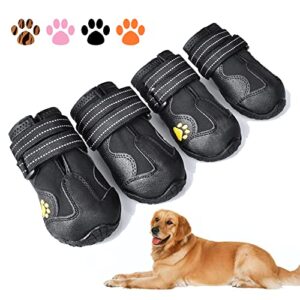
3. XSY&G Waterproof Reflective Anti-Slip Dog Boots
 View On Amazon
When the ground itself is the problem, boots offer a simple fix. The XSY&G Dog Boots block hot pavement, sharp debris, and chemical salts before they ever reach the skin — breaking the irritation cycle before it starts.
The anti-slip rubber soles hold steady on tile and wet surfaces, while reflective Velcro straps keep evening walks safer. They fit dogs between 52–70 lbs and stay secure once adjusted correctly. Measure paw width first — sizing makes all the difference.
| Best For | Dogs between 52–70 lbs whose paws regularly take a beating from hot pavement, icy sidewalks, or rough outdoor terrain. |
|---|---|
| Country of Origin | USA |
| Primary Benefit | Physical paw protection |
| Application Method | Wearable boot |
| Seasonal Suitability | Summer & winter |
| Indoor/Outdoor Use | Both indoor & outdoor |
| Key Limitation | Requires adjustment period |
| Additional Features |
|
- Reflective straps and lines make evening and nighttime walks noticeably safer
- Anti-slip rubber soles stay grippy on tile, wet floors, and uneven outdoor surfaces
- Dual adjustable straps keep the boots snug without cutting off circulation
- The low-cut design can let snow sneak in during deeper winter drifts
- Stitching isn’t fully waterproof, so deep water or heavy sand may seep through
- Some dogs need time to adjust before walking comfortably in them
How to Stop Paw Chewing
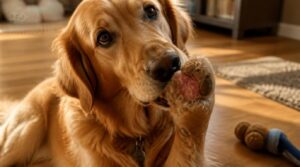
Stopping paw chewing starts with finding the reason behind it—and then working through it one step at a time. There’s no single fix, but the right combination of care and consistency makes a real difference. Here’s where to start.
Schedule a Vet Exam
If paw chewing has lasted more than a few days, schedule a vet exam — don’t wait for it to resolve on its own.
Call ahead, bring vaccine records, and write down when the chewing started, which paws are affected, and any pattern you’ve noticed. That history guides veterinary diagnostic tools far more than a rushed verbal summary ever could.
Treat Allergies or Parasites
Getting the diagnosis right is the first real step. Environmental allergies and parasitic infestations respond to completely different treatments.
- Confirm parasites through allergy testing or veterinary skin scrapes
- Break the flea life cycle by treating all pets and household bedding
- Remove environmental allergens by wiping paws after every walk
- Prevent secondary infections with vet-approved topical relief on clean, dry skin
Clean and Dry Paws
After every walk, wipe your dog’s paws with hypoallergenic, alcohol-free wipes to clear allergens, road salt, and chemical residue before they come inside.
Don’t skip the spaces between toes — that’s where moisture and debris hide. Pat completely dry, or use a cool hair dryer setting. Trapped dampness breeds yeast and bacteria fast, especially in warm, enclosed paw spaces.
Trim Nails Regularly
Overgrown nails do more damage than most people realize. When they get too long, they shift toe alignment, force uneven weight distribution, and reduce grip on smooth surfaces — all of which stress the paw.
Trim nails until you hear no clicking on hard floors. Short nails improve paw visibility during home checks, making it easier to spot redness or swelling early.
Add Enrichment and Exercise
Nail care helps with structure, but boredom and anxiety drive just as much chewing.
Puzzle toy rotation keeps your dog mentally engaged without letting any single toy lose its novelty. Pair that with scent games — scatter a few treats and say "find it" — to redirect focus naturally.
Consistent, varied leash walks and short structured play sessions burn restless energy before it turns inward.
Frequently Asked Questions (FAQs)
How do I get my dog to stop chewing on his paws?
Stop paw chewing by finding the cause first. Clean paws after walks, treat allergies or parasites with your vet, add daily enrichment, and keep nails trimmed to remove common triggers fast.
Is it normal for a dog to chew its paws?
Yes, some paw chewing is normal grooming. Dogs occasionally nibble to remove debris or soothe mild irritation. It becomes a concern when it’s excessive, obsessive, or leads to visible sores or staining.
What can I give my dog for itching and licking paws?
Think of relief as a toolkit. Oatmeal soaks, apple cider vinegar rinses, paw balms, and antihistamines like diphenhydramine all help. Always confirm dosing by weight with your vet first.
What parasites cause paw chewing?
Fleas, mites, ticks, and hookworms can all trigger paw chewing. Flea saliva causes intense allergic reactions. Sarcoptes and Demodex mites inflame skin. Tick bites cause localized irritation. Hookworm larvae penetrate skin, causing dermatitis.
What is your dog trying to warn about when they chew their paws?
Like a knocked-over water bowl demanding your attention, paw chewing signals distress — allergies, skin irritation causes, pain, or anxiety. Decoding silent signals early helps you catch a hidden problem before it worsens.
Why does my dog chew on his whole paw?
When allergies strike, they rarely stay in one spot. Itching can spread across the entire paw — pads, webbing, and all — which is why your dog chews everywhere, not just one place.
How long should paw chewing last?
A scratch that disappears by morning is nothing to worry about. Brief paw chewing — gone within a day — is normal. When it persists, intensifies, or causes redness, that signals an actual problem needing veterinary care.
Can diet changes stop paw chewing?
Yes, diet changes can stop paw chewing — but only when food sensitivity is the cause. An 8-week hypoallergenic diet trial with a novel or hydrolyzed protein is the most reliable way to find out.
Are certain dog breeds more prone?
Breed biology matters. Bulldogs, Retrievers, and Terriers carry higher genetic risk for canine dermatological issues. Purebred dogs show measurably greater susceptibility to pet skin irritation causes, coat density, and allergy trends than most mixed breeds.
When is paw chewing considered normal?
Short paw licking after a walk is normal grooming. It becomes a concern when it’s constant, escalating, or causes visible redness. Intact skin and brief sessions suggest no hidden issue.
Conclusion
That gnawing sound—paw against teeth, again and again—is your dog speaking the only language he has. Understanding why is my dog chewing on his paws means reading past the behavior to what’s underneath: allergies, pain, anxiety, or something lodged where you can’t easily see.
Check his paws today. Look closely, feel gently, and trust what you find. The sooner you identify the cause, the sooner he gets relief—and you both get some quiet.
- https://bestfriends.org/pet-care-resources/why-my-dog-licking-his-paws-so-much-causes-and-remedies
- https://www.petmd.com/dog/general-health/why-do-dogs-lick-chew-paws
- https://vetster.com/en/wellness/paw-licking-in-dogs-allergies-anxiety-or-something-else
- https://www.vin.com/apputil/content/defaultadv1.aspx?pId=20539&catId=113450&id=8506459&ind=61&objTypeID=17
- https://pmc.ncbi.nlm.nih.gov/articles/PMC12681101