
This site is supported by our readers. We may earn a commission, at no cost to you, if you purchase through links.

The blue fawn French bulldog stands at the intersection of canine genetics and modern breeding—a living example of how recessive genes can create something both striking and controversial. This color variant wears a coat that looks like someone draped a cool blue filter over warm fawn tones, creating a silvery-tan shade that stops people mid-scroll.
But here’s what most potential owners don’t realize: that gorgeous diluted coat comes from the same melanophilin gene mutation linked to color dilution alopecia, a condition that can leave patches of brittle, thinning hair across your Frenchie’s back and shoulders. Understanding the genetics behind this rare coloring isn’t just interesting science—it’s essential homework before you fall in love with a $6,000 puppy.
Table Of Contents
- Key Takeaways
- What is a Blue Fawn French Bulldog?
- Genetics Behind Blue Fawn Frenchies
- Distinctive Appearance and Temperament
- Health Issues and Care Needs
- Price, Availability, and Choosing a Puppy
- Frequently Asked Questions (FAQs)
- How rare is a blue fawn French Bulldog?
- How much is a blue fawn Frenchie?
- What makes a blue fawn Frenchie?
- How do I care for a Blue Fawn Frenchie?
- Are Blue Fawn Frenchies good family pets?
- Are Blue Fawn Frenchies easy to train?
- What type of environment do Blue Fawn Frenchies do best in?
- What type of exercise do Blue Fawn Frenchies need?
- Can blue fawn Frenchies participate in AKC shows?
- What foods are best for blue fawn Frenchies?
- Conclusion
Key Takeaways
- Blue fawn French bulldogs get their silvery-tan coat from a melanophilin gene mutation that disrupts pigment distribution, but this same dilution gene causes color dilution alopecia—a condition that leads to brittle hair and patchy baldness starting between 4 months and 3 years old.
- These rare pups cost $4,000–$7,000 because breeding requires both parents to carry recessive dilution genes, plus French bulldogs typically need artificial insemination and C-sections that run $3,000–$5,000 per litter.
- The AKC doesn’t recognize blue fawn as an official breed standard color, which disqualifies these dogs from conformation shows despite their striking appearance and purebred status.
- Beyond the coat-related alopecia risk, blue fawn Frenchies face the same brachycephalic health challenges as all French bulldogs—including breathing problems, heart conditions, and temperature regulation issues that require climate-controlled environments and limited exercise.
What is a Blue Fawn French Bulldog?
If you’ve spotted a Frenchie with a shimmery, light brown coat and a silvery mask, you’re looking at something special. Blue Fawn French Bulldogs don’t look like your typical Fawn or Blue Frenchie—they’re a beautiful mix of both.
Their coat carries subtle platinum undertones that shift beautifully in natural light, making them one of the most sought-after color variations.
Let’s break down what makes this color so unique, how it stacks up against other Frenchies, and why you won’t find it on the AKC’s official roster.
Defining The Blue Fawn Color
A Blue Fawn French Bulldog has a bluish gray base coat with warm fawn undertones—think pigeon gray mixed with pale tan accents. This isn’t your typical fawn or solid blue Frenchie.
The blue tones come from color dilution alopecia-linked genes that lighten pigment, creating a cool-toned palette. It’s canine genetics and breeding at work, blending coat color genetics into one head-turning coat pattern.
The fawn undertones in their coat closely resemble the official fawn color hex code recognized in color theory and design.
How Blue Fawn Differs From Other Frenchies
So what sets blue fawns apart in the French Bulldog lineup? Color comparison reveals they’re cooler-toned than traditional fawns and less steel-gray than pure blues.
Genetic differences—specifically that recessive dilution gene—create their signature muted coat. You’ll notice breed distinctions in their lighter noses and eye rims, plus unique markings that don’t lean heavily brindle. It’s coat color genetics doing something special.
For more on their origin and recognition, check out these rare colored purebred details.
Rarity and Recognition Status
That unique look comes with a catch: the AKC doesn’t officially recognize blue fawn as a breed standard color.
Most kennel clubs list them under dilute variants, not as a standalone category. They’re genuinely rare—far fewer blue fawns exist than pied or brindle French Bulldogs.
Market demand keeps climbing, but genetic purity and recognition issues mean you’ll face longer wait times and premium prices.
For instance, a Corgi Pug mix from a reputable breeder typically costs between $800 and $1,500, though prices can climb higher in competitive markets.
Genetics Behind Blue Fawn Frenchies
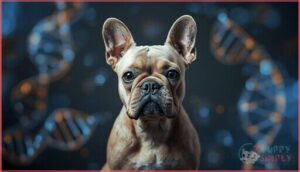
So what makes a Blue Fawn Frenchie look so different from their cousins? It all comes down to genetics—specifically, a quirky little gene mutation that changes how color shows up in their coat.
Let’s break down the science behind that stunning silvery-fawn look.
The Melanophilin Gene Mutation Explained
So what makes your Blue Fawn French Bulldog that gorgeous silvery-tan shade? It all comes down to a mutation in the melanophilin gene (MLPH).
This gene normally helps shuttle pigment packets—melanosomes—through your dog’s cells. When it’s mutated, melanosome transport gets disrupted, and pigment distribution changes. Instead of rich fawn, you’ll see that diluted, shimmery coat that screams “rare find!
Inheritance Patterns and Color Dilution
The dilution gene works on a recessive pattern—your Frenchie needs two copies to show that blue-gray effect.
Breeding two dilute carriers raises the odds of Blue Fawn French Bulldog puppies, but also risks like color dilution alopecia. That’s why genetic testing matters. Smart breeders track allele interactions and color inheritance, balancing breeding strategies with canine genetics and health—not just chasing rare shades.
Distinctive Appearance and Temperament
Now that you understand the genetics, let’s talk about what makes these Frenchies so special in real life.
Blue Fawns don’t just look different—they’ve got a personality that matches their striking appearance. Here’s what you can expect when you meet one of these unique pups.
Coat Color and Markings

Think of a blue fawn French Bulldog’s coat as fawn that’s been washed with a cool blue filter—it’s not warm tan, it’s muted gray-beige with silvery undertones.
You’ll notice darker shading along the back and a lighter chest, all softened by color dilution. This gene-driven effect creates that signature satin shine, though it also raises risk for color dilution alopecia in some dogs.
Physical Features and Size
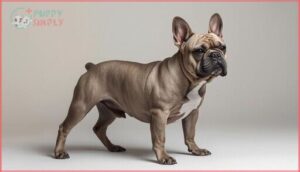
Blue fawn French Bulldogs pack serious muscle mass into a compact 11–12 inch frame, weighing 16–28 pounds at maturity. You’ll notice their broad chest, sturdy shoulders, and those iconic bat-like ears perched high on a brachycephalic skull.
Body proportions favor length over height, creating that low center of gravity. Short coat length—just 1–2 inches—hugs well-defined muscle tone, showcasing the breed’s signature stocky build.
Typical Blue Fawn Frenchie Personality Traits

You’ll find that French Bulldog characteristics shine through in Blue Fawn Frenchies—they’re affectionate lap dogs with moderate playfulness levels and high affection needs. Their emotional intelligence helps them read your moods, while social behavior stays friendly with kids and pets.
Training methods work best when you use positive reinforcement in short sessions. Expect a loyal companion who follows you room to room, thriving on predictable routines and gentle interaction.
Health Issues and Care Needs

Like all Frenchies, blue fawns come with some health baggage you need to know about before bringing one home.
That gorgeous diluted coat can cause specific skin issues, and their flat faces mean breathing problems are always on the radar. Let’s break down the main health concerns you’ll face and how to keep your blue fawn thriving day-to-day.
Common Genetic Health Concerns
French Bulldogs carry more than just adorable wrinkles—they’re vulnerable to serious genetic disorders. Beyond the color dilution alopecia we’ll tackle next, your Blue Fawn faces risks like heart conditions, chromosomal issues, and neurological disorders.
Genetic testing can spotlight metabolic diseases early. These health issues aren’t rare quirks—they’re breed realities that demand proactive dog health and wellness strategies from day one.
Color Dilution Alopecia in Blue Fawns
Your Blue Fawn French Bulldog’s shimmery coat comes with a catch—color dilution alopecia. This genetic disorder causes brittle hair and patchy hair loss patterns in those gorgeous dilute zones, usually showing up between 4 months and 3 years old.
What you’ll notice:
- Moth-eaten or thinning patches on the trunk, ears, and tail
- Flaky, dry skin where hair thins out
- Bald spots that respect color boundaries—white areas stay fluffy
- Secondary infections that bring odor and itch
- Normal coat as a puppy, then gradual decline
Genetic testing can’t predict who’ll get it, but skin care and alopecia management keep your dog comfortable. Because this breed specificity runs deep, most affected Frenchies still thrive—they just rock a thinner look. Managing dog health means moisturizing shampoos, treating infections fast, and accepting that hair regrowth isn’t guaranteed in those blue fawn patches.
While genetic testing can’t predict alopecia, good skin care keeps most affected Blue Fawn Frenchies comfortable despite their thinner coats
Daily Care, Grooming, and Exercise Tips
Beyond managing alopecia, your Blue Fawn French Bulldog needs consistent grooming tips and skin care—brush 2-3 times weekly with soft bristles, bathe every 4-6 weeks, and wipe those facial folds daily.
Exercise routines should include 20-40 minutes of gentle walks split into two sessions. Health monitoring catches problems early, while nutrition advice from your vet helps French Bulldog characteristics like their compact build and sensitive digestion.
Price, Availability, and Choosing a Puppy

If you’ve fallen for the Blue Fawn Frenchie‘s unique look, you’re probably wondering what it’ll cost you—and where to find one.
These rare pups don’t come cheap, and knowing why helps you spot red flags when shopping around. Let’s break down the price tag, what drives it so high, and how to find a breeder who’s worth every penny.
Blue Fawn Frenchie Price Range
You’re looking at $4,000 to $7,000 from reputable breeders for a blue fawn French Bulldog puppy. Regional variations matter—coastal markets and the Northeast often push prices above $5,000, while Midwest breeders may offer them closer to $3,500.
Show-quality pups with champion bloodlines can exceed $7,000. Pet pricing without breeding rights usually falls between $2,000 and $4,000, though breeder fees vary widely.
Why Blue Fawn Frenchies Are Expensive
Breeding costs drive puppy price higher than most folks expect. French Bulldog moms usually need artificial insemination and c-sections, which run $3,000 to $5,000 per litter.
Color rarity adds another layer—blue fawn genetics require two copies of the dilution gene, making successful litters scarce. Genetic testing, health screenings, and market demand for these limited puppies all push ownership expenses well above standard pet pricing and costs.
Tips for Finding Reputable Breeders and Adoption
Now that you know the price tag, finding the right source matters just as much. Smart breeder research protects you from heartbreak and hidden costs down the road.
Look for these non-negotiables when choosing where to get your blue fawn French Bulldog:
- Health guarantees backed by genetic testing – OFA certifications for hips, eyes, and cardiac function prove responsible pet ownership starts before breeding
- AKC registered parents with transparent lineage – Verify registration and ask about hereditary conditions in the bloodline
- Documented puppy socialization protocols – Early training programs like Puppy Culture shape confident, well-adjusted dogs
- Take-back policies and ongoing support – Ethical French Bulldog breeding includes lifetime breeder contact for questions and emergencies
Visit in person. Meet the parents. Watch how puppies interact with people and their environment—it tells you everything about their start in life.
Frequently Asked Questions (FAQs)
How rare is a blue fawn French Bulldog?
Blue fawn Frenchies are much rarer than standard fawn or brindle because both parents must carry the blue dilution gene—a tricky combo that makes breeding these unique pups especially challenging.
How much is a blue fawn Frenchie?
Expect to pay between $4,000 and $6,500 from reputable breeders, though show-quality lines can exceed that range. Adoption costs run under $2, Price variance depends on lineage, breeder fees, and health guarantees included.
What makes a blue fawn Frenchie?
A fascinating fusion of fawn genetics and dilution genes creates this rare color variation.
The melanophilin gene mutation lightens the base fawn coat, producing a silvery-blue appearance that doesn’t meet breed standards but captivates enthusiasts.
How do I care for a Blue Fawn Frenchie?
Caring for your pup means regular veterinary checks. Grooming tips for coat health and diet planning to prevent obesity are also essential.
Training methods for socialization should be practiced, and it is important to monitor skin conditions—especially color dilution alopecia common in Blue Fawn French Bulldog care.
Are Blue Fawn Frenchies good family pets?
French Bulldogs rank among the top five family breeds in the U.S.
Blue Fawn Frenchies share that affectionate temperament—they’re gentle with kids, adapt easily to household dynamics, and thrive on companionship.
Are Blue Fawn Frenchies easy to train?
Training your Frenchie isn’t always a breeze. They’re smart but stubborn dogs, so positive reinforcement and crate training work best.
Keep sessions short, stay patient, and use mental stimulation to handle their quirky dog behavior.
What type of environment do Blue Fawn Frenchies do best in?
Your apartment living with pets setup works perfectly for small dog breeds like the French Bulldog—they need climate control, short walk schedules, indoor activities, and consistent health monitoring in calm home setups.
What type of exercise do Blue Fawn Frenchies need?
Your Blue Fawn French Bulldog needs short daily walks and indoor play—about 25 to 40 minutes total.
Gentle fetch and leash training work well, but avoid overheating due to their brachycephalic build.
Can blue fawn Frenchies participate in AKC shows?
While many owners dream of the show ring, the AKC breed standards disqualify blue fawn French Bulldogs from conformation competition.
Their stunning coat color falls outside accepted standards, limiting AKC show eligibility despite registration.
What foods are best for blue fawn Frenchies?
Your French Bulldog thrives on high-quality animal protein, balanced fats, and digestible carbs.
Your Blue Fawn French Bulldogs with skin sensitivities benefit from omega-3s, limited-ingredient diets, and allergen-free formulas that support digestive health and coat condition.
Conclusion
Before you swipe your card for that silvery-tan puppy, ask yourself: are you ready for what that stunning coat might cost down the road? The blue fawn French bulldog isn’t just a color choice—it’s a genetic package deal that includes potential health challenges alongside those head-turning looks.
Love them fiercely, choose breeders wisely, and understand the science behind the beauty. Your eyes are wide open now.
- https://cdn.akc.org/FrenchBulldog.pdf
- https://en.wikipedia.org/wiki/Dilution_gene
- https://vcahospitals.com/know-your-pet/caesarean-sections-in-dogs-post-operative-instructions
- https://www.instagram.com/countryclubfrenchies
- https://www.petmd.com/dog/conditions/respiratory/c_multi_brachycephalic_airway_syndrome