
This site is supported by our readers. We may earn a commission, at no cost to you, if you purchase through links.
You glance over at your puppy curled up on his bed, and his little chest is going a mile a minute. Your first instinct is panic—before you reach for the phone, take a breath yourself.
A puppy breathing fast while sleeping is one of the most common concerns new owners bring to my clinic, and most of the time, there’s a perfectly ordinary explanation. Puppies sleep differently than adult dogs, and their breathing reflects that. Knowing what’s normal, what’s a temporary blip, and what genuinely warrants a vet call makes all the difference between a sleepless night and a peaceful one.
Table Of Contents
- Key Takeaways
- Normal Puppy Breathing Rates
- How to Count Breaths Correctly
- Sleep Breathing During REM
- After-Play Breathing Versus Sleep
- Temperature, Dehydration, and Stress
- Breed Traits That Affect Breathing
- Health Problems Behind Fast Breathing
- Fast Breathing or Panting?
- Warning Signs That Need a Vet
- How to Help Your Puppy
- Frequently Asked Questions (FAQs)
- How fast is too fast for a puppy to breathe?
- What are the early signs of fading puppy syndrome?
- Should I worry if my dog is breathing fast?
- Is 10 breaths per minute normal for dogs while sleeping?
- Is 120 breaths per minute for a puppy?
- Is there anything I can do to prevent my puppy from breathing rapidly during sleep?
- What are the potential causes of rapid breathing in puppies while sleeping?
- What noises are normal during puppy sleep?
- Do diet changes affect puppy breathing rhythm?
- Can specific breeds breathe differently during sleep?
- Conclusion
Key Takeaways
- A sleeping puppy’s breathing rate of 15–40 breaths per minute is normal, but anything consistently above 40 during deep sleep — not just during REM — warrants a closer look.
- Rapid breathing during REM sleep is harmless and expected, since a puppy’s brain is active and its body follows along with twitches, soft noises, and irregular breath patterns.
- Flat-faced breeds like Pugs and French Bulldogs breathe harder by design, but new or worsening noisy breathing, blue gums, or flared nostrils in any puppy mean it’s time to call your vet.
- You can ease most sleep-related fast breathing at home by keeping the room cool, offering fresh water, reducing noise, and capturing a short video to share with your vet if something feels off.
Normal Puppy Breathing Rates

Before you panic, it helps to know what’s actually normal for a sleeping puppy. Breathing rates vary by age, and there’s a clear line between fast-but-fine and fast-needs-attention.
Tracking those numbers over time gives you real peace of mind—here’s a simple guide to understanding your dog’s normal breathing rate while sleeping so you know exactly what to watch for.
Here’s what the numbers look like.
Typical Sleeping Breaths Per Minute
A healthy puppy’s sleeping respiratory rate generally falls between 15 and 40 breaths per minute — that’s your species baseline to keep in mind. You’ll notice some nighttime variability, with peak vs average rates shifting across sleep cycles.
During the REM stage, fast breathing while sleeping is completely normal. Device precision matters less than knowing this core range when you’re watching your pup rest.
How Rates Change With Age
As your puppy grows, normal breathing rate for puppies gradually slows. At 8 weeks, you might count close to 45 breaths per minute — that’s growth stage shifts and metabolic decline working together.
By 16 weeks, lung maturation and neural development smooth things out, dropping rates toward 30 breaths per minute. Bigger lungs simply move more air per breath.
When a Rate Becomes Too Fast
So where does "normal" end and "too fast" begin? Once rates stay consistently above 40 breaths per minute during deep sleep — beyond typical circadian rhythm shifts or brief REM surges — that crosses the line.
Fast breathing while sleeping that doesn’t ease after a few minutes is worth watching closely. That’s when sleep stage monitoring and, if needed, veterinary attention become genuinely important.
Why Puppies Breathe Faster Than Adults
Part of it comes down to biology. Puppies have higher metabolic demand than adults — their bodies burn energy quickly to fuel rapid growth, so they need more oxygen just lying still.
Add immature diaphragm control, ongoing lung maturation, and thermoregulation needs that rely heavily on breathing, and a faster normal breathing rate for puppies makes complete sense.
It’s not a flaw — it’s just how growing works. A typical resting respiratory rate range for puppies is 15 to 40 breaths per minute.
How to Count Breaths Correctly
Knowing your puppy’s breathing rate is only useful if you’re measuring it the right way. A few small mistakes — like counting during light sleep or only timing for ten seconds — can throw the number off completely.
Here’s exactly how to do it right.
Count Chest Rises During Deep Sleep

Start by watching — not counting.
Wait until your puppy is fully settled in deep sleep, body still, and breathing steady.
Then find the right observer angle where chest rise clarity is easiest: a side view usually works best.
Your puppy’s positioning matters too.
A curled-up pup can hide chest movement, so switch to watching the belly instead.
Use a Full 30 Seconds or One Minute

Once your puppy is settled, your window length matters more than you’d think. For reliable monitoring and measuring a puppy’s breathing rate, choose one consistent method:
- Count for 30 seconds
- Count for a full minute
- Repeat if anything looks off
A longer window improves count reliability through variability reduction — especially since normal puppy respiration during sleep can shift between stages.
Consistency is your best tool.
Double The 30-second Count
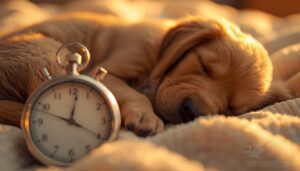
Once you’ve counted chest rises for 30 seconds, the math is simple — just double it. Twenty rises become 40 breaths per minute, which sits right at the edge of normal puppy respiration during sleep.
Doubling accuracy depends on consistency checks across multiple intervals, since one fast burst can skew your read. Round to whole numbers and don’t overthink it.
Record a Baseline for Comparison

One number means nothing on its own — a baseline breathing rate turns a single count into a real pattern. Log your puppy’s normal sleeping respiratory rate a few times a week using these habits:
- Consistent Timing: Record at the same sleep stage each night
- Position Standardization: Note whether your puppy is on their side or back
- Environmental Controls: Log room temperature and noise level
- Documentation Format: Write the date, time, and count together
- Longitudinal Tracking: Compare weekly to catch gradual changes early
Sleep Breathing During REM

If your puppy looks like they’re running a dream marathon — legs twitching, tiny whimpers, breathing gone haywire — you’re probably watching REM sleep in action.
This stage brings some of the most surprising breathing patterns you’ll see. Here’s what’s actually happening during those moments.
Rapid Breathing During Dreaming
REM sleep is basically your puppy’s brain running a highlight reel of the day. During these dream cycles, neurochemical triggers and brainstem modulation shift breathing control, causing dream-induced tachypnea — rapid breathing during sleep that looks alarming but isn’t.
| What You See | What’s Happening |
|---|---|
| Faster breath rate | Respiratory rhythm shifts during REM |
| Irregular breaths | Breath variability patterns are normal |
| Short bursts only | REM cycles last 2–3 minutes |
| Puppy stays relaxed | No distress, just dreaming |
Paw Twitching and Soft Noises
Those little dream paw movements are one of the sweetest parts of puppyhood. During REM sleep, your puppy’s brain is fully active — and their body follows along. Here’s what’s totally normal:
- Dream paw movements like flexing, batting, or chasing motions
- Soft vocalizations — gentle whimpering or barking, tiny chirps, puppy sleep sounds
- Flickering eyelids twitching in rhythm with the sleep cycle
- Twitching wakeability — a gentle nudge easily rouses them
- Noise-breath correlation stays calm; breathing remains unlabored alongside soft noises
Short Bursts Versus Constant Fast Breathing
Those soft noises and twitches you just noticed? They often come paired with brief breathing surges.
During REM sleep, physiological triggers like sympathetic activation cause fast breathing while sleeping — but pattern duration matters. Short bursts lasting two to three minutes are normal.
Constant fast breathing without pauses crosses diagnostic thresholds worth watching. CO2 fluctuations stay manageable during brief episodes, but a sustained elevated normal breathing rate warrants monitoring.
Why REM Breathing is Usually Harmless
Those brief bursts usually stay harmless because of how REM sleep physically works. Neuromuscular atonia — the deep muscle relaxation that defines this stage — keeps your puppy calm even while breathing fast, while sleeping.
Upper airway relaxation and transient tidal variability shift how each breath looks, but the safety margin stays intact.
Dream metabolic demand drives the pace, and normal essential signs for puppies hold steady throughout.
After-Play Breathing Versus Sleep

After a good play session, your puppy’s engine doesn’t just switch off the moment they curl up to sleep. Their body needs few minutes to wind down, and their breathing will reflect that.
Here’s what’s normal, what passes quickly, and what should actually catch your attention.
Elevated Breathing After Vigorous Exercise
After a big play session, your puppy’s body is still working hard even when they flop down to rest. Oxygen Debt Recovery, Carbon Dioxide Clearance, and Metabolic Heat Dissipation all keep breathing fast after play — sometimes for several minutes. Think of it like a engine cooling down after a long drive.
What’s happening inside:
- Muscles burned oxygen fast, so Post-Exercise Heart Rate and breathing stay elevated to restore balance.
- Carbon dioxide builds up during exercise and takes time to clear from the bloodstream.
- Body heat from play lingers, keeping the drive to breathe deeply.
- The nervous system begins its Neural Relaxation Shift — but it doesn’t flip off like a light switch.
How Long Recovery Breathing Can Last
Most puppies return to normal puppy breathing rates within 10 minutes after play — but cooling duration depends on activity intensity effect, and the room temperature. A warm environment creates an environmental delay, stretching recovery beyond that window.
Watch the recovery trend: breathing should gradually slow, not stay elevated. Persistent fast breathing while sleeping past that point is worth noting.
Signs The Puppy is Settling Normally
A settling puppy tells you plenty without making a sound. Look for calm body posture, gentle paw twitches, and closed mouth breathing — all normal signs during the REM stage.
Even chest movements and a breathing rate of 10 to 30 breaths per minute confirm normal puppy breathing rates.
Responsive yet calm when touched, then drifting right back to sleep — that’s your green light.
When Post-play Breathing Looks Abnormal
Something’s off if your puppy’s breathing keeps climbing instead of winding down after play. Post-Play Tachypnea becomes an Abnormal Respiratory Pattern when the rate doesn’t drop during quiet rest.
Watch for visible chest or belly struggle, pale or blue gums, and an Exertion Recovery Delay that stretches well past ten minutes — classic signs of respiratory distress in puppies that need prompt veterinary attention.
Temperature, Dehydration, and Stress

Not every bout of fast breathing comes from a dream or a post-zoomies wind-down. Sometimes the culprit is hiding in plain sight — the room temperature, your puppy’s water bowl, or even the stress of a new place.
Here are four everyday triggers worth knowing about.
Warm Rooms and Overheating
warm room is one of the most common — and overlooked — triggers for fast breathing in sleeping puppies. Poor ventilation timing, open windows without window shading strategies, and device heat sources like lamps can all spike indoor temperatures quickly.
Watch for these signs of overheating:
- Persistent panting at rest
- Rapid, shallow breaths during sleep
- Restlessness despite exhaustion
solar gain management and insulation heat retention awareness keep your puppy’s temperature regulation on track and heatstroke risk low.
Dehydration and Reduced Cooling
Think of your puppy’s body as a tiny cooling system — and water is the coolant. When a puppy gets dehydrated, an osmolality shift in body fluids triggers selective brain cooling, which actually cuts sweat production and reduces skin blood flow to conserve water. That trade-off means metabolic heat builds up instead of escaping.
A dehydrated puppy can’t cool itself — water is the coolant that keeps metabolic heat from building up
A cool environment and steady water intake help prevent fast breathing while sleeping and lower heatstroke risk.
Anxiety, Fear, and New Environments
A new home feels like sensory overload to a puppy — different smells, unfamiliar sounds, strange faces all at once. This social novelty and conditioned routine loss trigger uncertainty appraisal, pushing your puppy’s nervous system into physiological arousal.
Stress-related breathing follows naturally: cortisol spikes keep respiration fast even during sleep. Creating a calm safe space with familiar scents reduces anxiety and settles sleep-related panting quickly.
Nighttime Heat Swings and Breathing Spikes
heat doesn’t always let up — and that matters for your puppy. Seasonal nighttime patterns of rising humidity-driven breathing make sleep harder, pushing core temperature tracking into overdrive.
heat index influence of warm, stuffy rooms means your puppy breathes fast while sleeping just to stay cool.
Good ventilation strategies, like a fan or open window, help substantially.
Breed Traits That Affect Breathing

Some puppies are simply built differently — and that shapes how they breathe from day one.
Flat-faced breeds like Pugs, Bulldogs, and Boston Terriers have airways that work harder than most, which means their sleeping breath often looks and sounds different from other puppies.
Here’s what their anatomy actually means for their breathing.
Brachycephalic Breeds and Narrow Airways
If your puppy is a Pug, Bulldog, or French Bulldog, breathing fast while sleeping may simply be how they’re built.
Brachycephalic airway syndrome involves several structural problems working against them at once:
- Stenotic nares — nostrils so narrow they barely let air through
- Elongated soft palate — extra tissue that partially blocks the throat
- Laryngeal saccules — small pouches that evert and crowd the airway
- Nasopharyngeal crowding — tight nasal passages that restrict airflow further
- Upper airway pressure — all that resistance forces harder breathing just to inhale
Together, these make sleep-related breathing patterns in dogs more labored, which can tip into puppy respiratory distress surprisingly fast.
Noisy Breathing, Snoring, and Snorting
Those structural quirks don’t just affect airflow — they create sound. Airway vibration from narrowed passages produces the snoring, snorting, and rattling you hear during sleep-related breathing patterns in flat-faced dogs. Soft tissue simply vibrates as air squeezes through.
That snoring frequency can seem alarming, but it’s often just anatomy at work. If the noise is new or worsening, though, mention it to your vet.
Heat Sensitivity in Flat-faced Puppies
Snoring is one thing — overheating is another.
Flat-faced puppies can’t cool themselves efficiently because their restricted airways limit airflow, making temperature regulation and panting in dogs far less effective than in long-snouted breeds. Even a warm afternoon can push their breathing rate thresholds quickly.
Shade provision, cooling mats, and airflow optimization aren’t optional extras for these pups — they’re necessities to prevent heatstroke.
When Breed Anatomy Raises Concern
Heat intolerance is just one piece of the picture.
When brachycephalic breeds show persistent noisy breathing, snoring, or labored sleep patterns, their anatomy may be creating real ongoing strain — not just quirks.
Selective breeding risks and genetic screening importance matter here.
Surgical intervention options exist for severe cases, and your vet can use airway imaging techniques to assess how much obstruction is actually present.
Health Problems Behind Fast Breathing

Sometimes fast breathing points to something that needs a vet’s attention, not just a dream or a warm room. A few health conditions can quietly push your puppy’s breathing rate up, even during sleep.
Here’s what to watch for.
Respiratory Infections and Pneumonia
Sometimes a simple infection snowballs fast. Respiratory infections — from viruses like influenza or bacteria like Streptococcus — can develop into pneumonia in puppies.
Watch for rapid breathing during sleep paired with fever, coughing, and nasal discharge. A chest X-ray often confirms lung consolidation.
Don’t wait on these signs; puppies deteriorate quickly, so veterinary attention is urgent.
Congenital Heart Disease and Fluid Buildup
Some puppies are born with congenital heart disease, and the heart can’t pump efficiently enough to prevent fluid from backing up into the lungs — a process called pulmonary edema.
Cardiac filling pressure rises, fluid leaks into the chest through pleural effusion and third spacing, and fluid overload follows.
The result is persistent respiratory distress and abnormal sleep-related breathing patterns, your vet needs to assess promptly.
Anemia and Low Oxygen Delivery
When your puppy’s blood can’t carry enough oxygen, breathing speeds up fast. A low red blood cell count — called anemia in dogs — means hemoglobin deficiency leaves tissues starved. That tissue hypoxia response triggers compensatory tachycardia and faster breaths even during sleep.
Watch for:
- Blue or pale gums
- Unusual weakness or lethargy
- Rapid, shallow breathing at rest
- Visible oxygen deprivation signs like collapse
Diaphragmatic Hernia and Lung Restriction
A defect in the diaphragm — called a diaphragmatic hernia — lets abdominal organs push into the chest, crowding the lungs. Bochdalek hernia affects the back of the diaphragm, while Morgagni hernia hits the front.
Both cause pulmonary hypoplasia and pulmonary hypertension, making tachypnea and respiratory distress common diaphragmatic hernia symptoms.
Surgical repair timing matters enormously, as delayed treatment worsens lung disease and breathing rate instability.
Pain, Fever, or Metabolic Illness
Pain, fever, and metabolic illness each push a puppy’s respiratory rate higher through different routes. Pain triggers pain-induced tachypnea by shifting the body into a stress-like state. Fever-driven tachypnea follows the inflammatory cytokine surge of systemic infection, raising oxygen demand. Metabolic acidosis forces faster breathing to compensate.
Watch for restlessness, whining, pale gums, or rapid breathing during sleep that doesn’t ease with rest.
Fast Breathing or Panting?

Fast breathing and panting might look similar at a glance, but they’re actually quite different — and telling them apart matters.
The pattern, the sound, and whether your puppy’s mouth is open or closed can all point to very different things.
Here’s what to look for.
Open-mouth Panting Versus Closed-mouth Breathing
There’s a real difference between open-mouth panting and quiet, closed-mouth breathing — and it matters. Panting is your puppy’s thermal regulation strategy, using evaporation to cool down fast. Closed-mouth breathing follows normal airflow pathway differences through the nose.
When stress-induced mouth opening happens at rest without heat or exercise, that shift in oxygen exchange impacts signals, something worth watching.
Labored Breathing Versus Relaxed Rapid Breaths
Fast breathing isn’t automatically distressing — but labored breathing is a different story. Watch for muscle effort indicators: a straining chest, visible rib muscles working hard, or neck extension.
Relaxed rapid breathing stays rhythmically consistent and unstrained.
Behavioral stress cues like restlessness add concern.
Check oxygenation color signs — pale or bluish gums signal trouble.
Recovery duration matters too; normal rapid breathing eases quickly with rest.
Noises, Wheezing, or Snorting
Beyond the breathing rate, sound tells you a lot.
A high-pitched wheeze — that classic lower airway wheeze — signals narrowed bronchial tubes.
Stridor vs snoring matters too: stridor is harsher, mostly on inhale, while snoring is just soft-tissue vibration.
Listen for these patterns:
- Wheezing pitch — musical, high-pitched, heard on exhale
- Stridor — coarse, urgent, upper airway sounds during inhale
- Snort timing — sudden snorts on exhale may signal partial blockage
- Crackling sounds — popping noises suggesting fluid, not airway narrowing
What Each Pattern Can Mean
Each sound pattern carries clinical significance worth knowing. A wheeze or crackling usually points to the lower airways or fluid — both need veterinary attention soon.
Snoring alone, especially in flat-faced breeds, is often just anatomy.
But stridor paired with rapid breathing or panting at rest?
That’s a different story.
Trust your instincts — if something feels off, it probably is.
Warning Signs That Need a Vet

Most fast breathing during sleep is harmless, but some signs mean your puppy needs a vet right away. Knowing the difference can genuinely matter.
Watch for any of these red flags.
Breaths Above The Normal Sleep Range
A sleeping puppy’s breathing rate of 15 to 40 breaths per minute is the window you’re working with. Anything sustained above 40 during deep sleep — not just during REM stage transitions — deserves a closer look.
Use these owner observation techniques to track what you’re seeing:
- Count chest rises for 30 seconds, then double it
- Repeat during a second sleep period for confidence
- Note whether sleep-related breathing patterns in dogs stay elevated or settle
- Check for causes of rapid breathing in sleeping puppies, like ambient noise impact or heat
- Watch for emergency symptoms beyond the breathing rate alone
Blue or Pale Gums
Gum color is one of the most telling oxygen saturation cues you have.
Healthy gums look bubble-gum pink.
If you’re seeing pale gums or a bluish tint — what clinicians call cyanosis — that’s a systemic hypoxia indicator and a genuine emergency color change.
Blue gums signal dangerously low blood oxygen levels, often tied to a serious heart problem or respiratory failure.
Don’t wait.
Flared Nostrils and Neck Extension
Watch your puppy’s face as closely as the chest. Flared nostrils — nostrils that visibly widen with each breath — are key visual breathing indicators that something’s off.
Pair that with neck extension, where the neck stretches back to force air in, and these sleep distress markers tell you the body is working too hard. Together, they signal signs of respiratory distress in puppies that need prompt veterinary attention.
Excess Drooling, Collapse, or Lethargy
Three symptoms together — excess drooling, collapse, or lethargy — tell you that something serious may be happening. Drooling often signals Swallowing Dysfunction or Saliva Aspiration Risk, especially if your puppy looks glassy‑eyed.
Watch for these emergency signs:
- Drooling with weak swallowing
- Sudden collapse at rest
- Hard to wake or move
- Neurological Weakness or limpness
- Pale gums with Systemic Infection Indicators
Toxin exposure can trigger all five, fast.
Persistent Breathing Changes After Rest
If your puppy’s breathing stays fast well after settling down, that’s respiratory pattern persistence — and it matters. Normal recovery breathing trajectory trends downward over time.
When chest movement depth increases or breathing stays elevated beyond 10 minutes of rest, effortful breathing signs may be at play. Use telehealth video triage to share footage with your vet quickly.
How to Help Your Puppy

If your puppy’s breathing has you worried, there are a few simple things you can do right now to help. Most of them take less than a minute and can make a real difference while you figure out next steps.
Here’s what to do.
Keep The Room Cool and Ventilated
A warm room is one of the easiest problems to fix. Open windows on opposite sides of the space to create cross ventilation — moving air out instead of letting it stagnate.
Keep blinds closed during the day for sun blocking, and position a fan to circulate air gently without blowing directly on your pup.
Breathable bedding and good humidity management support steady thermal regulation in dogs.
Offer Fresh Water
Fresh water does more than quench thirst — it’s your puppy’s main cooling system. A dehydrated puppy loses that edge fast, which drives up breathing rate.
Stick to a Frequent Refill Schedule and keep a Bowl Cleanliness Routine going daily. Cool Water Temperature encourages steady drinking, so skip ice-cold.
Use a Stable Bowl Design in an Accessible Water Placement spot, your pup can always reach.
Reduce Noise and Stress
Water sorted — now think about your puppy’s environment. Stress-related breathing climbs fast when a pup feels anxious or overstimulated.
Keep the sleep space quiet using gentle white noise to mask sudden sounds. Consistent bedtime routines help manage anxiety and stress in young dogs, making it easier.
Low-stimulation play before bed, soft lighting, and basic soundproofing tips — like rugs and curtains — make a real difference.
Capture a Short Video for The Vet
Once the environment feels calm, grab your phone. short clip — 30 to 60 seconds in landscape orientation — gives your vet far more than any description could.
Hold the phone stable, stable handheld at eye level, aimed at your puppy’s chest. Good lighting conditions help reveal subtle chest rises.
Enable audio so snoring or wheezing gets captured, and add a quick audio tagging note like "sleeping, after play."
That video length covers enough cycles to spot abnormal puppy breathing fast while sleeping, supporting smarter monitoring and measuring a puppy’s breathing rate and clearer signs of respiratory distress in puppies.
Know When to Seek Urgent Care
That video might be the piece that saves time at the clinic — but some situations can’t wait for a scheduled visit.
Seek urgent veterinary attention if your puppy shows labored breathing, blue or pale gums, flared nostrils, unusual collapse pattern, or neurological distress, like sudden weakness. toxin exposure reaction, severe fluid loss, or a rapid heart rate paired with lethargy are also clear emergency signals.
Frequently Asked Questions (FAQs)
How fast is too fast for a puppy to breathe?
Most puppies breathe 15–40 times per minute at rest. Owner Observation Tips suggest that a breathing rate above 40 is worth noting — and anything near 100 means calling your vet today.
What are the early signs of fading puppy syndrome?
Watch for nursing refusal, weak suckle, weight loss, cold paws, lack of movement, and fast breathing. Blue gums signal low oxygen levels. These early signs mean urgent veterinary care.
Should I worry if my dog is breathing fast?
Sometimes, yes. Fast breathing at rest can signal pain indicators, allergic reactions, medication side effects, or poor air quality impact.
If it’s persistent and your puppy seems uncomfortable, don’t wait — call your vet.
Is 10 breaths per minute normal for dogs while sleeping?
Yes, 10 breaths per minute falls within the normal sleeping respiratory rate for dogs.
Healthy dogs usually breathe 10 to 35 breaths per minute at rest, so that number sits comfortably on the lower end.
Is 120 breaths per minute for a puppy?
No, 120 breaths per minute falls far outside the normal essential signs for puppies. A healthy resting breathing rate sits between 15 and 40 breaths per minute — 120 signals a serious concern.
Is there anything I can do to prevent my puppy from breathing rapidly during sleep?
Not everything fast needs fixing. REM sleep naturally drives those quick breaths.
Keep the room cool, time exercise early, and reduce stress — most rapid sleep breathing in puppies simply can’t, and shouldn’t, be prevented.
What are the potential causes of rapid breathing in puppies while sleeping?
Rapid breathing in sleeping puppies can stem from REM dreaming, post‑play recovery, overheating, stress, breed anatomy, or health conditions like infections, heart disease, anemia, allergic reaction, medication side effects, or neurological issues.
What noises are normal during puppy sleep?
Dream whimpers, soft growls, gentle sighs, nighttime grunts — these are all normal. During REM sleep, your puppy’s low murmurations are just dreaming in action. Nothing to worry about.
Do diet changes affect puppy breathing rhythm?
Yes, diet changes can nudge puppy’s breathing rhythm.
A calorie surge, nutrient deficiency, food allergies, gut inflammation, or poor hydration impacts how hard the body works to breathe, even at rest.
Can specific breeds breathe differently during sleep?
Absolutely. brachycephalic breeds like Pugs and French Bulldogs have smaller nasal passage size and airway obstruction patterns that make their sleep-related breathing patterns noticeably noisier and faster than longer-snouted dogs.
Conclusion
Rest easy—most of the time, a puppy breathing fast while sleeping is just your pup living their best dream life. REM cycles, post-play recovery, and warm rooms explain the majority of those rapid little chest rises.
Count the breaths, note the pattern, and trust what you’ve learned.
But when something feels genuinely off—pale gums, labored effort, or breathing that won’t settle—don’t hesitate. Your instincts, paired with the right knowledge, are your puppy’s best first line of defense.
- https://www.msdvetmanual.com/dog-owners/blood-disorders-of-dogs/anemia-in-dogs
- https://vcahospitals.com/know-your-pet/home-breathing-rate-evaluation
- https://www.cliniciansbrief.com/article/home-respiratory-rate-monitoring-dogs-cats
- https://petcorner.pangovet.com/pet-lifestyle/dogs/benefits-of-sleeping-with-your-dog/
- https://my.clevelandclinic.org/health/symptoms/24124-tachypnea