This site is supported by our readers. We may earn a commission, at no cost to you, if you purchase through links.

You crack an egg for breakfast, and your dog’s eyes lock onto the discarded shell like it’s buried treasure. That instinct isn’t entirely misguided—eggshells pack a serious calcium punch that can strengthen bones and teeth.
But tossing your pup a jagged shell fragment is like handing them a mouthful of sharp pottery shards. The difference between a nutritious supplement and a trip to the emergency vet comes down to preparation.
When properly sterilized and ground into fine powder, eggshells transform from a potential hazard into one of the most bioavailable calcium sources you can offer. The key lies in understanding exactly how to process them safely and how much your dog actually needs.
Table Of Contents
- Key Takeaways
- Can Dogs Eat Eggshells Safely?
- Nutritional Benefits of Eggshells for Dogs
- Risks of Feeding Eggshells to Dogs
- Proper Preparation of Eggshells for Dogs
- How Much Eggshell Should Dogs Eat?
- Which Dogs Should Avoid Eggshells?
- How to Feed Eggshells to Your Dog
- Signs of Eggshell Intolerance or Overconsumption
- Alternatives to Eggshells for Calcium
- Veterinary Advice on Eggshells in Dog Diets
- Frequently Asked Questions (FAQs)
- Will egg shells harm dogs?
- Can dogs eat eggshells or not?
- How many eggs can a dog eat in a day?
- Are eggs toxic to dogs?
- What happens if dogs eat egg shells?
- Can dogs eat whole raw eggs with shell?
- How do I prepare egg shells for my dog?
- Can I crack a raw egg in my dog’s food?
- Can puppies eat egg shells safely?
- Are organic egg shells better for dogs?
- Conclusion
Key Takeaways
- Dogs can safely eat eggshells only when properly sterilized (baked at 200°F for 10 minutes or boiled for 5-10 minutes) and ground into fine powder to prevent choking hazards and bacterial contamination like salmonella.
- Eggshells provide highly bioavailable calcium carbonate that supports bone density, dental health, and joint function, but they contain minimal other nutrients and should be viewed strictly as a calcium supplement, not a complete nutritional solution.
- Dosage must match your dog’s weight (¼ teaspoon for dogs under 25 lbs up to 1 teaspoon for dogs over 75 lbs daily) because over-supplementation can cause kidney strain, mineral imbalances, and digestive upset including vomiting and diarrhea.
- Puppies, senior dogs, dogs with kidney disease, and dogs already on complete commercial diets should avoid eggshell supplementation entirely unless specifically directed by a veterinarian, as these groups face heightened risks from calcium imbalance.
Can Dogs Eat Eggshells Safely?
Yes, dogs can eat eggshells safely when you prepare them correctly. The shells provide natural calcium carbonate that enhances your dog’s bone health and dietary needs.
Just remember to keep shells plain and ground into powder, and if you’re curious about other common snacks, check out whether dogs can safely eat tortilla.
However, you can’t just toss whole shells into the bowl. Sharp fragments create choking hazards and can irritate your dog’s digestive tract. You’ll need to sterilize the shells through baking or boiling, then grind them into fine powder.
Never feed whole eggshells to dogs—sterilize and grind them into fine powder to prevent choking and digestive harm
This simple preparation transforms eggshells into a safe canine supplement that delivers essential calcium without the risks of raw, unprocessed shells. For more details on proper eggshell preparation and its benefits, visit this thorough guide.
Nutritional Benefits of Eggshells for Dogs

Eggshells pack a surprising nutritional punch that can support your dog’s overall health. The calcium and minerals they contain work together to strengthen bones, teeth, and joints.
Let’s look at the specific ways eggshells can benefit your dog’s diet.
Calcium Content and Bone Health
Eggshells deliver calcium carbonate—the same mineral that makes up 99 percent of your dog’s skeletal framework. Here’s what this powerhouse nutrient does for canine nutrition:
- Bone density: Promotes peak bone mass during growth and maintains structural integrity throughout life
- Calcium absorption: Works with vitamin D for ideal uptake
- Mineral balance: Pairs with phosphorus to form strong hydroxyapatite crystals
- Osteoporosis prevention: Helps preserve bone mineral density as dogs age
- Nutrient interactions: Enhances muscle function and nerve signaling beyond skeletal support
Understanding is essential when considering supplements like eggshells for pets.
Vitamins and Minerals Present
While calcium takes center stage, eggshells don’t pack much else nutritionally. The membrane inside contains trace fat-soluble vitamins, but you won’t find reliable vitamin sources here.
Minerals like magnesium and phosphorus appear in tiny amounts—not enough to balance your dog’s dietary needs. Think of eggshells as a calcium supplement, not a complete nutrient solution. For vitamins and amino acids, you’ll need a well-rounded diet.
Joint and Dental Support
Beyond bone building, the eggshell membrane offers modest joint care through natural compounds. The thin layer between shell and white contains collagen and glucosamine-like substances that may reduce joint stiffness in active dogs.
For dental health, calcium benefits tooth enamel strength and jawbone integrity. Here’s how calcium aids oral structures:
- Stabilizes tooth enamel against wear
- Reinforces jawbone density around tooth roots
- Facilitates periodontal ligament attachment
- Aids in dentin mineralization beneath enamel
- Works with phosphorus for complete dental care
Don’t expect eggshells to replace targeted joint supplements or dental chews—they’re just one piece of your dog’s nutritional puzzle.
Risks of Feeding Eggshells to Dogs

While eggshells offer real nutritional benefits, they aren’t without their concerns. You need to understand the potential risks before adding them to your dog’s diet.
Let’s look at the three main safety issues you should watch for.
Choking and Digestive Issues
Large, unground pieces can turn into a choking hazard if your dog swallows them whole. Sharp edges may scratch the esophagus or stomach lining, risking esophageal obstruction and internal injury.
Rapid gulping causes airway blockage, especially in smaller breeds prone to food choking. Even fine particles can trigger digestive upset—vomiting, constipation, or abdominal discomfort—if you introduce them too quickly into your dog’s routine.
Bacterial Contamination (Salmonella)
On the shell’s surface, Salmonella bacteria can linger from contact with contaminated water, soil, or animal feces during egg production.
Proper nutrition matters for pets beyond just eggs—if you’re raising a puppy, understanding puppy calcium requirements and diet balance helps prevent bone development issues.
Bacterial transmission poses genuine food safety risks if you skip sanitization—raw shells may harbor pathogens that survive for hours on kitchen surfaces. Proper eggshell sanitization through boiling or baking kills these microbes, protecting your dog from gastrointestinal illness and preventing contamination risks in your home.
Over-Supplementation Risks
Even well-intentioned calcium supplementation in dog diets can tip into dangerous territory. Too much calcium intake for dogs disrupts mineral balance, stressing kidneys and liver as they process the excess.
Watch for these toxicity symptoms:
- Persistent vomiting or diarrhea signaling digestive distress
- Lethargy or weakness from nutrient imbalance
- Urinary changes indicating potential kidney strain
Calcium overdose isn’t worth the risk—moderation protects your dog’s long-term health.
Proper Preparation of Eggshells for Dogs
Raw eggshells can carry harmful bacteria like salmonella, so you can’t just toss them to your dog straight from the carton.
Proper preparation kills harmful germs and makes the shells safe and easy to digest. Here’s how to prepare eggshells the right way before adding them to your dog’s food.
Cleaning and Sterilizing Eggshells
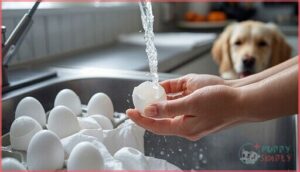
Before you can turn eggshells into a safe calcium supplement for your dog, you need to clean them thoroughly. Rinse each shell under cool running water to remove any leftover egg white or yolk.
Peel away the inner membrane—this thin layer can harbor salmonella and other bacteria. Once stripped clean, let the shells air dry completely on a clean surface before moving to sterilization methods.
Baking or Boiling for Safety

Once your shells are clean and dry, you’ll need heat treatment to eliminate salmonella and other pathogens.
Baking is the most reliable sterilization method—place shells on a tray and bake at 200°F for 10 minutes. Alternatively, boiling works too: submerge shells in water for 5 to 10 minutes. Both safety protocols guarantee bacterial removal before your next step in shell preparation.
Grinding Into Powder

After sterilization, grinding into powder is your final step to prepare egg shells safely. This process reduces particle size and increases surface area, making calcium supplements easier for your dog to digest and absorb.
- Coffee grinder: Quick pulses create fine eggshell powder in seconds
- Mortar and pestle: Manual control produces consistent texture for small batches
- Food processor: High-speed blades handle larger quantities efficiently
- Blender: Strong motors break shells into ultra-fine particles
How Much Eggshell Should Dogs Eat?

Getting the dosage right matters more than you might think. Too little won’t give your dog the calcium boost they need, while too much can throw their nutrition out of balance.
Let’s break down the recommended amounts, how to adjust for your dog’s specific needs, and what warning signs to watch for.
Recommended Dosage Guidelines
Start with a small pinch of finely ground eggshell powder mixed into your dog’s meal. You shouldn’t exceed one teaspoon per day for a medium-sized dog—that’s your upper limit for safe feeding practices.
Here’s what proper calcium balance looks like:
| Dog Weight | Daily Intake Limits |
|---|---|
| Under 25 lbs | ¼ teaspoon |
| 25-50 lbs | ½ teaspoon |
| 50-75 lbs | ¾ teaspoon |
| Over 75 lbs | 1 teaspoon |
These dosage adjustments maintain proper nutrient ratios in canine nutrition without risking over-supplementation.
Adjustments for Size and Age
Your puppy’s growth stages demand different calcium levels than an adult’s steady needs. Puppy nutrition requires careful balancing—too much calcium can harm developing bones in large breeds, while toy breeds tolerate slightly higher ratios.
Senior dog care flips this script: older dogs need less calcium to protect kidney function. Adjust your eggshell portions based on these age factors and size adjustments to match your dog’s dietary needs.
Monitoring for Side Effects
Watch your dog closely during the first week after introducing eggshells. Side Effect Tracking means logging any vomiting, diarrhea, or changes in stool within 48 hours.
Allergy Symptoms like itching or facial swelling need immediate veterinary attention. Digestive Issues from calcium overdose can signal Nutrient Imbalance, so keep a simple diary of doses and reactions to catch problems early while balancing the risks and benefits of feeding egg shells to dogs.
Which Dogs Should Avoid Eggshells?

While eggshells can be a helpful supplement for many dogs, they’re not right for everyone.
Certain health conditions, life stages, and dietary setups mean some dogs should skip eggshells entirely.
Here’s who needs to steer clear.
Puppies and Senior Dogs
Growing puppies and senior dogs need special attention regarding calcium intake. Puppies experience rapid growth and require balanced puppy nutrition—adding eggshells can throw off their carefully formulated diets.
Senior dogs often face age factors like declining kidney function, making calcium overconsumption risky. Both groups benefit from health monitoring.
Always consult your vet before introducing eggshell powder into your dog’s routine to protect canine health and support proper senior care and dog wellness.
Dogs With Kidney Disease
Kidney care becomes critical when your dog faces chronic kidney disease. Excess calcium intake for dogs can worsen renal health, leading to dangerous mineral imbalances.
Dietary therapy for kidney disease usually restricts phosphorus and calcium—adding eggshells as a calcium supplement works against disease management. Canine nephrology experts warn that dietary minerals like calcium carbonate can accelerate kidney damage.
Always prioritize veterinary-guided renal health protocols over supplementation.
Dogs on Complete Diets
Balanced nutrition in commercial complete diets already meets your dog’s nutrient needs without extra calcium. Adding eggshells risks over-supplementation and mineral imbalances.
Here’s why complete diets don’t need eggshells:
- They provide calcium to phosphorus ratios suited for your dog’s life stage
- AAFCO standards guarantee dietary needs of dogs are fully met
- Added calcium disrupts careful diet planning and canine care protocols
- Food allergies or sensitivities may worsen with unnecessary supplements
- Meal scheduling with complete foods promotes optimal dog nutrition and health
Trust the formula—it’s already balanced.
How to Feed Eggshells to Your Dog

You’ve prepared your eggshells properly, so now it’s time to actually feed them to your dog. The good news is that adding this calcium supplement to your pet’s routine doesn’t have to be complicated.
Here’s how to incorporate eggshell powder into your dog’s diet safely and effectively.
Mixing Powder With Food
You can’t just sprinkle eggshell powder on top and hope for the best. For even distribution, mix it into a small portion of wet dog food first, creating a smooth paste. This texture control ensures every bite delivers consistent dosage accuracy and palatability.
Your veterinarian will tell you the right serving size for your dog’s nutritional benefits. Store prepared portions in sealed containers and refrigerate.
Frequency of Supplementation
Daily dosing works best for most dogs because it maintains steady calcium balance throughout the week. You’ll want to add eggshell powder to one meal each day rather than spacing it out every few days.
This feeding rhythm aids nutrient absorption and keeps supplementation simple. Moderation matters here—consistent small amounts in your dog diet deliver better results than irregular higher doses that can disrupt calcium levels.
Storage Tips for Eggshell Powder
Proper storage keeps your eggshell powder fresh and potent for months. You’ll preserve calcium content by shielding the powder from moisture and light, which degrade nutritional quality over time.
- Store in an airtight, opaque container with a silica gel pack to control moisture
- Keep in a cool, dry spot away from heat sources and direct sunlight
- Label with the production date—properly stored powder stays effective for 12 to 24 months
Signs of Eggshell Intolerance or Overconsumption

Even healthy dogs can react poorly to eggshells if you feed too much or if their system doesn’t tolerate the supplement well. Catching these signs early helps you adjust before minor issues turn into bigger problems.
Watch for these three key indicators that something’s off.
Digestive Upset
When your dog’s digestive system rejects eggshells, you’ll notice symptoms quickly. Nausea, abdominal discomfort, and bloating usually appear within hours of feeding. Watch for excessive gas, stomach gurgling, or signs of cramping. These gastrointestinal issues signal food sensitivities requiring immediate attention.
| Symptom | Timing | Action |
|---|---|---|
| Nausea/discomfort | Within 2-4 hours | Stop eggshells immediately |
| Bloating/gas | Several hours after | Monitor hydration closely |
| Vomiting/retching | Variable onset | Contact your veterinarian |
| Abdominal gurgling | During digestion | Withhold next dose |
Proper food preparation prevents bacterial contamination, but overconsumption still disrupts digestive health regardless of sterilization methods.
Changes in Stool
Beyond cramping and nausea, monitor your dog’s bowel movements closely. Stool color shifts from normal brown to pale or greenish tones often indicate digestive issues affecting gut health. You might notice softer, paste-like consistency or harder pellets than usual.
Fecal analysis becomes important if you observe:
- Mucus coating or streaks in stool
- Unusually foul odor suggesting malabsorption
- Frequency changes—either diarrhea or constipation
These signs suggest eggshells aren’t supporting your dog’s gastrointestinal health as intended.
Allergic Reactions
While stool changes point to digestive upset, true allergic reactions involve your dog’s immune response to egg proteins. Watch for skin irritation like hives, intense itching, or facial swelling—classic allergy symptoms signaling food sensitivities.
Respiratory distress or vomiting after eggshell consumption requires immediate veterinary attention. Though anaphylaxis risks remain rare with eggshells alone, any sudden reaction warrants stopping supplementation and consulting your vet for proper allergy management.
Alternatives to Eggshells for Calcium
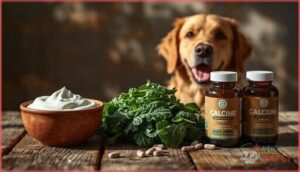
If eggshells don’t work for your dog or you’re looking for other options, you have plenty of choices.
Many foods and supplements can deliver the calcium your dog needs without the prep work eggshells require.
Here are three reliable alternatives that offer solid nutritional support.
Commercial Calcium Supplements
If eggshells aren’t practical, commercial calcium supplements offer reliable alternatives.
Calcium carbonate provides about 40 percent elemental calcium per dose—a low-cost option many vets recommend.
Calcium citrate is gentler on sensitive stomachs. Look for products paired with vitamin D to boost absorption and support mineral balance. Always choose supplements designed for dogs, as human formulas may contain harmful additives.
Bone Meal and Fish With Bones
Bone meal delivers calcium and phosphorus in a natural ratio—around 12 to 18 percent calcium and 12 to 20 percent phosphorus—supporting bone density and skeletal formation. Fish with soft bones, like canned sardines, supply these minerals plus omega-3s for skin and joint health.
- Use only food-grade bone meal to avoid contaminants
- Choose fish packed in water, not oil or salt
- Serve sardines in small portions to prevent digestive upset
- Grind bone meal finely for even mixing with meals
- Monitor your dog for any signs of calcium imbalance
Dairy and Vegetable Sources
Low-fat cheese and plain yogurt bring calcium alongside protein—look for options with minimal lactose if your dog shows sensitivity. Fortified plant milks like soy or almond provide calcium when dairy isn’t tolerated.
Collard greens and kale offer natural mineral content, though you’ll need larger servings to match dairy’s calcium punch. Pair these vegetable options with vitamin D sources to boost absorption and balance nutrients.
Veterinary Advice on Eggshells in Dog Diets

Before you add eggshells to your dog’s diet, it’s worth checking in with your vet. They can help you figure out if your dog actually needs the extra calcium and how much is safe based on their current diet.
Let’s look at when professional guidance matters most.
Consulting Your Veterinarian
Before you start grinding eggshells into powder, talk to your veterinarian—especially if your dog’s already on a commercial diet or takes medications. A vet consultation ensures you’re not accidentally creating mineral imbalances or interfering with existing treatments.
- Your vet can assess current calcium levels through blood work before you add supplements
- Veterinary nutritionists offer diet planning customized to your dog’s breed, age, and health conditions
- Regular health monitoring catches issues like hypercalcemia early, protecting kidney function long-term
Eggshells in Homemade Diets
Many raw food diet enthusiasts rely on ground eggshells to meet calcium requirements in homemade recipes. When you’re preparing homemade dog treats or complete meals, eggshells can bridge the gap between muscle meat and balanced pet wellness—but only when you match calcium sources to phosphorus levels.
| Homemade Diet Component | Eggshell Powder Role |
|---|---|
| Muscle meat (chicken, beef) | Balances high phosphorus |
| Organ meats | Adds missing calcium |
| Vegetables and grains | Complements mineral profile |
| Fish or poultry bones | May reduce eggshell need |
| Commercial base mixes | Often already balanced |
Proper diet planning ensures nutritional benefits without mineral excess.
Monitoring Long-Term Health
Long-term health trends reveal whether eggshell supplementation truly enhances bone health or disrupts nutrient balance. Your vet tracks disease markers and wellness checks to catch chronic care issues early—think of it as preventive canine care and wellness over years, not weeks.
- Schedule quarterly blood panels to monitor calcium and phosphorus ratios
- Track changes in stool consistency or digestive patterns
- Record body condition scores at each veterinary advice visit
- Note any shifts in mobility or joint comfort for dog health
- Review nutritional benefits annually against evolving dietary needs
Frequently Asked Questions (FAQs)
Will egg shells harm dogs?
Eggshells won’t poison your dog, but they’re not without risk. Salmonella risk lurks on raw shells, and sharp fragments can choke or irritate.
Proper preparation—baking or grinding—makes eggshells a safe calcium source, avoiding eggshell toxicity concerns.
Can dogs eat eggshells or not?
Yes, dogs can eat eggshells when properly prepared into fine powder. They provide a natural calcium source supporting bone health.
But proper preparation and vet consultation guarantee safe supplementation within balanced canine care and wellness protocols.
How many eggs can a dog eat in a day?
A Labrador who weighs 30 kg might handle two eggs daily, but your Chihuahua shouldn’t eat more than half.
Most dogs can safely eat one whole egg per day when incorporated into balanced canine nutrition.
Are eggs toxic to dogs?
Cooked eggs aren’t toxic to dogs—they’re actually nutritious.
Raw eggs pose Salmonella risks and can inhibit biotin absorption, but proper preparation makes eggs a safe, protein-rich addition supporting overall pet wellness and dog nutrition.
What happens if dogs eat egg shells?
When finely ground, they’re practically a calcium goldmine for canine nutrition and bone strength.
But whole fragments risk choking, while bacterial contamination threatens digestive health—proper preparation is everything for pet safety and canine care.
Can dogs eat whole raw eggs with shell?
Most dogs shouldn’t eat whole raw eggs with shell pieces. Large shell pieces create choking hazards, sharp edges can irritate the throat, and raw eggs may carry Salmonella that threatens both canine nutrition and pet safety.
How do I prepare egg shells for my dog?
You don’t need fancy equipment. Sterilize shells by boiling five minutes or baking at 200°F for ten.
Once dried, grind them into fine powder using a coffee grinder for safe preparation of egg shells for canine consumption.
Can I crack a raw egg in my dog’s food?
You can, but raw eggs carry Salmonella risk for both you and your dog.
Raw avidin may also inhibit biotin absorption. Cooking the egg first removes these concerns while preserving nutritional value.
Can puppies eat egg shells safely?
Yes, puppies can eat eggshells—because apparently parenting a puppy wasn’t hard enough.
Ground into fine powder and introduced gradually, properly prepared eggshells deliver calcium for developing bones when balanced with your pup’s complete diet.
Are organic egg shells better for dogs?
Organic shells may reduce pesticide exposure, but their calcium carbonate content matches conventional eggs.
Clean preparation and proper dosage matter more than source—both organic and conventional eggshells deliver safe, bioavailable calcium when ground finely.
Conclusion
Like Goldilocks searching for just right, the question can dogs eat egg shells demands balance—not too much, not too little, and always properly prepared.
Sterilized and ground eggshells offer outstanding calcium when your dog’s diet needs supplementation, but commercial foods already provide complete nutrition. Before adding any supplement, consult your veterinarian to guarantee you’re strengthening bones, not creating imbalances.
The safest approach always starts with professional guidance customized to your dog’s unique needs.
- https://theprouditalian.com/8-best-mini-food-processor-to-have/
- https://coffeesnobsworld.com/gear/the-7-best-mini-coffee-grinders-reviewed-and-compared/
- https://pmc.ncbi.nlm.nih.gov/articles/PMC6044796/
- https://www.avma.org/resources-tools/pet-owners/petcare/pet-dental-care
- https://pubmed.ncbi.nlm.nih.gov/11194049/