
This site is supported by our readers. We may earn a commission, at no cost to you, if you purchase through links.
When a Great Dane‘s gentle nobility meets a Rottweiler‘s unwavering courage, you get a dog that defies simple categorization. The Great Dane Rottweiler mix—often called a Weiler Dane—stands as one of the most imposing yet misunderstood crossbreeds in the canine world.
These dogs can weigh up to 170 pounds and tower over 30 inches tall, yet their hearts lean toward devotion rather than dominance. If you’re drawn to a companion who offers both guardian instincts and surprising tenderness, understanding this unique hybrid becomes essential.
The right owner can release a fierce loyalty wrapped in a surprisingly affectionate package, but the wrong match can lead to frustration on both ends of the leash.
Table Of Contents
- Key Takeaways
- What is a Great Dane Rottweiler Mix?
- Physical Characteristics of The Weiler Dane
- Temperament and Personality Traits
- Suitability as a Family Dog
- Exercise and Activity Needs
- Training Your Great Dane Rottweiler Mix
- Health Issues in Great Dane Rottweiler Mixes
- Grooming and Coat Maintenance
- Feeding and Nutrition Guidelines
- Is The Weiler Dane Right for You?
- Frequently Asked Questions (FAQs)
- How big do Rottweiler Great Dane mix get?
- What is the temperament of a Rottweiler Great Dane mix?
- What is the temperament of a Weiler Dane?
- What is a Great Dane Rottweiler mix called?
- Can you breed a Great Dane and a Rottweiler?
- How much is a Rottweiler Great Dane mix?
- How big do boxweilers get?
- Are Great Dane Rottweiler mixes good with other pets?
- Do these dogs have a high prey drive?
- Can Weiler Danes adapt to apartment living?
- Conclusion
Key Takeaways
- The Weiler Dane typically reaches 110-170 pounds and 26-32 inches tall, requiring substantial living space, 45-60 minutes of daily exercise, and a minimum 6-foot secure fence to accommodate their imposing size and protective instincts.
- This hybrid demands early socialization and consistent obedience training to channel their intelligence and guardian heritage into appropriate behaviors, as their strength becomes difficult to manage once they reach full size around 18-24 months.
- Common health vulnerabilities include hip and elbow dysplasia, bloat, and joint issues that contribute to their 8-10 year lifespan, making preventive veterinary care and weight management critical from puppyhood through senior years.
- Successful ownership requires matching the dog’s fierce loyalty with unwavering commitment to training, space, time, and veterinary expenses—this isn’t a casual companion but a profound responsibility that transforms household dynamics entirely.
What is a Great Dane Rottweiler Mix?
The Great Dane Rottweiler Mix brings together two powerhouse breeds into one impressive companion. You’ll find this crossbreed goes by several names, has a fascinating backstory, and plays a unique role in modern homes.
Many owners also consider the Great Dane Golden Retriever mix for a gentler temperament, though the Rottweiler cross offers more natural guarding instincts.
Let’s break down what makes this gentle giant tick and why it’s gaining traction among dog lovers.
Breed Origin and History
The Weiler Dane’s ancient roots stretch back to medieval Germany, where Great Danes guarded estates and Rottweilers drove cattle through Roman Empire territories.
Crossbreeding trends in the 20th century merged these guardian heritage lines, though the American Kennel Club doesn’t recognize this mix.
Breed development focused on blending the Great Dane’s imposing presence with the Rottweiler’s protective drive, creating a formidable companion with historical significance in dog breed history. For more background on the history and origins of different dog breeds, further exploration offers valuable insight into how breeds like the Great Dane and Rottweiler developed.
Common Names (Weiler Dane)
You’ll encounter this Rottweiler Great Dane Mix under several names in breeder listings and online communities. Here are the most common:
- Weiler Dane – the most widely recognized designation across designer dog registries
- Great Rottie or Great Rottweiler Dane – frequently used in forum discussions and social media
- Rottie Dane – a shorthand nickname owners prefer in casual conversation
Registry status varies, with some organizations accepting these name variations for mixed breed documentation. For a thorough overview of this hybrid’s, consult reputable guides and resources.
Purpose and Popularity
Breeders began crossing Rottweilers with Great Danes in the 2010s to create a hybrid breed that balances formidable guarding ability with a calm family pet temperament.
Rising interest in guardian companions who could both deter threats and snuggle children fueled market demand across the United States. This Rottweiler Great Dane Mix appeals to families wanting a loyal companion with protective instincts, though regional availability remains limited due to the breeding goals and health considerations involved.
Physical Characteristics of The Weiler Dane
When you picture a Weiler Dane, you’re looking at one of the most imposing mixed breeds around. These dogs don’t just inherit size from both parents—they combine physical traits in ways that make each one uniquely striking.
Let’s break down what you can expect regarding their build, coat, and standout features.
Size and Weight Range

When you bring home a Rottweiler Great Dane Mix, expect a gentle giant that’ll stand 26 to 32 inches tall and tip the scales at 110 to 170 pounds.
Weight factors depend on parental genetics, with females usually leaner and males carrying more bulk.
These large breed dogs reach full size around 18 to 24 months, though growth patterns show individual variance throughout adolescence.
Coat Type and Colors

Your Rottweiler Great Dane Mix usually sports a short, sleek coat with a dense undercoat that sheds moderately year-round. Color variations include black, fawn, brindle, and mantle combinations, often with dark facial masks or small white chest markings. Understanding shedding patterns helps you plan grooming tips around seasonal increases. Weekly brushing with a stiff bristle brush maintains fur maintenance and skin health.
Coat texture and color essentials:
- Short smooth hair lies flat for minimal dog grooming needs
- Dense double coat requires more attention during spring and fall
- Black masks intensify contrast against lighter fawn tones
- Brindle patterns display distinctive tiger-stripe accents
- Regular brushing promotes coat clarity and prevents matting
Distinctive Features

Your Weiler Dane inherits a broad skull and powerful jaw from its Rottweiler lineage, while the Great Dane contributes a regal, elongated muzzle.
Body proportions favor height over bulk, creating an imposing yet graceful silhouette. The muscular build extends through the chest and limbs, and coat patterns—whether solid, brindle, or marked—augment their commanding presence.
Deep, expressive eyes balance alertness with gentle curiosity.
Temperament and Personality Traits

The Weiler Dane’s personality is where its parent breeds truly shine through—a fascinating blend of the Great Dane’s gentle nature and the Rottweiler’s unwavering devotion.
Understanding these temperament traits helps you know what to expect when you bring one of these powerful dogs into your life. Here’s what defines the personality of a Great Dane Rottweiler mix.
Loyalty and Protective Instincts
Your Weiler Dane will show loyalty signals by following you from room to room and positioning themselves between you and strangers.
These loyal companions activate protective triggers when unfamiliar visitors approach, using their size and deep bark as defensive mechanics rather than aggression. Their guarding behavior stems from social bonding with family, making them outstanding guard dogs who balance protective instincts with discernment.
Intelligence and Trainability
Your Weiler Dane’s intelligent behavior shines through rapid command mastery, usually within 6 to 12 weeks of consistent dog training.
This breed uses problem solving to navigate obstacles and adapts quickly to new tasks with clear cues. Their adaptive learning means they’ll test boundaries, so you’ll need firm leadership and positive reinforcement during cognitive development to channel their canine behavior productively.
Affection With Family
Your gentle giants form deep social attachment to every household member, leaning into you for reassurance and following you room to room.
As a loyal family dog, your Weiler Dane offers steady emotional support through nuzzles and calm presence, responding to your moods with protective concern.
These family pets thrive on household dynamics—their canine companion instincts draw them close during daily routines and quiet moments alike.
Suitability as a Family Dog

You might wonder if a dog this big and powerful can really fit into family life.
The truth is, Weiler Danes can be exceptional family companions when you understand their needs and set them up for success. Let’s look at how they interact with children, other pets, and their natural instincts to protect your home.
Interaction With Children
You might worry that a dog this powerful can’t truly be safe around your kids—but with the right approach, your Weiler Dane becomes a loyal guardian dog rather than a risk. These family pets form deep bonds through daily interaction, transforming size into gentleness when you guide them properly.
Child Safety Tips and Family Bonding Activities:
- Start early socialization so your protective companion learns to read children’s cues and respond with calm affection
- Use consistent, gentle play guidance to prevent rough behaviors that could accidentally knock over smaller kids
- Establish clear boundaries through kid-friendly training sessions that teach both dog and child how to interact safely
- Practice parental supervision strategies during all interactions, especially when excitement runs high during playtime
- Create predictable routines that help your family dog understand when it’s time for calm companionship versus active play
Through patient guidance and a calm voice, you’ll reduce any fear your child might feel around such a large presence, turning potential anxiety into trust and transforming your home into a space where protection and tenderness coexist.
Compatibility With Other Pets
Just as your Weiler Dane learns to protect your children, you’ll need to carefully guide dog interactions with existing family pets to create harmony at home.
Early socialization lays the foundation for cat introductions and animal companionship, though temperament alignment matters more than wishful thinking.
Resource guarding can emerge around food or toys, so separate feeding zones and strategic dog training and behavior management keep peace during pet ownership transitions.
Guarding and Watchdog Abilities
Beyond getting along with other animals, your Weiler Dane’s protective instincts make them outstanding guard dogs when channeled through watchdog training. Their alert systems rely on deep barking and strategic positioning between you and potential threats, transforming protective breed genetics into purposeful threat response.
- They warn intruders with sustained barking before escalating
- Physical barrier formation protects family members instinctively
- Early socialization shapes appropriate guarding techniques
- Obedience training refines protective instincts into controlled responses
- Their imposing presence alone deters most unwanted visitors
Exercise and Activity Needs
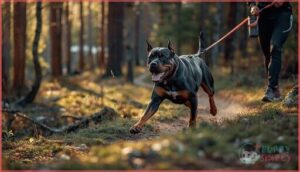
Your Weiler Dane isn’t a couch potato—this powerhouse needs serious physical activity to stay balanced and healthy.
Without enough exercise, you’ll see destructive behaviors emerge as all that pent-up energy finds an outlet. Let’s break down what it takes to keep your gentle giant thriving in body and mind.
Daily Walks and Playtime
Regular Walk Schedules are essential for your high energy Weiler Dane, with at least 45–60 minutes daily to support large breed dog health. Use brisk Exercise Routines, mixing leash training and Outdoor Safety, and always allow sniff breaks.
After walks, Playtime Activities like fetch or gentle tug keep exercise needs met and reinforce positive dog care and maintenance habits.
Mental Stimulation Requirements
Your intelligent canine hybrid thrives with brain challenges that go beyond physical exercise. Two 15-minute puzzle toy sessions daily prevent boredom, while treat-dispensing interactive games engage problem-solving for 20–45 minutes each.
Scent work and nose game rotations tap into animal behavior instincts, reducing anxiety naturally. Introduce three new dog training commands monthly using varied cognitive training techniques—short 5–10 minute bursts improve retention and keep your Weiler Dane mentally sharp.
Space Considerations
With their commanding presence, large dog breeds like this gentle giant need strategic space planning from day one. Your Indoor Layout must include barrier-free pathways and a dedicated dog zone.
While Outdoor Fencing of at least 6 feet ensures Yard Security during play, Home Modifications prevent hazards. Though apartment dwellers should reconsider—these large dogs require substantial room to thrive comfortably.
Training Your Great Dane Rottweiler Mix
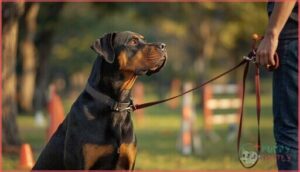
Training a Weiler Dane isn’t just about teaching commands—it’s about channeling that powerful combination of size, strength, and intelligence into a well-mannered companion. You’ll need to start early and stay consistent, because once this giant reaches full size, managing their behavior becomes substantially more challenging.
Let’s break down the essential training elements that’ll set you and your dog up for success.
Obedience and Socialization
Think of obedience training and socialization as your Weiler Dane’s passport to confident living. Start with basic commands like sit, stay, and come using positive reinforcement—high value treats paired with immediate praise lock in desired behavior.
Focus on three essentials:
- Short, reward-driven sessions (5-10 minutes) that build focus without frustration
- Controlled introductions to people, dogs, and environments during puppyhood
- Leash training that teaches calm walking and impulse control
Early, consistent work shapes canine communication and prevents reactivity down the road.
Managing Size and Strength
When your Great Dane Rottweiler Mix hits 130 pounds, gentle leash cues won’t cut it.
Muscle management begins with controlled slow walks that promote joint stability without overexertion, while body conditioning builds the core strength that maintains posture.
Weight control and exercise planning protect developing hips—heavy dogs pulling on leashes accelerate arthritis, so teaching “heel” early safeguards their future mobility.
Training Tips for Success
Your Weiler Dane thrives when you pair clicker training with high-value treats, marking each correct response before confusion sets in. Positive reinforcement builds leash manners faster than force—reward calm behavior over flashy tricks during those first vital weeks.
Fade prompts after two or three successful sessions, letting your intelligent dog own the skill. Canine communication flows both ways, so read their signals and adjust your reward systems accordingly.
Health Issues in Great Dane Rottweiler Mixes
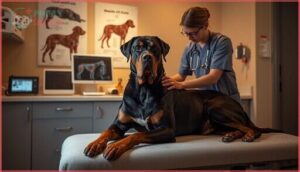
Your Weiler Dane‘s size and genetic heritage come with some serious health considerations you can’t ignore. Like most giant breeds, these dogs face a shorter lifespan and higher risk for certain conditions that demand your attention from day one.
Let’s break down what you’re up against so you can protect your gentle giant and catch problems before they become crises.
Common Genetic Conditions
Your Weiler Dane’s genetic blueprint carries risks you can’t ignore. Hip dysplasia and elbow dysplasia top the inherited diseases list, while bloat threatens suddenly and severely.
Joint pain often creeps in early due to their size, and hypothyroidism can disrupt metabolism. Genetic testing through DNA research helps identify breed health vulnerabilities before symptoms appear, giving you power to intervene with preventive medical genetics strategies.
Lifespan Expectations
Your Great Dane Rottweiler Mix will likely share 8 to 10 years with you—shorter than you’d hope, but typical for giant hybrid breeds.
Genetic factors from both parent lines influence mortality rates, while health monitoring catches heart disease and joint issues early.
Senior care starts around age seven, when longevity tips like joint supplements and customized nutrition make every year count.
Preventive Veterinary Care
You’ll protect those extra years with annual wellness exams that catch genetic disorders before symptoms appear. Regular checkups include targeted health screenings for hip dysplasia and heart conditions, while vaccine schedules and parasite control guard against preventable disease.
Don’t overlook dental care—periodontal infections stress your dog’s kidneys and heart. Proactive veterinary care turns potential crises into manageable conditions.
Grooming and Coat Maintenance

Your Weiler Dane’s grooming routine won’t demand hours of your time, but it does require consistency to keep that short coat healthy and your home reasonably fur-free.
Understanding the basics of brushing, bathing, and seasonal shedding patterns helps you stay ahead of maintenance needs. Let’s break down what you’ll need to manage their coat, ears, and nails effectively.
Brushing and Bathing Needs
Your Weiler Dane’s dense double coat thrives with consistent canine care. Brush 2–3 times weekly using a slicker brush to lift loose fur and distribute natural oils, then switch to a pin brush every other session. Bathe every 6 to 8 weeks with a mild, pH-balanced dog shampoo—rinse thoroughly to prevent irritation.
Weekly grooming sessions should include:
- Checking ears for wax buildup
- Trimming nails every 3–4 weeks
- Brushing teeth for overall health
Shedding and Seasonal Changes
Your Rottweiler Great Dane Mix sheds moderately year-round, with seasonal molting peaks in spring and autumn as undercoat density shifts.
Daily brushing during these coat transitions catches loose fur before it decorates your furniture. Watch for mild skin itching as old hairs loosen—balanced fatty acids and proper bathing intervals support skin health and keep fur management straightforward through every seasonal change.
Ear and Nail Care
Beyond coat care, your Weiler Dane’s ear hygiene and nail trimming protect overall canine health. Floppy ears trap moisture that invites ear infections, so wipe the outer ear after swimming and watch for head shaking or odor.
Trim nails every two to four weeks to prevent splits and paw health issues, checking for nail fungus or ingrown edges during each dog grooming session:
- Clean ears when visible wax appears using vet-approved cleaners
- Dry ears thoroughly after baths to reduce bacterial growth
- Use sharp clippers and avoid cutting into the quick
- Inspect nail beds for color changes or cracking
Feeding and Nutrition Guidelines

Feeding your Weiler Dane the right food isn’t just about filling their bowl—it’s about fueling a massive body that demands quality nutrition at every life stage.
Your dog’s dietary needs will shift dramatically from puppyhood through their senior years, and understanding these changes can add healthy years to their relatively short lifespan. Let’s break down what your gentle giant needs to thrive, from the best food choices to keeping those pounds in check.
Dietary Requirements by Age
Your pup’s nutritional needs shift dramatically as they grow—getting this right sets the foundation for a healthier, longer life. Puppies require protein-dense meals three to four times daily to fuel rapid growth stages, while adults switch to twice-daily feeding schedules with balanced macronutrients.
Here’s what proper Weiler Dane diet and exercise nutrition looks like:
| Life Stage | Daily Feeding Guidelines |
|---|---|
| Puppy (2-6 months) | High-protein diet (28-30%), 3-4 meals, promotes bone development |
| Junior (6-18 months) | Moderate protein (24-26%), 2-3 meals, regulates growth rate |
| Adult (18 months+) | Balanced nutrition (22-24% protein), 2 meals, maintains weight |
| Senior (7+ years) | Lower calories, joint support supplements, easy-to-digest proteins |
Proper nutrient balance prevents developmental orthopedic diseases common in giant breeds. Adjust portion control based on your dog’s activity level—sedentary dogs need fewer calories than active working companions.
Recommended Food Types
Quality pet nutrition starts with identifying the right protein sources—chicken, turkey, lean beef, or fish anchor most balanced formulas. You’ll want to pair these with whole grains like brown rice or oats for sustained energy, while adding fruits and vegetables boosts digestive health.
Rotate proteins periodically to minimize food allergies, and consider mixing wet and dry options to improve palatability during meal planning.
Managing Weight and Portion Control
Consistent portion sizing prevents obesity in these high energy giants—aim for measured meals split twice daily, adjusted to your large dog’s activity level.
Weekly weight monitoring catches trends early, while body condition scoring keeps you honest about visible changes.
Balancing caloric intake with exercise requirements protects those vulnerable joints, so reassess feeding strategies every four to six weeks as your dog’s nutrient balance needs shift.
Is The Weiler Dane Right for You?
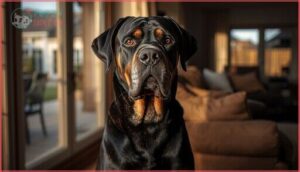
Bringing a Weiler Dane into your life isn’t a decision to take lightly—this gentle giant requires serious commitment and the right living situation to thrive.
Before you fall head over heels for those soulful eyes, you need to honestly assess whether your home, lifestyle, and resources can meet this dog’s substantial needs. Let’s break down what it really takes to be a successful Weiler Dane owner.
Ideal Home Environment
Space planning shapes everything when you bring home a gentle giant like the Weiler Dane. You’ll need wide doorways, non-slip flooring in high-traffic zones, and a secure four-foot fence minimum.
Temperature control between 68 and 72 degrees keeps joints comfortable, while noise reduction techniques calm anxious moments.
Furniture arrangement matters—creating dedicated quiet zones gives your large dog sanctuary when household energy peaks.
Owner Commitment and Lifestyle
Dog ownership at this scale transforms your entire rhythm of life. You’ll dedicate 90 minutes daily to walks, schedule 15 to 20-minute training sessions, and budget generously for veterinary care and maintenance.
Family dynamics shift when everyone shares obedience cues and supervises playtime. Space requirements demand yards and roomy interiors, while lifestyle adjustments mean planning vacations around your Weiler Dane’s needs.
Time management becomes your superpower here.
Pros and Cons of Ownership
Owning a Weiler Dane means embracing both fierce loyalty and significant ownership challenges. Cost considerations include higher veterinary expenses for dog health issues and large breed dog care needs.
Owning a Weiler Dane demands fierce loyalty in return for significant expenses and lifestyle adjustments that redefine daily routines
Family dynamics improve through shared training, yet lifestyle impact is real—travel becomes complicated and space demands multiply. Breed compatibility with your routine determines success. This isn’t casual dog ownership; it’s a profound commitment to a protective, powerful companion.
Frequently Asked Questions (FAQs)
How big do Rottweiler Great Dane mix get?
Like a toddler sprouting into a basketball player overnight, your Weiler Dane rockets from puppy to giant in 18-24 months, reaching 24-34 inches tall and 85-180 pounds depending on which parent’s genes take the lead.
What is the temperament of a Rottweiler Great Dane mix?
This loyal dog combines protective instincts with gentle giants’ calm demeanor.
Weiler Dane temperament and training reveal intelligent, family bonds-focused companions.
Social behavior requires early socialization to balance their natural guarding tendencies with friendly interactions.
What is the temperament of a Weiler Dane?
When properly socialized, this intelligent, loyal dog combines calm confidence with protective traits, creating gentle giants who display outstanding emotional intelligence in family dynamics—the Weiler Dane temperament and training reflect both breeds’ finest qualities.
What is a Great Dane Rottweiler mix called?
This hybrid goes by several names in the dog world. Most commonly, you’ll hear Weiler Dane or Rott Dane, though some breeders simply call it a Great Dane Rottweiler mix.
Can you breed a Great Dane and a Rottweiler?
Yes, you can breed a Great Dane and a Rottweiler, though crossbreeding ethics demand careful consideration of genetic risks, hybrid health concerns, and breeding challenges that affect both the dam and her mixed breed puppies.
How much is a Rottweiler Great Dane mix?
Expect to invest anywhere from $800 to $2,500 for a Weiler Dane puppy, though adoption routes usually run $100 to $ Reputable breeders with health-tested parent dogs command premium pricing.
How big do boxweilers get?
Boxweilers usually reach 21 to 27 inches tall at the shoulder and weigh between 70 and 100 pounds when fully grown, with males usually landing at the higher end of both height ranges and weight limits.
Are Great Dane Rottweiler mixes good with other pets?
Most canine compatibility hinges on early pet socialization rather than genetics alone.
With proper animal interactions during puppyhood, mixed breed dogs can thrive in multipet homes, though household dynamics require supervision and consistent dog training and behavior protocols.
Do these dogs have a high prey drive?
Prey drive varies among individuals, though guardian breeds often show moderate chase instincts toward small animals.
High energy levels combined with their protective nature mean early socialization needs and consistent training tactics help manage these impulses effectively.
Can Weiler Danes adapt to apartment living?
Ironically, cramming a 150-pound Weiler Dane into apartment living isn’t impossible—but it demands serious space management, compact exercise routines, noise reduction tactics, and unwavering commitment to urban living adaptations that many large breed dog owners underestimate.
Conclusion
Every decision you make today shapes tomorrow’s bond. The Great Dane Rottweiler mix won’t forgive half-hearted commitment, but rewards dedication with loyalty that borders on mythical.
This crossbreed demands space, time, and unwavering leadership—yet offers protection wrapped in surprising gentleness. If you’re ready to match their strength with your own resolve, you’ll discover a guardian who transforms your household into something both safer and profoundly more alive.
- https://www.dogsnaturallymagazine.com/10-reasons-to-feed-vegetables-for-dogs/
- https://petcorner.pangovet.com/pet-lifestyle/dogs/what-to-fill-a-kong-with/
- https://web.archive.org/web/20150920090804/https://snapguide.com/guides/play-hide-and-seek-with-your-dog/
- https://www.petmd.com/dog/breeds/rottweiler
- https://www.dw.com/en/10-dog-breeds-that-originated-in-germany/g-36529502