This site is supported by our readers. We may earn a commission, at no cost to you, if you purchase through links.
A dog that’s bored doesn’t just nap—it redecorates. Chewed baseboards, excavated flower beds, a chorus of barking at nothing. Most owners respond with more walks, but physical exercise only solves half the problem. A tired body paired with an unstimulated mind still leaves a restless dog.
The brain needs its own workout. Sniffing a single patch of grass activates more neural pathways than a full lap around the block, and puzzle toys can settle an anxious dog faster than a long run. Mental enrichment isn’t a luxury—it’s a biological need.
Games, scent work, and the right toys make keeping a dog mentally stimulated far simpler than most people expect.
Table Of Contents
Key Takeaways
- Your dog’s brain needs its own workout — sniffing a small patch of grass activates more neural pathways than a full lap around the block, so mental enrichment isn’t optional, it’s a biological need.
- Brain games like scatter feeding, hide-and-seek, and shell games directly replace destructive chewing, digging, and barking by giving your dog a real job to do.
- Short 5–10 minute training sessions build on positive reinforcement outperform long drills, and weaving cues like "sit" into playtime quietly builds impulse control every day.
- Mental stimulation can’t replace physical exercise — your dog still needs movement for heart health, muscle tone, and weight control, but the two together create a genuinely calmer, happier dog.
Why Dogs Need Mental Stimulation
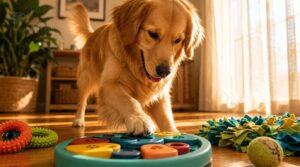
A tired dog isn’t always a happy dog — sometimes what they really need is a good mental workout.
Puzzles, scent games, and training sessions are some of the best ways to keep a dog mentally stimulated indoors when outdoor time is limited.
Just like people, dogs get bored, anxious, and restless when their brain isn’t engaged.
Here’s why mental stimulation matters and what happens when your dog isn’t getting enough of it.
How Mental Enrichment Reduces Boredom, Anxiety, and Stress
Mental enrichment isn’t just entertainment — it’s medicine for your dog’s brain. When your dog solves a puzzle or sniffs out hidden treats, stress reduction through sniffing activities triggers physiological relaxation and restores neurochemical balance naturally.
Mental enrichment is medicine for your dog’s brain — sniffing and problem-solving trigger real physiological calm
- Anxiety buffering through daily dog’s boredom prevention keeps restless energy from turning destructive
- Routine predictability builds confidence gains that calm reactive or fearful dogs
- Mental enrichment aids dog anxiety reduction without medication
Signs Your Dog Needs More Mental Activity
Your dog’s body tells the truth before their behavior gets loud. Recognizing signs of understimulation early saves your furniture — and your sanity.
| Dog Boredom Sign | What It Looks Like |
|---|---|
| Pacing Restlessness | Can’t settle even after walks |
| Attention Seeking | Constant nudging or pawing |
| Compulsive Chewing | Fixating on shoes or furniture |
| Settling Difficulty | Circles endlessly before lying down |
| Focus Problems | Ignores familiar cues like "sit" |
Including regular daily walks reduce idle energy can prevent boredom-related behaviors.
How Brain Games Help Prevent Destructive Chewing, Digging, and Barking
Those boredom signs don’t just stop at restlessness — they often show up as chewing, digging, or barking. Brain games for dogs replace that "nothing to do" energy with real jobs. Preventing destructive behavior through enrichment works because a busy brain doesn’t go looking for trouble.
Three ways it helps:
- Foraging chew substitutes replace furniture with puzzle toys, giving your dog an appropriate mouth outlet through incremental puzzle difficulty.
- Structured digging diversion channels exploration drive into nose work, making scent trails a more rewarding option than your yard.
- Targeted bark interruption becomes easier when a predictable enrichment routine reduces idle time and overall stress reactivity through impulse control training.
Why Mental Exercise Supports Puppies, Adults, and Senior Dogs
Every life stage brings different needs — and that’s where age-tailored challenges make all the difference.
| Life Stage | Benefits of Mental Stimulation |
|---|---|
| Puppies | Builds neural plasticity and lifelong learning habits |
| Adults | Aids mood regulation and reduces restless behavior |
| Seniors | Low-stress enrichment options slow cognitive decline |
| All Ages | Balancing mental and physical exercise improves well-being |
How Enrichment Strengthens The Dog-owner Bond
Enrichment does more than tire your dog out — it pulls you both into the same moment. Joint problem solving over a puzzle toy or a game of "find it" builds mutual trust in ways basic walks don’t.
From rotating puzzle toys to scent games, daily dog enrichment activities deepen the bond by giving you both something real to share.
Choice-driven engagement, where your dog opts into the activity, creates predictable interaction rituals your dog learns to count on.
That’s quality bonding time, reinforced daily.
Daily Brain Games for Dogs
The good news is that most of these games don’t need any equipment or extra space. A few minutes, some treats, and a little creativity go a long way.
Here are six easy brain games you can start today.
Hide-and-seek With Treats, Toys, or Family Members

Hide-and-seek is one of the simplest interactive games you can play with your dog — no equipment needed.
Start with easy Progressive Hiding Levels, then challenge your dog with tighter spots. Use Cue Consistency like "find it" every time.
- Practice Family Role Rotation so everyone hides
- Follow Safety Precautions near furniture gaps
- Keep Indoor Space Setup clear of hazards
- Reward immediately after each find
“Find It” Games for Easy Nose Work Indoors
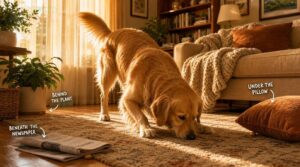
Find It games are one of the easiest indoor dog enrichment activities you can start today. Put your dog in a stay, hide small treats around the room, then release with a clear "find it" cue.
Maintain Cue Consistency every session.
Use Obstacle-Free Placement at first, then tuck treats under paper or rugs.
Treat Size Scaling and Multi-Scent Rotation keep nose work fresh and challenging.
Three-cup Shell Games for Focus and Memory
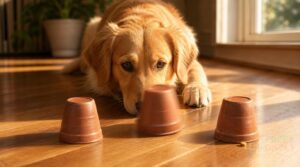
The three-cup shell game is one of the sharpest mental stimulation games you can run at home. Set a consistent Start Position, shuffle the cups, and let your dog track the hidden treat.
- Keep shuffle speed slow at first, then increase it
- Maintain cue consistency before each round
- Use small treats for quick reward timing
- Apply progressive difficulty by shuffling faster
- Rotate cup patterns for true cognitive enrichment
Scatter Feeding to Turn Meals Into Foraging Time
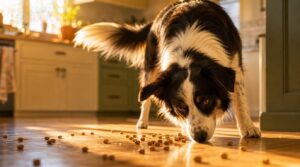
Your dog’s nose is basically a supercomputer—scatter feeding puts it to work. Instead of a bowl, spread your dog’s regular kibble across a clean floor or fenced yard. Start with small scatter distances for safety, then gradually increase difficulty by hiding pieces behind furniture or in different zones.
This method uses the same portion and same meal but offers far more mental stimulation through natural foraging behavior.
Snuffle Mats and Slow Feeders for Mealtime Enrichment

Snuffle mats turn kibble into a real nose-work session. The dense fabric hides treats in ways that naturally extend mealtime to 10–20 minutes—far better than a bowl. Material safety matters: choose washable fleece or felt and inspect regularly for loose threads.
Combined feeder setups—pairing slow feeders with puzzle feeding—support portion control while keeping interactive feeding puzzles for dogs fresh and genuinely satisfying.
Rotating Games Weekly to Prevent Boredom
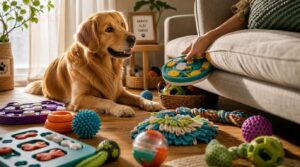
Your dog’s brain craves novelty. Keeping the same toys out daily kills motivation fast — that’s where a simple Rotation Calendar changes everything.
- Off-Week Storage — Pull games out of sight for a few days; Surprise Game Reveal keeps them feeling brand new.
- Variety Skill Mix — Alternate scent, puzzle, and search games weekly.
- Difficulty Progression — Add one harder hiding spot each rotation.
- Dog Boredom Prevention — Rotating toys to maintain interest takes minutes but pays off daily.
Training and Scent Enrichment
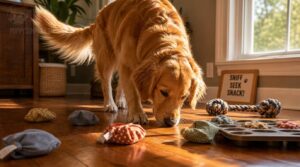
Training and scent work are two of the most underrated ways to tire out a dog. They don’t require a big yard or fancy gear — just a few minutes and some treats.
Here’s what actually works.
Short 5–10 Minute Reward-based Training Sessions
Keep training sessions to 5–10 minutes — that’s the sweet spot for micro training. Short, consistent trick training sessions with immediate rewards and clear criteria yield better results than marathon drills.
Aim for high success reps in a controlled distraction environment, then stop while engagement remains high.
Brief training sessions built on positive reinforcement, practiced daily, stack up faster than you’d expect.
Teaching Tricks Like Spin, Bow, and Item Retrieval
Spin starts with lure fade — guide the nose in a circle, then drop the treat motion once the movement clicks. Bow uses body positioning low to the floor. Item retrieval builds through chain building: go, grab, return, drop.
- Add the cue only after the behavior is reliable
- Practice in different rooms for generalization practice
- Time your reward with cue timing — reward the instant it’s right
Adding Sit, Stay, and Wait Cues to Playtime
Once your dog knows basic tricks, you can weave behavioral cues right into play. Ask for a sit before each ball toss — that’s impulse control in action.
Use a clear release signal so your dog knows when to move. Cue consistency matters: same word, same meaning, every time.
A quick play reset keeps structured playtime focused without killing the fun.
Scent Walks That Let Your Dog Sniff and Explore
Scent walks are cognitive exercise in disguise. Let your dog set the pace—real pace control means following their nose, not your schedule.
Varied routes through parks, grass, and sidewalks offer fresh olfactory enrichment every time. Allow marking and investigation to happen naturally.
Use reward placement along the trail to reinforce sniffing. Leash relaxation signals safety, and 10 focused minutes of nose work can melt stress better than a long jog.
Simple Home Scent Trails Using Treats or Kibble
Building a scent trail at home is easier than you’d think. Start with trail setup in a small room—drag a treat along the floor to lay an olfactory enrichment path you’re dog can follow. Space treat placement every few steps for repeated wins. Use container stations like folded towels or cups for nose work variety.
Scale difficulty gradually, and always use safe, familiar materials.
Low-impact Enrichment for Senior or Crate-rest Dogs
When your dog is on crate rest or slowing down with age, low-energy enrichment options for senior dogs keep their minds active without stressing their body. Try an Elevated Feeding Station with a puzzle feeder, Therapeutic Chew Toys, or quiet crate activities like a snuffle mat.
Timed Treat Release toys and Passive Audio Enrichment also work well—calm, low-stress enrichment options that fit right into their rest routine.
Top 5 Mental Stimulation Toys
The right toy can turn a bored dog into a focused, satisfied one.
These five picks are tested, trusted, and worth having in your rotation. Here’s what makes each one worth your dog’s time.
1. Kong Classic Stuffable Dog Toy
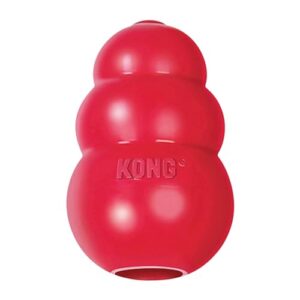
The KONG Classic is the most versatile tool in your enrichment toolkit. Stuff it with kibble and peanut butter, freeze it overnight, and transform a 90-second meal into 20 minutes of focused mental work. Its unpredictable bounce also makes it ideal for fetch.
Built from durable natural rubber, it withstands regular chewing and is dishwasher-safe and vet-endorsed. These features ensure longevity and ease of use for pet owners.
For anxious or high-energy dogs, the licking and chewing encouraged by the KONG stimulate endorphin release, acting as a built-in calming mechanism. This dual functionality supports both mental engagement and emotional well-being.
| Best For | Dog owners with medium-to-large, average-chewing breeds who want to reduce boredom, ease anxiety, or keep their pup busy during crate time or hot afternoons. |
|---|---|
| Material | Natural rubber |
| Dishwasher Safe | Yes |
| Treat Dispensing | Yes |
| Mental Stimulation | Yes |
| Chewer Type | Average chewers |
| Units Included | 1 |
| Additional Features |
|
- Stuff it, freeze it, and it keeps dogs mentally busy for way longer than a regular toy
- The unpredictable bounce makes fetch more fun and less predictable for curious dogs
- Dishwasher-safe and built tough enough to handle daily chewing without falling apart
- Too big for small breeds — tiny dogs just can’t reach the treats inside effectively
- Not a great fit for aggressive chewers who can destroy "average durability" rubber
- Dry treats can shake loose through the opening, so you’ll want to keep an eye on things
2. West Paw Qwizl Dog Puzzle Toy
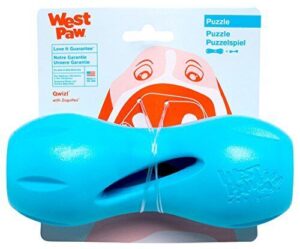
The West Paw Qwizl is built for dogs that need a real challenge. Slide in a bully stick or dental chew, and your dog must work the toy with their paws and nose to extract treats. Its design encourages active engagement, extending treat time considerably.
The toy features side vents that release scent, keeping dogs focused and motivated. Made from non-toxic, BPA-free Zogoflex plastic, it is dishwasher-safe and gentle on teeth, ensuring safety and easy maintenance.
While aggressive chewers may eventually wear it down, the Qwizl offers solid mental engagement for most dogs, combining durability with interactive play.
| Best For | Dogs that need mental stimulation and slower eating, especially medium to light chewers who benefit from treat-dispensing puzzles. |
|---|---|
| Material | Zogoflex plastic |
| Dishwasher Safe | Yes |
| Treat Dispensing | Yes |
| Mental Stimulation | Yes |
| Chewer Type | Light to medium chewers |
| Units Included | 1 |
| Additional Features |
|
- Keeps dogs busy for hours by making them work for bully sticks and dental chews through the side vents
- Made from safe, recyclable Zogoflex plastic — dishwasher-safe, BPA-free, and floats for water play
- Backed by West Paw’s "Love It" guarantee and made in the USA
- The small opening makes loading larger treats tricky and sometimes impossible
- Heavy chewers can eventually rip through it — not ideal for aggressive bite styles
- At nearly 6 inches tall, it may be awkward for smaller dogs to handle
3. Starmark Bob A Lot Dog Toy
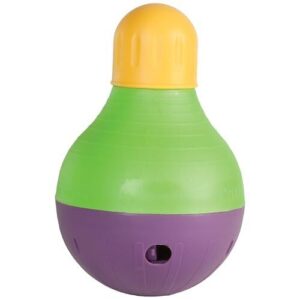
The Starmark Bob A Lot keeps food-motivated dogs busy for up to an hour. It has a wobbling, weighted base that moves unpredictably as your dog nudges and bats it around, releasing kibble through adjustable openings. You control the difficulty by widening or narrowing those openings. The dual chambers hold up to three cups of dry food, making it practical for full meals.
It comes apart for easy cleaning and holds up well to rough play. A solid choice for high-energy dogs.
| Best For | Food-motivated, high-energy dogs who eat too fast or need something to keep them busy while you’re away. |
|---|---|
| Material | Rubber |
| Dishwasher Safe | No |
| Treat Dispensing | Yes |
| Mental Stimulation | Yes |
| Chewer Type | Moderate chewers |
| Units Included | 1 |
| Additional Features |
|
- Adjustable openings let you dial up the difficulty as your dog gets the hang of it
- Holds up to 3 cups of kibble, so you can use it for full meals instead of just treats
- The wobbling base gives unpredictable movement that keeps dogs engaged longer
- The interior is tough to clean since it doesn’t fully disassemble
- The wobbling noise can get loud, which isn’t great for apartments
- Too big to be practical for small dogs
4. West Paw Toppl Interactive Dog Toy
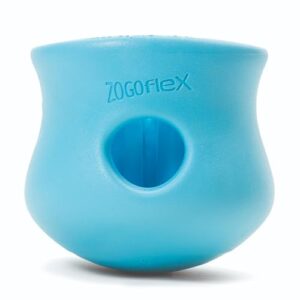
The West Paw Toppl emphasizes strategy over movement. It is a two-piece interlocking toy crafted from BPA-free, dishwasher-safe Zogoflex, ensuring durability for daily use and safety with no sharp edges, even if chewed.
Load it with kibble, peanut butter, or frozen yogurt, and your dog must nudge and nose it to release each piece. Small and large sizes interlock to increase difficulty, while its buoyant design enables outdoor or pool play.
| Best For | Dogs that eat too fast or need something to keep them busy while you’re out. |
|---|---|
| Material | Zogoflex plastic |
| Dishwasher Safe | Yes |
| Treat Dispensing | Yes |
| Mental Stimulation | Yes |
| Chewer Type | Moderate chewers |
| Units Included | 1 |
| Additional Features |
|
- The two-piece design lets you ramp up the challenge as your dog figures it out
- Safe materials — BPA-free, dishwasher-friendly, and tough enough for everyday use
- Frozen fillings (think peanut butter or yogurt) can keep your dog occupied for nearly an hour
- Not great for serious chewers — they’ll eventually get the better of it
- The liquid plug is sold separately, which feels like a small but annoying extra step
- One size won’t fit all — smaller breeds may struggle with the bulk
Kong Extreme Large Dog Chew Toy{Jsii
If your dog powers through puzzle toys like they’re warm butter, it’s time to think about rubber composition. The Kong Extreme is built from 100% natural rubber that holds up under serious bite pressure — durability testing backs this up.
Choose the right size selection for your breed, stuff it safely with peanut butter or kibble, and freeze it. This preparation method extends engagement and enhances the challenge.
Chew fatigue sets in naturally, keeping destructive behavior prevention on track. The toy’s design discourages unwanted chewing habits while providing mental stimulation.
Frequently Asked Questions (FAQs)
What is the 3-3-3 rule with dogs?
The 3-3-3 rule maps a rescue dog’s adjustment: 3 days of Decompression Days, 3 weeks of Routine Learning, and 3 months of Trust Settling before their true personality emerges.
Can dogs get mentally overstimulated or burned out?
Yes, absolutely. Too much mental input triggers sensory overload, flooding your dog with cortisol and cognitive fatigue. Watch for restlessness, ignoring familiar cues, or irritability — classic burnout signs.
Recovery breaks matter just as much as the games themselves.
How does mental stimulation differ across dog breeds?
Every breed thinks differently. Border Collies excel at inhibitory control, while Golden Retrievers lean on human-oriented cognition. Australian Shepherds and Siberian Huskies need work-drive-based tasks.
Breed-specific enrichment that matches spatial problem-solving styles gets the best results.
What time of day is best for brain games?
Think of your dog as a colleague—morning alertness peaks around 9–11 AM, perfect for a brain workout. Match sessions to your chronotype schedule for short, consistent trick training that sticks.
How long before results from enrichment are noticeable?
Most dogs show an initial response window within the first session.
One-week noticeability is common, and two-week improvement is typical for lasting behavior change.
Consistency drives long-term adaptation.
Can mental stimulation replace physical exercise entirely?
No, it can’t. Mental stimulation fills the Energy Expenditure Gap only partially. Your dog still needs movement for Cardiovascular Benefits, Muscle Maintenance, Weight Control, and Joint Health.
Conclusion
A worn-out body and a restless mind aren’t the same problem—and they don’t share the same solution. Knowing how to keep a dog mentally stimulated means meeting both needs, not just one.
A puzzle toy before dinner. A sniff-heavy walk. Five minutes of trick training. Small shifts that add up to a calmer, happier dog.
Your dog doesn’t need a more complicated life. Just a more interesting one.
- https://www.humaneanimalpartners.org/keeping-your-dog-happy-and-engaged-enrichment-activities-for-every-pup/
- https://www.zoomroom.com/tips/puzzle-toys/
- https://toegrips.com/mental-stimulation-toys-for-dogs/
- https://dogtrainersmilwaukee.com/why-every-dog-needs-scent-work-science-backed-benefits-you-should-know/
- https://animalwellnessmagazine.com/nose-work-for-dogs-enrich-his-life-through-scent/