
This site is supported by our readers. We may earn a commission, at no cost to you, if you purchase through links.

Somewhere between a steel wool pad and a teddy bear lives one of dogdom’s most underrated coat types.
Wiry coats aren’t an accident of genetics—they’re engineering. Guard hairs are thick enough to deflect brambles, a dense undercoat wicks moisture before it hits skin, and natural oils bead water off like a waxed jacket.
Breeds built this way spent centuries working rough terrain, and their coats kept pace.
Whether you’re eyeing a scrappy Border Terrier or a dignified Airedale, understanding what’s under that rough exterior changes how you choose, groom, and live with these dogs.
Table Of Contents
Key Takeaways
- two-layer system — stiff guard hairs block debris and shed water while a dense undercoat traps warmth, making them genuinely engineered for tough conditions.
- Hand stripping beats clipping every time: it pulls dead hair from the root and keeps that signature rough texture intact, while clipping just softens the coat over time.
- These breeds run the full size spectrum — from 8-pound Brussels Griffons to 115-pound Otterhounds — so there’s a wiry-coated dog that fits almost any home or lifestyle.
- Low-shedding doesn’t mean low-maintenance; dead hair stays trapped in the coat, which means regular grooming isn’t optional if you want a healthy, breathable, good-looking coat.
What Makes a Coat Wiry?
That rough, almost bristly texture you feel on a terrier’s back isn’t random — it’s a feature built for a purpose. A wiry coat is actually a two-layer system, and each part does a different job.
Each layer has a specific role, and understanding that system is key to grooming a double-coated dog properly without stripping away the coat’s natural protection.
Here’s what makes it work.
Harsh Outer Coat and Dense Undercoat
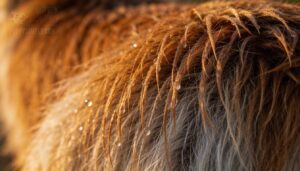
A wirehaired coat isn’t just rough to the touch — it’s engineered. The protective outer coat features guard hairs 0.5–1.5 mm in diameter, standing away from the body to increase airflow dynamics and speed up drying. Beneath that sits a dense undercoat with fibers just 6–12 µm wide, creating serious temperature resilience.
Here’s what makes this double coat special:
- Guard hair diameter keeps the outer layer stiff and debris-resistant
- Undercoat fiber size traps warm air close to the skin
- Coat density metrics reach up to 9 hairs per square millimeter on working dogs
- Dense undercoat wicks moisture away from skin naturally
- Coat maintenance starts with understanding this two-layer structure
Water Resistance and Brush Protection

That double-layer structure does more than insulate — it actively sheds water.
The protective outer coat uses natural coat channel design to guide runoff toward the coat tips, keeping your dog’s skin dry.
Natural oils along each hair shaft improve water shedding mechanics, so moisture beads off rather than soaks in.
Even the beard acts as a facial oil layer, deflecting splashes from the eyes.
Regular grooming frequency effect matters too — hand stripping preserves runoff efficiency that clipping slowly dulls.
Low-shedding Traits and Trapped Loose Hair
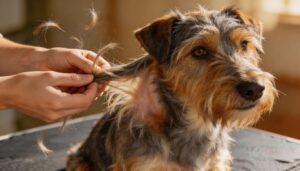
Low-shedding doesn’t mean no shedding — it means the hair stays in the coat instead of landing on your sofa. During seasonal hair cycle shifts, dead strands get caught in the dense undercoat rather than falling loose.
That’s where grooming timing matters. Without regular hand stripping for trapped hair removal, buildup dulls coat breathability and creates skin health impact risks.
Consistent wirehaired coat care keeps things crisp. Proper hand stripping technique helps maintain coat texture and prevent irritation.
Common Facial Furnishings Like Beards and Eyebrows
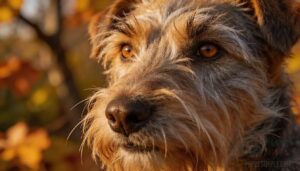
That bristly fur doesn’t stop at the neck. Wiry breeds preserve their coat texture on their faces too — literally.
- Beard Length Control keeps chin hair from tangling with debris after every outdoor run
- Bushy eyebrows with their rough coat texture provide real Eyebrow Shade Function over the eyes
- Muzzle Whisker Fringe frames the face and traps food and dirt without regular hand stripping
- Neck Border Framing and Facial Hair Shedding both improve with consistent grooming
How Wiry Coats Differ From Smooth Coats
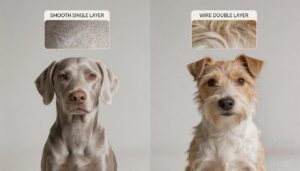
Think of a smooth-coated breed like a rain jacket with no lining — lightweight, easy to maintain, but minimal insulation. A wirehaired coat flips that entirely.
The stiff outer layer delivers serious coat durability and skin breathability, while the dense undercoat provides thermal insulation.
Seasonal molting is subtler, shedding reduction is real, and hand stripping — not clipping — keeps the coat honest.
smooth-coated breeds simply don’t require that level of coat maintenance.
Small Wiry Coat Dog Breeds

Small wiry-coat dogs pack a surprising amount of personality into a compact frame. Most weigh under 15 pounds, but don’t let that fool you — they’re scrappy, spirited, and built to work.
Here are some of the most popular small wiry breeds worth knowing.
Border Terrier
Ever met a dog built for gritty work but gentle at home? That’s your Border Terrier. Born in the Cheviot Hills, these narrow-bodied, low-shedding dynamos sport wiry coats in grizzle, red, or wheaten.
Temperament traits: Plucky and affectionate. Grooming needs are modest—hand stripping keeps that texture sharp.
Energy levels and exercise needs are high. Watch for dental and ear health concerns.
Wire Fox Terrier
The Wire Fox Terrier packs a lot into 15.5 inches. White-dominant, dense, and unmistakably wiry, this breed hits every show standard with crisp coat texture maintained through hand stripping — clipping softens it fast.
Three things to know:
- Grooming needs require stripping every few months
- Barking tendencies run high without enough stimulation
- Genetic risks include eye health concerns and dental care needs
Low-shedding, bold, and always ready for action.
Scottish Terrier
Few small dogs carry themselves with quite the self-assurance of a Scottish Terrier. That bold compact silhouette — low to the ground, deep-chested, steady — tells you everything about the independent nature inside.
| Feature | Details | Why It Matters |
|---|---|---|
| Weight | 18–22 lbs | Manageable size |
| Coat | Wirehaired, low-shedding | Grooming requirements for wiry coats apply |
| Grooming | Hand stripping every 6–8 weeks | Maintains harsh texture |
| Temperament | Loyal companionship, reserved with strangers | Suits quieter homes |
| Health Focus | Joint health, dental care | Helps 12–15 yr lifespan |
Your wirehaired coat care cheat sheet starts here: brush weekly, strip seasonally, and skip over-bathing. Energy requirements are moderate — daily walks satisfy this breed nicely.
Brussels Griffon
The Brussels Griffon packs a lot of personality into 8–10 pounds. That almost-human facial expression — wide dark eyes, flat nose, scruffy beard — is genuinely hard to forget.
- Rough coat needs hand stripping to preserve texture
- Brachycephalic breathing means no hard exercise in heat
- Velcro attachment style; struggles with long alone time
- Health screening matters, especially for neurological conditions
Life expectancy runs 12–15 years when proper grooming requirements for wiry coats are met consistently.
Jack Russell Terrier
Don’t let the size fool you — the Jack Russell Terrier is basically a big dog crammed into a compact 13–17 pound frame.
| Trait | Details |
|---|---|
| Energy levels and exercise needs | 45–60 min vigorous daily activity |
| Grooming Frequency | Hand stripping 2–3x yearly |
That bold personality and high prey drive mean apartment suitability depends entirely on your commitment.
Low-shedding rough coats need consistent hand stripping.
Joint health matters long-term.
Wirehaired Dachshund
From compact terriers to the iconic Wirehaired Dachshund — same wiry attitude, different silhouette. That long, muscular body and short legs aren’t just charming; they’re built for burrowing and scent work.
The double coat is low-shedding but needs regular hand stripping to stay textured.
Prioritize spine health, dental care, and obesity prevention.
Family bonding comes naturally — this breed is loyal to its core.
Best Fits for Apartments and Active Homes
All six of these breeds handle apartment living remarkably well — especially if you plan your exercise routine thoughtfully.
- Border Terrier and Wire Fox Terrier excel at compact living adaptation, needing just 45–60 minutes daily.
- Scottish Terrier and Brussels Griffon suit quieter households with noise level management in mind.
- Jack Russell and Wirehaired Dachshund reward active families who prioritize indoor enrichment ideas and consistent training.
Low-shedding coats mean less fur on your couch — and regular hand stripping keeps things tidy.
Medium Wiry Coat Dog Breeds

Medium wiry coat breeds hit a sweet spot — big enough to keep up on a long hike, compact enough to fit in most homes. This group covers everything from sharp-minded schnauzers to feisty terriers with serious personality.
Here’s a closer look at six breeds worth knowing.
Miniature Schnauzer
If you’re after a compact, hypoallergenic-friendly companion, the Miniature Schnauzer checks a lot of boxes. Breed history traces back to German ratting work — and that feisty independence still shows.
Weighing 10–18 pounds, their low-shedding wirehaired coat care cheat sheet starts with hand stripping. Standard colors include salt and pepper, black, and black and silver.
Health screening for hyperlipidemia matters here. Early socialization tips and weight management keep them thriving.
Standard Schnauzer
Step up in size from the Miniature, and the Standard Schnauzer brings serious presence. Standing 17–20 inches with a square proportion build and rectangular head, this 30–50 pound breed is all muscle and intent.
Your wirehaired coat care cheat sheet for grooming techniques for wiry coats:
- Weekly brushing prevents matting
- Hand stripping preserves texture
- Clip every 6–8 weeks
- Schedule eye screening regularly
- Prioritize dental care and joint health
Welsh Terrier
Welsh Terriers don’t just look the part — they live it. Standing 12–15 inches and weighing 20–30 pounds, this classic Terrier group carries a dense wirehaired coat that’s naturally low-shedding and allergy friendly. Weight management matters here since their appetite matches their energy. Hand stripping keeps that signature texture intact.
| Feature | Detail |
|---|---|
| Living Environment | Active home or apartment with daily exercise |
| Training Methods | Consistent, reward-based — firm but fun |
| Breed Popularity | Steady loyal following among terrier fans |
Lakeland Terrier
Born in the rugged Lake District, the Lakeland Terrier was built for work. Its square build and long-legged stature let it chase foxes through rocky terrain without missing a beat.
Saddle markings give it that classic look, while the wirehaired coat stays low-shedding — practically hypoallergenic. Hand stripping preserves that harsh texture. Fair warning: that mischievous personality comes standard.
| Feature | Detail |
|---|---|
| Origin | Lake District, England |
| Coat Type | Hard, wiry — hand stripping recommended |
| Shedding | Low — allergy-friendly households |
Irish Terrier
Rooted in Irish Farm Heritage, the Irish Terrier is all heart — bold, loyal, and built to work. That Compact Athletic Build (18 inches, ~25–27 lbs) fits surprisingly well in active homes.
- Wiry, Low-shedding coat — nearly Hypoallergenic
- Bold Protective Instincts — natural watchdog
- Hand stripping keeps texture crisp
- Family Compatibility is strong with consistent training
- Daily exercise is non‑negotiable
Kerry Blue Terrier
The Kerry Blue Terrier carries real Irish origin pride — it was practically a national symbol back home in County Kerry.
dense, blue-gray wirehaired coat care cheat sheet moment?
Hand stripping every 6–8 weeks keeps it show standards sharp.
It’s low-shedding, nearly hypoallergenic, and those expressive brows frame eyes worth protecting.
Genetic screening for eye health matters here.
Temperament, Trainability, and Exercise Needs
Medium wiry breeds are smart, spirited, and a little stubborn — a combo that keeps training interesting. Their independent streak means they’ll tune you out if drills get boring, so keep sessions short and lean on positive reinforcement.
Daily activity levels should hit 45–60 minutes minimum. Add mental stimulation through scent games or puzzle toys, because prey drive management starts with a busy brain.
Large Wiry Coat Dog Breeds

Large wiry coat breeds bring a whole different energy to the table — think working dogs built for serious jobs in rough conditions. These aren’t lap dogs; they’re athletes with coats to match.
large wiry breeds worth knowing.
Airedale Terrier
The Airedale Terrier is literally the king of terriers — standing 22 to 23.5 inches tall and weighing up to 65 pounds. That rough coat isn’t just for looks; it’s built for work.
Breed History ties directly to Yorkshire hunting grounds, where this dog earned early Police Service roles.
Key ownership facts:
- Hand stripping preserves the wiry texture
- Exercise requirements hit 60–90 minutes daily
- Therapy Work suits their calm, intelligent nature
- Training Techniques should stay varied and firm
- Health Concerns include obesity and joint care
German Wirehaired Pointer
If the Airedale is the king of terriers, the German Wirehaired Pointer is the workhorse of the Sporting group.
Standing 23 to 25 inches and weighing up to 70 pounds, this breed was built for field performance — pointing, flushing, and water retrieval without missing a beat.
Smart bloodlines genetics, consistent training strategies, and regular hand stripping keep that low-shedding wirehaired coat care cheat sheet simple.
Health screening for hips matters.
Wirehaired Vizsla
The Wirehaired Vizsla is a step softer than the GWP — golden, affectionate, and deeply handler-focused.
Breed origin traces to 1930s Hungary, crossing the smooth Vizsla with German Wirehaired Pointer stock for serious field versatility.
Adults stand 54 to 64 cm with a 2–3 cm wiry coat needing regular hand stripping.
Low-shedding but demanding — active families and daily exercise needs aren’t negotiable.
Health screening for hips applies here too.
Spinone Italiano
If the Wirehaired Vizsla is handler-focused, the Spinone Italiano is simply everyone’s dog.
Big, patient, and genuinely easygoing — males run 65–85 lbs, with a dense wiry coat built for rugged terrain adaptation.
Key traits worth knowing:
- Calm pointing instincts suit mixed-skill hunters
- Strong family affection without hyperactivity
- Hip joint health checks are non‑negotiable
- Beard grooming tips: clean weekly, trim monthly
Hand stripping technique keeps that signature rugged texture intact.
Otterhound
Where the Spinone is everyone’s dog, the Otterhound is practically built for a different world — cold rivers, muddy banks, and long days on scent work.
Webbed feet, a bay voice that carries for miles, and a dense wirehaired coat that sheds water naturally.
They weigh 70–115 lbs and genuinely love cold water swimming.
Watch for hip dysplasia, and don’t skip hand stripping technique to preserve that rough texture.
Irish Wolfhound
The Irish Wolfhound holds the height record as the tallest AKC breed — males reach 32–34 inches.
That gentle giant temperament (calm, dignified, deeply loyal) makes them wonderful companions, but lifespan statistics are sobering: median life expectancy sits around 7.5 years.
Irish Wolfhounds are calm, dignified, and deeply loyal companions, but their median lifespan is only about 7.5 years
Cardiac disease claims about 18% of the breed.
Their rough wirehaired coat traces back to the 1840s restoration by Captain G.A. Graham.
Hunting Roots, Energy Levels, and Space Needs
Every large wiry breed on this list carries real hunting DNA — scent tracking, sustained drive, and the stamina to match. German Wirehaired Pointers and Vizslas need hard daily exercise.
Airedales and Otterhounds demand consistent mental work too, not just walks. A fenced yard helps enormously.
Recall training isn’t optional — it’s essential. Space requirements matter less than routine quality.
Caring for Wiry Coat Dogs

Wiry coats are low-maintenance compared to many breeds, but they do have their own rules. Get the routine wrong and you’ll end up with a soft, fuzzy dog instead of that rugged, textured look the breed was built for.
Here’s what actually works.
Hand Stripping Vs Clipping
Hand stripping versus clipping — it’s the biggest grooming debate for wiry-coated dogs. Hand stripping technique removes dead guard hairs at the root, preserving texture and that signature rough feel.
Clipping is faster and cheaper, but softens the coat over time.
For skin comfort and texture preservation, hand stripping wins. Follow a seasonal schedule: every two to three times yearly keeps things on track.
Brushing Tools and Weekly Upkeep
Your dog grooming tools make or break weekly upkeep.
Start with a slicker brush — the slicker brush technique lifts loose hair and surface tangles without pulling skin. Follow with a metal comb to catch hidden knots in the chest and legs (metal comb benefits really show here).
A pin brush routine works for lighter daily cleanup. Use a sectional brushing sequence — body first, then legs, face last.
Detangling spray aid helps on coarser patches. Brush weekly, consistently.
Bathing Without Softening The Coat
Bath time is a threat to that signature wiry texture — unless you do it right. Use lukewarm water and diluted shampoo to protect natural oils.
Skip conditioner on the outer coat entirely. Finish with a rinse-only finish to keep hair crisp.
Then airflow drying with pin brush brushing while drying separates hairs before they clump.
Bathe every four to six weeks max.
Beard, Paw, and Ear Maintenance
Three spots get overlooked most: the beard, paws, and ears.
For beard staining prevention, daily beard combing matters — start with coarse comb teeth on any matted areas, then finish fine. Wipe it down with a warm cloth regularly.
For paw pad inspection, check monthly and trim fur between pads.
Ear discharge alerts signal vet time fast — red, swollen, or colored discharge means don’t wait.
Shedding, Allergy, and Family Considerations
Wiry coats are low-shedding, not no-shedding. Seasonal shedding still happens, especially when the undercoat changes.
The rough outer coat traps loose hair instead of dropping it everywhere — which helps with cleaning routines but doesn’t eliminate dander.
Allergy management matters here: allergens come from skin flakes and saliva, not just fur.
Regular grooming, air filters, and washable bedding make a real difference for allergy-friendly dogs.
Family energy fit counts too — these breeds run hot.
How to Choose The Right Wiry Breed
Picking the right wirehaired breed comes down to honest self-assessment. Your owner’s activity level, living environment, and family size matter more than looks.
A Jack Russell in a quiet apartment? Recipe for chaos. A Spinone Italiano with hiking enthusiasts? Perfect match.
Factor in health history, budget considerations for grooming, and breed temperament. Size variations among wirehaired breeds mean there’s genuinely one for everyone.
Frequently Asked Questions (FAQs)
What breed of dog has wiry fur?
Think of wiry fur as built-in armor. Breeds like the Wire Fox Terrier, Airedale Terrier, Scottish Terrier, German Wirehaired Pointer, and Wirehaired Vizsla all wear that signature rough, weather-tough coat.
Which dogs chase cats?
Many wiry-coated terriers and working dogs have a high prey drive.
Jack Russells, Airedales, and German Wirehaired Pointers are especially known for chasing cats due to strong hunting instincts and scent tracking.
Do wiry coats protect against skin conditions?
A wiry coat’s mechanical barrier effect offers real protection — but it’s not a guarantee.
Moisture retention risks and grooming irritation can still trigger seasonal skin flare-ups, so follicle health management matters just as much as the coat itself.
Can wiry breeds tolerate hot summer climates?
Yes, most wiry breeds handle summer heat reasonably well. Their coat insulation properties and natural airflow channels aid heat dissipation.
Seasonal grooming, hydration strategies, and shade management keep them comfortable when temperatures climb.
How do wiry breeds interact with other pets?
It depends on the breed and early training. Most wiry terriers have strong prey drive, so small pets need careful supervision. With proper introductions and consistency, they can coexist peacefully.
What health issues are common in wiry breeds?
Skin irritation, ear infections, dental disease, and joint issues top the list.
Allergy flareups are especially common in terrier types, making regular coat and ear care essential to long-term dog health.
Conclusion
What’s the real reward of sharing your life with a wiry coat dog breed? It’s the blend of rugged charm and loyal companionship.
These dogs aren’t just pets; they’re partners in adventure, with coats that protect and serve. With their wiry coat dog breed’s unique needs in mind, you’ll find a friend who’s equal parts rugged and affectionate.
By embracing their wiry coats, you’ll forge a lifelong bond that’s as resilient as it’s loving, every day.
- https://www.akc.org/expert-advice/health/dogs-hair-fur-grooming/
- https://www.petedge.com/blog/tips-for-grooming-wire-coats/
- https://cindra.net/blogs/news/grooming-wire-coated-dogs
- https://www.lepuppery.com/the-dog-blog/the-importance-of-hand-stripping-for-wire-coated-breeds
- https://chiensderafale.com/hand-stripping-101/